Types of septoplasty
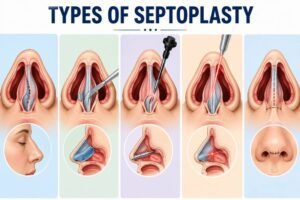
Traditional (open/conventional) septoplasty, endoscopic septoplasty, and septorhinoplasty are the main forms of septoplasty. To improve breathing, these surgical methods straighten the cartilage and bone within the nose.
Author: Dr Sagar Rajkuwar, ENT Specialist, Nashik, Maharashtra, India
🌐 www.entspecialistinnashik.com
Key Surgical Approaches
Standard Septoplasty: The conventional approach involves straightening the septum, cutting bent bone or cartilage, and elevating the lining using internal incisions within the nostril.
Endoscopic septoplasty is a cutting-edge, less invasive method that employs an endoscope, a thin camera tube, to provide precise vision inside small internal areas.
A combined treatment called septorhinoplasty modifies the outside of the nose while also correcting the internal crooked septum for health reasons.
Unique and Combined Procedures
Turbinate Reduction: Frequently performed in conjunction with a septoplasty to reduce enlarged inside nasal tissues (turbinates) that impede airflow.
Revision Septoplasty: A second procedure done to treat persistent or new breathing issues following a prior nose surgery.
Open/Extracorporeal Septoplasty: A complicated procedure that involves totally removing, straightening on a table, and reinserting severely twisted cartilage.
Types of Septoplasty: A Complete Guide to Surgical Techniques, Benefits, Recovery & Risks
Table of Contents
- Introduction
- What Is a Septoplasty?
- What is the Distinction Between an Open Septoplasty and a Closed Septoplasty?
- Septoplasty Combined with Other Procedures
- Who Needs Septoplasty?
- Septoplasty’s advantages
- Following Septoplasty, Recovery
- Potential Complications and Risks
- How Successful Is Septoplasty?
- How to Pick the Best Sort of Septoplasty
- When Is It Necessary to Consult an ENT Specialist?
- Conclusion
- Types of Septoplasty Frequently Asked Questions
Introduction
A septoplasty is a surgical operation used to straighten a deviated nasal septum, which is the bone and cartilage wall that divides the two nostrils. An uneven septum may restrict airflow, making it hard to breathe via the nose and raising the chance of sleep issues, nosebleeds, snoring, and chronic sinus infections.
There are various forms of septoplasty accessible today. The choice is based on the seriousness of the septal deviation, any related nasal issues, and the surgeon’s experience. In contrast to standard techniques, modern techniques, particularly endoscopic septoplasty, provide greater precision, less tissue injury, and a quicker recovery.
This article discusses the various forms of septoplasty, their benefits, drawbacks, recovery, and potential candidates.
What Is a Septoplasty?
The cartilage and bone of the bent areas of a deviated nasal septum are reshaped, relocated, or removed during the ENT surgical treatment known as septoplasty.
Septoplasty, in contrast to rhinoplasty, which alters the nose’s appearance, mainly seeks to enhance breathing and nasal function.
Deviated septa frequently present with symptoms such as:
- Problems breathing via one or both nostrils
- Congestion in the nose that is chronic
- regular sinus infections
- soreness
- Breathing through the mouth
- Epistaxis
- Pressure on the face
- headaches caused by nasal obstruction
What is the Distinction Between an Open Septoplasty and a Closed Septoplasty?
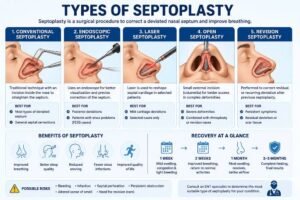
1. Typical (Conventional) Septoplasty
Traditional septoplasty has been used successfully for decades.
Methodology
- The surgeon makes an incision inside the nose, elevates the lining covering the septum, reshapes or removes the deviated cartilage and bone, and reestablishes the septum in the midline.
- There are no outward scars to be seen.
Benefits
- a well-established procedure
- Good for most septal abnormalities
- Scars that are not visible
- High level of achievement.
Restrictions
- A little more tissue dissection.
- Endoscopic methods might take a bit longer to recuperate from.
2. Septoplasty, Endoscopic
One of the most often utilized minimally invasive procedures is endoscopic septoplasty.
The surgeon can see inside the nose clearly with a thin endoscope equipped with a high-definition camera.
Benefits
- Improved visualization
- Less surgical dissection
- Bleeding is reduced.
- More accurate modification
- Faster Healing
- Less pain following surgery
Most appropriate for
- Deviations of the posterior septum
- Septal spurs that are localized
- Individuals undergoing sinus surgery (FESS)
3. Septoplasty using a laser.
Using laser energy, laser septoplasty reshapes certain areas of the septal cartilage.
Only carefully chosen individuals are candidates for this treatment.
Benefits
- Minimal bleeding
- reduced edema following surgery
- Procedure time is brief.
Limitations
- Not applicable to severe septal abnormalities
- Can’t fix bone deformities
- Compared to conventional surgery, there are less signs.
4.Septoplasty with an open approach
Through a small incision on the columella (the tissue that lies between the nostrils), open septoplasty is performed.
This technique offers superb exposure for intricate deformities.
Pros
- Good visualization
- Perfect for extreme deformities
- Helpful during revision surgery
- often used with rhinoplasty
Restrictions
- Little exterior incision
- A little longer healing period
5. Revising the Septoplasty
Following previous procedures, some individuals still have nasal blockage.
Septoplasty revision fixes:
- Consistent divergence
- Fibrotic tissue
- Deformity of the residual septum
- Selected cases of septal perforation
Due to changed anatomy and scar tissue, revision procedures are often more technically challenging.
Septoplasty Combined with Other Procedures
Septoplasty is frequently done concurrently with:
FESS, also known as Functional Endoscopic Sinus Surgery
Improves nasal airflow and cures chronic sinusitis.
Decrease in Turbinate Size
Reduces enlarged turbinates, which cause nasal obstruction.
Rhino Surgery
Boosts breathing and aesthetic appeal.
Surgery for Nasal Polyps
Corrects the septum while removing any nasal polyps that are in the way.
Who Needs Septoplasty?
If you have any of the following, your ENT specialist could advise septoplasty:
- Persistent nasal obstruction
- Nasal septum deviates
- Frequent sinus infections
- Nasal obstruction makes it difficult to sleep.
- Nasal obstruction causes snoring.
- Frequent nosebleeds
- Lack of response to therapy
Septoplasty’s advantages
After surgery, the majority of patients show a substantial improvement.
Among the benefits are:
- better nasal breathing
- More restful sleep
- Snoring less
- Less sinus infection
- Exercise tolerance that is improved
- Better quality of life
- Making CPAP machines simpler to utilize for people with sleep apnea
- Less reliance on nasal sprays
Following Septoplasty, Recovery
Between people, recovery differs.
Week 1
- Slight puffiness
- A blocked nose
- minimal bleeding
- Slight discomfort
Second Week
- Breathing better
- Swelling is lessened.
- Get back to your regular routines.
One Month
- The majority of swelling subsides.
- Significant boost to airflow
Three to Four Months
- Complete Internal Recovery
- The final surgical results are evident.
Potential Complications and Risks
Although septoplasty is usually harmless, there are risks:
- Hemorrhaging
- Contamination
- Hematoma of the septum
- Perforation of the Septum
- Continuous nasal blockage
- Temporary numbness
- Adjusted perception of smell
- Adhesions within the nose
- The requirement for revision surgery (uncommon)
Choosing an experienced ENT surgeon helps reduce these risks.
How Successful Is Septoplasty?
Septoplasty has an success rate of 70-90% in enhancing nasal breathing. Success depends on:
- Deviation’s seriousness
- Related nasal conditions
- Technique in surgery
- Following surgical treatment
- Therapeutic for the patient
Patients who have allergies or chronic sinus disease may still need medical attention following surgery.
How to Pick the Best Sort of Septoplasty
The best surgical approach is determined by:
- The location of the septal deviation
- Level of distortion
- existence of sinus illness
- Prior nasal surgery
- cosmetic worries
- Experience of a Surgeon
After a comprehensive evaluation, your ENT professional will suggest the best alternative.
When Is It Necessary to Consult an ENT Specialist?
If you have the following, see an ENT expert:
- ongoing nose obstruction
- Recurring sinus infections
- Nosebleeds that occur often
- Snoring that is loud
- It’s difficult to breathe via the nose.
- Pressure on the face that doesn’t get any better
- Medications have a poor reaction.
Prompt assessment can assist in determining whether medical therapy or septoplasty is the superior course of action.
Conclusion
Improving nasal breathing and mending a deviated nasal septum may be accomplished with one of the most successful methods available today: septoplasty. The surgical alternatives available today provide safe, effective, and minimally invasive treatments for the majority of individuals, ranging from standard septoplasty to cutting-edge endoscopic procedures. The kind of septoplasty that is most appropriate for you will be determined by your symptoms, the anatomy of your nose, and your general health.
For the best long-term outcome and the most suitable technique, a qualified ENT specialist must assess the patient. The majority of individuals report significantly better breathing, fewer sinus infections, and a higher quality of life with adequate postoperative treatment.
Types of Septoplasty Frequently Asked Questions
1. What kinds of septoplasty are there?
The primary varieties are:
- Septoplasty, both conventional and historical
- Septoplasty Endoscopically
- Septoplasty by Laser (selected cases)
- Septoplasty with Open Access
- Revision Septoplasty
2. What is conventional septoplasty?
Conventional septoplasty is the standard technique for correcting a deviated nasal septum by making an incision inside the nose without leaving any external scars.
3. What is septoplasty by endoscopy?
Using a tiny camera (endoscope), endoscopic septoplasty enables more accurate correction with less tissue damage and faster recovery.
4. What exactly is laser septoplasty?
Laser septoplasty uses laser energy to reshape certain cartilage abnormalities. It is not appropriate for all types of septal deviation and is exclusively applicable to carefully chosen patients.
5. What is open septoplasty?
Open septoplasty requires a minor external incision between the nostrils (columella) in order to provide improved access in complicated nasal abnormalities or when combined with rhinoplasty.
6. What does revision septoplasty entail?
Revision septoplasty is done when symptoms persist or recur following a prior septoplasty because of incomplete correction, scar tissue, or leftover deviation.
7. Which kind of septoplasty is optimal?
The optimum strategy is determined by the following factors:
- Septal Deviation Severity
- Anatomy of the nose
- Associated sinus condition
- Prior nasal surgeries
- Surgeon’s skill
The most suitable option will be advised by your ENT specialist.
8. Is endoscopic septoplasty better than standard septoplasty?
Often, endoscopic septoplasty provides:
- Improved surgical vision
- Lesser tissue cutting
- Reduced bleeding
- Faster recovery
When executed correctly, nevertheless, both methods give outstanding outcomes.
9. Is it possible to perform septoplasty in conjunction with other operations?
Yes. Often, septoplasty is done in conjunction with:
- FESS (Functional Endoscopic Sinus Surgery)
- Reduction in turbinate size
- Rhinoplasty
- Nasal polyp operation
10. What is the length of time for septoplasty surgery?
Depending on the complexity and if other nasal treatments are done, most procedures last between 30 and 90 minutes.
11. Is septoplasty uncomfortable?
The majority of patients have only minor pain, not extreme pain. Most of the time, the drugs prescribed are enough to manage the pain.
12. After septoplasty, how long does recuperation take?
- Back to desk labor: 5-7 days
- Decrease in swelling: 2–3 weeks
- Full internal recovery: 2-3 months
13. For whom is septoplasty a good option?
Patients with the following conditions may be advised to undergo septoplasty:
- Long-term nasal congestion
- Nasal Septum Deviated
- Recurring sinus infections
- It’s hard to breathe through your nose.
- Nasal obstruction and snoring
- Septal deviation resulting in nosebleeds
14. What risks are associated with septoplasty?
Possible side effects, though typically minor, include:
- Hemorrhage
- Infection
- perforation of the septum
- Constant nasal blockage
- Altered olfactory perception
- A revision operation is seldom required.
15. Is it possible for a deviated septum to recur following surgery?
Occasionally, a revision septoplasty may be necessary due to trauma, scar tissue, or incomplete healing, but the majority of corrections are permanent.
Medical Disclaimer
Medical Disclaimer: This article is intended for educational and informational purposes only and should not be considered medical advice. Septoplasty may not be suitable for everyone. Always consult a qualified ENT specialist for an accurate diagnosis and personalized treatment plan. Do not ignore professional medical advice or delay seeking treatment based on information found in this article.
Related Articles (Internal Links)
Difference Between SMR And Septoplasty
https://healthuseful.com/difference-between-smr-and-septoplasty/
Pillar Topic: Septoplasty
Comparison
- https://healthuseful.com/septoplasty-vs-turbinoplasty/
- https://healthuseful.com/difference-between-smr-and-septoplasty/
- https://healthuseful.com/septoplasty-vs-rhinoplasty/
Cost & Access
- https://healthuseful.com/septoplasty-cost/
- https://healthuseful.com/free-septoplasty/
- https://healthuseful.com/septoplasty-near-me/
Results & Recovery
SINUSITIS SILO STRUCTURE (UNIQUE URLS)
1. PILLAR PAGE (1)
https://healthuseful.com/sinusitis/
2. SINUS INFECTION SYMPTOMS
https://healthuseful.com/sinusitis-headache-symptoms/
https://healthuseful.com/sinus-headache-symptoms/
https://healthuseful.com/sinusitis-on-pressure/
https://healthuseful.com/sinusitis-with-cough/
https://healthuseful.com/sinus-headache-location/
https://healthuseful.com/sinus-headache-back-of-head/
https://healthuseful.com/sinus-headache-symptoms-one-side/
https://healthuseful.com/sinus-headache-symptoms-right-side/
https://healthuseful.com/frontal-sinus-headache/
https://healthuseful.com/sinus-headache-without-congestion/
https://healthuseful.com/can-sinusitis-cause-vomiting/
https://healthuseful.com/can-a-sinus-infection-cause-eye-pain/
https://healthuseful.com/what-are-the-neurological-symptoms-of-sinusitis/
https://healthuseful.com/what-are-the-four-cardinal-signs-of-sinusitis/
https://healthuseful.com/what-is-a-red-flag-for-sinusitis/
https://healthuseful.com/how-do-you-know-if-a-sinus-infection-is-severe/
https://healthuseful.com/end-stages-of-a-sinus-infection/
3. CHRONIC SINUSITIS
https://healthuseful.com/top-10-causes-of-chronic-sinusitis-how-to-treat-them/
https://healthuseful.com/what-is-the-root-cause-of-chronic-sinusitis/
https://healthuseful.com/who-is-most-at-risk-for-sinusitis/
https://healthuseful.com/autoimmune-disease-associated-with-chronic-sinusitis/
https://healthuseful.com/can-gut-issues-cause-sinus-problems/
https://healthuseful.com/can-your-thyroid-cause-sinus-issues/
https://healthuseful.com/can-hormone-imbalance-cause-sinus-problems/
https://healthuseful.com/can-sinusitis-be-a-symptom-of-something-else/
4. SINUS HEADACHE
https://healthuseful.com/sinus-headache-treatment/
https://healthuseful.com/sinus-headache-tablet/
https://healthuseful.com/how-to-rid-of-a-sinus-infection-headache/
https://healthuseful.com/what-triggers-sinusitis-headaches/
https://healthuseful.com/how-long-does-a-sinus-headache-last/
https://healthuseful.com/why-am-i-suddenly-getting-sinus-headaches/
https://healthuseful.com/what-vitamin-deficiency-causes-sinus-headaches/
https://healthuseful.com/where-to-massage-head-for-sinus-headache/
https://healthuseful.com/fastest-way-to-relieve-a-sinus-migraine/
https://healthuseful.com/what-is-the-fastest-way-to-relieve-a-sinus-migraine/
https://healthuseful.com/sinus-headache-while-pregnant/
5. SINUS TREATMENT
https://healthuseful.com/how-to-get-rid-of-a-sinus-infection-in-24-hours/
https://healthuseful.com/how-to-get-rid-of-sinus-infection-without-antibiotics/
https://healthuseful.com/what-kills-a-sinus-infection-naturally/
https://healthuseful.com/what-is-the-strongest-natural-antibiotic-for-sinus-infection/
https://healthuseful.com/how-to-cure-sinus-permanently/
https://healthuseful.com/sinusitis-with-cough-treatment/
https://healthuseful.com/sinusitis-nasal-washing/
https://healthuseful.com/how-doctors-clear-sinuses/
https://healthuseful.com/how-do-doctors-drain-sinuses-without-surgery/
https://healthuseful.com/what-naturally-drains-sinuses/
https://healthuseful.com/what-drink-will-clear-sinuses/
https://healthuseful.com/where-to-push-to-relieve-sinus-pressure/
https://healthuseful.com/what-exercises-clear-your-sinuses/
https://healthuseful.com/how-cloves-help-with-sinuses/
https://healthuseful.com/can-aloe-vera-treat-sinuses/
https://healthuseful.com/what-kills-bacteria-in-your-nose/
6. SINUS SURGERY
https://healthuseful.com/sinus-surgery/
https://healthuseful.com/cost-of-sinus-surgery-in-india/
https://healthuseful.com/does-insurance-pay-for-sinus-surgery/
https://healthuseful.com/sinus-lift-surgery/
https://healthuseful.com/how-do-you-prepare-for-a-ct-scan-of-the-sinuses/
7. COMPLICATIONS
https://healthuseful.com/complications-of-sinusitis/
https://healthuseful.com/hearing-loss-from-sinus-infection/
https://healthuseful.com/permanent-hearing-loss-from-sinus-infection/
https://healthuseful.com/how-to-tell-if-sinus-infection-has-spread-to-brain/
https://healthuseful.com/how-to-tell-if-sinus-infection-has-spread-to-bone/
https://healthuseful.com/what-are-the-risks-of-untreated-sinus-infection/
https://healthuseful.com/which-organ-is-affected-by-sinusitis/
https://healthuseful.com/can-sinusitis-affect-your-ears/
8. CONTAGIOUSNESS
https://healthuseful.com/are-sinus-infections-contagious/
https://healthuseful.com/is-a-bacterial-sinus-infection-contagious/
https://healthuseful.com/how-long-are-sinus-infections-contagious/
https://healthuseful.com/are-sinus-infections-contagious-to-babies/
https://healthuseful.com/are-bacterial-sinus-infections-contagious-while-on-antibiotics/
https://healthuseful.com/is-a-sinus-infection-contagious-with-fever/
9. PREGNANCY & SINUSITIS CLUSTER (5)
https://healthuseful.com/can-a-sinus-infection-during-pregnancy-hurt-the-baby/
https://healthuseful.com/how-to-get-rid-of-a-sinus-infection-in-24-hours-while-pregnant/
https://healthuseful.com/what-can-i-drink-for-sinuses-while-pregnant/
https://healthuseful.com/does-sinus-affect-pregnancy/
https://healthuseful.com/how-to-treat-sinus-pressure-while-pregnant/
10. PEDIATRIC SINUSITIS
https://healthuseful.com/can-a-baby-get-a-sinus-infection/
https://healthuseful.com/how-to-treat-sinuses-in-kids/
https://healthuseful.com/at-what-age-do-sinuses-develop/
11. DIAGNOSIS & DIFFERENTIAL DIAGNOSIS
https://healthuseful.com/what-mimics-sinus-issues/
https://healthuseful.com/what-can-be-mistaken-for-a-sinus-infection/
https://healthuseful.com/how-do-i-know-if-my-sinusitis-is-bacterial-or-viral/
https://healthuseful.com/what-virus-is-responsible-for-sinusitis/
https://healthuseful.com/can-you-smell-a-fungal-sinus-infection/
https://healthuseful.com/signs-of-sinus-infection-getting-better/
https://healthuseful.com/signs-of-sinus-infection-getting-better-with-antibiotics/
https://healthuseful.com/sinus-infection-recovery-time/
12. FOOD, VITAMINS & NATURAL HEALTH
https://healthuseful.com/what-vitamin-deficiency-causes-sinusitis/
https://healthuseful.com/what-deficiency-causes-sinusitis/
https://healthuseful.com/is-curd-bad-for-sinuses/
https://healthuseful.com/can-bananas-trigger-sinus/
https://healthuseful.com/what-fruit-clears-your-sinuses/
https://healthuseful.com/does-amla-increase-sinus/
https://healthuseful.com/is-papaya-good-for-sinus-infection/
https://healthuseful.com/can-almonds-cause-sinus-problems/
https://healthuseful.com/are-peanuts-bad-for-sinuses/
https://healthuseful.com/can-dehydration-worsen-sinus-pressure/
https://healthuseful.com/what-foods-should-you-avoid-with-sinus-infection/
13. AYURVEDA & ALTERNATIVE MEDICINE
https://healthuseful.com/what-is-the-name-of-the-sinusitis-in-ayurveda/
https://healthuseful.com/what-chakra-is-blocked-by-sinuses/
https://healthuseful.com/what-emotion-is-connected-to-sinuses/
14. MULTILINGUAL
Hindi
https://healthuseful.com/sinusitis-in-hindi/
https://healthuseful.com/how-to-get-rid-of-a-sinus-infection-in-24-hours-in-hindi/
https://healthuseful.com/can-a-sinus-infection-during-pregnancy-hurt-the-baby-in-hindi/
https://healthuseful.com/can-sinus-infection-cause-hair-loss-in-hindi/
Marathi
https://healthuseful.com/how-to-get-rid-of-a-sinus-infection-in-24-hours-in-marathi/
https://healthuseful.com/can-sinus-infection-cause-hair-loss-in-marathi/
References
https://www.mayoclinic.org/tests-procedures/septoplasty/about/pac-20384670
https://www.maxhealthcare.in/blogs/what-is-septoplasty
https://utswmed.org/conditions-treatments/septoplasty/