At What Age Do Sinuses Develop? A Complete Age-Wise Guide
From before birth through childhood and adolescence, the paranasal sinuses grow progressively. Although they are small at birth, the ethmoid and maxillary sinuses are present. Later on, the sphenoid and frontal sinuses expand and mature.
Since the actual timing differs between people, there isn’t a single birthday when all sinuses abruptly reach full development.
By Dr. Sagar Rajkuwar, ENT Specialist, Nashik, Maharashtra, India
🌐 www.entspecialistinnashik.com
Updated October 2026 with the latest ENT evidence on precise CT-based pneumatisation timelines, EPOS 2020 pediatric sinusitis diagnostic criteria, orbital and intracranial complication risks (Pott’s puffy tumor, orbital cellulitis), ethmoid sinus role in neonatal mastoiditis-like presentations, and age-wise imaging protocols.
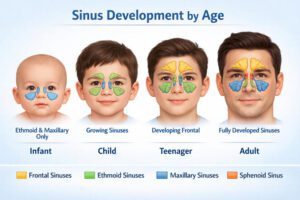
Figure 1 — Paranasal sinus development from birth to adulthood, with age-wise sinusitis risk and red-flag symptoms.
Age |
Main sinus development |
|---|---|
Birth |
Maxillary and ethmoid sinuses are present but small |
1–5 years |
Maxillary and ethmoid sinuses enlarge; other sinuses progressively develop |
Around 5–6 years |
Frontal sinus becomes increasingly pneumatized |
Childhood–teen years |
Sphenoid and frontal sinuses continue enlarging |
Adolescence |
Major growth of the paranasal sinuses continues |
Early adulthood |
Sinus size and shape approach adult anatomy |
The frontal sinus is among the later-developing sinuses, while the maxillary and ethmoid sinuses are established much earlier.
Further precision from CT studies (added October 2026): Modern cross-sectional imaging studies have refined these timelines. Published CT-based prevalence data give the following typical ages at which each sinus becomes radiologically visible and then reaches adult size:
- Ethmoid sinuses: present at birth as small cells; visible on CT in all newborns; reach adult size by about 12 years.
- Maxillary sinuses: small cleft at birth (~7 mm long); rapid growth 1–3 years and 6–12 years; reach adult size by about 15 years as the permanent teeth descend.
- Sphenoid sinuses: begin as pea-sized pneumatisation of the sphenoid bone at around 3–4 years; reach the sella turcica by 7 years; reach adult size by 15–18 years.
- Frontal sinuses: absent at birth; first visible on radiology at 5–6 years; reliable from 7–8 years; reach adult size only in the early 20s. About 4–5% of adults have aplasia (complete absence) of one or both frontal sinuses, which is normal.
Table of Contents
- What Are Sinuses?
- How Many Sinuses Do Humans Have?
- Are Sinuses Present at Birth?
- Sinus Development Timeline (Age-Wise)
- Can Babies and Toddlers Get Sinusitis?
- Why Children Get Fewer Sinus Infections Than Adults
- At What Age Are Sinuses Fully Developed?
- Does Sinus Development Continue After Age 18?
- Differences Between Child and Adult Sinuses
- Common Myths About Sinuses in Children
- How Sinus Development Affects Symptoms
- When to Suspect Sinus Problems in Children
- When Should a Child With Sinus Symptoms See a Doctor?
- Diagnosis of Sinus Issues by Age
- ENT Perspective: Why Age Matters in Sinus Disease
- Frequently Asked Questions
- Important Conclusions
- Modern Evidence: EPOS 2020 Guidelines, Imaging & Complication Risk (new, Oct 2026)
1. What Are Sinuses?
Air-filled spaces within the bones of the face and skull are called sinuses. They have mucous membrane linings and are connected to the nasal cavity.
Main functions of sinuses:
- Reduce the weight of the head
- Warm and humidify the air you breathe
- increase vocal resonance
- Help catch dust and microbes
Sinusitis occurs when these cavities become inflamed or clogged.
Further anatomical detail (added October 2026): Each sinus is lined by pseudostratified ciliated columnar epithelium (respiratory mucosa) with goblet cells that produce a thin mucus layer. The mucus is swept out of each sinus by beating cilia through a specific drainage pathway called the ostiomeatal complex (OMC) in the middle meatus of the nose. The OMC is the key anatomical bottleneck in sinus disease: when the OMC is obstructed by swelling, polyp or anatomic variant (deviated septum, concha bullosa, Haller cell), several sinuses drain poorly and inflammation sets in. Children’s sinuses still obey this plumbing — but the smaller volume and simpler drainage mean obstruction is less consequential than in adults. Beyond the four classical functions listed above, sinuses also act as crumple zones that absorb facial trauma, reducing the force transmitted to the brain, and they probably contribute to craniofacial growth and midface development.
2. How Many Sinuses Do Humans Have?
Humans have four pairs of paranasal sinuses:
| Sinus | Location |
|---|---|
| Maxillary | Cheeks |
| Ethmoid | Between the eyes |
| Frontal | Forehead |
| Sphenoid | Deep behind the nose |
👉 Important: Not all of these sinuses are present at birth.
Added October 2026 — why each location matters for complications: The anatomical location of each sinus explains the pattern of complications when infection breaks out of its bony walls:
- Maxillary sinus sits above the upper molar teeth — so an untreated upper-molar dental abscess can seed the maxillary sinus (odontogenic sinusitis), and conversely a chronic maxillary sinusitis can cause toothache or periapical pain.
- Ethmoid sinus is separated from the orbit by the paper-thin lamina papyracea — which is why ethmoid sinusitis is the single most common cause of orbital cellulitis in children.
- Frontal sinus is separated from the frontal lobe of the brain by the posterior table of frontal bone — and from the forehead skin by the anterior table — so advanced frontal sinusitis can lead to Pott’s puffy tumor (forehead swelling from osteomyelitis) or intracranial abscess.
- Sphenoid sinus is surrounded by the optic nerves, cavernous sinus, carotid artery, and pituitary gland — so sphenoid sinusitis, though rare, can rapidly cause blindness, cavernous sinus thrombosis or meningitis.
3. Are Sinuses Present at Birth?
Yes and no.
- At birth, the ethmoid sinuses are present but extremely little.
- Maxillary sinuses → Very small at birth
- Frontal sinuses are absent at birth.
- Sphenoid sinuses are absent at birth.
This accounts for the infrequency of real sinusitis in babies.
Added October 2026 — clinical implication of this limited anatomy in babies: Despite the near-absence of true sinusitis in babies, infected ethmoid air cells can still cause serious problems because they sit right next to the orbit. Neonatal ethmoiditis is a rare but recognised cause of acute orbital cellulitis in the first weeks of life, often misdiagnosed as dacryocystitis (tear-sac infection) initially. Any newborn with eye swelling, redness, fever and signs of toxicity needs urgent paediatric and ENT review, blood cultures, intravenous antibiotics and often imaging. In older infants, chronic nasal obstruction and discharge are usually due to viral upper respiratory infections, allergic rhinitis, choanal stenosis, foreign body, or adenoidal hypertrophy — not sinusitis.
4. Sinus Development Timeline (Age-Wise)
👶 Newborns and Infants (0–1 year)
- There are just maxillary and ethmoid sinuses.
- These sinuses are tiny and undeveloped.
- There are no frontal or sphenoid sinuses.
🔹 Clinical significance:
Babies do not get frontal sinusitis. Most nasal symptoms are due to:
- Viral infections
- Nose blocked
- Adenoid growth (eventually)
Added October 2026: At birth the maxillary sinus is a slit roughly 7 × 4 × 4 mm; the ethmoid is a cluster of 3–4 tiny air cells. Any ethmoiditis in this age group is a surgical-ENT emergency because of the thin lamina papyracea.
🧒 Toddlers & Preschool Children (1–5 years)
- Maxillary sinuses slowly enlarge
- Ethmoid sinuses continue developing
- Frontal sinuses still absent
- Sphenoid sinuses begin forming around age 3–4
🔹 Common issues at this age:
- Recurrent colds
- Mouth breathing
- Thick nasal discharge
👉 These are often misdiagnosed as “sinus,” but are usually viral rhinitis or adenoid problems.
Added October 2026: Published series describe a “double peak” of acute viral upper-respiratory infections in this age group (6–8 colds per year on average), each lasting 7–10 days. Only about 6–7% of these progress to true acute bacterial sinusitis per the AAP/EPOS criteria — so the common pattern of “colds every month” in a toddler is almost always viral, not bacterial sinusitis. Appropriate medical response is nasal saline, humidification, and symptomatic care; antibiotics are rarely indicated.
🧑🎓 School-Age Children (6–9 years)
- Frontal sinuses start developing around 6–7 years
- Sphenoid sinuses become more defined
- Drainage pathways mature
🔹 This is when true sinusitis can begin, especially:
- Maxillary sinusitis
- Ethmoid sinusitis
Added October 2026 — complication risk begins to rise: It is in this age group that orbital complications of ethmoid sinusitis first become a real risk — preseptal cellulitis, orbital cellulitis, subperiosteal abscess. Chandler’s classification groups these from mild (preseptal cellulitis, Grade I) to severe (cavernous sinus thrombosis, Grade V) and should be understood by any clinician seeing children with facial swelling. The pattern of “cold → unilateral eye swelling” at this age must prompt same-day evaluation.
🧑🦱 Teenagers (10–18 years)
- Rapid growth of all sinuses
- Frontal sinuses expand significantly during puberty
- Sinus anatomy becomes more complex
🔹 Teenagers may experience:
- Facial pain
- Headaches
- Pressure around eyes or forehead
- Allergic sinusitis
Added October 2026 — frontal sinus matters in this age group: As the frontal sinus pneumatises during puberty, frontal sinusitis and its specific complication Pott’s puffy tumor (osteomyelitis of the frontal bone with subperiosteal pus) become possible. This complication is classically seen in adolescent boys with frontal sinusitis who present with soft forehead swelling, fever and headache — and demands urgent CT, intravenous antibiotics and often surgical drainage. It should never be dismissed as a benign cyst.
🧑 Adults (18–25 years)
- Sinuses reach full size and maturity
- Frontal sinuses complete development by early 20s
✅ This is when the adult sinus anatomy is fully established
Added October 2026: Adult sinus volumes approximate: maxillary 15 ml, frontal 7 ml, sphenoid 7 ml, ethmoid 2–3 ml per side — with wide normal variation. About 4–5% of adults have unilateral or bilateral frontal sinus aplasia, which is a normal variant and not a disease.
5. Can Babies and Toddlers Get Sinusitis?
Yeah. Although the symptoms may be different from those seen in adults, young children can develop sinusitis.
The clinical pattern—for example, nasal discharge or daytime cough lasting more than 10 days without improvement, worsening symptoms after initial improvement, or severe symptoms such as high fever with purulent nasal discharge—is typically used to diagnose acute bacterial sinusitis in children.
Therefore, a baby’s runny or obstructed nose does not always signal sinusitis. Viral infections, allergic rhinitis, and enlarged adenoids can all cause similar symptoms.
Added October 2026 — EPOS 2020 and AAP criteria for diagnosis in children: The European Position Paper on Rhinosinusitis and Nasal Polyps (EPOS 2020) and the American Academy of Pediatrics (AAP) clinical practice guideline agree on three clinical patterns that identify acute bacterial sinusitis in children:
- Persistent symptoms: nasal discharge (of any quality) or daytime cough or both, lasting more than 10 days without improvement.
- Worsening course: initial improvement in a viral URI, followed by new onset or worsening of nasal discharge, daytime cough, or fever.
- Severe onset: high fever (≥39 °C / 102.2 °F) with purulent nasal discharge for at least 3 consecutive days.
Imaging is not routinely recommended to confirm acute bacterial sinusitis in children — only when complications are suspected or when alternative diagnoses need to be excluded. The commonest pathogens are Streptococcus pneumoniae, Haemophilus influenzae and Moraxella catarrhalis. First-line antibiotic is high-dose amoxicillin, with amoxicillin-clavulanate for severe cases or recent antibiotic exposure.
6. Why Children Get Fewer Sinus Infections Than Adults
- Sinuses are smaller
- Fewer enclosed spaces for infection
- Drainage pathways are simpler
- Symptoms are often nasal, not sinus-based
🔹 Many “sinus” complaints in children are actually:
- Allergic rhinitis
- Adenoiditis
- Viral URIs
Added October 2026 — but complications are relatively more common: Although children get fewer episodes of sinusitis than adults, when they do develop acute bacterial sinusitis the risk of serious orbital or intracranial complication is proportionally higher than in adults. Published case series put the rate of orbital complication of pediatric acute bacterial sinusitis at roughly 1–3% — vastly higher than the equivalent rate in adults. This asymmetry drives the strong rule-of-thumb used in pediatric ENT: treat children’s suspected bacterial sinusitis seriously, image early if any eye, forehead or neurological symptoms appear, and have a low threshold for admission.
7. At What Age Are Sinuses Fully Developed?
✔ Most sinuses are fully developed between 18–25 years
- Maxillary & ethmoid → earlier
- Sphenoid → mid-teens
- Frontal → last to mature
This is why adult sinus disease patterns differ significantly from childhood sinus problems.
Added October 2026: “Fully developed” needs qualification. Minor pneumatisation can continue into the fourth decade, especially of the frontal sinus and the sphenoid in some individuals. Adult sinus anatomy also varies enormously between people — asymmetric frontal sinuses, septations, agger nasi cells, Haller cells and Onodi cells are common anatomic variants. Any adult undergoing endoscopic sinus surgery needs a pre-operative CT to map these variants and avoid injury to the orbit, optic nerve or dura.
8. Does Sinus Development Continue After Age 18?
Sinus growth does not always cease suddenly at the age of eighteen. The paranasal sinuses‘ form and size differ greatly between individuals, and their growth might continue until late adulthood or adolescence.
Thus, rather than specifying one exact age for complete development, it is more accurate to state that the majority of major sinus development happens in childhood and adolescence, with adult anatomy forming by early adulthood.
Added October 2026: CT studies of large adult cohorts have shown that frontal-sinus volume and sphenoid-sinus volume continue to show modest growth into the mid-20s, with slow mucosal thinning and bone remodelling continuing into the fourth decade. This is biologically relevant — individual variation in “end of growth” is why some patients first present with frontal headaches or frontal sinusitis in their early twenties rather than in adolescence.
9. Differences Between Child and Adult Sinuses
| Feature | Children | Adults |
|---|---|---|
| Sinus size | Small | Fully developed |
| Frontal sinus | Absent or tiny | Large |
| Sinus infections | Rare | Common |
| Facial pain | Uncommon | Common |
| CT scan need | Rare | Often needed |
Added October 2026 — expanded comparison:
- Dominant pathogens differ: Children — S. pneumoniae, non-typeable H. influenzae, M. catarrhalis. Adults — similar pathogens plus Staph. aureus and more polymicrobial anaerobic flora in chronic cases.
- Dominant symptoms differ: Children — cough (especially at night), nasal discharge, irritability, poor feeding. Adults — facial pain/pressure, nasal congestion, hyposmia, headache.
- Imaging approach differs: Children — avoid CT when possible, use clinical criteria. Adults — CT is the gold standard for confirming chronic rhinosinusitis.
- Treatment duration differs: Children — 10–14 days of antibiotics. Adults — often 7–10 days for acute, longer for chronic.
- Surgery differs: Pediatric functional endoscopic sinus surgery (FESS) is reserved for complications, cystic fibrosis, primary ciliary dyskinesia, or failed medical therapy. Adult FESS is far more routine.
10. Common Myths About Sinuses in Children
❌ Myth 1: Babies can have frontal sinusitis
✔ Truth: Frontal sinuses don’t exist in babies
❌ Myth 2: Every blocked nose is sinus
✔ Truth: Most are viral or allergic
❌ Myth 3: Sinus surgery is common in kids
✔ Truth: Very rare and only in select cases
Added October 2026 — three more common myths:
❌ Myth 4: A green nasal discharge in a child always means bacterial sinusitis.
✔ Truth: Colored nasal discharge is a normal part of the natural course of viral URIs and does not by itself indicate bacterial infection. The duration (>10 days without improvement) and clinical pattern matter more than colour.
❌ Myth 5: A CT scan is the best first test for a child with persistent nasal symptoms.
✔ Truth: CT is not routinely recommended in children. It involves radiation to a developing head and rarely changes management for uncomplicated sinusitis. CT is reserved for suspected complications or when atypical diagnoses must be excluded.
❌ Myth 6: Adenoidectomy will cure every child with chronic nasal symptoms.
✔ Truth: Adenoidectomy helps when adenoid hypertrophy and biofilm are the main driver of chronic rhinosinusitis in children — roughly 50–70% of appropriately selected cases improve. It is not a universal fix for every child with a runny nose.
11. How Sinus Development Affects Symptoms
Children may show:
- Persistent nasal discharge
- Cough (especially at night)
- Mouth breathing
- Snoring
Adults may experience:
- Facial pain
- Headache
- Pressure sensation
- Reduced smell
- Thick post-nasal drip
Added October 2026 — why age shapes symptoms: Children often cannot localise facial pain; instead their symptoms are expressed as behavioural change (irritability, poor sleep), cough, halitosis, and reduced appetite. Older children and adults can localise pain to a specific sinus region, which helps clinical diagnosis. The absence of frontal headache in a 4-year-old does not rule out sinusitis — it simply reflects developmental limits of pain localisation and the fact that the frontal sinus doesn’t yet exist.
12. When to Suspect Sinus Problems in Children
Consult an ENT specialist if your child has:
- Nasal discharge >10–14 days
- Fever with facial swelling
- Persistent cough
- Recurrent infections
- Poor response to treatment
Added October 2026 — serious warning signs that need the emergency room, not the clinic:
- Eye swelling or redness — preseptal cellulitis at minimum, orbital cellulitis at worst
- Proptosis (bulging eye) or restricted eye movement
- Reduced vision or double vision — orbital or cavernous sinus involvement
- Forehead swelling in a teenager — Pott’s puffy tumor until proven otherwise
- Severe headache with vomiting, neck stiffness, or confusion — possible meningitis or intracranial abscess
- Seizure or focal neurological deficit
- High fever, toxic appearance, lethargy
13. When Should a Child With Sinus Symptoms See a Doctor?
A youngster who has the following symptoms should be seen by a doctor:
- Daytime cough or nasal discharge that has not improved after ten days
- Symptoms that first get better and then get worse
- A thick/purulent nasal discharge and a high fever
- Ongoing discomfort in the face or head
- Eye swelling
- Breathing challenges
- Unusual neurological symptoms or a severe headache
- Recurring or persistent symptoms associated to the sinuses
Because sinus infections can occasionally result in intracranial or orbital problems, any eye swelling, vision issues, severe headache, seizures, or other neurological symptoms should be immediately evaluated by a doctor.
14. Diagnosis of Sinus Issues by Age
- Infants & toddlers: Clinical examination only
- Children: Endoscopy if needed
- Adults: CT scan of sinuses (gold standard)
⚠️ CT scans are not routinely advised in young children.
Added October 2026 — modern age-wise diagnostic framework:
- Newborn with eye/orbital swelling: urgent CT with contrast (benefits outweigh radiation risk when complications are suspected)
- Toddlers (1–5y): clinical criteria; nasal endoscopy under topical anaesthesia only in selected cases; CT only if complications
- School-age (6–9y): clinical criteria; nasal endoscopy well tolerated; limited-cut low-dose CT if chronic symptoms or complications
- Adolescents (10–18y): nasal endoscopy routine; CT when chronic or recurrent sinusitis
- Adults: nasal endoscopy; CT paranasal sinuses as the gold standard; MRI for suspected fungal invasive disease, intracranial complication, or tumor
- Allergy testing considered in children with recurrent symptoms and family history of atopy
- Immune workup in children with recurrent severe sinusitis plus other infections (consider IgG subclass deficiency, cystic fibrosis, primary ciliary dyskinesia)
15. ENT Perspective: Why Age Matters in Sinus Disease
From an ENT standpoint, understanding sinus development prevents over-diagnosis and over-treatment.
- Avoid unnecessary antibiotics in children
- Focus on nasal hygiene and allergy control
- Reserve imaging and surgery for true sinus disease
Added October 2026 — practical ENT approach by age:
- Infants: nasal saline drops, humidification, nasal suction; antibiotics only for documented bacterial infection with persistent symptoms; emergency imaging for eye involvement.
- Toddlers: treat underlying allergic rhinitis with nasal saline and age-appropriate antihistamines; avoid antibiotics for viral URIs; evaluate for adenoid hypertrophy if nasal obstruction and snoring persist.
- School-age children: apply EPOS/AAP criteria for diagnosing bacterial sinusitis; use amoxicillin or amoxicillin-clavulanate; consider nasal corticosteroids for chronic rhinosinusitis; evaluate for adenoiditis and consider adenoidectomy when appropriate.
- Adolescents: add decongestants and intranasal steroids; consider FESS for chronic rhinosinusitis unresponsive to medical therapy; look for underlying nasal polyps, septal deviation, or aspirin-exacerbated respiratory disease.
- Adults: standard adult rhinosinusitis protocols with EPOS 2020 as the reference; nasal steroids are first-line for chronic disease; antibiotic use targeted to acute bacterial episodes; endoscopic sinus surgery for medically refractory chronic rhinosinusitis.
16. Frequently Asked Questions
Q1. Can a 2-year-old have sinusitis?
Rare. Most symptoms are viral or adenoid-related.
Q2. Why do teenagers get sinus headaches?
Because frontal sinuses expand during puberty.
Q3. Do sinuses grow after adulthood?
No. Growth completes by early 20s.
Q4. At what exact age can a child first get frontal sinusitis? (added October 2026)
Reliable frontal pneumatisation begins around 6–7 years but adult-size frontal sinus is not reached until early adulthood. True frontal sinusitis is uncommon before 7–8 years and becomes more frequent in adolescence.
Q5. Is CT scan safe for a 5-year-old with suspected sinusitis? (added October 2026)
CT uses ionising radiation and is not routinely recommended for uncomplicated pediatric sinusitis. However, when complications (eye swelling, severe headache, neurological signs) are suspected, the benefit of CT outweighs the radiation risk, and modern low-dose protocols minimise exposure.
Q6. What is Pott’s puffy tumor? (added October 2026)
Pott’s puffy tumor is an osteomyelitis of the frontal bone with subperiosteal abscess that complicates frontal sinusitis. It presents as a soft, tender swelling over the forehead in a teenager or young adult with headache and fever. It is a surgical emergency requiring intravenous antibiotics and often operative drainage.
Q7. Can adenoid problems masquerade as sinusitis? (added October 2026)
Yes — very commonly in children. Chronic adenoiditis and biofilm-laden adenoid tissue produce persistent nasal discharge and cough that mimic chronic rhinosinusitis. In appropriately selected children, adenoidectomy improves symptoms in 50–70% of cases, even without formal sinus surgery.
17. Important Conclusions
- Sinuses develop gradually from birth to early adulthood
- Babies do not have fully formed sinuses
- True sinusitis usually starts after age 6
- Frontal sinuses develop last
- Understanding age-wise sinus growth helps accurate diagnosis.
- Ethmoid sinuses present at birth; maxillary small at birth; sphenoid appears 3–4 years; frontal appears 5–7 years; all adult-size by 18–25 years.
- Although rare, orbital and intracranial complications of pediatric sinusitis are proportionally more common than in adults — recognise red flags immediately.
- Pott’s puffy tumor and orbital cellulitis are the two most important age-dependent complications.
- EPOS 2020 and AAP guidelines use clinical criteria — not imaging — to diagnose acute bacterial sinusitis in children.
18. Modern Evidence: EPOS 2020 Guidelines, Imaging & Complication Risk (new section — October 2026)
The past decade has clarified three evidence-based points about age and sinus disease:
a. EPOS 2020 and AAP clinical criteria
The European Position Paper on Rhinosinusitis and Nasal Polyps (EPOS 2020) and the American Academy of Pediatrics (AAP) clinical practice guideline for acute bacterial sinusitis both diagnose bacterial sinusitis in children using clinical pattern: persistent symptoms (>10 days), worsening course after initial improvement, or severe-onset symptoms (fever ≥39°C + purulent discharge for 3+ days). Imaging is not required to confirm uncomplicated sinusitis.
b. Low-dose cone-beam CT for pediatric sinuses
When imaging is needed, modern low-dose cone-beam CT delivers useful anatomic detail at radiation doses 5–10 times lower than conventional CT. This is particularly important for children, whose developing tissues are more radiosensitive. Dedicated pediatric imaging protocols using low kVp and iterative reconstruction further reduce dose.
c. Orbital complication grading (Chandler’s classification)
Orbital complications of sinusitis are classified from Grade I (preseptal cellulitis, usually responds to oral antibiotics) through Grade II (orbital cellulitis), Grade III (subperiosteal abscess), Grade IV (orbital abscess with proptosis and vision changes), to Grade V (cavernous sinus thrombosis). Grades III–V require surgical drainage and intravenous antibiotics. In children the lamina papyracea (bone separating ethmoid from orbit) is thin and sometimes dehiscent, which is why ethmoiditis in a child can rapidly progress to orbital infection.
d. Intracranial complications — Pott’s puffy tumor and beyond
Frontal sinusitis can lead to Pott’s puffy tumor, epidural empyema, subdural empyema, brain abscess, meningitis and cavernous sinus thrombosis. Published pediatric series report that intracranial complications occur in roughly 3–5% of children hospitalised for acute bacterial sinusitis. The anatomical reason is clear: valveless diploic veins connect frontal sinus mucosa directly to the dura, and infection can spread by thrombophlebitis even without bone erosion.
e. Dental sinusitis in children with permanent molar eruption
Odontogenic maxillary sinusitis becomes possible once the permanent upper molars erupt (around age 11–12) and their roots enter the floor of the maxillary sinus. Any unilateral maxillary sinusitis in an adolescent or adult should prompt dental review, because the correct treatment is dental.
Together these advances mean that modern pediatric sinusitis care is more precise — fewer unnecessary CT scans, fewer unnecessary antibiotics, earlier recognition of serious complications, and standardised criteria for admission and surgery.
What age does sinus growth start? Sinuses progressively mature from infancy through childhood, adolescence, and into early adulthood, according to the response. The frontal and sphenoid sinuses develop later, whereas the ethmoid and maxillary sinuses are already present at birth. Due to the fact that sinus growth changes with age, children’s sinusitis and sinus symptoms might differ from those of adults.
Updated October 2026: Modern CT studies, EPOS 2020 clinical criteria, Chandler’s orbital-complication grading, low-dose pediatric imaging protocols, and growing recognition of Pott’s puffy tumor and intracranial complications have all shaped the way ENT specialists diagnose and treat sinus disease at every age. The single most important first step for parents remains unchanged: a child with eye swelling, forehead swelling, severe headache, or neurological symptoms needs same-day evaluation — the stakes are higher in a developing head than in an adult one.
Disclaimer:
This article is intended for educational and informational purposes only. It does not replace professional medical advice, diagnosis, or treatment. Sinus development and related symptoms may vary by age and individual. Always consult a qualified ENT specialist or healthcare professional for personalized evaluation and treatment.
📞 ENT Consultation & Surgery
Dr. Sagar Rajkuwar (MS-ENT)
Prabha ENT Clinic, Ambad, Nashik
📱 7387590194 | 9892596635
🌐 www.entspecialistinnashik.com
Related Articles (Internal Links)
🔗 Sinus Related Articles (Internal Links)
🤧 Sinus Headache & Symptoms
- https://healthuseful.com/sinus-headache-symptoms/
- https://healthuseful.com/sinus-headache-symptoms-one-side/
- https://healthuseful.com/sinus-headache-symptoms-right-side/
- https://healthuseful.com/sinus-headache-back-of-head/
- https://healthuseful.com/sinus-headache-symptoms-home-remedies/
- https://healthuseful.com/how-to-rid-of-a-sinus-infection-headache/
🦠 Sinus Infection Treatment
- https://healthuseful.com/how-to-get-rid-of-a-sinus-infection-in-24-hours/
- https://healthuseful.com/how-to-get-rid-of-sinus-infection-without-antibiotics/
- https://healthuseful.com/what-kills-a-sinus-infection-naturally/
- https://healthuseful.com/sinus-headache-tablet/
- https://healthuseful.com/how-do-doctors-drain-sinuses-without-surgery/
- https://healthuseful.com/signs-of-sinus-infection-getting-better/
- https://healthuseful.com/signs-of-sinus-infection-getting-better-with-antibiotics/
⚠️ Serious Conditions & Warning Signs
- https://healthuseful.com/end-stages-of-a-sinus-infection/
- https://healthuseful.com/how-to-tell-if-sinus-infection-has-spread-to-brain/
- https://healthuseful.com/how-to-tell-if-sinus-infection-has-spread-to-bone/
- https://healthuseful.com/what-is-a-red-flag-for-sinusitis/
- https://healthuseful.com/when-to-go-to-ae-with-sinusitis/
👁️ Related Symptoms & Complications
- https://healthuseful.com/can-a-sinus-infection-cause-eye-pain/
- https://healthuseful.com/can-sinusitis-affect-your-ears/
- https://healthuseful.com/can-sinus-infection-cause-hair-loss/
- https://healthuseful.com/symptoms-of-perforated-sinus-after-tooth-extraction/
🧠 Causes, Triggers & Misdiagnosis
- https://healthuseful.com/what-triggers-sinusitis-headaches/
- https://healthuseful.com/what-can-be-mistaken-for-a-sinus-infection/
- https://healthuseful.com/what-mimics-sinus-issues/
- https://healthuseful.com/what-can-worsen-a-sinus-infection/
🧬 Nutrition & Deficiency
- https://healthuseful.com/what-vitamin-deficiency-causes-sinus-headaches/
- https://healthuseful.com/what-vitamin-deficiency-causes-sinusitis/
- https://healthuseful.com/what-deficiency-causes-sinusitis/
📘 General Sinus Knowledge
- https://healthuseful.com/what-are-the-four-cardinal-signs-of-sinusitis/
- https://healthuseful.com/is-a-sinus-infection-contagious-with-fever/
- https://healthuseful.com/can-you-smell-a-fungal-sinus-infection/
- https://healthuseful.com/sinusitis-in-hindi/
💰 Treatment & Surgery
- https://healthuseful.com/cost-of-sinus-surgery-in-india/
- https://healthuseful.com/how-to-cure-sinus-permanently/
🧒 Special Cases
- https://healthuseful.com/when-to-worry-about-headaches-in-kids/
- How to Treat Sinuses in Kids (added Oct 2026)
🔍 Rare Conditions
- https://healthuseful.com/what-are-the-symptoms-of-a-sinus-mucocele/
- Symptoms of Sinus Calcification (added Oct 2026)
🔗 Related Articles on Nasal Polyps (ENT Expert Guides)
For detailed, evidence-based information, explore the following articles:
https://healthuseful.com/can-nasal-polyps-turn-cancerous/
https://healthuseful.com/can-nasal-polyps-affect-the-brain/
https://healthuseful.com/what-are-the-symptoms-of-cancerous-nasal-polyps/
https://healthuseful.com/when-to-worry-about-nasal-polyp/
https://healthuseful.com/what-happens-if-nasal-polyps-untreated/
https://healthuseful.com/number-one-cause-of-nasal-polyps/
https://healthuseful.com/how-to-stop-polyp-growth/
https://healthuseful.com/can-nasal-polyps-cause-heart-problems/
https://healthuseful.com/how-to-cure-nasal-polyps-permanently/
https://healthuseful.com/can-ent-see-nasal-polyps/
Medical References
- Fokkens WJ, et al. European Position Paper on Rhinosinusitis and Nasal Polyps (EPOS 2020). Rhinology, 2020.
- Wald ER, et al. Clinical Practice Guideline for the Diagnosis and Management of Acute Bacterial Sinusitis in Children. American Academy of Pediatrics, 2013 (reaffirmed).
- Scuderi AJ, et al. Development of the Paranasal Sinuses: A CT Study. American Journal of Neuroradiology.
- Chandler JR. The pathogenesis of orbital complications in acute sinusitis. Laryngoscope.
- Thieme Journal of Pediatric Neuroradiology. Paranasal Sinus Development in Children — Imaging Review. 2015.
- Pott’s puffy tumor in pediatric patients — case series and literature review. PMC7750352.
- NHS and ENT UK patient-information leaflets on childhood sinusitis.
- World Health Organization. Chronic rhinosinusitis in children: management overview.