When to Go to A&E With Sinusitis? Warning Signs You Should Never Ignore
By Dr. Sagar Rajkuwar, ENT Specialist, Nashik, Maharashtra, India
🌐 www.entspecialistinnashik.com
Table of Contents
-
Introduction
-
What Is Sinusitis? A Quick Overview
-
Normal Sinusitis vs Dangerous Sinusitis
-
Why Sinusitis Can Become an Emergency
-
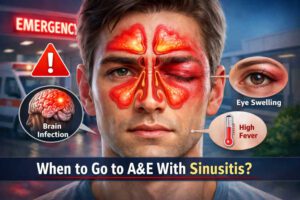
🚨 Red Flag Symptoms: When to Go to A&E Immediately
-
Severe Headache and Facial Swelling
-
Eye Symptoms: A Medical Emergency
-
High Fever and Signs of Sepsis
-
Neurological Symptoms: Brain Involvement
-
Sinusitis in Children: Emergency Warning Signs
-
Sinusitis in Immunocompromised Patients
-
What Will Doctors Do in A&E?
-
Tests and Imaging in Emergency Sinusitis
-
Treatment Given in A&E
-
When Sinusitis Does NOT Need Emergency Care
-
When to See an ENT Instead of A&E
-
How to Prevent Sinusitis Complications
-
Frequently Asked Questions (FAQs)
-
Key Takeaway
1. Introduction
Sinusitis is a common condition that most people manage at home with medicines, steam inhalation, or outpatient care. However, not all sinus infections are harmless. In rare but serious cases, sinusitis can spread to the eyes, brain, or bloodstream, turning into a medical emergency.
Many patients often ask:
“When should I go to A&E with sinusitis?”
This article clearly explains danger signs, emergency symptoms, and when sinusitis becomes life-threatening, helping you make the right decision at the right time.
2. What Is Sinusitis? A Quick Overview
Sinusitis is inflammation or infection of the paranasal sinuses, usually caused by:
-
Viral infections (most common)
-
Bacterial infections
-
Fungal infections (rare but dangerous)
Common Symptoms Include:
-
Nasal blockage
-
Thick nasal discharge
-
Facial pain or pressure
-
Reduced sense of smell
-
Headache
-
Post-nasal drip
Most cases resolve within 7–10 days or improve with treatment.
3. Normal Sinusitis vs Dangerous Sinusitis
| Normal Sinusitis | Emergency Sinusitis |
|---|---|
| Mild–moderate pain | Severe, worsening pain |
| Low-grade fever | High fever (>39°C) |
| Improves with medicines | No improvement or deterioration |
| No eye or brain symptoms | Eye swelling, confusion, seizures |
👉 Emergency sinusitis occurs when infection spreads beyond the sinuses.
4. Why Sinusitis Can Become an Emergency
The sinuses lie dangerously close to:
-
👁️ Eyes (orbit)
-
🧠 Brain
-
🩸 Major blood vessels
Infection can spread causing:
-
Orbital cellulitis
-
Brain abscess
-
Meningitis
-
Cavernous sinus thrombosis
-
Sepsis
These conditions are life-threatening and require urgent A&E care.
5. 🚨 Red Flag Symptoms: When to Go to A&E Immediately
Go to A&E / Emergency Department immediately if you have sinusitis with any of the following:
-
Swelling around eyes or eyelids
-
Severe headache not relieved by painkillers
-
High fever with chills
-
Confusion or altered consciousness
-
Double vision or vision loss
-
Stiff neck
-
Seizures
-
Vomiting
-
Rapid worsening of symptoms
-
Severe facial swelling or redness
6. Severe Headache and Facial Swelling
A sudden, severe headache, especially with:
-
Facial swelling
-
Forehead tenderness
-
Pain behind the eyes
may indicate:
-
Frontal sinus osteomyelitis
-
Brain involvement
⚠️ Pain that wakes you from sleep is especially concerning.
7. Eye Symptoms: A Medical Emergency
Go to A&E urgently if you have:
-
Swollen or red eyelids
-
Bulging eye (proptosis)
-
Pain while moving the eye
-
Double vision
-
Blurred vision
-
Reduced eyesight
These symptoms suggest:
-
Orbital cellulitis
-
Orbital abscess
Delayed treatment can lead to permanent blindness.
8. High Fever and Signs of Sepsis
Seek emergency care if sinusitis is accompanied by:
-
Fever above 39°C (102°F)
-
Rapid heartbeat
-
Rapid breathing
-
Low blood pressure
-
Extreme weakness
-
Cold or clammy skin
These may indicate sepsis, a medical emergency.
9. Neurological Symptoms: Brain Involvement
Immediately go to A&E if you experience:
-
Confusion or drowsiness
-
Difficulty speaking
-
Personality changes
-
Seizures
-
Severe vomiting
-
Neck stiffness
These may suggest:
-
Meningitis
-
Brain abscess
-
Cavernous sinus thrombosis
🧠 Brain complications of sinusitis are rare but fatal if untreated.
10. Sinusitis in Children: Emergency Warning Signs
Children may deteriorate faster than adults.
Take your child to emergency if:
-
Swollen eyes or eyelids
-
Persistent high fever
-
Excessive sleepiness
-
Irritability
-
Vomiting
-
Refusal to eat or drink
Young children cannot explain symptoms clearly—early evaluation saves lives.
11. Sinusitis in Immunocompromised Patients
Patients with:
-
Diabetes
-
Cancer
-
HIV
-
Long-term steroid use
-
Organ transplant history
are at higher risk of fungal sinusitis, which is a medical emergency.
Warning Signs:
-
Black nasal discharge
-
Black crusts in nose
-
Facial numbness
-
Eye pain or vision loss
👉 Go to A&E immediately.
12. What Will Doctors Do in A&E?
In emergency care, doctors will:
-
Assess vital signs
-
Perform neurological and eye examination
-
Check blood tests
-
Start intravenous (IV) antibiotics
-
Consult ENT and other specialists urgently
13. Tests and Imaging in Emergency Sinusitis
Common investigations include:
-
CT scan of sinuses and brain
-
MRI (if brain involvement suspected)
-
Blood cultures
-
Nasal swab or biopsy (suspected fungal infection)
14. Treatment Given in A&E
Emergency treatment may include:
-
IV antibiotics
-
IV antifungal medicines
-
Pain management
-
Oxygen therapy
-
Emergency surgery (if abscess present)
Early treatment dramatically improves survival.
15. When Sinusitis Does NOT Need Emergency Care
You do not need A&E if you have:
-
Mild facial pain
-
Nasal congestion
-
Thick discharge without fever
-
Symptoms improving with medicines
These cases can be managed by:
-
ENT consultation
-
OPD treatment
-
Home care
16. When to See an ENT Instead of A&E
See an ENT specialist if:
-
Symptoms last more than 10 days
-
Recurrent sinus infections
-
Nasal polyps
-
Chronic sinusitis symptoms
-
Reduced smell without emergency signs
17. How to Prevent Sinusitis Complications
-
Treat sinus infections early
-
Complete prescribed antibiotics
-
Control diabetes
-
Avoid self-medication
-
Seek ENT care for recurrent symptoms
-
Do not ignore worsening pain or swelling
18. Frequently Asked Questions (FAQs)
Is sinusitis life-threatening?
Rarely, but complications can be fatal if untreated.
Can sinusitis cause brain infection?
Yes, through direct spread from frontal or sphenoid sinuses.
Should I go to A&E for sinus headache?
Only if severe, worsening, or associated with neurological symptoms.
🆕 19. The Chandler Classification of Orbital Complications of Sinusitis
Patients who ask “when to go to A&E with sinusitis” are often most anxious about orbital complications. ENT specialists worldwide use the Chandler Classification (1970, still cited in AAO-HNS and EPOS 2020) to grade severity and urgency:
- Stage I — Preseptal (Periorbital) Cellulitis: inflammation limited anterior to the orbital septum. Managed with IV antibiotics; usually no surgery.
- Stage II — Orbital Cellulitis: infection posterior to septum, no abscess. Eye movement painful; needs IV antibiotics and close ENT/ophthalmology input.
- Stage III — Subperiosteal Abscess: pus between periorbita and lamina papyracea. Often needs endoscopic sinus surgery (ESS).
- Stage IV — Orbital Abscess: pus within orbital fat. Vision at acute risk; emergency surgical drainage.
- Stage V — Cavernous Sinus Thrombosis: rare, life-threatening, bilateral eye findings; mortality still 20–30% even with modern care.
If a loved one has sinusitis plus bulging eye, pain on eye movement, or vision changes, the answer to when to go to A&E with sinusitis is immediately — Chandler stage III and above need surgical drainage within hours to save vision.
🆕 20. Pott’s Puffy Tumour & Intracranial Complications
Though named a “tumour”, Pott’s puffy tumour is actually a subperiosteal abscess of the frontal bone caused by frontal sinusitis, often with underlying osteomyelitis. It presents as a soft, boggy, tender forehead swelling, usually in teenagers or young adults, and carries up to 60% risk of intracranial extension — subdural empyema, epidural abscess, brain abscess, or superior sagittal sinus thrombosis. Suspect it in any adolescent with forehead swelling and sinusitis; this is a textbook example of when to go to A&E with sinusitis. Contrast-enhanced MRI brain with MRV is the imaging of choice.
🆕 21. Invasive Fungal Rhinosinusitis — The 24-Hour Killer
In uncontrolled diabetes (especially diabetic ketoacidosis), post-chemotherapy neutropenia, or recent COVID-19 with steroid use (the Indian mucormycosis wave of 2021 taught us hard lessons), acute invasive fungal rhinosinusitis — caused by Mucorales (Rhizopus, Mucor), Aspergillus, or Fusarium — can kill in days. Warning signs include:
- Black crusts/eschar on the nasal septum, palate, or middle turbinate
- Facial numbness (trigeminal nerve infiltration)
- Painless loss of vision
- Facial swelling that spreads over hours
- Reddish-black discolouration of palate
Mortality is 30–70%, higher if diagnosis is delayed beyond 48 hours. Treatment: emergency endoscopic debridement, IV liposomal amphotericin B, and tight glycaemic control. For diabetic or immunocompromised patients, the threshold for asking “when to go to A&E with sinusitis“ should be very low.
🆕 22. SNOT-22 & Red-Flag Triage Score
The Sinonasal Outcome Test (SNOT-22) is a validated patient-reported outcome measure used by ENT surgeons to grade chronic sinusitis severity (0–110). While it is not an emergency tool, a sudden spike in score — particularly in sub-domains for ocular, headache or sleep symptoms — can signal complications. If SNOT-22 jumps >20 points in 48 hours with new red flags, treat as a flag for when to go to A&E with sinusitis. The British Rhinological Society publishes free SNOT-22 forms online for patient self-monitoring.
🆕 23. What Happens Behind the Scenes in A&E — The Sepsis-6 Bundle
If your sinusitis triage lands you in A&E with suspected sepsis, UK/EU emergency teams follow the Sepsis-6 bundle within one hour: (1) give high-flow oxygen; (2) take blood cultures; (3) measure serum lactate; (4) start IV broad-spectrum antibiotics (commonly ceftriaxone + metronidazole, or meropenem for severe cases); (5) start IV fluid resuscitation; (6) monitor urine output. Knowing this helps you cooperate with staff and understand why so much happens so quickly — none of this is possible outside A&E, which is why when to go to A&E with sinusitis is such a critical decision.
🆕 24. 2024 EPOS Guideline Red-Flag Checklist
The European Position Paper on Rhinosinusitis and Nasal Polyps (EPOS 2020, 2024 addendum) lists these red flags for same-day specialist review:
- Periorbital oedema / erythema
- Displaced globe / proptosis
- Double vision / ophthalmoplegia
- Reduced visual acuity
- Severe unilateral or bilateral frontal headache
- Frontal swelling (Pott’s puffy tumour)
- Signs of meningitis
- Focal neurological signs
- Reduced consciousness
Any single red flag on this list is sufficient reason to go to A&E; two or more raises the probability of orbital or intracranial complication to >40%.
19. Key Takeaway
Most sinus infections are harmless, but certain warning signs must never be ignored.
👉 Go to A&E immediately if sinusitis is associated with eye swelling, severe headache, high fever, confusion, or vision changes.
Early emergency treatment can save eyesight, prevent brain damage, and save lives.
✍️ Written by:
Dr. Sagar Rajkuwar
ENT Specialist – Nashik, Maharashtra
Medical Disclaimer
Some patients rely solely on internet information and attempt self-treatment, which can lead to serious or catastrophic consequences. This article is meant to educate and improve understanding, not replace professional medical consultation.
Having prior knowledge helps patients cooperate better with treatment, as treating physicians often have limited time to explain every detail. Always consult a qualified ENT specialist for diagnosis and treatment decisions.
📞 ENT Consultation & Surgery
Dr. Sagar Rajkuwar (MS-ENT)
Prabha ENT Clinic, Ambad, Nashik
📱 7387590194 | 9892596635
🌐 www.entspecialistinnashik.com
FOR FURTHER INFORMATION IN GREAT DETAIL ON Can Sinus Infection Cause Hair Loss PL CLICK ON THE LINK GIVEN BELOW-It is always better to view links from laptop/desktop rather than mobile phone as they may not be seen from mobile phone. ,in case of technical difficulties you need to copy paste this link in google search. In case if you are viewing this blog from mobile phone you need to click on the three dots on the right upper corner of your mobile screen and ENABLE DESKTOP VERSION.
FOR FURTHER INFORMATION IN GREAT DETAIL ON Symptoms of Perforated Sinus After Tooth Extraction PL CLICK ON THE LINK GIVEN BELOW-It is always better to view links from laptop/desktop rather than mobile phone as they may not be seen from mobile phone. ,in case of technical difficulties you need to copy paste this link in google search. In case if you are viewing this blog from mobile phone you need to click on the three dots on the right upper corner of your mobile screen and ENABLE DESKTOP VERSION.
FOR FURTHER INFORMATION IN GREAT DETAIL ON Sinusitis in Hindi PL CLICK ON THE LINK GIVEN BELOW-It is always better to view links from laptop/desktop rather than mobile phone as they may not be seen from mobile phone. ,in case of technical difficulties you need to copy paste this link in google search. In case if you are viewing this blog from mobile phone you need to click on the three dots on the right upper corner of your mobile screen and ENABLE DESKTOP VERSION.
FOR FURTHER INFORMATION IN GREAT DETAIL ON How to rid of a sinus infection headache PL CLICK ON THE LINK GIVEN BELOW-It is always better to view links from laptop/desktop rather than mobile phone as they may not be seen from mobile phone. ,in case of technical difficulties you need to copy paste this link in google search. In case if you are viewing this blog from mobile phone you need to click on the three dots on the right upper corner of your mobile screen and ENABLE DESKTOP VERSION.