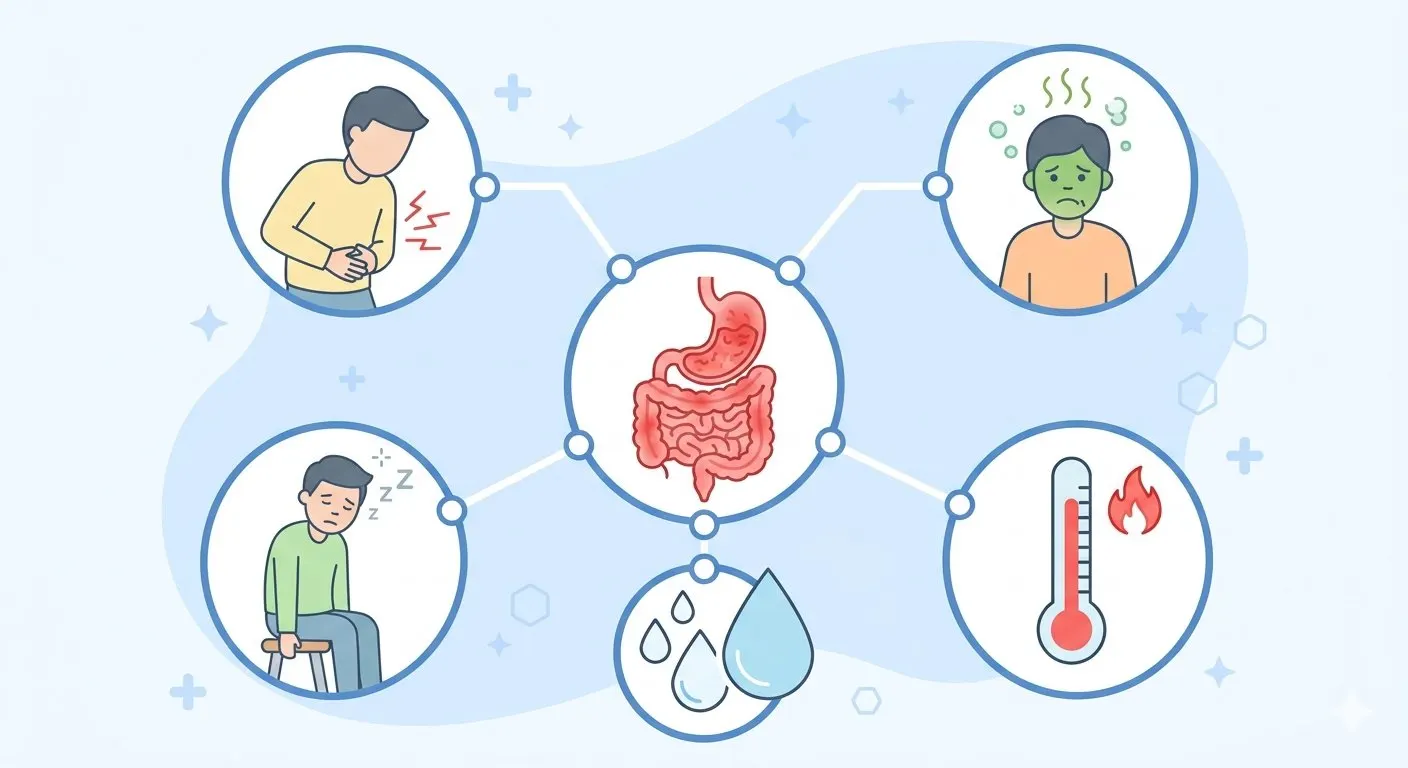
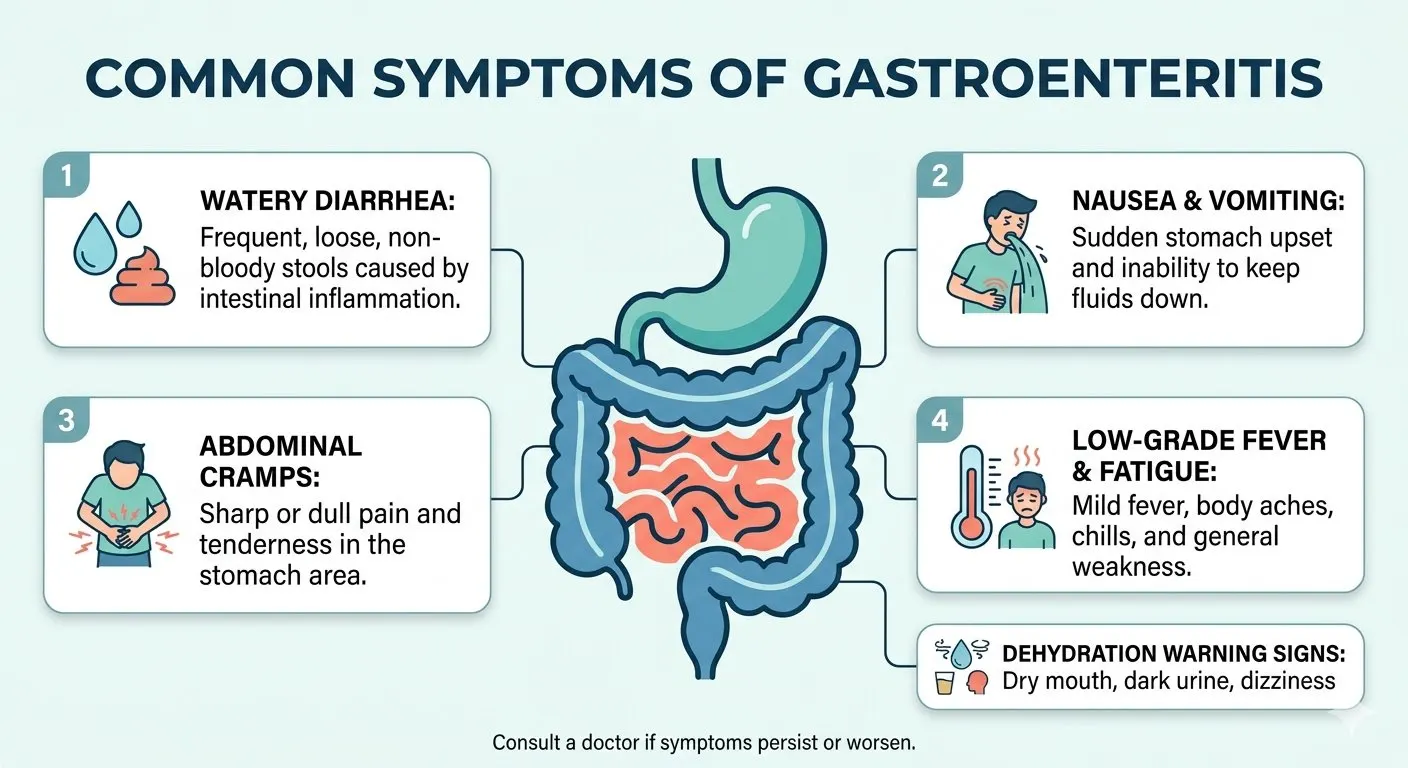
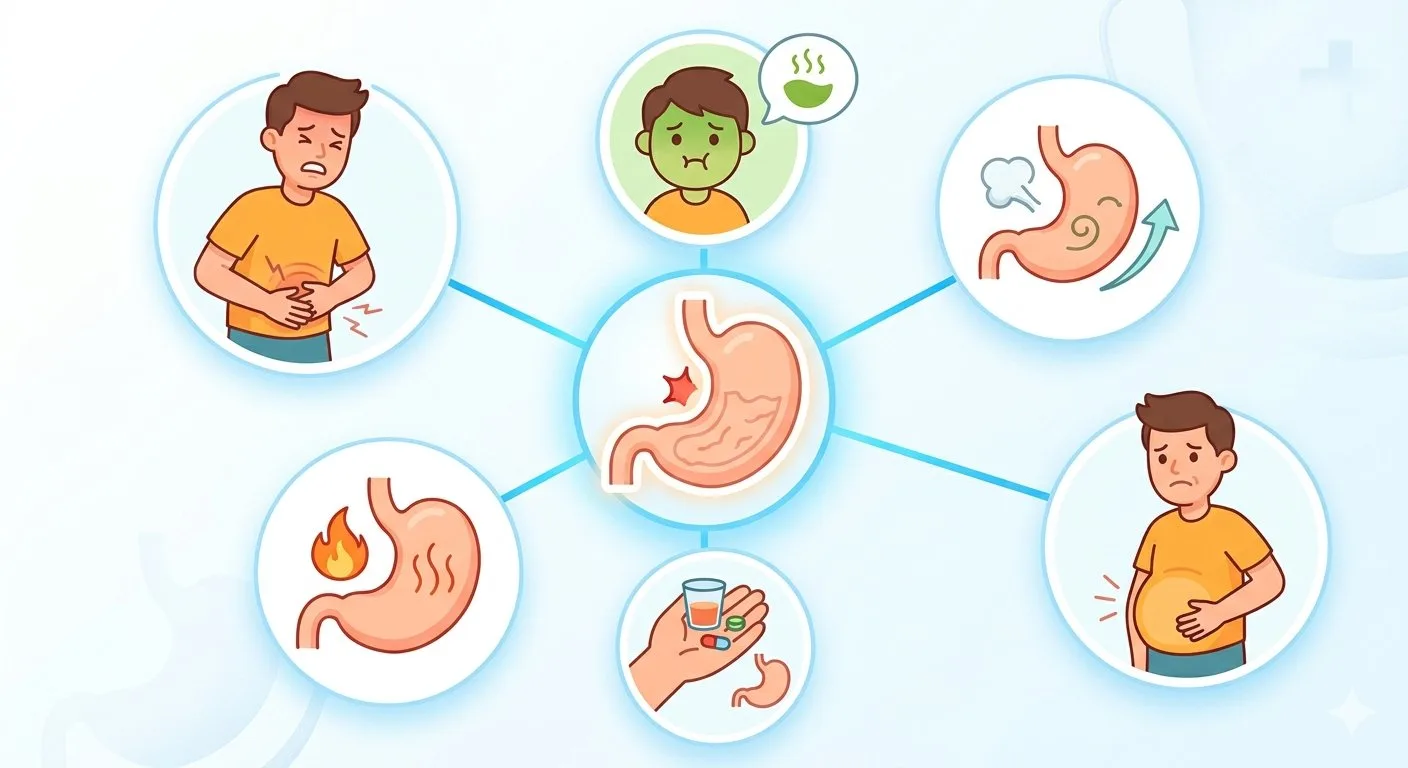
Gastroenteritis symptoms commonly include loose or watery diarrhoea, nausea, vomiting and abdominal cramps. Some people also develop fever, headache, body aches and loss of appetite. Symptoms may begin suddenly and range from mild discomfort to severe illness with dehydration.
Gastroenteritis is often caused by a virus, but bacteria, parasites and foodborne toxins can also produce similar symptoms. The exact pattern depends on the cause, the person’s age, general health and the amount of fluid lost. Many otherwise healthy people recover with careful fluid replacement and rest, but infants, older adults and people with weakened immunity can become seriously unwell more quickly.
This guide explains the common and less obvious gastroenteritis symptoms, how they may differ in adults and children, what dehydration looks like, how long symptoms usually last, and which warning signs require urgent medical assessment.
Quick answer: What are the main symptoms of gastroenteritis?The main gastroenteritis symptoms are watery diarrhoea, nausea, vomiting and abdominal cramps. Fever, reduced appetite, headache and body aches may also occur. The most important complication to watch for is dehydration, which may cause intense thirst, dry mouth, dark or reduced urine, dizziness, sunken eyes or unusual sleepiness. Blood in the stool, severe abdominal pain, confusion or inability to keep fluids down needs prompt medical assessment.
Gastroenteritis symptoms
Gastroenteritis Symptoms: Signs in Adults & Children
1. Main symptoms of gastroenteritis
Gastroenteritis symptoms usually affect the digestive system. A person may experience one symptom or several together. The common pattern is sudden diarrhoea with nausea, vomiting or abdominal cramps, although not everyone develops all of these symptoms.
Symptom
How it may feel or appear
Why it matters
Diarrhoea
Loose or watery stools, often more frequent than usual
Can cause substantial fluid and salt loss
Nausea
Queasy feeling or urge to vomit
May reduce the ability to drink enough fluids
Vomiting
Bringing stomach contents up through the mouth
Can worsen dehydration, especially with diarrhoea
Abdominal cramps
Intermittent gripping, twisting or cramping pain
Often accompanies intestinal irritation
Fever
Raised body temperature, sometimes with chills
May occur with viral or bacterial infection
Loss of appetite
Reduced desire to eat
Common during short-lived illness
Headache and body aches
Generalised discomfort or muscle aches
May accompany viral illness or fluid loss
Weakness and tiredness
Low energy, fatigue or dizziness
May reflect illness or dehydration
Do all people develop diarrhoea and vomiting?
No. Some people mainly experience diarrhoea, while others have prominent vomiting and nausea. Symptoms can vary with the organism responsible. A person with mild gastroenteritis may have only a few loose stools and mild cramps, whereas another person may have repeated vomiting and frequent watery diarrhoea.
2. Diarrhoea: Frequency, appearance and meaning
Diarrhoea is generally defined as passing three or more loose or liquid stools in a day, or stools more frequently than is normal for that individual. The change from a person’s usual bowel pattern is important; frequent passage of formed stools alone is not necessarily diarrhoea.
What does gastroenteritis-related diarrhoea look like?
In many viral infections, stools are watery and do not contain visible blood. A person may need to pass stool several times in a day, sometimes with urgency. Bacterial infections can also cause watery diarrhoea, but some produce inflammatory diarrhoea with blood or mucus.
Why does diarrhoea occur?
Infection can interfere with the intestine’s normal absorption of water and salts. Some organisms produce toxins that increase fluid secretion into the bowel; others inflame or damage the intestinal lining. The extra fluid in the intestine makes stools loose or watery.
When is diarrhoea concerning?
Blood, pus or black, tarry stool.
Very frequent watery stools with reduced urine output or dizziness.
Diarrhoea accompanied by severe or localised abdominal pain.
Persistent diarrhoea, particularly when it is not improving.
Diarrhoea in an infant, frail older adult or person with a weakened immune system.
Blood in the stool is not a typical feature of uncomplicated viral gastroenteritis and needs medical assessment. Do not assume that bloody diarrhoea is simply a more severe version of a routine stomach infection.
3. Nausea and vomiting
Nausea is the unpleasant sensation that a person may vomit. Vomiting is the forceful emptying of stomach contents through the mouth. Both are common gastroenteritis symptoms, especially in some viral infections and foodborne illnesses.
Why does gastroenteritis cause vomiting?
Infection and inflammation in the digestive tract can activate nerve pathways involved in the vomiting reflex. The body’s response may lead to nausea, retching and vomiting. Vomiting may occur before diarrhoea, at the same time, or without prominent diarrhoea.
What if a person vomits after drinking water?
During active nausea, large drinks may trigger further vomiting. If the person is alert and able to swallow safely, small, frequent sips of an appropriate oral rehydration solution (ORS) may be easier to tolerate than a large glass at once. If even small amounts cannot be kept down, medical advice is important because dehydration can develop.
Vomiting warning signs
Repeated vomiting with inability to retain fluids.
Blood in vomit or vomit resembling coffee grounds.
Green vomit, particularly in a child, which requires urgent assessment.
Vomiting with severe abdominal pain, a swollen abdomen, confusion or marked drowsiness.
4. Abdominal cramps and pain
Abdominal cramps are common gastroenteritis symptoms. They may feel like waves of gripping or twisting discomfort, often around the middle or lower abdomen. Cramping can occur before passing stool and may ease temporarily after a bowel movement.
Why do cramps occur?
Inflammation and irritation of the intestine can alter normal intestinal contractions. The bowel may contract more actively, producing cramp-like pain. Gas and fluid moving through the intestine may contribute to bloating and discomfort.
What type of pain is more typical?
Uncomplicated gastroenteritis often causes generalised or intermittent cramps rather than one fixed point of severe pain. However, the location and severity vary, and pain pattern alone cannot establish a diagnosis.
Important: Severe, persistent or increasingly localised abdominal pain should not automatically be attributed to gastroenteritis. Appendicitis, pancreatitis, gallbladder disease, bowel obstruction and other conditions can initially resemble a stomach infection.
5. Fever, headache, body aches and fatigue
Some people with gastroenteritis develop a raised temperature, chills, headache, muscle aches and tiredness. These symptoms may be more noticeable with certain viral and bacterial infections.
Does every case cause fever?
No. Fever may be absent in mild viral gastroenteritis and in some foodborne illnesses. A normal temperature does not rule out gastroenteritis, and fever alone does not identify the organism.
What does a high fever mean?
A high or persistent fever, particularly with bloody diarrhoea, severe abdominal pain or a person who looks very unwell, warrants medical assessment. It may indicate an invasive infection or another condition that needs specific investigation.
Why do people feel weak?
Weakness can result from the body’s response to infection, reduced food intake, poor sleep, fever and loss of water and electrolytes. Dizziness on standing, very low urine output or unusual drowsiness may indicate dehydration rather than ordinary tiredness.
6. Dehydration: The most important complication of gastroenteritis
Dehydration occurs when the body loses more water and essential salts than it takes in. Diarrhoea and vomiting can cause significant losses, sometimes over a short period. Recognising dehydration is one of the most important parts of assessing gastroenteritis symptoms.
Early signs of dehydration in adults
Increased thirst.
Dry mouth, lips or tongue.
Dark yellow urine or passing urine less often than usual.
Headache, tiredness or light-headedness.
Dizziness when standing up.
Signs of more serious dehydration
Very little urine or no urine for an unusually long period.
Marked weakness, fainting or inability to stand safely.
Rapid heartbeat or rapid breathing.
Sunken eyes, very dry mouth or reduced alertness.
Confusion, extreme drowsiness or collapse.
Dehydration signs in babies and young children
Fewer wet nappies than usual or no wet nappy for several hours.
Dry mouth and tongue.
Few or no tears when crying.
Sunken eyes or, in an infant, a sunken soft spot on the head.
Unusual irritability, sleepiness or reduced activity.
Poor feeding or inability to keep feeds down.
Emergency warning: Confusion, collapse, severe drowsiness, inability to drink, very little urine with marked weakness, or signs of shock need urgent medical care. Severe dehydration may require intravenous fluids in hospital.
Why children and older adults need special attention
Infants and young children have smaller fluid reserves, so fluid loss can become serious quickly. Older adults may have a reduced sense of thirst, chronic illnesses or medicines that affect fluid balance. People with kidney disease, diabetes or weakened immunity may also need earlier assessment.
7. Gastroenteritis symptoms in adults
In adults, gastroenteritis symptoms commonly include watery diarrhoea, nausea, vomiting and abdominal cramps. Fever, headache and body aches may occur. Some adults remain able to drink and carry out basic activities, while others feel exhausted and need to rest.
Typical adult symptom pattern
Sudden onset of loose or watery stools.
Nausea, with or without vomiting.
Intermittent abdominal cramps or bloating.
Reduced appetite and tiredness.
Sometimes mild fever, chills, headache or muscle aches.
When adult symptoms are not routine
Adults should seek medical advice for blood or black stool, severe abdominal or rectal pain, high fever, repeated vomiting, six or more loose stools in a day, diarrhoea lasting more than two days, or signs of dehydration. These are important thresholds for assessment, not a reason to wait if the person is deteriorating sooner.
Pregnant people, older adults, people with weakened immunity and those with significant underlying conditions should contact a healthcare professional earlier, even if symptoms initially appear mild.
8. Gastroenteritis symptoms in babies and children
Children may develop the same broad symptoms as adults, but dehydration can occur more rapidly, particularly in babies. Parents should pay attention to feeding, urine output, alertness and behaviour, not just the number of loose stools.
Common symptoms in children
Watery diarrhoea or more frequent stools than usual.
Vomiting or difficulty keeping feeds down.
Abdominal cramps, irritability or crying.
Fever, reduced appetite and low energy.
Reduced urine output or fewer wet nappies if dehydrated.
Symptoms in babies
Babies cannot describe nausea, pain or thirst. Signs may include refusing feeds, vomiting, frequent watery stools, unusual crying, fewer wet nappies, dry mouth, fewer tears or unusual sleepiness. A baby who is difficult to wake, floppy, unable to feed or showing signs of dehydration needs urgent medical assessment.
When should a child be assessed?
Seek prompt medical advice if a child has signs of dehydration, repeated vomiting, blood in the stool, severe abdominal pain, unusual drowsiness or worsening symptoms. Any fever in a very young infant needs prompt clinical advice. Infants, premature babies and children with underlying medical conditions may need assessment sooner.
Continue breastfeeding and age-appropriate feeds
Breastfeeding should generally continue during diarrhoeal illness. Formula should be prepared at its usual strength; do not dilute it unless specifically instructed by a clinician. An appropriate ORS may be advised to replace losses, with the amount and method guided by the child’s age and clinical condition.
9. Symptoms in older adults and people at higher risk
Older adults may experience ordinary diarrhoea, vomiting and cramps, but the effects of fluid loss can be more serious. A person may become dizzy, weak, confused or less mobile. Confusion can sometimes be an early sign of significant illness or dehydration and should not be dismissed as simply ageing.
People receiving chemotherapy, transplant medicines or other immune-suppressing treatment may develop severe or prolonged infection. Those with diabetes, kidney disease, heart disease or inflammatory bowel disease may also need individual advice about fluid replacement and medicines.
If a high-risk person develops gastroenteritis symptoms, contact a healthcare professional early rather than waiting for symptoms to become severe.
10. How symptoms may vary by cause
Different organisms can produce overlapping symptoms, so the pattern may suggest a cause but cannot confirm it. Recent food exposure, sick contacts, travel, outbreak information and the time between exposure and illness can help a clinician assess the possibilities.
Possible cause
Common symptom pattern
Useful context
Norovirus
Sudden nausea, vomiting, watery diarrhoea and cramps; sometimes headache, body aches or low fever
Symptoms often begin 12–48 hours after exposure; many recover in 1–3 days
Rotavirus
Watery diarrhoea, vomiting and sometimes fever
Important cause of severe diarrhoea in young children
Salmonella
Diarrhoea, fever and abdominal cramps; sometimes blood in stool
May follow contaminated eggs, poultry, meat or other foods
Campylobacter
Diarrhoea, fever and abdominal pain; stools may be bloody
Often linked to undercooked poultry, unpasteurised milk or unsafe water
Shigella
Diarrhoea, fever and cramps; sometimes blood or mucus
Can spread easily from person to person
Giardia
Prolonged diarrhoea, gas, bloating and sometimes greasy or foul-smelling stools
May follow contaminated water exposure
Foodborne toxins
Sudden nausea, vomiting, cramps or diarrhoea
Some toxin-related illnesses begin within hours of eating contaminated food
Bloody diarrhoea, severe pain or high fever should prompt medical assessment rather than an attempt to identify the organism at home. Some bacterial infections require specific testing and treatment decisions.
11. How long do gastroenteritis symptoms last?
The duration depends on the cause, the person’s age and health, and the severity of fluid loss. Many short-lived viral illnesses improve within a few days. Norovirus commonly resolves in one to three days, while diarrhoea from other causes may last longer.
Symptom or illness pattern
General duration
Norovirus illness
Often 1–3 days
Vomiting in common stomach bugs
Often settles within 1–2 days
Diarrhoea in common stomach bugs
May take several days; some cases last up to about a week
Persistent diarrhoea
Lasting 14 days or longer needs assessment for causes such as parasites and non-infectious disorders
These are broad patterns, not guarantees. Seek advice earlier if symptoms are severe, worsening, associated with dehydration or affecting someone at higher risk. Do not wait for the expected duration to pass when warning signs are present.
Can diarrhoea continue after vomiting stops?
Yes. Vomiting may settle first, while loose stools continue for several days. The person should continue replacing fluid losses and gradually return to normal food as tolerated. Persistent or worsening diarrhoea needs clinical advice.
12. Stool colour and appearance: What should you know?
Stool appearance can change during diarrhoeal illness because food and fluid move through the intestine more quickly. However, colour alone cannot identify the organism or establish the diagnosis.
Watery stool
Watery stool is common in viral gastroenteritis and several other infections. Frequent watery stools increase the risk of dehydration.
Mucus in stool
Mucus can occur with intestinal irritation and some infections. A large amount of mucus, particularly with blood, fever or pain, should be assessed by a clinician.
Blood in stool
Visible red blood or maroon stool may indicate intestinal inflammation, infection or bleeding from another cause. Black, tarry stool can indicate bleeding higher in the digestive tract, although some medicines and foods can also darken stool. Medical assessment is important rather than assuming it is a routine symptom of gastroenteritis.
Pale or greasy stool
Repeated pale, bulky, greasy or foul-smelling stools are not typical of a simple short-lived viral stomach infection. They may be associated with problems absorbing nutrients, bile flow or certain parasitic infections. Persistent changes need medical evaluation.
Practical point: Describe the stool to your clinician, including whether it is watery, bloody, black, greasy or contains mucus. A photograph may sometimes help explain an unusual appearance, but it does not replace examination or testing.
13. Symptoms that may indicate something other than gastroenteritis
Some serious abdominal conditions can initially resemble a stomach infection. Certain symptom patterns should trigger urgent assessment.
Warning pattern
Conditions clinicians may need to exclude
Progressively worsening pain, especially moving to the lower right abdomen
Appendicitis
Severe persistent upper abdominal pain spreading to the back
Acute pancreatitis
Upper right abdominal pain with fever or jaundice
Gallbladder or bile duct disease
Swollen abdomen, repeated vomiting and inability to pass gas or stool
Bowel obstruction
Possible pregnancy with one-sided pelvic pain, bleeding, shoulder pain or fainting
Ectopic pregnancy
Thirst, frequent urination, vomiting, deep breathing or confusion in a person with diabetes
Diabetic ketoacidosis
Other causes of diarrhoea include medication side effects, food intolerance, irritable bowel syndrome (IBS), inflammatory bowel disease (IBD) and coeliac disease. Recurrent or persistent symptoms need assessment rather than repeated self-treatment as infection.
14. How doctors assess gastroenteritis symptoms
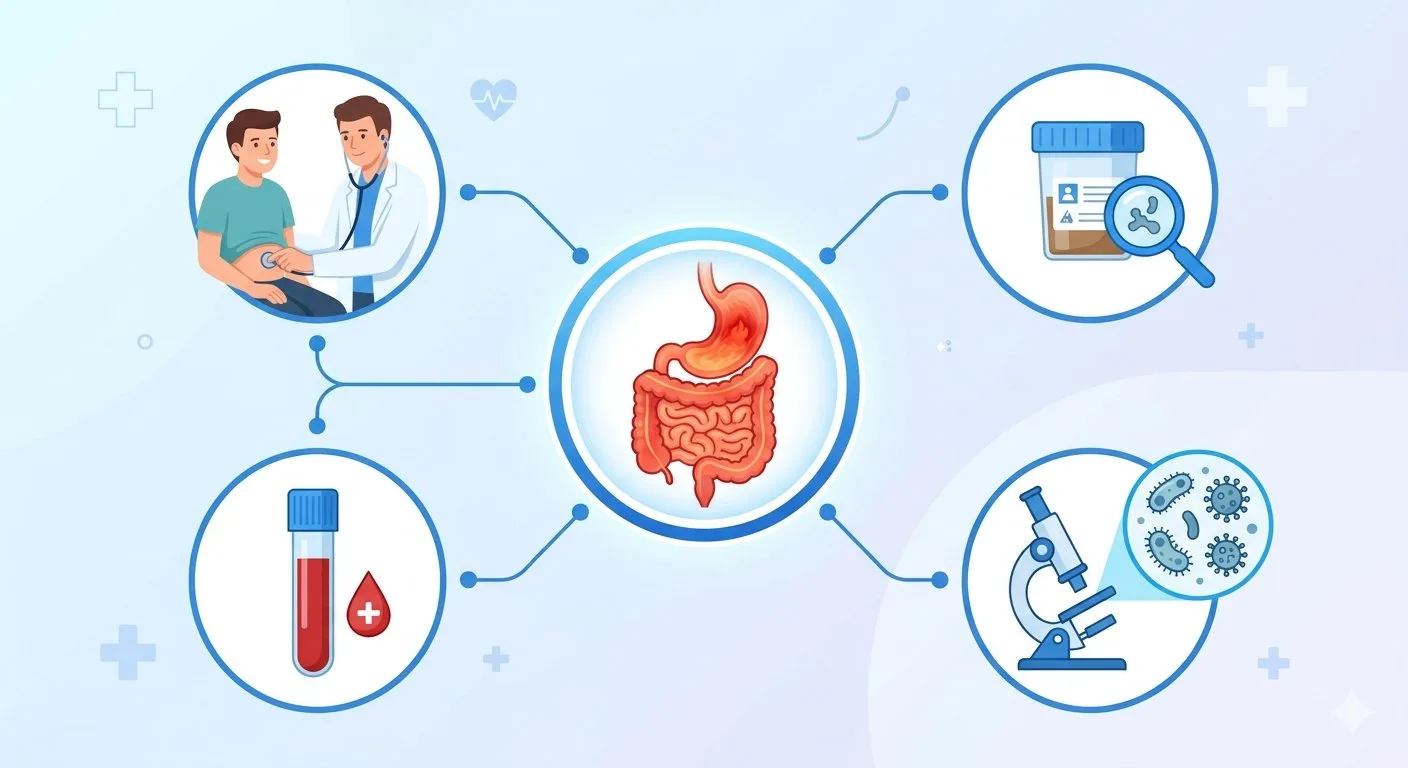
Many mild cases can be assessed from the history and physical examination without laboratory tests. The clinician focuses on symptom duration, severity, hydration, exposure history and signs that suggest another diagnosis.
Questions a doctor may ask
When did diarrhoea or vomiting begin?
How many loose stools or vomiting episodes have occurred in the last 24 hours?
Is there fever, blood, mucus or black stool?
Can the patient drink and keep fluids down?
How often is the patient passing urine?
Did other people who shared food become ill?
Has there been recent travel, unsafe water exposure, antibiotic use or hospitalisation?
Does the patient have pregnancy possibility, diabetes, kidney disease or weakened immunity?
Physical examination
The clinician may check temperature, pulse, blood pressure, breathing, hydration and abdominal tenderness. In children, weight, feeding, alertness and wet nappies are particularly useful indicators.
When are tests needed?
Stool tests may be considered when diarrhoea is bloody, severe, persistent, associated with high fever, follows travel or occurs after antibiotics or hospitalisation. Tests may also be useful during suspected outbreaks or in people with weakened immunity.
Blood tests may assess electrolytes, kidney function, blood count and other indicators when dehydration or systemic illness is suspected. Imaging may be required if the examination suggests appendicitis, obstruction, gallbladder disease or another abdominal condition. Not every person with uncomplicated diarrhoea needs stool testing or a scan.
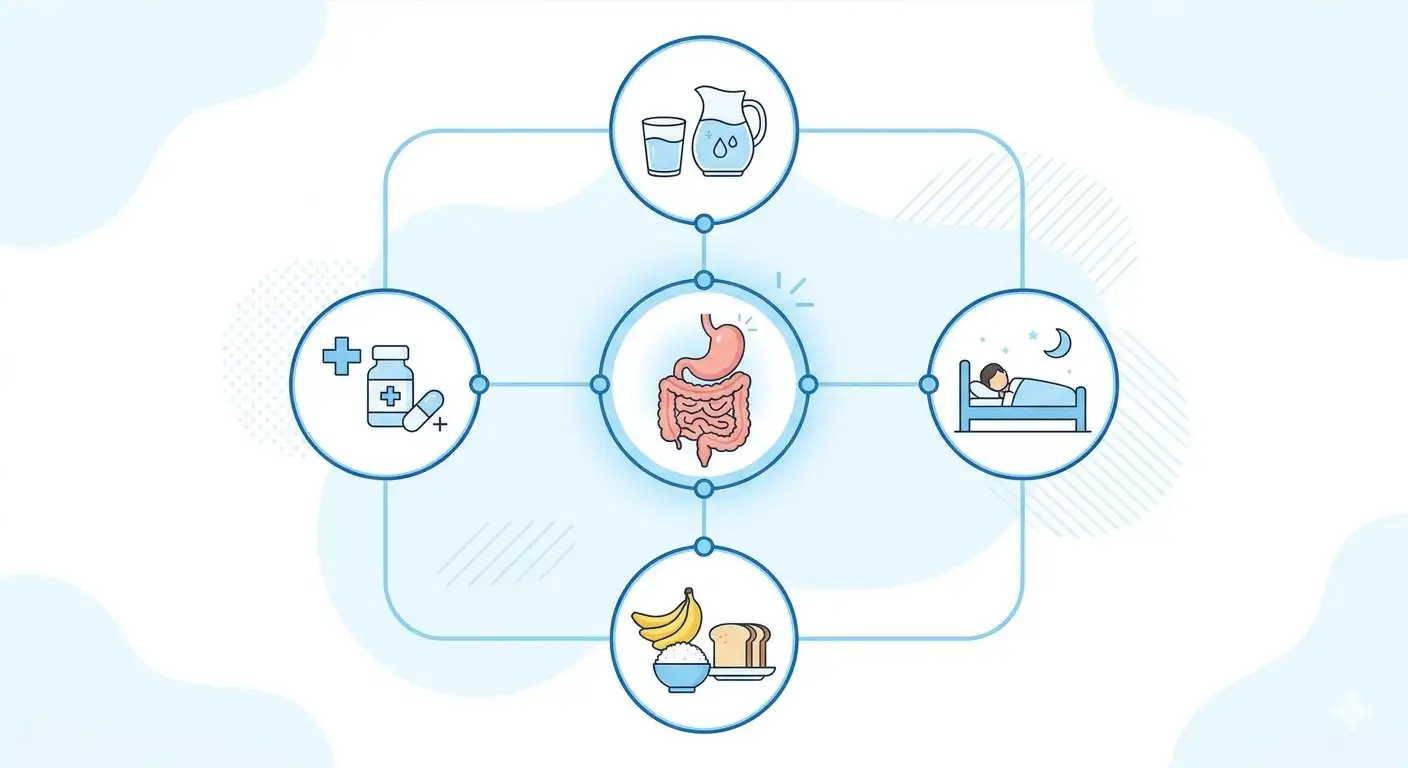
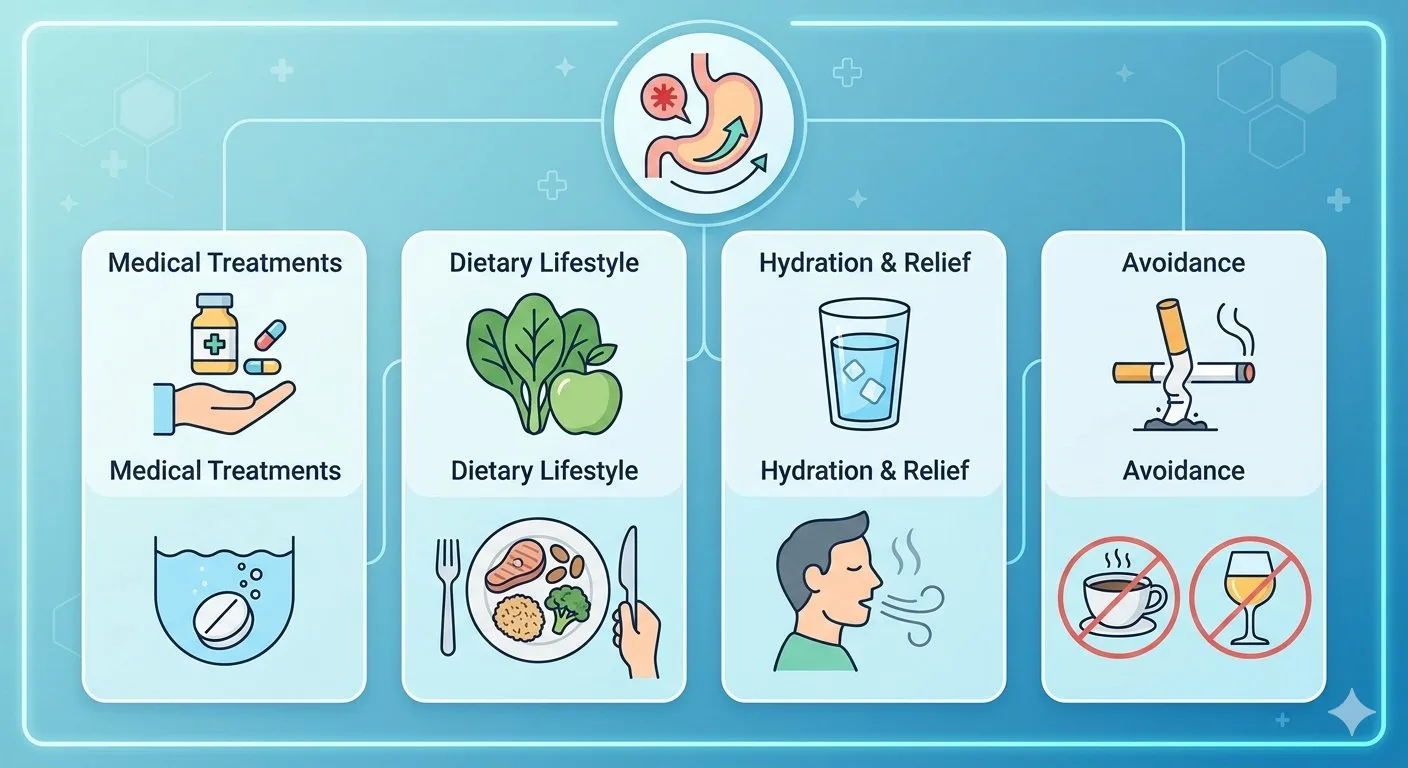
15. What to do when gastroenteritis symptoms begin
Replace fluid and salts
Use a suitable oral rehydration solution (ORS) when diarrhoea or vomiting is causing fluid loss. Prepare packaged ORS exactly according to the instructions, using the specified quantity of safe water. Do not make it more concentrated or dilute than directed. Take small, frequent sips if nausea is present.
Continue feeding as tolerated
Resume ordinary age-appropriate food when appetite returns. Prolonged fasting or an unnecessarily restrictive diet is generally not recommended. Continue breastfeeding during a child’s illness. Formula should be prepared at its normal strength unless a clinician advises otherwise.
Use medicines carefully
Antibiotics do not treat viral gastroenteritis and are not needed for every bacterial infection. Some diarrhoea-stopping medicines are unsuitable for children and for people with fever or bloody stools. Ask a clinician or pharmacist before using them, and do not give anti-diarrhoeal medicines to young children unless specifically advised.
Reduce spread to others
Wash hands thoroughly with soap and water after using the toilet or changing nappies and before preparing food.
Clean and disinfect surfaces contaminated by vomit or stool using an appropriate product according to its label.
Avoid preparing food for other people while ill.
Do not share towels, and wash contaminated clothing or bedding carefully.
Follow local advice on returning to work, school or food handling; many public-health recommendations advise staying away until at least 48 hours after vomiting and diarrhoea have stopped.
16. When to seek medical attention
Seek emergency medical care now for collapse or fainting, confusion or inability to wake normally, severe or sudden abdominal pain, signs of shock, severe breathing difficulty, vomiting blood or material resembling coffee grounds, or green vomit in a child. Suspected poisoning also needs urgent professional advice.
Adults should seek prompt medical advice for
Blood, pus or black tarry stool.
High fever or severe abdominal or rectal pain.
Frequent vomiting or inability to keep fluids down.
Six or more loose stools in a day, or diarrhoea lasting more than two days.
Signs of dehydration such as very dark or reduced urine, dizziness or marked weakness.
Symptoms that are worsening or not improving with appropriate fluid replacement.
Pregnancy, older age, weakened immunity or significant underlying illness.
Children need prompt assessment for
Any signs of dehydration, including fewer wet nappies, dry mouth, no tears or sunken eyes.
Repeated vomiting, poor feeding or inability to retain fluids.
Blood in stool, severe abdominal pain or unusual drowsiness.
Fever in an infant, especially a very young baby.
Diarrhoea lasting more than a day in a young child, or any deterioration.
These are general safety thresholds. A person who appears seriously unwell should be assessed immediately rather than waiting for a particular number of hours or stools.
17. Frequently asked questions about gastroenteritis symptoms
What are the first symptoms of gastroenteritis?
Early symptoms often include nausea, abdominal discomfort or cramps, followed by vomiting and/or watery diarrhoea. The order varies; some people develop diarrhoea first, while others begin with vomiting.
Can gastroenteritis occur without vomiting?
Yes. Some people have diarrhoea and abdominal cramps without vomiting. Others experience nausea but do not actually vomit.
Can gastroenteritis occur without diarrhoea?
Vomiting and nausea may be prominent early in an illness, and diarrhoea may appear later or be mild. However, persistent vomiting without diarrhoea can have causes other than gastroenteritis and may need assessment.
Is fever always present in gastroenteritis?
No. Fever may occur, but many people with viral gastroenteritis have no fever or only a mild temperature rise. A high or persistent fever, especially with blood in stool or severe pain, needs medical assessment.
How many times a day can a person pass stool with gastroenteritis?
The frequency varies considerably. Some people pass a few loose stools, while others have frequent watery bowel movements. The person’s hydration, general condition and warning signs are more important than the number alone.
How long do gastroenteritis symptoms last?
Many short-lived viral illnesses improve within a few days. Norovirus commonly lasts one to three days, while diarrhoea from other causes may continue for several days or around a week. Persistent, severe or worsening symptoms need medical advice.
Are body aches and headache symptoms of gastroenteritis?
They can occur, particularly with viral infections or dehydration. Severe headache, stiff neck, confusion or unusual drowsiness should not be assumed to be routine gastroenteritis.
Does yellow watery stool mean gastroenteritis?
Not necessarily. Rapid movement through the intestine can change stool colour, but colour alone cannot identify the cause. Persistent pale, greasy, bloody or black stool needs medical assessment.
What are the signs of dehydration in gastroenteritis?
Common signs include thirst, dry mouth, dark or reduced urine, dizziness and tiredness. In children, look for fewer wet nappies, no tears, sunken eyes, dry mouth and unusual sleepiness or irritability.
When should I go to hospital for gastroenteritis?
Seek emergency care for collapse, confusion, severe abdominal pain, shock, blood or coffee-ground-like vomit, or severe dehydration. Prompt medical assessment is also needed for bloody stool, inability to keep fluids down, high fever or symptoms in high-risk patients.
Can gastroenteritis symptoms come and go?
Cramping and nausea may fluctuate, and diarrhoea may occur in episodes. However, recurrent symptoms over weeks or repeated episodes should be assessed for other causes such as IBS, IBD, food intolerance or persistent infection.
Can a person spread gastroenteritis after symptoms stop?
Yes. Some organisms, including norovirus, may continue to be shed after a person feels better. Careful handwashing and food hygiene remain important after recovery. Follow workplace and local public-health advice about returning to food handling or group settings.
Are antibiotics required for gastroenteritis?
No. Many cases are viral and antibiotics do not work against viruses. Antibiotics are appropriate only for selected bacterial infections or specific clinical circumstances, based on medical assessment.
18. Summary and conclusion
The main gastroenteritis symptoms are watery diarrhoea, nausea, vomiting and abdominal cramps. Fever, headache, body aches, loss of appetite and fatigue may also occur. The pattern and severity vary according to the cause and the person’s age and general health.
Dehydration is the most important complication to recognise. Thirst, dry mouth, dark or reduced urine and dizziness are warning signs; confusion, collapse, severe drowsiness or inability to drink require emergency care. Infants, young children, older adults and people with weakened immunity or chronic illness need particular attention.
Most uncomplicated cases improve with appropriate fluid replacement and supportive care. However, blood in the stool, severe or localised abdominal pain, high fever, repeated vomiting or persistent symptoms may indicate a more serious infection or a different diagnosis. Do not rely on symptoms alone to identify the cause. Seek medical advice when warning signs occur, and use ORS correctly to replace fluid and electrolyte losses.
This article is intended for general educational and informational purposes only. It does not replace an individual medical consultation, diagnosis or treatment plan. Diarrhoea, vomiting and abdominal pain can have causes other than gastroenteritis, including conditions that require urgent treatment.
Seek medical advice for blood in the stool, severe or localised abdominal pain, high fever, persistent vomiting, dehydration, prolonged symptoms or illness in an infant, older adult or person with weakened immunity. Seek emergency care for collapse, confusion, severe dehydration, severe sudden pain or other emergency warning signs.
Do not start antibiotics or anti-diarrhoeal medicines without appropriate medical advice. Prepare ORS exactly as directed on the packet.