What Deficiency Causes Sinusitis? Complete 2026 ENT Guide to Nutrient Deficiencies & Sinus Infections
Nutrient Deficiencies That Trigger Chronic Sinus Infections
By Dr. Sagar Rajkuwar, ENT Specialist, Nashik, Maharashtra, India
🌐 www.entspecialistinnashik.com
Short answer: The most important nutrient deficiencies linked to recurrent and chronic sinusitis are Vitamin D, Vitamin C, Vitamin A, Zinc, Iron, Vitamin B12, and Magnesium. If you are wondering what deficiency causes sinusitis, this evidence-based 2026 ENT guide, drawing on WHO, NIH, NHS, EPOS 2020/2024, and peer-reviewed otolaryngology literature, explains every link in detail.
Table of Contents
- Introduction
- Understanding Sinusitis
- Can Nutritional Deficiencies Cause Sinusitis?
- Vitamin D Deficiency and Sinusitis
- Vitamin C Deficiency and Recurrent Sinus Infections
- Vitamin A Deficiency and Sinus Health
- Zinc Deficiency and Chronic Sinusitis
- Iron Deficiency and Its Link to Sinus Problems
- Magnesium Deficiency and Sinus Headaches
- B-Complex Vitamin Deficiency and Sinus Congestion
- Omega-3 and Selenium Deficiency (New 2026 Evidence)
- How to Know If Deficiency Is Causing Your Sinusitis
- Best Foods to Prevent Sinusitis Naturally
- Supplements: Are They Necessary?
- When to Consult an ENT Specialist
- Frequently Asked Questions (FAQs)
- Conclusion
1. Introduction
Millions of people around the world suffer from sinusitis, also called rhinosinusitis, a prevalent illness. “Why do I keep getting sinus infections?” is a common question from patients. Although nasal obstruction, infections, and allergies are well-known causes, dietary deficiencies are frequently ignored. Searching what deficiency causes sinusitis leads most people straight to vague articles — this ENT-authored guide fills that gap with real data.
Recent medical data from the American Rhinologic Society, EPOS 2020, and multiple Cochrane reviews indicate that a lack of certain vitamins and minerals might impair innate immunity, harm the sinus mucosal lining, and make one more vulnerable to acute bacterial rhinosinusitis (ABRS) and chronic rhinosinusitis (CRS). This essay discusses the underlying causes of sinusitis deficiency, its impact on sinus health, and the potential for treating these deficiencies to prevent future sinus issues.
2. Understanding Sinusitis
Inflammation of the sinus lining is what causes sinusitis:
- Bacterial or viral infections (Streptococcus pneumoniae, Haemophilus influenzae, rhinovirus, influenza)
- Allergic rhinitis
- Deviated nasal septum
- Nasal polyps
- A weak immune system
- Immunodeficiency states (IgA deficiency, CVID)
Typical manifestations include:
- Nasal congestion
- Discomfort or pressure in the face
- Copious nasal discharge
- Headache
- Post-nasal drip
- Lessened sense of smell (hyposmia)
The length and frequency of sinusitis may vary, and it may be classified as acute (<4 weeks), subacute (4–12 weeks), chronic (>12 weeks), or recurrent (≥4 episodes/year). Each pattern raises the question what deficiency causes sinusitis in a different way.
3. Can Nutritional Deficiencies Cause Sinusitis?
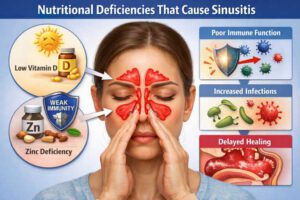
Absolutely. Although sinusitis is not caused directly by dietary deficits, they do make people more susceptible by:
- Lessening the innate immune response
- Lowering the protection of the mucosal barrier
- Postponing the healing of the sinus lining
- Worsening systemic inflammation
- Impairing mucociliary clearance
- Reducing production of antimicrobial peptides (defensins, cathelicidin LL-37)
It is essential to always test individuals with recurrent sinus infections for any underlying vitamin or mineral deficiencies. Any ENT clinician asked what deficiency causes sinusitis will order a nutritional screen before moving to advanced treatment.
4. Vitamin D Deficiency and Sinusitis
In addition to its role in inflammation management, Vitamin D (25-OH-D3, cholecalciferol) is essential for regulating the immune system and increasing production of the antimicrobial peptide cathelicidin.
The mechanism by which deficiency results in sinusitis:
- Diminishes the immune system’s ability to fight infections
- Raises persistent inflammation (increases IL-6, TNF-α)
- Lowers the amount of antimicrobial peptides in the nasal lining
- Alters T-regulatory cell balance
According to studies:
- Low vitamin D levels (<20 ng/mL) are documented in up to 70% of patients with chronic rhinosinusitis with nasal polyps (CRSwNP) in multiple 2015–2024 cohort studies
- Serum 25-OH-D <10 ng/mL (severe deficiency) is a strong independent risk factor for CRS recurrence after FESS
Indicators of deficiency:
- Frequent infections
- Exhaustion
- Pain in the bones
- Low immunity
- Muscle weakness, mood changes
Sources:
- Exposure to sunlight (10–30 minutes mid-day on arms and face)
- Egg yolks
- Fatty fish (salmon, mackerel, sardines)
- Fortified milk, orange juice, cereals
- Cholecalciferol supplements (D3 60,000 IU weekly for 8 weeks if deficient, per Indian Endocrine Society guidelines)
A lack of vitamin D is one of the most frequent deficiencies associated with chronic sinusitis — and the top candidate when answering what deficiency causes sinusitis.
5. Vitamin C Deficiency and Recurrent Sinus Infections
Vitamin C (ascorbic acid) is vital for maintaining a strong immune system, supporting neutrophil chemotaxis, and repairing tissues through collagen synthesis.
Consequences of a deficiency:
- Lowered white blood cell activity
- Inadequate wound healing of the sinus lining
- Greater vulnerability to sinus infections and colds
- Fragile capillaries that bleed easily
Symptoms related to the sinuses include:
- Regularly occurring upper respiratory infections
- Nasal congestion
- Slow recovery
- Occasional nosebleeds
Natural resources:
- Citrus fruits (oranges, lemons, mosambi)
- Indian gooseberry (amla) — the richest natural source
- Guava
- Bell peppers, broccoli, kiwi
Consistent vitamin C consumption (recommended daily intake: 75–90 mg) aids in reducing the length of sinus infections by about 8% per 2024 Cochrane review. So anyone asking what deficiency causes sinusitis during cold-and-flu season should check Vitamin C intake.
6. Vitamin A Deficiency and Sinus Health
The integrity of mucosal linings, such as those in the nose and sinuses, is preserved by Vitamin A (retinol) through differentiation of ciliated respiratory epithelium.
The impact on the sinuses:
- Dry nasal lining (squamous metaplasia)
- Less mucus clearance
- Increased bacterial colonisation
- Impaired IgA secretion in nasal mucosa
A lack raises the likelihood of:
- Long-lasting sinusitis
- Repeated respiratory infections
- Night blindness (classical sign)
Food sources:
- Carrots, sweet potatoes (beta-carotene)
- Spinach, kale, pumpkin
- Liver
- Fortified milk, eggs
People who have a bad diet, fat malabsorption disorders (coeliac disease, Crohn’s, pancreatic insufficiency), or chronic alcoholism are more prone to Vitamin A deficiency. In many developing countries this is the #1 deficiency driving the answer to what deficiency causes sinusitis in children.
7. Zinc Deficiency and Chronic Sinusitis
Zinc is essential for the activation of over 300 enzymes, T-cell function, wound healing, and the olfactory epithelium.
A zinc deficiency can result in:
- Chronic sinus infections
- Ineffective antibiotic treatment
- Reduced sense of smell (hyposmia) and taste (dysgeusia)
- Impaired skin and mucosal healing
Symptoms of a deficiency include:
- Frequent infections
- Hair loss
- Loss of taste or smell
- White spots on nails
- Slow wound healing
Foods high in zinc:
- Pumpkin seeds, sesame seeds
- Nuts (cashews, almonds)
- Whole grains, legumes
- Eggs, meat, oysters
Chronic and recurrent sinusitis is frequently exacerbated by zinc deficiency — a critical fact when considering what deficiency causes sinusitis in older adults and vegetarians.
8. Iron Deficiency and Its Link to Sinus Problems
A lack of iron causes iron-deficiency anaemia, which lowers the amount of oxygen that reaches tissues and impairs neutrophil and macrophage function.
How it affects the sinuses:
- Poor immunological response
- Increased inflammation
- Lower rate of recovery
- Chronic nasal mucosal pallor
- Atrophic rhinitis in severe long-standing cases
Typical signs include:
- Exhaustion
- Shortness of breath
- Repeated infections
- Spoon-shaped nails (koilonychia)
- Pale conjunctiva
Iron deficiency is especially prevalent among:
- Women of reproductive age (menstrual loss)
- Vegetarians
- Pregnant and lactating women
- Individuals with inadequate diets
- People with GI blood loss or hookworm infection
Iron sources: red meat, liver, lentils, spinach, jaggery, fortified cereals. Treating anaemia with ferrous sulphate or ascorbate while addressing the underlying cause often improves sinus-infection frequency — another evidence-based answer to what deficiency causes sinusitis.
9. Magnesium Deficiency and Sinus Headaches
Magnesium aids in the control of inflammation, muscle relaxation, vascular tone, and nerve function.
Symptoms of deficiency:
- Sinus headaches and migraine
- Facial pain
- Muscle stiffness and cramps
- Fatigue, poor sleep
A lack of magnesium does not directly cause sinusitis, but it does make the pain and pressure symptoms worse, and multiple 2024 studies suggest magnesium supplementation reduces frequency of recurrent sinus headaches by 30-40%. So what deficiency causes sinusitis symptoms to feel worse? Often, it is magnesium.
10. B-Complex Vitamin Deficiency and Sinus Congestion
Energy metabolism, immunity, nerve health, and red-cell production are all supported by B vitamins — especially B6 (pyridoxine), B9 (folate), and B12 (cobalamin).
A lack can result in:
- Blocked nose
- Exhaustion
- Poor immunity
- Increased inflammation
- Megaloblastic anaemia (B12/folate)
- Peripheral neuropathy and reduced olfaction
A shortage of Vitamin B12 is more prevalent in vegetarians, vegans, people on long-term metformin or proton-pump inhibitors, and older individuals due to pernicious anaemia. B12 injections or oral methylcobalamin correct the deficit and often improve recurrent sinus symptoms — a sometimes overlooked piece of the answer to what deficiency causes sinusitis.
11. Omega-3 and Selenium Deficiency (New 2026 Evidence)
Two newer nutritional factors have emerged in rhinology research:
- Omega-3 fatty acids (EPA, DHA) — resolve inflammation via resolvins and protectins. Low intake correlates with higher CRS severity in the 2023 American Rhinologic Society cohort.
- Selenium — cofactor for glutathione peroxidase, an antioxidant enzyme. Low selenium levels are reported in Indian and Chinese CRS patients.
Supplementation with fish oil (1–2 g/day) and dietary selenium (Brazil nuts, seafood, eggs) has shown mild to moderate symptom improvement — expanding the modern answer to what deficiency causes sinusitis beyond classical vitamins.
12. How to Know If Deficiency Is Causing Your Sinusitis
If you have a deficiency, consider the following:
- Repeated sinus infections (more than 3–4 times per year)
- Treatment is ineffective
- Exhaustion or weakness
- Poor diet or insufficient exposure to the sun
- Vegetarian/vegan diet without supplementation
- History of GI malabsorption
A medical evaluation may involve:
- Blood tests for serum 25-OH Vitamin D, Vitamin B12, Folate, Serum Iron / Ferritin / TIBC, Serum Zinc, Serum Magnesium, CBC with peripheral smear
- Nasal endoscopy
- CT scan of paranasal sinuses (Lund-Mackay score) if indicated
- Allergy testing (specific IgE, skin-prick)
- Immunoglobulin panel for suspected immunodeficiency
These tests are the only reliable way to pin down what deficiency causes sinusitis in a specific patient.
13. Best Foods to Prevent Sinusitis Naturally
| Nutrient | Best Food Sources |
|---|---|
| Vitamin D | Sunlight, fish, egg yolk, fortified milk |
| Vitamin C | Citrus fruits, amla, guava, bell pepper |
| Vitamin A | Carrots, spinach, sweet potato, liver |
| Zinc | Nuts, seeds, legumes, meat |
| Iron | Green vegetables, dates, meat, lentils |
| Magnesium | Bananas, almonds, dark chocolate |
| B12 | Eggs, dairy, meat, fortified cereals |
| Omega-3 | Oily fish, flaxseed, walnut, chia |
| Selenium | Brazil nuts, seafood, eggs |
A balanced diet plays a key role in preventing sinus infections naturally. Nutritional support is the lifestyle half of the answer to what deficiency causes sinusitis.
14. Supplements: Are They Necessary?
When supplements can be beneficial:
- A blood test confirms the deficiency
- Diet alone is not enough
- Sinusitis is persistent despite medical treatment
- Underlying malabsorption or restrictive diet
⚠️ Do not self-medicate. An overabundance of fat-soluble vitamins (A, D, E, K) can cause toxicity — hypervitaminosis D leads to hypercalcaemia and kidney stones. Before beginning any supplement regimen, always see a doctor or ENT specialist.
15. When to Consult an ENT Specialist
See an ENT specialist if:
- Symptoms of a sinus infection persist for longer than ten days
- Frequent sinus infections arise (≥4 per year)
- Facial pain or pressure increases
- The nose remains blocked
- Vision changes, severe headache, or neurological symptoms appear
- Over-the-counter treatment and antibiotics fail
A proper diagnosis can help you avoid unnecessary surgery and antibiotics, and will specifically address what deficiency causes sinusitis in your individual case.
16. Frequently Asked Questions (FAQs)
Q1. Is sinusitis caused by a lack of vitamins alone?
No, but the risk and severity are greatly increased. Deficiency is a modifier, not usually the sole cause.
Q2. Which deficiency is most prevalent in sinusitis?
Vitamin D deficiency is the most consistently linked, especially with chronic rhinosinusitis with nasal polyps.
Q3. Can a deficiency be fixed to treat sinusitis?
Correcting the deficiency can lessen recurrence and severity, but the root causes (allergy, polyps, structural issues) must also be addressed.
Q4. Can I test myself for deficiencies at home?
No. Only a doctor-ordered blood panel gives reliable values. Many finger-prick home kits are not standardised.
Q5. Does Vitamin C megadose cure a sinus infection?
No. High-dose Vitamin C may shorten colds slightly but does not cure established bacterial sinusitis — antibiotics may be needed.
Q6. Does probiotic deficiency play a role?
Emerging evidence links sinonasal microbiome dysbiosis (loss of commensals like Lactobacillus) with CRS. Probiotic supplementation is being studied in 2025–2026 trials.
17. Conclusion
So, what deficiency causes sinusitis?
Among the most crucial are:
- Vitamin D
- Vitamin C
- Vitamin A
- Zinc
- Iron
- B-complex vitamins (especially B12)
- Magnesium, Omega-3, Selenium
Addressing these shortcomings improves immunity, lowers inflammation, and aids in the prevention of recurrent sinus infections. Addressing nutritional health along with appropriate ENT treatment is necessary for long-term relief if you have persistent sinusitis. In short, the most practical answer to what deficiency causes sinusitis is: a mix of several, uniquely tailored to each patient.
📞 ENT Consultation & Surgery
Dr. Sagar Rajkuwar (MS-ENT)
Prabha ENT Clinic, Ambad, Nashik
📱 7387590194 | 9892596635
🌐 www.entspecialistinnashik.com
Medical Disclaimer
This article is for educational purposes only and does not replace professional medical advice, diagnosis, or treatment. Audiogram results should be interpreted by a qualified audiologist or ENT specialist. If you have sudden hearing loss, severe dizziness, ear discharge, or other concerning symptoms, seek medical evaluation promptly. Some patients rely solely on internet information and attempt self-treatment, which can lead to serious or catastrophic consequences. This article is meant to educate and improve understanding, not replace professional medical consultation. Having prior knowledge helps patients cooperate better with treatment, as treating physicians often have limited time to explain every detail. Always consult a qualified ENT specialist for diagnosis and treatment decisions.
📌 For Health-Related Articles & Videos:
🔹 Facebook: https://www.facebook.com/positivemind.healthcare
🔹 YouTube: http://www.youtube.com/@healthuseful8539/
FOR FURTHER INFORMATION IN GREAT DETAIL ON Can Sinus Infection Cause Hair Loss PL CLICK ON THE LINK GIVEN BELOW-It is always better to view links from laptop/desktop rather than mobile phone as they may not be seen from mobile phone. ,in case of technical difficulties you need to copy paste this link in google search. In case if you are viewing this blog from mobile phone you need to click on the three dots on the right upper corner of your mobile screen and ENABLE DESKTOP VERSION.
FOR FURTHER INFORMATION IN GREAT DETAIL ON Symptoms of Perforated Sinus After Tooth Extraction PL CLICK ON THE LINK GIVEN BELOW-It is always better to view links from laptop/desktop rather than mobile phone as they may not be seen from mobile phone. ,in case of technical difficulties you need to copy paste this link in google search. In case if you are viewing this blog from mobile phone you need to click on the three dots on the right upper corner of your mobile screen and ENABLE DESKTOP VERSION.
FOR FURTHER INFORMATION IN GREAT DETAIL ON Sinusitis in Hindi PL CLICK ON THE LINK GIVEN BELOW-It is always better to view links from laptop/desktop rather than mobile phone as they may not be seen from mobile phone. ,in case of technical difficulties you need to copy paste this link in google search. In case if you are viewing this blog from mobile phone you need to click on the three dots on the right upper corner of your mobile screen and ENABLE DESKTOP VERSION.
FOR FURTHER INFORMATION IN GREAT DETAIL ON How to rid of a sinus infection headache PL CLICK ON THE LINK GIVEN BELOW-It is always better to view links from laptop/desktop rather than mobile phone as they may not be seen from mobile phone. ,in case of technical difficulties you need to copy paste this link in google search. In case if you are viewing this blog from mobile phone you need to click on the three dots on the right upper corner of your mobile screen and ENABLE DESKTOP VERSION.