SMR vs Septoplasty: Key Differences, Benefits, Risks & Recovery

SMR vs Septoplasty: Key Differences, Benefits, Risks & Recovery

by

Difference Between SMR and Septoplasty: ENT Expert Guide for Patients

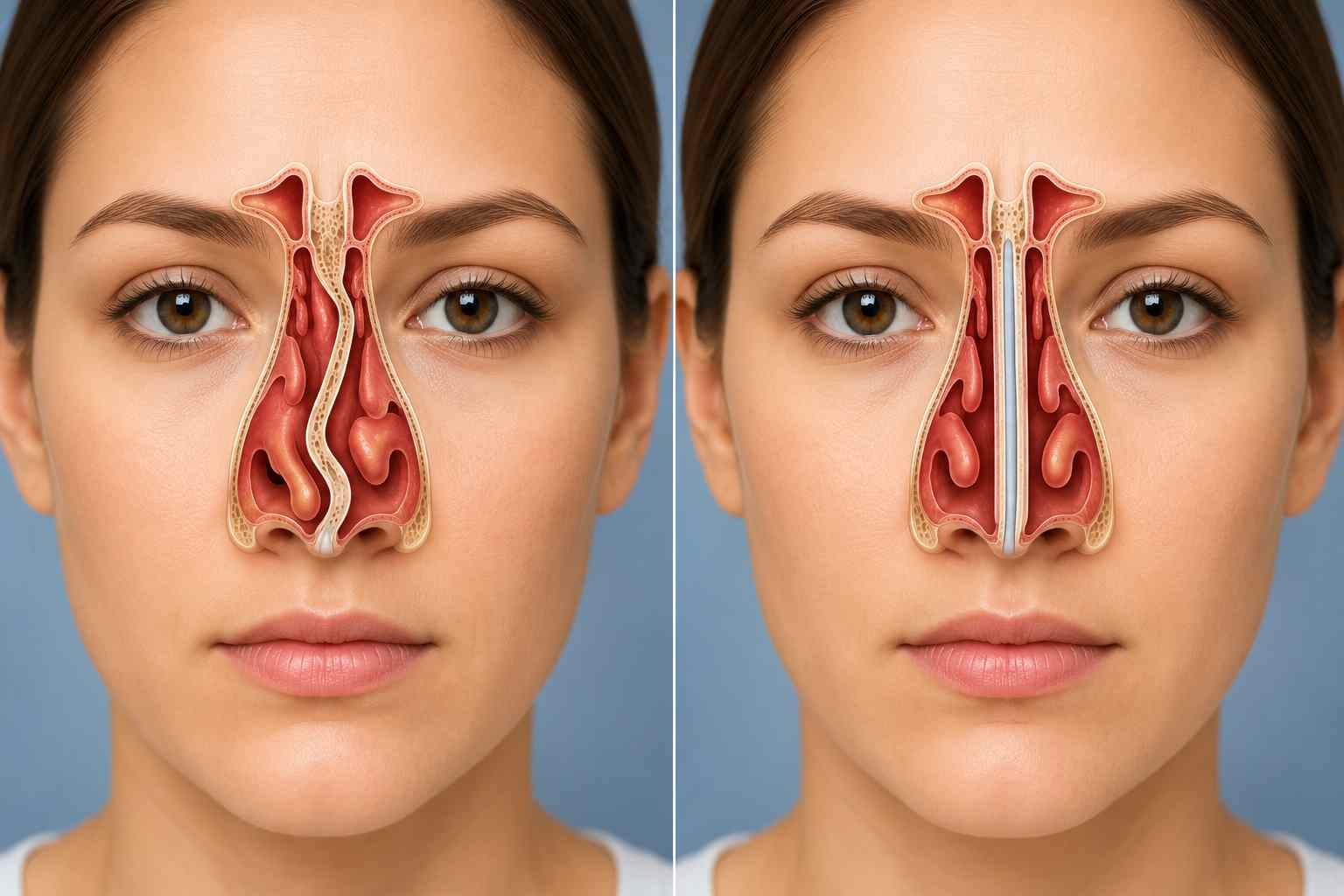
What’s the difference between septoplasty and SMR? Septoplasty and Submucous Resection (SMR) are surgical procedures used to repair a deviated nasal septum and enhance nasal airflow. Modern septoplasty concentrates on preserving or rebuilding vital structural support while correcting the deviation, whereas classic SMR removes a larger portion of the deviated septal bone and cartilage while retaining the mucosal lining. This is the primary distinction.

Today, the preferred nomenclature and approach for the majority of individuals with symptomatic deviated nasal septum is generally septoplasty, however SMR principles may still be employed as part of septal surgery in certain cases.

Author: Dr. Sagar Rajkuwar, MS-ENT
ENT Specialist, Nashik, Maharashtra, India

Clinic: Prabha ENT Clinic, Ambad, Nashik

Website: 🌐 www.entspecialistinnashik.com
 

SMR vs Septoplasty: Key Differences, Benefits, Risks & Recovery


Quick Answer: SMR vs Septoplasty

Feature

SMR

Septoplasty

Full name
Submucous Resection
Septoplasty
Main purpose
Correct septal deviation by removing selected deviated portions
Straighten and reconstruct the deviated septum
Tissue removal
Traditionally more extensive
Usually more conservative and targeted
Structural preservation
Important, but traditional techniques removed more cartilage
Strong emphasis on preserving structural support
Mucosal lining
Preserved
Preserved and repositioned
Modern use
Less commonly used as a standalone traditional operation
Common contemporary approach
Children
Not automatically excluded, but age and facial growth matter
Selected children may undergo septoplasty when clinically necessary
Main goal
Improve nasal airway
Improve nasal airway while maintaining septal stability


The terminology can overlap because contemporary septoplasty developed from earlier SMR techniques. Therefore, the exact operation matters more than the name alone.


Which operation is best for you?

For routine deviated septum cases, modern ENT experts highly advise Septoplasty over standard SMR. The “L-strut” is the supporting framework for the nose, and it helps maintain its natural structural shape and reduce the long-term risk of septal perforation or nasal collapse.

Today, less than ideal since cartilage is removed in its entirety. While SMR has historically been essential for clearing nasal obstruction. At present, SMR is mostly utilized in certain circumstances, such as harvesting septal cartilage grafts or gaining surgical entrance to other deeper sinus sections.

The initial stage in successful treatment is determining the underlying source of nasal blockage.

If you are considering surgical choices, please inform me:

  • Are you experiencing nosebleeds, nasal blockages, or persistent sinus pressure?
  • Roughly how old are you?

I’ll be able to offer more focused advice on what to anticipate from the consultation and recovery.


📌 Table of Contents

  1. What Is Submucous Resection (SMR)?

  2. What Is Septoplasty?

  3. Septoplasty vs. SMR: Key Discrepancies

  4. In many cases, why did septoplasty replace traditional SMR?

  5. What Happens During Septoplasty?

  6. What Happens During SMR?

  7. Can Children Have Septoplasty?

  8. Risks and Complications

  9. Recovery After Septoplasty or SMR

  10. Septoplasty vs Sinus Surgery

  11. When Is SMR or Septoplasty Recommended?

  12. Cost of SMR and Septoplasty in India

  13. Frequently Asked Questions

  14. Conclusion

  15. Medical Disclaimer


1️⃣ What Is Submucous Resection (SMR)?

https://www.westsidehn.com/wp-content/uploads/2020/12/Septoplasty_Stop_Snoring-fi11694921.jpg

For the treatment of a deviated nasal septum, submucous resection (SMR) is a dated surgical procedure.

In classic SMR, the surgeon elevates the mucosal covering of the septum, then removes specific parts of the deviated cartilage and bone while leaving the mucosal flaps alone.

In terms of septal surgery, the procedure was a historically significant advance. Yet, the advent of more conservative septoplasty methods was spurred by worries regarding too much cartilage removal, left-over deformity, septal perforation, and a lack of structural support.

What is the goal of SMR?

The goal is to:

  • Remove any parts of the deviated septum that are blocking the airway.
  • Enhance nasal airflow
  • Reduce nasal blockage
  • Keep the mucosa intact.
  • Maintain adequate septal support that is still present

Crucially, SMR should not be interpreted as merely taking away all aberrant cartilage. The structural support must be maintained.


2️⃣ What Is Septoplasty?

https://carolinafacialplasticsurgery.com/wp-content/uploads/2024/09/carolina-facial-plastics-kulbersh-charlotte-rhinoplasty-septorhinoplasty5-scaled-1.jpg

Deviated nasal septum is corrected with septoplasty.

Bone and cartilage make up the nasal septum, which splits the nasal cavity into right and left halves. When the septum is significantly deviated, it may interfere with breathing and reduce one or both nasal passages.

The surgeon may: during septoplasty

  • Realign misaligned cartilage
  • Remove some of the cartilage or bones.
  • Reshape abnormal areas
  • Maintain vital structural support.
  • Reinforce the septum if needed
  • Change the position of the mucosal lining.

Removing tissue is not the sole objective. The objective is to establish a septum that is more straight and functionally stable while maintaining the nose’s structural framework.

Similar to this: What is Septoplasty?

https://healthuseful.com/what-is-septoplasty-surgery/


3️⃣Septoplasty vs. SMR: Key Discrepancies

The surgical concept is the most significant distinction.

The mucosal lining was not intended to be removed by conventional SMR. In general, modern septoplasty uses a more focused approach that straightens the deviation while preserving as much of the functional septal architecture as possible.

SMR vs Septoplasty: Key Differences, Benefits, Risks & Recovery

1. How much cartilage was taken out?

A relatively big amount of crooked cartilage and bone may be eliminated with conventional SMR.

Septoplasty often only eliminates, reshapes, or repositions the areas required to resolve the obstruction.


2. Maintaining structural support

It is important in today’s septoplasty to keep the dorsal and caudal septal support, often referred to as the L-strut.

Nasal deformity or lack of tip support may result from the excessive removal of supporting cartilage.


3. The remediation of complex abnormalities

Using several techniques, modern septoplasty may correct posterior, anterior, bony, and cartilaginous abnormalities.

Instead of simple removal, complex or severe deformities may need reconstruction.


4. Terminology

Although there is a lot of overlap between septoplasty and SMR, these methods have conventionally been distinguished.

The difference isn’t always obvious since contemporary septoplasty originated from prior SMR techniques.


4️⃣In many cases, why did septoplasty replace traditional SMR?

Although traditional SMR was a significant historical operation, physicians quickly realized that removing an excessive amount of septal cartilage might impair the nose’s architecture.

As a result, septal surgery grew increasingly conservative.

The rule became:

When feasible, fix the blockage while maintaining the structural integrity.

Although surgical outcomes are highly dependent on patient selection and surgeon experience, older comparative studies revealed greater subjective outcomes and fewer problems with septoplasty than traditional septal resection.

Tissue preservation, structural stability, and functional correction are the main goals of modern septoplasty rather than just removing a lot of cartilage.


5️⃣What Happens During Septoplasty?

A septoplasty is often done via the nostrils, so there isn’t normally a noticeable outside scar.

Depending on where the deviation is located and how severe it is, the precise method differs.

Typical steps include the following:
  • Anesthesia is administered.
  • Inside the nose, a cut is performed.
  • The mucosal lining is meticulously elevated.
  • Cartilage and bone abnormalities are observed.
  • The aberrant sections are reshaped, relocated, or chosen for removal.
  • Reconstruction or preservation of structural support is carried out.
  • The repositioning of the mucosal lining occurs.
  • If necessary, splints or sutures can be utilized.

Even if complicated treatments can take longer, septoplasty usually takes between 30 and 90 minutes.


6️⃣ What Happens During SMR?

Additionally, traditional SMR is carried out via the nasal cavity.

The surgeon lifts the mucosal lining, which reveals the bone and cartilage underneath that is out of line with the septum.

Certain portions of the diverted septum are removed while the mucosal flaps and enough support are kept in place.

One historical incision utilized for submucous septal surgery is the Killian incision. However, contemporary septal surgery may employ various incisions depending on the degree and position of the deviation.

Thus, it’s erroneous to suppose that each SMR procedure employs the same incision or eliminates the same amount of tissue.


7️⃣Can Children Have Septoplasty?

It is a widespread belief that youngsters cannot undergo septoplasty.

Actually, the decision is based on a number of clinical considerations, including the child’s age, symptoms, degree of obstruction, facial growth, and history of trauma.

Doctors may occasionally wait until the nose has developed before performing septal surgery. However, when the benefits outweigh the potential hazards, certain children and adolescents with significant nasal blockage or other key indicators may have septal surgery.

As a result, there is:

Not only adults undergo septoplasty.

It’s also wrong to say that SMR is always forbidden below a certain age, say 17 years old. Individualized surgical choices should be made.


8️⃣Risks and Complications

Both septoplasty and SMR are surgical operations that might result in issues.

Possible complications include:

  • Bleeding.
  • infection
  • Hematoma of the septum
  • Perforated septum
  • Persistent blockage of the nasal passages
  • Crusting
  • A transient numbness
  • Reduced ability to smell
  • Scar tissue or adhesions
  • Deviation that is persistent or recurs.
  • Seldom change in nasal form

Loss of nasal support and exterior deformity are more likely to occur with excessive removal of structural septal cartilage. Preservation of important structural components is one reason why modern septal surgery focuses on it.


9️⃣Recovery After Septoplasty or SMR

The surgical method and the degree of correction will influence how long it takes for each individual to recover.

Temporary symptoms following septoplasty may include:

  • Obstruction of the nose
  • A little discomfort
  • Edema
  • blood-colored drainage
    Scabbing
  • A sensation of fullness or pressure

Although the initial recovery typically lasts one to two weeks, the cartilage and bone continue to mend more thoroughly for much longer.

General post-operative recommendations could be:
  • At first, refrain from blowing your nose too hard.
  • Regarding saline irrigation, follow your surgeon’s recommendations.
  • Until your surgeon says it’s okay, stay away from intense exercise.
  • Keep all planned follow-up appointments.
  • Until they are removed or dissolve as instructed, splints or packing should be left in place.

Recovery plans are different, so you should follow the instructions of your own surgeon.


🔟Septoplasty vs Sinus Surgery

Sinus surgery and septoplasty are two distinct procedures.

Septoplasty

A deviated nasal septum is corrected via septoplasty.

The principal aim of this procedure is to rectify the structural deviation in order to improve the nasal airway.

Surgery for sinuses

FESS/ESS is a procedure done to improve ventilation and drainage of blocked or diseased sinuses.

Both treatments are necessary for some patients.

For example, a patient may suffer from chronic sinus illness and a greatly deviated septum, which might make it difficult to access or worsen nasal obstruction.


1️⃣1️⃣When Is SMR or Septoplasty Recommended?

When a deviated septum causes serious symptoms that don’t respond well to medical care, surgery may be an option.

Possible symptoms are:

  • Ongoing nasal obstruction
  • Trouble breathing via the nose
  • Breathing via the mouth
  • Nasal blockage that results in snoring
  • breathing problems that are related to sleep
  • Frequent nosebleeds that are brought on by a deviation in the septum
  • A septal malformation that prevents access to other nasal or sinus operations

The American Academy of Otolaryngology-Head and Neck Surgery mentions recurrent nosebleeds connected to the deviation, nasal airway blockage, and specific surgical-access indications as situations in which septal surgery may be taken into consideration.

It is not always necessary to have surgery for a deviated septum. Many people experience no symptoms despite having a deviated septum.


1️⃣2️⃣Cost of SMR and Septoplasty in India

In India, the price of septal surgery varies greatly.

Possible factors include:

  • Hospital location
  • the surgeon’s experience
  • Kind of anesthetic
  • Technique of surgery
  • Hospital expenses
  • Diagnostic tests
  • imaging or nasal endoscopy
  • Other operations, such as sinus surgery or turbinate reduction,
  • Coverage for insurance

After evaluation and review, the exact expense should be debated.

Similar: Septoplasty Cost in India 

https://healthuseful.com/septoplasty-cost/


1️⃣3️⃣Frequently Asked Questions

Is septoplasty the same thing as SMR?

None. There is considerable overlap, but they are historically different methods. Modern septoplasty developed from older SMR procedures and usually focuses on structural support maintenance and targeted correction.


Which is superior, septoplasty or SMR?

No one surgery is ideal for all patients. Because it enables targeted correction while preserving vital structural support, modern septoplasty is frequently used for several symptomatic deviated septums.


Is SMR considered to be obsolete?

Modern septoplasty is utilized more frequently than traditional radical SMR as a standalone technique. Despite this, SMR principles are still historically and technically relevant, and the language may still be employed in clinical settings.


Is it possible for septoplasty to alter the nose’s form?

The main goal of conventional septoplasty is to enhance internal nasal function rather than to alter the outside appearance. However, reconstructive procedures might be necessary for sophisticated deformities or structural changes, and rhinoplasty can occasionally be used in conjunction with septoplasty.

Rhinoplasty vs Septoplasty: What’s the Difference?  https://healthuseful.com/septoplasty-vs-rhinoplasty/


Is it possible to have turbinate surgery along with septoplasty?

Yes. Turbinate reduction may be done in conjunction with septoplasty when clinically suitable if expanded turbinates also cause nasal obstruction.

Similar: Turbinoplasty vs Septoplasty  https://healthuseful.com/septoplasty-vs-turbinoplasty/


Is sinusitis treated with septoplasty?

It is not always the case. Correcting a structural septal deviation is accomplished by septoplasty. Among other anatomical factors, sinusitis can be brought on by infection, inflammation, allergies, and. Septoplasty shouldn’t be automatically advertised as a treatment for sinusitis, even if certain individuals may find combined therapy useful.


1️⃣4️⃣Conclusion

The main difference between septoplasty and SMR is the philosophy and surgical method utilized to repair a deviated nasal septum.

The submucous resection (SMR) procedure historically included removing specific areas of the deviated septal bone and cartilage under the intact mucosal lining. Contemporary septoplasty primarily concentrates on rectifying the deviation by maintaining crucial structural support and removing or reshaping only what is required.

Since current septoplasty evolved from previous SMR procedures, the two names may sometimes cross.

The most important issue for those who have severe nasal obstruction is not simply whether the operation is referred to as SMR or septoplasty. The major problems include:
  • Where is the septum deviated?
  • How awful is the block?
  • Is the deviation bony, cartilaginous, anterior, or posterior?
  • Is there also an enlargement of the turbinates?
  • Is there any concomitant sinus illness?
  • What amount of structural support needs to be kept?
  • Which surgical procedure is best for that person?

Therefore, a thorough ENT assessment is necessary before deciding on surgery.

Medical Disclaimer

This article is provided for general educational purposes and does not replace an examination, diagnosis or individualized treatment plan from a qualified ENT specialist. Surgical techniques, indications, risks and recovery can vary between patients. Do not choose or avoid surgery solely on the basis of information available online.

📞 ENT Consultation & Surgery

Dr. Sagar Rajkuwar (MS-ENT)
Prabha ENT Clinic, Ambad, Nashik

📱 7387590194 | 9892596635
🌐 www.entspecialistinnashik.com

For consultation, discuss your symptoms and examination findings with your ENT specialist before deciding between septoplasty, SMR or another nasal procedure.


Medical References

  1. Taha HI, et al. Septoplasty versus non-surgical management for deviated nasal septum: a systematic review and meta-analysis of randomized controlled trials. European Archives of Oto-Rhino-Laryngology. 2025;282:597–610.
  2. Abd Elhadi U, Safia A, Masalha M. Septoplasty Versus Non-Surgical Treatment for Deviated Nasal Septum: A Systematic Review and Meta-Analysis. Journal of Clinical Medicine. 2026;15(10):3930.
  3. Low WK, Willatt DJ. Submucous resection for deviated nasal septum: a critical appraisal. Singapore Medical Journal. 1992;33(6):617–619.
  4. Lajdam GB, et al. Septoplasty versus septoplasty with turbinate reduction for nasal obstruction due to deviated nasal septum: a systematic review and meta-analysis. Rhinology. 2022;60(6):411–420.
  5. Endoscopic septoplasty versus conventional septoplasty for nasal septum deviation: a systematic review and meta-analysis of randomized clinical trials. Medicine. 2023.
  6. Janipour M, Rezaei-Tazangi F. The State of the Art in Septoplasty: A Review of the Latest Achievements. 2026.


Related Articles (Internal Links)

Difference Between SMR And Septoplasty

https://healthuseful.com/difference-between-smr-and-septoplasty/


Pillar Topic: Septoplasty

  1. https://healthuseful.com/what-is-septoplasty-surgery/

Comparison

  1. https://healthuseful.com/septoplasty-vs-turbinoplasty/
  2. https://healthuseful.com/difference-between-smr-and-septoplasty/
  3. https://healthuseful.com/septoplasty-vs-rhinoplasty/

Cost & Access

  1. https://healthuseful.com/septoplasty-cost/
  2. https://healthuseful.com/free-septoplasty/
  3. https://healthuseful.com/septoplasty-near-me/

Results & Recovery

  1. https://healthuseful.com/septoplasty-before-and-after/


SINUSITIS SILO STRUCTURE (UNIQUE URLS)

1. PILLAR PAGE (1)

https://healthuseful.com/sinusitis/


2. SINUS INFECTION SYMPTOMS

https://healthuseful.com/sinusitis-headache-symptoms/

https://healthuseful.com/sinus-headache-symptoms/

https://healthuseful.com/sinusitis-on-pressure/

https://healthuseful.com/sinusitis-with-cough/

https://healthuseful.com/sinus-headache-location/

https://healthuseful.com/sinus-headache-back-of-head/

https://healthuseful.com/sinus-headache-symptoms-one-side/

https://healthuseful.com/sinus-headache-symptoms-right-side/

https://healthuseful.com/frontal-sinus-headache/

https://healthuseful.com/sinus-headache-without-congestion/

https://healthuseful.com/can-sinusitis-cause-vomiting/

https://healthuseful.com/can-a-sinus-infection-cause-eye-pain/

https://healthuseful.com/what-are-the-neurological-symptoms-of-sinusitis/

https://healthuseful.com/what-are-the-four-cardinal-signs-of-sinusitis/

https://healthuseful.com/what-is-a-red-flag-for-sinusitis/

https://healthuseful.com/how-do-you-know-if-a-sinus-infection-is-severe/

https://healthuseful.com/end-stages-of-a-sinus-infection/


3. CHRONIC SINUSITIS

https://healthuseful.com/top-10-causes-of-chronic-sinusitis-how-to-treat-them/

https://healthuseful.com/what-is-the-root-cause-of-chronic-sinusitis/

https://healthuseful.com/who-is-most-at-risk-for-sinusitis/

https://healthuseful.com/autoimmune-disease-associated-with-chronic-sinusitis/

https://healthuseful.com/can-gut-issues-cause-sinus-problems/

https://healthuseful.com/can-your-thyroid-cause-sinus-issues/

https://healthuseful.com/can-hormone-imbalance-cause-sinus-problems/

https://healthuseful.com/can-sinusitis-be-a-symptom-of-something-else/


4. SINUS HEADACHE

https://healthuseful.com/sinus-headache-treatment/

https://healthuseful.com/sinus-headache-tablet/

https://healthuseful.com/how-to-rid-of-a-sinus-infection-headache/

https://healthuseful.com/what-triggers-sinusitis-headaches/

https://healthuseful.com/how-long-does-a-sinus-headache-last/

https://healthuseful.com/why-am-i-suddenly-getting-sinus-headaches/

https://healthuseful.com/what-vitamin-deficiency-causes-sinus-headaches/

https://healthuseful.com/where-to-massage-head-for-sinus-headache/

https://healthuseful.com/fastest-way-to-relieve-a-sinus-migraine/

https://healthuseful.com/what-is-the-fastest-way-to-relieve-a-sinus-migraine/

https://healthuseful.com/sinus-headache-while-pregnant/


5. SINUS TREATMENT

https://healthuseful.com/how-to-get-rid-of-a-sinus-infection-in-24-hours/

https://healthuseful.com/how-to-get-rid-of-sinus-infection-without-antibiotics/

https://healthuseful.com/what-kills-a-sinus-infection-naturally/

https://healthuseful.com/what-is-the-strongest-natural-antibiotic-for-sinus-infection/

https://healthuseful.com/how-to-cure-sinus-permanently/

https://healthuseful.com/sinusitis-with-cough-treatment/

https://healthuseful.com/sinusitis-nasal-washing/

https://healthuseful.com/how-doctors-clear-sinuses/

https://healthuseful.com/how-do-doctors-drain-sinuses-without-surgery/

https://healthuseful.com/what-naturally-drains-sinuses/

https://healthuseful.com/what-drink-will-clear-sinuses/

https://healthuseful.com/where-to-push-to-relieve-sinus-pressure/

https://healthuseful.com/what-exercises-clear-your-sinuses/

https://healthuseful.com/how-cloves-help-with-sinuses/

https://healthuseful.com/can-aloe-vera-treat-sinuses/

https://healthuseful.com/what-kills-bacteria-in-your-nose/


6. SINUS SURGERY

https://healthuseful.com/sinus-surgery/

https://healthuseful.com/cost-of-sinus-surgery-in-india/

https://healthuseful.com/does-insurance-pay-for-sinus-surgery/

https://healthuseful.com/sinus-lift-surgery/

https://healthuseful.com/how-do-you-prepare-for-a-ct-scan-of-the-sinuses/


7. COMPLICATIONS

https://healthuseful.com/complications-of-sinusitis/

https://healthuseful.com/hearing-loss-from-sinus-infection/

https://healthuseful.com/permanent-hearing-loss-from-sinus-infection/

https://healthuseful.com/how-to-tell-if-sinus-infection-has-spread-to-brain/

https://healthuseful.com/how-to-tell-if-sinus-infection-has-spread-to-bone/

https://healthuseful.com/what-are-the-risks-of-untreated-sinus-infection/

https://healthuseful.com/which-organ-is-affected-by-sinusitis/

https://healthuseful.com/can-sinusitis-affect-your-ears/


8. CONTAGIOUSNESS

https://healthuseful.com/are-sinus-infections-contagious/

https://healthuseful.com/is-a-bacterial-sinus-infection-contagious/

https://healthuseful.com/how-long-are-sinus-infections-contagious/

https://healthuseful.com/are-sinus-infections-contagious-to-babies/

https://healthuseful.com/are-bacterial-sinus-infections-contagious-while-on-antibiotics/

https://healthuseful.com/is-a-sinus-infection-contagious-with-fever/


9. PREGNANCY & SINUSITIS CLUSTER (5)

https://healthuseful.com/can-a-sinus-infection-during-pregnancy-hurt-the-baby/

https://healthuseful.com/how-to-get-rid-of-a-sinus-infection-in-24-hours-while-pregnant/

https://healthuseful.com/what-can-i-drink-for-sinuses-while-pregnant/

https://healthuseful.com/does-sinus-affect-pregnancy/

https://healthuseful.com/how-to-treat-sinus-pressure-while-pregnant/


10. PEDIATRIC SINUSITIS

https://healthuseful.com/can-a-baby-get-a-sinus-infection/

https://healthuseful.com/how-to-treat-sinuses-in-kids/

https://healthuseful.com/at-what-age-do-sinuses-develop/


11. DIAGNOSIS & DIFFERENTIAL DIAGNOSIS

https://healthuseful.com/what-mimics-sinus-issues/

https://healthuseful.com/what-can-be-mistaken-for-a-sinus-infection/

https://healthuseful.com/how-do-i-know-if-my-sinusitis-is-bacterial-or-viral/

https://healthuseful.com/what-virus-is-responsible-for-sinusitis/

https://healthuseful.com/can-you-smell-a-fungal-sinus-infection/

https://healthuseful.com/signs-of-sinus-infection-getting-better/

https://healthuseful.com/signs-of-sinus-infection-getting-better-with-antibiotics/

https://healthuseful.com/sinus-infection-recovery-time/


12. FOOD, VITAMINS & NATURAL HEALTH

https://healthuseful.com/what-vitamin-deficiency-causes-sinusitis/

https://healthuseful.com/what-deficiency-causes-sinusitis/

https://healthuseful.com/is-curd-bad-for-sinuses/

https://healthuseful.com/can-bananas-trigger-sinus/

https://healthuseful.com/what-fruit-clears-your-sinuses/

https://healthuseful.com/does-amla-increase-sinus/

https://healthuseful.com/is-papaya-good-for-sinus-infection/

https://healthuseful.com/can-almonds-cause-sinus-problems/

https://healthuseful.com/are-peanuts-bad-for-sinuses/

https://healthuseful.com/can-dehydration-worsen-sinus-pressure/

https://healthuseful.com/what-foods-should-you-avoid-with-sinus-infection/


13. AYURVEDA & ALTERNATIVE MEDICINE

https://healthuseful.com/what-is-the-name-of-the-sinusitis-in-ayurveda/

https://healthuseful.com/what-chakra-is-blocked-by-sinuses/

https://healthuseful.com/what-emotion-is-connected-to-sinuses/


14. MULTILINGUAL

Hindi

https://healthuseful.com/sinusitis-in-hindi/

https://healthuseful.com/how-to-get-rid-of-a-sinus-infection-in-24-hours-in-hindi/

https://healthuseful.com/can-a-sinus-infection-during-pregnancy-hurt-the-baby-in-hindi/

https://healthuseful.com/can-sinus-infection-cause-hair-loss-in-hindi/

Marathi

https://healthuseful.com/how-to-get-rid-of-a-sinus-infection-in-24-hours-in-marathi/

https://healthuseful.com/can-sinus-infection-cause-hair-loss-in-marathi/


For link on you tube video on -Difference Between SMR and Septoplasty please click on the link given below-


Deviated Septum Surgery Options: Types, Diagnosis, Treatment, and Recovery

Deviated Septum Surgery Options

A deviated septum occurs when the wall separating the two nasal passages is displaced to one side. This can lead to nasal blockage, breathing difficulties, recurrent sinus infections, snoring, and poor sleep quality.

When symptoms are significant and do not improve with medication, surgery may be recommended. The most common surgical procedure is septoplasty, which aims to straighten the nasal septum and improve airflow through the nose.

Depending on the severity of the deviation, septoplasty may be performed using different techniques, including endonasal (closed), endoscopic, or extracorporeal approaches.

In some cases, septoplasty may be combined with other procedures such as rhinoplasty or functional endoscopic sinus surgery (FESS) to address additional nasal or sinus problems.


How Is a Deviated Septum Diagnosed?

An ENT specialist diagnoses a deviated septum through a detailed medical history and physical examination.

During the examination, the doctor may:

  • Use a bright light to inspect the nasal passages.
  • Use a nasal speculum to widen the nostrils.
  • Perform nasal endoscopy using a thin tube with a camera to examine deeper parts of the nose.

Additional imaging studies may be required if sinus disease or other nasal conditions are suspected.


Treatment for a Deviated Septum

Treatment depends on the severity of symptoms.

If symptoms are mild, medications may help improve nasal airflow and reduce inflammation. These may include:

  • Nasal steroid sprays
  • Antihistamines
  • Decongestants
  • Saline nasal irrigation

However, medications cannot correct the structural deformity. Surgery is the only permanent treatment for a deviated septum.


Septoplasty: Surgery for a Deviated Septum

Septoplasty is the standard surgical procedure used to correct a deviated septum.

During the operation:

  • The surgeon makes an incision inside the nose.
  • The mucosal lining is gently lifted.
  • Deviated cartilage and bone are repositioned or removed.
  • The septum is straightened and placed in the midline.
  • The mucosal lining is repositioned.

The procedure improves nasal breathing while preserving the natural structure of the nose.


Rhinoplasty and Septoplasty

Some patients require both functional and cosmetic correction.

In these cases, rhinoplasty may be performed together with septoplasty.

Rhinoplasty Can:

  • Improve the appearance of the nose
  • Correct nasal asymmetry
  • Reduce or increase nasal size
  • Improve overall facial balance

When performed together, the procedure is often called Septorhinoplasty.


Different Types of Septoplasty

1. Endonasal (Closed) Septoplasty

Endonasal septoplasty is the most commonly performed technique.

The procedure is performed entirely through the nostrils, leaving no visible external scars.

Benefits

  • Minimally invasive
  • Faster recovery
  • No external incision
  • Excellent cosmetic outcome


2. Endoscopic Septoplasty

Endoscopic septoplasty uses a small camera called an endoscope.

The camera provides a magnified view of the nasal structures, allowing the surgeon to perform precise corrections.

Benefits

  • Improved visualization
  • Greater surgical precision
  • Less tissue trauma
  • Better management of complex deviations


3. Extracorporeal Septoplasty

Extracorporeal septoplasty is reserved for severe or complex nasal deformities.

In this technique, the septum is temporarily removed, reshaped outside the body, and then reinserted.

This approach is typically used when conventional septoplasty cannot adequately correct the deformity.


Alternative Surgical Options

Submucous Resection (SMR)

Submucous Resection (SMR) is an older surgical technique that removes larger portions of septal cartilage and bone.

Although effective in selected cases, modern septoplasty is generally preferred because it preserves more nasal support structures.


Turbinate Reduction Surgery

Enlarged turbinates can contribute to nasal blockage.

Turbinate reduction surgery may be performed along with septoplasty to improve nasal airflow.

This procedure is often called:

  • Turbinoplasty
  • Turbinate reduction
  • Inferior turbinate surgery


Balloon Septoplasty

Balloon septoplasty is a less invasive technique used in selected patients.

A small balloon catheter is inserted into the nasal passage and inflated to help reposition the septum.

However, its effectiveness may be limited compared with conventional septoplasty.


Factors That Influence Surgical Choice

Several factors determine the best surgical approach:

Severity of Septal Deviation

Severe deformities may require advanced surgical techniques.

Associated Nasal or Sinus Conditions

Patients with chronic sinusitis may benefit from combined sinus surgery.

Cosmetic Concerns

Patients seeking both functional and cosmetic improvement may require septorhinoplasty.

Patient Preference

Recovery time, treatment goals, and personal expectations may influence the choice of surgery.

Most procedures can be performed under general anesthesia or local anesthesia with sedation.


Recovery After Septoplasty

Most septoplasty procedures are performed as day-care surgeries, allowing patients to return home the same day.

Common postoperative symptoms include:

  • Nasal congestion
  • Mild swelling
  • Crusting
  • Minor bleeding

Recovery Tips

  • Avoid blowing your nose.
  • Sleep with your head elevated.
  • Avoid strenuous exercise.
  • Use saline nasal sprays as directed.
  • Attend all follow-up appointments.

Most patients resume normal activities within one to two weeks.


Preparing for Your ENT Consultation

Before your appointment, make a note of your symptoms and medical history.

Your ENT specialist may ask:

  • How long have you experienced nasal blockage?
  • Is one side more blocked than the other?
  • Do you have recurrent sinus infections?
  • Have you had previous nasal injuries?
  • Do you suffer from allergies?
  • Do you experience nosebleeds?
  • Have you undergone nasal surgery before?

You may also wish to ask:

  • What is causing my symptoms?
  • Do I need surgery?
  • What treatment options are available?
  • What are the risks and benefits of surgery?
  • How long is the recovery period?
  • Will my insurance cover the procedure?

Preparing questions in advance can help you get the most from your consultation.


Conclusion

Septoplasty remains the gold-standard treatment for symptomatic deviated septum. Modern surgical techniques can significantly improve breathing, reduce sinus problems, and enhance quality of life.

The best surgical approach depends on the severity of the deviation, associated conditions, and individual treatment goals. Consultation with an experienced ENT surgeon can help determine the most suitable option for long-term relief.


References:

  1. American Academy of Otolaryngology–Head and Neck Surgery (AAO-HNS)
    https://www.entnet.org
  2. National Health Service (NHS) – Septoplasty
    https://www.nhs.uk
  3. MedlinePlus – Deviated Septum
    https://medlineplus.gov
  4. Merck Manual Professional Edition
    https://www.merckmanuals.com
  5. Mayo Clinic – Deviated Septum
    https://www.mayoclinic.org