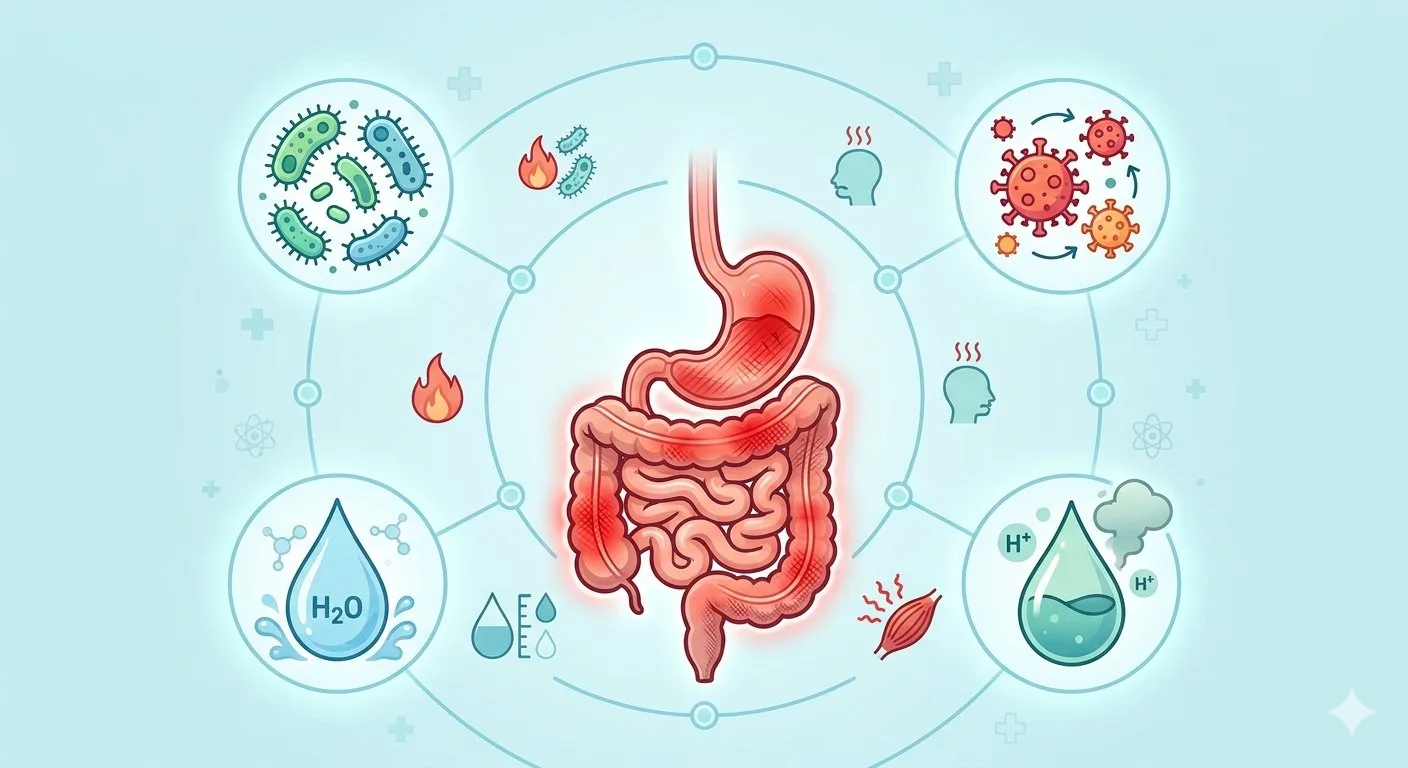
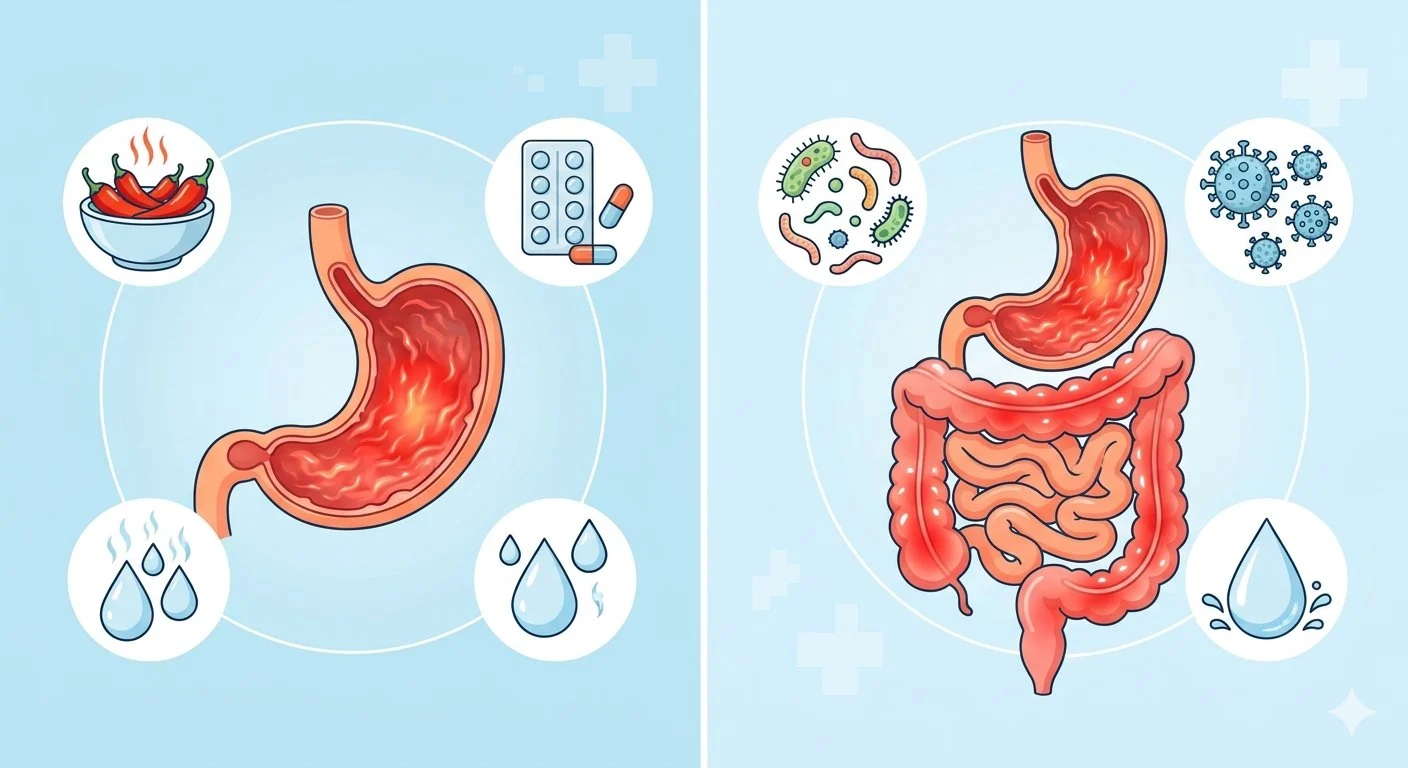
What Does Stage 1 GERD Feel Like? Early Symptoms, Causes and Treatment-various aspects-
Article author: Dr. Sagar Rajkuwar, MS-ENT 🌐 www.entspecialistinnashik.com
What does stage 1 GERD feel like? When people use “stage 1 GERD,” they usually mean mild or early gastroesophageal reflux disease (GERD). It may feel like occasional heartburn—a warm, burning sensation behind the breastbone—or a sour or bitter taste when stomach contents move back towards the throat or mouth. Symptoms may appear after a large meal, when bending forward, or after lying down. An important medical clarification comes first: GERD does not have one universally accepted four-stage system in routine clinical practice. “Stage 1” is often used informally online. Doctors may describe symptom frequency and impact, or grade visible oesophageal inflammation using the Los Angeles (LA) classification during endoscopy. These are not interchangeable systems. This article explains what early or mild reflux can feel like, what it does not necessarily mean, how clinicians assess it, practical steps that may help, and warning signs that should never be ignored.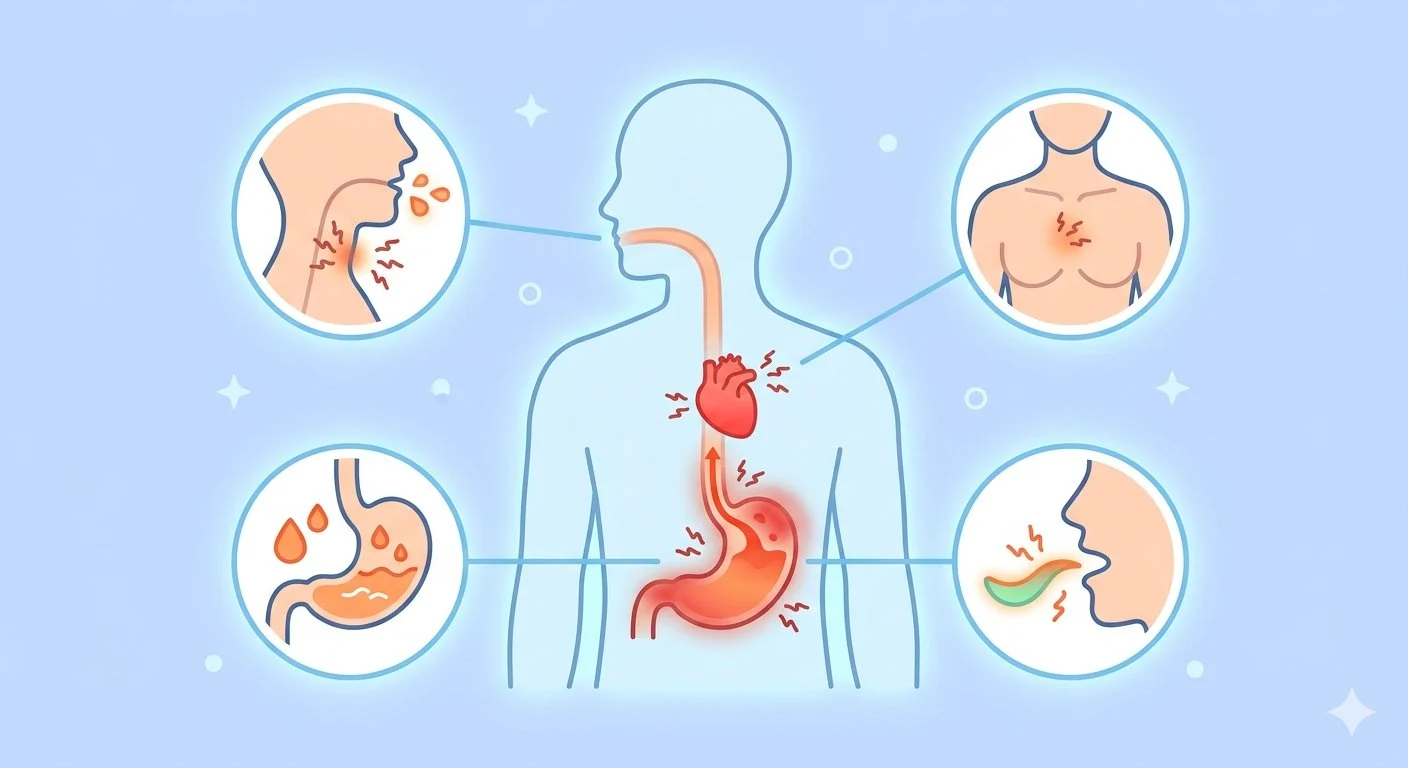
What does stage 1 GERD feel like? A quick answer
If “stage 1” means mild or early GERD, a person may notice:- Occasional heartburn—burning behind the breastbone, sometimes rising towards the throat.
- A sour, acidic or bitter taste in the mouth.
- Regurgitation—a small amount of liquid or recently eaten food coming back up without forceful vomiting.
- Burping, mild upper abdominal discomfort or an unpleasant sensation after meals.
- Symptoms that are more noticeable after a heavy or fatty meal, bending forward, or lying flat.
1. What does “stage 1 GERD” mean?
There is no single, universally adopted clinical staging scale in which every patient moves through GERD stages 1, 2, 3 and 4 in a predictable sequence. Websites sometimes use “stage 1 GERD” to describe mild symptoms, but this wording can be mistaken for an endoscopic grade or a formal disease classification.Symptom severity is not the same as endoscopic severity
A person may experience troublesome heartburn even when endoscopy shows no visible erosions. Another person may have visible reflux oesophagitis but report relatively few symptoms. How GERD feels and what endoscopy shows are related but different aspects of the condition.What is LA Grade A oesophagitis?
The Los Angeles (LA) classification describes reflux-related breaks in the oesophageal lining seen during endoscopy:| Grade | General endoscopic description |
|---|---|
| LA Grade A | One or more mucosal breaks no longer than 5 mm, not extending between the tops of two mucosal folds. |
| LA Grade B | One or more mucosal breaks longer than 5 mm, not extending between the tops of two folds. |
| LA Grade C | Mucosal breaks extending between the tops of two or more folds, involving less than 75% of the circumference. |
| LA Grade D | Mucosal breaks involving at least 75% of the oesophageal circumference. |
Why this distinction matters
If an endoscopy report says “Grade A oesophagitis,” it describes what the doctor saw. It does not mean symptoms must be mild, that disease will inevitably worsen, or that the patient is at a fixed point on a four-stage pathway.Useful question to ask your doctor
Ask whether “stage 1” refers to symptom severity, an endoscopy finding, or another classification. Request the exact wording of the report.2. How early or mild GERD may feel
A. Mild heartburn after eating
The most recognised symptom is heartburn, a burning sensation in the middle of the chest behind the breastbone. It may begin in the upper abdomen and move upwards towards the throat. In mild reflux, it may occur occasionally rather than throughout the day. Heartburn is not the same as a burning sensation in the stomach, and symptoms alone cannot confirm GERD.B. Sour or bitter taste in the mouth
Regurgitation occurs when stomach contents flow back into the oesophagus and sometimes reach the throat or mouth. A person may notice a sour, acidic or bitter taste, particularly after bending, lying down or eating a large meal. It is usually different from forceful vomiting.C. Repeated burping or belching
Some people report frequent belching or a sensation of air rising. Belching is common and can also result from swallowed air, eating quickly, carbonated drinks or other digestive conditions. By itself, it is not proof of GERD.D. Mild throat irritation
Reflux reaching the upper oesophagus or throat may be associated with irritation in some people. However, sore throat, hoarseness and throat clearing are nonspecific. Allergies, infections, voice overuse, smoking and other disorders may cause the same complaints.E. Symptoms that disturb sleep
Some people notice reflux after lying flat, particularly if they eat shortly before bedtime. They may wake with a sour taste, burning discomfort or fluid in the throat. Night-time symptoms are not required for a GERD diagnosis.Can early GERD be painless?
Some people with reflux-related disease do not describe typical heartburn. Persistent cough, hoarseness or breathing complaints should not automatically be labelled “silent reflux,” because these symptoms have several possible causes and require assessment.3. When do mild GERD symptoms occur?
Timing can provide clues. Early or mild reflux may be more noticeable after a large meal, after high-fat meals if these are a personal trigger, when bending forward, when lying down soon after eating, at night, or during pregnancy or periods of weight gain in some individuals.How long does a mild reflux episode last?
There is no fixed duration. A brief episode may settle on its own, while symptoms can recur or persist in people with GERD. Duration alone cannot show whether the oesophagus is inflamed or whether another condition is responsible.Occasional acid reflux versus GERD
Many healthy people experience reflux from time to time, particularly after a heavy meal. GERD is considered when reflux causes repeated troublesome symptoms or complications. Impact on sleep, eating, work and quality of life matters—not just whether someone has ever experienced heartburn. NIDDK: Definition and facts about GER and GERD.4. Symptoms that may be mistaken for early GERD
Not every burning sensation in the chest or upper abdomen is caused by reflux. Similar symptoms may occur in digestive, cardiac and musculoskeletal conditions.| Condition | Possible clues | Why assessment matters |
|---|---|---|
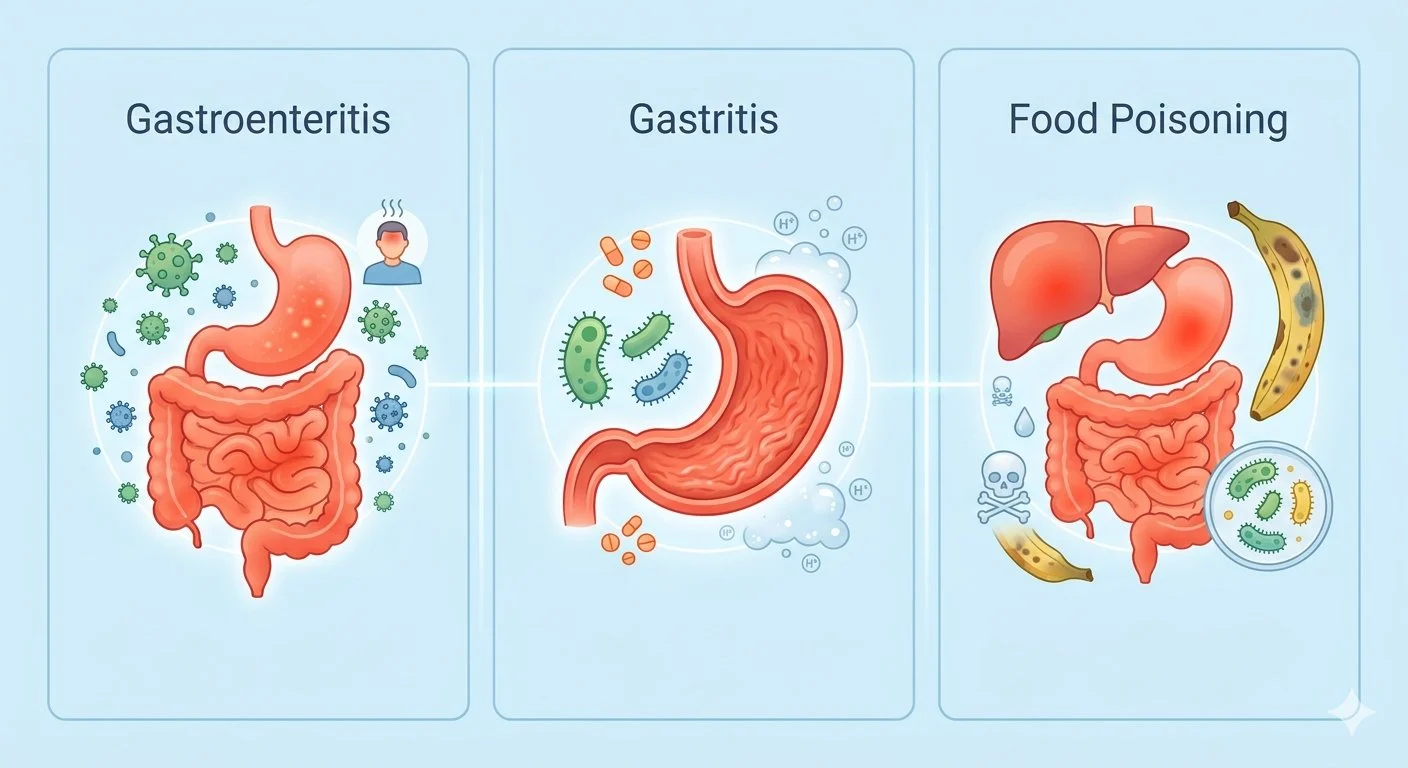
| Functional dyspepsia | Upper abdominal discomfort, early fullness, post-meal fullness or nausea | Symptoms overlap with reflux and gastritis. |
| Gastritis | Upper abdominal discomfort, nausea or indigestion | May relate to H. pylori, NSAIDs or other causes. |
| Peptic ulcer | Upper abdominal pain, sometimes bleeding | May require testing, endoscopy and cause-specific treatment. |
| Gallbladder disease | Upper right or central abdominal pain, sometimes after meals | May need blood tests and imaging. |
| Heart-related disease | Pressure, tightness, burning or chest discomfort; may occur with exertion | Can be life-threatening and must not be mistaken for acidity. |
| Oesophageal disorders | Difficulty swallowing, food sticking or chest discomfort | May require endoscopy or specialist tests. |
GERD versus a heart problem
Heart-related chest pain can feel like heartburn or indigestion. New or unexplained chest pressure, particularly during exertion or with breathlessness, sweating, nausea, faintness, or pain spreading to the arm, jaw, neck or back, needs emergency medical assessment. Do not try to distinguish a heart attack from reflux by taking an antacid and waiting.5. Causes and risk factors for early GERD
GERD can develop when the normal barrier that prevents stomach contents from flowing backwards does not work effectively. The lower oesophageal sphincter (LES) and diaphragm normally help limit reflux. Reflux may occur when the sphincter relaxes at inappropriate times, has reduced pressure, or when anatomical and physiological factors interfere with this barrier.Common contributing factors
- Hiatal hernia: part of the stomach moves through the diaphragm into the chest and may weaken the anti-reflux barrier.
- Overweight or obesity: increased abdominal pressure can contribute to reflux.
- Pregnancy: hormonal changes and increased abdominal pressure may promote reflux.
- Large or late meals: may trigger symptoms, particularly when lying down soon afterwards.
- Smoking: can worsen reflux and has other important health risks.
- Individual food triggers: high-fat meals, chocolate, coffee, mint, alcohol, tomato or spicy foods may worsen symptoms in some people.
- Some medicines: certain drugs can affect sphincter pressure or irritate the oesophagus. Do not stop prescribed medicines without advice.
Does stress cause GERD?
Stress does not by itself establish a diagnosis of GERD. It may increase sensitivity to symptoms, affect eating and sleep habits, or make discomfort harder to tolerate. Persistent symptoms deserve assessment rather than being attributed to stress alone.Is spicy food the main cause?
No. Spicy food may trigger burning in some people, but it is not the fundamental cause of GERD. Identify personal triggers and avoid unnecessary dietary restrictions.6. Does mild or stage 1 GERD progress to severe GERD?
Not necessarily. Reflux symptoms do not follow a predictable sequence in which everyone progresses from stage 1 to stage 2, 3 and 4. Many people manage symptoms successfully, and some have intermittent symptoms over long periods. Others develop persistent inflammation or complications.Possible complications of long-standing or inadequately controlled GERD
- Erosive oesophagitis: inflammation and breaks in the oesophageal lining due to reflux.
- Oesophageal stricture: scar-related narrowing that may cause food to stick or swallowing difficulty.
- Barrett’s oesophagus: a change in the lining of the lower oesophagus associated with chronic reflux in some patients.
- Bleeding or ulceration: can occur in more significant oesophageal injury, although it is not typical of mild reflux.
Does everyone with GERD develop Barrett’s oesophagus?
No. Most people with GERD do not develop Barrett’s oesophagus. Risk is influenced by factors such as chronic reflux, age, sex, central obesity, smoking and family history. Screening decisions are individualised; mild heartburn alone does not mean routine endoscopy is needed.Can stage 1 GERD be reversed?
Symptoms may settle or become well controlled with appropriate lifestyle measures and, when indicated, medication. Whether reflux returns depends on underlying factors. It is more accurate to discuss symptom control and healing than to promise a permanent cure based on an informal “stage 1” label.7. How is early GERD diagnosed?
A clinician usually begins with the symptom history, examination, medical conditions and medication list. If a person has typical heartburn and regurgitation without alarm features, a clinical diagnosis and initial treatment may be appropriate. Not everyone needs endoscopy immediately. NIDDK: Diagnosis of GER and GERD.A. Clinical assessment
The doctor may ask how often symptoms occur, how long they last, whether they follow meals, whether they wake the patient at night, and whether there is difficulty swallowing, vomiting, bleeding or weight loss. Medicines such as NSAIDs and drugs that can influence reflux may be reviewed.B. Upper GI endoscopy
Upper gastrointestinal endoscopy uses a flexible camera to examine the oesophagus, stomach and duodenum. It can identify erosive oesophagitis, strictures, Barrett’s changes, ulcers or other explanations for symptoms. A normal endoscopy does not rule out GERD, because many patients with reflux symptoms have no visible erosions.C. Ambulatory reflux monitoring
Ambulatory pH monitoring measures acid exposure in the oesophagus over time. Some tests also detect weakly acidic or non-acid reflux. It may be used when the diagnosis is uncertain, symptoms persist despite treatment, or objective confirmation is needed before selected interventions.D. Oesophageal manometry
Oesophageal manometry measures pressure and coordination in the oesophagus. It is not normally used alone to diagnose GERD, but can help assess swallowing disorders and is used in selected patients before anti-reflux procedures.When might testing be needed sooner?
Difficulty swallowing, painful swallowing, gastrointestinal bleeding, unexplained weight loss, persistent vomiting or suspected complications should prompt medical evaluation. Endoscopy is often an important first investigation when alarm symptoms are present.8. Treatment of mild or early GERD
Treatment is selected according to symptom frequency, severity, complications, medical history and response to initial measures. The term “stage 1” alone is not enough to choose a medicine or duration.A. Lifestyle measures
- Allow time between dinner and bedtime: avoid lying down for about 2–3 hours after eating if night-time reflux is a problem.
- Choose smaller meals: very large meals may provoke symptoms.
- Identify personal triggers: record foods, drinks and activities that repeatedly precede symptoms.
- Elevate the head of the bed: for night-time symptoms, raise the head end using a wedge or suitable bed risers. Extra pillows alone may not work as well.
- Weight management: weight loss may improve reflux in people who are overweight or obese.
- Stop smoking: cessation benefits overall health and may reduce reflux symptoms.
- Review medicines: discuss possible medication-related symptoms with the prescriber or pharmacist.
B. Antacids and alginates
Antacids neutralise stomach acid and may give short-term relief. Alginates form a floating barrier over stomach contents and can help some people with post-meal reflux. These products do not correct every cause of GERD and should not be used frequently for prolonged periods without professional advice.C. H2-receptor blockers
H2-receptor antagonists, such as famotidine, reduce acid production. They may be suitable for selected patients with intermittent or less frequent symptoms. A clinician or pharmacist can advise on suitability, interactions and dosing.D. Proton pump inhibitors (PPIs)
Proton pump inhibitors (PPIs) reduce stomach acid more strongly and are commonly used for frequent typical GERD symptoms and to heal erosive oesophagitis. The American College of Gastroenterology guideline recommends an eight-week, once-daily PPI trial before a meal for adults with classic heartburn or regurgitation and no alarm symptoms, under appropriate clinical guidance. The need for continued treatment should be reviewed after response.Do not self-prescribe long-term acid suppression
PPIs are effective, but the right indication, dose and duration depend on the patient. Persistent symptoms despite treatment may mean the diagnosis needs review rather than simply increasing the dose. Do not stop or change prescribed medicines without discussing the plan with the treating clinician.E. When are procedures considered?
Anti-reflux surgery or endoscopic procedures are considered only in selected patients with objectively established GERD, appropriate symptoms and specialist assessment. They are not routine treatments for occasional mild heartburn. See the NIDDK guide to GERD treatment.9. When should you see a doctor?
Arrange a medical appointment if heartburn occurs frequently, symptoms interfere with sleep or daily activities, pharmacy medicines are needed repeatedly, symptoms persist despite sensible lifestyle changes, or you are unsure whether the discomfort is reflux.Warning symptoms that need prompt assessment
- Dysphagia: food or liquids sticking or difficulty swallowing.
- Odynophagia: pain when swallowing.
- Unexplained weight loss or loss of appetite.
- Repeated or persistent vomiting.
- Unexplained anaemia or unusual fatigue.
- Symptoms that progressively worsen or return soon after treatment.
Seek emergency medical care
- Vomiting blood or material resembling coffee grounds.
- Black, tarry stools or significant rectal bleeding.
- Severe chest pain or pressure, especially with breathlessness, sweating, faintness, exertion or pain spreading to the arm, jaw or back.
- Collapse, fainting or signs of shock.
10. A simple symptom diary: what information should you record?
A short symptom diary can help a doctor understand the pattern and decide whether testing or treatment is appropriate. If symptoms are not urgent, record the following for one to two weeks:| What to record | Example |
|---|---|
| Time of symptom | After lunch, evening or during sleep |
| Symptom type | Chest burning, sour taste, regurgitation or upper abdominal discomfort |
| Duration and severity | Brief or prolonged episode; effect on sleep or work |
| Food and drink | Meal size, coffee, alcohol or suspected trigger |
| Body position | Lying down, bending forward or sitting upright |
| Medicines | Prescribed medicines, antacids and timing |
| Associated symptoms | Difficulty swallowing, vomiting, weight loss or chest symptoms |
Frequently Asked Questions
1. What does stage 1 GERD feel like?
If “stage 1” means mild or early GERD, it may feel like occasional burning behind the breastbone, a sour taste or small amounts of stomach contents coming back into the throat. Symptoms may occur after meals or when lying down. The phrase is informal and does not define a standard clinical stage.2. Is stage 1 GERD the same as LA Grade A?
No. LA Grade A is an endoscopic description of small breaks in the oesophageal lining. “Stage 1 GERD” is often informal. LA Grade A alone is not conclusive proof of GERD in every patient.3. Can mild GERD occur without heartburn?
Yes. Some people mainly notice regurgitation or other symptoms, and some have no classic symptoms. Cough, hoarseness and throat clearing are nonspecific and should not automatically be attributed to reflux.4. Can stage 1 GERD be cured permanently?
Symptoms may resolve or remain well controlled, but recurrence varies with the underlying factors. Discuss symptom control, healing and follow-up rather than assuming a permanent cure based on an informal stage label.5. Does mild GERD need an endoscopy?
Not usually when symptoms are typical and there are no alarm features. Endoscopy may be needed for swallowing difficulty, bleeding, unexplained weight loss, persistent vomiting, treatment failure or other clinical concerns.6. What foods should I avoid with mild GERD?
There is no universal list. Some people are triggered by fatty meals, coffee, chocolate, mint, alcohol, tomato or spicy foods. Avoid foods that reliably worsen your symptoms rather than restricting everything.7. Can drinking water stop acid reflux?
Small sips may help clear an unpleasant taste for some people, but water is not a proven GERD treatment and does not reliably prevent reflux episodes. Persistent symptoms need assessment.8. Is mild GERD dangerous?
Mild symptoms are often manageable, but symptom intensity does not always show the degree of oesophageal injury. Seek evaluation for persistent symptoms and promptly report difficulty swallowing, bleeding or unexplained weight loss.9. Does stage 1 GERD become stage 2?
There is no universal stepwise staging pathway that every patient follows. GERD may remain intermittent, improve, recur or cause complications in some people. The informal stage number cannot predict an individual’s course.10. Can stress make reflux worse?
Stress may increase symptom sensitivity and affect sleep, food choices and daily habits. It does not prove reflux is the cause. Persistent or severe symptoms should be assessed.11. Can GERD cause cough or hoarseness?
GERD may be associated with cough or hoarseness in some patients, but these symptoms have many other causes. A clinician should consider respiratory, allergic, infectious and voice-related conditions before attributing them to reflux.12. When is heartburn an emergency?
New, severe or unexplained chest pressure or pain—especially with breathlessness, sweating, faintness, exertion or pain spreading to the arm, jaw or back—requires emergency assessment. Vomiting blood, black tarry stools or collapse also require urgent care.Summary
- “Stage 1 GERD” usually means mild or early reflux in informal usage; it is not a universally accepted formal clinical stage.
- Typical symptoms may include occasional heartburn, sour taste and regurgitation, often after meals or when lying down.
- Symptom severity and endoscopic findings are not the same.
- LA Grade A is an endoscopic description, not a synonym for stage 1 GERD; it alone may not conclusively establish GERD.
- Many people do not need immediate endoscopy if symptoms are typical and there are no alarm features.
- Meal timing, personal trigger identification, weight management when appropriate and head-of-bed elevation for night symptoms may help.
- Frequent symptoms, swallowing difficulty, bleeding, unexplained weight loss or persistent vomiting need medical evaluation.
- New or severe chest pain must not automatically be attributed to reflux; a heart cause may need emergency exclusion.
Conclusion
So, what does stage 1 GERD feel like? If the phrase describes mild or early reflux, a person may experience occasional heartburn, sour or bitter fluid coming back into the throat, or discomfort after meals and when lying down. But “stage 1 GERD” is not a standardised clinical stage, and symptoms alone cannot show the amount of oesophageal inflammation. LA Grade A is a separate endoscopic description and should not be treated as an automatic equivalent. Practical lifestyle changes may help, and a clinician can advise whether medication or testing is appropriate. Persistent symptoms, swallowing problems, bleeding, unexplained weight loss or severe chest pain should never be ignored.Recommended patient education video and resources
For reliable information about acid reflux and GERD, consult the American College of Gastroenterology’s patient education page: American College of Gastroenterology: Acid Reflux and GERD. Editorial note: A specific YouTube video has not been embedded because its source and medical accuracy should be checked before publication. If adding a video, choose one from a recognised medical organisation or qualified clinician and verify that it accurately reflects current guidance.Medical disclaimer
This article is for general educational purposes only and does not replace a consultation, diagnosis or treatment from a qualified healthcare professional. “Stage 1 GERD” is not a universally accepted formal staging label. Do not diagnose yourself or start, stop or change prescription medicines based only on this article. Chest pain may be cardiac, and gastrointestinal bleeding, difficulty swallowing, unexplained weight loss or persistent vomiting require medical assessment. Seek emergency care for severe chest pain, vomiting blood, black tarry stools, fainting or signs of shock.References and further reading
- NIDDK: Acid Reflux (GER & GERD) in Adults.
- NIDDK: Symptoms and Causes of GER and GERD.
- NIDDK: Diagnosis of GER and GERD.
- NIDDK: Treatment of GER and GERD.
- Katz PO et al. ACG Clinical Guideline for the Diagnosis and Management of GERD. American Journal of Gastroenterology. 2022.
- NHS: Heartburn and Acid Reflux.
- American College of Gastroenterology: Acid Reflux / GERD.
- American Society for Gastrointestinal Endoscopy: Clinical Guidelines.
📲 For Health-Related Articles & Videos
🔹 Facebook: https://www.facebook.com/positivemind.healthcare🔹 YouTube: http://www.youtube.com/@healthuseful8539/
ENT Consultation & Surgery
Dr. Sagar Rajkuwar (MS-ENT) Consultant ENT Specialist & Head-Neck SurgeonPrabha ENT Clinic, Ambad, Nashik, Maharashtra, India