Is it possible for almonds to cause sinus issues? (Full Medical Guide)
Because of their high nutritional value and variety of health advantages, almonds are commonly considered a superfood. But people often ask:
By Dr. Sagar Rajkuwar, ENT Specialist, Nashik, Maharashtra, India
🌐 www.entspecialistinnashik.com
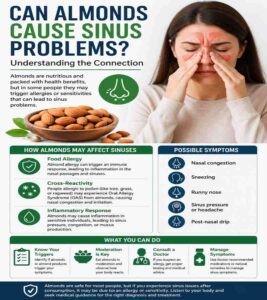
Is it possible that almonds might cause sinus issues?
Almonds are usually safe for most people, but some people may develop sinus-related symptoms after eating them. From a medical and practical standpoint, this thorough book examines the relationship between almonds and sinus problems.
Table of contents
- Introduction
- Understanding Sinus Issues
- What are almonds?
- ❓ Is it possible for almonds to induce sinus issues?
- ⚠️ The Way Almonds May Cause Sinus Symptoms
- Symptoms of Almond-Related Sinus Problems
- Scientific Explanation
- 👶 Who Is in Danger?
- ⚖️ Almonds: Benefits vs Risks
- 🥗 Almond Forms and Their Impact
- Avoid almond-related sinus problems by doing this
- When to Go to the Doctor
- Almond Allergy Diagnosis
- Therapeutic Options
- Myths About Almonds and Sinuses
- 🌿 Alternatives That Are Natural
- Conclusion
- FAQ: Can Almonds Cause Sinus Problems?
- 🔑 Main points
Introduction
Despite the widespread awareness of the health benefits of almonds, many people ask if they might contribute to sinus issues. Although almonds are typically healthy and safe, some people may have symptoms like nasal congestion, a runny nose, or sinus pressure as a result of an underlying Food Allergy or intolerance. Almond intake might sometimes cause symptoms associated with Allergic Rhinitis, particularly in those who are prone to allergies. Knowing the link between almonds and sinus problems can help you make informed food decisions and prevent undesirable symptoms.
Understanding Sinus Issues
The majority of sinus issues, medically known as sinusitis, involve inflammation of the sinus lining.
Typical Symptoms:
- stuffy nose
- Pressure on the face
- Head ache
- A thick nasal discharge
- diminished sense of smell
Possible causes of sinus problems include:
- Infections
- Allergies
- Irritants to the environment
- Some foods
What are almonds?
Nutrient-dense almonds are loaded with:
- Fats that are good for you
- Protein
- Vitamin E
- Magnesium
- Antioxidants
They are frequently eaten in the following way:
- unprocessed almonds
- Almond milk
- almond butter
- Baked goods
❓ Is it possible for almonds to induce sinus issues?
The brief response is:
For the majority of individuals, almonds do not immediately bring on sinus issues.
Almonds, though, can cause sinus-related problems in certain people due to allergies or sensitivities.
⚠️ The Way Almonds May Cause Sinus Symptoms
1. A Food Allergy
A food allergy is one of the main causes.
If someone has an almond allergy:
- Almond proteins elicit a response from the immune system
- Histamine is released.
- You may experience symptoms like nasal congestion.
2. Allergic Rhinitis
In susceptible people, almonds can exacerbate allergic rhinitis.
Among the symptoms are:
- Sneezing
- Nose that’s runny
- A blocked nose
3. Cross-Reactivity (Oral Allergy Syndrome)
Oral Allergy Syndrome affects some individuals.
When this occurs:
- You have a pollen allergy
- Some meals, like almonds, elicit comparable responses.
4. The Myth of Mucus Production
People widely believe that nuts cause more mucus.
Scientific reality:
- There is no compelling evidence that almonds raise mucus levels in healthy people.
- But some individuals may have subjective emotions.
5. Intolerance or Sensitivity
A few people may have a slight intolerance, which results in:
- Discomfort in the throat
- Nasal discomfort
- Signs of a digestive problem
Symptoms of Almond-Related Sinus Problems
You may have the following symptoms if almonds cause sinus issues:
Little Signs:
- obstruction of the nasal passage
- a runny nose
- Coughing
Moderate Symptoms:
- Pressure on the face
- Headache
- Postnasal drip
Significant Symptoms:
- trouble breathing
- Edema
- Anaphylaxis
🚨 If you have any serious symptoms, get medical care right away.
Scientific Explanation
Most sinus issues caused by almonds are related to the immune system.
Method:
- The body absorbs almond proteins.
- The immune system mistakes them for being dangerous.
- IgE antibodies are released.
- Inflammation is caused by histamine.
- The symptoms of a sinus infection manifest.
👶 Who Is in Danger?
If you have any of the following, you are more prone to experiencing symptoms:
- Preexisting food allergies
- Asthma
- Seasonal allergies
- A family history of allergies
⚖️ Almonds: Benefits vs Risks
✅ Advantages:
- Improve cardiovascular health
- contains a high concentration of antioxidants
- Encourage healthy brain activity
⚠️ Risks:
- Allergic responses
- Irritation of the sinuses in those who are susceptible
🥗 Almond Forms and Their Impact
| Form | Effect on Sinus |
|---|---|
| Raw almonds | Generally safe |
| Roasted almonds | Safe |
| Almond milk | May trigger symptoms in allergic individuals |
| Processed foods | Higher risk due to additives |
Avoid almond-related sinus problems by doing this
✔ Advice:
- Determine your own triggers.
- Stay away from almonds if you experience any symptoms.
- Eat in moderation
- Maintain a food journal
When to Go to the Doctor
See a doctor if you have:
- Continuous sinus issues
- Severe allergic reactions
- breathing problems
Almond Allergy Diagnosis
Doctors may advise:
- Skin prick test
- blood test (IgE levels)
- Dietary elimination of foods
Therapeutic Options
1. Avoidance
Avoiding almonds is the main treatment.
2. Medications
- Antihistamines
- Sprays for the nose
3. Emergency Care
For severe reactions, use epinephrine.
Myths About Almonds and Sinuses
Don’t be shy about asking questions! The first misconception is that almonds always induce sinus problems.
Truth: Only in those who are allergic
Misconception 2: Almonds generate more mucus
Fact: There is no solid scientific data
🌿 Alternatives That Are Natural
Try the following if almonds cause symptoms:
- Walnuts
- Chia and flax seeds
- Items made from coconut
Conclusion
In general, almonds don’t cause sinus issues, but some people may experience symptoms as a result of a food allergy or sensitivity. After eating almonds, people who have nut allergies or allergic rhinitis may have sinus pressure, a runny nose, or nasal congestion. By recognizing individual triggers and regulating consumption, one may avoid pain associated with sinusitis.
👉Almonds do not generally cause sinus issues in the majority of individuals.
👉Nevertheless, they can cause symptoms in people who are sensitive or allergic.
👉It’s critical to recognize how your body reacts.
FAQ: Can Almonds Cause Sinus Problems?
1. Is it possible that almonds might cause sinus issues?
Although almonds are rarely the cause of sinus issues, a food allergy or intolerance may cause symptoms in some individuals.
2. Does nasal congestion worsen with almonds?
Almonds can exacerbate nasal congestion in those who are allergic, particularly those who have Allergic Rhinitis.
3. Is sinusitis a potential outcome of almond allergy?
Yes, an almond allergy can induce inflammation that may resemble or exacerbate the symptoms of sinusitis.
4. Does eating almonds increase mucus production?
Some individuals may experience heightened congestion, but there is no conclusive scientific evidence that almonds cause an increase in mucus in healthy people.
5. What are the signs of sinus problems associated with almonds?
The symptoms may include:
- A runny nose
- Blockage of the nose
- sneezing
- Pressure on the face
6. If I have sinus issues, should I stay away from almonds?
Only if you have symptoms after eating almonds should you stay away from them.
7. Is it possible for almonds to cause allergies that impact the sinuses?
Yes, almonds can cause allergic reactions that affect the sinuses, some of which are associated with Oral Allergy Syndrome.
8. Do almonds cause sinusitis?
Not always. Unless they have a particular allergy, almonds are generally harmless for the majority of sinusitis sufferers.
9. How can I tell if almonds are the cause of my sinus problems?
Triggers can be recognized by:
- Maintaining a food diary
- Avoiding almonds for a while
- Getting tested for allergies by a doctor
10. Are severe allergic reactions possible from almonds?
Yes, although it is uncommon, almonds can cause anaphylaxis, which necessitates prompt medical intervention.
🔑 Main points
- Almonds are often harmless.
- The primary reason for sinus problems is allergies.
- The symptoms range from minor to life-threatening.
- Steer clear if you see any responses.
⚠️ Medical Disclaimer
This article is for informational purposes only and does not replace professional medical advice. Consult a healthcare provider for diagnosis and treatment.
👉 YouTube Channel:
http://www.youtube.com/@healthuseful8539/
📞 ENT Consultation & Surgery
Dr. Sagar Rajkuwar (MS-ENT)
Prabha ENT Clinic, Ambad, Nashik
📱 7387590194 | 9892596635
🌐 www.entspecialistinnashik.com
📲 For Health-Related Articles & Videos
🔹 Facebook: https://www.facebook.com/positivemind.healthcare
🔹 YouTube: http://www.youtube.com/@healthuseful8539/
🔗 Sinus Related Articles (Internal Links)
🤧 Sinus Headache & Symptoms
- https://healthuseful.com/sinus-headache-symptoms/
- https://healthuseful.com/sinus-headache-symptoms-one-side/
- https://healthuseful.com/sinus-headache-symptoms-right-side/
- https://healthuseful.com/sinus-headache-back-of-head/
- https://healthuseful.com/sinus-headache-symptoms-home-remedies/
- https://healthuseful.com/how-to-rid-of-a-sinus-infection-headache/
🦠 Sinus Infection Treatment
- https://healthuseful.com/how-to-get-rid-of-a-sinus-infection-in-24-hours/
- https://healthuseful.com/how-to-get-rid-of-sinus-infection-without-antibiotics/
- https://healthuseful.com/what-kills-a-sinus-infection-naturally/
- https://healthuseful.com/sinus-headache-tablet/
- https://healthuseful.com/how-do-doctors-drain-sinuses-without-surgery/
- https://healthuseful.com/signs-of-sinus-infection-getting-better/
- https://healthuseful.com/signs-of-sinus-infection-getting-better-with-antibiotics/
⚠️ Serious Conditions & Warning Signs
- https://healthuseful.com/end-stages-of-a-sinus-infection/
- https://healthuseful.com/how-to-tell-if-sinus-infection-has-spread-to-brain/
- https://healthuseful.com/how-to-tell-if-sinus-infection-has-spread-to-bone/
- https://healthuseful.com/what-is-a-red-flag-for-sinusitis/
- https://healthuseful.com/when-to-go-to-ae-with-sinusitis/
👁️ Related Symptoms & Complications
- https://healthuseful.com/can-a-sinus-infection-cause-eye-pain/
- https://healthuseful.com/can-sinusitis-affect-your-ears/
- https://healthuseful.com/can-sinus-infection-cause-hair-loss/
- https://healthuseful.com/symptoms-of-perforated-sinus-after-tooth-extraction/
🧠 Causes, Triggers & Misdiagnosis
- https://healthuseful.com/what-triggers-sinusitis-headaches/
- https://healthuseful.com/what-can-be-mistaken-for-a-sinus-infection/
- https://healthuseful.com/what-mimics-sinus-issues/
- https://healthuseful.com/what-can-worsen-a-sinus-infection/
🧬 Nutrition & Deficiency
- https://healthuseful.com/what-vitamin-deficiency-causes-sinus-headaches/
- https://healthuseful.com/what-vitamin-deficiency-causes-sinusitis/
- https://healthuseful.com/what-deficiency-causes-sinusitis/
📘 General Sinus Knowledge
- https://healthuseful.com/what-are-the-four-cardinal-signs-of-sinusitis/
- https://healthuseful.com/is-a-sinus-infection-contagious-with-fever/
- https://healthuseful.com/can-you-smell-a-fungal-sinus-infection/
- https://healthuseful.com/sinusitis-in-hindi/
💰 Treatment & Surgery
- https://healthuseful.com/cost-of-sinus-surgery-in-india/
- https://healthuseful.com/how-to-cure-sinus-permanently/
🧒 Special Cases
🔍 Rare Conditions
🔗 Related Articles on Nasal Polyps (ENT Expert Guides)
For detailed, evidence-based information, explore the following articles:
https://healthuseful.com/can-nasal-polyps-turn-cancerous/
https://healthuseful.com/can-nasal-polyps-affect-the-brain/
https://healthuseful.com/what-are-the-symptoms-of-cancerous-nasal-polyps/
https://healthuseful.com/when-to-worry-about-nasal-polyp/
https://healthuseful.com/what-happens-if-nasal-polyps-untreated/
https://healthuseful.com/number-one-cause-of-nasal-polyps/
https://healthuseful.com/how-to-stop-polyp-growth/
https://healthuseful.com/can-nasal-polyps-cause-heart-problems/
https://healthuseful.com/how-to-cure-nasal-polyps-permanently/
https://healthuseful.com/can-ent-see-nasal-polyps/
📚 References
- Mayo Clinic
- National Institutes of Health
- World Health Organization
- PubMed
What Is an Allergy to Almonds? Symptoms, Causes & Management
Almond allergy is a type of Food Allergy that occurs when the immune system mistakenly identifies almond proteins as harmful. Almonds belong to the tree nut family, which also includes walnuts, cashews, pistachios, and pecans.
Although almonds are nutritious, they are among the most common tree nut allergies worldwide. In fact, almond allergy is one of the leading causes of severe allergic reactions, especially in children.
🧠 What Is an Almond Allergy?
An almond allergy develops when the immune system overreacts to proteins found in almonds. This reaction triggers the production of immunoglobulin E (IgE), leading to allergic symptoms.
👉 Almonds are part of the “tree nut” group, which includes:
- Walnuts
- Cashews
- Pistachios
- Pecans
- Brazil nuts
📊 Key Facts:
- Almond allergy often begins before age 2
- It can also develop later in life
- Less likely to be outgrown compared to some other food allergies
⚠️ Why Almond Allergy Is Serious
Tree nut allergies, including almond allergy, are associated with a higher risk of severe reactions compared to many other food allergies.
👉 Important statistics:
- 70–90% of food-related deaths involve peanuts and tree nuts
- Tree nuts cause up to 40% of Anaphylaxis cases
🚨 Symptoms of Almond Allergy
Symptoms can range from mild to life-threatening and usually appear within minutes to hours after consuming almonds.
1. Allergic Rhinitis
Allergic Rhinitis is a common symptom.
Signs include:
- Runny nose
- Sneezing
- Nasal congestion
👉 These symptoms can mimic common cold or seasonal allergies.
2. Skin Reactions
Skin symptoms often appear quickly after exposure.
Common signs:
- Itching
- Rashes
- Hives
In some cases, it may lead to:
- Atopic Dermatitis
3. Digestive Problems
The digestive system is frequently affected.
Symptoms include:
- Nausea
- Diarrhea
- Bloating
- Abdominal cramps
👉 These symptoms may sometimes be confused with food intolerance.
4. Oral Allergy Syndrome (OAS)
Oral Allergy Syndrome occurs in people with pollen allergies.
Symptoms:
- Itching in mouth
- Tingling sensation
- Mild swelling
👉 Often linked with birch pollen allergy.
5. Anaphylaxis (Emergency)
The most dangerous reaction is Anaphylaxis.
Symptoms:
- Difficulty breathing
- Wheezing
- Persistent cough
- Fainting
- Low oxygen levels
🚨 Medical emergency – seek immediate help
🧬 Causes of Almond Allergy
The primary cause is an immune response involving IgE antibodies.
How it happens:
- Body misidentifies almond proteins as harmful
- IgE antibodies are produced
- Immune cells release chemicals like histamine
- Allergic symptoms appear
❗ Almond Allergy vs Almond Sensitivity
| Feature | Almond Allergy | Almond Sensitivity |
|---|---|---|
| Immune system involvement | Yes | No |
| Severity | Can be severe | Usually mild |
| Symptoms | Systemic | Mostly digestive |
| Risk of anaphylaxis | High | None |
🛑 How to Manage Almond Allergy
1. Avoidance
The most effective strategy is to avoid almonds completely.
Tips:
- Read food labels carefully
- Avoid cross-contamination
- Inform restaurants
2. Emergency Preparedness
Carry an epinephrine auto-injector at all times.
👉 It helps in:
- Preventing severe reactions
- Saving life during anaphylaxis
3. Medical Consultation
Always consult a healthcare provider for:
- Diagnosis
- Allergy testing
- Treatment plan
🥗 Foods to Avoid
If you have almond allergy, avoid:
- Almond milk
- Almond butter
- Bakery items containing almonds
- Mixed nuts
⚠️ Risk Factors
- Family history of allergies
- Other food allergies
- Asthma
- Eczema
👨⚕️ When to See a Doctor
Consult a doctor if you experience:
- Repeated allergic reactions
- Breathing difficulty
- Severe skin reactions
- Digestive symptoms after eating nuts
📌 Final Verdict
👉 Almond allergy is a serious condition that can lead to life-threatening reactions.
👉 Early diagnosis and strict avoidance are key to preventing complications.
👉 Always be prepared with emergency medication.
❓ FAQ
Is almond allergy common?
Yes, it is one of the most common tree nut allergies.
Can almond allergy go away?
It is less likely to be outgrown compared to other allergies.
How is almond allergy diagnosed?
Through skin tests, blood tests, and medical history.