Can Septoplasty Change the Shape of the Nose? Benefits, Risks & Septorhinoplasty Explained
A standard septoplasty does not alter the outward form of your nose. It’s a functional procedure that aims to improve breathing by straightening the inside nasal septum, maintaining the same appearance of your tip, bridge, and outer profile.
Author: Dr Sagar Rajkuwar, ENT Specialist, Nashik, Maharashtra, India
🌐 www.entspecialistinnashik.com
When Shape Might Change
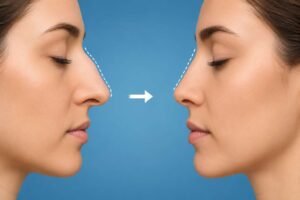
If an exceptionally crooked internal septum visibly moves the outer nose to the side, straightening it may sometimes subtly straighten the nose.
Septorhinoplasty: In order to address both aesthetic and practical issues, physicians integrate septoplasty with a cosmetic rhinoplasty.
Healing Takes Time: In the first several weeks of healing, swelling and minor changes can make the nose appear or feel a little bit different before it returns to its original form.
Table of Contents
- Is it possible for a Septoplasty to alter the nose’s shape?
- In What Ways Septoplasty Can Address Varied Nasal Abnormalities
- Benefits, FAQs, Conclusion, and Recovery
Is it possible for a Septoplasty to alter the nose’s shape?
Introduction
One of the most frequent ENT operations is septoplasty, which is done to mend a skewed nasal septum in order to alleviate symptoms like snoring, recurrent sinus infections, difficulty breathing, and nasal blockage, as well as to improve airflow. Although septoplasty’s main objective is to reestablish proper nasal function, a lot of individuals are curious as to whether the procedure would alter their nose’s look.
The answer is yes, but only in some cases. Correcting severe deformities can sometimes improve the nose’s external form since the nasal septum functions as the nose’s main supporting structure. Septorhinoplasty is a procedure that combines cosmetic changes with practical septoplasty.
Knowing how the septum supports the outside nose explains why fixing it may make both breathing and facial appearance better.
What is the nasal septum?
A thin layer of bone and cartilage separates the nose into two nostrils, forming the nasal septum. It accomplishes a number of crucial duties:
- Provides structural support for the nose.
- Sustains adequate airflow through both nostrils
- Helps to filter, humidify, and heat inspired air
- Gives the nasal tip and bridge central support.
A straight, stable septum promotes balanced breathing and a symmetrical nose. Injury, heredity, or unusual development can cause the septum to deviate, which can have an impact on both breathing and the nose’s outward look.
Can Septoplasty Alter the Appearance of the Nose?
Standard septoplasty often doesn’t significantly change the nose’s outward appearance since it concentrates on mending the internal septum while keeping its original shape.
Septoplasty, however, can make a significant cosmetic difference if the deviated septum also affects the nose’s support system.
These enhancements might be:
- More straight nasal bridge
- Improved alignment of the nose
- Enhanced nasal tip support
- More balanced nostrils
- Improved facial balance overall
Surgeons frequently do septorhinoplasty, which mixes functional correction with cosmetic reshaping, if major cosmetic modifications are desired.
The Nasal Septum’s Contribution to the Nose’s Shape
Most people believe that the appearance of the nose is solely determined by the nasal bones. The cartilaginous septum actually contributes significantly to the nose’s form, height, and projection.
The septum aids in determining:
Size of the Nasal Bridge
The bridge of the nose is supported by the septal cartilage’s higher region. Changes in its height might affect the bridge’s perception as flat, straight, or prominent.
Length of the nose
The septum’s front edge adds to the nose’s overall length. Nasal projection can be impacted by changes in septal length.
Medial Position
A straight nose is maintained by a centrally located septum. A deviated septum might cause a nose to be crooked or asymmetrical.
Projecting the Tip
The tip of the nose is supported by the septum’s anterior (front) section. A poorly projected or drooping tip may be caused by insufficient support.
Position of the Columella
The bottom portion of the septum aids in the support of the columella, which is the tissue that separates the nostrils. A balanced appearance of the nostrils is achieved through correct alignment.
Outer Nose Anatomy
The nose’s appearance is influenced by a variety of interacting systems.
Bones of the Nose
Paired nasal bones, which make up the stiff bridge, make up the upper third of the nose.
Cartilage in the septum
The inner support and help in maintaining the height and alignment of the nose are provided by the central cartilage.
Lateral Cartilages of the Top
These cartilages contribute to the middle part of the nasal bridge and help maintain the internal nasal valve by connecting to the septum.
Cartilages of the Lower Lateral
The nasal tip and nostrils are formed by these cartilages. The tip’s definition and the nostril’s form are affected by its position and size.
Skin and Soft Tissue
The underlying framework is covered by the skin and soft tissue, which also impacts how the post-surgery appearance will turn out.
How a Deviated Septum May Impact How You Look
An extremely deviated septum might lead to functional and cosmetic issues.
Possible visible alterations are:
- Crooked nose
- bridge of nose uneven
- Nasal tip with a twist
- asymmetrical noseholes
- Tip dropping
- Facial symmetry that isn’t ideal
Although not all deviated septa result in obvious abnormality, severe deviations frequently have an impact on both respiration and look.
Why Septoplasty Occasionally Enhances Looks
Restoring proper support to the surrounding cartilages involves repositioning a deviated septum into the midline. This can naturally get better.
- Symmetry of the nose
- Alignment of tips
- Directness of the bridge
- Overall nose balance
Rather than being the main goal of surgery, these cosmetic improvements are typically secondary to fixing the structural issue.
In What Ways Septoplasty Can Address Varied Nasal Abnormalities
A deviated nasal septum has effects that extend beyond breathing. Abnormalities in the septum’s size, position, or form can also affect the exterior look since it is the nose’s main support. Improving both nasal function and facial symmetry can be achieved by correcting these structural concerns in certain situations during septoplasty.
1. Deformity of the Saddle Nose
When the bridge of the nose collapses, it results in a discernible depression along the nasal dorsum, giving it the appearance of a saddle.
- Common causes include:
- Abscess of the septum
- Trauma to the nose
- Earlier nasal surgery
- Infection leads to cartilage deterioration.
- Seldom occur autoimmune disorders.
- Signs and symptoms
- Flattened nose bridge
- Reduced support for the nose
- Breathing difficulties
- Cosmetic dissatisfaction
- Surgical repair
Surgeons may reconstruct the bridge with cartilage grafts if the septum has lost enough height. Common graft sources include:
- Cartilage in the nasal septum
- Cartilage of the ear
- (for severe deformities) rib cartilage
The graft repairs structural support and enhances both breathing and look.
2. Hump Nose
Others have too much cartilage, bone, or both, resulting in an overly large nasal bridge.
- Features
- On the bridge of the nose, there is a visible hump.
- Prominent side profile
- Sometimes linked to septal deviation
- Surgical Intervention
The extra bone and cartilage are carefully remade. The nasal bones are repositioned to create a smoother bridge while maintaining normal nasal function, if needed.
3. Nose that isn’t straight
A deviated septum that pulls the nose away from the facial midline is a frequent cause of a crooked nose.
- reasons
- Deformity caused by birth.
- Prior nasal trauma
- Significant septal deviation
- Uneven development of cartilage
- Signs and symptoms
- Bridge of the nose that is crooked
- Nostrils that are not the same size
- obstruction of the nasal passage
- Asymmetrical face
- Corrective surgery
The deviated septum is repositioned to the midline during surgery. Airflow and cosmetic balance are improved by realigning the linked nasal cartilages.
4. Nasal Tip that Is Sagging
The septal cartilage’s strength is a major determinant of the nasal tip.
The tip could: if there isn’t enough septal support.
- Dangle downward
- Look circular.
- lose definition
- Influence the balance of the face
- Correction via surgery
In order to increase projection and strengthen the nasal tip, extra cartilage grafts may be used without sacrificing the nose’s original look.
5. Uneven Nostril Symmetry
The columella, which is the tissue separating the nostrils, is partially supported by the septum’s lower part.
If this part is moved:
- One nostril may look larger.
- Unevenness may appear in the nostrils.
- The base of the nose might not be symmetrical.
- Operative repair
The surgeon aligns the septum into the midline and secures it, enhancing the symmetry of the nostrils.
6. Columella Retracted
Between the nostrils is a piece of tissue known as the columella.
A short or weak septum can lead to:
- columellar minimal presentation
- Reduced support for tips
- Short-looking nose
- Treatment
A cartilage graft can be inserted into the columella to improve support, projection, and overall nasal equilibrium.
7. Nasal Tip: Dull
Inadequately maintained anterior septal angle may result in:
- Pointed tip
- Definition is lacking
- a broad appearance of the nose
- Therapy
By inserting cartilage grafts between the medial crura, the surgeon strengthens the tip, resulting in a more stable and refined nasal tip.
Septoplasty: Surgical Procedures Utilized
The surgeon may carry out one or more of the following procedures, depending on the deformity:
- Relocation of Septal Cartilage
- Grafting of cartilage
- The removal of bone or cartilage spurs.
- Correction of the dorsal septum
- Reconstruction of the caudal septum
- Grafting to bolster the tip of the nose
- Osteotomy (bone repositioning when necessary)
Both structural stability and nasal function are intended to be restored by these procedures.
Septorhinoplasty: When Is It Necessary?
While septoplasty typically prioritizes enhancing nasal airflow, certain people also want to address aesthetic issues.
Septorhinoplasty may be advised for people who have:
- nose that is bent
- Saddle nose deformity
- Nose with a hump
- A sagging nasal tip
- Nasal asymmetry is extreme.
- Cosmetic concerns and functional breathing issues
The doctor can enhance breathing and the nose’s outward appearance in one surgery by integrating the two techniques.
The advantages of septoplasty that alters the structure
Patients with serious septal abnormalities may experience:
- Better nasal airflow
- Better sleep quality
- Reduced nasal obstruction
- More upright nasal appearance
- Improved facial symmetry
- Higher-quality tip assistance
- More self-assurance
- Reduced chance of ongoing nasal congestion
Can All Septoplasties Alter Nose Shape?
No. Most septoplasty treatments are done purely for breathing enhancement and don’t significantly change one’s appearance.
Visible alterations are more probable when:
- The septum is greatly diverted.
- External nasal support is impacted by the deviation.
- Grafting is necessary for structural purposes.
- Rhinoplasty and septoplasty are performed together.
A cosmetic upgrade is secondary to the main objective of restoring nasal function and only happens when structural repair is required.
Benefits, FAQs, Conclusion, and Recovery
Septoplasty: What to Expect Afterward
Septoplasty is often followed by a simple recovery, with the majority of patients experiencing a steady improvement in their nasal breathing as the swelling goes down. Although recovery time differs from one individual to another, adhering to the surgeon’s recommendations can help achieve the best outcomes.
Following surgery, what to anticipate?
It is normal to have: immediately after surgery.
- Slight stuffiness in the nose
- Nasal swelling
- Minor hemorrhage or bloody discharge
- brief mouth breathing
- Moderate face discomfort or pressure
Over the first one to two weeks, these symptoms often get better.
Timeline for Recovery
Initial 24-48 hours
- With your head elevated, relax.
- Take prescribed drugs according to the instructions.
- Don’t blow your nose.
- It is common to have a little bleeding.
Initial Week
- The nasal swelling slowly disappears.
- Internal swelling may continue to make it feel as if your breathing is obstructed.
- The majority of patients resume their desk jobs in 5 to 7 days.
Weeks Two Through Four
- Breathing through the nose is still getting better.
- The interior tissues start to mend.
- You may resume light activity if your surgeon gives you the all-clear.
Three to Six Months
- The majority of internal recovery is complete.
- Nasal airflow improves significantly in the end.
- The nose continues to improve as the swelling disappears if cosmetic adjustment was performed.
Tips for a Successful Recuperation
In order to facilitate healing:
- Elevate your head while sleeping.
- For at least two weeks, refrain from lifting anything heavy.
- Until told to, avoid blowing your nose.
- Keep the nose moist with a saline nasal spray.
- Steer clear of smoking and drinking during your recuperation.
- Attend all follow-up visits.
Advantages of Septoplasty
Septoplasty has a number of functional advantages, including:
- Better nasal respiration
- Improved quality of sleep
- Selected patients have reduced snoring.
- Less sinus infections caused by nasal blockage
- More approachable physical activity
- enhanced quality of life
- Improved access for any potential future sinus surgery
Additionally, it might enhance when combined with structural correction:
- Symmetry of the nose
- Support for the nasal tip
- Facial balance in general
Risks and Potential Complications
Even if septoplasty is thought to be a safe surgery, no surgical procedure is completely free of risk.
The following are potential issues:
- Bloody nose
- Contamination
- Septal hematoma
- perforation of the septum
- brief numbness in the top teeth or nose
- Ongoing stuffy nose
- Synechiae (adhesions)
- A modified sense of smell (usually transient)
- There’s a rare need for revision surgery.
These risks can be lessened by choosing an ENT surgeon with experience.
Who Would Be a Good Fit for Septoplasty?
For those who have: Septoplasty may be suggested.
Nasal obstruction that doesn’t go away
Examination revealed a deviated nasal septum.
Recurrent sinus infections linked to septal deviation
Septal deviation can cause nosebleeds often.
during exercise, trouble breathing
Sleep disorders resulting from nasal obstruction.
Continuous oral respiration
Patients who want to improve their breathing as well as their appearance may benefit more from septorhinoplasty than from septoplasty alone.
Commonly Asked Questions (FAQs)
Can septoplasty alter the way my nose looks?
A standard septoplasty is done to help with breathing and typically doesn’t alter the external look much. However, minor cosmetic enhancements may result from the correction of serious septal deformities.
How do septoplasty and septorhinoplasty compare?
To enhance breathing, the internal nasal septum is corrected during septoplasty. Septoplasty is combined with aesthetic modification of the exterior nose during septorhinoplasty.
Is septoplasty going to make my nose smaller?
No. The size of the nose is not decreased by septoplasty. Any cosmetic modifications are normally linked to repairing structural abnormalities.
How long will it take for me to heal?
While complete internal tissue healing might take several months, the majority of patients go back to their regular activities within a week.
Is septoplasty uncomfortable?
Most patients report only mild to moderate discomfort, not extreme pain. Most of the time, enough comfort is given by suggested pain medications.
Is it possible for a crooked nose to result from a deviated septum?
Yes. In addition to making the nose seem crooked, a severe septal deviation may affect its support.
Is it possible for septoplasty to help with snoring?
Septoplasty may lessen snoring if nasal obstruction is a contributing factor, however it is not a guaranteed treatment for obstructive sleep apnea.
Will septoplasty leave me with scars?
No, not at all. Through incisions within the nose, a standard septoplasty is done, leaving no apparent external scars.
Summary
The nasal septum is more than simply a barrier between the nostrils; it is also a vital structural support for the external nose. Fixing severe septal deformities can also improve nose symmetry, tip support, and general facial appearance, even though septoplasty’s main objective is to improve nasal breathing.
Septorhinoplasty offers patients a chance to recover normal breathing and enhance the nose’s shape when they have both cosmetic and functional problems. In order to select the most suitable treatment strategy, careful evaluation by a competent ENT surgeon is required.
Conclusion
A very successful method for treating a deviated nasal septum and relieving chronic nasal blockage is septoplasty. Even though septoplasty is not intended to be a cosmetic procedure, it can enhance the nose’s external appearance by repairing structural deformities. Individuals looking for considerable aesthetic improvement might consider septorhinoplasty, which combines functional and aesthetic objectives.
Patients can make educated judgments regarding surgery and have reasonable expectations for both functional and cosmetic outcomes by understanding the function of the nasal septum in sustaining the nose. Septoplasty can provide long-lasting benefits in breathing, comfort, and general quality of life with good surgical planning and postoperative care.
References
- American Academy of Otolaryngology–Head and Neck Surgery (AAO-HNS) – Nasal Septum & Septoplasty
- National Institutes of Health (NIH) – PubMed
- MedlinePlus – Deviated Septum
- MSD Manual Professional Edition – Deviated Nasal Septum
- American Rhinologic Society (ARS)
- Cleveland Clinic – Septoplasty
- Mayo Clinic – Deviated Septum
- Johns Hopkins Medicine – Septoplasty
- National Health Service (NHS, UK) – Septoplasty
- Sathyaki DC, Geetha C, Munishwara GB, et al. A Comparative Study of Endoscopic Septoplasty Versus Conventional Septoplasty. Indian Journal of Otolaryngology and Head & Neck Surgery. 2014.