Will Doxycycline Clear Tonsillitis? A Complete ENT-Specialist Guide
Author: Dr Sagar Rajkuwar, ENT Specialist, Nashik, Maharashtra, India
🌐 www.entspecialistinnashik.com
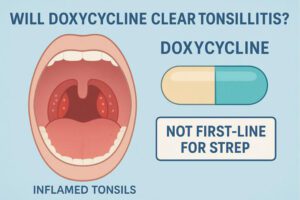
Table of Contents
- (1)Introduction
- (2)What is Tonsillitis?
- (3)Is Tonsillitis Treatable with Doxycycline?
- (4)When can doxycycline be used?
- (5)When Tonsillitis Should Not Be Treated With Doxycycline
- (6)For tonsillitis, which antibiotics are the most effective?
- (7)Symptoms That Doxycycline May Help Alleviate
- (8)What is the duration of doxycycline’s effect?
- (9)Why Doctors Stay Away From Using Doxycycline for Common Tonsillitis
- (10)Indicators that You Need Antibiotics for Your Tonsillitis, Not Doxycycline
- (11)Which patients should not use doxycycline to treat tonsillitis?
- (12)Home Treatments to Aid in Recovery (With or Without Antibiotics)
- (13)Consequences of Incorrect Tonsillitis Treatment
- (14)When to Seek Immediate Medical Attention from an ENT Specialist
(1)Introduction
Tonsillitis is one of the most prevalent throat infections among youngsters, adolescents, and adults. It can be caused by bacteria or viruses, with Group A Streptococcus (Strep throat) being the most frequent culprit. “Will doxycycline clear tonsillitis?” is a typical query as patients seek for quick-acting antibiotics.
It’s crucial to remember that doxycycline is not the first-line antibiotic for tonsillitis, particularly if the etiology is streptococcal, as an ENT expert. Doxycycline, though, can be beneficial in certain circumstances, depending on the kind of illness, the patient’s profile, and the antibiotic resistance.
When doxycycline works, when it doesn’t, the safest course of action, and when to seek emergency medical care are all covered in this thorough, SEO-optimized guide.
(2)What is Tonsillitis?
An inflammation of the palatine tonsils, two lymphoid tissues found at the back of the throat, is known as tonsillitis. It may be:
1. Viral Tonsillitis (Most Common – 70–80%)
Triggered by viruses such as:
- Rhinovirus
- The flu
- Adenoviruses
- The Epstein-Barr virus (EBV), which causes infectious mononucleosis
Viral tonsillitis cannot be treated with antibiotics.
2. Bacterial Tonsillitis (20–30%)
The most frequent causes are:
- Streptococcus of group A (GAS)
- Staphylococcus aureus
- Influenzae Hemophilus
- chronic tonsillitis caused by anaerobic bacteria
Bacterial tonsillitis is the only type of tonsillitis that responds to antibiotics.
Before selecting a medicine, it’s important to comprehend the underlying reason.
(3)Is Tonsillitis Treatable with Doxycycline?
Brief Response:
Although doxycycline can sometimes cure tonsillitis, it is not the most common or recommended antibiotic for strep tonsillitis.
For what reason?
The most common bacterial cause of tonsillitis is Group A Streptococcus, against which doxycycline is less effective. Antibiotics based on penicillin are still the best available option.
But doxycycline may be helpful in particular circumstances:
What are the conditions under which doxycycline is useful in treating tonsillitis?
(4)When can doxycycline be used?
1. Unusual microorganisms cause tonsillitis.
Examples:
- Pneumonia caused by Mycoplasma pneumoniae
- Chlamydia pneumonia
- Secondary infections related to sinusitis or lower respiratory infections
2. The patient has a penicillin allergy.
For those who have:
- Penicillin allergy causing anaphylaxis
- Moderate hypersensitivity to cephalosporins or penicillins
If a strep infection is improbable in these circumstances, doxycycline might be taken into consideration.
3. The Illness Is Recurrent or Chronic
Doxycycline may be effective for patients with recurrent tonsillitis caused by a combination of microorganisms (staph + anaerobes), but other antibiotics like clindamycin or azithromycin are often favored.
4. Acne Therapy-Related Tonsillitis
Doxycycline, which some patients are already using for acne treatment, may help alleviate a little bacterial tonsillitis.
(5)When Tonsillitis Should Not Be Treated With Doxycycline
1. Streptococcal tonsillitis, confirmed or suspected
Streptococcus pyogenes is not consistently killed by doxycycline.
2. High fever with severe acute tonsillitis
A more potent antibiotic that targets strep infections is necessary.
3. Children Under 8 Years Old with Tonsillitis
Bone development can be slowed, and permanent teeth might become discolored by doxycycline.
4. While breastfeeding or pregnant
Doxycycline is typically not used.
(6)For tonsillitis, which antibiotics are the most effective?
According to ENT and infectious disease guidelines:
The optimal first-line antibiotics for strep tonsillitis are:
- Penicillin V
- amoxycillin
Alternatives (Penicillin Allergy):
- Azithromycin
- Clarithromycin
- clindamycin
The preferred list for streptococcal tonsillitis does not include doxycycline.
(7)Symptoms That Doxycycline May Help Alleviate
The use of doxycycline in an appropriate situation can lead to improvements in:
- sore throat
- Swelling
- Fever
- Having trouble swallowing
- Redness of the tonsils
- Symptoms related to a chest or sinus infection
However, bacterial clearance cannot be verified only by symptom relief.
(8)What is the duration of doxycycline’s effect?
Improvement can be seen within the following range if the tonsillitis responds to doxycycline:
24 to 48 hours
- The fever goes down.
- Throat discomfort is alleviated
- Swallowing is made easier.
Full resolution: 5–7 days
An average course lasts between seven and ten days.
(9)Why Doctors Stay Away From Using Doxycycline for Common Tonsillitis
1. Insufficient measures against Streptococcus
Treatment failure can result in consequences such as:
- Peritonsillar abscess
- Rheumatic fever
- Acute glomerulonephritis
2. Problems with antibiotic resistance
Unnecessary doxycycline use contributes to broader resistance.
3. Side effects
- Stomach discomfort
- Sun Sensitivity
- Diarrhea
- If ingested without water, esophagitis might result.
It is consequently only used in a small number of instances.
(10)Indicators that You Need Antibiotics for Your Tonsillitis, Not Doxycycline
If you experience any of the following symptoms, seek antibiotic treatment:
- Temperature over 101°F (38.3°C)
- Tonsils with white pus patches
- extreme pain in the throat
- Lymph nodes in the neck that are painful
- No cough (indicating strep)
- Symptoms with an abrupt onset
This is the Centor Criteria, which is used to diagnose streptococcal tonsillitis.
(11)Which patients should not use doxycycline to treat tonsillitis?
If you are: don’t take doxycycline.
- Being pregnant
- Breastfeeding
- under the age of eight
- Experiencing severe vomiting
- Having a bad liver condition
- Having a tetracycline allergy
If you’re ever unsure, always speak with an ENT professional.
(12)Home Treatments to Aid in Recovery (With or Without Antibiotics)
✔Warm salt-water gargle
lowers inflammation and eliminates germs on the skin.
✔Hydration
Assists the body in warding off illness.
✔Inhalation of steam
Reduces congestion and relieves throat pain.
✔Honey, ginger, and turmeric water
Naturally anti-inflammatory.
✔A soft diet is acceptable.
Fried and spicy foods should be avoided.
✔Adequate rest
Boosts the immune system’s response.
These treatments help alleviate symptoms, but when a bacterial infection is verified, antibiotics should not be substituted.
(13)Consequences of Incorrect Tonsillitis Treatment
Using the wrong antibiotic, like doxycycline, when strep is present, might result in:
Local issues:
- Abscess near the tonsils
- Parapharyngeal abscess
- middle ear infection
- Sinusitis
Systemic problems:
- Rheumatic fever
- Scarlet fever
- inflammation of the kidneys (post-strep glomerulonephritis)
Choosing the right antibiotic is essential.
(14)When to Seek Immediate Medical Attention from an ENT Specialist
If you have any of the following symptoms, get immediate medical treatment:
- Breathing problems
- Inability to swallow one’s saliva
- Extreme dehydration
- Persistent high fever
- Pain in one side of the throat
- “Hot potato” voice muffled
- Tonsils are really big and in contact with one another.
An airway blockage or an abscess may be indicated by these.
(15)Conclusion: Will Doxycycline Cure Tonsillitis?
Yes, but only in a few instances when the cause is not streptococcus.
Doxycycline should not be used to treat typical, common bacterial tonsillitis (strep throat).
For the majority of patients:
- The best choice is either penicillin or amoxicillin.
- Doxycycline should only be used in rare cases of infection or if other antibiotics are not effective.
Consult an ENT specialist if you have any questions.
Medical Disclaimer
Medical Disclaimer: This article is for educational purposes only and should not be considered medical advice. Antibiotic selection depends on the cause of tonsillitis, medical history, allergies, and local resistance patterns. Always consult a qualified healthcare professional or ENT specialist before starting, stopping, or changing any medication. Seek urgent medical attention if you experience breathing difficulty, inability to swallow saliva, severe dehydration, or persistent high fever.
🎥 Watch Educational Videos
👉 YouTube Channel:
http://www.youtube.com/@healthuseful8539/
📞 ENT Consultation & Surgery
Dr. Sagar Rajkuwar (MS-ENT)
Prabha ENT Clinic, Ambad, Nashik
📱 7387590194 | 9892596635
🌐 www.entspecialistinnashik.com
📲 For Health-Related Articles & Videos
🔹 Facebook: https://www.facebook.com/positivemind.healthcare
🔹 YouTube: http://www.youtube.com/@healthuseful8539/
What to Avoid While Taking Doxycycline
https://healthuseful.com/what-to-avoid-while-taking-doxycycline/
Antibiotics & Medication Safety
Antibiotic Guidelines
Doxycycline
- https://healthuseful.com/will-doxycycline-clear-tonsillitis/
- https://healthuseful.com/how-do-i-protect-my-gut-while-taking-doxycycline/
- https://healthuseful.com/can-i-drink-milk-with-doxycycline/
- https://healthuseful.com/what-happens-if-you-dont-drink-enough-water-with-doxycycline/
- https://healthuseful.com/what-is-the-most-common-side-effect-of-doxycycline/
- https://healthuseful.com/what-foods-should-i-avoid-while-taking-doxycycline/
- https://healthuseful.com/what-to-avoid-while-taking-doxycycline/
Other Antibiotics
Medication Safety
- https://healthuseful.com/drugs-to-be-avoided-in-certain-circumstances/
- https://healthuseful.com/drugs-to-be-avoided-in-certain-circumstances-2/
Sinus Infection & Sinusitis
Treatment
Antibiotics & Contagiousness
Allergy & Drug Reactions
Allergic Reactions
Nasal Disorders
Nasal Polyps
Ear Disorders & Hearing Health
Tinnitus
Common Cold & Upper Respiratory Infections
Common Cold
Tonsillitis, Tonsillectomy & Adenoid Disorders
Disease: Tonsillitis
- https://healthuseful.com/tonsillitis-symptoms/
- https://healthuseful.com/tonsillitis-white-patches/
- https://healthuseful.com/tonsillitis-white-stones/
- https://healthuseful.com/tonsillitis-treatment/
Surgery: Tonsillectomy
- https://healthuseful.com/tonsillitis-surgery/
- https://healthuseful.com/tonsillitis-removal-surgery/
- https://healthuseful.com/what-age-is-too-late-to-remove-tonsils/
- https://healthuseful.com/does-removing-tonsils-change-your-voice/
- https://healthuseful.com/lingual-tonsillectomy/
Recovery & Post-Operative Care
- https://healthuseful.com/what-are-the-worst-days-after-tonsillectomy-and-adenoidectomy/
- https://healthuseful.com/tonsillectomy-diet-day-by-day-for-child/
- https://healthuseful.com/are-ear-infections-common-after-tonsillectomy/
Complications & Associated Conditions
References
- American Academy of Otolaryngology–Head and Neck Surgery – Clinical guidance on tonsillitis and throat infections.
- Infectious Diseases Society of America – Guidelines for diagnosis and management of streptococcal pharyngitis.
- Centers for Disease Control and Prevention – Group A Streptococcal (GAS) Pharyngitis guidance.
- CDC Strep Throat Information
- National Institute for Health and Care Excellence – Antimicrobial prescribing guidance for sore throat.
- NICE Sore Throat Guidance
- World Health Organization – Antimicrobial stewardship and antibiotic resistance recommendations.
- MedlinePlus Doxycycline Information