What to Avoid While Taking Doxycycline?
Avoid dairy, mineral supplements, antacids, alcohol, and certain medications to ensure doxycycline works effectively and safely.
Author: Dr Sagar Rajkuwar, ENT Specialist, Nashik, Maharashtra, India
🌐 www.entspecialistinnashik.com
Table of Contents
- Introduction
- Use Caution When Taking Doxycycline
- When to Contact Your Doctor Immediately
- Conclusion
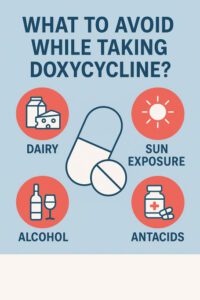
What to Avoid While Taking Doxycycline?
1. Introduction
Doxycycline is a commonly prescribed antibiotic used to treat a wide range of bacterial infections. Doctors often prescribe it for sinus infections, tonsillitis, acne, respiratory tract infections, sexually transmitted diseases (STDs), and tick-borne illnesses.
Although doxycycline is highly effective, certain foods, medications, supplements, and lifestyle habits can reduce its effectiveness or increase the risk of side effects. Therefore, it is important to understand what to avoid while taking doxycycline to ensure the best treatment results.
By following the correct precautions, you can improve doxycycline absorption, reduce unwanted side effects, and help the antibiotic work more effectively against infection.
In this comprehensive guide, you will learn about the most important doxycycline interactions and the foods, drinks, medications, and habits you should avoid during treatment.
2. Avoid Dairy Products Close to Your Doxycycline Dose
One of the most common mistakes people make while taking doxycycline is consuming dairy products too close to their medication dose.
Why Should You Avoid Dairy with Doxycycline?
Dairy products contain calcium, which can bind to doxycycline in the stomach and digestive tract. As a result, your body may absorb less of the antibiotic. This can reduce the effectiveness of the treatment and delay recovery from infection.
This interaction is one of the most important doxycycline food interactions patients should know about.
Dairy Products to Avoid Near Your Dose
Avoid consuming the following dairy products within two hours before or after taking doxycycline:
- Milk
- Yogurt or curd
- Cheese
- Paneer
- Ice cream
- Milkshakes
- Smoothies made with milk
- Tea or coffee containing milk
How Long Should You Wait?
For best results, avoid dairy products for at least 2 hours before and 2 hours after taking doxycycline. This simple step can significantly improve doxycycline absorption and effectiveness.
Can You Take Doxycycline with Food?
Yes. If doxycycline causes stomach upset, nausea, or mild discomfort, you may take it with a light non-dairy meal or snack. Suitable options include fruits, toast, crackers, rice, or other foods that do not contain calcium-rich dairy products.
Taking doxycycline correctly can help reduce stomach irritation while ensuring the medication works as intended.
3. Avoid Iron Supplements and Multivitamins While Taking Doxycycline
Many people are unaware that iron supplements can interfere with doxycycline treatment. Iron binds strongly to doxycycline in the digestive tract, making it harder for your body to absorb the antibiotic.
Why Should You Avoid Iron with Doxycycline?
Iron can significantly reduce doxycycline absorption. In some cases, it may decrease antibiotic absorption by up to 50%. As a result, the medication may not work as effectively, which can slow your recovery and reduce treatment success.
This is one of the most important doxycycline interactions patients should know about.
Iron-Containing Products to Avoid
Avoid taking the following products close to your doxycycline dose:
- Iron tablets
- Iron capsules
- Multivitamins containing iron
- Prenatal vitamins
- Iron-fortified cereals
- Nutritional supplements with added iron
Timing Matters
To maximize doxycycline effectiveness:
- Avoid iron supplements for at least 2 hours before taking doxycycline
- Avoid iron supplements for at least 2 hours after taking doxycycline
If your doctor recommends iron supplementation, take it at a different time of the day to prevent interactions.
4. Avoid Calcium, Magnesium, and Zinc Supplements
Calcium, magnesium, and zinc are essential minerals. However, they can interfere with doxycycline absorption when taken at the same time.
These minerals bind to doxycycline and form compounds that your body cannot absorb properly. Consequently, the antibiotic becomes less effective.
Supplements to Avoid Near Your Doxycycline Dose
Common products that contain these minerals include:
- Calcium tablets
- Calcium supplements
- Magnesium supplements
- Zinc supplements
- Mineral-enriched electrolyte powders
- Calcium-containing health drinks
- Certain Ayurvedic and herbal supplements containing minerals
Recommended Timing Gap
To avoid doxycycline interactions, maintain a gap of at least 3 to 4 hours between doxycycline and any calcium, magnesium, or zinc supplement.
Following this timing rule can improve doxycycline absorption and help the medication work more effectively.
5. Stay Away From Antacids and Acid-Reducing Medications
Certain antacids and acid-reducing medications may reduce the effectiveness of doxycycline. Many antacids contain calcium, magnesium, or aluminum, which can prevent proper absorption of the antibiotic.
Why Can Antacids Affect Doxycycline?
When doxycycline combines with these minerals, the body absorbs less medication. As a result, treatment may become less effective.
This is another common medication interaction that patients should avoid while taking doxycycline.
Antacids and Medications to Use With Caution
Examples include:
- Gelusil
- Digene
- Eno
- Calcium-containing antacids
- Magnesium-containing antacids
In addition, some acid-reducing medications may require special timing, including:
- Omeprazole
- Pantoprazole
- Famotidine
- Ranitidine
Do not stop prescribed medications without consulting your doctor.
If You Need an Antacid
If an antacid is medically necessary, keep a minimum gap of 3 hours between the antacid and your doxycycline dose.
This simple precaution can help maintain adequate doxycycline absorption and improve treatment outcomes.
6. Avoid Alcohol While Taking Doxycycline
Although alcohol does not directly interact with doxycycline, it may reduce the effectiveness of treatment and increase the risk of certain side effects.
Why Should You Avoid Alcohol?
Drinking alcohol while taking doxycycline can affect how your body processes the medication. As a result, the antibiotic may not work as effectively against bacterial infections.
In addition, alcohol may worsen some common doxycycline side effects and put extra stress on the liver.
Possible Effects of Alcohol During Doxycycline Treatment
If you consume alcohol while taking doxycycline, you may experience:
- Reduced effectiveness of the antibiotic
- Slower recovery from infection
- Increased nausea
- Vomiting
- Dizziness
- Greater strain on the liver, especially during long-term treatment
Best Practice
For the best treatment results, avoid alcohol until you have completed your doxycycline course. This simple step can help improve recovery and reduce the risk of side effects.
7. Do Not Lie Down Immediately After Taking Doxycycline
Many people do not realize that doxycycline can irritate the esophagus, the tube that connects the mouth to the stomach.
Lying down immediately after taking the medication increases the risk of irritation and discomfort.
Why Is This Important?
If the capsule or tablet remains in the esophagus for too long, it can cause inflammation and irritation. In some cases, this may lead to a condition known as doxycycline-induced esophagitis.
Possible Symptoms
Taking doxycycline incorrectly may result in:
- Heartburn
- Acid reflux
- Burning chest pain
- Pain when swallowing
- Esophageal irritation
How to Take Doxycycline Correctly
To reduce the risk of irritation:
- Take doxycycline with a full glass of water.
- Remain sitting or standing for at least 30 minutes after taking the medication.
- Avoid taking doxycycline immediately before bedtime.
Following these simple steps can help prevent discomfort and improve medication safety.
8. Avoid Heavy, Oily, and Spicy Foods
Although doxycycline can be taken with food, certain foods may increase stomach-related side effects.
Heavy meals can make nausea, bloating, and indigestion worse, especially in people with sensitive stomachs.
Foods to Avoid While Taking Doxycycline
Try to limit or avoid:
- Fried foods
- Oily foods
- Highly spicy foods
- Rich and heavy meals
- Foods that trigger acidity or indigestion
These foods may not directly affect doxycycline absorption, but they can increase stomach discomfort during treatment.
Better Food Choices
If doxycycline causes stomach upset, choose light and easy-to-digest foods such as:
- Toast
- Plain crackers or biscuits
- Fresh fruits
- Rice
- Simple dal
- Khichdi
- Boiled vegetables
These foods are generally gentler on the stomach and may help reduce nausea while taking doxycycline.
9. Avoid Medications That Can Interact With Doxycycline
Certain medications can interfere with doxycycline or increase the risk of side effects. Therefore, it is important to tell your doctor about all prescription drugs, over-the-counter medicines, vitamins, and supplements you are taking.
a) Blood Thinners
Doxycycline may increase the effects of blood-thinning medications, which can raise the risk of bleeding.
Examples include:
- Warfarin
- Acenocoumarol
If you take blood thinners, your doctor may need to monitor you more closely during treatment.
b) Anti-Seizure Medications
Some seizure medications can reduce doxycycline levels in the body, making the antibiotic less effective.
Examples include:
- Carbamazepine
- Phenytoin
- Phenobarbital
These medications may speed up the breakdown of doxycycline, which can reduce its ability to fight infection.
c) Certain Antibiotics
Doxycycline may not work as effectively when combined with antibiotics from the penicillin group.
Examples include:
- Penicillin
- Amoxicillin
- Ampicillin
Always consult your healthcare provider before taking multiple antibiotics together.
d) Isotretinoin (Acne Medication)
Taking doxycycline and isotretinoin together may increase the risk of a rare condition called pseudotumor cerebri (increased pressure around the brain).
Possible symptoms include:
- Severe headache
- Blurred vision
- Double vision
- Nausea
Because of this risk, doctors usually avoid prescribing these medications together.
Key Takeaway
Understanding doxycycline drug interactions can help improve treatment safety and effectiveness. Always inform your doctor about every medication and supplement you use.
10. Avoid Taking Doxycycline Right Before Bedtime
Many people take medications before going to sleep. However, doxycycline should not be taken immediately before bedtime.
Why Should You Avoid Bedtime Dosing?
Taking doxycycline right before lying down increases the risk of:
- Acid reflux
- Heartburn
- Esophageal irritation
- Pain when swallowing
These problems occur because the medication may remain in the esophagus longer than intended.
Best Time to Take Doxycycline
For better absorption and fewer side effects, consider taking doxycycline:
- After breakfast
- After lunch
- At least 2 hours before bedtime
Following this schedule can reduce irritation and improve comfort during treatment.
11. Avoid Herbal and Ayurvedic Supplements Without Medical Advice
Many people assume that herbal remedies are completely safe. However, some herbal and Ayurvedic products may interact with doxycycline and affect its effectiveness.
Herbal Supplements That May Interact With Doxycycline
Examples include:
- St. John’s Wort
- Ashwagandha
- Giloy (Guduchi)
- Herbal immune boosters
Why Is Caution Necessary?
Some herbal products may:
- Reduce antibiotic levels in the body
- Increase certain side effects
- Alter immune system responses
- Affect medication absorption
In addition, some Ayurvedic preparations may contain minerals or heavy metals such as calcium, zinc, or mercury, which can interfere with doxycycline absorption.
Important Advice
Always discuss herbal supplements, Ayurvedic medicines, and natural remedies with your doctor before combining them with doxycycline.
12. Never Take Expired Doxycycline
Using expired medication is never recommended. In the case of doxycycline, taking expired tablets may be harmful.
Risks of Expired Doxycycline
Old or expired doxycycline has been associated with kidney-related complications in rare cases. It may also lose effectiveness and fail to treat the infection properly.
Avoid Using
- Expired doxycycline tablets
- Old antibiotic strips
- Leftover antibiotics from previous illnesses
- Medication with unclear expiration dates
Safety Tip
Always check the expiration date before taking any medication. If the medicine has expired, dispose of it safely and obtain a new prescription if needed.
13. Do Not Stop Doxycycline Too Early
One of the most common mistakes patients make is stopping antibiotics as soon as they start feeling better.
Although symptoms may improve within a few days, bacteria may still be present in the body.
Why Should You Complete the Full Course?
Stopping doxycycline early can:
- Cause the infection to return
- Increase the risk of antibiotic resistance
- Allow bacteria to survive and multiply
- Reduce treatment success
Avoid These Common Mistakes
- Skipping doses
- Missing scheduled doses
- Stopping treatment early
- Sharing antibiotics with friends or family
Complete the Entire Course
Even if your symptoms improve, continue taking doxycycline exactly as prescribed by your doctor. Completing the full course helps eliminate the infection and reduces the risk of antibiotic-resistant bacteria.
14. Do Not Take Doxycycline During Pregnancy or Breastfeeding Without Medical Advice
Doxycycline is generally not recommended during pregnancy or breastfeeding unless a doctor determines that the benefits outweigh the potential risks.
Why Is Doxycycline Avoided During Pregnancy?
Doxycycline may affect the development of a baby’s teeth and bones. For this reason, healthcare providers usually avoid prescribing it during pregnancy unless it is absolutely necessary.
When Might a Doctor Prescribe Doxycycline?
In certain situations, a doctor may recommend doxycycline for serious infections, including:
- Tick-borne diseases
- Severe atypical pneumonia
- Certain life-threatening bacterial infections
In these cases, the benefits of treatment may outweigh the potential risks.
Important Safety Advice
- Do not self-medicate with doxycycline during pregnancy.
- Inform your doctor if you are pregnant or planning to become pregnant.
- Tell your healthcare provider if you are breastfeeding before starting treatment.
Key Takeaway
If you are pregnant or breastfeeding, always seek medical advice before taking doxycycline. Safe antibiotic use is essential for both mother and baby.
15. Foods That Can Reduce Doxycycline Absorption
Many people know that dairy products can interfere with doxycycline. However, several other foods and drinks may also reduce doxycycline absorption if consumed too close to your medication dose.
Why Does Food Timing Matter?
Certain foods contain minerals or fiber that can bind to doxycycline in the digestive tract. As a result, your body may absorb less of the antibiotic, making treatment less effective.
Foods to Avoid Around Your Doxycycline Dose
For best results, avoid the following foods within 2 hours after taking doxycycline:
- High-fiber foods
- Oatmeal
- Bran cereals
- Iron-fortified foods
- Calcium-fortified processed foods
- Protein shakes with added minerals
- Calcium-fortified soy milk
- Mineral-enriched nutritional drinks
How These Foods Affect Doxycycline
These foods may:
- Reduce doxycycline absorption
- Delay stomach emptying
- Lower antibiotic effectiveness
- Slow recovery from infection
Best Practice for Maximum Absorption
To improve doxycycline effectiveness:
- Take doxycycline with a full glass of water.
- Follow the timing instructions provided by your doctor.
- Avoid mineral-rich foods close to your medication dose.
- Maintain the recommended gap between doxycycline and calcium, iron, magnesium, or zinc-containing products.
16. What to Do If You Miss a Dose of Doxycycline
Take a doxycycline dose as soon as you remember if you forget. However, if it’s almost time for your next dose, skip the missed dose and resume your regular dosing schedule.
Do not take two doses at once to make up for a missed dose unless your doctor tells you to.
Consult your doctor or pharmacist about strategies to maintain a regular drug schedule if you often forget dosages.
17. Can You Take Doxycycline With Food?
Doxycycline can frequently be consumed with meals if it makes your stomach upset. Instructions, however, could differ based on the doxycycline product’s formulation.
Adhere strictly to the directions that come with your prescription.
Ask your doctor or pharmacist if you’re not sure whether your particular doxycycline medication should be consumed with food or dairy products.
18. Protect Your Skin From Excessive Sun Exposure
The skin can become more sensitive to sunlight after using doxycycline. This may make you more prone to getting sunburned.
while consuming doxycycline:
- Avoid unnecessary or extended direct sunlight exposure.
- When you’re outside, put on some protective clothing.
- Always use sunscreen.
- During extended outdoor activities, be more cautious.
- If you have an unusually severe sunburn or a major skin response, speak to your doctor.
Doxycycline safety depends heavily on sun protection.
19. Do Not Take More Doxycycline Than Prescribed
Do not increase your doxycycline dosage just because you believe your infection is severe or because your symptoms haven’t improved quickly.
Increasing the dosage of doxycycline beyond what is prescribed might raise the likelihood of adverse effects without ensuring a quicker recovery from the illness.
Always adhere to the dosage and schedule prescribed by your doctor.
20. Do Not Share Doxycycline With Other People
Even if they seem to have symptoms similar to yours, never give your doxycycline to someone else.
Different antibiotics, dosages, and treatment periods may be needed for various infections. Delaying effective care and encouraging antibiotic resistance may result from employing an unsuitable antibiotic.
In the same way, avoid using someone else’s extra doxycycline.
21. Do Not Use Leftover Doxycycline for a New Infection
Don’t save leftover doxycycline for later use without consulting a physician.
Fever, sinus problems, cough, or a sore throat don’t necessarily call for an antibiotic. Doxycycline is ineffective against viruses, which are responsible for some diseases.
It is important for a healthcare provider to assess if an antibiotic is needed.
22. Watch for Severe or Persistent Diarrhea
Diarrhea might be a side effect of antibiotics. Severe or persistent diarrhea, however, shouldn’t be disregarded.
Call your doctor if you experience any of the following:
- Severe or watery diarrhea
- Stools with blood
- Severe belly aches
- Diarrhea that is linked to fever
- Diarrhea that gets worse or continues
After the antibiotic course is finished, diarrhea related to the medication can sometimes develop.
23. Do Not Ignore Severe Headache or Vision Changes
Doxycycline and other tetracycline antibiotics have occasionally been linked to elevated intracranial pressure.
If you notice the following, get help right away:
- Headaches that are severe or chronic
- vision blurred
- Vision: two at a time
- Lowered sight
- Additional inexplicable alterations in eyesight
Instead of just continuing the prescription without advice, these symptoms need medical examination.
24. Tell Your Doctor About Liver or Kidney Problems
Before beginning doxycycline, inform your healthcare practitioner if you have a history of kidney or liver disease.
Additionally, supply details regarding any supplements and other drugs you are presently taking.
Your physician may be able to advise you on whether doxycycline is suitable for you and whether any extra precautions are required.
25. Tell Your Doctor About Previous Antibiotic Allergies
Before you use this antibiotic, let your doctor know if you have ever had an allergic reaction to doxycycline or any other tetracycline antibiotic.
If you experience symptoms like these, get help right away:
- breathing difficulty
- Having trouble swallowing
- swelling of the face or throat
- Urticaria
- Rash that is serious or spreads quickly.
Don’t overlook any signs that can point to a serious allergic reaction.
26. Discuss Contraception With Your Healthcare Professional
Inform your physician or pharmacist that you are taking doxycycline if you use hormonal birth control.
Do not presume that doxycycline automatically renders hormonal birth control ineffective. Depending on the person’s circumstances and other medications they may be taking, contraceptive recommendations may vary.
Inquire about additional contraceptive procedures that might be suitable for you with your healthcare provider.
2. Use Caution When Taking Doxycycline
To maximize doxycycline effectiveness and reduce the risk of side effects, follow these important safety tips.
Doxycycline Safety Tips
✔ Take doxycycline with a full glass of water.
✔ Remain sitting or standing for at least 30 minutes after taking the medication.
✔ Protect your skin from excessive sun exposure, as doxycycline may increase sun sensitivity.
✔ Take the medication at the same time each day whenever possible.
✔ Avoid dairy products, calcium supplements, iron supplements, magnesium, zinc, and antacids close to your dose.
✔ Complete the full course of antibiotics, even if you start feeling better.
✔ Inform your doctor about all medications, vitamins, and supplements you are taking.
Key Takeaway
Following these doxycycline precautions can improve antibiotic absorption, reduce side effects, and help ensure successful treatment.
3. When Should You Contact Your Doctor Immediately?
Although doxycycline is generally safe when used correctly, certain symptoms may indicate a serious side effect or complication.
Seek immediate medical attention if you experience any of the following:
- Severe abdominal pain
- Yellowing of the skin or eyes (jaundice)
- Difficulty swallowing
- Severe headache with blurred vision or vision changes
- Skin rash or breathing difficulties
- Persistent vomiting
- Severe diarrhea
- Dark-colored urine
- Unusual weakness or extreme fatigue
Why These Symptoms Matter
These symptoms may indicate a serious allergic reaction, liver-related complications, severe gastrointestinal side effects, or other medical conditions that require urgent evaluation.
Do not ignore these warning signs. Contact your healthcare provider immediately if they occur.
4. Conclusion
Understanding what to avoid while taking doxycycline can significantly improve treatment success and reduce unwanted side effects.
For the best results, avoid dairy products, mineral supplements, antacids, excessive sun exposure, alcohol, and improper dosing habits. In addition, take doxycycline exactly as prescribed and complete the full course of treatment.
Following these simple doxycycline safety tips can improve antibiotic absorption, reduce the risk of antibiotic resistance, and support a faster recovery from bacterial infections.
Always consult your doctor if you have concerns about doxycycline interactions, side effects, or the correct way to take this medication.
Medical Disclaimer
Important: This article is provided for general educational and informational purposes only. It is not a substitute for professional medical advice, diagnosis, or treatment.
Doxycycline is a prescription antibiotic, and the correct dose, duration, administration instructions, and precautions depend on the individual patient, the condition being treated, and the specific doxycycline formulation.
Do not start, stop, increase, decrease, or change doxycycline treatment without consulting a qualified healthcare professional.
If you develop severe or unexpected symptoms while taking doxycycline, seek appropriate medical attention.
Related Articles (Internal Links)
What to Avoid While Taking Doxycycline
https://healthuseful.com/what-to-avoid-while-taking-doxycycline/
Cluster 1: Antibiotics, Doxycycline & Medication Safety
Pillar Article
Doxycycline Cluster
- https://healthuseful.com/will-doxycycline-clear-tonsillitis/
- https://healthuseful.com/how-do-i-protect-my-gut-while-taking-doxycycline/
- https://healthuseful.com/can-i-drink-milk-with-doxycycline/
- https://healthuseful.com/what-happens-if-you-dont-drink-enough-water-with-doxycycline/
- https://healthuseful.com/what-is-the-most-common-side-effect-of-doxycycline/
- https://healthuseful.com/what-foods-should-i-avoid-while-taking-doxycycline/
Antibiotic Use & Safety
- https://healthuseful.com/cefuroxime-and-adenoid-infections-effective-or-not/
- https://healthuseful.com/are-bacterial-sinus-infections-contagious-while-on-antibiotics/
Medication Safety
- https://healthuseful.com/drugs-to-be-avoided-in-certain-circumstances/
- https://healthuseful.com/drugs-to-be-avoided-in-certain-circumstances-2/
Cluster 2: Sinus Infection & Sinusitis
Pillar Article
Cluster 3: Allergy & Drug Reactions
Pillar Article
Supporting Articles
- https://healthuseful.com/drugs-to-be-avoided-in-certain-circumstances/
- https://healthuseful.com/drugs-to-be-avoided-in-certain-circumstances-2/
- https://healthuseful.com/what-is-the-most-common-side-effect-of-doxycycline/
Cluster 4: Nasal Disorders
Pillar Article
Cluster 5: Ear Disorders & Hearing Health
Pillar Article
Cluster 6: Common Cold & Upper Respiratory Infections
Pillar Article