Can Enlarged Adenoids Cause Night Cough?-various aspects-
By ENT Specialist – Dr. Sagar Rajkuwar, Nashik, Maharashtra, India
Clinic Website: www.entspecialistinnashik.com
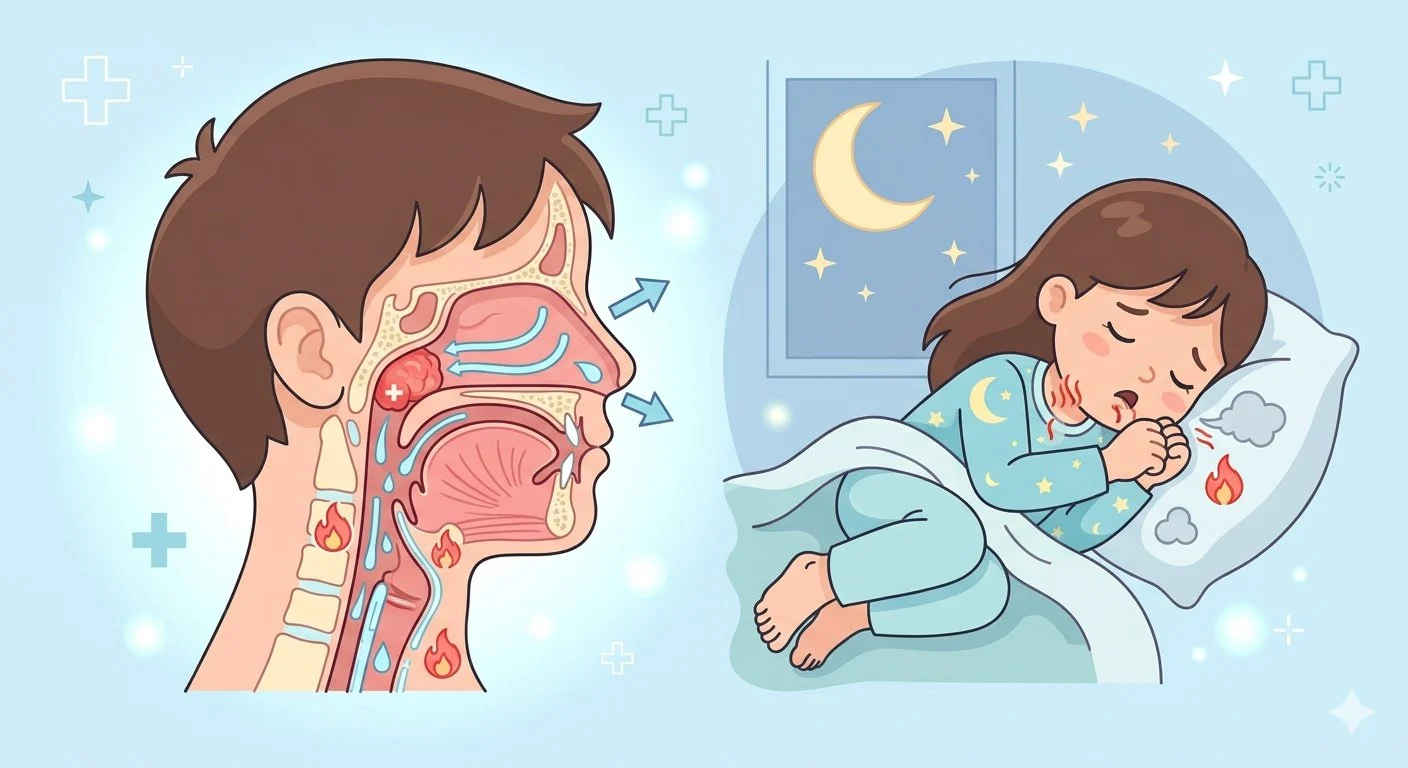
Table of Contents
- Introduction
- How adenoids become enlarged
- How enlarged adenoids may cause nighttime coughing
- Other symptoms that may accompany night cough
- Important: other causes of nighttime cough
- Diagnosis and ENT examination
- Treatment options
- Home care and prevention
- When should parents seek medical help?
- Frequently asked questions
- Conclusion
Introduction
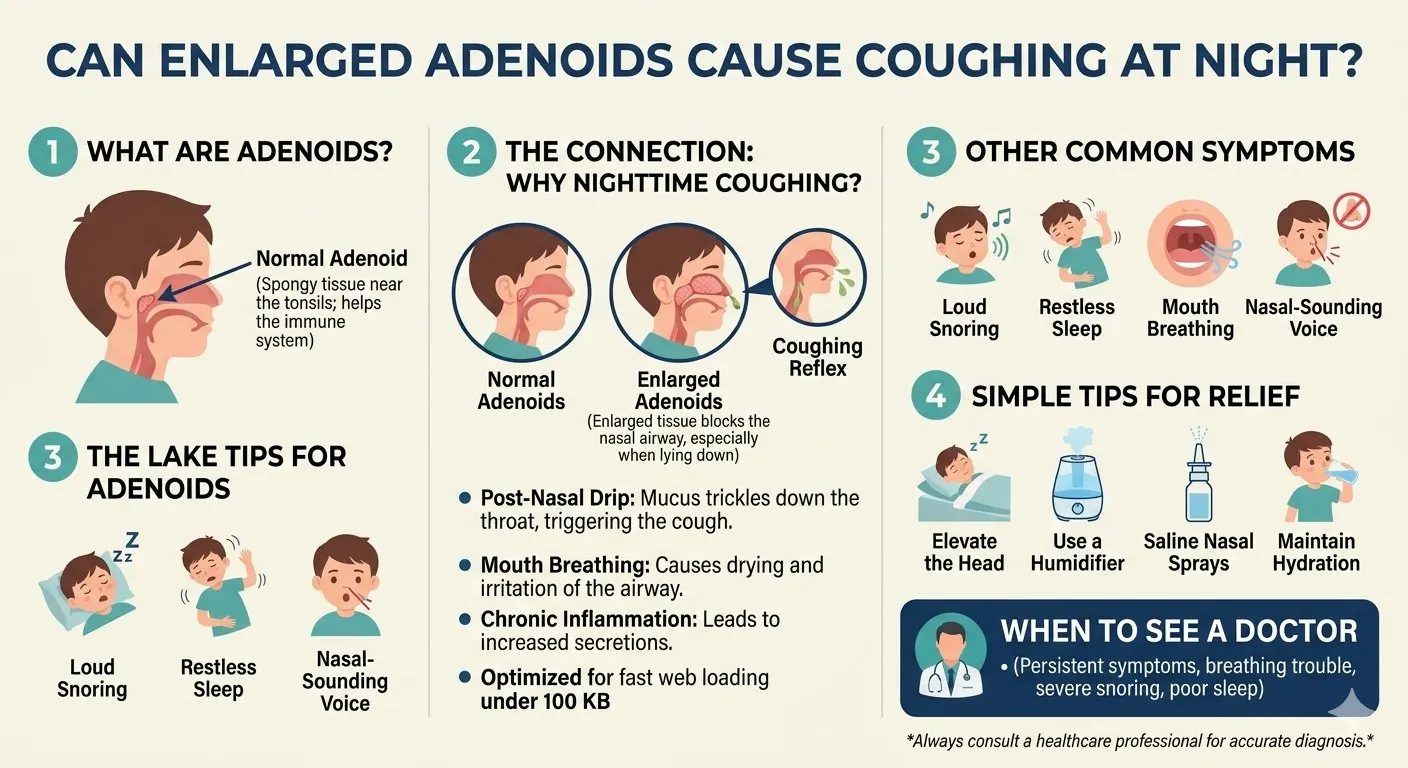
Adenoids are small masses of lymphoid tissue located high in the throat, behind the nose and the roof of the mouth, in an area called the nasopharynx. They are part of the body’s immune system and help recognise germs entering through the nose. Adenoids are relatively prominent during childhood and normally become smaller as a child grows, often regressing around adolescence.
When adenoids remain enlarged, a condition known as adenoid hypertrophy, they may contribute to nasal blockage, mouth breathing, snoring, disturbed sleep, recurrent ear problems and sometimes a persistent or nighttime cough. Therefore, the answer to the question, Can enlarged adenoids cause coughing at night? is yes—but enlarged adenoids are only one possible explanation. A cough occurring at night does not, by itself, prove that the adenoids are enlarged.
The association is often indirect: enlarged or inflamed adenoids can obstruct nasal airflow and interfere with the clearance of nasal secretions. Mucus may then trickle towards the throat, especially when a child lies down, causing irritation and repeated coughing or throat clearing. A careful assessment is important because asthma, viral infections, allergic rhinitis and other conditions can also cause nighttime cough.
How Adenoids Become Enlarged
Adenoids may enlarge as part of the normal immune response during childhood. Repeated viral or bacterial infections and ongoing inflammation can cause swelling; in some children the tissue remains enlarged even after an acute infection has settled. Allergic inflammation and exposure to irritants may coexist and aggravate nasal symptoms. The size of the adenoid alone is not the whole story: the amount of obstruction relative to the available space in the nasopharynx, together with the child’s symptoms, is clinically important.
It is useful to distinguish adenoid hypertrophy (enlargement) from adenoiditis (inflammation or infection of the adenoid tissue). They can occur together, but they are not identical. A child may have enlarged adenoids without an active bacterial infection, so antibiotics are not automatically required. Persistent symptoms need assessment rather than repeated self-medication.
How Enlarged Adenoids May Cause Nighttime Coughing
1. Postnasal drainage
Enlarged or inflamed adenoids may coexist with nasal inflammation and increased mucus. Secretions can collect in the back of the nose and flow down the posterior wall of the throat, a process commonly called postnasal drip or postnasal drainage. When the child lies down, the sensation of mucus in the throat may become more noticeable and stimulate sensory nerves that trigger the cough reflex. A child may cough, swallow repeatedly, clear the throat or wake up because of this irritation.
Not every child with postnasal drip will have a cough, and mucus sensation alone does not establish the cause. Nasal allergy, viral rhinitis and sinus inflammation can produce similar symptoms. The doctor therefore considers the complete pattern—nasal blockage, discharge, sneezing, snoring and examination findings—rather than attributing every cough to the adenoids.
2. Nasal obstruction and mouth breathing
When enlarged adenoids narrow the passage behind the nose, a child may find it difficult to breathe comfortably through the nose and may breathe through the mouth, particularly during sleep. Mouth breathing can dry the mouth and throat and contribute to irritation, a dry or tickling sensation and coughing. It may also be associated with snoring and restless sleep.
Persistent nasal obstruction can affect sleep quality and may coexist with enlarged tonsils. A child who habitually sleeps with the mouth open, snores loudly or has consistently blocked nasal breathing should be assessed for the underlying cause rather than treated only with cough medicines.
3. Sleep-disordered breathing and obstructive sleep apnoea
In some children, enlarged adenoids—often together with enlarged tonsils—narrow the upper airway during sleep. This can cause sleep-disordered breathing and, in more significant cases, obstructive sleep apnoea (OSA). Warning patterns include habitual loud snoring, pauses in breathing, gasping, choking sounds, restless sleep and unusual sleeping positions. A child may wake frequently, but coughing is not a defining or reliable sign of OSA.
Parents should not assume that every brief noise or cough is an apnoeic episode. If breathing pauses, gasping or laboured breathing are observed repeatedly, discuss this promptly with a paediatrician or ENT specialist. Depending on the history and examination, a sleep study may be considered.
4. Adenoid inflammation or associated infection
Chronic adenoiditis may be associated with persistent nasal discharge, mucus at the back of the throat, throat clearing, nasal obstruction and cough. Fever, worsening illness or thick/purulent discharge may suggest an acute infection, but mucus colour alone cannot reliably distinguish bacterial from viral infection. A clinician must decide whether an antibiotic is appropriate; antibiotics do not treat uncomplicated viral infections or simple adenoid enlargement.
Other Symptoms That May Accompany Night Cough
Can enlarged adenoids cause coughing at night? They can, especially when cough occurs along with other signs of nasal obstruction or sleep disturbance. Symptoms that may point towards adenoid-related problems include:

- Persistent nasal blockage or a stuffy nose.
- Habitual mouth breathing, during the day or while sleeping.
- Snoring or noisy breathing during sleep.
- Restless sleep, frequent waking or observed pauses in breathing.
- Persistent nasal discharge or mucus felt at the back of the throat.
- Repeated throat clearing or a sensation of mucus in the throat.
- A nasal-sounding or muffled voice.
- Recurrent middle-ear infections, fluid behind the eardrum or hearing difficulty.
- Daytime tiredness, irritability or difficulty concentrating after poor sleep.
These features are not all specific to adenoids. For example, allergic rhinitis can cause sneezing, itching and nasal congestion, while enlarged tonsils can contribute to snoring and OSA. Recurrent ear symptoms may occur because adenoid tissue can interfere with the function of the Eustachian tube, which helps ventilate the middle ear. An ENT examination helps identify which structures are involved.
Important: Other Causes of Nighttime Cough in Children
One of the most important points for parents is that nighttime cough should not automatically be labelled as an adenoid problem. Several conditions can produce a similar pattern:
- Asthma: Cough may worsen at night or with exercise, and may be accompanied by wheezing, chest tightness or breathlessness. Some children have cough-predominant asthma without obvious wheezing.
- Allergic rhinitis: Sneezing, nasal itching, watery discharge and congestion can lead to postnasal drainage and throat irritation.
- Viral respiratory infection: Cough can persist after a cold has improved. A cough following a viral infection does not necessarily indicate bacterial infection.
- Sinusitis: Persistent nasal symptoms, discharge and facial discomfort may occur, depending on the child’s age and clinical picture.
- Gastro-oesophageal reflux: Reflux may contribute to cough in selected children when compatible symptoms are present. Acid-suppressing medicines should not routinely be started for isolated cough without evidence of reflux.
- Protracted bacterial bronchitis: This is one consideration in a child with a continuous wet cough lasting more than four weeks; it requires clinical assessment.
- Inhaled foreign body: A sudden episode of coughing or choking, particularly in a young child, requires urgent assessment even if the child initially appears well.
- Environmental irritants: Tobacco smoke, vaping aerosols, dust, strong fragrances and indoor air pollution can aggravate cough.
In children, a cough lasting more than four weeks is generally considered chronic and deserves clinical evaluation. The pattern, duration, whether it is dry or wet, associated symptoms, growth and examination findings guide further investigation. A child should not be given repeated cough syrups, antibiotics or inhalers without a diagnosis and age-appropriate advice.
Diagnosis: How Does an ENT Specialist Check for Enlarged Adenoids?
Diagnosis begins with a detailed history. The doctor may ask when the cough started, whether it occurs only after lying down, whether it is dry or wet, whether the child snores, breathes through the mouth, has nasal discharge, experiences pauses in breathing, or has recurrent ear infections. Details about allergy, asthma, recent viral illness, exposure to smoke and the child’s sleep and daytime behaviour are also relevant.
1. Clinical examination
The ENT specialist examines the nose, throat, tonsils and ears. The adenoids are located behind the nose and usually cannot be assessed adequately by simply looking into the open mouth. Ear examination may identify fluid behind the eardrum or signs of recurrent middle-ear disease.
2. Nasal endoscopy
Flexible nasopharyngoscopy uses a thin camera passed gently through the nose to view the nasal passages and nasopharynx. When tolerated by the child and available, it can directly show the adenoid tissue, the degree of airway narrowing, retained secretions and other possible causes of obstruction. The examination is selected according to the child’s age, cooperation and clinical need.
3. Lateral nasopharyngeal X-ray
A lateral soft-tissue X-ray may be used in selected cases when endoscopy is not possible or additional information is needed. It provides an indirect view of the nasopharyngeal airway. It is not always necessary, and an X-ray should not replace clinical assessment or be ordered automatically for every child with a cough.
4. Hearing tests and tympanometry
If the child has hearing difficulty, recurrent ear infections or suspected fluid in the middle ear, the doctor may recommend pure-tone audiometry when age-appropriate and tympanometry. These tests assess hearing and middle-ear function; they do not diagnose the cause of cough directly.
5. Sleep study
If the history suggests significant sleep apnoea, a polysomnography (sleep study) may be recommended. It records breathing and other body signals during sleep. Not every child with snoring or enlarged adenoids requires a sleep study; the decision depends on the severity of symptoms, examination and associated medical conditions.
Treatment Options
Can enlarged adenoids cause coughing at night? Yes, but treatment should target the actual cause of the child’s symptoms. The decision depends on the degree of nasal obstruction, sleep disturbance, recurrent infections, ear problems, age and overall health. An enlarged adenoid seen on an examination or X-ray does not automatically mean surgery is required.
1. Observation and follow-up
Some children have enlarged adenoids but few troublesome symptoms. In such cases, observation and review may be appropriate because adenoid tissue often becomes smaller with age. The doctor will consider whether symptoms are affecting breathing, sleep, hearing, growth or quality of life before recommending intervention.
2. Saline nasal drops or spray
Saline drops or spray can help loosen and clear nasal secretions and may improve nasal comfort. Use a child-appropriate product and follow its instructions. For nasal irrigation, use sterile, distilled, or previously boiled and cooled water, and keep the device clean. Saline may relieve nasal symptoms but does not reliably shrink significantly enlarged adenoid tissue.
3. Intranasal corticosteroid sprays
A doctor may prescribe an intranasal corticosteroid for selected children, particularly when nasal inflammation or allergic rhinitis is contributing to symptoms. These sprays reduce inflammation; they are not instant decongestants and must be used with the correct technique and for the duration advised. The appropriate medicine and age suitability should be decided by the treating clinician. Possible local effects include nasal irritation or nosebleeds.
4. Allergy management
If allergic rhinitis is present, treatment may include allergen reduction and age-appropriate medication such as an antihistamine or nasal spray, based on the child’s symptoms. Antihistamines do not treat every type of adenoid enlargement and should not be used routinely without a reason. Avoiding smoke and relevant irritants is helpful.
5. Antibiotics
Antibiotics are considered only when a clinician diagnoses a bacterial infection for which antibiotic treatment is indicated. They do not reduce adenoid size in the absence of infection and should not be used simply because a child has a nighttime cough, nasal mucus or enlarged adenoids. Unnecessary antibiotics can cause side effects and contribute to antimicrobial resistance.
6. Adenoidectomy (surgical removal of adenoids)
Adenoidectomy may be considered when significant nasal obstruction, sleep-disordered breathing, persistent or recurrent adenoid-related problems, or selected middle-ear conditions continue despite appropriate management. The decision is based on the whole clinical picture—not nighttime cough alone. In some children, tonsil surgery may also be considered if the tonsils contribute to airway obstruction.
Adenoidectomy is generally performed under general anaesthesia, usually through the mouth, and many children go home the same day when medically appropriate. As with any operation, risks and benefits must be discussed with the surgeon. Potential complications include bleeding, infection, anaesthesia-related problems, temporary voice changes and persistence or recurrence of symptoms; adenoid tissue can occasionally regrow. Surgery is not a guaranteed cure for cough if the cough is due to asthma, allergy or another unrelated condition.
Home Care and Prevention
Supportive measures may reduce irritation and improve comfort, although they cannot replace assessment when a child has persistent symptoms or breathing difficulty.
- Maintain hydration: Offer regular fluids appropriate for the child’s age. Adequate hydration can help keep secretions less thick.
- Use saline appropriately: Saline drops or spray may help clear nasal secretions. Follow product instructions and safe-water guidance for any irrigation device.
- Reduce smoke exposure: Keep the home and car smoke-free. Avoid tobacco smoke, vaping aerosols and other airway irritants.
- Manage known allergies: Reduce exposure to identified triggers where practical and follow the clinician’s treatment plan.
- Keep the sleeping environment comfortable: A clean, well-ventilated, dust-conscious room may help. A humidifier is not essential; if used, it must be cleaned regularly to prevent mould and microbial growth.
- Observe sleep: Note habitual snoring, gasping, pauses in breathing and restless sleep. A short recording of a typical episode, if safe to obtain, may help the doctor understand the symptoms.
- Avoid unsupervised medicines: Do not give adult cough preparations, decongestants, antibiotics or multiple cold medicines to a child without professional advice. Some products are unsuitable for young children.
Parents sometimes try to elevate a child’s head with extra pillows. This is not a treatment for enlarged adenoids, and loose pillows or positioning devices may be unsafe for infants. Follow age-appropriate safe-sleep guidance, especially for babies.
When Should Parents Seek Medical Help?
Arrange an ENT or paediatric assessment if a child has persistent nasal blockage, habitual snoring, repeated nighttime cough with nasal symptoms, mouth breathing, recurrent ear infections, suspected hearing difficulty or sleep disruption. A cough that lasts more than four weeks should be assessed even if the child otherwise seems active.
Seek urgent medical attention if the child has difficulty breathing, blue or grey lips, severe chest retractions, marked drowsiness or is struggling to stay awake. Sudden choking or a possible inhaled foreign body also requires urgent evaluation. Prompt medical review is needed for coughing blood, persistent fever, poor weight gain, unexplained weight loss, night sweats, cough associated with feeding, or a child who appears seriously unwell.
Frequently Asked Questions
Can enlarged adenoids cause coughing at night every night?
They may contribute to recurrent nighttime cough when nasal obstruction, postnasal drainage or associated inflammation irritates the throat. However, a cough every night can also be caused by asthma, allergy, reflux or other respiratory conditions. The duration and accompanying symptoms should guide assessment.
Is nighttime cough a definite sign of enlarged adenoids?
No. Nighttime cough is a non-specific symptom. Enlarged adenoids become more likely when cough occurs with persistent nasal obstruction, mouth breathing, snoring, nasal discharge or recurrent ear problems. Examination is needed to confirm the diagnosis.
Can adenoids cause a dry cough as well as a wet cough?
Throat irritation from mouth breathing or postnasal drainage may produce a dry, tickling cough or repeated throat clearing. If there is substantial mucus, the cough may sound wet. The sound of the cough alone cannot identify the cause.
Does every child with enlarged adenoids need surgery?
No. Many children do not need an operation. Observation or medical treatment may be suitable when symptoms are mild. Surgery is considered when the child’s symptoms and examination findings show a meaningful problem such as persistent obstruction or sleep-disordered breathing.
Will adenoidectomy definitely stop nighttime coughing?
Not necessarily. If the cough is genuinely related to adenoid obstruction or associated postnasal drainage, treatment of that problem may help. If asthma, allergy, infection or another condition is responsible, the cough may continue unless that condition is also treated.
At what age do adenoids become smaller?
Adenoids are commonly prominent in early childhood and generally begin to regress as children grow, often around adolescence. The timing varies, and age alone should not be used to ignore significant breathing, sleep or ear symptoms.
Can enlarged adenoids affect hearing?
Yes. Their location near the openings of the Eustachian tubes means enlarged or inflamed adenoid tissue can interfere with middle-ear ventilation in some children. This may contribute to middle-ear fluid, recurrent ear infections or conductive hearing loss. Hearing assessment may be appropriate if parents notice difficulty hearing, speech concerns or frequent requests to repeat words.
Conclusion
Can enlarged adenoids cause coughing at night? Yes. Enlarged or inflamed adenoids may contribute to nighttime coughing through nasal obstruction, postnasal drainage, mouth breathing and associated upper-airway inflammation. They may also coexist with snoring and sleep-disordered breathing. Nevertheless, nighttime cough has several possible causes, and adenoids should not be blamed without appropriate assessment.
If a child has persistent cough along with nasal blockage, mouth breathing, snoring, pauses in breathing or recurrent ear problems, consult a paediatrician or ENT specialist. The right treatment may be observation, saline, prescribed nasal medication, allergy management or, in selected cases, adenoidectomy. The aim is not simply to stop the cough but to identify and treat the condition affecting the child’s breathing, sleep and general health.
Further Reading: Related Adenoid Articles on HealthUseful
For more detailed information, explore these existing related articles. These internal links are retained to support readers who want to understand adenoid symptoms, diagnosis and treatment in greater depth.
- How to reduce adenoids naturally
- Adenoidectomy surgery guide
- What age is best for adenoidectomy?
- Cost of adenoidectomy in India
- Coblation adenoidectomy cost in India
- Adenoids laser surgery cost
- Coblation adenoidectomy side effects
- Cost of adenoidectomy in Hyderabad
- Cost of adenoidectomy in Delhi
- Cost of adenoidectomy surgery in Mumbai
- Cost of adenoidectomy in Kerala
- Is adenoid surgery expensive?
- Do antihistamines help adenoids?
- How do you know if your child needs adenoids out?
- Is there any Ayurvedic treatment for adenoids?
- Do adenoids affect brain development?
- Can adenoids turn cancerous?
- How can I shrink my adenoids fast?
- When to worry about adenoids?
- What does Grade 3 adenoids mean?
- What herbs are good for swollen adenoids?
- How to shrink adenoids in toddlers
- How to help a child sleep better with enlarged adenoids
- Enlarged adenoids in children: symptoms parents may miss
- Is drooling normal after adenoidectomy?
- Adenoidectomy infection: warning signs
- What is the success rate of adenoid removal?
- Is adenoid surgery safe?
- Is removing adenoids a good idea?
- What happens if adenoids are not removed?
- Adenoid cystic carcinoma symptoms
- Do kids sleep better after adenoid removal?
- Can my child swim after adenoidectomy?
- Can removing adenoids affect behaviour?
- Adenoids and speech delay
- How to prevent adenoid problems in children
- Are adenoids linked to allergies?
- What to avoid after adenoid surgery
- Adenoids vs allergies
- Are adenoid problems genetic?
- Can food get stuck in adenoids?
- Do adenoids affect the brain?
- How long does adenoid surgery take?
- How to keep adenoids healthy naturally
- Severe headache after adenoidectomy
- Is adenoid removal risky?
- Does removing adenoids improve hearing?
- Do you get sick more without adenoids?
- Can adenoids cause ear pain?
- Adenoids removed but still snoring?
- Can you have enlarged adenoids without enlarged tonsils?
- How ENT specialists check adenoids
- At what age are adenoids most active?
- Do adults have adenoids?
- Long-term effects of adenoid removal
- Can adenoids grow back in adults?
- How long does it take for adenoids to grow back?
- How much does an adenoid X-ray cost?
- Is adenoid surgery covered by insurance?
- Cefuroxime and adenoid infections
- Can adenoids cause low oxygen levels?
- Can enlarged adenoids cause hearing loss?
- Does adenoid removal cause weight gain?
- Adenoids and asthma
Medical References
- MedlinePlus, US National Library of Medicine. Enlarged adenoids. Reviewed July 2025.
- Ahmad Z, et al. Adenoid hypertrophy—diagnosis and treatment: the new S2k guideline. 2023.
- National Health Service (NHS). Adenoidectomy.
- Cornwall and Isles of Scilly NHS. Chronic cough in children: clinical referral guidance. Review date November 2025.
- Nationwide Children’s Hospital. Enlarged adenoid.
- NCBI Bookshelf. Adenoid hypertrophy.
Stay Connected for More Health Information
For further health-related topics and updates, readers may visit our Facebook page, watch educational videos on our YouTube channel, or join the HealthUseful WhatsApp group.
For ENT consultation, online consultation or surgery-related appointments, visit Dr. Sagar Rajkuwar’s clinic website.
ENT Consultation & Surgery
Dr. Sagar Rajkuwar (MS-ENT)
Prabha ENT Clinic, Ambad, Nashik
📱 7387590194 | 9892596635
🌐 www.entspecialistinnashik.com
Medical Disclaimer
Medical Disclaimer: This article is for educational purposes only and does not replace professional medical advice, diagnosis, or treatment.