Can Adenoids Grow Back in Adults? The Truth You Need to Know
The remaining tissue shrinks over time, and adenoids don’t usually recur in adults once removed.
By Dr. Sagar Rajkuwar, MS-ENT — ENT Specialist, Nashik, Maharashtra, India
Clinic: 🌐 www.entspecialistinnashik.com
Introduction
Can adults’ adenoids resurface? In general, it is uncommon for the adenoids to regrow after infancy. During adolescence, adenoid tissue typically shrinks and is usually much less noticeable in adulthood.
Adults may, nevertheless, still have persistent or enlarged adenoid tissue. Thus, symptoms including nasal blockage, mouth breathing, snoring, postnasal drip, or ear problems may manifest.
It is crucial to remember that a adult nasopharyngeal mass or a noticeable tissue expansion shouldn’t be immediately considered adenoid tissue. Because other disorders can cause comparable symptoms, a thorough ENT examination is necessary.
Table of contents-
- 1. What Transpires to Adenoids As We Get Older?
- 2. Can Adenoids Regrow Following Excision?
- 3. Actual Regrowth vs. Ongoing Adenoids
- 4. What are the reasons why adenoid tissue may stay enlarged in adults?
- 5. Signs and Symptoms of Adenoid Hypertrophy in Adults
- 6. Is it possible for adults to experience ear problems as a result of adenoid expansion?
- 7. How Are Adenoids in Adults Diagnosed When They Are Big?
- 8. Other Adult Adenoid-like Disorders
- 9. When should an adult with swollen adenoids worry?
- 10. Adult Adenoid Enlargement Treatment
- 11. Adenoidectomy in adults
- 12. Why Histological Evaluation May Be Important for Adults
- 13. Is it possible for adenoids to regenerate after surgery years later?
- 14. Is it possible for enlarged adult adenoids to go away on their own?
- 15. FAQs
- 16. When Should You See an ENT Specialist?
- 17. Summary
1. What Transpires to Adenoids As We Get Older?
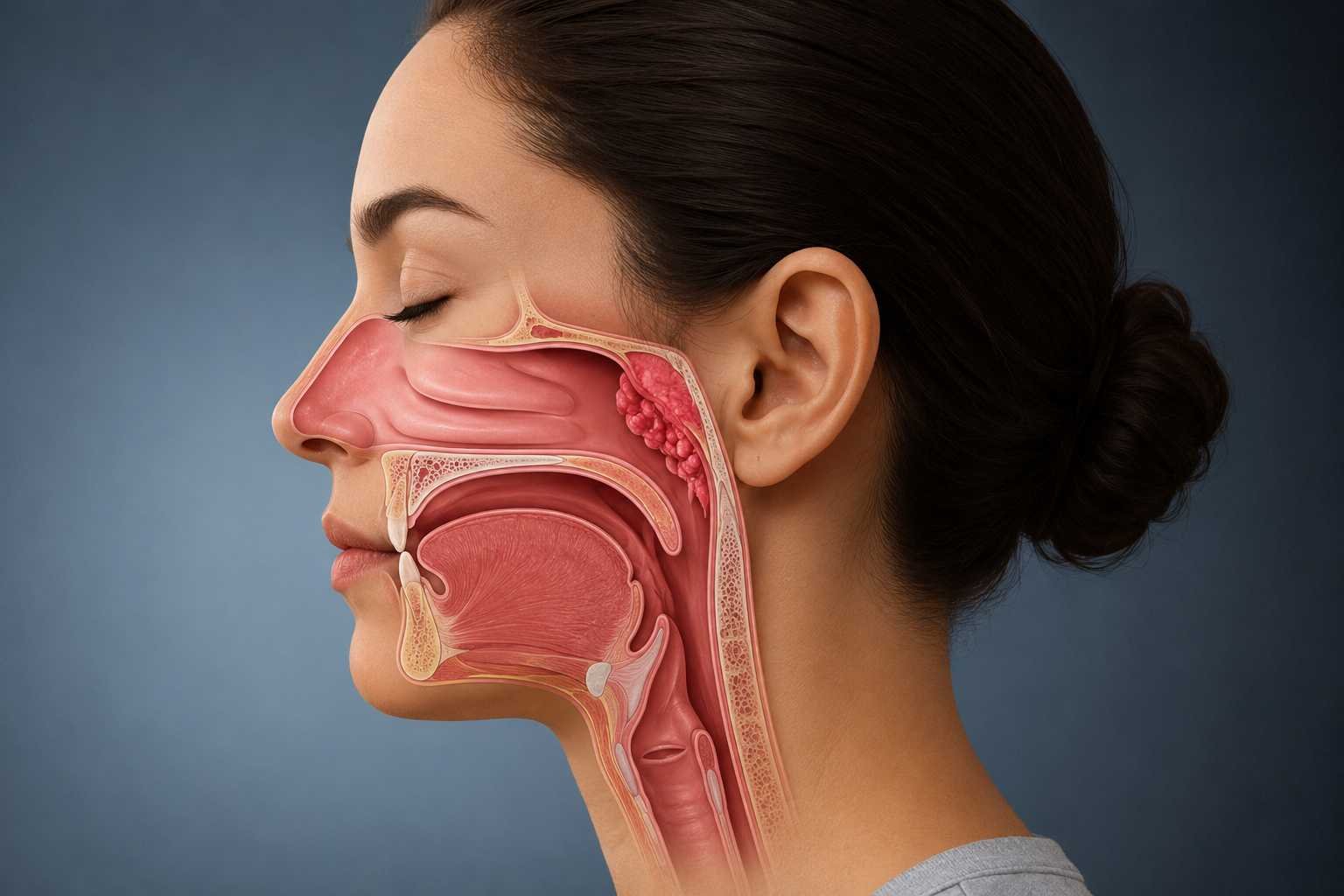
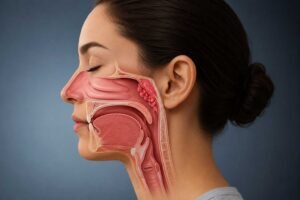
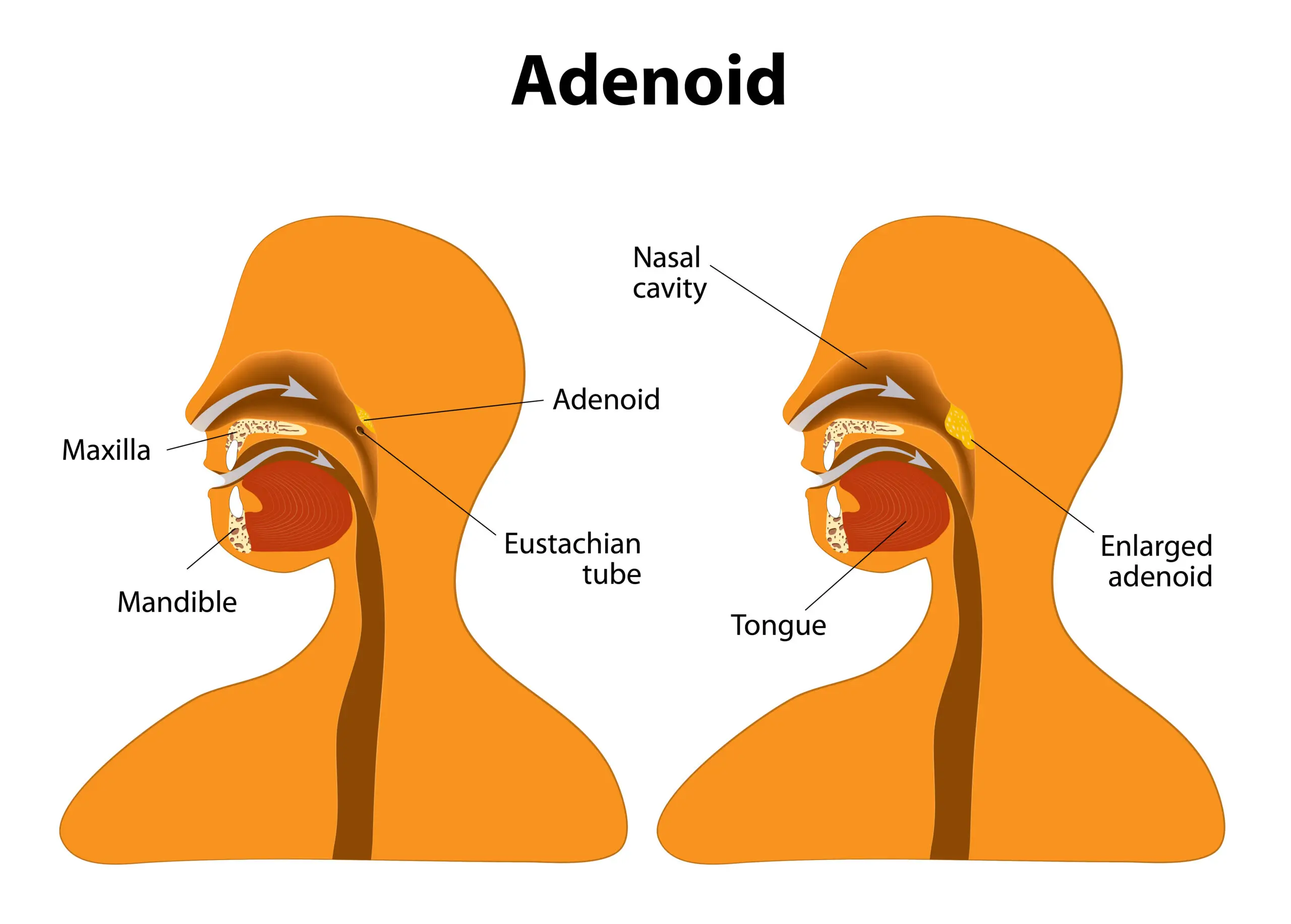
The lymphoid tissue known as adenoids can be found in the nasopharynx, which is located at the back of the nasal cavity.
During childhood, they are especially engaged. Typically, adenoid tissue reaches its largest size during childhood and eventually shrinks during puberty.
The adenoids are typically significantly reduced in size by the time one reaches maturity.
This explains why enlarged adenoids are far more frequent in children than in adults.
2. Can Adenoids Regrow Following Excision?
Although clinically significant recurrence in adults is rare, it is possible for adenoid tissue to enlarge or recur.
Sometimes, minute bits of tissue may persist after an adenoidectomy. This leftover tissue can occasionally grow again in kids.
Nevertheless, the typical inclination of adenoid tissue in adults is toward regression rather than noticeable expansion.
Hence, when an adult who had an adenoidectomy many years ago experiences a return of symptoms, the doctor should rule out recurrent hypertrophy, persistent tissue, or another underlying issue rather than presuming that the adenoids have merely “grown back.”
Even if it is uncommon, research on adult adenoid hyperplasia indicates that bigger adenoid tissue can develop in adults.
3. Actual Regrowth vs. Ongoing Adenoids
It is important to differentiate between these two circumstances.
Adenoids that won’t go away
Because the adenoids did not totally vanish with age, some lymphoid tissue may continue to be present.
The tissue may enlarge as a result of inflammation, allergies, infection, or other causes, making it visible.
After adenoidectomy, there is true regeneration.
Adults have a significantly lower chance of experiencing real recurrence after a prior surgery.
An ENT expert should determine precisely what the tissue signifies rather than assuming it is recurrent adenoid tissue if an adult develops a nasopharyngeal mass after having adenoidectomy previously.
4. What are the reasons why adenoid tissue may stay enlarged in adults?
Adult adenoid hypertrophy may be linked to a number of variables, such as:
- Persistent inflammation
- Conditions involving allergies
- repeated upper respiratory infections
- Irritant exposure or smoking
- Prior adenotonsil operation
- Other inflamed illnesses
According to an adult research, patients with adenoid hypertrophy had relationships with allergy, smoking, a deviated nasal septum, and a history of adenotonsillectomy.
These relationships do not, however, suggest that every adult with such factors will acquire enlarged adenoids.
5. Signs and Symptoms of Adenoid Hypertrophy in Adults
Adults who have swollen adenoid tissue may have symptoms like:

Symptoms of the nose
- Chronic nasal obstruction
- Hard time breathing through nose
- Breathing through the mouth
- postnasal drip
Symptoms associated with sleeping
- Snoring.
- Sleep of poor quality
- Breathing problems during sleep
Ear symptoms
- Fullness or pressure in the ear
- Middle-ear issues that recur
- Dysfunction of the eustachian tube
- Hearing impairments that are conductive
Symptoms of the throat
- persistent throat irritation
- Drip after the nose
- Upper respiratory symptoms that recur often
Allergic rhinitis, persistent sinusitis, nasal polyps, and structural nasal disorders can all cause these symptoms, which are not exclusive to adenoids.
6. Is it possible for adults to experience ear problems as a result of adenoid expansion?
Indeed.
The adenoid tissue is located close to the Eustachian tube apertures. A large increase could make it difficult for the middle ear to ventilate properly.
This might lead to:
- Pressure on the ear
- Dysfunction of the eustachian tube
- fluid in the middle ear
- Hearing loss that is conductive
As a result, a grown-up with unexplainable ear issues and nasal blockage may need to be assessed for nasopharyngeal problems.
7. How Are Adenoids in Adults Diagnosed When They Are Big?
A thorough diagnosis is crucial since adult nasopharyngeal masses have a wider differential diagnosis than adenoid enlargement in youngsters.
Endoscopy of the nose
Nasal endoscopy is among the most helpful procedures.
The ENT specialist can examine the nasal cavity and nasopharynx directly and evaluate the tissue’s size and appearance with the help of a small endoscope.
In adulthood, the efficacy of endoscopic examination for identifying adenoid hypertrophy has been expressly established.
Photography
Consider an MRI or CT scan based on the clinical information.
Imaging can aid in determining the size of a mass and pinpointing traits that warrant more study.
Biopsy
Tissue sampling may be recommended by the ENT specialist if the appearance is odd or if another disease is suspected.
Because a nasopharyngeal mass shouldn’t be automatically categorized as adenoid tissue, this is especially crucial in adults. Reviews and adult guidelines highlight the importance of evaluating neoplastic causes while there is a lot of adenoid-like tissue.
8. Other Adult Adenoid-like Disorders
This section is crucial for search intent and medical completeness, thus it should be kept.
Possible causes of nasopharynx-related mass or symptoms include:
- long-lasting rhinitis
- Allergic rhinitis is the medical word for hay fever.
- Polyps in the nose
- Septum nasal devié
- persistent illness
- Benign lesions of the nasopharynx
- Lymphoid disorders
- Tumors of the nasopharynx
While some of these conditions are uncommon, it’s essential to rule them out if the clinical signs are worrisome.
9. When should an adult with swollen adenoids worry?
If there is: An adult should get medical evaluation.
- Chronic nasal blockage
- A visible or suspected nasopharyngeal mass
- Recurring ear problems or those for which there is no obvious explanation
- Persistent symptoms on one side of the body
- Nosebleeds for no apparent reason.
- swelling in the neck
- Enduring hearing damage
- Pain that is severe in the face or nasopharynx
- Symptoms that become worse and worse
Although these symptoms don’t necessarily signal cancer, they should be treated by a doctor rather than self-medicating.
10. Adult Adenoid Enlargement Treatment
The kind of examination results, symptoms, severity, and cause all impact treatment.
Treatment for medical conditions

Treatment may include, depending on the diagnosis:
- Treatment of allergic rhinitis
- Sprays of nasal corticosteroids
- Proper management of the infection
- Irrigation of the nose with saltwater
- Management of comorbid sinus disease
Instead of being initiated simply because an adult has nasal blockage, medication should be chosen based on the underlying cause.
11. Adenoidectomy in adults
An ENT specialist may recommend adenoidectomy if symptoms continue despite proper medical treatment and substantial adenoid hypertrophy is confirmed.
Endoscopic adenoidectomy has been researched in adults and can offer improvement in properly chosen patients.
The precise surgical method is determined by the size and location of the tissue as well as the patient’s specific anatomy.
12. Why Histological Evaluation May Be Important for Adults
This is a crucial revision to the initial piece.
The ENT surgeon may advise histopathological examination of the tissue removed, particularly when the look or clinical circumstances are strange, since large adenoid-like tissue in an adult can occasionally indicate something more than simple benign adenoid hypertrophy.
Histopathological assessment of adenoid tissue removed has been often discussed in adult studies.
13. Is it possible for adenoids to regenerate after surgery years later?
Adenoid tissue can relapse, but considerable regrowth in adults is unusual.
There are a number of possible reasons if symptoms come back years after a child’s adenoidectomy:
- Small amounts of residual tissue have increased in size.
- Instead of totally disappearing, the adenoid tissue remained.
- A distinct sinus or nasal disease is to blame.
- Another nasopharyngeal lesion is found.
Because of this, nasal endoscopy is superior to simply assuming that the adenoids have recurred.
14. Is it possible for enlarged adult adenoids to go away on their own?
Enlarged lymphoid tissue may occasionally diminish with treatment for an underlying inflammatory or nasal issue.
Furthermore, a recent study found that spontaneous regression of adult adenoid hypertrophy occurred in some patients following nasal surgery, showing that enlargement does not always necessitate direct adenoid surgery.
Treatment, however, should be tailored to each person’s diagnosis.
15. FAQs
Is it possible for adenoids to recur in grownups?
Genuine regeneration is uncommon in adult humans. Similar symptoms may be due to persistent tissue, residual tissue, or another nasopharyngeal condition.
Is it possible for adenoids to return after being removed?
Although recurrence in adults is rare, particularly in younger individuals, recurrence of adenoid tissue is possible.
What are the signs of adult enlarged adenoids?
Symptoms could include ear pressure, mouth breathing, nasal blockage, postnasal drip, Eustachian tube issues, and snoring.
How is adult adenoiditis diagnosed?
The nasopharynx is typically directly seen using nasal endoscopy. In rare cases, a biopsy or imaging may be necessary.
Is there such a thing as adult adenoid surgery?
Certainly. Adenoidectomy may be performed on carefully chosen individuals if adenoid hypertrophy is proven to be a cause of serious symptoms or consequences.
Is an enlarged adenoid in an adult always safe?
No. Although most cases are harmless, a large nasopharyngeal tumor in an adult must be thoroughly examined to rule out other causes.
16. When Should You See an ENT Specialist?
If nasal blockage, snoring, ear symptoms, postnasal drip, or other symptoms continue despite routine therapy, see an ENT specialist.
Avoid assuming that adenoids are responsible for every adult nasal blockage. Genuine cause can be identified by proper examination, thus avoiding needless treatment.
17. Summary
Is it possible for adenoids to recur in grownups? The simple response is that considerable real regrowth is uncommon, however persistent or overgrown adenoid tissue can occasionally be seen in adults.
Adult adenoid enlargement is uncommon and may mimic other nasopharyngeal conditions; therefore, nasal endoscopy and a thorough ENT assessment are essential.
Rather than presuming that the adenoids have simply regrown, it is imperative to ascertain the root cause if an adult experiences chronic nasal blockage, ear problems, snoring, or a suspected nasopharyngeal mass.
Medical Disclaimer
This article is for educational purposes only and does not replace professional medical advice, diagnosis, or treatment. Adult adenoid enlargement is uncommon, and persistent nasal blockage, ear problems, or a nasopharyngeal mass should be evaluated by an ENT specialist. Do not self-diagnose or begin treatment based solely on this information.
📞 ENT Consultation & Surgery
Dr. Sagar Rajkuwar (MS-ENT)
Prabha ENT Clinic, Ambad, Nashik
📱 7387590194 | 9892596635
🌐 www.entspecialistinnashik.com
Medical References
- Kamel R, Ishak E. Enlarged adenoid and adenoidectomy in adults. J Laryngol Otol. 1990;104(12):965–967.
- Kothekar A, Vallur S. Adenoid Hypertrophy and Endoscopic Adenoidectomy in Adults. Indian J Otolaryngol Head Neck Surg. 2022;74(Suppl 2):1067–1072.
- Paramaesvaran S, et al. Incidence and potential risk factors for adenoid regrowth and revision adenoidectomy: A meta-analysis. Int J Pediatr Otorhinolaryngol. 2020;138:110220.
- Adenoid hypertrophy—diagnosis and treatment: the new S2k guideline. Eur Arch Otorhinolaryngol.
Adenoids – Categorized Internal Linking List
1. Adenoid Types, Grades & Basic Information
- What Does Grade 3 Adenoids Mean? Symptoms, Causes & Treatment Explained
https://healthuseful.com/what-does-grade-3-adenoids-mean/ - At What Age Are Adenoids Most Active? Every Parent Should Know This!
https://healthuseful.com/at-what-age-are-adenoids-most-active/ - Can You Have Enlarged Adenoids Without Enlarged Tonsils?
https://healthuseful.com/can-you-have-enlarged-adenoids-without-enlarged-tonsils/ - Enlarged Adenoids in Children: Symptoms That Look Harmless But Aren’t
https://healthuseful.com/enlarged-adenoids-in-kids-symptoms-parents-miss/
2. Adenoid Symptoms & Problems
- When to Worry About Adenoids?
https://healthuseful.com/when-to-worry-about-adenoids/ - Can Adenoids Cause Ear Pain?
https://healthuseful.com/can-adenoids-cause-ear-pain/ - Can Adenoids Cause Low Oxygen Levels?
https://healthuseful.com/can-adenoids-cause-low-oxygen/ - Can Enlarged Adenoids Cause Hearing Loss?
https://healthuseful.com/can-adenoids-affect-hearing/ - Adenoids and Speech Delay
https://healthuseful.com/can-adenoids-affect-speech/ - How to Help a Child Sleep Better with Enlarged Adenoids
https://healthuseful.com/how-to-help-a-child-sleep-with-enlarged-adenoids/ - Do Adenoids Affect the Brain?
https://healthuseful.com/do-adenoids-affect-the-brain/ - Do Adenoids Affect Brain Development in Children?
https://healthuseful.com/do-adenoids-affect-brain-development/ - Can Food Get Stuck in Adenoids?
https://healthuseful.com/can-food-get-stuck-in-adenoids/
3. Causes, Allergies & Related Conditions
- Are Adenoids Linked to Allergies?
https://healthuseful.com/are-adenoids-related-to-allergies/ - Adenoids vs. Allergies
https://healthuseful.com/adenoids-vs-allergies-what-doctors-want-you-to-understand/ - Are Adenoid Problems Genetic?
https://healthuseful.com/are-adenoid-problems-genetic/ - Adenoids and Asthma
https://healthuseful.com/can-adenoids-make-asthma-worse/ - Do Antihistamines Help Adenoids?
https://healthuseful.com/do-antihistamines-help-adenoids/
4. Natural Treatment & Shrinking Adenoids
- How to Reduce Adenoids Naturally?
https://healthuseful.com/how-to-reduce-adenoids-naturally/ - How Can I Shrink My Adenoids Fast?
https://healthuseful.com/how-can-i-shrink-my-adenoids-fast/ - What Herbs Are Good for Swollen Adenoids?
https://healthuseful.com/what-herbs-are-good-for-swollen-adenoids/ - Is There Any Ayurvedic Treatment for Adenoids?
https://healthuseful.com/is-there-any-ayurvedic-treatment-for-adenoids/ - How to Keep Adenoids Healthy Naturally
https://healthuseful.com/how-to-keep-adenoids-healthy/ - How to Shrink Adenoids in Toddlers
https://healthuseful.com/how-to-shrink-adenoids-in-toddlers/ - Foods to Avoid for Adenoids
https://healthuseful.com/foods-to-avoid-for-adenoids/
5. Diagnosis & ENT Examination
- How Doctors Check Adenoids: Inside the ENT Process Explained Clearly
https://healthuseful.com/how-ent-specialists-check-adenoids/ - How Much Does an Adenoid X-Ray Cost?
https://healthuseful.com/how-much-does-an-adenoid-xray-cost/
6. Adenoidectomy – Surgery & General Information
- Adenoidectomy Surgery Guide – Expert Advice
https://healthuseful.com/adenoidectomy-surgery/ - What Age Is Best for Adenoidectomy?
https://healthuseful.com/what-age-is-best-for-adenoidectomy/ - How Do You Know If Your Child Needs Adenoids Out?
https://healthuseful.com/how-do-you-know-if-your-child-needs-adenoids-out/ - Is Adenoid Surgery Expensive?
https://healthuseful.com/is-adenoid-surgery-expensive/ - How Long Does Adenoid Surgery Take?
https://healthuseful.com/how-long-does-adenoid-surgery-take/ - Is Removing Adenoids a Good Idea?
https://healthuseful.com/is-removing-adenoids-a-good-idea/ - What Happens If Adenoids Are Not Removed?
https://healthuseful.com/what-happens-if-adenoids-are-not-removed/
7. Adenoidectomy Safety, Risks & Success
- Is Adenoid Surgery Safe?
https://healthuseful.com/is-adenoid-surgery-safe/ - Is Adenoid Removal Really Risky?
https://healthuseful.com/how-risky-is-adenoid-removal/ - What Is the Success Rate of Adenoid Removal?
https://healthuseful.com/what-is-the-success-rate-of-adenoids-removal/ - How Many People Have Died from Adenoidectomy?
https://healthuseful.com/how-many-people-have-died-from-adenoidectomy/ - Is Adenoid Removal Safe in the Long Run?
https://healthuseful.com/long-term-effects-of-adenoid-removal/ - Do You Get Sick More Without Adenoids?
https://healthuseful.com/do-you-get-sick-more-without-adenoids-the-truth-by-ent-specialist/
8. Adenoidectomy Recovery & Aftercare
- Is Drooling Normal After Adenoidectomy?
https://healthuseful.com/is-drooling-normal-after-adenoidectomy/ - Adenoidectomy Infection: Warning Signs
https://healthuseful.com/how-do-you-know-if-your-adenoidectomy-is-infected/ - What to Avoid After Adenoid Surgery
https://healthuseful.com/what-to-avoid-after-adenoid-surgery/ - Severe Headache After Adenoidectomy
https://healthuseful.com/severe-headache-after-adenoidectomy/ - Can My Child Swim After Adenoidectomy?
https://healthuseful.com/can-my-child-swim-after-adenoidectomy/ - Do Kids Sleep Better After Adenoid Removal?
https://healthuseful.com/do-kids-sleep-better-after-adenoid-removal/ - When Are the Worst Days After Tonsillectomy and Adenoidectomy?
https://healthuseful.com/what-are-the-worst-days-after-tonsillectomy-and-adenoidectomy/
9. Effects After Adenoid Removal
- Does Removing Adenoids Improve Hearing?
https://healthuseful.com/does-removing-adenoids-improve-hearing/ - Does Adenoid Removal Cause Weight Gain?
https://healthuseful.com/does-adenoid-removal-cause-weight-gain/ - Can Removing Adenoids Affect Behavior?
https://healthuseful.com/can-adenoid-removal-affect-behavior/ - Adenoids Removed but Still Snoring?
https://healthuseful.com/can-you-still-snore-without-adenoids/
10. Adenoid Regrowth
- Can Adenoids Grow Back in Adults?
https://healthuseful.com/can-adenoids-grow-back-in-adults/ - How Long Does It Take for Adenoids to Grow Back After Surgery?
https://healthuseful.com/how-long-does-it-take-for-adenoids-to-grow-back-after-surgery/
11. Adenoidectomy Cost in India
- Cost of Adenoidectomy in India
https://healthuseful.com/cost-of-adenoidectomy-in-india/ - Coblation Adenoidectomy Cost in India
https://healthuseful.com/coblation-adenoidectomy-cost-in-india/ - Adenoids Laser Surgery Cost
https://healthuseful.com/adenoids-laser-surgery-cost/ - Is Adenoid Surgery Covered by Insurance?
https://healthuseful.com/is-adenoid-surgery-covered-by-insurance/
12. Adenoidectomy Cost by City/Region
- Cost of Adenoidectomy in Hyderabad
https://healthuseful.com/cost-of-adenoidectomy-in-hyderabad/ - Cost of Adenoidectomy in Delhi
https://healthuseful.com/cost-of-adenoidectomy-in-delhi/ - Cost of Adenoidectomy Surgery in Mumbai
https://healthuseful.com/cost-of-adenoidectomy-surgery-in-mumbai/ - Cost of Adenoidectomy in Kerala
https://healthuseful.com/cost-of-adenoidectomy-in-kerala/
13. Surgical Techniques & Side Effects
- Coblation Adenoidectomy Side Effects
https://healthuseful.com/coblation-adenoidectomy-side-effects/ - Adenoids Laser Surgery Cost
https://healthuseful.com/adenoids-laser-surgery-cost/
14. Infection & Medicines
- Cefuroxime and Adenoid Infections: Effective or Not?
https://healthuseful.com/cefuroxime-and-adenoid-infections-effective-or-not/ - Adenoidectomy Infection: Warning Signs You Should Never Ignore
https://healthuseful.com/how-do-you-know-if-your-adenoidectomy-is-infected/
15. Rare Conditions / Cancer
- Can Adenoids Turn Cancerous?
https://healthuseful.com/can-adenoids-turn-cancerous/ - Adenoid Cystic Carcinoma Symptoms
https://healthuseful.com/adenoid-cystic-carcinoma-symptoms-early-warning-signs-you-shouldnt-ignore/