What Is Mistaken for Nasal Polyps? Common Conditions You Should Know
By Dr. Sagar Rajkuwar, ENT Specialist, Nashik, Maharashtra, India
🌐 www.entspecialistinnashik.com
Chronic inflammation causes nasal polyps, which are soft, noncancerous tumors that form in the sinuses or nasal passages. Common symptoms include a stuffy nose, sinus discomfort, a diminished sense of smell, and trouble breathing. But many other disorders can have similar symptoms and are frequently misdiagnosed as nasal polyps, resulting in delayed or ineffective care.
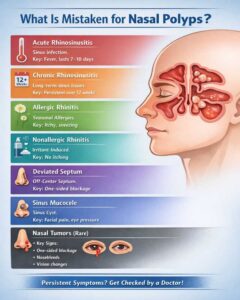
Table of contents
- Nasal Polyps: Causes, Symptoms, and How to Identify Them
- Nasal Polyps Symptoms: Congestion, Runny Nose, Loss of Smell & Sinus Pressure
- Acute Rhinosinusitis vs Nasal Polyps
- Chronic Rhinosinusitis: Long-Term Nasal Congestion and Sinus Inflammation
- Allergic Rhinitis: Causes, Symptoms, and Triggers
- Nonallergic Rhinitis: Causes, Symptoms, and Diagnosis
- Deviated Nasal Septum: Causes, Symptoms, and One-Sided Nasal Congestion
- Sinus Mucocele: Causes, Symptoms, and One-Sided Nasal Congestion
- The Importance of Correct Diagnosis
- When to See an ENT Specialist for Nasal Polyps
- Conclusion
- FAQs
Nasal Polyps: Causes, Symptoms, and How to Identify Them
You may develop Nasal polyps when your nasal passages or sinuses remain chronically inflamed and swollen. These soft, noncancerous growths form from the mucous membranes lining the nose and sinuses and can gradually increase in size over time.
Because nasal polyps are often small and painless, many people may not even realize they have them in the early stages. While some individuals experience noticeable symptoms, others may remain asymptomatic, making early detection challenging.
Common Symptoms of Nasal Polyps
Nasal polyps can present with symptoms similar to other sinus conditions, which can make diagnosis difficult. Common signs include:
- Persistent nasal congestion or blockage
- Reduced or loss of sense of smell
- Runny nose or excess mucus
- Postnasal drip (mucus flowing into the throat)
- Facial pressure or heaviness
Who Is at Risk?
Nasal polyps are frequently associated with Chronic Rhinosinusitis, a condition affecting a significant portion of adults. The risk is higher in individuals with:
- Asthma
- Allergic Rhinitis
- Recurrent sinus infections
- Ongoing nasal inflammation
Why Diagnosis Can Be Tricky
The symptoms of nasal polyps often overlap with other sinus and nasal conditions, making it difficult to distinguish them without proper medical evaluation. Since symptoms can vary from person to person, a clinical examination and appropriate tests are essential for accurate diagnosis.
Although nasal polyps can result in symptoms like sinus pressure, nasal congestion, and loss of smell, they are frequently mistaken for other sinus ailments. Early diagnosis is crucial for ensuring proper treatment and preventing complications.
Acute Rhinosinusitis vs Nasal Polyps
Acute rhinosinusitis is a common cause of sinus inflammation, usually triggered by viral infections such as the common cold. While its symptoms can closely resemble nasal polyps, understanding the key differences helps in accurate diagnosis and timely treatment.
Common Symptoms of Acute Rhinosinusitis
Acute rhinosinusitis often presents with:
- Nasal congestion or blockage
- Sinus pain and facial tenderness
- Headache
- Reduced or altered sense of smell
However, unlike nasal polyps, it may also include:
- Fever
- Fatigue
- General feeling of illness
Key Differences from Nasal Polyps
- Duration: Acute rhinosinusitis typically resolves within 7–10 days, especially if viral.
- Cause: Usually infection-related (viral or sometimes bacterial), while nasal polyps are linked to chronic inflammation.
- Symptoms severity: Fever and fatigue are more common in infections than in polyps.
When to Be Concerned
If symptoms persist beyond 10 days, worsen over time, or recur frequently, it may indicate:
- Chronic rhinosinusitis
- Secondary bacterial infection
- Underlying conditions like nasal polyps
Takeaway
Although acute rhinosinusitis and nasal polyps share similar symptoms, the presence of fever, shorter duration, and infection-related onset helps differentiate them. If symptoms don’t improve or keep returning, medical evaluation is essential for proper diagnosis and treatment.
Chronic Rhinosinusitis: Long-Term Nasal Congestion and Sinus Inflammation
Chronic rhinosinusitis is a long-lasting condition characterized by persistent inflammation of the nose and sinus cavities. It is diagnosed when symptoms such as nasal congestion, facial pressure, and sinus tenderness continue for more than 12 weeks, even after proper medical treatment.
What Causes Chronic Rhinosinusitis?
Chronic rhinosinusitis usually develops when irritation—such as infection, allergies, or nasal trauma—blocks the sinus openings. This blockage leads to:
- Thick mucus buildup
- Ongoing inflammation
- Changes in the sinus lining
Over time, this creates a cycle of congestion and swelling that is difficult to resolve without targeted treatment.
Risk Factors for Chronic Rhinosinusitis
Several conditions can increase the risk, including:
- Allergic rhinitis (nasal allergies)
- Asthma
- Deviated nasal septum
- Weak immune system
- Chronic Rhinosinusitis and Nasal Polyps
Chronic rhinosinusitis is often associated with nasal polyps, but it can also occur without polyps. When polyps are present, symptoms may be more severe and persistent.
Common Symptoms
- Persistent nasal blockage
- Facial pain or pressure
- Thick nasal discharge or postnasal drip
- Reduced or loss of smell
- Ongoing sinus discomfort
Key Takeaway
Chronic rhinosinusitis is a long-term inflammatory condition that requires proper evaluation and management. If symptoms last beyond 12 weeks or keep recurring, seeking medical care is essential to prevent complications and improve sinus health.
Allergic Rhinitis: Causes, Symptoms, and Triggers
Allergic rhinitis, commonly known as hay fever or seasonal allergies, is a condition where the immune system overreacts to airborne allergens such as pollen, dust, or pet dander. This reaction leads to inflammation in the nasal passages and a range of uncomfortable symptoms.
What Happens in Allergic Rhinitis?
When allergens enter the nose, the immune system releases histamine and other inflammatory chemicals, triggering classic allergy symptoms that affect the nose, eyes, and throat.
Common Symptoms of Allergic Rhinitis
- Nasal congestion or blockage
- Runny nose
- Frequent sneezing
- Itching of the nose, eyes, throat, or skin
Seasonal vs Perennial Allergies
Seasonal allergic rhinitis: Symptoms occur during certain times of the year, especially in spring, summer, and early fall, when pollen levels are high.
Perennial allergic rhinitis: Symptoms persist throughout the year due to constant exposure to allergens like dust mites, mold, or pet dander.
Allergic Rhinitis vs Nasal Polyps
Although allergic rhinitis shares symptoms like congestion and runny nose with nasal polyps, it is primarily driven by an allergic immune response, whereas nasal polyps result from chronic inflammation of the sinus lining.
Key Takeaway
Allergic rhinitis is a common cause of nasal symptoms triggered by allergens. Identifying and avoiding triggers, along with proper treatment, can significantly reduce symptoms and improve overall sinus health.
Nonallergic Rhinitis: Causes, Symptoms, and Diagnosis
Nonallergic rhinitis is a condition that causes nasal symptoms similar to allergies—but without an allergic trigger. Many people experience nasal congestion, runny nose, and intermittent cough, even though allergy tests come back negative.
What Is Nonallergic Rhinitis?
Nonallergic rhinitis occurs when the nasal passages become irritated due to non-allergic triggers, leading to inflammation and mucus production. Unlike allergic rhinitis, it does not involve an immune reaction to allergens.
Common Triggers of Nonallergic Rhinitis
Symptoms may be triggered by:
- Strong odors (perfumes, smoke, chemicals)
- Air pollution or environmental irritants
- Viral infections (common cold)
- Hormonal changes
- Weather changes
- Spicy foods or alcohol
- Certain medications (e.g., aspirin, ibuprofen, beta-blockers)
Symptoms of Nonallergic Rhinitis
- Persistent or intermittent nasal congestion
Runny nose
Postnasal drip
Occasional cough
Symptoms that come and go throughout the year
Key difference: Unlike allergies, nonallergic rhinitis usually does not cause itching of the nose, eyes, or throat.
How Is It Diagnosed?
Diagnosis is typically made after ruling out allergies using:
- Skin prick tests
- Blood tests
Doctors may also consider symptom patterns, especially if they occur year-round without clear allergic triggers.
Link Between Nonallergic Rhinitis and Nasal Polyps
Nonallergic rhinitis may sometimes be associated with nasal polyps, especially in cases of chronic inflammation. However, a physical examination or nasal endoscopy is required for confirmation.
Key Takeaway
Nonallergic rhinitis is a common but often overlooked cause of nasal congestion and runny nose. Identifying triggers and getting a proper diagnosis is essential, especially since it can overlap with conditions like nasal polyps.
Deviated Nasal Septum: Causes, Symptoms, and One-Sided Nasal Congestion
A deviated nasal septum occurs when the thin wall (nasal septum) between the two nasal passages is misaligned or off-center. This structural issue can narrow one side of the nose, leading to unilateral (one-sided) nasal congestion and breathing difficulty.
What Is a Deviated Nasal Septum?
In many individuals, the nasal septum is slightly off-center. However, when the deviation is significant, it can:
- Obstruct airflow through one nostril
- Cause persistent nasal blockage
- Lead to chronic nasal irritation
Common Symptoms of a Deviated Septum
- One-sided nasal congestion
- Frequent sinus infections
- Nosebleeds (epistaxis)
- Difficulty breathing through the nose
- Mouth breathing, especially during sleep
Complications and Associated Problems
A deviated septum can contribute to:
- Recurrent sinus infections due to poor sinus drainage
- Chronic inflammation inside the nasal passages
- Disturbed sleep and snoring
Deviated Septum vs Nasal Polyps
Unlike nasal polyps, which are soft tissue growths, a deviated septum is a structural abnormality. However, both conditions can cause similar symptoms like congestion and sinus pressure, making proper diagnosis important.
Key Takeaway
A deviated nasal septum is a common cause of one-sided nasal blockage and recurrent sinus issues. If symptoms are persistent or affecting daily life, medical evaluation is essential for accurate diagnosis and appropriate treatment.
Sinus Mucocele: Causes, Symptoms, and One-Sided Nasal Congestion
A sinus mucocele is a benign, cyst-like growth that develops inside the sinuses due to blockage of normal drainage pathways. Although noncancerous, it can gradually expand and cause significant pressure on surrounding structures.
What Is a Sinus Mucocele?
A sinus mucocele forms when a sinus becomes blocked, leading to the accumulation of mucus and damaged tissue. Over time, this trapped material creates a slow-growing cyst that can enlarge and affect nearby areas.
Common Symptoms of Sinus Mucocele
- One-sided nasal congestion
- Persistent headaches
- Facial pain or pressure
- Facial swelling (in advanced cases)
Why Sinus Mucoceles Can Be Serious
As the mucocele grows, it may:
- Expand into surrounding bone
- Affect nearby structures like the eye socket (orbit)
- Cause visible facial swelling or deformity
Because of its progressive nature, early detection is important to prevent complications.
Sinus Mucocele vs Nasal Polyps
While both conditions can cause nasal blockage, a sinus mucocele is a fluid-filled cyst, whereas nasal polyps are soft inflammatory growths. Mucoceles are more likely to cause one-sided symptoms and structural pressure effects.
Key Takeaway
A sinus mucocele is a slow-growing but potentially serious condition that can cause unilateral nasal congestion, headaches, and facial pain. If symptoms are persistent or worsening, medical evaluation is essential for accurate diagnosis and timely treatment.
Takeaway: Nasal Polyps and Related Sinus Disorders
Although common symptoms of nasal polyps include sinus pressure, nasal congestion, and loss of smell, these symptoms frequently overlap with those of other sinus-related disorders. Without a thorough assessment, it can be challenging to pinpoint the precise reason for this likeness.
A number of warning signs, particularly unilateral nasal congestion, could point to other disorders that need medical evaluation, such as a deviated nasal septum or a sinus mucocele.
It is crucial to get medical treatment if you have continuous nasal congestion, facial pressure, or a change in your sense of smell. A correct diagnosis guarantees the proper course of therapy and aids in the prevention of complications associated with nasal polyps or other sinus conditions.
The Importance of Correct Diagnosis
The treatments for these disorders differ greatly, even though they have comparable symptoms. Usually, nasal polyps are treated with drugs like corticosteroid nasal sprays or surgery in severe situations. However, infections and allergies may require specific medical treatment, but a deviated septum may need septoplasty.
Imaging tests, such a CT scan of the sinuses, and nasal endoscopy are often used to make a precise diagnosis. Proper diagnosis of the ailment and suitable therapy can be achieved by consulting an ENT specialist.
When to See an ENT Specialist for Nasal Polyps
If nasal symptoms continue, worsen, or do not respond to basic treatment, you should think about seeing an ENT expert. Early assessment aids in confirming a correct diagnosis and warding against problems.
Signs That You Need To Consult an ENT Expert:
- Continuous nasal congestion that lasts for more than 10–14 days
- Medications like antihistamines and nasal sprays are ineffective in treating a blocked nose.
- Loss or diminished sense of smell (anosmia)
- Recurring symptoms or frequent sinus infections
- pain in the face or pressure around the eyes, cheeks, or forehead
- Having trouble breathing through the nose
- A one-sided nasal blockage, which can be a sign of underlying conditions or structural problems
- Unusual nasal discharge or nosebleeds
- a nasal blockage that causes snoring or sleep problems
The Importance of Early Consultation with an ENT Specialist
To precisely determine if symptoms are caused by nasal polyps or other disorders such a deviated septum or sinus infection, an ENT specialist can conduct thorough examinations such as nasal endoscopy or imaging (CT scan). Early diagnosis enables focused therapy, improved symptom management, and the prevention of consequences.
Conclusion
Although nasal polyps are a frequent cause of nasal obstruction, they are not the sole cause of symptoms like congestion, facial pressure, and a diminished sense of smell. There are a number of diseases that may easily resemble nasal polyps, causing misunderstanding. Among these are a deviated septum, chronic sinusitis, allergic rhinitis, and other nasal growths.
An accurate diagnosis is necessary since treatment varies depending on the underlying cause. Don’t disregard persistent or one-sided symptoms, recurring infections, or odd signs like nosebleeds. An ENT specialist’s thorough assessment, frequently utilizing nasal endoscopy or imaging, helps pinpoint the precise issue and guarantees that treatment is focused and successful.
An accurate diagnosis made early on not only alleviates symptoms more quickly but also enhances general sinus health and avoids complications.
FAQs
1. What conditions are commonly mistaken for nasal polyps?
Common conditions include deviated septum, chronic sinusitis, allergic rhinitis, turbinate hypertrophy, and nasal tumors, all of which can cause similar symptoms like nasal blockage and congestion.
2. How can you tell the difference between nasal polyps and a deviated septum?
A deviated septum usually causes one-sided nasal blockage, while nasal polyps often affect both sides. Diagnosis is confirmed through nasal examination or endoscopy.
3. Can sinus infections be confused with nasal polyps?
Yes, chronic sinusitis can mimic nasal polyps as both cause congestion, facial pressure, and reduced sense of smell. They may also occur together.
4. Are nasal polyps dangerous?
Nasal polyps are noncancerous and usually not dangerous, but if left untreated, they can lead to breathing problems, recurrent infections, and reduced quality of life.
5. When should I see a doctor for nasal blockage?
You should consult a doctor if symptoms persist for more than 10 days, worsen over time, or include one-sided blockage, nosebleeds, or severe facial pain.
6. Can allergies cause symptoms similar to nasal polyps?
Yes, allergic rhinitis can cause swelling, congestion, and runny nose, which may feel similar to nasal polyps but requires different treatment.
Medical Disclaimer:
This content is for informational purposes only and not a substitute for professional medical advice, diagnosis, or treatment. Consult a qualified healthcare provider for proper evaluation and care.
👉 YouTube Channel:
http://www.youtube.com/@healthuseful8539/
📞 ENT Consultation & Surgery
Dr. Sagar Rajkuwar (MS-ENT)
Prabha ENT Clinic, Ambad, Nashik
📱 7387590194 | 9892596635
🌐 www.entspecialistinnashik.com
📲 For Health-Related Articles & Videos
🔹 Facebook: https://www.facebook.com/positivemind.healthcare
🔹 YouTube: http://www.youtube.com/@healthuseful8539/
📚 References
https://www.everydayhealth.com/ear-nose-throat/is-it-nasal-polyps-or-something-else/
https://www.emc.id/en/care-plus/nasal-polyps-and-sinusitis-learn-the-difference-and-how-to-prevent-them-here
🔗 Related Articles on Nasal Polyps (ENT Expert Guides)
For detailed, evidence-based information, explore the following articles:
https://healthuseful.com/can-nasal-polyps-turn-cancerous/
https://healthuseful.com/can-nasal-polyps-affect-the-brain/
https://healthuseful.com/what-are-the-symptoms-of-cancerous-nasal-polyps/
https://healthuseful.com/when-to-worry-about-nasal-polyp/
https://healthuseful.com/what-happens-if-nasal-polyps-untreated/
https://healthuseful.com/number-one-cause-of-nasal-polyps/
https://healthuseful.com/how-to-stop-polyp-growth/
https://healthuseful.com/can-nasal-polyps-cause-heart-problems/
https://healthuseful.com/how-to-cure-nasal-polyps-permanently/
https://healthuseful.com/can-ent-see-nasal-polyps/
🔗 Sinus Related Articles (Internal Links)
🤧 Sinus Headache & Symptoms
- https://healthuseful.com/sinus-headache-symptoms/
- https://healthuseful.com/sinus-headache-symptoms-one-side/
- https://healthuseful.com/sinus-headache-symptoms-right-side/
- https://healthuseful.com/sinus-headache-back-of-head/
- https://healthuseful.com/sinus-headache-symptoms-home-remedies/
- https://healthuseful.com/how-to-rid-of-a-sinus-infection-headache/
🦠 Sinus Infection Treatment
- https://healthuseful.com/how-to-get-rid-of-a-sinus-infection-in-24-hours/
- https://healthuseful.com/how-to-get-rid-of-sinus-infection-without-antibiotics/
- https://healthuseful.com/what-kills-a-sinus-infection-naturally/
- https://healthuseful.com/sinus-headache-tablet/
- https://healthuseful.com/how-do-doctors-drain-sinuses-without-surgery/
- https://healthuseful.com/signs-of-sinus-infection-getting-better/
- https://healthuseful.com/signs-of-sinus-infection-getting-better-with-antibiotics/
⚠️ Serious Conditions & Warning Signs
- https://healthuseful.com/end-stages-of-a-sinus-infection/
- https://healthuseful.com/how-to-tell-if-sinus-infection-has-spread-to-brain/
- https://healthuseful.com/how-to-tell-if-sinus-infection-has-spread-to-bone/
- https://healthuseful.com/what-is-a-red-flag-for-sinusitis/
- https://healthuseful.com/when-to-go-to-ae-with-sinusitis/
👁️ Related Symptoms & Complications
- https://healthuseful.com/can-a-sinus-infection-cause-eye-pain/
- https://healthuseful.com/can-sinusitis-affect-your-ears/
- https://healthuseful.com/can-sinus-infection-cause-hair-loss/
- https://healthuseful.com/symptoms-of-perforated-sinus-after-tooth-extraction/
🧠 Causes, Triggers & Misdiagnosis
- https://healthuseful.com/what-triggers-sinusitis-headaches/
- https://healthuseful.com/what-can-be-mistaken-for-a-sinus-infection/
- https://healthuseful.com/what-mimics-sinus-issues/
- https://healthuseful.com/what-can-worsen-a-sinus-infection/
🧬 Nutrition & Deficiency
- https://healthuseful.com/what-vitamin-deficiency-causes-sinus-headaches/
- https://healthuseful.com/what-vitamin-deficiency-causes-sinusitis/
- https://healthuseful.com/what-deficiency-causes-sinusitis/
📘 General Sinus Knowledge
- https://healthuseful.com/what-are-the-four-cardinal-signs-of-sinusitis/
- https://healthuseful.com/is-a-sinus-infection-contagious-with-fever/
- https://healthuseful.com/can-you-smell-a-fungal-sinus-infection/
- https://healthuseful.com/sinusitis-in-hindi/
💰 Treatment & Surgery
- https://healthuseful.com/cost-of-sinus-surgery-in-india/
- https://healthuseful.com/how-to-cure-sinus-permanently/
🧒 Special Cases
🔍 Rare Conditions