🩺 What Vitamins Shrink Nasal Polyps?(Natural Methods for Lowering Inflammation)
Treating nasal polyps using natural methods centers around improving immune function and reducing inflammation. According to the literature, vitamin D has the strongest evidence for its potential to shrink or lessen the reoccurrence of nasal polyps, particularly in people with vitamin D deficiencies. Other vital nutrients, such as Vitamin C and anti-inflammatory chemicals such as Bromelain and Turmeric, are frequently used to alleviate polyp symptoms.
By Dr. Sagar Rajkuwar, ENT Specialist, Nashik, Maharashtra, India
🌐 www.entspecialistinnashik.com
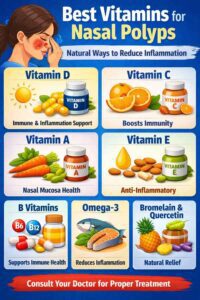
Table of contents
- Introduction
- 🌿 Best Vitamins for Nasal Polyps
- 🧪 Other Helpful Nutrients
- ⚠️ Important Medical Note
- 🚨 When to See a Doctor
- 📝 Key Takeaways
- The conclusion
Introduction
Due to chronic inflammation, nasal polyps are benign, soft tumors that grow in the lining of the nose and sinuses. They may induce symptoms such as nasal obstruction, congestion, a diminished sense of smell, and shortness of breath.
Vitamins and other natural remedies are sought after by many in order to treat nasal polyps. Even though vitamins cannot get rid of polyps entirely, they can help boost the immune system, lessen inflammation, and enhance the general health of the sinuses.
🌿 Best Vitamins for Nasal Polyps
1. Vitamin D
Vitamin D plays a key role in controlling inflammation and supporting the immune system. Low levels are commonly seen in patients with chronic sinusitis and nasal polyps.
Studies suggest that supplementation may help reduce the size and severity of polyps, especially in people who are deficient.
Key Points:
- Helps reduce inflammation
- Supports immune defense
- May improve polyp symptoms in deficient individuals
Dosage (Study-Based):
- 4,000 IU daily (short-term)
- 60,000 IU weekly (under medical supervision)
Important:
- Not effective if vitamin D levels are already normal
- Overdose may cause nausea, weakness, or kidney issues
- Can interact with steroids, diuretics, and statins
👉 Always test vitamin D levels before supplementation.
2. Quercetin
Quercetin is a natural flavonoid found in fruits and vegetables. It works as a natural antihistamine and anti-inflammatory agent, helping reduce allergy-related symptoms.
Benefits:
- Reduces histamine release
- Helps control inflammation
- May support allergy-related nasal polyps
Limitations:
- Limited human studies for nasal polyps
- Evidence mainly from lab and animal research
Safety:
- Avoid during pregnancy and breastfeeding
- May interact with antibiotics, antihistamines, and BP medications
3. N-acetylcysteine (NAC)
NAC is a powerful antioxidant that helps thin mucus and improve sinus drainage, making it useful in chronic sinus conditions.
Benefits:
- Breaks down thick mucus
- Reduces inflammation
- Supports respiratory health
Evidence:
- Shown to improve symptoms after sinus surgery
- More effective for sinusitis than nasal polyps directly
Side Effects:
- Nausea, reflux, diarrhea
- Strong sulfur smell (common complaint)
Precaution:
- May interact with blood thinners and BP medications
4. Omega-3 Fatty Acids
Omega-3 fatty acids (EPA & DHA) are well-known for their anti-inflammatory effects and may help reduce recurrence of nasal polyps after surgery.
Sources:
- Fish (salmon, sardines)
- Flaxseeds and walnuts
- Supplements
Benefits:
- Reduces chronic inflammation
- Supports sinus and immune health
Safety:
- Max 5 grams/day (FDA recommendation)
- May increase bleeding risk
- Avoid if allergic to seafood
5. Bromelain
Bromelain is a natural enzyme found in pineapple that helps reduce swelling and break down mucus.
Benefits:
- Improves sinus drainage
- Reduces inflammation
- May improve breathing
Limitations:
- Limited strong evidence for nasal polyps
- More effective in sinusitis cases
Side Effects:
- Mild stomach upset
- Diarrhea
Precaution:
- May affect blood clotting
- Avoid without medical advice if pregnant or on blood thinners
🧪 Other Helpful Nutrients
🍍 Bromelain
An enzyme found in pineapple that helps reduce swelling and mucus.
🐟 Omega-3 Fatty Acids
Strong anti-inflammatory compounds that may help prevent recurrence.
🌿 Quercetin
A natural antihistamine that reduces allergic inflammation.
⚠️ Important Medical Note
Vitamins can help manage symptoms but do not cure nasal polyps completely. Doctors may prescribe treatments like:
- Steroid nasal sprays
- Oral corticosteroids such as Prednisone
- Surgery in severe cases
🚨 When to See a Doctor
Seek medical help if you experience:
- Severe nasal blockage
- Loss of smell
- Frequent sinus infections
- Breathing difficulty
📝 Key Takeaways
✔ Vitamin D is the most important vitamin for nasal polyps
✔ Vitamins C, A, and E help reduce inflammation
✔ B vitamins support immune health
✔ Supplements work best as supportive therapy
✔ Medical treatment may still be required
❓ Frequently Asked Questions (FAQs)
1. What vitamins help shrink nasal polyps?
In nasal polyps, vitamin D, vitamin C, vitamin A, and vitamin E are examples of vitamins that help lower inflammation and promote immunological function.
2. Can vitamin D reduce nasal polyps?
Vitamin D may help lower inflammation and alleviate symptoms, particularly in those with low vitamin D levels, but it doesn’t totally eliminate polyps.
3. Is vitamin C good for nasal polyps?
By acting as an antioxidant and strengthening the immune system, vitamin C may alleviate sinus infections and inflammation associated with nasal polyps.
4. Can vitamins cure nasal polyps permanently?
No, nasal polyps cannot be treated permanently with vitamins. They can help control symptoms, but medical attention might still be necessary.
5. Which deficiency causes nasal polyps?
Chronic sinus inflammation and nasal polyps are frequently linked to low vitamin D levels.
6. Are vitamin supplements safe for nasal polyps?
When taken at recommended dosages, the majority of vitamin supplements are safe, but consuming too much can have adverse effects. Before using, always see a doctor.
7. What is the best natural way to reduce nasal polyps?
The optimum outcomes come from combining medical care, nasal irrigation, an anti-inflammatory diet, and vitamins.
8. Can I take vitamin D daily for nasal polyps?
But only with medical advice. Excessive amounts can result in adverse effects such as calcium imbalance or renal problems.
9. Do vitamins replace steroid treatment for nasal polyps?
Vitamins are helpful, not harmful. Even now, physicians may recommend therapies like nasal sprays or prednisone.
10. When should I see a doctor for nasal polyps?
If you have severe nasal congestion, trouble breathing, or loss of smell, speak with a doctor.
The conclusion
Although some supplements may help nasal polyps by reducing sinus inflammation and boosting immune function, further research is necessary to validate these benefits.
Vitamin D, quercetin, n-acetylcysteine, omega-3 fatty acids, and bromelain are the supplements that are most likely to aid in the treatment of nasal polyps in conjunction with conventional therapies.
Before starting any new supplement, talk to your doctor, who can advise you on the proper dosage and keep an eye on you for any adverse effects or drug interactions.
👉 YouTube Channel:
http://www.youtube.com/@healthuseful8539/
📞 ENT Consultation & Surgery
Dr. Sagar Rajkuwar (MS-ENT)
Prabha ENT Clinic, Ambad, Nashik
📱 7387590194 | 9892596635
🌐 www.entspecialistinnashik.com
📲 For Health-Related Articles & Videos
🔹 Facebook: https://www.facebook.com/positivemind.healthcare
🔹 YouTube: http://www.youtube.com/@healthuseful8539/
⚠️ Medical Disclaimer
The information on this website is for educational purposes only and is not a substitute for professional medical advice. Always consult a doctor for diagnosis and treatment of nasal polyps or any health condition.
📚 References
https://www.everydayhealth.com/ear-nose-throat/supplements-for-nasal-polyps/
Important Detailed Articles
🔗 Related Articles on Nasal Polyps (ENT Expert Guides)
For detailed, evidence-based information, explore the following articles:
https://healthuseful.com/can-nasal-polyps-turn-cancerous/
https://healthuseful.com/can-nasal-polyps-affect-the-brain/
https://healthuseful.com/what-are-the-symptoms-of-cancerous-nasal-polyps/
https://healthuseful.com/when-to-worry-about-nasal-polyp/
https://healthuseful.com/what-happens-if-nasal-polyps-untreated/
https://healthuseful.com/number-one-cause-of-nasal-polyps/
https://healthuseful.com/how-to-stop-polyp-growth/
https://healthuseful.com/can-nasal-polyps-cause-heart-problems/
https://healthuseful.com/how-to-cure-nasal-polyps-permanently/
https://healthuseful.com/can-ent-see-nasal-polyps/
🔗 Sinus Related Articles (Internal Links)
🤧 Sinus Headache & Symptoms
- https://healthuseful.com/sinus-headache-symptoms/
- https://healthuseful.com/sinus-headache-symptoms-one-side/
- https://healthuseful.com/sinus-headache-symptoms-right-side/
- https://healthuseful.com/sinus-headache-back-of-head/
- https://healthuseful.com/sinus-headache-symptoms-home-remedies/
- https://healthuseful.com/how-to-rid-of-a-sinus-infection-headache/
🦠 Sinus Infection Treatment
- https://healthuseful.com/how-to-get-rid-of-a-sinus-infection-in-24-hours/
- https://healthuseful.com/how-to-get-rid-of-sinus-infection-without-antibiotics/
- https://healthuseful.com/what-kills-a-sinus-infection-naturally/
- https://healthuseful.com/sinus-headache-tablet/
- https://healthuseful.com/how-do-doctors-drain-sinuses-without-surgery/
- https://healthuseful.com/signs-of-sinus-infection-getting-better/
- https://healthuseful.com/signs-of-sinus-infection-getting-better-with-antibiotics/
⚠️ Serious Conditions & Warning Signs
- https://healthuseful.com/end-stages-of-a-sinus-infection/
- https://healthuseful.com/how-to-tell-if-sinus-infection-has-spread-to-brain/
- https://healthuseful.com/how-to-tell-if-sinus-infection-has-spread-to-bone/
- https://healthuseful.com/what-is-a-red-flag-for-sinusitis/
- https://healthuseful.com/when-to-go-to-ae-with-sinusitis/
👁️ Related Symptoms & Complications
- https://healthuseful.com/can-a-sinus-infection-cause-eye-pain/
- https://healthuseful.com/can-sinusitis-affect-your-ears/
- https://healthuseful.com/can-sinus-infection-cause-hair-loss/
- https://healthuseful.com/symptoms-of-perforated-sinus-after-tooth-extraction/
🧠 Causes, Triggers & Misdiagnosis
- https://healthuseful.com/what-triggers-sinusitis-headaches/
- https://healthuseful.com/what-can-be-mistaken-for-a-sinus-infection/
- https://healthuseful.com/what-mimics-sinus-issues/
- https://healthuseful.com/what-can-worsen-a-sinus-infection/
🧬 Nutrition & Deficiency
- https://healthuseful.com/what-vitamin-deficiency-causes-sinus-headaches/
- https://healthuseful.com/what-vitamin-deficiency-causes-sinusitis/
- https://healthuseful.com/what-deficiency-causes-sinusitis/
📘 General Sinus Knowledge
- https://healthuseful.com/what-are-the-four-cardinal-signs-of-sinusitis/
- https://healthuseful.com/is-a-sinus-infection-contagious-with-fever/
- https://healthuseful.com/can-you-smell-a-fungal-sinus-infection/
- https://healthuseful.com/sinusitis-in-hindi/
💰 Treatment & Surgery
- https://healthuseful.com/cost-of-sinus-surgery-in-india/
- https://healthuseful.com/how-to-cure-sinus-permanently/