What Should You Avoid Eating and Drinking During Gastroenteritis?-various aspects
Article author: Dr. Sagar Rajkuwar, MS-ENT 🌐 www.entspecialistinnashik.com
Introduction
Gastroenteritis can cause diarrhoea, vomiting, nausea, stomach cramps and loss of appetite. During this illness, even familiar foods may seem difficult to tolerate. A common question is: What should I avoid eating if I have gastroenteritis? The answer is not to stop eating completely or follow an unnecessarily strict diet. Certain foods and drinks can make diarrhoea, bloating or nausea worse in some people, but most patients can gradually return to their usual diet as their appetite improves. This guide explains which foods are worth limiting, which meals may be easier to tolerate, how to replace fluids and salts, and how dietary advice differs for babies, children, older adults and people with medical conditions. It also corrects common misconceptions about fasting, the BRAT diet, milk, curd and fruit juices.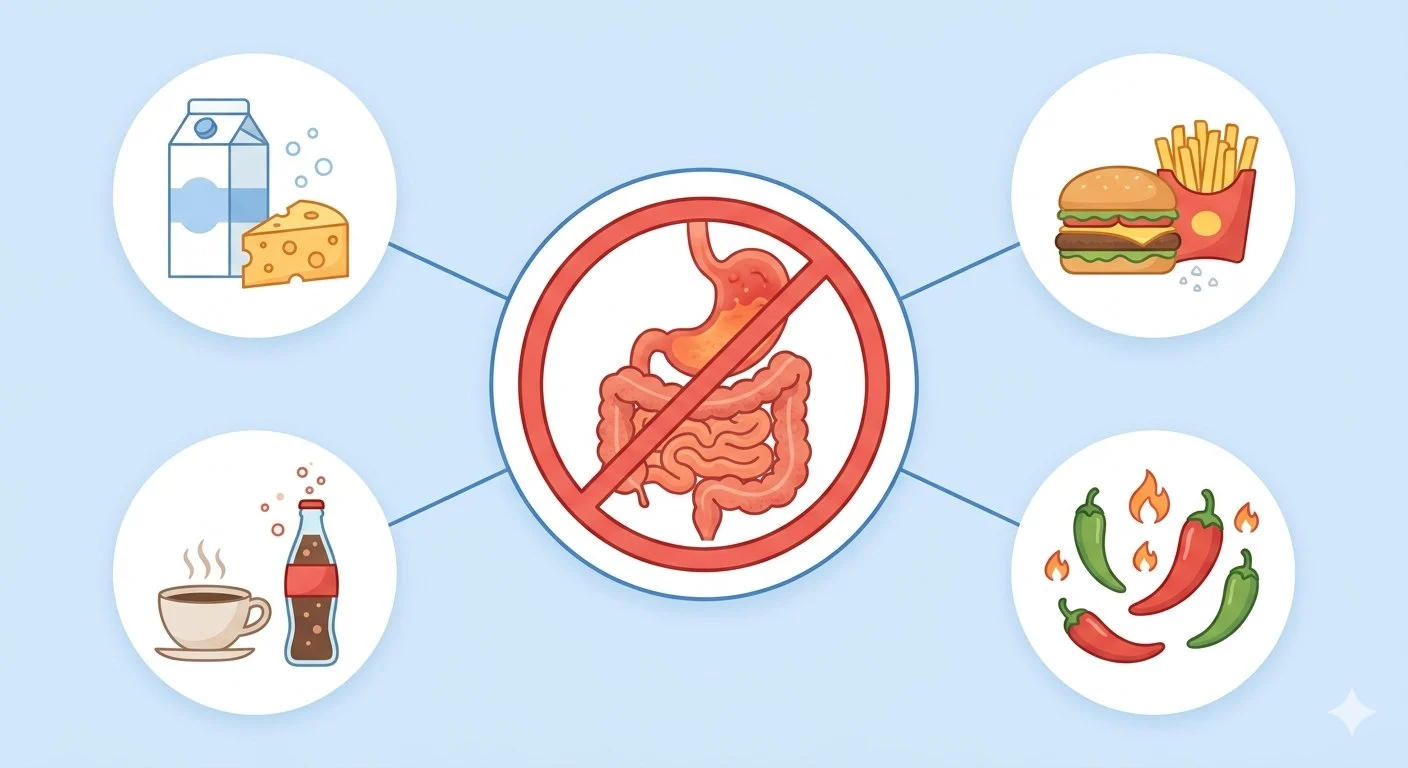
What Should I Avoid Eating If I Have Gastroenteritis?
Direct answer: During gastroenteritis, temporarily avoid or limit foods and drinks that may worsen symptoms: fried and greasy foods, very high-fat meals, alcohol, caffeine, very sugary drinks and juices, and products containing sugar alcohols such as sorbitol. Milk and other lactose-containing dairy products may need to be reduced if they increase diarrhoea, gas or bloating. Very spicy foods may also aggravate nausea or abdominal discomfort in some people.
You do not usually need to fast or follow a highly restrictive diet. Drink enough fluids, use oral rehydration solution (ORS) when appropriate, and eat small portions of foods you can tolerate. Children should continue age-appropriate feeding and breastfeeding.
The most important principle is individual tolerance. A food does not have to be forbidden for every person with gastroenteritis. If a particular item clearly worsens symptoms, leave it out temporarily and try it again after recovery.
Table of Contents
- Foods and drinks to avoid or limit
- Why these foods can worsen symptoms
- What can you eat instead?
- Practical Indian food choices
- Should you avoid milk, curd and other dairy?
- Is the BRAT diet necessary?
- ORS and hydration: the most important priority
- Dietary advice for babies and children
- Older adults and people with chronic illnesses
- When and how to return to your normal diet
- Warning signs and when to seek medical help
- Frequently asked questions
- References
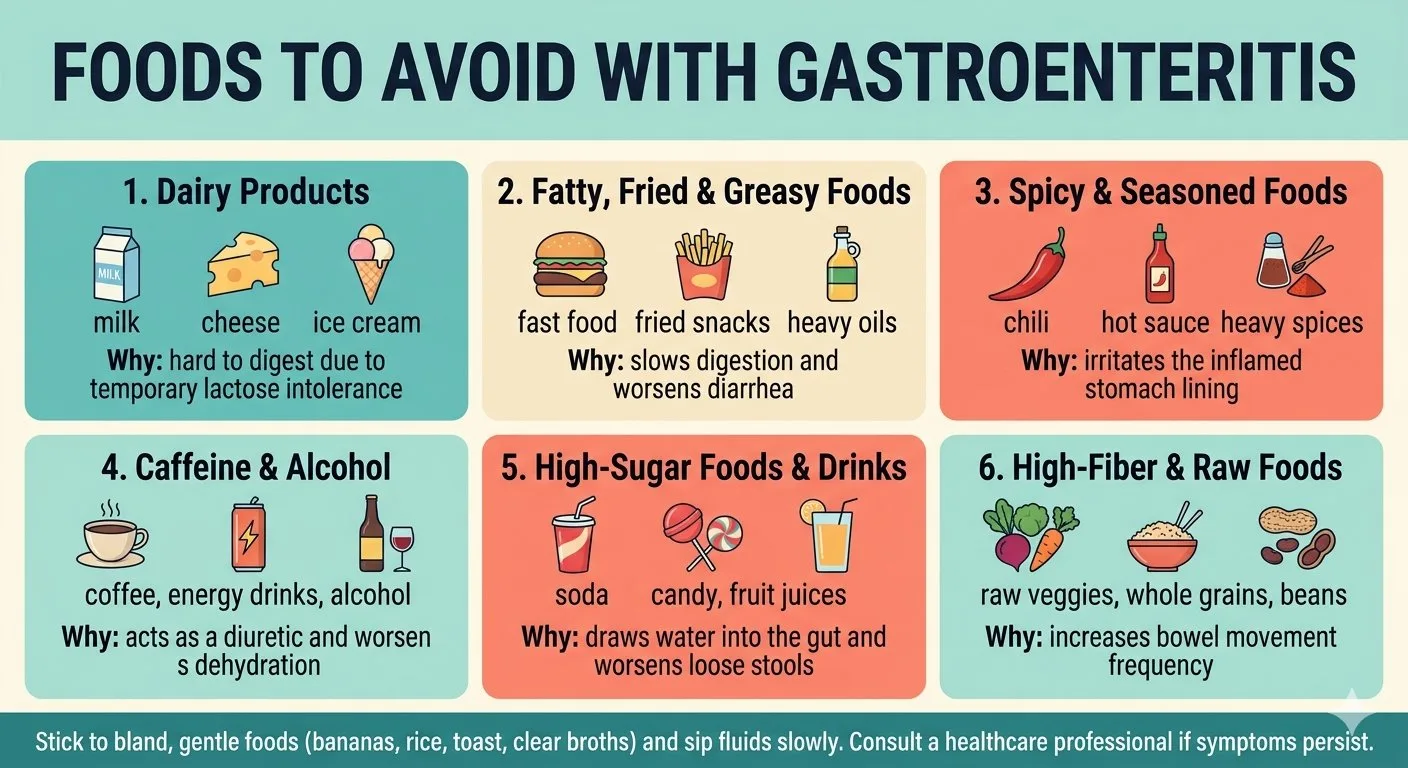
1. Foods and Drinks to Avoid or Limit During Gastroenteritis
If you are wondering what should I avoid eating if I have gastroenteritis, start with the following categories. These are practical temporary restrictions, not a permanent diet plan.1. Fried, greasy and high-fat foods
Foods with a high fat content may be harder to tolerate during an episode of diarrhoea or nausea. Large, greasy meals can make some people feel more nauseated or uncomfortable. Examples to limit:- Deep-fried snacks such as pakoras, bhajiyas and samosas.
- French fries, chips and fried chicken.
- Puri, bhatura and heavily oily parathas.
- Pizza, burgers and fast food.
- Rich gravies, creamy sauces and meals with excess oil or butter.
2. Alcoholic beverages
Avoid alcohol while you have vomiting or diarrhoea. Alcohol can irritate the digestive tract and may make it harder to maintain adequate hydration. It is sensible to wait until you have recovered, are eating normally and are adequately hydrated before drinking alcohol again.3. Caffeinated drinks
Caffeine can stimulate bowel activity in some people and may worsen loose stools. It may also aggravate nausea or interfere with rest. Examples: strong tea, coffee, energy drinks, cola and some caffeinated soft drinks. Consider avoiding them during active diarrhoea. If you normally drink tea, choose a non-caffeinated alternative temporarily if it suits you.4. Very sugary drinks and fruit juices
Large quantities of simple sugars can draw water into the intestine and may worsen diarrhoea in some people. Fruit juice and sweetened beverages are not substitutes for ORS. Limit:- Packaged fruit juices with added sugar.
- Undiluted large servings of sweet fruit juice.
- Soft drinks and fizzy sugary beverages.
- Sweetened iced tea, sherbet drinks and sweet energy drinks.
- Very sweet homemade drinks or concentrated syrups.
5. Foods and products containing sugar alcohols
Some sugar-free products contain sweeteners known as sugar alcohols or polyols. These can cause loose stools, gas or bloating in susceptible people, particularly when consumed in larger amounts. Look for ingredients such as sorbitol, mannitol, xylitol and maltitol in sugar-free chewing gum, candies, lozenges and some low-sugar products. Temporarily avoid them if diarrhoea is active.6. Milk and lactose-containing dairy products – if they worsen symptoms
Some people develop temporary difficulty digesting lactose, the natural sugar in milk, after an intestinal infection. This can happen because the small intestine may temporarily produce less lactase, the enzyme that breaks down lactose. Milk, milkshakes, ice cream and some soft dairy products may then cause gas, bloating, cramps or looser stools. Do not assume that everyone must stop all dairy. Reduce lactose-containing foods only if they trigger symptoms, and make sure adequate nutrition is maintained.7. Very spicy foods
Chilli-heavy dishes, hot sauces and very spicy pickles may aggravate burning sensations, nausea or abdominal discomfort in some people. Evidence does not mean that every spicy food worsens every infection, but choosing milder meals while symptoms are active is a reasonable practical approach.8. Very large meals
Even foods that are normally healthy can be difficult to tolerate when eaten in large quantities during acute illness. A large meal may worsen nausea, fullness or cramps. Try small portions more frequently and increase the amount as appetite improves.9. Foods that personally trigger gas or bloating
Some people temporarily find beans, chickpeas, cabbage, cauliflower, onions or other gas-producing foods uncomfortable. These foods are not universally harmful and do not need to be banned. Reduce them briefly if they clearly increase bloating or cramps, then reintroduce them as tolerated.Important distinction: The strongest general dietary advice is to limit high-fat foods, alcohol, caffeine, high-sugar drinks and lactose-containing foods when they worsen symptoms. Avoiding every vegetable, fruit, spice or dairy product is not supported as a universal rule.
2. Why Can Certain Foods Make Gastroenteritis Symptoms Worse?
Understanding the reason behind food restrictions helps you make sensible choices instead of following an unnecessarily narrow diet.Temporary lactose intolerance
The lining of the small intestine contains cells that produce lactase. When an intestinal infection temporarily affects this lining, lactose may not be digested completely. Undigested lactose reaches the colon, where bacteria ferment it. This can produce gas, bloating, cramps and diarrhoea.Osmotic effect of excess sugars
Some sugars are poorly absorbed when consumed in large quantities. They can retain water inside the intestinal lumen, increasing stool water content. This is one reason why very sweet drinks and some fruit juices can aggravate diarrhoea.Effect of fat on digestion
High-fat meals may delay stomach emptying and feel heavy when a person is already nauseated. They may also be less comfortable to digest during acute illness. A lower-fat meal is often easier to tolerate temporarily.Caffeine and bowel activity
Caffeine can stimulate intestinal activity in some individuals. If stools are already frequent and watery, caffeinated beverages may make symptoms more troublesome.Individual sensitivity
Not every person responds in the same way. A small serving of a food may be tolerated by one patient but trigger discomfort in another. Keep the focus on hydration, adequate nutrition and foods that you can comfortably digest.3. What Can You Eat Instead During Gastroenteritis?
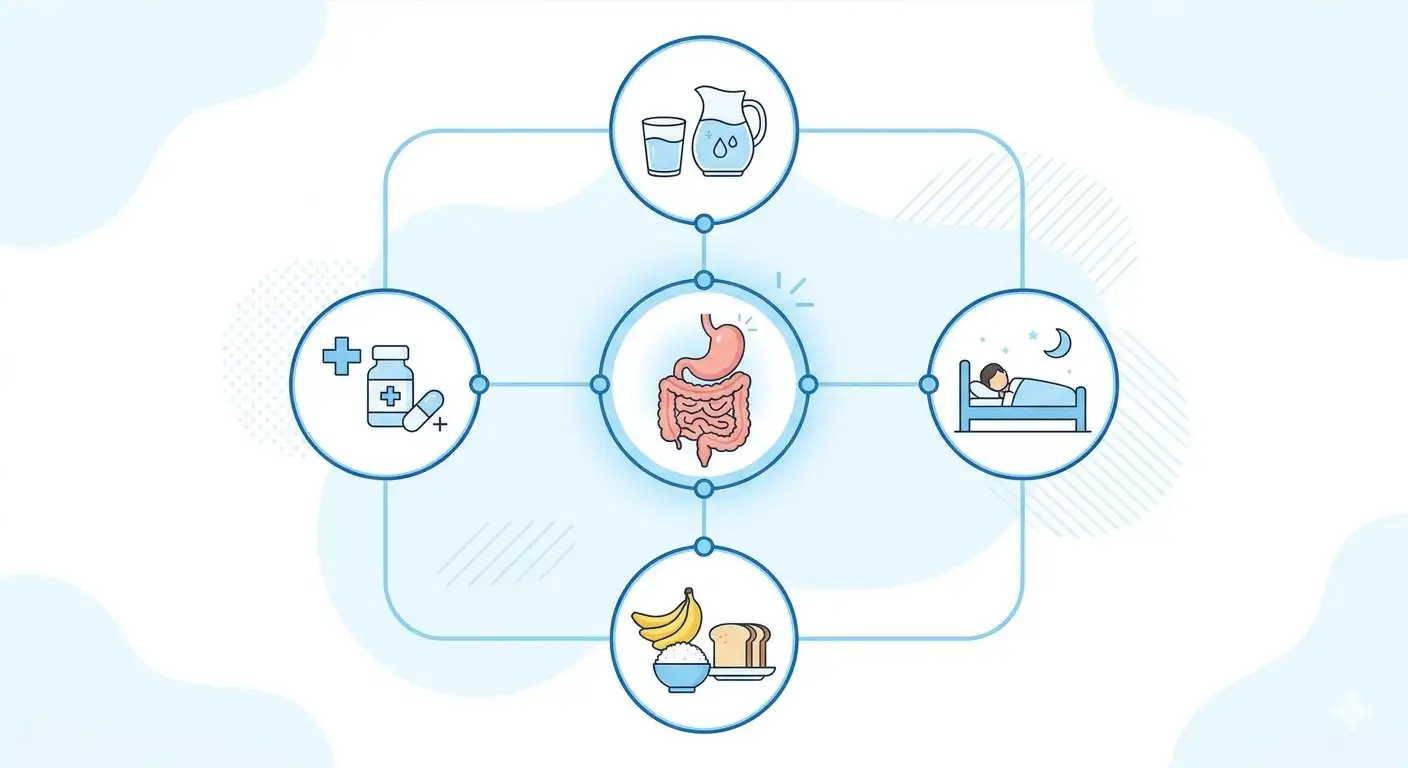
When appetite returns, most people can resume their usual diet as tolerated. During the first phase of recovery, small, simple meals may be easier to manage. The following options are examples, not a mandatory treatment diet.Foods that may be easier to tolerate
| Food group | Examples | Practical advice |
|---|---|---|
| Grains and starches | Plain rice, soft khichdi, toast, plain bread, oats, idli | Start with modest portions; use less oil and chilli. |
| Vegetables | Well-cooked carrots, potato, pumpkin or bottle gourd | Cook until soft; avoid excess oil and heavy seasoning. |
| Fruits | Banana or other ripe fruit that is tolerated | Prefer a small whole-fruit portion over large amounts of juice. |
| Protein | Plain dal if tolerated, egg, lightly cooked chicken or fish | Choose simple preparations rather than fried or rich dishes. |
| Fluids | ORS when indicated, water, clear soup or broth | Use ORS to replace fluid and electrolyte losses; ordinary water alone may not be enough during substantial diarrhoea. |
Why small meals can help
If nausea is present, a large plate may be difficult to finish. Small portions allow you to eat according to appetite without forcing food. For example, begin with a little rice or toast, then add a suitable protein and cooked vegetable as symptoms settle.Do not confuse bland food with a cure
Plain rice, banana or toast may be comfortable choices, but they do not kill the virus or bacteria causing gastroenteritis. The infection usually resolves according to its cause and the patient’s immune response. Hydration and adequate nutrition help prevent complications during recovery.4. Practical Indian Food Choices During Gastroenteritis
Patients often ask for familiar foods rather than a complicated diet chart. These examples can be adapted to appetite, age, medical conditions and individual tolerance.Possible breakfast options
- Plain idli without spicy chutney.
- Soft oats or porridge prepared with water or tolerated milk alternatives.
- Toast or plain bread with a banana.
- Soft poha prepared with minimal oil and mild seasoning, if tolerated.
Possible lunch options
- Soft rice with lightly cooked moong dal.
- Simple moong dal khichdi with little oil and mild seasoning.
- Boiled potato or cooked bottle gourd with rice.
- Plain curd rice only if dairy is tolerated; avoid it if it worsens diarrhoea or bloating.
Possible dinner options
- Soft rice with a mild vegetable preparation.
- Plain dal-rice in a small portion.
- Light vegetable soup with toast.
- Steamed idli or soft cooked oats.
Example of a gentle meal progression: Start with a few spoonfuls of soft rice or khichdi. If tolerated, add a small serving of cooked vegetables or protein. Increase portions gradually. There is no need to remain on rice and banana alone for several days.
Foods to pause temporarily if they worsen symptoms
Very spicy misal, oily pav bhaji, deep-fried snacks, rich biryani, heavy restaurant gravies, large servings of sweets and sugary cold drinks may be uncomfortable during active symptoms. This is a symptom-based recommendation, not a claim that these foods cause every episode of gastroenteritis.5. Should You Avoid Milk, Curd and Other Dairy Products?
Dairy advice needs nuance. Gastroenteritis can temporarily reduce the intestine’s ability to digest lactose. However, routine complete dairy avoidance is not necessary for everyone.Milk
If milk causes more gas, cramps or loose stools during recovery, reduce or avoid it temporarily. You may be able to reintroduce it gradually after symptoms settle. Lactose-free milk may be an option for people who are temporarily lactose intolerant.Curd and yoghurt
Some people tolerate curd or yoghurt better than milk, but this is not guaranteed. Fermentation reduces some lactose, but products vary. If curd worsens symptoms, stop it temporarily. Do not rely on curd as a replacement for ORS.Cheese, paneer and ice cream
These products vary in lactose and fat content. Ice cream can be high in both fat and lactose, so it may be difficult to tolerate. Choose according to symptoms and avoid rich servings during active illness.How long should dairy be restricted?
Some people experience temporary lactose intolerance for days or weeks after gastroenteritis; NIDDK notes that it can persist for a month or longer in some cases. Do not continue a restrictive diet unnecessarily. If symptoms persist, discuss the possibility of lactose intolerance or another diagnosis with a healthcare professional.6. Is the BRAT Diet Necessary for Gastroenteritis?
The BRAT diet refers to bananas, rice, applesauce and toast. These foods are relatively simple and may be easy to tolerate for a short period. However, the BRAT diet is nutritionally limited and should not be used as the only diet for several days.Why a strict BRAT diet is not recommended
- It may not provide enough protein, energy and other nutrients if continued for too long.
- It does not treat the underlying infection.
- Most people can resume a normal, age-appropriate diet as appetite returns.
- Children need continued nutrition to reduce the risk of malnutrition during diarrhoeal illness.
7. ORS and Hydration: More Important Than Food Restrictions
Diarrhoea and vomiting cause loss of water and important electrolytes, including sodium and potassium. Severe fluid loss can lead to dehydration, kidney injury, circulatory problems and, in extreme cases, shock.What is oral rehydration solution?
Oral rehydration solution (ORS) contains a carefully balanced combination of glucose and salts. The glucose and sodium are absorbed together in the small intestine, helping the body absorb water even during many diarrhoeal illnesses.How to use an ORS sachet safely
- Use a recognised ORS sachet from a pharmacy or health facility.
- Read the packet carefully: sachets are designed for a specified volume of water.
- Mix the entire sachet with exactly the stated amount of safe drinking water.
- Do not add extra sugar, salt, juice or milk.
- Do not make the solution more concentrated or dilute than directed.
- Store and discard the prepared solution according to the packet or local health instructions; many standard preparations should be discarded after 24 hours.
What if vomiting occurs after drinking?
Try small, frequent sips rather than drinking a large glass at once. If vomiting continues and the person cannot retain fluids, seek medical advice promptly. Severe dehydration may require supervised treatment and intravenous fluids.Are sports drinks, coconut water or soft drinks equivalent to ORS?
No. Their sugar and electrolyte composition is not the same as a correctly prepared ORS. Sports drinks and coconut water should not be assumed to provide the balanced replacement needed for significant diarrhoeal fluid loss. Sugary soft drinks and undiluted fruit juices may worsen diarrhoea. Use ORS when recommended, particularly for children or people at higher risk of dehydration.Who should get medical advice about fluid replacement?
People with kidney disease, heart failure, diabetes, older adults who take diuretics, and people with significant chronic illness may need individual advice about the type and amount of fluid. Do not force large volumes without considering their medical condition.8. What Should Babies and Children Eat During Gastroenteritis?
Children can become dehydrated more quickly than healthy adults. Dietary restrictions should not compromise their nutrition.Breastfed babies
Continue breastfeeding frequently. Breast milk provides fluid and nutrition and should not be stopped simply because the baby has diarrhoea.Formula-fed babies
Continue the usual full-strength formula unless a clinician advises otherwise. Do not routinely dilute formula. If the baby is vomiting, smaller, more frequent feeds may be easier to tolerate while seeking clinical advice when needed.Children eating solid foods
Offer their usual age-appropriate foods as tolerated. Soft rice, khichdi, cooked vegetables, banana, toast and other familiar foods may be suitable. Avoid fruit juice and fizzy drinks until diarrhoea has stopped, in line with NICE advice for young children.ORS and zinc
Use a suitable ORS according to age, weight and clinical guidance. WHO recommends zinc supplementation as part of diarrhoea management for children in settings where it is indicated; follow local paediatric guidance for the correct age-specific dose and duration. Do not start supplements or medicines for an infant without appropriate advice.Seek urgent medical assessment for a child who is unusually sleepy, difficult to wake, unable to drink or breastfeed, has markedly fewer wet nappies, blood in the stool, green vomit, severe abdominal pain or signs of dehydration.
9. Dietary Advice for Older Adults and People With Chronic Illness
Older adults may have reduced thirst sensation, limited mobility or medicines that affect fluid balance. Diarrhoea can therefore lead to dehydration more quickly or make existing conditions worse.People with diabetes
Illness and reduced food intake can affect blood glucose. Monitor glucose more frequently according to the person’s sick-day plan and seek advice about diabetes medicines if eating or drinking is substantially reduced. Do not rely on sugary drinks for routine hydration.People with kidney or heart disease
Some patients have prescribed fluid or electrolyte restrictions. Because diarrhoea causes fluid and salt loss, their usual plan may need clinical adjustment. Contact the treating clinician rather than independently increasing or restricting fluids.People with weakened immunity
People receiving chemotherapy, transplant medicines, high-dose steroids or other immune-suppressing treatment should seek medical advice earlier, especially with fever, persistent diarrhoea or poor fluid intake.10. When and How Should You Return to Your Normal Diet?
There is no need to wait until every loose stool has stopped before eating. Once appetite returns and fluids are being tolerated, gradually resume normal food. This helps maintain energy and nutrition during recovery.A practical step-by-step approach
- During active vomiting: focus on small, frequent sips of fluid or ORS as advised. Do not force a large meal.
- When vomiting settles: try small portions of familiar, simple foods.
- As appetite improves: add tolerated protein, cooked vegetables and other usual foods.
- When diarrhoea is improving: gradually reintroduce foods you had temporarily limited, including dairy if tolerated.
- If a food repeatedly triggers symptoms: pause it and discuss persistent problems with a clinician.
Do not prolong food restrictions without a reason
Remaining on a very limited diet can reduce energy and nutrient intake. If diarrhoea continues, weight is falling or food intolerance persists, medical evaluation is more useful than repeatedly removing foods from the diet.11. Common Dietary Mistakes to Avoid
- Fasting for a full day: routine fasting is not recommended. Eat as tolerated and prioritise rehydration.
- Drinking large quantities of fruit juice: high sugar content may worsen diarrhoea.
- Using soft drinks as ORS: these do not have the correct electrolyte balance.
- Stopping breastfeeding: breastfeeding should continue during diarrhoeal illness.
- Following a strict BRAT diet for several days: it is too limited to provide complete nutrition.
- Taking antibiotics without medical advice: many cases are viral, and antibiotics are not routinely needed.
- Assuming every dairy product is harmful: lactose tolerance varies; restrict only when it worsens symptoms or a clinician advises it.
- Ignoring dehydration: fluid replacement is more important than finding a perfect food list.
12. When Should You Consult a Doctor?
Dietary changes are supportive care. They cannot replace medical assessment when symptoms are severe or complications are developing.Seek urgent medical care if you notice:
- Blood in the stool or vomit, or black tarry stool.
- Severe, persistent or localised abdominal pain.
- Confusion, fainting, unusual drowsiness or difficulty waking.
- Very little urine, severe dizziness or other signs of significant dehydration.
- Repeated vomiting with inability to keep fluids down.
- High fever with marked weakness or worsening illness.
- Green (bilious) vomit, particularly in a child.
Seek earlier advice for higher-risk patients
Infants, older adults, pregnant people, people with kidney or heart disease, diabetes, weakened immunity or significant chronic illness may need earlier assessment. Contact a healthcare professional if symptoms are not improving, diarrhoea is persistent, or you are unsure whether home care is safe.13. Quick Food Guide: What to Limit and What to Choose
| Limit if symptoms are active | Try instead, if tolerated |
|---|---|
| Deep-fried snacks and greasy meals | Plain rice, soft khichdi, steamed idli |
| Alcohol and energy drinks | Water and ORS when indicated |
| Strong coffee and caffeinated drinks | Non-caffeinated fluids |
| Large servings of sugary juice or soft drinks | ORS, water, clear soup |
| Milk if it worsens diarrhoea or bloating | Lactose-free option or other tolerated foods |
| Very spicy, oily meals | Mildly seasoned, simply cooked meals |
| Sugar-free sweets containing sorbitol or mannitol | Simple snacks without these sweeteners |
| Very large meals | Small portions more frequently |
14. Summary: The Most Important Dietary Rules
- Limit greasy, fried and high-fat foods while symptoms are active.
- Avoid alcohol and consider avoiding caffeine.
- Limit very sugary beverages, large amounts of fruit juice and sugar-alcohol sweeteners.
- Reduce lactose-containing dairy only if it worsens symptoms.
- Choose small portions of familiar, simply cooked foods as appetite returns.
- Do not fast or follow a strict BRAT diet for prolonged periods.
- Use correctly prepared ORS when needed; do not substitute soft drinks or sports drinks for it in significant diarrhoeal fluid loss.
- Continue breastfeeding and age-appropriate feeding in children.
- Seek medical help for dehydration, blood in stool, severe pain, persistent vomiting or other warning signs.
15. Frequently Asked Questions (FAQs)
1. What should I avoid eating if I have gastroenteritis?
Temporarily limit fried and greasy foods, high-fat meals, alcohol, caffeine, very sugary drinks and products containing sugar alcohols. Reduce milk and lactose-containing dairy if they worsen diarrhoea, gas or bloating. Avoid foods that clearly aggravate your symptoms.2. Can I eat rice during gastroenteritis?
Yes. Plain rice and soft rice-based meals such as khichdi are often easy to tolerate. They are food choices, not a cure for the infection. Add other nutritious foods as appetite improves.3. Should I stop eating when I have diarrhoea?
No. Routine fasting is not recommended. Drink fluids and eat small amounts of normal, age-appropriate food as tolerated. If vomiting is active, prioritise frequent small sips of fluid and seek help if you cannot retain them.4. Is banana good for gastroenteritis?
A ripe banana may be easy to tolerate and provides energy and potassium. It can be part of a balanced recovery diet, but it is not a treatment on its own and should not be the only food eaten for several days.5. Can I drink milk during gastroenteritis?
Some people tolerate milk, while others develop temporary lactose intolerance after intestinal infection. Reduce or avoid milk if it causes more diarrhoea, gas or cramps. Reintroduce it gradually when symptoms improve.6. Is curd rice good during gastroenteritis?
It may suit people who tolerate curd, but dairy can worsen symptoms in people with temporary lactose intolerance. Use a small amount only if it is comfortable, and do not use it instead of ORS.7. Can I drink coconut water during gastroenteritis?
Coconut water can be a beverage for some people, but it is not compositionally equivalent to ORS and should not be relied on to treat significant dehydration. Use correctly prepared ORS when indicated.8. Should I avoid tea and coffee?
It is sensible to avoid or reduce caffeinated tea and coffee during active diarrhoea because caffeine may stimulate bowel activity in some people. Resume gradually after recovery if tolerated.9. Are fruit juices harmful during gastroenteritis?
Large amounts of juice, particularly high-sugar juice, can worsen diarrhoea. For children with gastroenteritis, NICE advises avoiding fruit juices and fizzy drinks until diarrhoea has stopped. Prefer ORS for rehydration when indicated.10. Is the BRAT diet recommended?
A few BRAT foods may be easy to tolerate, but a strict BRAT diet is nutritionally incomplete. Most patients should resume a varied, age-appropriate diet as appetite returns.11. What should children eat during gastroenteritis?
Continue breastfeeding and usual age-appropriate feeding. Offer ORS when indicated and familiar foods as tolerated. Avoid fruit juice and fizzy drinks during diarrhoea in young children. Seek paediatric advice if the child is dehydrated or unwell.12. How long should I avoid dairy after gastroenteritis?
There is no fixed period for everyone. Temporary lactose intolerance may last days or, in some people, a month or longer. Reintroduce dairy gradually when tolerated; seek advice if symptoms persist.13. Can I eat eggs or chicken during gastroenteritis?
Plain, thoroughly cooked eggs or lightly cooked chicken may be tolerated as appetite returns. Avoid fried, oily or heavily spiced preparations, and follow food-safety practices.14. When should I return to my normal diet?
You can usually begin returning to your normal age-appropriate diet as soon as your appetite returns and you can tolerate food. Increase variety and portion size gradually. Do not wait for every loose stool to stop.16. Helpful Video Resource
For additional patient education, see the WHO-related educational video search on oral rehydration and diarrhoea. Prefer videos from recognised health organisations or qualified healthcare professionals. Video content is supplementary and does not replace medical advice.17. Medical References and Further Reading
- National Institute of Diabetes and Digestive and Kidney Diseases (NIDDK): Eating, Diet, and Nutrition for Viral Gastroenteritis.
- NIDDK: Eating, Diet, and Nutrition for Diarrhea.
- NIDDK: Treatment of Viral Gastroenteritis.
- World Health Organization (WHO): Diarrhoeal Disease.
- Infectious Diseases Society of America (IDSA): Clinical Practice Guidelines for Infectious Diarrhea.
- National Institute for Health and Care Excellence (NICE): Diarrhoea and Vomiting Caused by Gastroenteritis in Under 5s.
- National Health Service (NHS): Diarrhoea and Vomiting.
- NHS Inform: Gastroenteritis in Adults.
- MedlinePlus: When You Have Diarrhea – Self-Care Instructions.
Medical Disclaimer
This article is intended for general educational purposes only. It does not replace an individual medical consultation, examination, diagnosis or treatment plan. Dietary needs vary with age, pregnancy, kidney or heart disease, diabetes, medicines and severity of illness. Seek urgent medical care for signs of severe dehydration, blood in stool or vomit, severe abdominal pain, confusion, fainting or inability to retain fluids. Do not start antibiotics or prescription medicines without appropriate medical advice. About HealthUseful.com: Our goal is to provide understandable, evidence-informed health information that helps readers make informed decisions and seek professional care when needed.📲 For Health-Related Articles & Videos
🔹 Facebook: https://www.facebook.com/positivemind.healthcare🔹 YouTube: http://www.youtube.com/@healthuseful8539/
ENT Consultation & Surgery
Dr. Sagar Rajkuwar (MS-ENT) Consultant ENT Specialist & Head-Neck SurgeonPrabha ENT Clinic, Ambad, Nashik, Maharashtra, India