Get Rid of External Hemorrhoids in 48 Hours: What Really Works?-various aspects-
Medically reviewed By ENT and respiratory health specialist — Dr. Sagar Rajkuwar, MS-ENT. Clinic Website: www.entspecialistinnashik.com
Health education article | HealthUseful.com
Can you get rid of external hemorrhoids in 48 hours? You may be able to reduce pain, itching and swelling within 48 hours, but there is no reliable home remedy that makes every external hemorrhoid disappear completely in two days. The result depends on whether the swelling is a simple external hemorrhoid, irritated skin, or a thrombosed external hemorrhoid (a clot inside an external hemorrhoid). If a painful lump appeared suddenly, especially if it is firm, blue or purple, arrange a prompt medical assessment. A clinician can confirm the diagnosis and discuss whether pain control and observation or a procedure is appropriate. Do not puncture, squeeze, cut or attempt to drain the lump yourself.
What you can realistically achieve in 48 hours
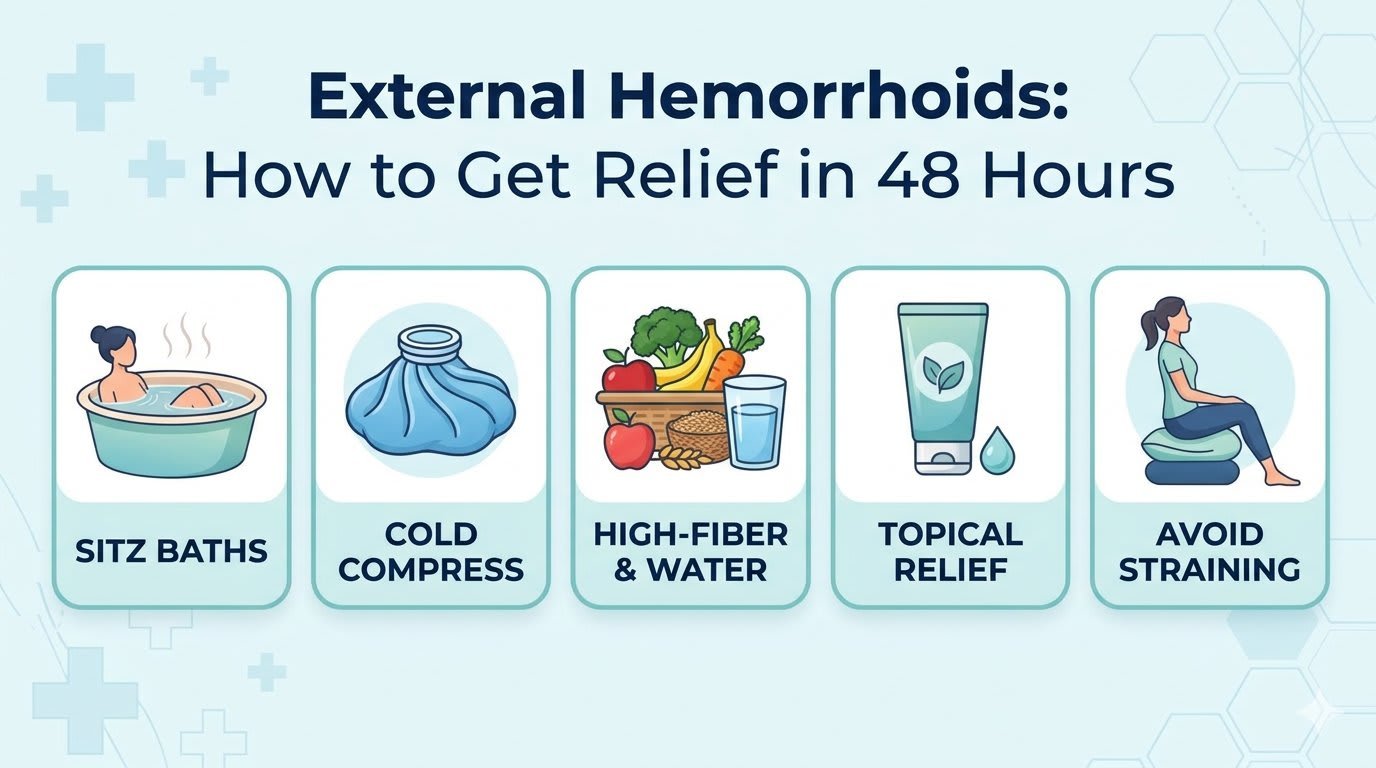
The aim of the first two days is to calm irritation, reduce discomfort and prevent hard stools or straining from making the problem worse. Warm-water soaks, a wrapped cold pack, gentle hygiene and softer stools may help symptoms. The lump itself may take longer to shrink, and a thrombosed hemorrhoid can take days or sometimes longer to settle.
Table of contents
- What are external hemorrhoids?
- A practical 48-hour relief plan
- Could it be a thrombosed external hemorrhoid?
- Medicines and creams: what to know
- Food, fluids and bowel habits
- What not to do
- When to see a doctor
- How doctors diagnose and treat it
- How to prevent recurrence
- Frequently asked questions
- Summary and conclusion
What are external hemorrhoids?
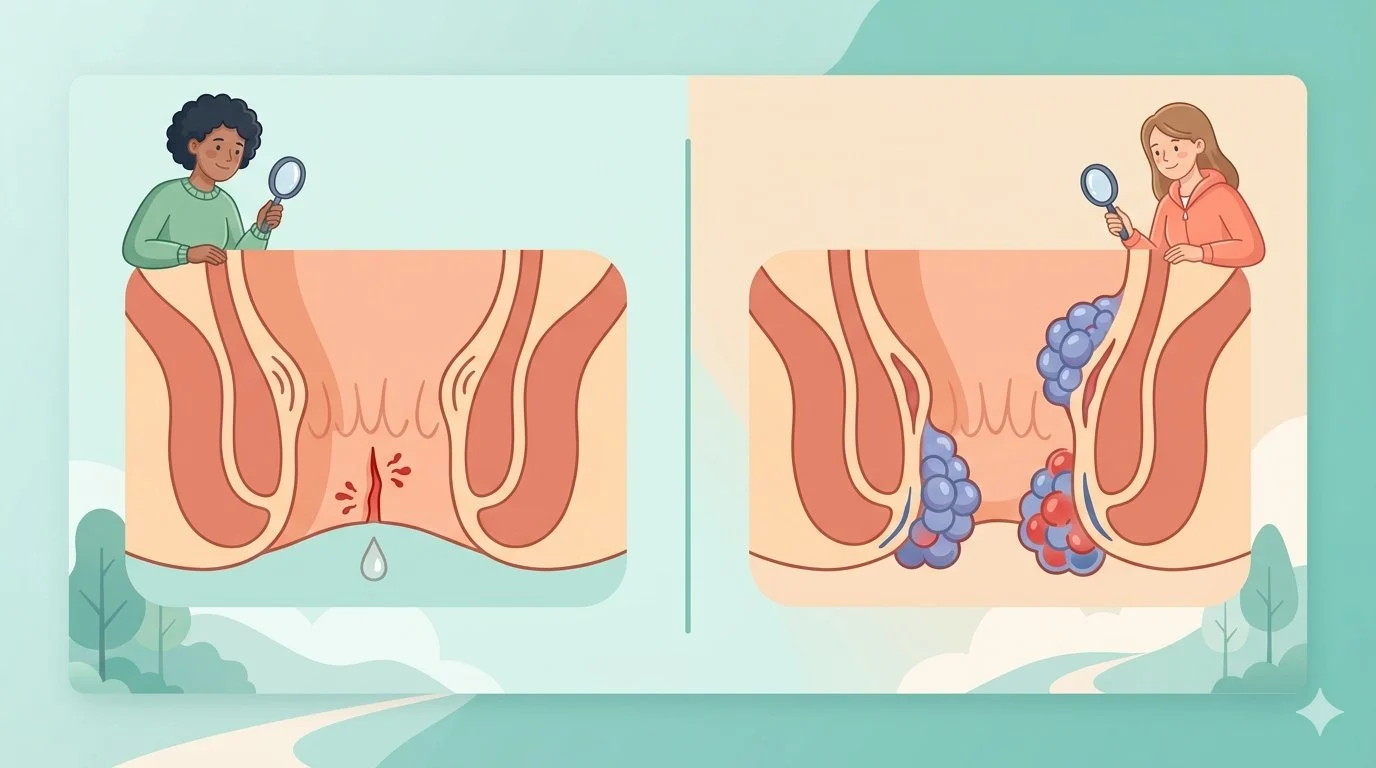
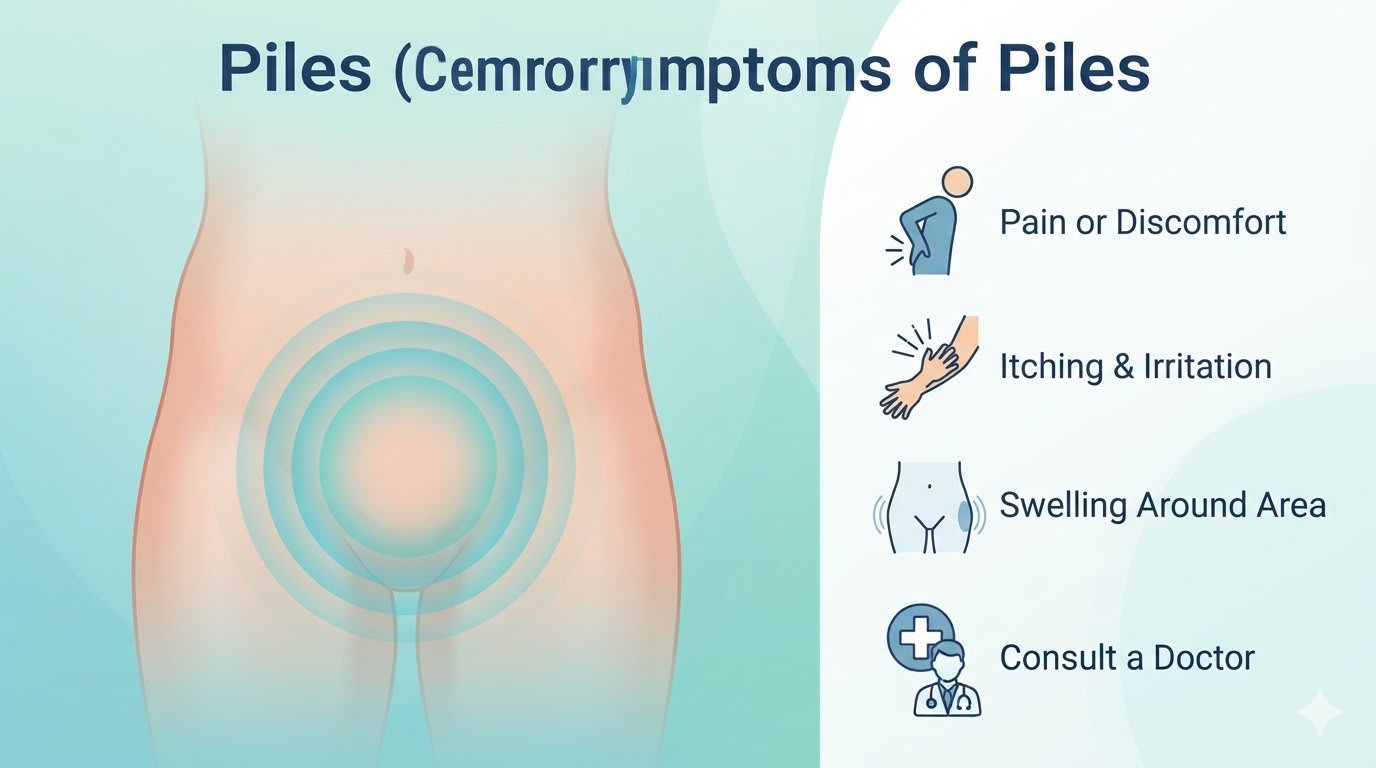
External hemorrhoids are swollen vascular cushions beneath the sensitive skin around the anal opening. They may cause a lump, itching, irritation, discomfort when sitting or pain during bowel movements. They are different from internal hemorrhoids, which arise higher inside the anal canal. Both types can occur together.
Common symptoms
- A lump or swelling at the edge of the anus.
- Itching, burning or irritation around the anal skin.
- Tenderness or pain, especially while sitting or passing stool.
- Occasional bright-red bleeding, particularly if the skin becomes irritated or breaks.
- A sudden, very painful, firm lump if a clot has formed.
Why do external hemorrhoids develop?
Hemorrhoidal symptoms are associated with pressure and strain around the anal canal. Contributing factors include constipation, repeated straining, prolonged toilet sitting, low dietary fibre, pregnancy, ageing and sometimes persistent diarrhoea. A person may have more than one contributing factor.
A practical 48-hour plan to relieve external hemorrhoid symptoms
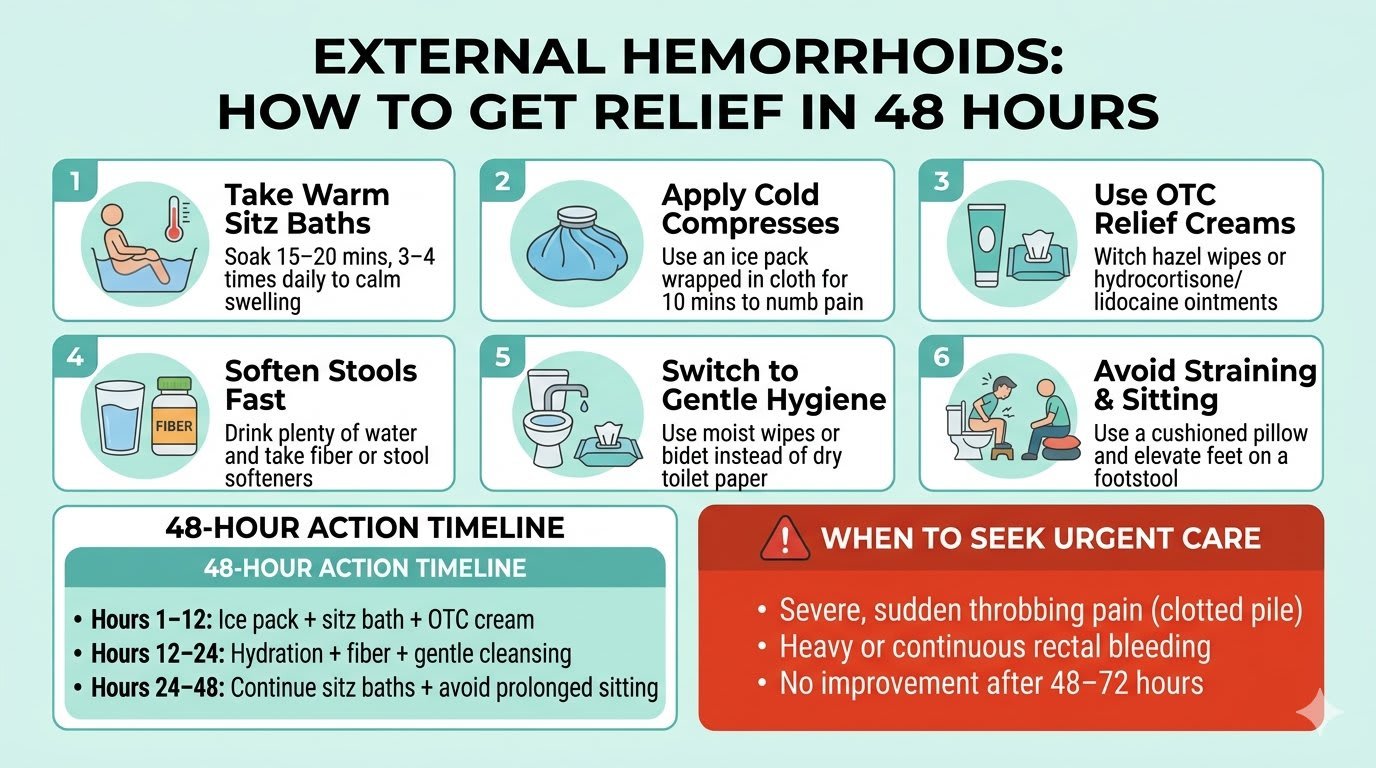
This plan is intended for adults with mild symptoms and no warning signs. It is not a substitute for examination when pain is severe, the lump is new and very tender, or bleeding is present. The measures below are consistent with patient guidance from the NIDDK, NHS and colorectal-surgery recommendations.
During the first 24 hours
1. Use a warm sitz bath
Sit in comfortably warm (not hot) plain water for about 10–15 minutes, two or three times during the day and after a bowel movement if helpful. A clean bathtub or sitz-bath basin can be used. Avoid adding antiseptics, strong soaps, perfume, salt or herbal preparations unless a clinician has specifically advised them; these may irritate sensitive skin.
2. Try a wrapped cold pack for swelling
A cold pack wrapped in a soft towel may temporarily ease discomfort. Apply briefly, then remove it and allow the skin to return to normal temperature. Never put ice directly on the skin and do not keep a cold pack in place long enough to cause numbness or skin injury.
3. Keep the area clean and dry
After a bowel movement, rinse gently with water or use unscented, non-irritating wipes if needed. Pat the area dry rather than rubbing. Avoid vigorous wiping, fragranced products and repeated scrubbing.
4. Avoid pressure and prolonged sitting
Change position regularly. A short, comfortable walk may help bowel movement and general circulation, but avoid activities that clearly increase pain. If sitting is uncomfortable, use a position that reduces pressure; do not use a hard surface for long periods.
During the next 24 hours
5. Make the next bowel movement easier
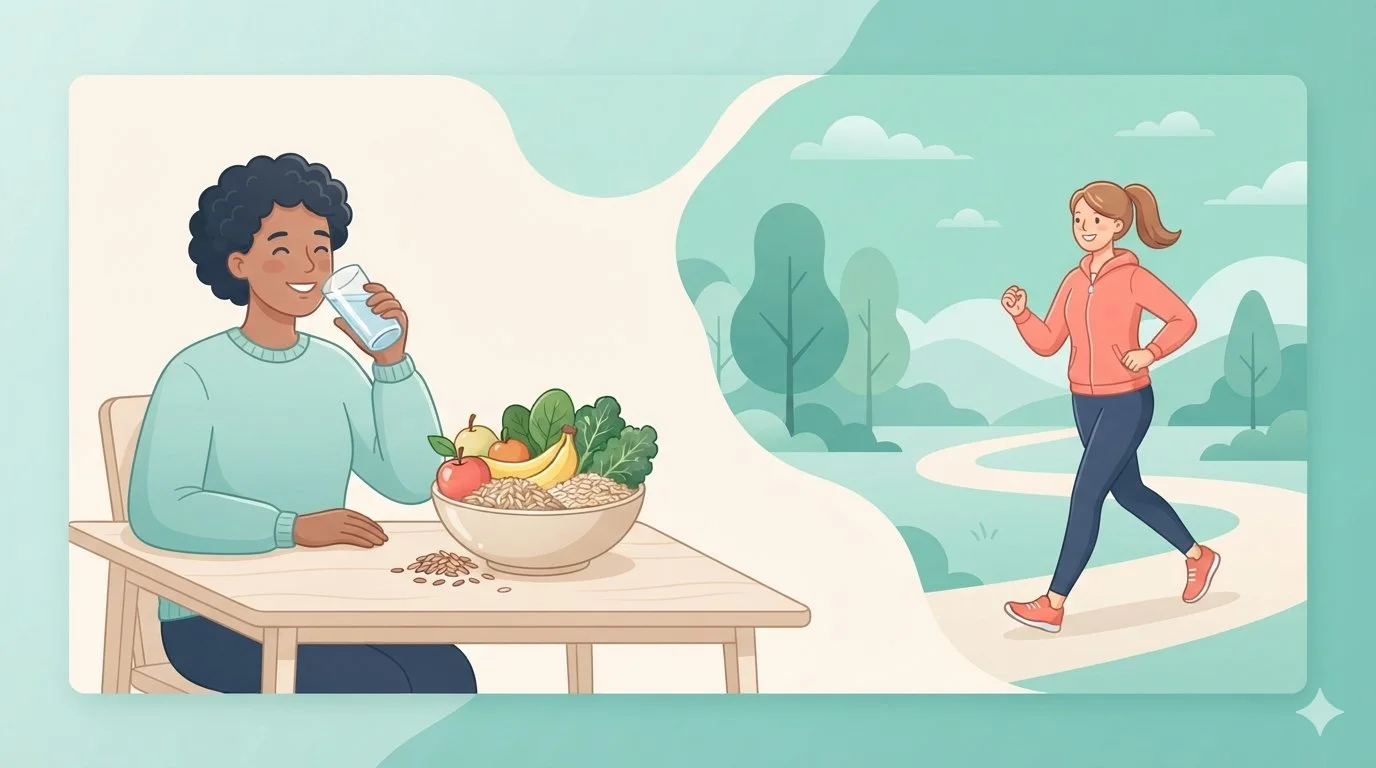
Eat fibre-containing foods and drink enough fluid for your health needs. Do not suddenly consume a very large amount of bran or fibre if your usual intake is low; increase it gradually to reduce bloating. If stools remain hard, ask a pharmacist or clinician whether a fibre supplement such as psyllium or an appropriate stool-softening treatment is suitable for you.
6. Use the toilet without straining
Go when you feel the urge. Do not sit scrolling on a phone, reading or waiting for a bowel movement. Avoid forceful pushing and leave the toilet if nothing happens after a short attempt. A small footstool may help some people adopt a more comfortable position, but it is not a cure.
7. Monitor the symptoms
Note whether pain, swelling and bleeding are improving, stable or worsening. If a sudden painful lump is present, do not wait for a 48-hour home-care trial before seeking advice: an early clinical assessment may be useful, particularly during the first 72 hours after onset.
Could it be a thrombosed external hemorrhoid?
A thrombosed external hemorrhoid occurs when a blood clot forms within an external hemorrhoid. It may appear suddenly as a firm, very tender lump near the anal opening. The skin over it may look blue, purple or dark. Pain can be intense and may increase during the first 48–72 hours.
Why the 48-hour claim can be misleading
Online headlines may imply that a clot or lump can always be removed at home within 48 hours. That is not accurate. Some symptoms settle with conservative care, but the clot and lump do not necessarily disappear in two days. A clinician may discuss removal of the clot or excision of the affected hemorrhoid in selected people with severe pain and recent onset. The decision depends on examination, timing, medical history, medicines and patient preference.
When early assessment matters
If the lump is newly developed and severely painful, contact a doctor or colorectal surgeon promptly rather than trying home drainage. Some clinical guidance describes a potential benefit from a procedure in selected cases within roughly 72 hours of symptom onset. This is not a universal deadline or a reason to undergo a procedure without an examination.
Medicines and creams: what to know
Over-the-counter products may temporarily reduce itching, irritation or pain, but they do not reliably remove the underlying lump. Ask a pharmacist or clinician to help choose a product, particularly if you are pregnant, have other medical conditions, take regular medicines or have bleeding.
Topical creams and ointments
- Hydrocortisone products may reduce inflammation and itching for a short period. Do not use longer than the product label or clinician recommends; prolonged use can thin or irritate the skin.
- Lidocaine or other local anaesthetic products may temporarily numb discomfort. Follow the label and avoid applying excessive amounts or using multiple products with the same ingredient.
- Barrier ointments may protect irritated skin, but they will not dissolve a clot or cure a hemorrhoid.
Pain relief
Paracetamol (acetaminophen) may help pain when used according to the packet directions and your clinician’s advice. Avoid taking more than the recommended dose or combining multiple products that contain paracetamol. Anti-inflammatory painkillers such as ibuprofen are not suitable for everyone and should be avoided if you have rectal bleeding unless a clinician advises otherwise. People taking anticoagulants or antiplatelet medicines, or those with kidney disease, stomach ulcers, pregnancy or other risk factors, should seek individual advice before using painkillers.
Constipation treatment
A pharmacist or doctor can advise whether a fibre supplement, osmotic laxative or stool softener is appropriate. The best choice depends on the cause of constipation, other illnesses and medicines. Do not repeatedly use stimulant laxatives or combine laxatives without advice.
Food, fluids and bowel habits that support recovery
Soft, easy-to-pass stools reduce the need to strain. Fibre works by increasing stool bulk and helping retain water. Increase fibre gradually and take fluids in line with your medical needs.
Fibre-rich foods commonly available in India
| Food group | Examples | Practical tip |
|---|---|---|
| Fruit | Papaya, guava, pear, orange, apple with skin when tolerated | Choose whole fruit more often than strained juice. |
| Vegetables | Carrot, beans, peas, leafy vegetables, pumpkin | Add a serving to lunch and dinner. |
| Whole grains | Oats, whole-wheat roti, daliya, brown rice | Replace refined grains gradually. |
| Pulses and legumes | Moong, masoor, chana, rajma | Increase portions gradually if they cause gas. |
| Seeds | Isabgol/psyllium, chia or flaxseed | Use supplements with adequate water and follow product directions. |
How much water should you drink?
There is no single fluid target suitable for everyone. Drink regularly and follow advice tailored to your activity, climate and health. People with heart failure, kidney disease, advanced liver disease or a prescribed fluid restriction should not increase fluids substantially without medical advice.
Foods to limit if they worsen constipation or irritation
No specific food has been proven to directly cause every hemorrhoid. However, a diet dominated by low-fibre processed foods may contribute to hard stools. Notice whether particular foods worsen your bowel symptoms, and make practical changes without unnecessarily eliminating nutritious foods.
What not to do when trying to get rid of external hemorrhoids in 48 hours
- Do not cut, puncture, squeeze or drain the lump. This can cause bleeding, infection and injury.
- Do not apply toothpaste, garlic, undiluted essential oils, chilli, alcohol, strong antiseptics or other irritating home remedies.
- Do not force a lump back inside. External hemorrhoids are outside the anal canal; a painful external lump should not be pushed forcibly.
- Do not strain, hold your breath while passing stool or sit on the toilet for prolonged periods.
- Do not use steroid creams for longer than advised.
- Do not assume that all rectal bleeding is caused by hemorrhoids.
When should you see a doctor?
Seek urgent medical care
- Heavy or continuous rectal bleeding, large blood clots, faintness, dizziness or weakness.
- Severe or rapidly worsening anal pain.
- Fever, chills, feeling very unwell, or pus/discharge around the anus.
- A rapidly increasing swelling, spreading redness or concern about an abscess.
Arrange a medical appointment soon
- Any first episode of rectal bleeding, even if you suspect hemorrhoids.
- A new, hard, very painful or discoloured lump.
- Symptoms that worsen, keep recurring or do not improve with a short period of appropriate self-care.
- Changes in bowel habits, unexplained weight loss, persistent abdominal symptoms, anaemia or a family history of colorectal cancer.
In India, seek care at the nearest emergency department for heavy bleeding, fainting, severe pain or fever with significant anal swelling. Do not delay urgent assessment to complete a home treatment plan.
How doctors diagnose and treat external hemorrhoids
A clinician usually asks about the duration and severity of symptoms, bleeding, bowel habits and medicines, then examines the area. Depending on the symptoms, an examination of the anal canal or further investigation may be needed to rule out fissure, abscess, inflammatory bowel disease, polyps or other causes of bleeding.
Possible treatment options
Conservative treatment
For uncomplicated external hemorrhoids, treatment commonly focuses on fibre, adequate fluids, avoiding straining, warm baths, gentle hygiene and short-term symptom-relief medicines.
Procedure for a thrombosed external hemorrhoid
For selected patients with a recent, severely painful thrombosed external hemorrhoid, a clinician may offer excision or clot removal under local anaesthesia. Benefits and risks should be discussed. Not every clot needs a procedure, and timing alone does not determine treatment.
Surgery for persistent or large disease
Persistent, recurrent or extensive hemorrhoidal disease may require specialist assessment. Surgical excision is sometimes considered for large or troublesome external hemorrhoids, but it involves recovery time and potential complications. Rubber-band ligation is generally used for suitable internal hemorrhoids, not for an external lump.
How to prevent external hemorrhoids from coming back
- Build a sustainable high-fibre eating pattern.
- Drink fluids appropriate for your health and activity level.
- Respond to the urge to pass stool rather than repeatedly delaying it.
- Avoid straining and long toilet sessions.
- Stay physically active as tolerated.
- Address persistent constipation or diarrhoea with a healthcare professional.
- Review medicines that may contribute to constipation with the prescribing clinician; do not stop prescribed medicines yourself.
Frequently asked questions
1. Can I get rid of external hemorrhoids in 48 hours?
You may reduce pain, itching and swelling within 48 hours, but complete disappearance is not guaranteed. A thrombosed external hemorrhoid may take longer to settle and should be assessed if it is very painful or newly developed.
2. What is the fastest way to relieve external hemorrhoid pain?
A warm sitz bath, a brief wrapped cold pack, gentle hygiene, avoiding straining and suitable pain relief may help. A clinician or pharmacist can advise which medicines are safe for you.
3. Does a thrombosed external hemorrhoid go away on its own?
Many improve gradually without a procedure, but pain and the lump may take days or longer to resolve. Severe pain or a recent painful lump warrants prompt clinical assessment because selected patients may benefit from a procedure.
4. Should I pop or squeeze an external hemorrhoid?
No. Never puncture, squeeze or try to drain it. This can cause bleeding, infection and further tissue damage.
5. Is a blue or purple lump near the anus dangerous?
A blue or purple, firm and tender lump can be a thrombosed external hemorrhoid, but appearance alone cannot confirm the diagnosis. Arrange a prompt examination, especially if pain is severe.
6. Can warm water shrink external hemorrhoids?
Warm sitz baths can soothe discomfort and irritation. They do not reliably dissolve a clot or make every hemorrhoid disappear.
7. Is ice better than a warm sitz bath?
They may help in different ways. A wrapped cold pack can temporarily ease swelling and pain, while warm water may soothe irritation. Use either gently and stop if it worsens symptoms.
8. Which foods help external hemorrhoids?
Fibre-rich foods such as vegetables, fruit, whole grains, pulses and legumes help soften and regulate stools. Increase fibre gradually and take appropriate fluids.
9. Can I use hemorrhoid cream for a week?
It depends on the ingredients. Hydrocortisone-containing products should generally be used only for the short duration stated on the label or advised by a clinician because prolonged use can thin the skin.
10. Can external hemorrhoids bleed?
Yes, an irritated external hemorrhoid can bleed, but rectal bleeding has other possible causes. New, recurrent, heavy or unexplained bleeding should be medically assessed.
11. Is walking helpful during a hemorrhoid flare?
Gentle walking may support bowel regularity and reduce prolonged sitting. Avoid strenuous activity that increases pain and follow your clinician’s advice after a procedure.
12. When should I worry that it is not hemorrhoids?
Seek assessment for severe pain, fever, pus, a rapidly growing lump, significant bleeding, altered bowel habits, unexplained weight loss or symptoms that persist. Anal fissures, abscesses and other bowel conditions can resemble hemorrhoids.
Summary
- Relief from external hemorrhoid symptoms may begin within 48 hours, but a guaranteed cure in two days is unrealistic.
- Warm sitz baths, brief wrapped cold packs, gentle hygiene and softer stools may reduce discomfort.
- A sudden, hard, very painful or blue-purple lump may be thrombosed and deserves prompt medical assessment.
- Never cut, squeeze or drain a hemorrhoid at home.
- Heavy bleeding, faintness, severe pain, fever or pus require urgent care.
Conclusion
If you want to get rid of external hemorrhoids in 48 hours, focus on safe symptom relief rather than a guaranteed overnight cure. Reduce irritation, avoid straining, keep stools soft and use suitable short-term relief measures. If the lump is suddenly very painful, seek prompt medical advice because a thrombosed external hemorrhoid may need a different approach. Persistent or unexplained rectal bleeding should never be self-diagnosed.
Medical disclaimer
This article is for general educational information and does not replace an examination, diagnosis or personalised treatment from a qualified healthcare professional. Treatment depends on the cause of symptoms, severity, age, pregnancy status, other medical conditions and current medicines. Do not start, stop or change prescription medicines based only on this article. Seek urgent care for heavy bleeding, faintness, severe pain, fever or pus.
References and further reading
- National Institute of Diabetes and Digestive and Kidney Diseases (NIDDK): Treatment of Hemorrhoids.
- NIDDK: Eating, Diet, and Nutrition for Hemorrhoids.
- NIDDK: Hemorrhoids – Overview, Symptoms, Causes and Diagnosis.
- NHS: Piles (Haemorrhoids).
- Mayo Clinic: Hemorrhoids – Diagnosis and Treatment.
- American Society of Colon and Rectal Surgeons (ASCRS): Management of Hemorrhoids, 2024 Clinical Practice Guideline.
- ASCRS: Hemorrhoids – Expanded Patient Information.
- American Family Physician: Management of Hemorrhoids – Guidelines from the ASCRS (2025 summary).
Related video resources
Watch patient-education videos about hemorrhoids from colorectal-surgery sources on YouTube. Choose videos from recognised hospitals or professional medical organisations and consult a clinician for personal advice.
📲 For Health-Related Articles & Videos
🔹 Facebook: https://www.facebook.com/positivemind.healthcare
ENT Consultation & Surgery
Dr. Sagar Rajkuwar (MS-ENT) Consultant ENT Specialist & Surgeon📱 7387590194 | 9892596635