What Are the Causes of Piles? Risk Factors, Triggers and Prevention-various aspects-
Medically reviewed By ENT and respiratory health specialist — Dr. Sagar Rajkuwar, MS-ENT. Clinic Website: www.entspecialistinnashik.com
Health education article | HealthUseful.com
Introduction
People often ask, “What are the causes of piles?” because they want to know whether constipation, spicy food, sitting for long periods or heavy lifting is responsible. The most accurate answer is that haemorrhoids usually arise through a combination of pressure, repeated straining and changes in the supporting tissues that hold the anal cushions in place. Haemorrhoidal cushions are normal structures that help seal the anal canal. They contain blood vessels, connective tissue and smooth muscle. They become a problem when they enlarge, bleed or slide downwards. Understanding the causes of piles helps people reduce avoidable triggers, but it is important not to blame every episode of rectal bleeding on haemorrhoids.
Table of contents
1. How do piles develop?
To understand what causes piles, it helps to know the anatomy. The anal canal contains specialised vascular cushions made up of blood vessels and supporting connective tissue. These cushions are present in everyone and contribute to continence by helping the anal canal close fully. When the supporting tissue weakens or is repeatedly subjected to pressure and shearing forces, the cushions may enlarge and move downwards. This is sometimes described as sliding anal canal lining or displacement of the anal cushions. Enlarged cushions can bleed, prolapse or cause irritation. External haemorrhoids involve tissue beneath the sensitive skin around the anal opening; a clot may form in an external haemorrhoid and cause sudden pain.
2. Main causes and contributing factors
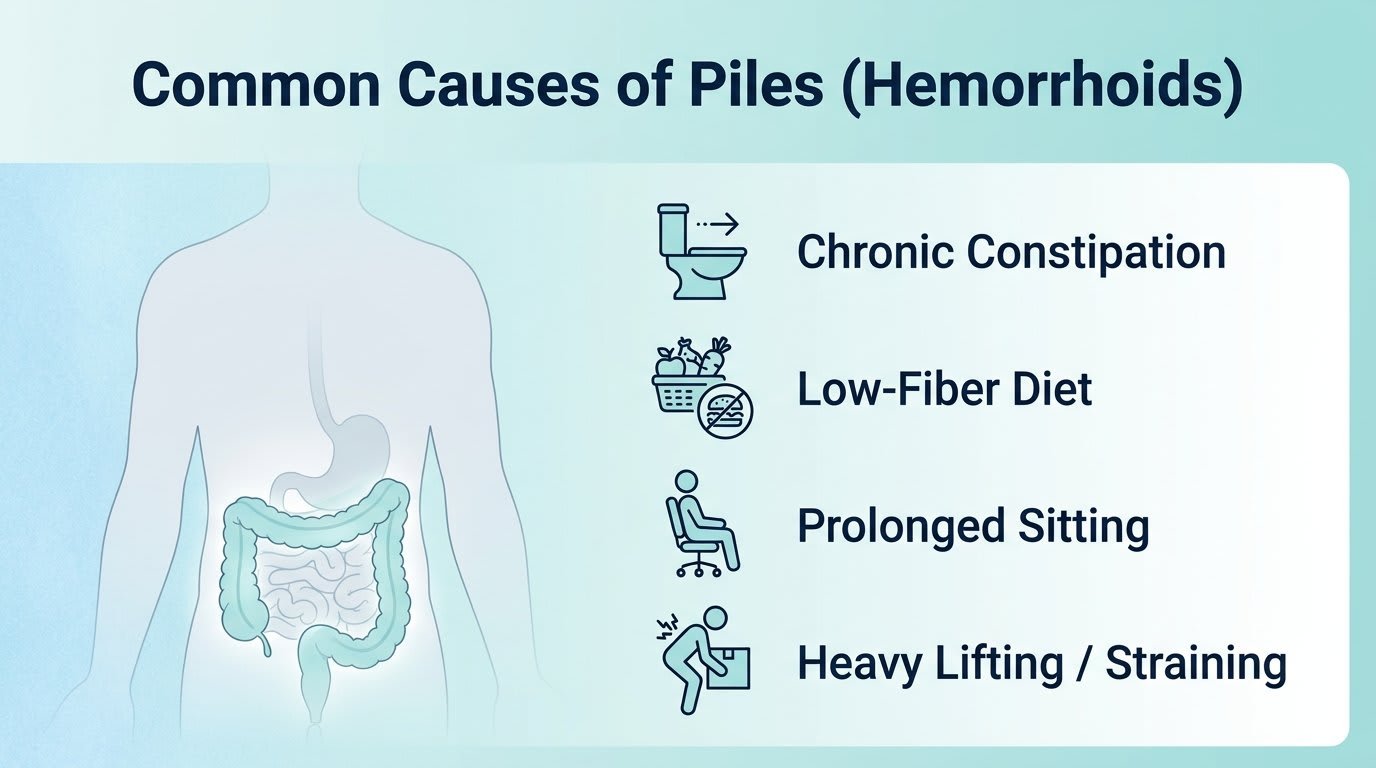
The causes of piles are not identical for everyone. Factors commonly associated with haemorrhoids include:
- Constipation and passing hard, dry stools.
- Repeated or forceful straining during defecation.
- Spending a long time sitting on the toilet.
- Persistent or recurrent diarrhoea and frequent bowel movements.
- Pregnancy, due to increased pelvic pressure and bowel changes.
- Ageing and weakening of connective tissues supporting the anal cushions.
- Factors that increase abdominal or pelvic pressure, including repeated heavy lifting or chronic coughing.
- Low-fibre dietary patterns, which can contribute to constipation and hard stools.
These are risk factors, not proof of cause in an individual. A person can have more than one factor, and haemorrhoids can occur even when none is obvious.
3. Constipation, hard stool and straining
Constipation is one of the most commonly discussed contributors to piles. When stool is hard or difficult to pass, a person may push forcefully or remain on the toilet for a prolonged period. Repeated straining increases pressure in the anal canal and may place stress on the supporting tissues around the anal cushions.
Why hard stools can be a problem
- Hard stool may require more effort to pass.
- Repeated pushing can increase pressure around the anal cushions.
- Passing large, hard stools may irritate the anal canal and can also contribute to an anal fissure, a separate condition that causes pain and bleeding.
- Fear of pain may lead some people to delay bowel movements, making stool harder and perpetuating a cycle.
How to reduce constipation-related strain
Increase fibre gradually through vegetables, fruit, beans, lentils, whole grains, nuts and seeds. Drink enough fluid for your needs, unless a clinician has advised fluid restriction. Respond to the urge to pass stool and avoid forcing it. If constipation persists, ask a clinician or pharmacist whether a fibre supplement or laxative is appropriate.
4. Toilet habits and prolonged sitting
Spending a long time on the toilet—especially while scrolling on a phone or reading—can encourage prolonged pressure around the anal area. Repeated straining and unnecessary sitting may contribute to symptoms in susceptible people. Go when you feel the urge, avoid pushing hard, and leave the toilet when finished. If you regularly need a long time to pass stool, constipation, medication effects or a bowel disorder may need attention.
5. Can chronic diarrhoea cause piles?
Yes, persistent diarrhoea and frequent bowel movements can contribute to irritation and may be associated with haemorrhoidal symptoms. Repeated wiping, urgency and frequent trips to the toilet can irritate anal skin. Chronic diarrhoea may also indicate infection, medication intolerance, irritable bowel syndrome or inflammatory bowel disease. Do not assume long-lasting diarrhoea is simply a cause of piles. Seek medical advice if it persists, recurs, wakes you at night, causes dehydration, or occurs with fever, blood, weight loss or significant abdominal pain.
6. Pregnancy and childbirth
Pregnancy is an important risk factor. As the uterus grows, pressure in the abdomen and pelvic veins increases. Hormonal changes can slow bowel movement, and iron supplements or changes in activity may contribute to constipation in some pregnant people. Straining during bowel movements and the physical effort of childbirth may also aggravate haemorrhoids.
Reducing risk during pregnancy
- Choose fibre-rich foods and increase fibre gradually.
- Maintain suitable physical activity if approved by the maternity-care team.
- Drink adequate fluids, unless advised otherwise.
- Discuss persistent constipation or haemorrhoidal symptoms with the obstetric clinician before using medicines or creams.
Pregnancy-related haemorrhoids often improve after delivery, but persistent bleeding, severe pain or a new lump should still be assessed.
7. Ageing and weakening of supporting tissues
The connective tissues that support the anal cushions can become less resilient with age. This may make the cushions more likely to enlarge or descend. Haemorrhoids can occur in younger adults too, but the likelihood tends to increase with age. Age alone does not establish the diagnosis, and rectal bleeding in an older adult should not automatically be attributed to piles.
8. Other possible risk factors
Repeated heavy lifting and physical strain
Repeated activities involving breath-holding and forceful straining may raise abdominal pressure. Heavy lifting is often mentioned as a possible contributor, but it is not a guaranteed cause. Use suitable lifting technique and avoid unnecessary breath-holding.
Chronic coughing
Frequent forceful coughing can repeatedly increase abdominal pressure. A persistent cough should be assessed for its own cause rather than treated only as a possible piles trigger.
Low-fibre dietary patterns
A diet low in fibre can contribute to constipation and hard stools, which may increase straining. Fibre is best increased gradually and alongside suitable fluid intake. People with bowel narrowing, swallowing difficulties or certain digestive conditions should obtain individual advice before major dietary changes.
Overweight and obesity
Some studies report an association between higher body weight and haemorrhoids, potentially related to pressure and bowel habits. The relationship is not simple, and body weight should not be treated as the sole explanation for an individual’s symptoms.
Family history and individual susceptibility
Some people may be more susceptible because of inherited differences in connective tissue, bowel habits or other anatomical factors. A family history does not mean haemorrhoids are inevitable.
Medicines and underlying bowel conditions
Some medicines can cause constipation or diarrhoea, indirectly affecting haemorrhoid risk. Examples include certain pain medicines and iron supplements. Do not stop a prescribed medicine on your own. Ask the prescribing clinician whether a side effect or alternative treatment should be considered.
9. Common myths about the causes of piles
Myth 1: Spicy food directly causes piles
Fact: Spicy food is not established as a direct cause of haemorrhoids. It may worsen burning or irritation during bowel movements in some people, especially when the anal area is already inflamed.
Myth 2: Sitting on a hard chair causes piles
Fact: Ordinary sitting is not considered a proven direct cause. Prolonged sitting on the toilet and straining are more relevant bowel-habit concerns.
Myth 3: Only people with constipation get piles
Fact: Constipation is a contributor, but haemorrhoids can also occur with diarrhoea, pregnancy, ageing and weakening of supporting tissues.
Myth 4: Piles are caused by poor hygiene
Fact: Haemorrhoids are not caused simply by being unclean. Gentle hygiene can reduce irritation after symptoms develop, while excessive rubbing and fragranced products may worsen it.
Myth 5: Every anal lump is a pile
Fact: Skin tags, fissures, abscesses, fistulas, warts and other conditions can cause a lump or swelling. A new or painful lump needs clinical assessment.
10. Symptoms and possible complications
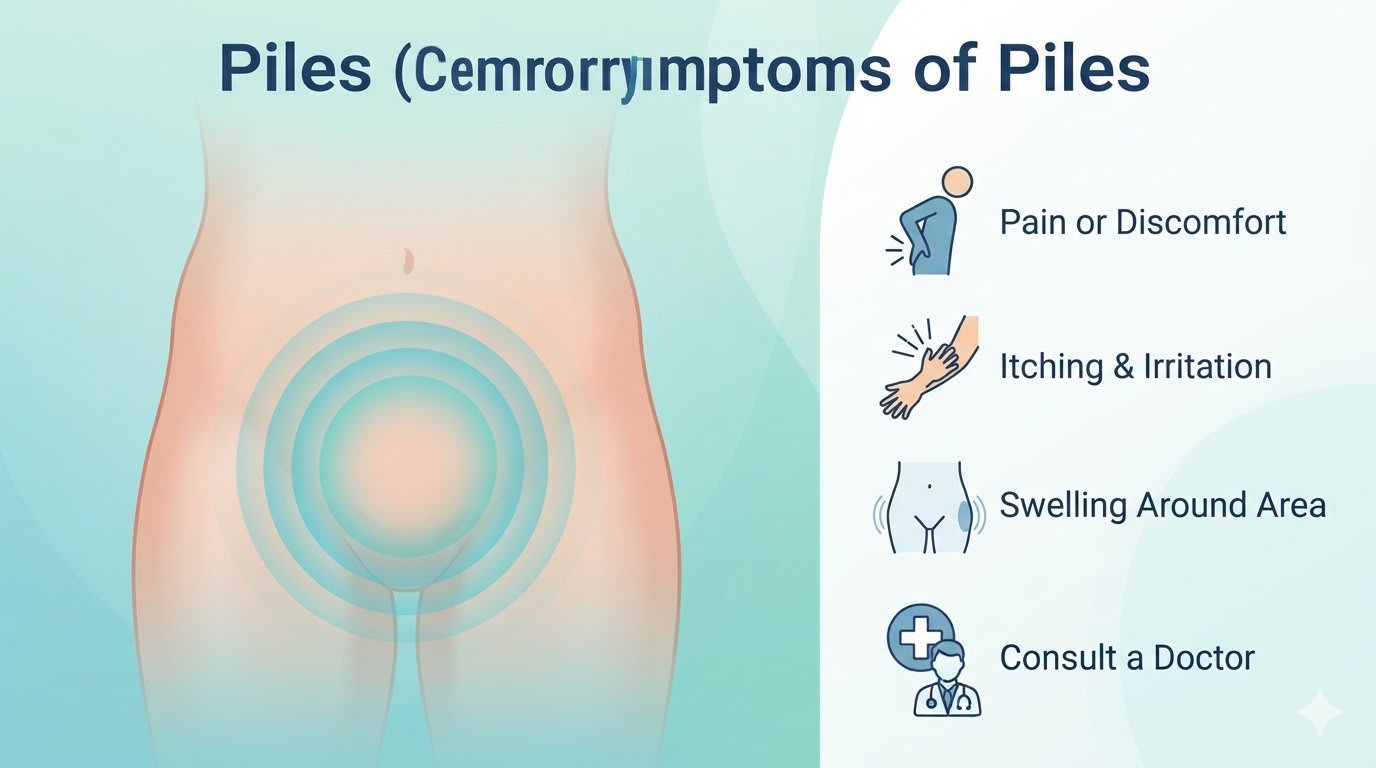
The causes of piles and their symptoms are related, but symptoms vary by type and severity. Common features include:
- Bright-red blood on toilet paper, on the stool surface or in the toilet bowl.
- Itching or irritation around the anus.
- A lump or swelling near the anal opening.
- Discomfort or pain, especially with external haemorrhoids.
- Mucus, dampness or difficulty cleaning the area.
- Prolapse, where internal haemorrhoidal tissue comes down through the anal opening.
Possible complications
Some haemorrhoids can develop a blood clot (thrombosis), causing sudden pain and a firm lump. Repeated bleeding can occasionally contribute to iron-deficiency anaemia. Prolapsed tissue may become irritated or, rarely, trapped. Severe pain, heavy bleeding, fever or pus should not be managed as routine piles at home.
11. How does a doctor assess the cause?
A clinician will ask about bowel habits, constipation or diarrhoea, straining, bleeding, pain, medicines, pregnancy history where relevant, and family or personal history of bowel disease. They may inspect the anal area and perform a digital rectal examination when appropriate. An anoscopy may be used to view internal haemorrhoids. Further tests, such as sigmoidoscopy or colonoscopy, may be recommended depending on age, bleeding pattern, anaemia, bowel-habit changes, family history and examination findings. Finding haemorrhoids does not necessarily rule out another cause of bleeding.
12. How to reduce the risk of piles
- Eat enough fibre: Include fruit, vegetables, pulses and whole grains regularly. Increase intake gradually.
- Drink adequate fluids: Hydration helps fibre work effectively. Follow medical fluid restrictions if you have heart or kidney disease.
- Avoid straining: Do not force stool or hold your breath while pushing.
- Limit toilet time: Avoid sitting on the toilet longer than needed.
- Stay active: Regular movement can support bowel regularity; choose activity suited to your health.
- Address ongoing bowel symptoms: Persistent constipation or diarrhoea needs evaluation.
- Review medicines with a clinician: If a medicine appears to cause constipation or diarrhoea, ask about safe options. Do not stop it independently.
A simple daily bowel-health routine
Eat fibre-containing foods across the day, maintain suitable fluid intake, take regular movement breaks, respond to the urge to pass stool and avoid prolonged toilet sitting. These habits support bowel health; they cannot guarantee that piles will never occur.
Remember
Prevention is about reducing avoidable pressure and straining—not following a restrictive “piles diet” or avoiding entire food groups without a medical reason.
13. When should you consult a doctor?
Arrange prompt medical assessment if you have new or recurrent rectal bleeding, persistent or worsening anal pain, a new lump, fever or pus, unexplained weight loss, fatigue, possible anaemia, a persistent change in bowel habits, black tarry stool, maroon blood, or symptoms that do not improve after about a week of appropriate self-care. If you take anticoagulant or antiplatelet medicines, have a bleeding disorder, are pregnant or have significant chronic illness, obtain individual medical advice. Do not stop prescribed medicines without speaking to the prescriber.
14. Frequently asked questions
1. What are the main causes of piles?
The main contributing factors include constipation, hard stools, repeated straining, prolonged toilet sitting, chronic diarrhoea, pregnancy and age-related weakening of supporting tissues. More than one factor may be involved.
2. Does constipation always cause piles?
No. Constipation and straining increase risk, but not everyone with constipation develops haemorrhoids. Piles can also occur in people without constipation.
3. Can piles be caused by diarrhoea?
Frequent bowel movements and chronic diarrhoea can irritate the anal area and may contribute to haemorrhoidal symptoms. Persistent diarrhoea needs assessment to identify its cause.
4. Can spicy food cause piles?
Spicy food is not established as a direct cause of haemorrhoids. It can aggravate burning or irritation in some people who already have anal symptoms.
5. Does sitting for long hours cause piles?
Ordinary sitting has not been established as a direct cause. Long periods on the toilet, especially with straining, are more relevant. Take movement breaks and avoid unnecessary toilet time.
6. Why are piles common during pregnancy?
Pregnancy increases pressure in the pelvic veins. Hormonal changes, constipation and straining can add to the risk. Discuss treatment with the maternity-care team before using medicines.
7. Can heavy lifting cause piles?
Repeated heavy lifting with forceful straining or breath-holding may increase abdominal pressure and could aggravate symptoms. It is one possible contributor, not a proven sole cause in every case.
8. Are piles hereditary?
Family history may contribute to susceptibility, possibly through inherited tissue characteristics or bowel habits. It does not mean piles are inevitable.
9. Can piles occur without constipation?
Yes. They may occur with pregnancy, ageing, diarrhoea, tissue changes or no obvious trigger.
10. Can piles cause rectal bleeding?
Yes. Internal haemorrhoids can cause bright-red bleeding, often during or after a bowel movement. Other bowel and anal conditions can also bleed, so new or recurrent bleeding needs assessment.
11. Can piles go away permanently if constipation is treated?
Reducing constipation and straining can improve symptoms and lower recurrence risk, but it does not guarantee permanent prevention. Existing prolapsing haemorrhoids may need additional treatment.
12. Which doctor treats piles?
A primary-care doctor, general surgeon or colorectal surgeon can assess haemorrhoids. A gastroenterologist may be involved when bowel symptoms or colon investigations are needed.
15. Summary
- Piles develop when normal anal cushions enlarge or move downwards because of changes in pressure and supporting tissues.
- Constipation, hard stool, straining and prolonged toilet sitting are important modifiable contributors.
- Chronic diarrhoea, pregnancy, ageing and individual tissue susceptibility can also play a role.
- Spicy food and ordinary chair-sitting are not established direct causes.
- Fibre, suitable fluid intake, regular activity and avoiding straining can support prevention.
- Rectal bleeding should not automatically be labelled piles; persistent or alarming symptoms need medical evaluation.
16. Conclusion
So, what are the causes of piles? In most people, haemorrhoids are associated with several interacting factors rather than one single cause. Constipation and straining can increase pressure on the anal cushions, while pregnancy, chronic diarrhoea, ageing and weakening of supporting tissues can add to the risk. Improving bowel habits is a useful first step, but it cannot replace an examination when symptoms occur. New or recurrent rectal bleeding, a persistent lump, severe pain or a change in bowel habits should be assessed by a healthcare professional.
17. Medical disclaimer
This article is for general educational purposes only. It does not provide a personal diagnosis or replace consultation with a qualified healthcare professional. Risk factors described here do not prove the cause of an individual’s symptoms. Do not start, stop or change prescribed medicines based on this article. Seek medical assessment for rectal bleeding, persistent pain, a new lump or bowel-habit changes. Heavy bleeding, faintness, collapse, fever with severe anal pain or signs of infection require urgent in-person care.
18. References and further reading
- National Institute of Diabetes and Digestive and Kidney Diseases (NIDDK). Hemorrhoids: Symptoms & Causes.
- National Health Service (NHS). Piles (haemorrhoids).
- Mayo Clinic. Hemorrhoids: Symptoms and causes.
- American Society of Colon and Rectal Surgeons. Hawkins AT, et al. Clinical Practice Guidelines for the Management of Hemorrhoids. Diseases of the Colon & Rectum. 2024;67(5):614–623.
- National Institute for Health and Care Excellence (NICE). Clinical Knowledge Summary: Haemorrhoids.
- MedlinePlus, U.S. National Library of Medicine. Hemorrhoids.
Suggested video resource: Find patient-education videos explaining haemorrhoids and their causes. Prefer videos from recognised hospitals, government health services or qualified colorectal specialists.
📲 For Health-Related Articles & Videos
🔹 Facebook: https://www.facebook.com/positivemind.healthcare