Fissures and Piles Difference: Symptoms, Causes and Treatment Compared-various aspects-
Medically reviewed By ENT and respiratory health specialist — Dr. Sagar Rajkuwar, MS-ENT. Clinic Website: www.entspecialistinnashik.com
Health education article | HealthUseful.com
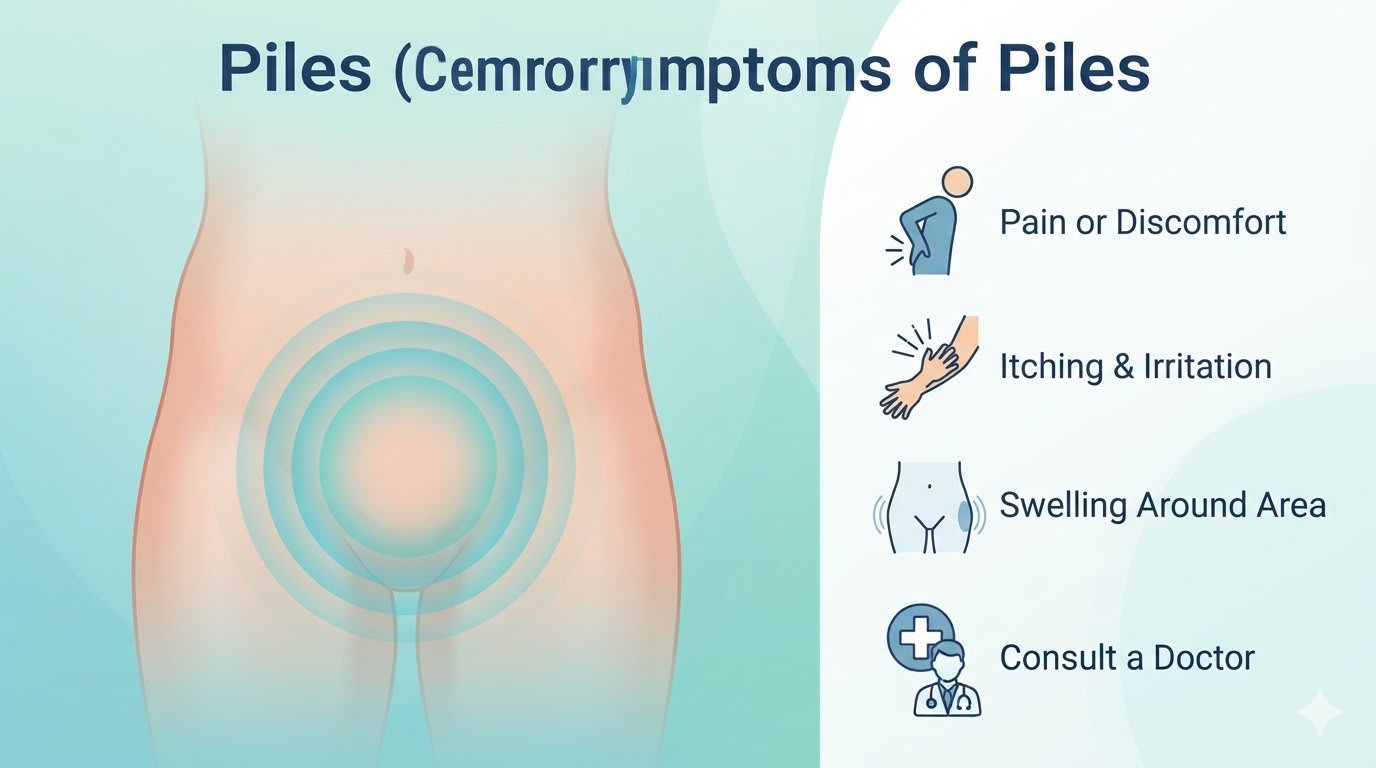
The main difference between fissures and piles is that an anal fissure is a small tear in the lining of the anal canal, whereas piles (hemorrhoids) are enlarged vascular cushions around or inside the anus. A fissure classically causes sharp pain during a bowel movement and burning that can continue afterwards. Piles more often cause painless bright-red bleeding, itching or a lump, although external or thrombosed piles can be very painful. Symptoms overlap, so bleeding or persistent pain should be assessed rather than self-diagnosed.
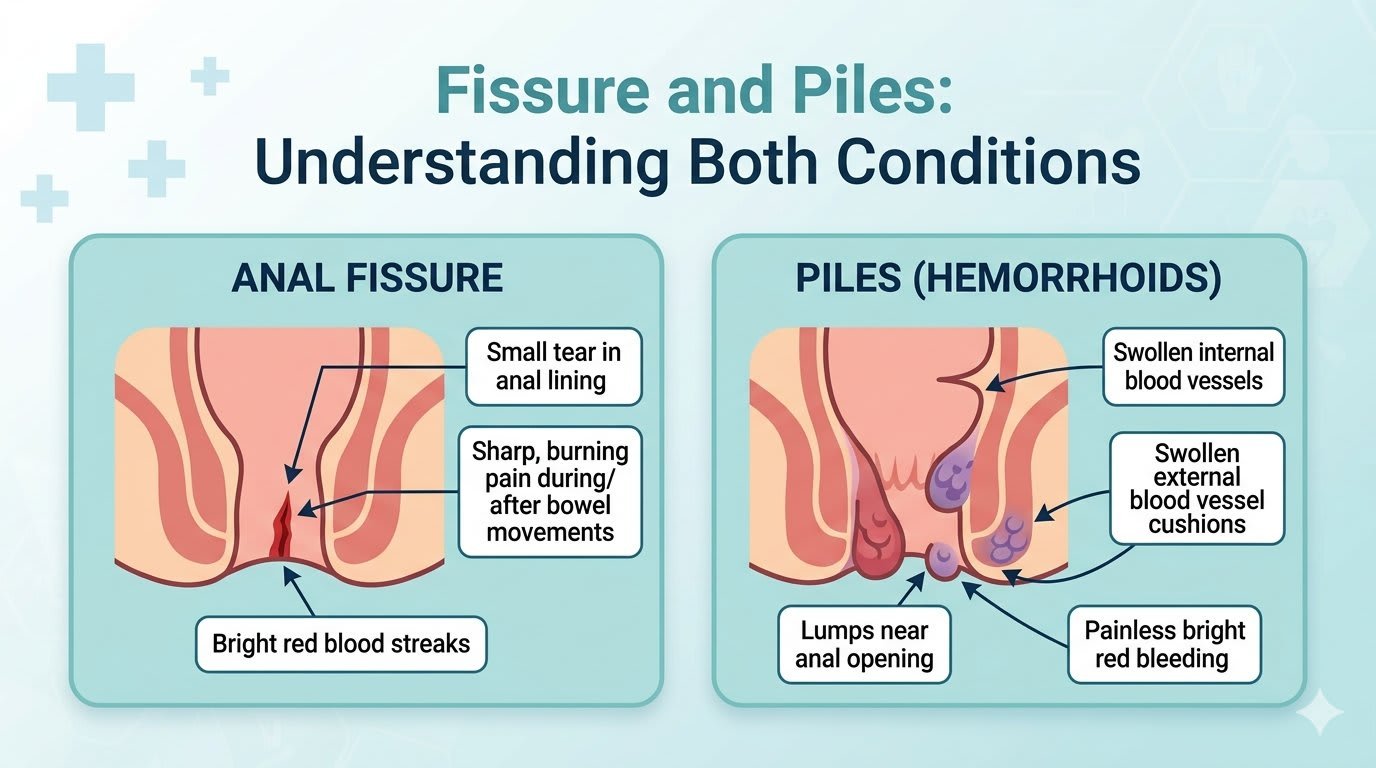
Table of contents
- Main guide
- Safe self-care
- When to seek medical care
- Frequently asked questions
- Summary and conclusion
Fissures and piles difference at a glance
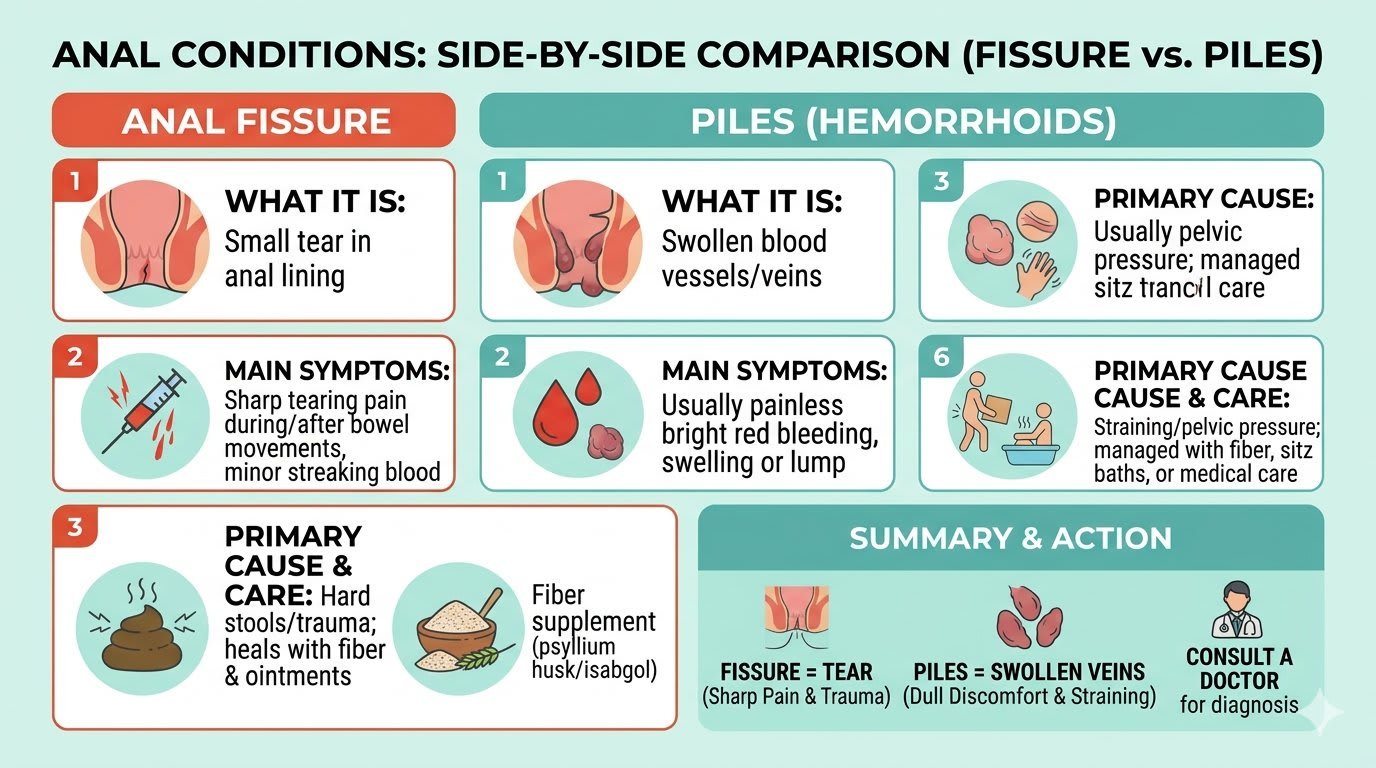
| Feature | Anal fissure | Piles (hemorrhoids) |
|---|---|---|
| What it is | A linear tear in the anal lining | Enlarged or symptomatic vascular cushions |
| Typical pain | Sharp, cutting pain with stool; burning may last afterwards | Often little pain with internal piles; external or thrombosed piles may hurt |
| Bleeding | Usually a small amount of bright-red blood on tissue or stool surface | Bright-red bleeding can occur, often during or after passing stool |
| Lump | A chronic fissure may have a small sentinel skin tag | External piles may form a lump; internal piles may prolapse |
| Main treatment approach | Soften stool; relax sphincter when needed; selected medicines or procedures | Fibre, bowel habit changes, symptom relief; selected office procedures or surgery |
How to distinguish the symptoms
Fissure pain is often described as passing glass or a sharp cut. It is linked closely to defecation and can persist for minutes or hours because the internal sphincter may spasm. Piles may cause itching, mucus, a feeling of incomplete cleaning, prolapse or a lump. Internal hemorrhoids are usually not painful unless another problem is present; severe pain can occur with a thrombosed external hemorrhoid or strangulated prolapse.Can fissures and piles occur together?
Yes. Constipation and straining can contribute to both conditions, and a person can have a fissure and hemorrhoids at the same time. Finding a pile does not prove it is the source of bleeding or pain. A careful examination helps identify which condition is responsible and whether another diagnosis must be considered.Which condition is more serious?
Most uncomplicated fissures and hemorrhoids are treatable and are not life-threatening. Severity depends on symptoms, duration and the underlying cause. Persistent bleeding should not automatically be attributed to either condition. Fever, pus, constant throbbing pain, black stool, heavy bleeding or faintness requires prompt or urgent medical assessment.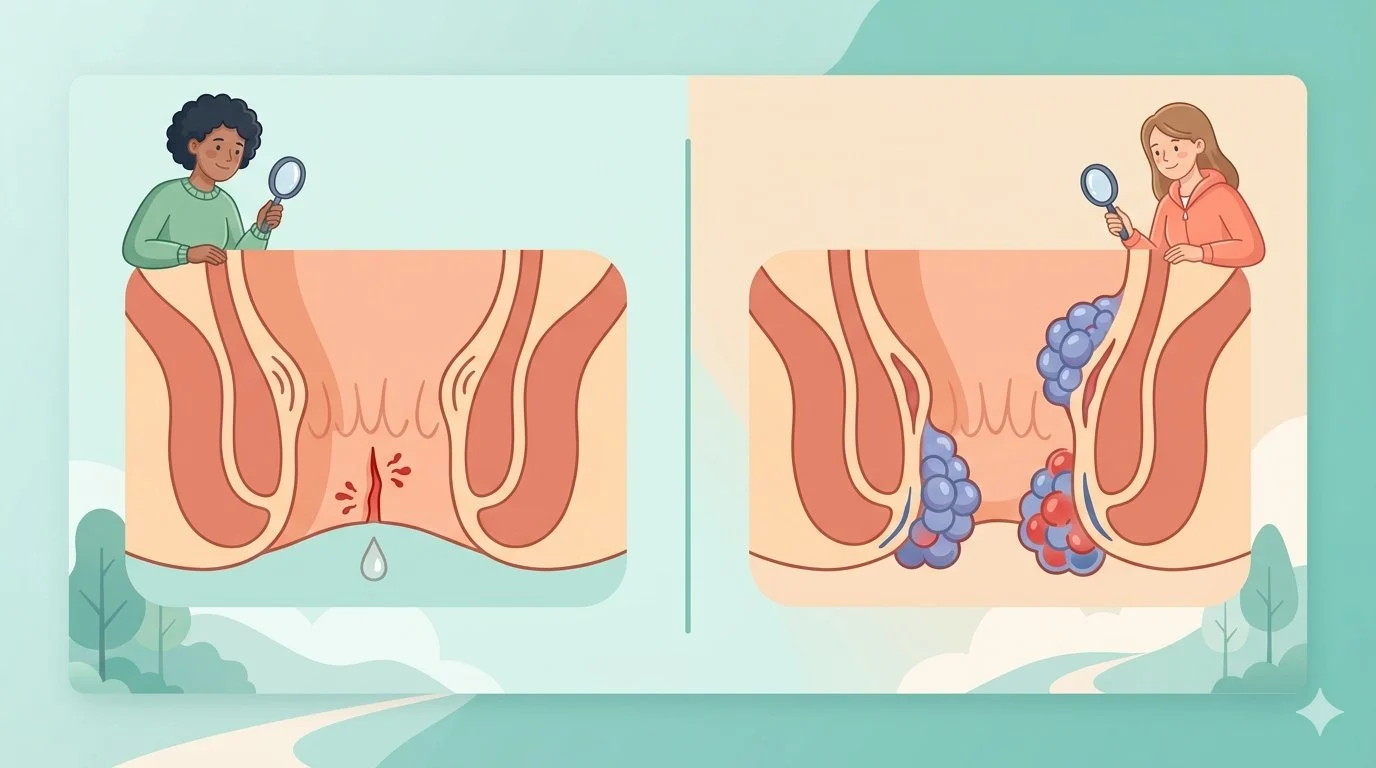
How treatment differs
Fissure treatment
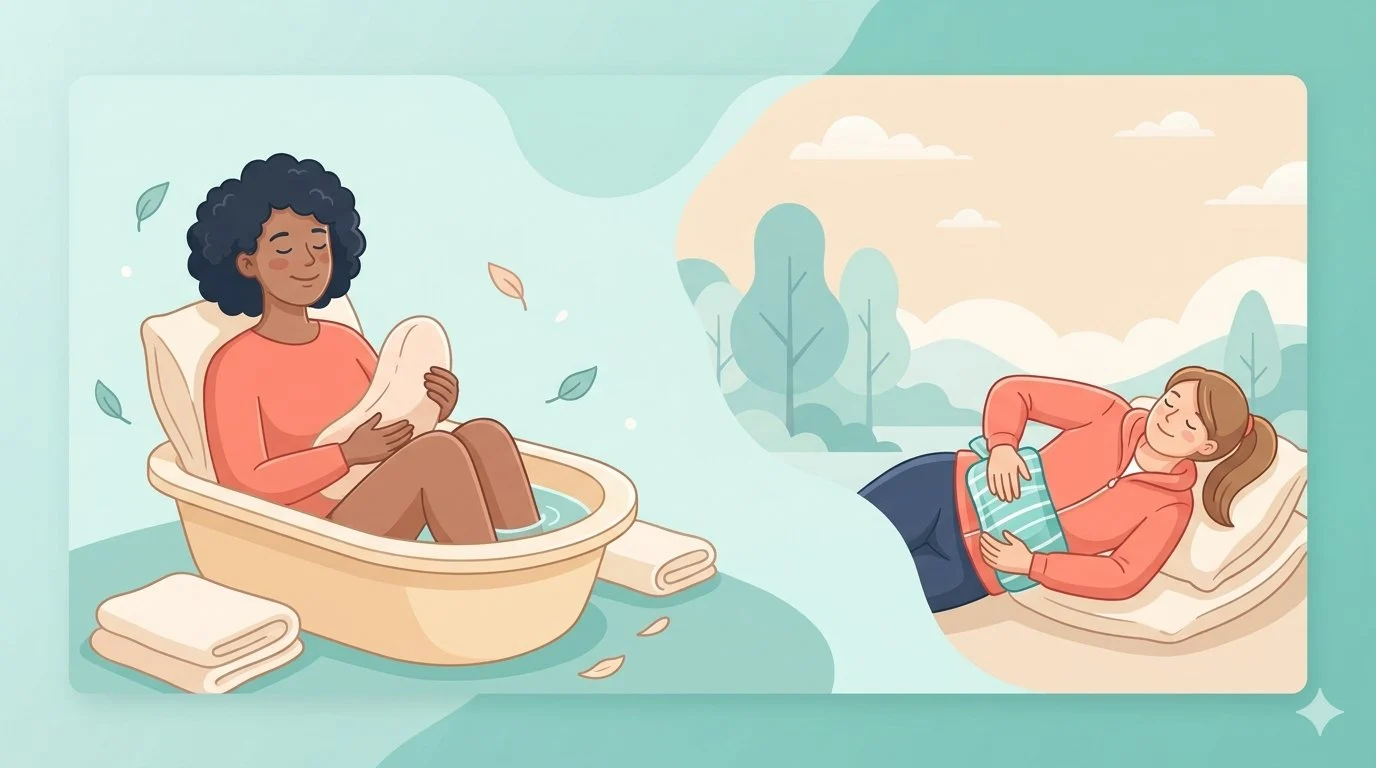
Initial treatment focuses on soft, formed stools, fibre, fluid, warm baths and avoiding straining. Persistent fissures may need prescription topical medicines that relax the sphincter, botulinum toxin injection or a selected operation.Piles treatment
Management depends on whether hemorrhoids are internal or external and how troublesome they are. Fibre and bowel-habit changes are first steps. Selected internal piles may be treated with rubber-band ligation or other office procedures; large or persistent disease may need surgery. A rubber band is not a treatment for an external lump.What should you do next?
If pain is sharp during stool, a fissure is possible; if there is itching, prolapse or a lump, piles may be possible. These clues are not a diagnosis. Arrange an examination for new bleeding, severe pain, recurrent symptoms or symptoms that do not improve.Safe self-care that supports healing
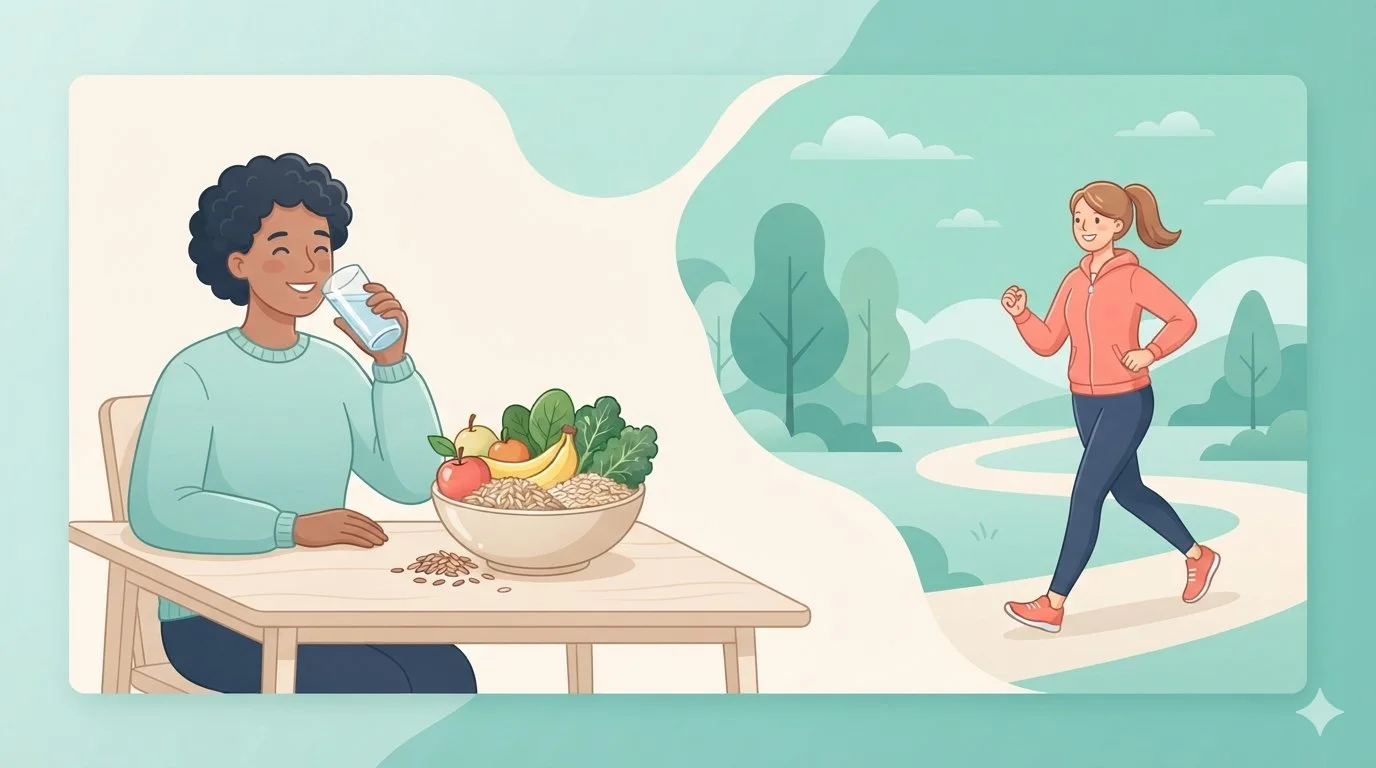
For many uncomplicated fissures, the foundation of treatment is to make bowel movements soft, formed and easy to pass. Increase dietary fibre gradually through vegetables, fruit, pulses, oats and whole grains. Drink adequate fluid unless a clinician has prescribed a fluid restriction. A fibre supplement such as psyllium may help some people; introduce it gradually and take it with the amount of water stated on the product label. If constipation continues, ask a clinician or pharmacist whether an appropriate laxative is needed. A warm, shallow sitz bath for around 10–20 minutes, particularly after a bowel movement, may soothe discomfort and relax the anal sphincter. Clean the area gently with water and pat dry. Avoid forceful wiping, fragranced soaps and irritating home remedies. Do not delay a bowel movement when you feel the urge, and do not sit on the toilet for long periods or strain.Practical bowel-habit checklist
- Go when the urge comes; do not repeatedly postpone stool.
- Allow time but avoid prolonged toilet sitting or phone scrolling.
- Do not push hard or hold your breath while passing stool.
- Keep a simple record of stool consistency, pain and bleeding to discuss at review.
- Address both constipation and frequent diarrhoea, because either can irritate the anal canal.
When to seek medical care
Arrange a medical assessment for anal pain or rectal bleeding rather than assuming the cause is a fissure or piles. Seek prompt care if pain is severe, symptoms are worsening, or there is no improvement after about seven days of self-care. Fever, chills, pus or constant throbbing pain may indicate an anal abscess or another infection and need urgent assessment. Heavy or continuous bleeding, large clots, faintness, black or dark-red stool, or feeling very unwell requires urgent medical attention. Unusual fissures—multiple, off the midline, recurrent or slow to heal—may need investigation for conditions such as Crohn’s disease, infection or, rarely, cancer. This does not mean these conditions are likely, but atypical findings should not be ignored.How a clinician confirms the diagnosis
Diagnosis usually begins with a history of pain, bleeding, bowel habits, duration and relevant medical conditions, followed by a careful visual inspection. A painful internal examination may be deferred or performed by a specialist when appropriate. Further tests are not necessary for every typical fissure; they may be considered when symptoms are atypical, persistent, recurrent or accompanied by other bowel symptoms.Medical disclaimer
This article is for general education and is not a substitute for examination, diagnosis or individual treatment. Medicines and procedures must be selected by a qualified healthcare professional after considering pregnancy, other illnesses, allergies and current medicines. Do not start, stop or change prescribed treatment based only on this page.References and further reading
- NHS – Anal fissure
- Mayo Clinic – Anal fissure: symptoms and causes
- Mayo Clinic – Anal fissure: diagnosis and treatment
- ASCRS – Management of Anal Fissures (2023 clinical practice guideline)
- American Family Physician – ASCRS fissure guideline summary (2024)
- NHS – Anal pain: causes and urgent warning signs
- Mayo Clinic Healthcare – Anal fissures and fistulas
Related video resource
Find patient-education videos about anal fissures from recognised medical organisations on YouTube. Use videos for general education, not as a substitute for a personal medical assessment.Frequently asked questions
Can piles cause sharp pain while passing stool?
They can, particularly if an external pile is thrombosed or another condition such as a fissure is also present. Typical internal piles are often painless.Can a fissure cause a lump?
A long-standing fissure may develop a small sentinel skin tag, which can be mistaken for an external pile.Which causes more bleeding, fissure or piles?
Both can cause bright-red bleeding. The amount and appearance alone cannot reliably identify the cause.Can I have piles and fissure together?
Yes. A clinician can examine you and identify both conditions if present.Can piles or fissures become cancer?
Neither condition is itself cancer, but bleeding or a persistent anal lesion should not be assumed to be benign without assessment.Summary
A fissure is a tear; piles are enlarged vascular cushions. Sharp pain during and after stool points more towards a fissure, while itching, prolapse or a lump may suggest piles. Both can coexist and both can bleed. Examination is important when symptoms persist or bleeding is new.
Conclusion
A fissure is a tear; piles are enlarged vascular cushions. Sharp pain during and after stool points more towards a fissure, while itching, prolapse or a lump may suggest piles. Both can coexist and both can bleed. Examination is important when symptoms persist or bleeding is new. The right next step depends on the duration and severity of symptoms and an examination when needed. Avoid self-diagnosis and seek professional advice if symptoms persist or warning signs occur.
📲 For Health-Related Articles & Videos
🔹 Facebook: https://www.facebook.com/positivemind.healthcare