Tympanosclerosis vs Otosclerosis: Key Differences, Symptoms, Hearing Loss & Treatment Options Explained
Author: Dr Sagar Rajkuwar, ENT Specialist, Nashik, Maharashtra, India
🌐 www.entspecialistinnashik.com
Do you have trouble understanding conversations, ringing in your ears, or hearing loss? Many are astonished to discover that tympanosclerosis and otosclerosis, two ear conditions with similar-sounding names, are entirely different illnesses that impact hearing differently.
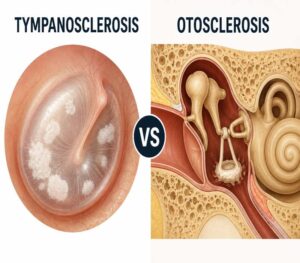
They are frequently mistaken for one another because both circumstances might lead to hearing problems. Nevertheless, it is vital to be able to distinguish between them in order to receive the appropriate diagnosis and treatment. You will learn about the causes, symptoms, diagnosis, treatment choices, and outlook for otosclerosis and tympanosclerosis in this thorough tutorial.
Table of Contents
- What Is Tympanosclerosis?
- What is otosclerosis?
- Tympanosclerosis vs Otosclerosis: Side-by-Side Comparison
- More Hearing Loss Is Caused by Which Condition?
- Is it possible for otosclerosis and tympanosclerosis to produce tinnitus?
- What Methods Are Used To Diagnose These Diseases?
- Treatment Options for Tympanosclerosis
- Treatment Options for Otosclerosis
- Is There a Way to Avoid These Conditions?
- You should consult an ENT specialist.
- Conclusion
What Is Tympanosclerosis?
Tympanosclerosis is a condition caused by inflammation or infection that causes scar tissue and calcium deposits to grow on the eardrum (tympanic membrane) or inside the middle ear.
It typically happens after:
- Persistent ear infections
- Chronic otitis media
- Past ear operation
- Damage to the eardrum
- chronic middle ear inflammation
These calcium deposits might make the eardrum less flexible, impairing sound transmission and causing hearing problems.
Typical Symptoms of Tympanosclerosis
- Deafness
- white patches in the eardrum
- Fullness in the ear
- Tinnitus (ringing in the ears) in a mild form
- History of recurrent ear infections
Tympanosclerosis is occasionally discovered during a routine ear check without generating any symptoms.
What is otosclerosis?
Otosclerosis is a condition characterized by abnormal bone remodeling in the middle ear, particularly around the stapes (stirrup) bone.
Sound is normally transmitted to the inner ear by the stapes’ unrestricted vibrations. Hearing loss is caused by abnormal bone growth in otosclerosis, which immobilizes the stapes and diminishes sound transmission.
Symptoms of otosclerosis that occur frequentlyTympanosclerosis vs Otosclerosis
- Slowly deteriorating hearing loss
- Hearing low-frequency noises is challenging.
- Ringing in the ear
- History of hearing impairment in the family
- Balance problems or dizziness on an intermittent basis
Otosclerosis is commonly genetic and often impacts adults aged 20 to 50.
Tympanosclerosis vs Otosclerosis: Side-by-Side Comparison
| Feature | Tympanosclerosis | Otosclerosis |
|---|---|---|
| Primary Cause | Scarring and calcium deposits after infection | Abnormal bone growth around stapes |
| Location | Eardrum and middle ear | Stapes bone and middle ear |
| Hearing Loss Type | Conductive hearing loss | Conductive or mixed hearing loss |
| Associated With | Chronic ear infections | Genetics and bone remodeling |
| Visible During Ear Exam | Often yes | Usually no |
| Tinnitus | Possible | Common |
| Surgery Option | Tympanoplasty | Stapedectomy/Stapedotomy |
More Hearing Loss Is Caused by Which Condition?
Hearing loss severity varies from person to person.
Depending on the degree of scarring, tympanosclerosis can result in hearing loss that is mild to moderate.
Otosclerosis can slowly worsen and cause severe hearing loss if left untreated.
Since treatment outcomes are often improved when intervention takes place before severe hearing loss occurs, early diagnosis is essential.
Is it possible for otosclerosis and tympanosclerosis to produce tinnitus?
Yes.
Tinnitus, also referred to as: may be brought on by either of these factors.
- Ringing
- Humming
- Hissing
- Whistles
It can be persistent or intermittent and can have an impact on one’s quality of life, sleep quality, and ability to concentrate.
What Methods Are Used To Diagnose These Diseases?
An ENT expert could do the following:
Examination of the Ear
The eardrum may show characteristic white patches of tympanosclerosis.
Audiometry
- Audiometry using pure tones
- Speech audiometry
- Tympanometry
Studies of imaging
When surgical intervention is taken into consideration, CT scans might be advised.
Treatment Options for Tympanosclerosis
Symptom severity determines the course of treatment.
Seeing
No therapy may be necessary for mild cases.
Hearing devices
Effective when hearing impairment impacts everyday conversation.
Tympanoplasty
When extensive scarring severely impacts hearing, surgery may be taken into account.
Treatment Options for Otosclerosis
Aid to Hearing
Frequently effective in the early phases.
Stapedectomy or Stapedotomy
These operations may greatly enhance hearing and replace or avoid the impaired stapes bone.
Periodic Observation
Hearing examinations on patients ought to be conducted on a regular basis.
Is There a Way to Avoid These Conditions?
In order to lessen the likelihood of developing tympanosclerosis
- Quickly treat ear infections.
- Follow ENT’s advice.
- Steer clear of recurrent ear trauma
In order to lessen otosclerosis’ effects
Prevention is restricted since heredity has a significant influence. However:
- Diagnosis at an early stage
- Evaluations of hearing on a regular basis
- prompt treatment
may aid in maintaining hearing function.
You should consult an ENT specialist.
Seek professional care if you suffer any of the following symptoms:
- Enduring deafness
- Tinnitus
- Ear infections that persist
- Pressure or fullness in the ears
- Progressive auditory challenges
Complications might be avoided with early detection and identification of the problem.
Conclusion
Tympanosclerosis and otosclerosis are two distinct ear diseases that share similar names but vary in their causes, symptoms, and treatment options. Abnormal bone growth involving the stapes bone is known as otosclerosis, whereas tympanosclerosis is commonly connected with scarring after ear infections.
A thorough assessment by an ENT professional may help you identify the cause of hearing loss or ringing in the ears and guide the best course of action.
Dr. Sagar Rajkuwar, an ENT specialist in Nashik, India, posted this.
Medical Disclaimer
Medical Disclaimer: This article is for educational and informational purposes only and should not be considered medical advice, diagnosis, or treatment. Always consult a qualified ENT specialist or healthcare professional regarding any hearing loss, tinnitus, ear disease, or other medical concerns.
Primary Topic Cluster: Otitis Media (Middle Ear Infection)
Pillar Article
Symptoms & Diagnosis
Chronic Otitis Media Cluster
- https://healthuseful.com/chronic-otitis-media/
- https://healthuseful.com/treatment-of-chronic-otitis-media/
- https://healthuseful.com/chronic-otitis-media-effusion/
Specific Types of Otitis Media
- https://healthuseful.com/otitis-media-nonsuppurative/
- https://healthuseful.com/otitis-media-paediatric/
Primary Topic Cluster: Tympanosclerosis
Pillar Article
Causes & Risk Factors
Treatment Cluster
- https://healthuseful.com/tympanosclerosis-treatment-without-surgery/
- https://healthuseful.com/tympanosclerosis-surgery-success-rate/
Symptoms & Complications
Comparison Articles
- https://healthuseful.com/tympanosclerosis-vs-otosclerosis/
- https://healthuseful.com/tympanosclerosis-vs-cholesteatoma/
References
- American Academy of Otolaryngology–Head and Neck Surgery – Clinical information on hearing loss and ear disorders.
- National Institute on Deafness and Other Communication Disorders (NIDCD) – Hearing loss and ear disease resources.
- Merck Manual Professional Edition – Otosclerosis Overview
- MSD Manual Consumer Version – Hearing Loss Disorders
- National Health Service guidance on otosclerosis, hearing loss, and ear conditions.
- MedlinePlus – Hearing Disorders Information