What Is the Cause of Tympanosclerosis? The Real Causes of Eardrum Scarring, According to ENT Doctors
Author: Dr Sagar Rajkuwar, ENT Specialist, Nashik, Maharashtra, India
🌐 www.entspecialistinnashik.com
Hearing loss and white areas on the eardrum may be symptoms of tympanosclerosis, an frequent yet often ignored ear ailment. Learn about the primary causes, risk factors, prevention advice, and when to get medical attention.
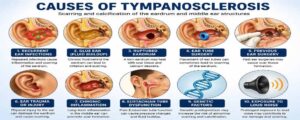
Causes of tympanosclerosis? Finding the underlying causes of eardrum scarring
Scar tissue and calcium accumulation on the eardrum and sometimes the middle ear structures are symptoms of tympanosclerosis. Even while some individuals never experience symptoms, some may have hearing loss, tinnitus, or a sensation of ear obstruction.
What causes tympanosclerosis is one of the most often asked questions of ENTs by patients.
Frequently, the cause is connected to previous ear infections, ear surgery, chronic inflammation, or ear drum injury. Although the ailment itself is typically not serious, knowing its origins may help lower the likelihood of developing chronic hearing problems.
Table of Contents
- What is Tympanosclerosis?
- Principal Causes of Tympanosclerosis
- Tympanosclerosis Risk Factors
- Is It Possible for Children to Have Tympanosclerosis?
- What tympanosclerosis does to hearing
- Symptoms of Tympanosclerosis
- What Is the Process for Diagnosing Tympanosclerosis?
- Is It Possible to Avoid Tympanosclerosis?
- When Should You Consult with an ENT Specialist?
- Summary
What is Tympanosclerosis?
The growth of calcium deposits and hardened scar tissue on the eardrum (tympanic membrane) and occasionally the middle ear is known as tympanosclerosis.
These deposits may eventually make it harder for sound vibrations to pass normally through the ear by lowering the flexibility of the eardrum.
Principal Causes of Tympanosclerosis
1. Frequent Ear Infections
The most frequent reason for tympanosclerosis is thought to be recurring middle ear infections.
Inside the ear, every infection results in inflammation. During the healing process, scar tissue may develop. Calcium deposits can build up in this scar tissue over time.
Children are especially susceptible to frequent ear infections.
2. Prolonged Otitis Media
Prolonged inflammation of the middle ear has the potential to harm the fragile ear tissues.
Inflammation that is chronic can cause the eardrum to thicken and harden due to abnormal healing processes.
The higher the chance of permanent scarring, the longer the inflammation persists.
3. Ear Glue (Otitis Media with Effusion)
Glue ear develops when fluid becomes stuck behind the eardrum.
Irritation and inflammation can result from chronic fluid accumulation even when there is no infection.
Healing alterations might lead to the development of tympanosclerosis over time.
4. Broken Eardrum
Scar tissue may cause a pierced or broken eardrum to recover.
Causes that are often seen include:
- earache
- Psychological Injury
- Sudden variations in pressure
- Loud explosions
While many perforations recover completely, some leave permanent calcium-containing scars.
5. Grommet Surgery (Ear Tube Placement)
Myringosclerosis or tympanosclerosis may sometimes manifest in children who have ear tube insertion to treat recurring infections.
Any disturbance to the eardrum during the treatment, which is safe and helpful, might cause healing reactions that lead to scarring.
6. Previous Ear Surgery
The likelihood of scarring may rise if surgery is performed on the eardrum or middle ear.
Some instances are:
- Tympanoplasty
- Surgery on the mastoid bone
- Surgery for cholesteatoma
Some patients may experience the formation of calcium deposits during the healing process, however the majority of procedures recover successfully.
7. Ear injury
The eardrum may be harmed by bodily damage to the ear.
Potential causes include:
- cotton swab accidents
- insertion of pointed objects
- Injuries Sustained During Sports
- Calamities
Scarring might start during recovery after trauma.
8. Chronic Inflammatory States
Some chronic inflammatory disorders that impact the ear might cause recurrent tissue damage and repair cycles.
Calcium deposition may be more probable as a result of this continuing inflammation.
9. Dysfunction of the Eustachian Tube
The Eustachian tube equalizes pressure between the environment and the middle ear.
When this tube is not functioning properly, fluid can accumulate and negative pressure can develop.
Inflammation and scarring may result from persistent dysfunction.
10. Genetic Vulnerability
According to scientists, genetics may affect how individuals recover following ear injury or infection.
Some individuals seem to be more susceptible than others to calcium deposits and scar tissue formation.
Further study is still in progress.
Tympanosclerosis Risk Factors
Factors that may heighten risk include:
- Recurrent ear infections
- Otitis media that persists
- Placement of ear tubes
- Exposure to smoking
- Abnormal Eustachian tube function
- Ear infection as a kid
- trauma to the ear
- ear issues in the family’s past
Is It Possible for Children to Have Tympanosclerosis?
Yes.
Ear infections are common throughout childhood, making children one of the most impacted groups.
Parents should watch out for:
- Trouble hearing
- Speech development that has been delayed
- repeated ear infections
- Ear fullness symptoms
Early ENT examination might help detect problems before they impact hearing.
What tympanosclerosis does to hearing
The flexibility of the eardrum might be diminished by scar tissue.
When sound waves hit the eardrum, typical vibration is constrained.
This might cause:
- Hearing that is not clear.
- Problems with speech comprehension
- decreased hearing acuity
- Conductive hearing loss
The amount of scarring determines how bad it is.
Symptoms of Tympanosclerosis
A lot of people have no symptoms.
Other possible symptoms are:
- Loss of hearing
- Tinnitus (ringing in the ears)
- A feeling of fullness in the ear.
- Experiencing difficulty in listening to conversations
- On the eardrum, white patches appear.
Unless there is active inflammation, pain is uncommon.
What Is the Process for Diagnosing Tympanosclerosis?
ENT professionals often use:
- Review of medical history
- Examination through an otoscope
- Tests for Hearing (Audiometry)
- Tympanometry
Diagnosis is often simple due to the typical chalky white look.
Is It Possible to Avoid Tympanosclerosis?
Even though risk isn’t always avoidable, it may be minimized by:
- Responding quickly to ear infections
- refraining from secondhand smoke
- Preventing damage to the ears
- After ear surgery, adhering to medical recommendations.
- Don’t put things in your ear canal.
Maintaining long-term problems can be avoided with proper ear care.
When Should You Consult with an ENT Specialist?
Visit an ENT specialist if you encounter any of the following:
- Persistent hearing loss
- Ear infections that recur frequently
- Ringing of the ears
- Fullness of the ears
- Leakage of the ear
- Unexpected modifications to hearing
Hearing may be preserved and consequences may be avoided with early diagnosis.
Summary
The most frequent causes of tympanosclerosis are recurrent ear infections, chronic inflammation, injury to the eardrum, or surgery to the ear. Considerable scarring may result in tinnitus and conductive hearing loss, even if many people never experience symptoms.
It’s crucial to understand the causes of tympanosclerosis since prompt treatment of ear infections and adequate ear care may lower the possibility of irreparable eardrum damage. An ENT expert should be consulted by anyone experiencing chronic ear problems or changes in their hearing.
Medical Disclaimer
This article is for informational purposes only and does not replace professional medical advice, diagnosis, or treatment. Always consult a qualified healthcare provider regarding any ear-related symptoms or medical concerns.
Primary Topic Cluster: Otitis Media (Middle Ear Infection)
Pillar Article
Symptoms & Diagnosis
Chronic Otitis Media Cluster
- https://healthuseful.com/chronic-otitis-media/
- https://healthuseful.com/treatment-of-chronic-otitis-media/
- https://healthuseful.com/chronic-otitis-media-effusion/
Specific Types of Otitis Media
- https://healthuseful.com/otitis-media-nonsuppurative/
- https://healthuseful.com/otitis-media-paediatric/
Primary Topic Cluster: Tympanosclerosis
Pillar Article
Causes & Risk Factors
Treatment Cluster
- https://healthuseful.com/tympanosclerosis-treatment-without-surgery/
- https://healthuseful.com/tympanosclerosis-surgery-success-rate/
Symptoms & Complications
Comparison Articles
- https://healthuseful.com/tympanosclerosis-vs-otosclerosis/
- https://healthuseful.com/tympanosclerosis-vs-cholesteatoma/
References
- Cleveland Clinic – Tympanosclerosis: Causes, Symptoms & Treatment — Detailed medical overview of tympanosclerosis, causes, symptoms, hearing loss, diagnosis, and treatment options.
- Medical News Today – Tympanosclerosis Guide — Evidence-based explanation of tympanosclerosis, risk factors, chronic inflammation, and middle ear scarring.
- Cleveland Clinic – Tympanic Membrane (Eardrum) Anatomy and Disorders — Information about eardrum function, scarring, ruptures, infections, and tympanosclerosis.
- National Institute on Deafness and Other Communication Disorders (NIDCD) — Authoritative resource on hearing disorders, middle ear diseases, and hearing loss.
- American Academy of Otolaryngology–Head and Neck Surgery — ENT specialist guidance on ear diseases, hearing disorders, and ear surgery.
- NHS UK – Ear Conditions and Hearing Loss Information — Public health guidance on ear infections, hearing changes, and middle ear conditions.
- StatPearls Medical Database — Clinical reviews on tympanosclerosis, otologic diseases, and conductive hearing loss.