
What Activities Should I Avoid With Stitches? Complete 2026 Doctor’s Guide
Complete Recovery Guide for Safe & Faster Healing
By Dr. Sagar Rajkuwar
ENT Specialist, Nashik, Maharashtra, India
🌐 www.entspecialistinnashik.com
Short answer: If you’ve just had sutures placed, you must avoid strenuous exercise, heavy lifting, swimming, soaking, excessive bending or stretching, rubbing or scratching the wound, tight clothing, smoking, alcohol, direct sun exposure on the scar, and sexual activity when stitches are in sensitive areas — all until the wound is fully closed and your doctor clears you. If you are wondering what activities should I avoid with stitches, this evidence-based 2026 guide — built on CDC, NHS, Mayo Clinic, and AAFP wound-care recommendations — covers every detail.
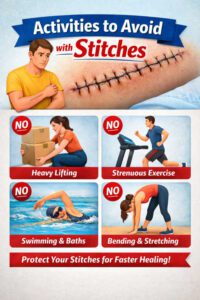
Table of Contents
- Introduction
- Why Activity Restrictions Matter When You Have Stitches
- Types of Sutures and Why They Matter
- General Rules to Follow After Getting Stitches
- Activities You Should Avoid With Stitches
- Activities That Are Usually Safe With Stitches
- How Long Should You Avoid Activities With Stitches?
- Warning Signs That You May Have Overdone Activity
- Tips to Promote Faster Healing With Stitches
- Special Situations: Diabetes, Blood Thinners, Pregnancy
- When Can You Resume Normal Activities?
- Frequently Asked Questions (FAQs)
- Final Thoughts
1. Introduction
Following an injury, accident, or surgery, wounds are closed using stitches, also known as sutures. Although stitches aid in the proper healing of your skin, your conduct throughout the healing phase is critical in avoiding complications. One of the questions that patients frequently ask is: “What activities should I avoid with stitches?”
Too soon participation in the incorrect activities might result in pain, infection, delayed healing, wound dehiscence (reopening), hypertrophic scars, or keloid formation. This 2026 post clarifies what activities should I avoid with stitches, why they are important, and how long restrictions often last, enabling you to heal in a secure and comfortable manner.
2. Why Activity Restrictions Matter When You Have Stitches
The wound edges are kept together by stitches so that fresh tissue — collagen laid down by fibroblasts — may grow beneath. The wound is vulnerable throughout the initial proliferative phase of healing (days 3–21). Too much motion, force, or humidity may:
- Separate the stitches (wound dehiscence)
- Cause bleeding or haematoma
- Introduce bacteria and cause wound infection (cellulitis, abscess)
- Delay healing or worsen scarring
- Trigger stitch granulomas or suture reactions
Refrain from engaging in particular activities to give your body the optimum opportunity to recover properly. This is the central reason patients are told what activities should I avoid with stitches matters more than most expect.
3. Types of Sutures and Why They Matter
The restrictions depend partly on what type of suture you have:
- Absorbable (dissolvable) sutures — Vicryl, Monocryl, PDS, chromic gut: break down over 10–120 days by hydrolysis or enzymatic action
- Non-absorbable sutures — nylon (Ethilon), polypropylene (Prolene), silk: removed 5–14 days after placement
- Surgical staples: removed 5–10 days post-op
- Tissue adhesives (Dermabond, Steri-Strips): fall off naturally in 5–10 days
- Internal buried sutures: never removed; always absorbable
Each type has slightly different post-care, so understanding what activities should I avoid with stitches starts with knowing which closure you have.
4. General Rules to Follow After Getting Stitches
Follow these general guidelines before considering any particular actions:
- Keep the wound clean and dry for the first 24–48 hours (per Mayo Clinic/CDC)
- Adhere to your doctor’s dressing advice
- Refrain from excessively touching stitches
- Take any prescribed medications regularly (antibiotics, analgesics)
- Attend stitch-removal sessions or follow-up appointments
- Watch for signs of infection daily
- Apply petroleum jelly (not antibiotic ointment routinely) to keep wound moist, per 2024 AAFP guidance
These fundamental guidelines encourage quicker and safer recovery.
5. Activities You Should Avoid With Stitches
Now the detailed breakdown — this is the heart of the answer to what activities should I avoid with stitches.
5.1 Strenuous Exercise and Sports
Refrain from engaging in activities like:
- Jogging or running
- Gym training
- Weightlifting
- Contact sports (football, boxing, martial arts)
- High-intensity interval training (HIIT), CrossFit
- Cycling on rough terrain
Why stay away from them? Intense physical activity raises blood pressure, heart rate and muscle tension, which can cause sutures to bleed or rupture due to wound stretching. This is why “what activities should I avoid with stitches” always starts with vigorous exercise.
5.2 Heavy Lifting
Refrain from lifting:
- Big containers or bags (>5 kg)
- Furniture
- Gym weights
- Children or pets if heavy
- Grocery bags with both hands
Heavy lifting raises intra-abdominal pressure, particularly following abdominal or chest surgery, which raises the chance of harm to internal sutures and the development of incisional hernia.
5.3 Swimming and Soaking in Water
Stay away from:
- Swimming pools
- Rivers, lakes, or ocean water
- Hot tubs, bathtubs, Jacuzzis
- Jet-ski or boating with splash exposure
Water contact raises the risk of infection (particularly Pseudomonas aeruginosa from pools and Vibrio vulnificus from seawater) and may cause stitches to become weaker (hydrolysis of absorbable sutures accelerates). Light showers are usually permitted after 24–48 hours, but the wound should not be soaked until it has fully healed. Pat dry — do not rub.
5.4 Excessive Bending, Stretching, or Twisting
If there are stitches in the abdomen, back, joints, or groin, it is important to avoid activities like yoga, deep stretching, or frequent bending. These actions cause the skin to stretch and may cause the wound to reopen. Patients with stitches across flexor creases (elbow, knee, finger joints) must be especially careful — this is a key, often-missed element of what activities should I avoid with stitches.
5.5 Rubbing, Scratching, or Touching the Wound
While stitches heal, itching is frequent (due to histamine release and nerve regeneration), but scratching or picking scabs might:
- Introduce bacteria (Staphylococcus aureus, Streptococcus pyogenes)
- Induce inflammation
- Postpone healing and cause hypertrophic scars
Keep your hands clean and avoid unnecessary contact. Cool compress or antihistamine (cetirizine) can relieve itching.
5.6 Wearing Tight or Irritating Clothing
Stay away from constricting belts, tight apparel, or synthetic materials that rub against the wound. Sutures can be irritated and healing can be slowed by friction and pressure. The best choice is loose cotton apparel.
5.7 Smoking and Alcohol Consumption
Smoking reduces the amount of oxygen available to tissues that are healing (nicotine causes vasoconstriction, reducing tissue perfusion by up to 42% per 2022 vascular studies), and alcohol impairs the immune system and liver’s clotting-factor synthesis. Both can greatly slow wound healing and raise the chance of infection. Stop smoking at least 4 weeks before and after surgery when possible.
5.8 Sexual Activity (When Stitches Are in Sensitive Areas)
Sexual activity should be avoided until the wound has healed if stitches are close to the perineal region, groin, lower belly, or genitalia to prevent wound disruption and infection. Postpartum episiotomy, abdominoplasty, inguinal hernia repair, and vasectomy all need 2–6 week abstinence depending on the procedure.
5.9 Sun Exposure on Stitches
Scars can be permanently darkened (post-inflammatory hyperpigmentation) by direct sunshine for up to 12 months after wound closure. Keep the area covered and avoid sun exposure on the healing stitches. After the wound closes, apply broad-spectrum sunscreen SPF 30+ daily to the scar.
5.10 Driving and Long Travel
Avoid driving until you can safely manoeuvre the vehicle without pain or restricted movement. Long journeys may cause deep vein thrombosis (DVT) risk after abdominal/pelvic surgery — walk around every 1–2 hours. For stitches on the hand, foot, or near a seatbelt line, driving may be unsafe for 1–2 weeks.
6. Activities That Are Usually Safe With Stitches
The following activities are often safe:
- Gentle walking (promotes circulation)
- Simple household chores
- Desk or computer work
- Reading or watching television
- Light cooking (avoid heavy pans)
- Deep breathing exercises
- Gentle leg exercises in bed to prevent DVT
If you experience discomfort or tugging at the wound, stop immediately.
7. How Long Should You Avoid Activities With Stitches?
| Stitch Location | Usual Restriction Period |
|---|---|
| Face | 5–7 days (removal); heavy exercise 10–14 days |
| Scalp | 7–10 days |
| Hands/Arms | 7–10 days |
| Trunk/Chest | 10–14 days |
| Legs/Feet | 10–14 days |
| Over joints (knee, elbow) | 14 days |
| Abdomen (open surgery) | 4–6 weeks |
| Laparoscopic ports | 2–3 weeks |
| Internal / organ repair sutures | 6–8 weeks |
| Cardiac / sternotomy | 8–12 weeks |
| Tonsillectomy intraoral stitches | 10–14 days (soft diet) |
Healing time varies based on age, nutrition, wound depth, and medical conditions like diabetes mellitus, peripheral vascular disease, or immunosuppression. Any patient asking what activities should I avoid with stitches should match the timeline to their specific wound.
8. Warning Signs That You May Have Overdone Activity
If you see the following, call your doctor:
- Increased pain or swelling
- Bleeding from the wound
- Redness, warmth, or pus (signs of cellulitis)
- Stitches coming undone (wound dehiscence)
- High temperature (>38 °C fever)
- Foul odour from the wound
- Red streaks spreading from wound (lymphangitis) — go to ER
- Confusion or rapid heartbeat (possible sepsis) — go to ER immediately
These could point to stitch injury or infection and need urgent attention.
9. Tips to Promote Faster Healing With Stitches
- Eat foods high in protein (1.2–1.5 g/kg body weight/day; eggs, lentils, dairy, lean meat)
- Ensure Vitamin C, Vitamin A, Zinc, and arginine intake (support collagen synthesis)
- Stay well hydrated (2–3 L water/day)
- Get adequate sleep (7–9 hours)
- Avoid stressing the wound
- Follow medical advice without exception
- Keep diabetes well controlled (HbA1c <7% ideally)
- Use silicone gel or sheets on closed scars to reduce hypertrophy (per 2024 International Scar Classification)
Good habits promote healing and lessen complications.
10. Special Situations: Diabetes, Blood Thinners, Pregnancy
- Diabetes: Healing can be 1.5–2× slower; strict glucose control essential; higher infection risk
- Anticoagulants/antiplatelet drugs (warfarin, apixaban, aspirin, clopidogrel): higher bleeding risk; never stop without doctor’s advice
- Pregnancy: Changes in blood volume and immune state alter healing; avoid NSAIDs in third trimester; episiotomy sutures need Sitz baths
- Elderly: Thinner skin, slower collagen deposition; extra time needed
- Immunosuppressed (steroids, chemotherapy, HIV, transplant): higher infection risk; prophylactic antibiotics sometimes used
- Keloid-prone individuals: silicone sheets and pressure dressings from day one
In each of these groups, the answer to what activities should I avoid with stitches becomes stricter and longer.
11. When Can You Resume Normal Activities?
You can resume your regular activities when:
- Pain has significantly decreased
- The wound has visibly healed and sealed
- Stitches are removed or fully dissolved
- Your physician gives the all-clear
- No redness, swelling, or discharge for ≥48 hours
Do not rush your rehabilitation — problems can set you back weeks. Patience, nutrition, and good hygiene are the best medicine. Keep asking what activities should I avoid with stitches until you fully understand your doctor’s post-op plan.
12. Frequently Asked Questions (FAQs)
Q1. Can normal walking damage stitches?
Gentle walking is usually safe and helps blood circulation, but avoid fast walking or long distances unless your doctor allows it.
Q2. Can stitches break if I exercise too early?
Yes, strenuous exercise or heavy lifting can pull stitches apart and cause bleeding or delayed healing.
Q3. How long should I avoid physical activity with stitches?
Most people should avoid strenuous activity for 7–14 days, but abdominal or internal stitches may need 4–6 weeks, and sternotomy up to 12 weeks.
Q4. Is itching around stitches normal?
Yes, mild itching is normal during healing, but scratching should be avoided to prevent infection. Cool compresses or oral antihistamines help.
Q5. When can I return to normal activities after stitches?
You can return to normal activities once the wound has healed, stitches are removed or absorbed, and your doctor gives approval.
Q6. Can I shower with stitches?
Yes, usually after 24–48 hours. Keep the shower brief, let water run over the wound without rubbing, and pat dry with a clean towel.
Q7. Can I apply makeup or lotion over facial stitches?
No, not until the wound is fully closed and stitches removed. Then, use fragrance-free moisturiser and SPF 30+ sunscreen.
Q8. Should I remove the scab over my stitches?
Never. The scab protects the healing wound; let it fall off naturally.
For important health-related topics please click on our Facebook page link given below or copy-paste this link into Google search —
https://www.facebook.com/positivemind.healthcare
For important health-related videos please click on the link of our YouTube channel given below or copy-paste this link into Google search —
http://www.youtube.com/@healthuseful8539
13. Final Thoughts
Following a stitch, it is critical to avoid certain activities so the wound can heal correctly. You can avoid complications and improve the outcome by adhering to medical advice and giving your body enough time to heal. Before engaging in any action that you are unsure about, always seek advice from your physician. In short, the complete answer to what activities should I avoid with stitches is: anything that strains, soaks, dirties, or stretches the wound before it is strong enough.
📞 ENT Consultation & Surgery
Dr. Sagar Rajkuwar (MS-ENT)
Prabha ENT Clinic, Ambad, Nashik
📱 7387590194 | 9892596635
🌐 www.entspecialistinnashik.com
Medical Disclaimer
This article is for educational purposes only and does not replace professional medical advice, diagnosis, or treatment. Audiogram results should be interpreted by a qualified audiologist or ENT specialist. If you have sudden hearing loss, severe dizziness, ear discharge, or other concerning symptoms, seek medical evaluation promptly. Always consult your doctor for personalised treatment of surgical wounds.
If any patient has any ENT – ear, nose, throat problems and requires any consultation, online consultation, or surgery in the clinic of ENT specialist Dr Sagar Rajkuwar, he may TAKE APPOINTMENT BY CLICKING ON THE LINK GIVEN BELOW —
Clinic address of ENT specialist Dr Sagar Rajkuwar —
Prabha ENT Clinic, Plot no 345, Saigram Colony, Opposite Indoline Furniture, Ambad Link Road, Ambad, 1 km from Pathardi Phata, Nashik, 422010, Maharashtra, India — Dr Sagar Rajkuwar (MS-ENT), Cell no 7387590194, 9892596635
FOR FURTHER INFORMATION IN GREAT DETAIL ON What Are the Signs Dissolvable Stitches Are Healing? PL CLICK ON THE LINK GIVEN BELOW-
FOR FURTHER INFORMATION IN GREAT DETAIL ON How Long Do Tonsillectomy Stitches Take to Dissolve? PL CLICK ON THE LINK GIVEN BELOW-
FOR FURTHER INFORMATION IN GREAT DETAIL ON Can Dissolvable Stitches Stay In Too Long? PL CLICK ON THE LINK GIVEN BELOW-
FOR FURTHER INFORMATION IN GREAT DETAIL ON What Happens If Non-Dissolving Stitches Are Left In? PL CLICK ON THE LINK GIVEN BELOW-


