What happens if stitches are left in too long?
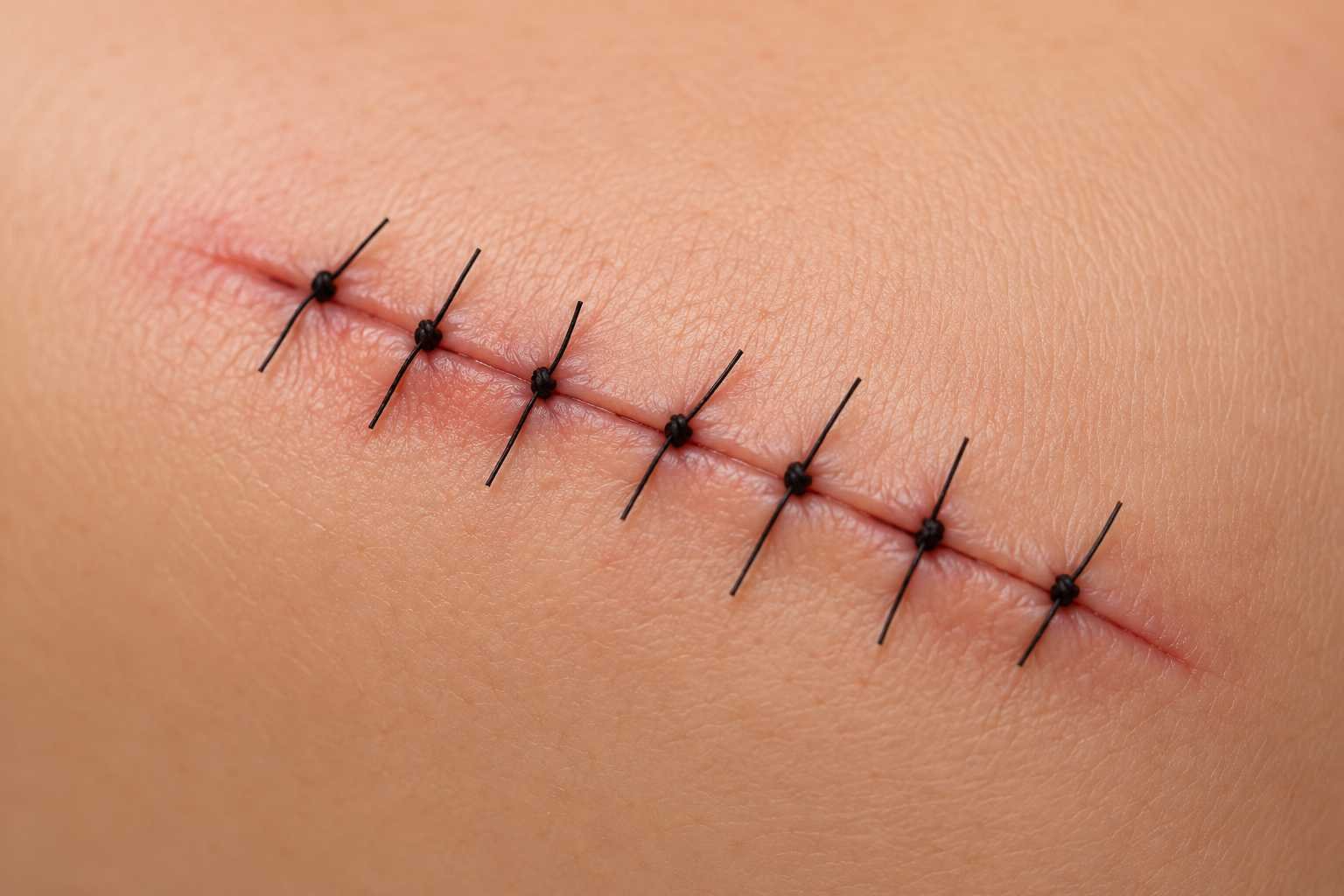
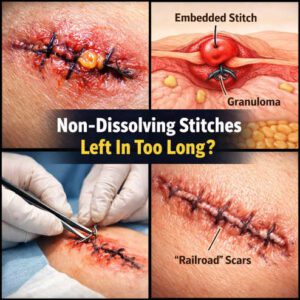
Stitches that don’t dissolve and are left in place longer than advised might irritate, inflame, leave marks, or get stuck in the skin. Delayed wound healing or infection are possible in certain circumstances. The ideal time for removal, however, depends on the wound site, type of suture, tension on the wound, and how rapidly it is healing.
Author: Dr Sagar Rajkuwar, ENT Specialist, Nashik, Maharashtra, India
🌐 www.entspecialistinnashik.com
Table of contents
- (1)Introduction
- (2)What are the various kinds of stitches?
- (3)What are non-dissolving sutures?
- (4)Why Does it Necessary to Remove Non-Dissolving Sutures?
- (5)What happens if undissolvable stitches are left in place?
- (6)Can non-dissolvable stitches dissolve?
- (7)“Dissolvable vs non-dissolvable” comparison
- (8)How Long Can Non-Dissolving Stitches Be Left In?
- (9)Can stitches be left in longer than the recommended time?
- (10)What if my stitches are overdue?
- (11)Can stitches grow into the skin?
- (12)What Would Happen If Stitches Were Accidentally Left Behind?
- (13)Is it risky to take out stitches late?
- (14)The Process by Which Doctors Remove Old or Embedded Stitches
- (15)How to Avoid Issues with Non-Dissolving Sutures
- (16)When should I NOT remove stitches myself
- (17)What happens if you remove the stitches too late?
- (18)Specific Considerations for Surgical and ENT Operations
- (19)When Should You Seek Medical Attention Right Away?
- (20)What about stitches after ENT surgery?
- (21)Expert answer
- (22)The Four Stages of Wound Healing and Why Suture Timing Matters
- (23)Comparing Suture Materials: Which Causes the Least Tissue Reaction?
- (24)Patient Risk Factors That Influence Suture Removal Timing
- (25)Suture Removal in Children: Age-Specific Guidelines
- (26)Rare but Important Late Complications: Suture Sinus and Delayed Granuloma
- (27)How Modern Antimicrobial Sutures Help Reduce Infection Risk
- (28)Caring for the Wound After Stitch Removal
- (29)Scar Management After Stitch Removal
- (30)Summary
- (31)FAQ
(1)Introduction
After surgery, injuries, or medical treatments, wounds are often closed with stitches, which are also known as sutures. Non-dissolvable stitches must be taken out by a medical practitioner at the appropriate time, even though some stitches disappear by themselves.
The question asked by many patients is:
- 👉If stitches that don’t dissolve stay in for too long, what happens?
- 👉 Is it possible for the body to absorb them?
- 👉 Is there a chance of long-term consequences?
Leaving non-dissolvable skin sutures in longer than recommended can increase the risk of local irritation, suture marks, inflammation, embedding, and other wound complications. The actual risk depends on the type of suture, wound location, healing progress, and how long the sutures remain in place.
📊 Deep Research Insight (Updated 2026): According to peer-reviewed data, surgical site infection (SSI) remains one of the most common postoperative complications globally, with incidence around 1% in the United Kingdom for routine surgeries and significantly higher rates in abdominal and emergency surgery. Sutures themselves can act as a nidus (focal point) for bacterial colonization, which is why timely removal of non-absorbable skin sutures is a cornerstone of wound care guidelines issued by the Centers for Disease Control and Prevention (CDC), the World Health Organization (WHO), and the UK National Institute for Health and Care Excellence (NICE). In the United States alone, SSIs are estimated to cost approximately $3.3 to $10.0 billion annually, highlighting why proper suture management and timing matter not just for individual patients but for health systems as a whole.
(2)What are the various kinds of stitches?
Depending on your wound, your doctor may use a variety of sutures.
Dissolvable stitches:
The body naturally absorbs them within about 60 days, so dissolvable stitches don’t need to be removed. This kind of suture can be employed for skin and tissue layers that recover quickly. Materials that break down slowly within the body are used to make this kind of stitch. Since they are made with numerous fibers and are less likely to split, they are robust throughout the first several days of recuperation. They will begin to lose their strength after two weeks of recuperation. They’re ideal for healing muscles since they require strong stitches at first but heal very quickly.
Non-absorbable stitches:
Because they often result in less scarring, non-absorbable stitches are ideal for visible skin wounds. After the wound has had a chance to recover, they are taken off. Typically, it may take about a week for the wound’s two edges to become connected and form a bridge. The stitches can be taken out once the tissue has healed. Removing stitches too late may result in greater scarring.
🔬 Additional Classification (based on NIH / NCBI references): Beyond the simple dissolvable vs non-dissolvable split, sutures are also classified in two more clinically important ways:
- Monofilament vs multifilament (braided): Monofilament sutures (nylon, polypropylene, PDS) are a single smooth strand and carry a lower risk of harboring bacteria. Braided or multifilament sutures (silk, polyester, Vicryl) handle more easily and hold knots better but their interstices can trap microbes.
- Natural vs synthetic: Natural materials (silk, catgut) tend to cause a stronger inflammatory response than synthetic materials (nylon, polypropylene, polyglactin). Modern practice generally prefers synthetic sutures for lower tissue reactivity.
For readers interested in how absorbable sutures work in detail, see our related article: What Are the Signs Dissolvable Stitches Are Healing? Doctor Explains.
(3)What are non-dissolving sutures?
Non-dissolving stitches are composed of substances that the body does not naturally break down. These stitches remain in place until physically taken out, unlike absorbable sutures.
Typical Varieties of Non-Dissolvable Sutures
- Nylon
- Silk
- Polyester
- Prolene (Polypropylene)
- seldomly used stainless steel
When are these stitches typically used?
- Wound support should be robust.
- The healing process is gradual.
- Closure must be precise.
- The wound is tense.
💡 Doctor’s Note on Material Choice: Each non-absorbable material has characteristic properties. Nylon (monofilament) causes the least gingival/skin inflammatory response and allows the earliest tissue repair among common non-absorbable options, which is why it is a workhorse suture for skin closure. Polypropylene (Prolene) has excellent long-term tensile strength and extremely low bacterial adherence, making it preferred for cardiovascular work and for closures where infection risk must be minimized. Silk, while easy to handle and knot, triggers the most intense and most prolonged inflammatory reaction of commonly used non-absorbables; it also shows significantly more bacterial adherence than polypropylene. Polyester sits between these in reactivity. Stainless steel wire, though rare, is used in sternal closure after heart surgery because of unmatched tensile strength.
(4)Why Does it Necessary to Remove Non-Dissolving Sutures?
The purpose of non-dissolving sutures is to be temporary. The stitches are no longer useful once the wound has healed sufficiently for it to remain closed on its own.
When left in:
- The body perceives them as a foreign entity
They can begin to develop skin over them.
Around the thread, bacteria can build up.
It may get in the way of the body’s natural healing process.
⏱ Why timing matters at the cellular level: Once a stitched wound passes the inflammatory phase (roughly day 4–6) and enters the proliferative phase, new epithelial cells begin migrating across the wound surface. If a non-absorbable suture remains past the point when the wound no longer needs mechanical support, these new skin cells can begin growing over and around the suture tract, which is the physical basis for “embedding” and later suture-marks or “railroad-track” scarring.
(5)What happens if undissolvable stitches are left in place?
Leaving non-dissolving stitches in for too long can cause a variety of issues. The degree of severity is determined by:
- Material for sewing
- where the wound is
- How long they are left in there
- The patient’s hygiene and immunity.
Consider the possible outcomes.
1. Inflammation and irritation of the skin
Local irritation is one of the first issues.
The signs are as follows:
- Redness surrounding stitches
- A feeling of itching or burning
- Slight swelling
- Tenderness
The stitch material is treated by the skin as a foreign object, which is why this occurs.
📌This is frequently the case when sutures stay in place longer than advised.
2. Elevated Risk of Infection
Bacteria may thrive on stitches that do not dissolve.
Indications of illness include:
- rising discomfort
- The wound is surrounded by warmth.
- Yellow or pus discharge
- Terrible odor
- fever (in extreme circumstances)
An infected wound may either open up again or heal slowly.
⚠️ Untreated infections may extend to the bloodstream or deeper tissues.
🦠 How bacteria colonize sutures (added depth): Research reviewed in European Review for Medical and Pharmacological Sciences and PMC-indexed studies shows that bacteria readily adhere to suture surfaces and form biofilms, which are communities of microbes shielded by a protective matrix. Biofilms are highly resistant to antibiotic treatment, which is one reason an infected stitch sometimes does not clear with antibiotics alone and the suture itself has to be removed. Braided silk shows significantly more bacterial adherence than monofilament polypropylene, which is why many surgeons now avoid silk in contaminated or high-infection-risk fields.
3. Delayed or Inadequate Wound Healing
When stitches are left in for too long:
- The skin is unable to regenerate effectively
- Healing becomes uneven.
- The margins of wounds may not heal on their own.
As a consequence, the wound heals more slowly, and there is a greater chance that it may open again after the sutures are taken out too soon.
4. A Lot of Scars and Stitches
It can result from leaving stitches in place for too long:
- Permanent stitch lines
- Scars resembling rail tracks
- Thick or elevated scars (hypertrophic scars)
This is particularly prevalent on:
- Face
- The neck
- Hands
- Areas of surgical cosmetics
📌Removing stitches early (when necessary) minimizes scarring.
🔎 Hypertrophic scars vs keloids: It’s important for patients to distinguish between these. Hypertrophic scars stay within the boundary of the original wound and often improve over months. Keloids, in contrast, extend beyond the wound edges and are much harder to treat. People with a personal or family history of keloids should always inform their surgeon before surgery so suture choice, timing of removal, and post-removal taping or silicone-sheet therapy can be planned to reduce risk.
5. Stitch Integration into the Skin
Embedded stitches are one of the most troublesome consequences.
What transpires?
- The stitch is covered by skin.
- The skin traps Stitch.
- Removing becomes difficult and painful.
A small surgical excision is occasionally necessary.
6. Granuloma Development
Leaving stitches in place for an extended period of time might result in the development of a foreign body granuloma.
Symptoms:
- A little, firm knot at the location of the suture
- Skin-colored or reddish swelling
- Continuing pain
Sometimes, a little excision or medical care is all that is needed for granulomas.
📚 Case-report evidence (NCBI/PMC): Suture granulomas are a recognized but under-appreciated foreign body reaction, predominantly linked to non-absorbable sutures (especially silk). They have been reported many years after the original surgery — one PMC-indexed case documented a suture granuloma of the abdominal wall presenting 12 years after an open appendectomy. On imaging, these lumps can mimic cancer recurrence, so a patient who develops a hard, painless nodule anywhere along an old scar line should mention their surgical history to the examining clinician.
7. Persistent wound discharge
Some patients go through:
- constant seeping
- Discharge that is clear or purulent
- edges of wounds that won’t heal
The reason for this is that the tissue is continuously irritated by the stitch.
➕ Suture sinus — a specific pattern worth knowing: When a persistent discharge forms a small opening that keeps draining from one spot along a scar, it is called a suture sinus (sometimes “stitch sinus”). This is a chronic draining tract that stays open as long as the offending suture material remains in the tissue. The definitive treatment is removal of the retained suture; antibiotics alone will not close the sinus.
(6)Can non-dissolvable stitches dissolve?
Sutures that are not absorbable or non-dissolvable are made to stay in the body instead of being absorbed and disintegrated like absorbable sutures. However, just because some may eventually become less noticeable, move to the skin’s surface, or become covered in scar tissue does not mean they have been absorbed.
The suture-material reference from Merck differentiates between non-absorbable materials like nylon and polypropylene and absorbable materials whose strength and absorption levels vary significantly by material.
What the body actually does with non-absorbable sutures: Rather than breaking the material down, the body walls it off. A thin fibrous capsule (encapsulation) forms around the suture, which is why some old stitches can be felt as tiny firm knots beneath the skin for years without causing symptoms. In rare cases, the body “extrudes” or spits out a buried suture through the skin surface weeks or months later — a phenomenon called suture extrusion. This is the body’s way of clearing a foreign material it cannot digest.
(7)“Dissolvable vs non-dissolvable” comparison
Feature |
Absorbable stitches |
Non-absorbable stitches |
|---|---|---|
Need routine removal? |
Usually no |
Often yes when used on the skin |
Designed to break down? |
Yes |
No |
Common examples |
Poliglecaprone, polydioxanone, gut |
Nylon, polypropylene, polyester |
How long they last |
Varies greatly by material |
Designed to remain until removed |
Common use |
Deeper tissues and selected skin closures |
Many external skin wounds |
Importantly, “dissolvable” does not mean all absorbable sutures disappear within 60 days. Absorption time varies substantially by material. For example, Merck lists some materials that absorb within weeks and others that can persist for months.
For a detailed look at how long dissolvable stitches can safely stay in before causing problems, read: Can Dissolvable Stitches Stay In Too Long? Risks, Signs & Doctor Advice.
(8)How Long Can Non-Dissolving Stitches Be Left In?
The removal time depends on the location of the wound.
Wound location |
Typical removal range* |
|---|---|
Face |
3–5 days |
Scalp |
7–10 days |
Neck |
Around 5–10 days |
Arms |
7–10 days |
Trunk/back |
10–14 days |
Legs |
10–14 days |
Hands/feet |
10–14 days |
Palms/soles |
14–21 days |
Over joints |
Around 14 days or as advised |
🧾 Fine-grained schedule (adults, Trott / Pregerson references): For clinicians and interested patients, published emergency-medicine references subdivide the above further:
- Eyelid, nose, lip, forehead, other parts of face: 3–5 days
- Ear: 4–5 days
- Scalp: 6–8 days
- Chest / Abdomen: 8–10 days
- Arm / Hand: 8–10 days
- Fingertip: 10–12 days
- Joint — flexor surface: 8–10 days; extensor surface: 10–14 days
- Lower extremity: 8–12 days
- Foot: 10–12 days
- Back: 12–14 days
A simplified “Pregerson Formula” (published in Consultant, 2004) that many clinicians use mentally: 5 days for facial wounds; 10 days for most other wounds; 15 days for high-tension sites, the lower extremities, elderly patients, patients on corticosteroids or with diabetes; and 20 days for patients with multiple risk factors for delayed healing.
Indications That Your Stitches Should Have Been Removed by Now
If you see any of the following, get medical help:
- after the recommended day, there are still stitches
- The stitch is covered in skin.
- Pus or redness
- The discomfort is getting worse rather than better.
- The thread may either pierce the skin or snap.
(9)Can stitches be left in longer than the recommended time?
Occasionally, yes. The suggested removal date is not an exact deadline for all patients. The site, magnitude, depth, and tension of the wound, the kind of suture, the rate at which it heals, and the patient’s unique circumstances are all taken into consideration by healthcare professionals.
For example, sutures around the face may not need to remain as long as stitches over regions exposed to movement or stress. Maintaining some skin stitches for an extended period might increase the likelihood of noticeable stitch marks or tissue irritation, whereas removing them too soon can result in the wound edges separating.
➕ Partial / staged removal is often the right answer: Experienced wound-care clinicians sometimes remove alternate stitches first (every other suture) at the usual due date, then remove the remaining stitches 2–4 days later. This “staged removal” supports edges that are still fragile, especially over joints, the lower leg, or in diabetic or elderly patients, while reducing the risk of persistent stitch marks.
(10)What if my stitches are overdue?
Don’t panic and don’t remove your stitches yourself if you forgot to go to your planned stitch-removal appointment. Make an appointment with the doctor, clinic, or surgeon who placed the sutures for an evaluation.
A medical expert can decide if the stitches should be taken out right away or if they should remain in for a bit longer if the incision is mending properly. Additional therapy may be required if the sutures have become infected, irritated, or embedded.
If you observe: sooner, get medical assistance.
- Increased redness or swelling
- increasing pain
- foul-smelling discharge or pus
- a fever
- separation of wound
- uncontrollable bleeding
- the stitches becoming deeply buried in the skin
🔗 Red-streak warning: One sign emphasized in most hospital discharge instructions but often missed by patients at home is red streaks spreading away from the wound. This can indicate lymphangitis, meaning infection is tracking along lymphatic channels, and is a reason to seek same-day medical care rather than wait for a scheduled appointment.
(11)Can stitches grow into the skin?
Sure. If non-absorbable skin sutures are left in place longer than intended, they may become partially embedded in the skin. It might be harder to remove the suture later on if tissue grows around or over it as the wound heals.
Avoid attempting to remove or trim a stuck suture on your own. It can be safely removed by a medical expert after inspecting the region.
Why embedding happens biologically: As the proliferative phase of healing progresses, keratinocytes (skin cells) migrate across the wound and begin producing new epidermis. If a suture remains in place beyond this window, these cells migrate over the suture material. The thin layer of new epidermis then overlies the thread. The deeper the suture sits (for example, if it was tied with greater tension), the more likely this “epithelial over-growth” is to occur.
(12)What Would Happen If Stitches Were Accidentally Left Behind?
Don’t try to get rid of them on your own.
What to do:
- See your physician or surgeon.
- Maintain a clean environment
- Don’t try to cut or pull the stitch.
- Be on the lookout for signs of infection.
Although it’s generally feasible to remove it late, caution must be used.
(13)Is it risky to take out stitches late?
Generally speaking:
- The stitches can still be removed safely.
- There could be slight discomfort.
- After that, there is generally an improvement in recovery.
But medical intervention is required if embedding or infection has occurred.
(14)The Process by Which Doctors Remove Old or Embedded Stitches
Doctors may:
- Use tools that are sterile.
- If necessary, use local anesthetic.
- If stitches are embedded, remove scar tissue
- If there is an infection, prescribe antibiotics.
Early assessment helps avoid difficulties.
🩺 Typical in-clinic removal sequence (step-by-step):
- The area is cleaned with normal saline, sterile water, or antiseptic (chlorhexidine is commonly used).
- Using sterile forceps, the clinician gently lifts the knot of each stitch.
- Sterile suture scissors cut the thread below the knot, flush with the skin, so no part of the exposed outer thread is pulled back through the wound tract — a step that lowers contamination risk.
- The suture is drawn out gently in the direction that minimizes tension on the healing wound.
- Steri-strips or thin adhesive strips are often applied to support the edges for about 5 more days.
- The healed wound is dressed with a sterile, non-adherent dressing if needed.
When a suture is embedded or when scar tissue has formed around it, a small incision under local anesthesia is sometimes required to retrieve the material fully.
(15)How to Avoid Issues with Non-Dissolving Sutures
Advice for Providing Patient Care
- Keep your stitch removal appointment.
- Keep wounds clean.
- Don’t scratch or soak anything.
- Obey the instructions following surgery.
Recommendation from a doctor
- Inquire about the absorbability of stitches at all times.
- Before release, make sure the stitch removal date is clear.
- Don’t put off follow-up appointments.
🧼 Evidence-based wound-care add-ons:
- Water contact: Most modern NHS and hospital guidance allows gentle showering (not soaking) by about 48 hours after wound closure, provided the wound is clean and dry. Avoid bathtubs, swimming pools, hot tubs, and the sea until the stitches are out and the wound is sealed.
- Avoid perfumed soaps and antiseptic creams directly on the wound once it is healing — they can delay re-epithelialization.
- Sun protection: Fresh scars pigment easily. Use SPF 30+ sunscreen or cover the scar from direct sunlight for at least 3–6 months after the stitches are out.
- Smoking: Smoking reduces skin oxygen delivery and is associated with up to a 20–40% delay in healing. Stopping even briefly around surgery improves outcomes.
- Nutrition: Protein, vitamin C, zinc, and adequate hydration all support collagen synthesis and faster wound closure.
For related reading on wound protection, see: Do Stitches Heal Faster Covered or Uncovered? Doctor Explains, and When Should I Stop Covering My Stitches? Doctor-Approved Healing Guide.
(16)When should I NOT remove stitches myself
Can I remove stitches at home?
In most cases, it is advised not to attempt to remove surgical or wound sutures on your own. A healthcare professional will be able to tell if the wound has healed enough and if it’s safe to take out the sutures.
Trying to remove an infected or embedded suture might damage the surrounding tissue, but taking them out too soon might cause the wound to rip apart.
🚫 Absolutely do NOT remove stitches yourself if:
- The wound is on the face, over a joint, or in a cosmetically important area.
- The wound closed a deep laceration or a surgical incision rather than a superficial scratch.
- You have diabetes, are on steroids, chemotherapy, or any immunosuppressant, or have known slow-healing conditions.
- The stitches look embedded, red, painful, or are discharging.
- You are not sure whether the stitches are dissolvable or non-dissolvable.
(17)What happens if you remove the stitches too late?
Elevated risk of infection
One of the most important hazards of removing stitches too late is a higher chance of infection. Leaving stitches in for a long period might allow bacteria to grow. If an infection develops, it might lengthen the time it takes for your stitches to heal by causing swelling, redness, and discharge from the wound.
Injury to Tissue and Scarring
Stitches might scar or injure tissue if they are kept in too long. The skin and underlying tissues may heal surrounding the stitches, causing painful knots or unsightly scars. However, early stitch removal might promote quicker healing and lessen scarring.
Healing that is slow to occur
Failure to remove sutures on time may slow the healing process. Stitches may create stress around the injured area as it begins to heal, pulling it in the wrong direction and causing the wound to reopen. The healing time might be increased due to this delayed healing.
(18)Specific Considerations for Surgical and ENT Operations
During ENT procedures (nose, ear, throat, skin incisions):
- Timing of stitches is crucial.
- The cosmetic result is important
- Function can be impacted by the chance of infection.
Frequent follow-up guarantees the best possible recovery.
(19)When Should You Seek Medical Attention Right Away?
Get immediate treatment if:
- A fever starts.
- The pain is excruciating.
- More pus is released
- The complexion becomes dark or black
- The wound breaks open out of nowhere.
⚠️ Darkening of the skin around a wound can be an early sign of tissue necrosis (localized tissue death) and must never be ignored. Likewise, red streaks tracking away from the wound, high fever (above 38.5 °C / 101.3 °F), chills, confusion, or a rapid heart rate suggest the infection may be spreading systemically, and warrant emergency evaluation.
(20)What about stitches after ENT surgery?
After ENT surgeries, the time it takes to remove stitches is determined by the kind of suture employed and the location of the incision.
For instance, some ENT treatments employ absorbable sutures that don’t need to be taken out, whereas external skin incisions might need non-absorbable sutures to be taken out during a scheduled follow-up appointment.
After ear, nose, or throat surgery, don’t believe that all stitches must be removed. Find out from your surgeon if the material is absorbable or non-absorbable and when it has to be evaluated.
🩻 ENT-specific examples:
- Tonsillectomy / Adenoidectomy: Modern techniques often don’t use external skin sutures; when sutures are used intra-orally, they are typically absorbable. Read more: How Long Do Tonsillectomy Stitches Take to Dissolve?
- Septoplasty / Rhinoplasty: External skin stitches on the nose are usually removed in 3–5 days to minimize visible stitch marks. Internal splints and absorbable packing are removed on separate schedules.
- Mastoid / Ear canal surgery: Post-auricular skin sutures are typically removed around day 7.
- Thyroidectomy / Neck dissections: Cervical skin sutures or staples are generally removed between day 5 and day 10.
(21)Expert answer
Doctor’s Take
“A stitch being left in a little longer than planned does not automatically mean that a serious complication will occur. However, non-absorbable skin sutures should be reviewed by a healthcare professional when they reach their recommended removal time. If a stitch becomes embedded, painful, red, swollen, or associated with discharge, it should be assessed rather than removed at home.”
— Dr. Sagar Rajkuwar, MS-ENT
(22)The Four Stages of Wound Healing and Why Suture Timing Matters
Understanding the biology of wound healing helps patients see why suture timing follows the schedules it does. Modern wound biology, as reviewed in Frontiers in Physiology (2019, 2022) and the NIH / NCBI literature, describes four overlapping phases:
- Hemostasis (seconds to hours): Platelets and fibrin form a clot that stops bleeding and creates a scaffold for incoming cells.
- Inflammation (hours to day 4–6): Neutrophils and macrophages clear bacteria and debris and release signals that recruit repair cells. This is the phase in which the wound looks red, warm, and mildly swollen — this is normal, not infection.
- Proliferation (day 4 to day 21): Fibroblasts lay down new collagen, blood vessels regrow (angiogenesis), and keratinocytes migrate across the wound to close the surface. The wound is still mechanically weak at this stage, which is why sutures are generally kept in place until this phase is well underway.
- Remodeling / maturation (week 3 to 1–2 years): Collagen is reorganized along stress lines and the scar gradually becomes stronger and flatter. However, a healed scar at best reaches around 70–80% of the tensile strength of uninjured skin.
Why this matters for stitches:
- Remove sutures too early, and the wound is still in early proliferation — the collagen matrix is weak and the edges can pull apart (dehiscence).
- Leave sutures too long, and keratinocytes migrate over the suture (embedding), while the chronic foreign-body response increases the chance of granulomas and visible stitch marks.
(23)Comparing Suture Materials: Which Causes the Least Tissue Reaction?
Not all non-absorbable sutures behave the same way in your body. Multiple histological studies (Brazilian Dental Journal 1992; Textile Research Journal 2005; and the Serbian polypropylene-vs-silk study) consistently rank tissue reactivity roughly as follows, from least to most inflammatory:
| Suture material | Structure | Tissue reaction | Bacterial adherence | Common uses |
|---|---|---|---|---|
| Polypropylene (Prolene) | Monofilament | Very low | Very low | Cardiovascular, skin, hernia repair |
| Nylon | Monofilament | Low (minimal inflammatory response; earliest tissue repair) | Low | Skin closure (most common) |
| Polyester | Braided | Moderate | Moderate | Cardiac, tendon, ligament |
| Silk | Braided (natural) | High (most intense and most prolonged inflammation) | High | Historical; still used for mucosa, drains |
| Stainless steel wire | Monofilament | Very low biologically, but mechanically irritating | Very low | Sternal closure, bone |
This ranking helps explain why some wounds closed with silk may look more irritated than wounds closed with nylon, even when the removal date is the same. If you have a known tendency to react to a specific suture material from a past surgery, mention it to your surgeon beforehand.
(24)Patient Risk Factors That Influence Suture Removal Timing
Suture-removal schedules in textbooks and discharge sheets assume an average, otherwise healthy adult. Several factors can change the ideal timing:
- Age — elderly: Skin thins and healing slows after age 60, so stitches often need to stay 2–5 extra days.
- Age — children: Children heal faster, and shorter removal times are used (see next section).
- Diabetes mellitus: Poorly controlled blood sugar impairs white-cell function and collagen formation; healing can be extended by 30–50% and infection risk is higher.
- Smoking: Reduces skin oxygen delivery; associated with 20–40% delay in healing and higher dehiscence rates.
- Corticosteroids and chemotherapy: Suppress inflammation and immune function; may require stitches to stay in longer.
- Peripheral vascular disease / renal failure: Reduced blood supply slows healing, especially on the lower limbs.
- Obesity: Fat tissue has lower blood supply and higher mechanical tension at the wound, increasing dehiscence risk.
- Autoimmune disease: Lupus, rheumatoid arthritis, and other inflammatory conditions can delay healing.
- Malnutrition / low protein / low vitamin C or zinc: Each limits collagen synthesis.
- Wound tension and movement: Joints, lower legs, and areas under skin stretch need longer suture support.
Your clinician will weigh these when deciding whether to use the standard removal day, delay it, or stage removal.
(25)Suture Removal in Children: Age-Specific Guidelines
Because paediatric skin heals faster than adult skin, published references (Trott, Wounds and Lacerations) suggest earlier removal:
| Region | Children — typical removal |
|---|---|
| Forehead / face | 3–5 days |
| Eyelid | 3–5 days |
| Ear | 3–5 days |
| Nose | 3–5 days |
| Lip | 3–5 days |
| Scalp | 5–7 days |
| Chest / Abdomen / Arm / Hand | 6–8 days |
| Back | 10–12 days |
| Lower extremity | 6–10 days |
| Foot / Fingertip | 8–10 days |
Practical tips for parents:
- Keep the child’s wound covered when they play outdoors, especially in dusty environments.
- Trim their nails to reduce scratching.
- Many paediatric facial lacerations are increasingly closed with tissue adhesives (skin glue) or absorbable sutures rather than non-absorbable sutures, specifically to avoid the trauma of removal in young children.
- Reward and reassure — removal is quick and usually not painful.
(26)Rare but Important Late Complications: Suture Sinus and Delayed Granuloma
Most problems from retained stitches appear within days to weeks. However, non-absorbable suture material can cause complications months to years after surgery — important for patients and clinicians to recognize.
- Suture sinus (stitch sinus): A chronic draining tract that keeps opening at one point along the scar. It typically harbors a buried, forgotten non-absorbable stitch. Treatment is identification and removal of the retained material; antibiotics alone will not close it.
- Delayed suture granuloma: A firm, sometimes tender nodule along an old scar line, caused by chronic foreign-body reaction. Case reports in NCBI/PMC describe granulomas presenting many years after the original surgery, including intra-abdominal silk granulomas presenting more than a decade after appendectomy, Caesarean section, or colon surgery. These are benign but can mimic tumor recurrence on imaging.
- Suture extrusion: Occasionally, the body gradually pushes a retained suture to the skin surface weeks or months later, where it appears as a small protruding thread. Do not pull it yourself — see a clinician for safe removal.
- Hypersensitivity reactions: Rare, but polyester and silk sutures have been associated with localized allergic-type reactions in some patients.
Any new lump, draining spot, or redness along an old scar — even years later — deserves medical evaluation.
(27)How Modern Antimicrobial Sutures Help Reduce Infection Risk
Suture-associated surgical site infection (SSI) has driven innovation in suture technology. Current international guidelines reflect this shift:
- The CDC, the World Health Organization, and the UK NICE recommend considering the use of triclosan-coated sutures for the prevention of SSI in appropriate operations.
- Multiple systematic reviews and meta-analyses (including a 2024–2025 meta-analysis published in ANZ Journal of Surgery) show that antimicrobial-coated sutures can reduce SSI rates in several procedure types compared with conventional sutures.
- Chlorhexidine-coated sutures are another emerging antimicrobial option.
From the patient’s point of view, this means that if your surgeon mentions “antibacterial” or “coated” sutures (brand names such as Vicryl Plus or PDS Plus), these are evidence-based choices — not a sales pitch — intended to lower your chance of a wound infection. However, antimicrobial coatings do not replace the need for timely removal of non-dissolving skin sutures.
(28)Caring for the Wound After Stitch Removal
A healed wound after stitch removal is only around 10–20% as strong as uninjured skin — it needs continuing protection:
- Keep the area clean and dry; a light, non-adherent dressing is fine for the first 24–48 hours.
- If adhesive strips (Steri-strips) are applied, leave them in place for about 5 days unless advised otherwise.
- Avoid vigorous activity that stretches the scar line for 2–4 weeks.
- Do not swim, soak, or expose the fresh scar to very hot water for at least a week.
- Use broad-spectrum sunscreen on the scar for 3–6 months to prevent darkening.
- Return to the clinic if any new redness, swelling, discharge, or opening appears.
(29)Scar Management After Stitch Removal
Once the wound is closed and the stitches are out, scar quality can still be improved for several weeks:
- Silicone sheets or silicone gel applied over the scar for at least 12 hours a day for 2–3 months is the best-studied non-prescription method to reduce hypertrophic scarring.
- Gentle massage with an unscented moisturizer, starting about 2 weeks after stitch removal, can soften the scar and improve pliability.
- Sun protection prevents permanent darkening.
- Avoid tension on the scar — adhesive paper tape across the scar line can distribute mechanical stress and may reduce widening.
- If a scar becomes thick, raised, itchy, or keloid-like, a dermatologist or ENT/plastic surgeon can offer intralesional steroid injections, pressure therapy, or laser treatment.
(30)Summary
Although non-dissolving stitches are essential for wound healing, they must be removed at the appropriate moment. Keeping them in place for too long might result in irritation, infection, scarring, and a prolonged recovery period.
✔Make sure to always adhere to the schedule for stitch removal provided by your doctor.
✔Never take out stitches on your own.
✔If stitches are forgotten or cause problems, seek medical assistance.
✔Mention risk factors (diabetes, steroids, smoking, keloid tendency) to your surgeon before surgery.
✔Expect scar maturation to continue for up to a year — early sun protection and silicone products pay off.
It’s just as crucial to remove stitches in a timely manner as it is to perform the surgery.
(31)FAQ
1. What are the consequences of leaving stitches in for too long?
If non-dissolvable sutures are not removed after the suggested time frame, they may cause skin irritation, inflammation, infection, suture markings, scarring, or get trapped in the skin. The precise risk is influenced by the wound’s location, the type of suture material used, and the length of time the stitches are left in place.
2. Is it possible for non-absorbable stitches to break down?
No. Stitches that cannot be absorbed or dissolved are meant to stay in the body until a healthcare provider removes them. They shouldn’t be anticipated to disappear on their own.
3. Can stitches enter the flesh?
Yes. New skin may grow over or around the stitch if it is left in for too long. This might make removal trickier and lead to irritation, pain, or a little scar.
4. For how long can stitches be left in?
The advised time of removal differs based on where the wound is located. Stitches on the arms, legs, joints, or back may stay longer, but facial stitches are typically removed sooner, usually within 5–7 days. The right timing should be decided by your physician or surgeon.
5. What if stitches aren’t taken out at the proper time?
Increased risks of irritation, inflammation, stitch marks, scars, and suture embedding in the skin might result from late removal. Do not try to remove them on your own if you missed your scheduled removal appointment; instead, get in touch with your doctor.
6. Is it risky to keep sutures in for an excessive period of time?
While it isn’t necessarily an emergency to leave stitches in longer than advised, it can raise the possibility of issues including scarring, infection, inflammation, or implanted sutures. If there is increasing pain, redness, swelling, or discharge, medical evaluation is particularly necessary.
7. Is it possible for aged stitches to cause infection?
Yes. Sutures that are left in place may occasionally contribute to local irritation or bacterial accumulation, especially if the wound is not mending well. An infection may manifest as increased redness, warmth, swelling, pain, pus, a foul stench, or a fever.
8. Are stitches capable of causing lasting scars?
Yes. If stitches are left in for too long, they might leave evident stitch markings or scars. The danger varies depending on factors including the location of the wound, the kind of sutures used, the healing process, and the person’s propensity to scar.
9. What should I do if I forgot to take out my stitches?
Make an appointment with your physician or surgeon right away. Do not remove or cut the stitches yourself, particularly if they are ingrained in the skin or the wound exhibits symptoms of infection.
10. Is it possible for me to take out my stitches?
In most cases, it’s advised against removing stitches on your own. Using appropriate sterile instruments, a healthcare professional can assess whether the wound has healed enough and remove the sutures.
11. When stitches are taken out, do they hurt?
You might feel a brief stinging feeling, or pulling or tugging, but stitch removal usually doesn’t create much discomfort. If a suture has become lodged in the skin, removing it may be more painful and may occasionally necessitate local anesthesia.
12. What symptoms indicate an infection in a stitched wound?
Indications may include fever, increasing warmth, swelling, unpleasant odor, pus or yellow discharge, worsening discomfort, or the wound opening. If these symptoms appear, seek medical help immediately.
13. Can a suture granuloma appear years after surgery?
Yes. Case reports in the NCBI/PMC literature document suture granulomas presenting years after the original surgery — sometimes a decade or more — particularly with retained silk or other non-absorbable material. These lumps are benign but can look like a recurrent tumor on imaging, so always mention your previous surgery to any doctor evaluating a new lump along an old scar.
14. Do diabetics or smokers need stitches to stay in longer?
Often, yes. Diabetes can extend healing by 30–50% and smoking by 20–40%. For such patients, clinicians commonly keep sutures in 2–5 extra days, or stage removal — taking out every other stitch at the normal time and the rest a few days later — to lower the risk of wound dehiscence.
15. What is a suture sinus and how is it treated?
A suture sinus is a chronic small opening along a scar that keeps draining fluid because a buried non-absorbable stitch is irritating the tissue. The definitive treatment is removal of the retained suture. Antibiotics alone usually will not cure it.
16. Are antimicrobial (triclosan-coated) sutures better?
For many procedures, yes. Multiple meta-analyses and the guidelines of the CDC, WHO, and NICE support considering antimicrobial-coated sutures to reduce surgical site infection. However, they are not a replacement for timely suture removal and good wound-care practices.
Medical Disclaimer
Medical Disclaimer: The information provided in this article is intended for general educational and informational purposes only. It should not be considered a substitute for professional medical advice, diagnosis, or treatment. The appropriate timing for stitch removal varies depending on the wound location, type of suture, surgical procedure, and individual healing.
If your stitches have been left in longer than recommended, do not attempt to remove them yourself. Consult your doctor or surgeon for an examination and safe removal. Seek prompt medical attention if you develop increasing pain, redness, swelling, pus or other discharge, fever, wound opening, or significant bleeding.
HealthUseful.com and the author do not accept responsibility for complications resulting from self-treatment or from relying solely on the information provided in this article. Always follow the specific aftercare and follow-up instructions given by your healthcare professional.
References
- American Academy of Family Physicians (AAFP) – Laceration Repair: A Practical Approach
Provides guidance on suture-removal timing according to wound location, including face, scalp, arms, trunk, legs, hands and feet. - MedlinePlus – Skin Lesion Removal: Aftercare
Covers care of stitched wounds, follow-up for suture removal, wound hygiene, and warning signs such as redness, increasing pain, pus, fever, and wound separation. - MedlinePlus – Surgical Wound Infection: Treatment
Provides information about surgical wound infections, symptoms such as pus, redness, warmth, pain and fever, and when medical treatment is needed. - NCBI Bookshelf – Fusiform Incision
Discusses wound closure and explains that suture-removal timing depends on the wound location and tension, with commonly used ranges for facial and trunk/extremity wounds. - American Academy of Family Physicians – Management of Lacerations to Avoid Infection and Scarring
Discusses absorbable and non-absorbable sutures, wound care, infection monitoring, scarring, and appropriate suture removal. - NCBI/PMC – Skin Biopsy Techniques for the Internist
Provides examples of suture-removal timing for different anatomical locations and discusses complications associated with wound closure. - NCBI/PMC – Silent Intruders: Recurrent Suture Granuloma Unveiled in Caesarean Scar (2024)
Documents the pathology and recurrence of suture granulomas, especially with non-absorbable sutures. - Frontiers in Physiology (2019; 2022) – Timeline of normal human cutaneous wound healing
Phases of hemostasis, inflammation, proliferation, and remodeling. - CDC / WHO / NICE – Guidelines on the prevention of surgical site infection
Recommendations regarding triclosan-coated sutures and perioperative wound care. - NHS – Wound care and stitches patient information leaflets (Whittington Health NHS Trust; Royal Berkshire NHS; NHS Wales)
Advice on timing of stitch removal, warning signs, and home care. - Pregerson D.B., Trott A. – Simplified formula for suture removal (Consultant, 2004; Wounds and Lacerations, Mosby).
- Abi Rached et al., Brazilian Dental Journal 1992 – Reaction of the human gingival tissue to different suture materials
Nylon showed the least and silk the greatest inflammatory response. - Karaca E. et al., Textile Research Journal 2005 – Mechanical properties and tissue reaction of silk, polyester, polyamide and polypropylene sutures in vivo.