Pulsatile tinnitus in one ear only at night
Author: Dr Sagar Rajkuwar, ENT Specialist, Nashik, Maharashtra, India
🌐 www.entspecialistinnashik.com
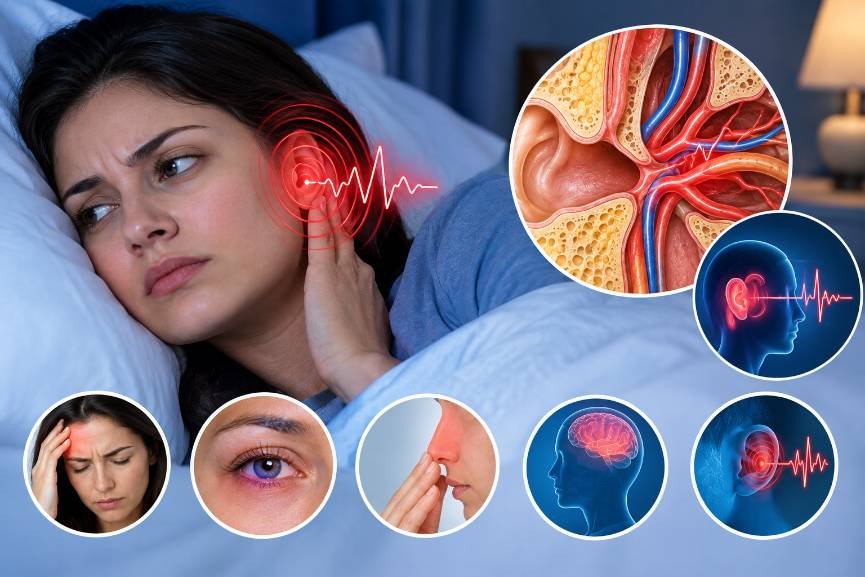
Pulsatile tinnitus is a regular sound that typically corresponds to one’s heartbeat. It might sound like a heartbeat, thumping, or whooshing in the ear.
If pulsatile tinnitus is only present in one ear, particularly if it is new or lasts for a long time, a healthcare professional should check it out. However, some causes are harmless, whereas others involve blood vessels, pressure around the brain, the temporal bone, or other medical issues.
Many people experience pulsatile tinnitus more frequently at night. By eliminating background noises, a peaceful bedroom makes internal sounds more apparent. However, nighttime consciousness alone cannot identify the root cause.

Potential Causes:
Blood Changes Flow:
The rhythmic noises of blood coursing through vessels close to the ear are more audible when lying down because it can affect blood pressure and flow.
vascular disorders:
Pulsatile tinnitus can result from turbulent blood flow brought on by ailments like aneurysms, arteriovenous malformations, or other blood vessel problems.
Greater Awareness:
You may be more conscious of typical bodily noises, such as blood pulsing, in a peaceful setting like a bedroom at night.
Additional Possible Causes:
Additionally, pulsatile tinnitus can be caused by high blood pressure, specific tumors, ear infections, or even an accumulation of earwax.
When to Ask a Doctor:
Symptoms that are new or getting worse:
It’s crucial to consult a doctor if your pulsatile tinnitus has just begun or is getting worse.
Related symptoms include:
Seek medical help right away if the pulsating sound is accompanied by other symptoms such as headaches, impaired vision, dizziness, or hearing loss.
Persistent or irritating tinnitus:
Visit a healthcare provider if the throbbing sound is persistent, loud, or has a major effect on your daily life or sleep.
Treatment:
The underlying reason for pulsatile tinnitus determines the course of therapy. Managing blood pressure, treating infections, addressing vascular abnormalities, or managing additional contributing
factors may all be involved.
Ultimately, there are several potential reasons for pulsatile tinnitus in one ear, particularly at night, some of which may be harmless while others need medical care. For a proper diagnosis and management, it’s essential to speak with a healthcare expert.
Table of Contents
- What exactly is pulsatile tinnitus?
- At night, why is pulsatile tinnitus more severe?
- Is There a Reason Why I Only Hear Pulsatile Tinnitus in One Ear?
- Possible Causes of Pulsatile Tinnitus
- Is pulsatile tinnitus a possibility caused by earwax?
- Is Pulsatile Tinnitus Worsened by Laying Down?
- When I stand up, why does my pulsatile tinnitus Occasionally vanish?
- Could a Pulsatile Tinnitus Be Caused by Sleeping Position?
- What tests are performed to identify pulsatile tinnitus?
- When Should You Be Concerned About Pulsable Tinnitus?
- Headache and Vision Issues with Pulsatile Tinnitus
- Following a Head Injury, Pulsatile Tinnitus
- How is Pulsatile Tinnitus Treated?
- What steps may I take at night to lessen the visibility of my pulsatile tinnitus?
- Is it okay for me to sleep on the injured side?
- When Is It Appropriate to Consult an ENT Specialist?
- When Is Pulsatile Tinnitus a Serious Problem?
- Is pulsatile tinnitus brought on by stress?
- Is Pulsatile Tinnitus Treatable?
- FAQs
- Main Points
What exactly is pulsatile tinnitus?
Ordinary ringing tinnitus is not the same as pulsatile tinnitus.
Instead of a continuous ringing or buzzing noise, the individual hears a rhythmic sound that typically coincides with their pulse.
It might sound like:
- A heart beating
- Swooshing
- Pounding
- beating
- Rhythmic rushing
- A constant whooshing noise
Blood flow close to the ear or alterations in the way vascular noises are communicated to the auditory system are frequently linked to pulsatile tinnitus.
At night, why is pulsatile tinnitus more severe?
For a number of reasons, pulsatile tinnitus may become more obvious at night.
1. The Bedroom Is Tranquil
Conversations, traffic, fans, and other sounds can cover tinnitus during the daytime.
The area becomes much calmer after dark. So, one could become more conscious of the melodic sound.
2. Concentration Gets Better
The brain is able to concentrate more intently on an internal noise when there are fewer distractions.
This might make the tinnitus appear louder even though the basic blood flow hasn’t changed.
3. The placement of the head and body may be crucial.
Some people discover that pulsatile tinnitus alters when they:
- Lie down
- Keep your back straight.
- Move their head around
- Lean forward
- Adjust your resting position.
The head and neck’s posture might affect the flow of veins or blood vessels, which can lead to this.
There is no one sleeping position, however, that consistently relieves pulsatile tinnitus.
Is There a Reason Why I Only Hear Pulsatile Tinnitus in One Ear?
One-sided pulsatile tinnitus needs special consideration.
Among the possible causes are:
- Abnormalities in the venous sinuses
- Transverse sinus stenosis
- Abnormalities of the Sigmoid Sinus Wall
- Fistula arteriosa duralis
- Carotid artery illness
- Narrowing or anomaly of an artery
- Malformed blood vessels
- vascular tumors or glomus tumors
- Intracranial hypertension of unknown cause
- Temporal bone deformities
- dehiscence of the top semicircular canal
- Examples of systemic disorders include hyperthyroidism and anemia.
According to the American College of Radiology, arterial and venous problems can both lead to pulsatile tinnitus.
Possible Causes of Pulsatile Tinnitus
1. Causes of Venous Issues
A major group of reasons are venous disorders.
Examples are:
- stenosis of the transverse sinus
- Diverticulum of the sigmoid sinus
- Abnormalities of the Sigmoid Sinus Wall
- Anomalies of the jugular vein
- Veins that are very apparent
Pulsatile tinnitus has been linked to dilated mastoid emissary veins in recent research.
2. Arterial Etiologies
Abnormal arterial blood flow can occasionally cause pulsatile tinnitus.
Potential causes include:
- Atherosclerosis in the carotid arteries
- Stenosis of the carotid arteries
- Dissection of an artery
- Fibromuscular dysplasia
- Malformations of the Arterial and Venous Systems
Medical evaluation is necessary for these problems.
3. Arteriovenous Fistula in the Dural
An abnormal link between arteries and veins in the brain’s coverings is known as a dural arteriovenous fistula (dAVF).
Sometimes, the sole initial sign of pulsatile tinnitus is its presence.
Given that certain dAVFs can result in severe neurological problems, chronic pulsatile tinnitus should not be disregarded.
4. Intracranial Hypertension (Idiopathic)
IIH, or idiopathic intracranial hypertension, is characterized by increased pressure around the brain in the absence of a discernible mass or other apparent cause.
IIH can cause pulsatile tinnitus.
It might also be connected to:
- Headache
- Vision problems
- Flickering visual obscurations
- Optic disc edema
IIH and pulsatile tinnitus are also linked to venous sinus stenosis.
5. Low Blood Count
Blood flow and cardiac output can rise substantially in cases of severe anemia.
This may lead to pulsatile tinnitus and make vascular noises more audible.
6. Overactive thyroid gland
Heart rate and blood flow can be accelerated by an overactive thyroid.
Due to this, certain people may experience pulsatile tinnitus.
7. Abnormalities in the Temporal Bone
Pulsatile tinnitus can be caused by some temporal bone disorders.
Superior semicircular canal dehiscence is one such condition; it can result in equilibrium issues, sensitivity to sound, and the capacity to hear one’s own internal body sounds.
Is pulsatile tinnitus a possibility caused by earwax?
Because it prevents outside noises, earwax might make normal tinnitus more apparent.
However, persistent, pulse-synchronous tinnitus should not be immediately attributed to earwax.
An ENT exam may reveal wax, an ear infection, a middle-ear issue, or another ear condition.
Is Pulsatile Tinnitus Worsened by Laying Down?
It is possible.
Some people discover that their pulsatile tinnitus worsens after lying down. Others experience little change or even improvement.
Potential reasons include alterations in:
- Blood flow in the veins
- Position of head and neck
- Understanding interior noises
- Noise in the background
Nevertheless, worsening when lying down does not itself reveal the cause.
As a result, if pulsatile tinnitus persists or affects only one side, changing your sleep posture should not be used in place of a medical evaluation.
When I stand up, why does my pulsatile tinnitus Occasionally vanish?
The transmission of vascular noises or venous blood flow may be affected by changes in position.
Therefore, some patients experience a change in the sound when they:
- Sit up straight.
- Stand
- To look behind you, spin your head around.
- Lay down
- Lean over.
This information is valuable for discussing with your physician since alterations in posture might offer insights during the clinical evaluation.
Could a Pulsatile Tinnitus Be Caused by Sleeping Position?
Typically, sleeping posture does not cause a vascular condition.
It might, however, alter how obvious the sound is.
Some individuals, for instance, could feel more pulsing when laying down. Others might notice less while lying on one side.
There is no trustworthy proof that sleeping on the afflicted ear will cure the root cause for good.
What tests are performed to identify pulsatile tinnitus?
The evaluation is determined by the signs and examination findings.
1. Examination of the ear
A person with ENT may check the:
- canal auriculaire
- Eardrum
- Middle ear
- The area following the eardrum
Because the existence or absence of a retrotympanic vascular lesion can impact the imaging selection, otoscopy is crucial.
2. Test dell’udito
An audiogram may be performed, especially when the patient additionally has:
- Loss of Hearing
- Fullness in the ear
- Hearing difficulties on one side
- Other ear problems
3. Blood Testing
Blood tests may be taken into account to look for diseases like the following, depending on the patient’s medical history:
- Anemia
- Thyroid condition
Every blood test isn’t required for every patient.
4. Imaging Techniques
Persistent or unaccounted-for pulsatile tinnitus is frequently evaluated with imaging.
According to the clinical context, physicians may employ:
- Angiography of the CT scan
- Magnetic resonance angiography
- Venography performed using MRI
- Temporal Bone CT Scanning
- Alternative vascular imaging
No one imaging test is suitable for every patient. The decision is based on the suspected reason and the test.
When Should You Be Concerned About Pulsable Tinnitus?
In certain cases, pulsatile tinnitus can be a sign of a underlying disease that needs treatment.
It needs special attention when it:
- Happens in only one ear
- Is long-lasting and fresh
- Matches the pulse
- Is getting easier to see
- Occurs when hearing is impaired
- accompanied by balance or dizziness issues
- Headaches are accompanied by it.
- With visual symptoms, it manifests.
- Starts after trauma to the head or neck
Research suggests that following a thorough assessment, a certain etiology may be found in a significant number of individuals. Over 70% of individuals with a complete assessment, according to one study, had an underlying reason that might be identified.
It shouldn’t be interpreted to imply that every patient has a life-threatening ailment because of this percentage.
Headache and Vision Issues with Pulsatile Tinnitus
This combination requires immediate medical evaluation.
Pulsatile tinnitus that:
- A severe or new headache
- Unclear sight
- Dual perspective
- Brief vision loss
- Other signs of the nervous system
can happen in cases of elevated intracranial pressure or vascular malformations.
Never believe that these symptoms are just brought on by sleep deprivation or stress.
Following a Head Injury, Pulsatile Tinnitus
Any new pulsatile tinnitus following head or neck trauma should be assessed.
Blood arteries might be impacted by trauma and may be connected to vascular anomalies.
Pulsatile tinnitus can be caused by a dural arteriovenous fistula and other vascular diseases.
How is Pulsatile Tinnitus Treated?
The underlying reason determines the course of treatment.
For all pulsatile tinnitus, there is no single remedy.
Possible treatment options include:
Managing Anemia
Treating the underlying anemia may lessen the tinnitus if it is leading to a spike in blood flow.
Treating Thyroid Conditions
If hyperthyroidism is causing an increase in blood flow, treating the thyroid condition may help reduce symptoms.
Regulating blood pressure
If the symptoms are caused by high blood pressure, managing it appropriately could be helpful.
Vascular Anomaly Treatment
Specific specialist care could be needed for some vascular disorders.
Treatment options may include:
- procedures performed endovascularly
- embolism
- Stenting
- Operation
The underlying problem is first found, and then these remedies are picked.
What steps may I take at night to lessen the visibility of my pulsatile tinnitus?
Some methods may make the sound less obvious while the cause is being assessed.
Try:
- A follower
- White sound
- Gentle background music
- Exercises for relaxation
- A regular bedtime routine
- Lowering stress
- If caffeine makes your symptoms worse, avoid consuming too much of it.
However, they do not address an underlying vascular illness. These treatments can aid with sleep and symptom perception.
Is it okay for me to sleep on the injured side?
Pulsatile tinnitus has no universally recommended sleep position.
For comfort, use the location that makes the sound less audible.
However, especially if the tinnitus is one-sided and persistent, don’t use sleeping posture as a kind of therapy.
When Is It Appropriate to Consult an ENT Specialist?
If you want to:
- Several days to weeks are spent with pulsatile tinnitus.
- It occurs recurrently in one ear.
- Your heartbeat is synced with the audio.
- Sleep is being affected by it.
- Your hearing is impaired.
- You often experience vertigo.
- Headaches that won’t go away
- Symptoms that alter with head position are noticed.
Since pulsatile tinnitus can have curable structural or vascular causes, assessment is essential.
When Is Pulsatile Tinnitus a Serious Problem?
If pulsatile tinnitus is accompanied by the following, get help right away:
- Hearing Loss That Unexpectedly Occurs
- Abrupt or significant alterations in eyesight
- Numbness or new neurological weakness
- Talking is challenging.
- Extreme inequality
- Passing out
- Sudden, severe headache
- Symptoms following severe head trauma
Because sudden sensorineural hearing loss is time-sensitive, an abrupt change in hearing itself needs immediate assessment.
Is pulsatile tinnitus brought on by stress?
Tinnitus may become more noticeable due to stress.
Additionally, anxiety and poor sleep might make you more aware of internal noises.
However, before other possible causes have been evaluated, stress should not be presumed to be the cause of new unilateral pulsatile tinnitus.
Is Pulsatile Tinnitus Treatable?
Sometimes.
The prognosis is determined by the root cause.
The pulsatile sound may disappear or significantly improve if the cause can be found and treated.
Endovascular procedures, for instance, can be utilized to treat certain vascular abnormalities. Treatment of an underlying medical illness improves other causes.
Nonetheless, even after thorough testing, certain patients have no recognized cause.
FAQs
Is it a serious problem if you have pulsatile tinnitus in one ear?
It is possible. A vascular or structural etiology may exist for one-sided, pulse-synchronous tinnitus. Rather than being automatically ascribed to the calm of night, chronic symptoms should be assessed.
At night, why can I hear my heart beating in my ear?
It is simpler to hear internal noises in a calm setting. Vascular sound perception can be affected by changes in body posture.
Is pulsatile tinnitus aggravated by lying down?
Some individuals may experience it. Sound perception and blood flow may be affected by position. The underlying cause, however, is not determined by this.
Is pulsatile tinnitus a result of elevated blood pressure?
Although high blood pressure can cause pulsatile tinnitus, it is not the only cause. Also, keep in mind vascular and venous problems.
Could anemia lead to pulsatile tinnitus?
Yes. Increased blood flow from severe anemia might lead to pulsatile tinnitus.
Can a humming sound be caused by earwax?
Tinnitus that is always synchronized with the heartbeat shouldn’t be attributed solely to earwax, even if earwax can worsen its severity.
Can pulsatile tinnitus disappear on its own?
Although pulse-synchronous tinnitus may sometimes be transitory, it should be assessed to establish if there is an underlying cause if it is persistent or recurrent.
Do brain tumors cause pulsatile tinnitus?
However, pulsatile tinnitus can be caused by some vascular tumors and other head or neck lesions, but a pulsing sound does not indicate that a person has a brain tumor.
Is a blood vessel issue capable of producing pulsatile tinnitus?
Yes. Pulsatile tinnitus can be caused by both venous and arterial abnormalities.
Main Points
- Rhythmic whooshing or a heartbeat are symptoms of pulsatile tinnitus.
- It might become more apparent at night since the atmosphere is tranquil.
- Some folks may have changes in their symptoms when they lie down or change the position of their head.
- Persistent pulsatile tinnitus on one side needs to be examined.
- Vascular abnormalities, venous sinus disorders, IIH, temporal bone abnormalities, anemia, and thyroid illness are among the probable causes.
- If indicated, focused imaging may be performed after an examination and hearing test.
- The underlying reason determines the course of treatment.
- Relaxation and white noise can decrease awareness, but they don’t address the core problem.
- Neurological symptoms, severe headache, sudden hearing loss, or changes in vision need immediate medical care.
Medical Disclaimer
This article is intended for general educational purposes. It does not replace an examination, diagnosis, or individualized treatment from a qualified healthcare professional. Persistent or one-sided pulsatile tinnitus should be assessed by an appropriate clinician, particularly when it is synchronized with the heartbeat or occurs with hearing, visual, neurological, or balance symptoms.
Tinnitus & Pulsatile Tinnitus – Organized Internal Link Categories
1. Pulsatile Tinnitus – Causes / Overview
- What Is the Most Common Cause of Pulsatile Tinnitus?
- What Causes Tinnitus in One Ear Only?
2. Pulsatile Tinnitus – When to Worry / Warning Signs
- Should I Ignore Pulsatile Tinnitus?
- When Should I Worry About Pulsatile Tinnitus?
- What Happens If Pulsatile Tinnitus Is Left Untreated?
3. Pulsatile Tinnitus – Sleep / Nighttime Management
- How to Sleep With Pulsatile Tinnitus
4. Tinnitus – Ear Drops / Ear-Related Causes
- Can Ear Drops Cure Tinnitus?
5. Tinnitus – Temporary Symptoms / Duration
- How Long Does Temporary Tinnitus Last?
6. Tinnitus – Risks / Safety
- Is Tinnitus Dangerous?
7. Tinnitus – Medication-Related Causes
- Is Tinnitus a Side Effect of Medication?
8. Tinnitus – Treatment / New Treatments
- What Is the Latest Treatment for Tinnitus?
Does Lying Down Affect Pulsatile Tinnitus?
This pulsatile tinnitus causes the sufferer to hear a sound in their ear that coincides with their pulse. It may be a sign of illnesses that harm your arteries, veins, or heart.
Changes in head position, like lying down, can frequently have an impact on the symptoms of pulsatile tinnitus.

When lying down, why do I experience tinnitus with pulses?
When they move their head, stoop, or lie down, many persons with pulsatile tinnitus experience changes in their symptoms. The symptoms of pulsate tinnitus worsen when lying down for certain individuals.
The pressure in your body may change when you lie down, as well as the way blood flows through the arteries close to your ear.
The sounds of tinnitus may also be more apparent in a quiet environment with no distractions, such as while lying in bed.
When I lie down, why does my pulsatile tinnitus disappear?
The symptoms of pulsatile tinnitus may also disappear for some individuals when they lie down. Changes in posture and blood flow in arteries close to the ear might cause this. Symptoms can also be influenced by the position of the head when lying down.
Some people experience tinnitus symptoms as a result of stress. Relaxing and laying down might alleviate symptoms.
Is it possible that the position of your body when you’re asleep might lead to pulsatile tinnitus?
Although it is unlikely to be the main factor, your sleep position may cause you to experience pulsating tinnitus. An underlying problem is frequently indicated by pulsatile tinnitus.
This often entails heart health issues as well as disorders that impact the blood arteries in your head and neck.
Certain ailments associated with pulsatile tinnitus are listed below:
- arteriosclerosis
- high blood pressure
- the constriction of a vein in the brain
- tumors in the head
- tumors in the neck
- significant anemia
- hyperthyroidism
- idiopathic intracranial hypertension
- a hole in the eardrum
- headache
Sometimes, pulsatile tinnitus is transient. It might be brought on by things like being highly watchful or experiencing an increase in your sense of awareness. As an example, during a panic attack, some individuals may have pulsatile tinnitus.
When I lie down, how can I make my tinnitus go away?
The symptoms of pulsatile tinnitus can be influenced by the posture you sleep in. Lying with the head towards the affected side is frequently found to be helpful for those suffering from pulsatile tinnitus.
For example, if your left ear is experiencing mostly pulsatile tinnitus symptoms, you may find relief by laying on your left side with your left ear on your pillow.
Additionally, taking time to rest might lessen the symptoms of pulsatile tinnitus. You can use techniques like:
- meditate
- breathing practice
- journaling
- conscious awareness
These relaxation devices can help lower blood pressure and lessen the overall impact of pulsatile tinnitus.
Pulsatile tinnitus symptoms can frequently be alleviated by treating the underlying cause. For example, pulsatile tinnitus symptoms can be lessened or cured by using drugs that target thyroid disorders, blood pressure, or anemia.
Other potential therapies for lessening the symptoms of pulsatile tinnitus at night include:
- utilizing white noise machines or fans at night
- stay away from caffeine in the evening
- if you drink, stay away from alcohol at night.
- exercising frequently
- Use eye masks, blackout drapes, and other tools to help lessen the light in your bedroom.
- establishing a nighttime regimen
- modifying your bedroom to increase comfort
When is pulsatile tinnitus considered to be severe?
Many disorders might have pulsatile tinnitus as a symptom. Particularly if you’ve had pulsate tinnitus frequently, you should always inform your doctor about it. For around 70% of individuals, an underlying illness or reason may be identified.
who have tinnitus that is pulsatile.
A pulsating tinnitus might occasionally be a sign of a serious medical condition. If you have pulsatile tinnitus that: it is crucial to get in touch with a healthcare provider right away.
- begins following a head trauma
- only occurs in one ear and lasts for many weeks
- occurs simultaneously with other symptoms, such as balance problems, dizziness, nausea, and vomiting
The conclusion
The symptoms of pulsatile tinnitus can be influenced by the head’s posture. For others, lying down makes their symptoms get better or worse.
Changes in blood flow in the arteries around the ear are frequently the reason for this. Symptoms can be lessened by altering sleeping posture, such as lying with the afflicted ear against the pillow.
Medical References – Pulsatile Tinnitus
- Narsinh KH, et al. JAMA Otolaryngology–Head & Neck Surgery. 2022.
- Lynch P, et al. Otology & Neurotology. 2022.
- Daou JJ, Ducruet AF. Neurosurgery Clinics of North America. 2024.
- Alkhatib SG, et al. Radiographics. 2024.
- ACR Appropriateness Criteria® – Tinnitus. American College of Radiology.
- Diagnostic Yield and Utility of Radiographic Imaging in Pulsatile Tinnitus. Otology & Neurotology.
- Pulsatile Tinnitus: Differential Diagnosis and Radiological Work-Up. Current Radiology Reports.
- Cleveland Clinic – Pulsatile Tinnitus: Symptoms, Causes & Treatment.