How to Cure an Anal Fissure Permanently Without Surgery-various aspects-
Medically reviewed By ENT and respiratory health specialist — Dr. Sagar Rajkuwar, MS-ENT. Clinic Website: www.entspecialistinnashik.com
Health education article | HealthUseful.com
Many anal fissures heal without surgery, especially when they are recent and constipation or hard stools are corrected. However, no treatment can promise a permanent cure for every person because fissures can recur if the underlying bowel problem continues or if an underlying condition is present. The best nonsurgical strategy combines consistently soft stools, reduced straining, warm baths and—when prescribed—medicines that relax the anal sphincter.
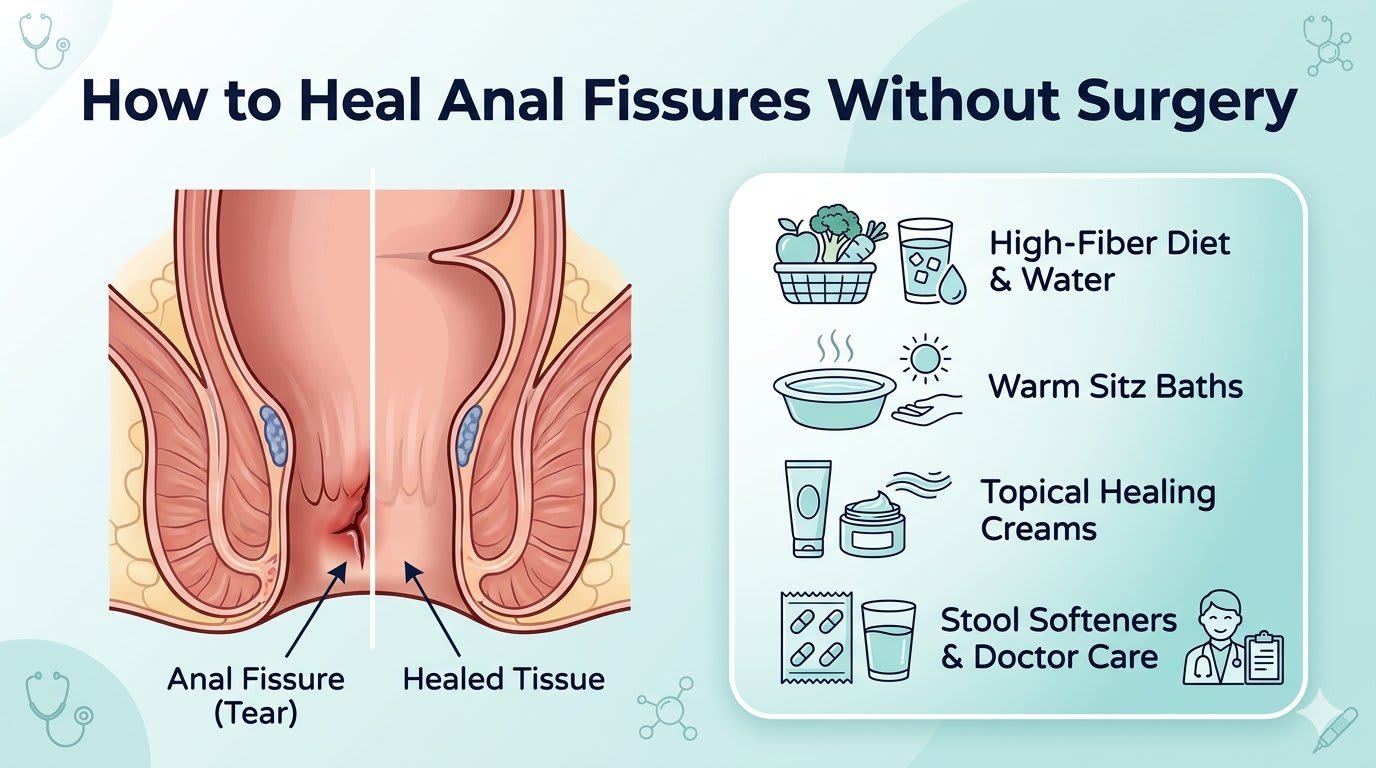
Table of contents
- Main guide
- Safe self-care
- When to seek medical care
- Frequently asked questions
- Summary and conclusion
What does “permanent cure” mean?
Healing means the tear closes and pain or bleeding resolves. Long-term success also means keeping bowel movements easy enough to avoid reopening the tear. A healed fissure can recur, so prevention is part of treatment rather than an optional extra.
Step-by-step nonsurgical treatment
Step 1: Correct the stool problem
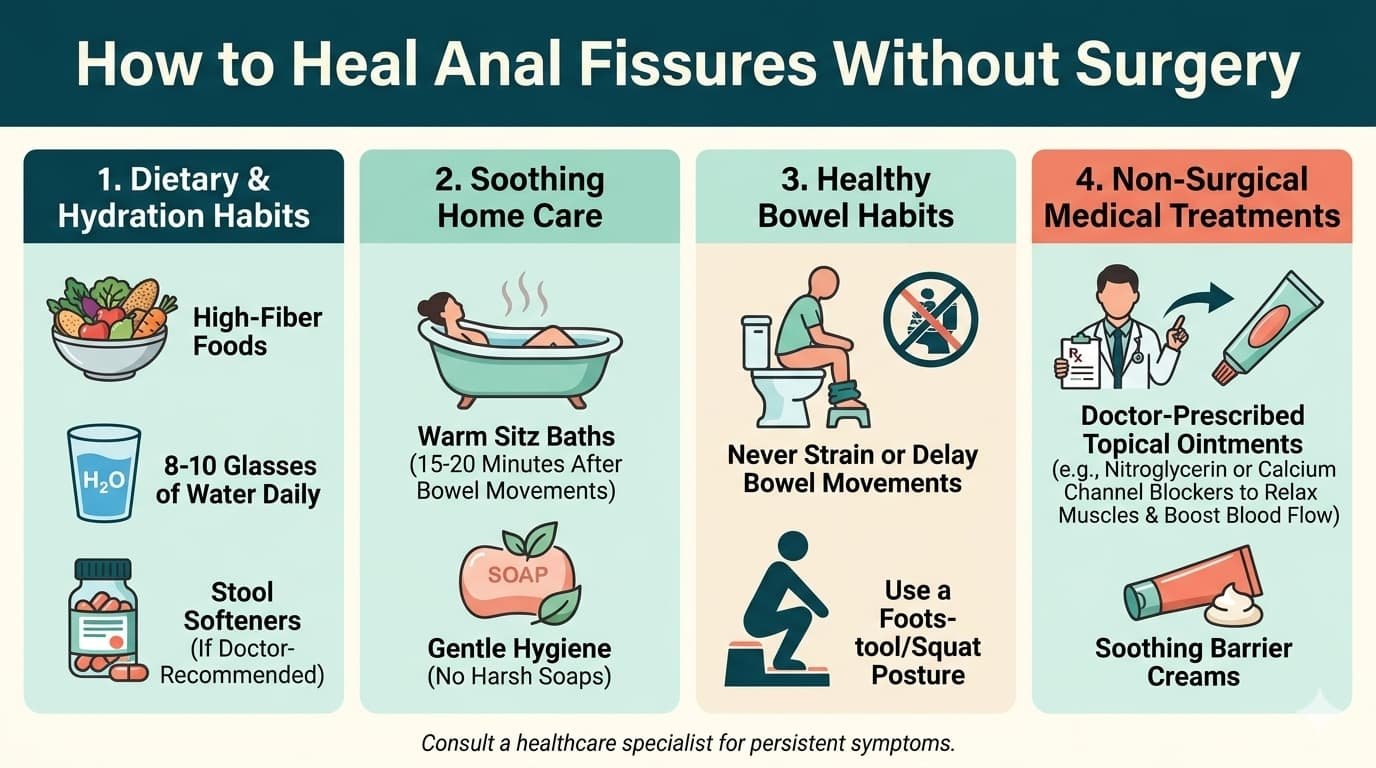
Increase fibre gradually, drink appropriate fluids and treat constipation or diarrhoea. If stools remain hard, discuss a fibre supplement or laxative with a clinician. Avoid excessive fibre increases that cause bloating or worsen discomfort.Step 2: Reduce pain and muscle spasm
Warm sitz baths after bowel movements may relax the anal sphincter and soothe pain. Gentle cleaning and avoiding prolonged toilet sitting also reduce irritation.Step 3: Use a prescribed healing ointment when indicated
For a persistent fissure, topical diltiazem or nifedipine may relax the internal sphincter. Topical GTN is another option, but headaches are common and it has important drug interactions. These are not interchangeable with ordinary hemorrhoid creams or numbing gels. Use the exact preparation, dose and duration prescribed; treatment courses commonly extend for several weeks.Step 4: Attend follow-up
Symptoms may improve before the tear has fully healed. Follow-up helps confirm progress, check adherence and decide whether the diagnosis or treatment needs to change.What if the fissure does not heal?
A chronic fissure may persist despite appropriate conservative care. A colorectal surgeon may discuss botulinum toxin injection, which temporarily relaxes the sphincter, or surgery such as lateral internal sphincterotomy. Surgery has high healing rates in selected patients but carries a risk of impaired control of gas or stool. Prior childbirth-related sphincter injury, baseline incontinence, inflammatory bowel disease or previous anorectal surgery can change the risk-benefit assessment.How to reduce the chance of recurrence
- Maintain a fibre-rich diet long term.
- Keep stool soft but formed; avoid both constipation and persistent diarrhoea.
- Do not strain or ignore the urge to pass stool.
- Stay active and review medicines that may cause constipation with the prescriber.
- Seek care early if pain or bleeding returns.
Beware of “permanent cure in days” claims
Herbal oils, caustic applications, self-inserted objects and unregulated creams have not been shown to permanently cure fissures and may injure the skin. A fissure that repeatedly returns, is off the midline or has unusual features needs assessment for an underlying cause.Safe self-care that supports healing
For many uncomplicated fissures, the foundation of treatment is to make bowel movements soft, formed and easy to pass. Increase dietary fibre gradually through vegetables, fruit, pulses, oats and whole grains. Drink adequate fluid unless a clinician has prescribed a fluid restriction. A fibre supplement such as psyllium may help some people; introduce it gradually and take it with the amount of water stated on the product label. If constipation continues, ask a clinician or pharmacist whether an appropriate laxative is needed. A warm, shallow sitz bath for around 10–20 minutes, particularly after a bowel movement, may soothe discomfort and relax the anal sphincter. Clean the area gently with water and pat dry. Avoid forceful wiping, fragranced soaps and irritating home remedies. Do not delay a bowel movement when you feel the urge, and do not sit on the toilet for long periods or strain.Practical bowel-habit checklist
- Go when the urge comes; do not repeatedly postpone stool.
- Allow time but avoid prolonged toilet sitting or phone scrolling.
- Do not push hard or hold your breath while passing stool.
- Keep a simple record of stool consistency, pain and bleeding to discuss at review.
- Address both constipation and frequent diarrhoea, because either can irritate the anal canal.
When to seek medical care
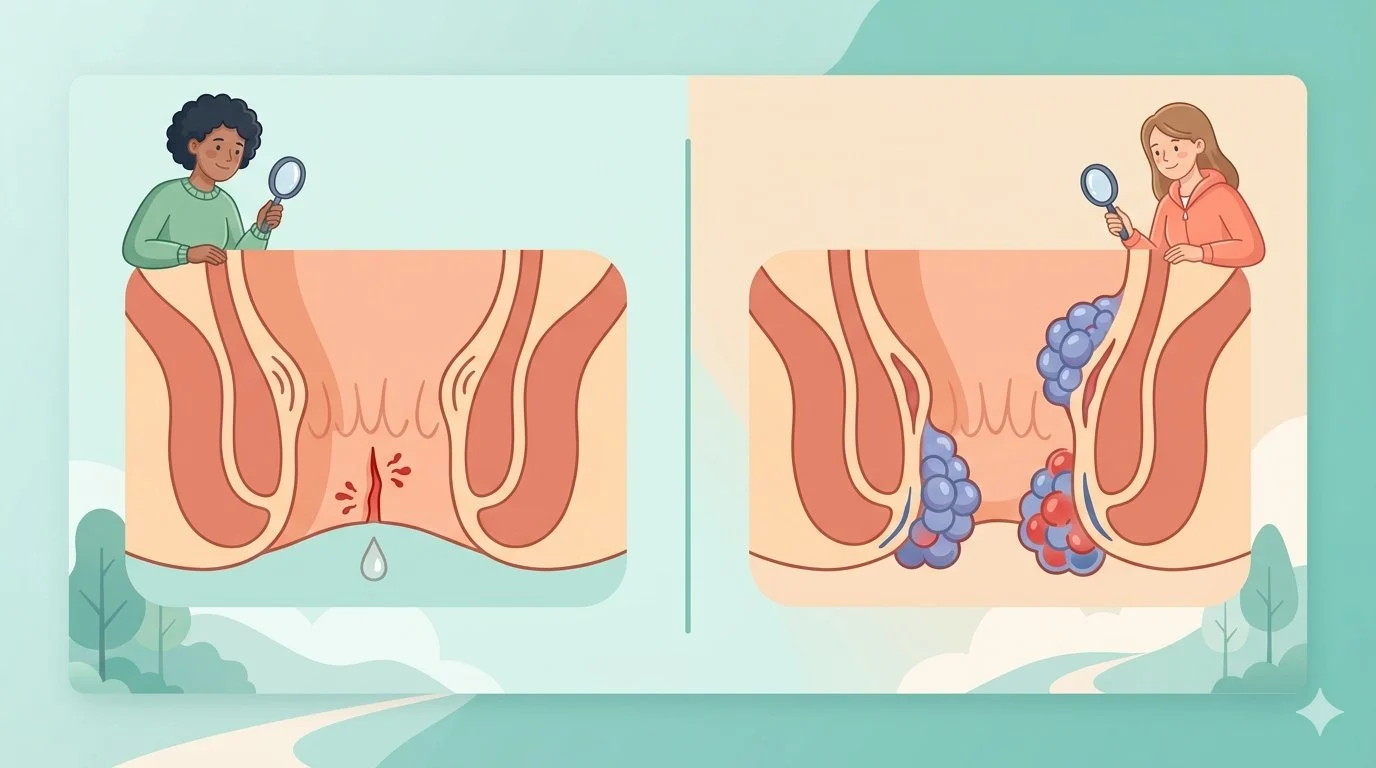
Arrange a medical assessment for anal pain or rectal bleeding rather than assuming the cause is a fissure or piles. Seek prompt care if pain is severe, symptoms are worsening, or there is no improvement after about seven days of self-care. Fever, chills, pus or constant throbbing pain may indicate an anal abscess or another infection and need urgent assessment. Heavy or continuous bleeding, large clots, faintness, black or dark-red stool, or feeling very unwell requires urgent medical attention. Unusual fissures—multiple, off the midline, recurrent or slow to heal—may need investigation for conditions such as Crohn’s disease, infection or, rarely, cancer. This does not mean these conditions are likely, but atypical findings should not be ignored.How a clinician confirms the diagnosis
Diagnosis usually begins with a history of pain, bleeding, bowel habits, duration and relevant medical conditions, followed by a careful visual inspection. A painful internal examination may be deferred or performed by a specialist when appropriate. Further tests are not necessary for every typical fissure; they may be considered when symptoms are atypical, persistent, recurrent or accompanied by other bowel symptoms.Medical disclaimer
This article is for general education and is not a substitute for examination, diagnosis or individual treatment. Medicines and procedures must be selected by a qualified healthcare professional after considering pregnancy, other illnesses, allergies and current medicines. Do not start, stop or change prescribed treatment based only on this page.References and further reading
- NHS – Anal fissure
- Mayo Clinic – Anal fissure: symptoms and causes
- Mayo Clinic – Anal fissure: diagnosis and treatment
- ASCRS – Management of Anal Fissures (2023 clinical practice guideline)
- American Family Physician – ASCRS fissure guideline summary (2024)
- NHS – Anal pain: causes and urgent warning signs
- Mayo Clinic Healthcare – Anal fissures and fistulas
Related video resource
Find patient-education videos about anal fissures from recognised medical organisations on YouTube. Use videos for general education, not as a substitute for a personal medical assessment.Frequently asked questions
Can a fissure heal permanently without surgery?
Yes, many do, particularly acute fissures. Recurrence is possible, so ongoing stool management matters.How long does nonsurgical fissure treatment take?
Many acute fissures improve over several weeks. Chronic fissures may require a prescribed treatment course and reassessment.Is diltiazem ointment a permanent cure?
It can help a fissure heal by relaxing the sphincter, but it cannot guarantee that the fissure will never recur.Can a chronic fissure heal without operation?
Some chronic fissures heal with prescription topical medicines or botulinum toxin, although others need surgery.When should I consider surgery?
Only after specialist assessment of persistent symptoms, previous treatment, continence risks and alternative options.Summary
A durable nonsurgical result is possible for many people, but it cannot be guaranteed. Correct constipation or diarrhoea, maintain soft stools, avoid straining and use prescription sphincter-relaxing treatment when appropriate. Persistent or recurrent fissures need specialist review.
Conclusion
A durable nonsurgical result is possible for many people, but it cannot be guaranteed. Correct constipation or diarrhoea, maintain soft stools, avoid straining and use prescription sphincter-relaxing treatment when appropriate. Persistent or recurrent fissures need specialist review. The right next step depends on the duration and severity of symptoms and an examination when needed. Avoid self-diagnosis and seek professional advice if symptoms persist or warning signs occur.
📲 For Health-Related Articles & Videos
🔹 Facebook: https://www.facebook.com/positivemind.healthcare