Does Amla Make Sinus Issues Worse? (The Complete ENT Guide)
By Dr. Sagar Rajkuwar, ENT Specialist, Nashik, Maharashtra, India
🌐 www.entspecialistinnashik.com
Millions of individuals throughout the globe suffer from sinus problems, particularly those who are coping with allergies, infections, or persistent inflammation. Amla is frequently advertised as a natural treatment for respiratory and immune system well-being. The question that patients frequently ask is:
👉 Does amla exacerbate sinus issues or make congestion worse?
Let’s approach this from an ENT and scientific standpoint.
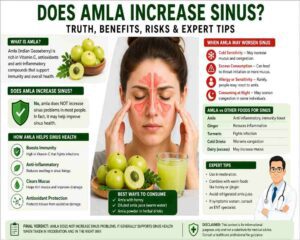
Table of contents
- What does sinusitis mean?
- What is Amla?
- Is Sinus Issues Made Worse by Amla?
- ✅ How Amla Supports Sinus Health
- ⚠️ When Amla Can Make Sinus Symptoms Worse
- The Scientific View
- Cold Weather and Amla
- Consult a professional ENT specialist.
- Ways to Eat Amla for Healthy Sinuses
- ⚖️ Amla vs Other Foods for Sinus
- Myths About Sinus and Amla
- Which folks should stay away from amla?
- Tips for a Natural Sinus Relief with Amla
- When to Visit a Doctor
- Conclusion
- FAQ: Does Amla Increase Sinus?
What does sinusitis mean?
Inflammation of the sinus lining, sometimes linked to the following, is known as sinusitis:
- nasal congestion
- pressure on the face
- Headache
- Postnasal drip
The most prevalent kind is Sinusitis, which can be:
- Acute (short-term)
- Persistent (long-lasting)
What is Amla?
Indian gooseberry, commonly known as amla, is a potent superfruit used in traditional medicine such as Ayurveda.
Nutritional Information:
- Vitamin C-rich
- Antioxidants
- Substances that reduce inflammation
👉 It is frequently consumed as:
- Fresh fruit
- Juice
- powder
- Pickle
Is Sinus Issues Made Worse by Amla?
Brief Response:
The majority of people do not experience more sinus issues as a result of taking amla.
Actually, it could improve the health of your sinuses.
Nevertheless, there are circumstances in which it may exacerbate symptoms.
✅ How Amla Supports Sinus Health
1. Enhances Immunity
One of the best sources of vitamin C, which aids in warding off infections that cause sinusitis, is amla.
2. Anti-Inflammatory Effects
It lessens edema in sinus membranes, which promotes drainage.
3. Gets Rid of Mucus
By thinning mucus, amla facilitates drainage from the sinuses.
4. Antioxidant defense
Safeguards the tissues in the sinuses from oxidative harm.
👉 Clinical insight: An immune-supportive diet can often help patients who have repeated sinus infections.
⚠️ When Amla Can Make Sinus Symptoms Worse
Some people may have worsening symptoms, even with the advantages.
1. Cold Sensitivity
According to Ayurveda, amla has a cooling effect, which might lead to:
- More mucus
- A runny nose
2. Excessive Consumption
Excessive amla consumption might result in:
- Throat discomfort
- More nasal discharge
3. Sensitivity or allergy
People might occasionally respond to amla.
4. Eating at Night
In some people, nighttime intake may exacerbate congestion.
The Scientific View
There is no proof from modern medicine that amla directly causes sinusitis. As opposed to:
- It boosts the immune system.
- Reduces inflammation
- Facilitates healing
However, individual response differs due to:
- The environment
- Body kind
- Current allergies
Cold Weather and Amla
During the winter or in chilly regions:
- Symptoms may be made worse by the cooling properties of amla.
- Particularly in those who are susceptible to allergic rhinitis
Pro tip: Mix amla with foods that are warm, such as honey or ginger.
Consult a professional ENT specialist.
From a clinical ENT point of view:
✔ Amla is usually not harmful.
✔ useful in treating chronic sinusitis
✔ If symptoms worsen, stay away from acute severe congestion.
Key advice:
- Keep an eye out for how each person reacts.
- It’s vital to exercise restraint.
Ways to Eat Amla for Healthy Sinuses
✔ Recommended:
- honey and amla
- Warm water diluted with amla juice
- Herbal beverages with amla powder
❌ Avoid:
- Amla juice that has been chilled
- Too much raw consumption
- Intake in the late hours of the night
⚖️ Amla vs Other Foods for Sinus
| Food | Effect on Sinus |
|---|---|
| Amla | Anti-inflammatory, immune boost |
| Ginger | Strong anti-inflammatory |
| Turmeric | Reduces infection |
| Cold drinks | Worsens congestion |
| Dairy (excess) | May increase mucus |
Myths About Sinus and Amla
Myth #1: Amla always makes more mucus.
Truth: Only in those who are sensitive
Myth 2: Amla causes sinus infections
Truth: There is no scientific proof.
Myth 3: Stay away from amla in sinus entirely
Truth: Moderate consumption is beneficial
Which folks should stay away from amla?
If you should steer clear of or restrict your intake of amla, then:
- You experience greater congestion after consumption
- You are very susceptible to the cold
- You have a sore throat.
Tips for a Natural Sinus Relief with Amla
- Steam inhalation
- Rinsing the nose with saline
- Warm beverages
- Avoid cold food
When to Visit a Doctor
If you have any of the following symptoms, see an ENT professional:
- Continuous blockage lasting more than 10 days
- Intense headache
- temperature
- Changes in vision
These may point to problems associated with chronic sinusitis.
Conclusion
👉Most individuals do not experience an increase in sinus issues as a result of using amla.
👉Because of the following factors, it is really advantageous:
- Effects that reduce inflammation
- Boosting the immune system
Nonetheless:
Symptoms might get worse with excessive use or individual susceptibility.
FAQ: Does Amla Increase Sinus?
1. Does amla increase sinus problems?
No, Amla does not increase sinus problems in most people. It usually helps reduce inflammation and boosts immunity.
2. Is amla good for sinusitis?
Yes, amla can help in Sinusitis due to its vitamin C and anti-inflammatory properties that support sinus healing.
3. Can amla cause nasal congestion?
In some individuals, especially those sensitive to cold foods, amla may increase mild nasal congestion.
4. Should I avoid amla during sinus infection?
Not necessarily. You can take amla in moderation, but avoid it if it worsens your symptoms.
5. Is amla juice good for blocked nose?
Yes, diluted amla juice may help reduce mucus and improve immunity, which can relieve a blocked nose.
6. When should I avoid amla for sinus?
Avoid amla if you notice:
- Increased runny nose
- Throat irritation
- Cold sensitivity
7. Can amla cure chronic sinusitis?
Amla alone cannot cure Chronic Sinusitis, but it can support treatment by improving immunity.
8. Is amla hot or cold for the body?
According to Ayurveda, amla has a cooling effect, which may not suit everyone with sinus issues.
9. How to take amla for sinus relief?
Best ways:
- Amla with honey
- Warm diluted amla juice
- Avoid cold or refrigerated forms
10. Does amla help boost immunity against sinus infections?
Yes, amla is rich in vitamin C, which strengthens immunity and helps prevent recurrent sinus infections.
Medical Disclaimer:
🔗 Sinus Related Articles (Internal Links)
🤧 Sinus Headache & Symptoms
- https://healthuseful.com/sinus-headache-symptoms/
- https://healthuseful.com/sinus-headache-symptoms-one-side/
- https://healthuseful.com/sinus-headache-symptoms-right-side/
- https://healthuseful.com/sinus-headache-back-of-head/
- https://healthuseful.com/sinus-headache-symptoms-home-remedies/
- https://healthuseful.com/how-to-rid-of-a-sinus-infection-headache/
🦠 Sinus Infection Treatment
- https://healthuseful.com/how-to-get-rid-of-a-sinus-infection-in-24-hours/
- https://healthuseful.com/how-to-get-rid-of-sinus-infection-without-antibiotics/
- https://healthuseful.com/what-kills-a-sinus-infection-naturally/
- https://healthuseful.com/sinus-headache-tablet/
- https://healthuseful.com/how-do-doctors-drain-sinuses-without-surgery/
- https://healthuseful.com/signs-of-sinus-infection-getting-better/
- https://healthuseful.com/signs-of-sinus-infection-getting-better-with-antibiotics/
⚠️ Serious Conditions & Warning Signs
- https://healthuseful.com/end-stages-of-a-sinus-infection/
- https://healthuseful.com/how-to-tell-if-sinus-infection-has-spread-to-brain/
- https://healthuseful.com/how-to-tell-if-sinus-infection-has-spread-to-bone/
- https://healthuseful.com/what-is-a-red-flag-for-sinusitis/
- https://healthuseful.com/when-to-go-to-ae-with-sinusitis/
👁️ Related Symptoms & Complications
- https://healthuseful.com/can-a-sinus-infection-cause-eye-pain/
- https://healthuseful.com/can-sinusitis-affect-your-ears/
- https://healthuseful.com/can-sinus-infection-cause-hair-loss/
- https://healthuseful.com/symptoms-of-perforated-sinus-after-tooth-extraction/
🧠 Causes, Triggers & Misdiagnosis
- https://healthuseful.com/what-triggers-sinusitis-headaches/
- https://healthuseful.com/what-can-be-mistaken-for-a-sinus-infection/
- https://healthuseful.com/what-mimics-sinus-issues/
- https://healthuseful.com/what-can-worsen-a-sinus-infection/
🧬 Nutrition & Deficiency
- https://healthuseful.com/what-vitamin-deficiency-causes-sinus-headaches/
- https://healthuseful.com/what-vitamin-deficiency-causes-sinusitis/
- https://healthuseful.com/what-deficiency-causes-sinusitis/
📘 General Sinus Knowledge
- https://healthuseful.com/what-are-the-four-cardinal-signs-of-sinusitis/
- https://healthuseful.com/is-a-sinus-infection-contagious-with-fever/
- https://healthuseful.com/can-you-smell-a-fungal-sinus-infection/
- https://healthuseful.com/sinusitis-in-hindi/
💰 Treatment & Surgery
- https://healthuseful.com/cost-of-sinus-surgery-in-india/
- https://healthuseful.com/how-to-cure-sinus-permanently/
🧒 Special Cases
🔍 Rare Conditions
🔗 Related Articles on Nasal Polyps (ENT Expert Guides)
For detailed, evidence-based information, explore the following articles:
https://healthuseful.com/can-nasal-polyps-turn-cancerous/
https://healthuseful.com/can-nasal-polyps-affect-the-brain/
https://healthuseful.com/what-are-the-symptoms-of-cancerous-nasal-polyps/
https://healthuseful.com/when-to-worry-about-nasal-polyp/
https://healthuseful.com/what-happens-if-nasal-polyps-untreated/
https://healthuseful.com/number-one-cause-of-nasal-polyps/
https://healthuseful.com/how-to-stop-polyp-growth/
https://healthuseful.com/can-nasal-polyps-cause-heart-problems/
https://healthuseful.com/how-to-cure-nasal-polyps-permanently/
https://healthuseful.com/can-ent-see-nasal-polyps/
📚 References
- Mayo Clinic – Overview of sinusitis, causes, and dietary considerations
- Cleveland Clinic – Sinus infection symptoms and natural management
- National Institutes of Health – Role of vitamin C in immunity and inflammation
- National Center for Biotechnology Information – Research on antioxidants and respiratory health
- World Health Organization – Respiratory disease prevention and immune health
- Charaka Samhita – Traditional use of amla for balancing body systems
- All India Institute of Medical Sciences – ENT-based clinical understanding of sinus disorders
- PubMed – Peer-reviewed studies on sinusitis and nutrition