What Are 7 Foods Best for Heart Health? Complete 2026 Doctor’s Guide
By Dr. Sagar Rajkuwar, ENT Specialist, Nashik, Maharashtra, India
🌐 www.entspecialistinnashik.com
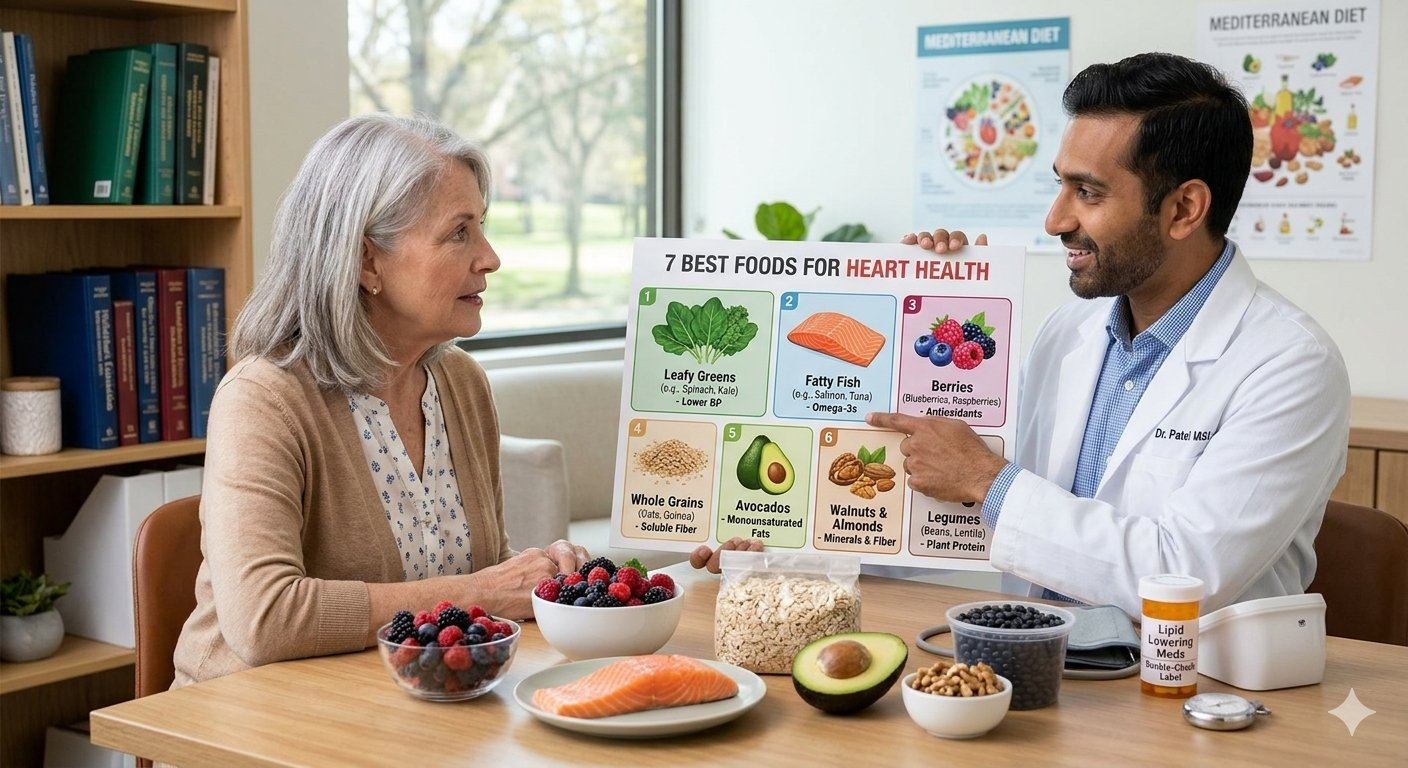
Short answer: The 7 evidence-based best foods for a healthy heart are: 1) oily fish (salmon, mackerel, sardines, Indian bangda/surmai) rich in omega-3 fatty acids; 2) berries packed with polyphenols and anthocyanins; 3) nuts & seeds (walnuts, almonds, flaxseed, chia); 4) leafy green vegetables (spinach, kale, methi, moringa) rich in nitrates, folate and magnesium; 5) extra-virgin olive oil or mustard oil as the primary cooking fat; 6) whole grains and millets (oats, ragi, jowar, bajra) rich in soluble beta-glucan fibre; and 7) legumes & pulses (dal, chana, rajma, lobia). If you are asking what are 7 foods best for heart health, this 2026 ENT-authored guide — built on WHO, CDC, NHS, AHA 2024, PREDIMED, DASH, and ICMR 2024 — gives you every detail.
Table of Contents
- Introduction
- Why Diet Matters for the Heart
- Food 1 — Oily Fish
- Food 2 — Berries
- Food 3 — Nuts & Seeds
- Food 4 — Leafy Green Vegetables
- Food 5 — Extra-Virgin Olive Oil (or Mustard Oil)
- Food 6 — Whole Grains & Millets
- Food 7 — Legumes & Pulses
- Bonus Heart Foods
- Foods to Limit or Avoid
- Sample 1-Day Heart-Healthy Indian Meal Plan
- External Video Resource
- FAQs
- Conclusion
- References
1. Introduction
Diet is one of the strongest, cheapest, and most sustainable tools for cardiovascular health. The 2023 Lancet Global Burden of Disease study attributes 11 million deaths each year to dietary risk factors — more than tobacco. Understanding what are 7 foods best for heart health and building meals around them can cut your lifetime risk of heart attack, stroke, type 2 diabetes, and heart failure dramatically.
2. Why Diet Matters for the Heart
Your plate affects five core cardiovascular mechanisms:
- LDL cholesterol and Lipoprotein(a)
- Blood pressure via sodium, potassium, nitrates and polyphenols
- Insulin sensitivity and glycaemic control
- Systemic inflammation (hs-CRP, IL-6)
- Endothelial function and nitric oxide production
So what are 7 foods best for heart health and how exactly they work matters — let’s dive in.
3. Food 1 — Oily Fish
3.1 Why it helps
Rich in long-chain omega-3 fatty acids EPA and DHA, which:
- Lower triglycerides by 20–30%
- Reduce arrhythmia risk
- Improve endothelial function
- Modestly lower BP
- Reduce platelet aggregation
3.2 How often
2 servings (85 g each) of oily fish per week (AHA 2024).
3.3 Best choices
- Salmon, mackerel, sardines, trout
- Indian: Bangda (mackerel), surmai (seer fish), bangda, hilsa, pomfret
- Choose steamed, grilled, baked over deep-fried
3.4 Vegetarian alternative
Algae-based omega-3 supplements, flaxseed, chia and walnut provide ALA, which is partially converted to EPA/DHA.
4. Food 2 — Berries
4.1 Why they help
Berries are loaded with polyphenols, anthocyanins (which give red-purple colour), Vitamin C, and fibre. The Nurses’ Health Study showed ≥3 servings/week of berries cut heart-attack risk by 32% in women.
4.2 Benefits
- Lower LDL and oxidised LDL
- Improve endothelial function
- Reduce BP
- Improve insulin sensitivity
4.3 Best choices
- Blueberries, strawberries, raspberries, blackberries
- Indian: jamun, pomegranate, custard apple, phalsa
- Prefer fresh or frozen; avoid canned-in-syrup varieties
5. Food 3 — Nuts & Seeds
5.1 Why they help
Nuts are rich in monounsaturated and polyunsaturated fats, plant protein, fibre, magnesium, Vitamin E, L-arginine and plant sterols. PREDIMED showed a 30% reduction in major cardiovascular events in people adding 30 g/day mixed nuts to a Mediterranean diet.
5.2 Daily portion
30 g (a handful) of unsalted nuts per day.
5.3 Best choices
- Walnuts, almonds, pistachios, hazelnuts, cashews (moderate)
- Peanuts also beneficial
- Seeds: flaxseed, chia, pumpkin, sunflower, sesame
6. Food 4 — Leafy Green Vegetables
6.1 Why they help
Leafy greens are rich in dietary nitrates, folate, Vitamin K, magnesium, and antioxidants. Dietary nitrates convert to nitric oxide which dilates blood vessels, lowers BP and improves endothelial function.
6.2 Best choices
- Spinach, kale, Swiss chard, rocket
- Indian: palak, methi, moringa (drumstick leaves), amaranth (chaulai), bathua, mustard greens (sarson)
- Aim for 1–2 cups cooked daily
6.3 Preparation tips
Lightly cook or steam to preserve nitrates and folate; avoid prolonged frying.
7. Food 5 — Extra-Virgin Olive Oil (or Mustard Oil)
7.1 Why it helps
Extra-virgin olive oil (EVOO) is the hallmark of the Mediterranean diet. It contains:
- Monounsaturated oleic acid
- Polyphenols (oleocanthal) with anti-inflammatory action
- Vitamin E, squalene
PREDIMED showed 30 g/day of EVOO cut CV events by 30%.
7.2 Indian alternatives
Mustard oil (rich in monounsaturated and alpha-linolenic acid) and rice-bran oil (containing oryzanol) are evidence-based regional choices. Groundnut oil in moderation and rotation is acceptable.
7.3 Daily amount
- EVOO: 20–30 ml/day for raw drizzling or low-heat cooking
- Mustard/rice-bran oil: 2–3 teaspoons/day for high-heat cooking
- Keep total cooking oil <500 ml per person per month (ICMR 2024)
- Avoid coconut oil, palm oil, and vanaspati
8. Food 6 — Whole Grains & Millets
8.1 Why they help
Whole grains are rich in soluble beta-glucan fibre (especially oats and barley), magnesium, B vitamins, phenolic acids, and plant lignans.
8.2 Benefits
- Lower LDL by 5–10%
- Improve glycaemic control
- Promote satiety and healthy weight
- Nurture the gut microbiome
8.3 Best choices
- Oats — porridge, overnight oats
- Barley, quinoa, brown rice
- Indian millets: ragi (finger millet), jowar (sorghum), bajra (pearl millet), foxtail, kodo, little millet
- Whole wheat atta (chakki-ground), not maida
8.4 Portion
3–6 servings per day; one serving = ½ cup cooked grain or 1 slice whole-grain bread.
9. Food 7 — Legumes & Pulses
9.1 Why they help
Pulses are rich in plant protein, soluble fibre, folate, iron, and polyphenols. 2024 meta-analyses show one serving/day of legumes cuts LDL by 5% and CV event risk by 10%.
9.2 Best choices
- Lentils (dal — moong, masoor, urad, toor)
- Chickpeas (chana), kidney beans (rajma), black-eyed peas (lobia), horse gram (kulthi)
- Soya (whole beans, tofu, tempeh)
9.3 Portion
½ to 1 cup cooked legumes 4–7 days/week.
Together these 7 foods form the strongest evidence-based answer to what are 7 foods best for heart health.
10. Bonus Heart Foods
- Dark chocolate (≥70% cocoa) — flavanols improve endothelial function; 10–20 g/day
- Garlic & onion — allicin, sulfur compounds, mild BP and lipid benefits
- Green tea — EGCG and catechins
- Fat-free or low-fat yoghurt / curd — probiotics
- Avocado — monounsaturated fats, potassium
- Pomegranate — polyphenols, LDL-lowering
- Beetroot — dietary nitrate, BP-lowering
- Turmeric — curcumin, anti-inflammatory
11. Foods to Limit or Avoid
- Trans fats (vanaspati, hydrogenated oils)
- Deep-fried snacks, pakoras, samosas, chips
- Red/processed meats (bacon, sausages, salami)
- Full-fat dairy excess, excessive ghee or butter
- Sugary drinks, cola, packaged juices
- Refined carbs (white bread, maida-based items)
- Excess salt — pickles, papad, salted snacks
- Alcohol excess
12. Sample 1-Day Heart-Healthy Indian Meal Plan
- Early morning: Warm water with lemon; soaked almonds (6–8) and 2 walnuts
- Breakfast: Vegetable oats upma with flaxseed + 1 bowl berries/papaya
- Mid-morning: Green tea + roasted chana
- Lunch: 2 jowar/ragi rotis + mixed-vegetable sabzi (methi, palak) + 1 cup dal + 1 bowl curd + salad with olive-oil dressing
- Evening: Fruit (orange or jamun) + handful of pistachios/pumpkin seeds + chamomile tea
- Dinner: Grilled salmon or paneer + stir-fried spinach-mushroom with garlic + quinoa or brown rice + bowl of mixed-dal soup
- Before bed: 10–15 g dark chocolate (≥70% cocoa) occasionally
13. External Video Resource
For a visual summary of what are 7 foods best for heart health, watch:
YouTube: Best Foods for Heart Health – AHA / BHF / Mayo Clinic
14. FAQs
Q1. Is ghee bad for the heart?
Small quantities (≤1 tsp/day) in a balanced diet are generally tolerated; daily high intake raises LDL.
Q2. Can vegetarians get enough omega-3?
Yes — through flaxseed, chia, walnut and algae-based supplements, though conversion of ALA to EPA/DHA is modest.
Q3. Are eggs heart-healthy?
Up to 1 whole egg/day is safe for most adults; those with high LDL should monitor response.
Q4. How much salt is safe?
WHO recommends <5 g salt (2 g sodium) per day.
Q5. Does coconut oil help the heart?
No. Despite marketing claims, coconut oil raises LDL as much as butter — AHA 2024 advises against daily use.
Q6. Are millets really better than rice?
Yes. Lower glycaemic index, higher fibre, more magnesium and polyphenols — ICMR 2023 strongly endorses millets.
Q7. Is red wine protective?
The 2023 Lancet update says no amount of alcohol is risk-free — do not start drinking for CV benefit.
Q8. Can I eat fruit if I am diabetic?
Yes — whole fruits in moderation. Prefer low-GI fruits like berries, apple, pear, guava, jamun; limit mango, chikoo, grapes.
15. Conclusion
So, what are 7 foods best for heart health? Oily fish, berries, nuts and seeds, leafy greens, extra-virgin olive oil (or mustard oil), whole grains and millets, and legumes. Build your plate around these seven, add garlic, green tea, dark chocolate, pomegranate, and beetroot as regular bonuses, and limit trans fats, refined carbs, red/processed meats, excess salt and sugar. Combined with 150+ minutes of weekly activity, tobacco avoidance, and good sleep, these foods form the strongest and most sustainable cardio-protective lifestyle known to modern medicine.
16. References
- Estruch R, et al. PREDIMED trial. NEJM 2018.
- Appel LJ, et al. DASH diet trial. NEJM 1997; updated DASH-Sodium.
- Lichtenstein AH, et al. 2021 AHA Dietary Guidance; 2024 Scientific Statement.
- WHO Healthy Diet Fact Sheet 2024.
- ICMR–NIN Dietary Guidelines for Indians, 2024 edition.
- Micha R, et al. Dietary factors and CVD mortality. JAMA 2017; Global Burden of Disease 2023.
- Afshin A, et al. Nut consumption and CVD. Am J Clin Nutr 2014.
📞 ENT Consultation & Surgery
Dr. Sagar Rajkuwar (MS-ENT)
Prabha ENT Clinic, Ambad, Nashik
📱 7387590194 | 9892596635
🌐 www.entspecialistinnashik.com
Medical Disclaimer
Medical Disclaimer: This article is for educational purposes only and does not replace professional medical advice, diagnosis, or treatment. Audiogram results should be interpreted by a qualified audiologist or ENT specialist. If you have sudden hearing loss, severe dizziness, ear discharge, or other concerning symptoms, seek medical evaluation promptly. Always consult a qualified cardiologist or dietitian for personalised heart-nutrition advice.