Cavity Problems After Mastoid Surgery and Their Management
By Dr. Sagar Rajkuwar, MS-ENT — ENT Specialist, Nashik, Maharashtra, India
🌐 www.entspecialistinnashik.com
Cholesteatoma and chronic ear disease can be successfully managed with mastoid surgery. Following surgery, however, some individuals experience issues in the mastoid cavity. Recurrent infections, chronic ear discharge, granulation tissue, accumulation of wax or debris, tinnitus, dizziness, or trouble utilizing a hearing aid may all be symptoms of this condition.
Poor surgery is not always the cause of a difficult mastoid cavity. The anatomy of the cavity, the healing process, and the postoperative care are all influenced by the underlying ear disease.
Important: Not every mastoidectomy creates a permanent open cavity. Cavity-related problems are particularly associated with canal-wall-down (CWD) mastoidectomy, in which the mastoid and ear canal are connected to create an open cavity.
Updated October 2026 with the latest ENT evidence on bioactive-glass mastoid obliteration, non-echo-planar DWI MRI surveillance of residual cholesteatoma, Pseudomonas-biofilm–directed topical therapy, bone-anchored hearing solutions for chronic draining cavities, and NHS / ENT UK guidance on water precautions.
Table of Contents
- What Is a Mastoid Cavity?
- Why Is Mastoid Surgery Performed?
- What Causes Cavity Problems After Mastoid Surgery?
- Common Symptoms
- Why Does a Mastoid Cavity Continue to Discharge?
- How Is a Problematic Mastoid Cavity Diagnosed?
- Medical Management
- When Is Revision Mastoid Surgery Needed?
- Mastoid Cavity Obliteration
- What Is Meatoplasty?
- Obliteration vs Cavity Revision
- Hearing Problems and Hearing Aids
- Dizziness After Mastoid Surgery
- Water Precautions and Daily Care
- Recovery After Revision Surgery
- When Should You Contact an ENT Specialist?
- Common Questions
- Important Points to Remember
- Modern Advances: Bioactive Glass, Patient-Reported Outcomes & Imaging (new)
- Conclusion
- ENT Consultation
1. What Is a Mastoid Cavity?
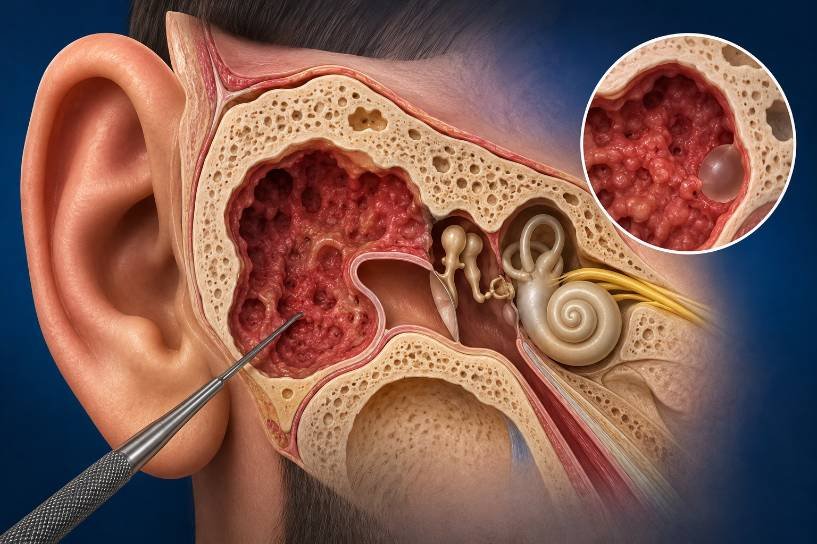
The mastoid bone is located at the back of the ear. It has air-filled chambers that connect to the middle ear.
In some forms of mastoid surgery, especially canal-wall-down mastoidectomy, diseased mastoid air cells are extracted and the mastoid is connected to the outer ear canal.
As a result, a mastoid bowl or mastoid cavity is produced.
To remove illness and establish a safe ear is the goal. It may be challenging to keep an open cavity clean and dry, though.
Long-term issues may include the following:
- Frequent ear discharge
- Accumulation of wax and other debris
- Tissue granulation
- Repeated infection
- Difficult to clean the cavity
- Dizziness caused by air or chilly water entering the cavity.
- ringing in the ear
- Deafness
- Problems donning or wearing a hearing aid
Large cavities, bony overhangs, cholesteatoma, residual infected cells, perforation, and insufficient meatoplasty have all been linked to troublesome mastoid cavities in research.
Further context (added October 2026): It is helpful to understand how a mastoid cavity differs from the normal anatomy. In a healthy ear, the mastoid air cells are a honeycomb of small bony pockets lined by respiratory mucosa and ventilated through the aditus and the middle ear. In an open or canal-wall-down cavity, this honeycomb has been drilled out and the lining replaced by migrating squamous (skin) epithelium that must shed outwards into the external canal to stay healthy. When migration is slowed by scars, dependent pockets, humidity or a narrow meatus, keratin and wax accumulate instead of self-cleaning, and the cavity becomes “troublesome.” Published series describe a troublesome-cavity rate of roughly 10–20% after canal-wall-down surgery when meatoplasty, cavity shape and follow-up are all adequate; the figure rises sharply when any of those three are inadequate. In short, a mastoid cavity is a surgically created compromise: it trades a self-ventilating middle-ear system for direct inspection, with lifelong aural toilet as part of the bargain.
2. Why Is Mastoid Surgery Performed?
A few disorders might necessitate mastoid surgery, including:
- Cholesteatoma
- Otitis media suppurative chronica
- Long-standing mastoid infection
- Continuous middle ear infection
- Chronic ear infection complications
- Access to the middle or inner ear is necessary for certain selected situations.
One significant rationale for mastoidectomy is cholesteatoma.
A cholesteatoma is an unusual accumulation of skin cells in the mastoid or middle ear. If it keeps expanding, it could harm adjacent organs like the facial nerve, balance system, and small hearing bones.
Hence, the main objective of surgery is to remove sickness and establish a secure ear.
Further context (added October 2026): The World Health Organization estimates that chronic suppurative otitis media (CSOM) — the chronic middle-ear and mastoid infection that most often leads to mastoid surgery — affects roughly 65–330 million people worldwide, with about 60% experiencing significant hearing impairment and more than 20,000 deaths each year from its intracranial complications. The burden is disproportionately higher in South and Southeast Asia, sub-Saharan Africa and the Pacific. Modern mastoid surgery is driven by two complementary goals that are agreed in the European consensus statements and the AAO-HNS clinical frameworks: (1) a safe ear — one free of cholesteatoma and intracranial-complication risk — and (2) a serviceable ear — one that is dry, closable with a hearing device if needed, and acceptable for daily life. Surgery that achieves the first but fails the second is what later presents as a “cavity problem.” Pediatric cholesteatoma, dehiscence of the facial canal (reported in up to one-third of chronic cases), lateral semicircular canal fistula, and extradural or sinus-plate disease each raise the threshold for choosing canal-wall-down over canal-wall-up, because exposure and lifelong direct inspection outweigh the inconvenience of an open bowl in these settings.
3. What Causes Cavity Problems After Mastoid Surgery?
A persistent or bothersome mastoid cavity might have several causes.
1. Persistent or recurring illness
If infected tissue or cholesteatoma remains or reappears, the cavity may become unwell and begin discharging.
2. Poorly formed or enormous aperture
It can be difficult to clean yourself if you have a really huge cavity. Deeper regions have the potential for debris to accumulate.
3. Overhanging bones
A bony overhang might hinder appropriate drainage and make it challenging for the patient and ENT specialist to examine the cavity.
4. High facial ridge
A pocket that accumulates moisture and garbage can form from a facial ridge that has not been adequately lowered.
5. Limited ear canal aperture
Examination and cleaning can be challenging due to a tight external auditory canal.
6. Meatoplasty that is not adequate
The ear canal’s opening is widened by a meatoplasty. Cleaning and ventilating the cavity may be challenging if the hole is too tiny.
7. Granulation tissue
Granulation tissue might form during the healing process. Discharge or blockage can result from excessive granulation.
8. Bad epithelialization
Healthy skin must line the cavity. Chronic inflammation and discharge might result from delayed or insufficient epithelialization.
9. Preserved mastoid cells
Occasionally, persistent infection may result from residual sick or poorly ventilated cells.
10. Postoperative care problems
Proper follow-up is frequently required for a mastoid cavity. Issues may result from an accumulation of wax, keratin, or trash if it is not cleaned away.
11. Bacterial biofilms (added October 2026)
Research from the last decade has added bacterial biofilm formation to this list. In studies of chronic suppurative otitis media, biofilm was identified in otorrhoea samples in roughly 80% of participants at enrolment, and more than three-quarters of Pseudomonas aeruginosa isolates grown from these ears produced biofilm. A biofilm is a sheet of bacteria embedded in a self-made polysaccharide matrix that sticks to the cavity lining, blunts the effect of ordinary ear drops, and lets infection relapse as soon as treatment stops. This explains why some cavities keep discharging despite “the right” antibiotic on culture — the drug reaches the planktonic bacteria but not the biofilm. Biofilm-aware strategies (mechanical debridement under the microscope, acidifying agents such as dilute acetic acid, culture-directed topical fluoroquinolones for an adequate course, and in selected cases surgical removal of the biofilm-coated lining) are now part of modern cavity management.
12. Previous radiotherapy or diabetes (added October 2026)
Prior temporal-bone radiotherapy, poorly controlled diabetes mellitus and chronic immunosuppression all slow epithelialisation, impair local vascularity and raise the risk of a chronically wet cavity. In these patients, a dry ear often requires both tight systemic disease control and a surgical plan that reduces cavity volume (obliteration) rather than medical management alone.
4. Common Symptoms of Mastoid Cavity Problems
A problematic cavity doesn’t always show the same signs in every patient.
Common symptoms include:
Ear discharge
One of the most important signs is discharge that is persistent or recurs.
The discharge could be:
- Thin
- dense
- Pus-like
- Stinky
- Irregular
Added October 2026: The character of the discharge gives useful clues. A thin, foul-smelling, grey-green discharge most often reflects Pseudomonas aeruginosa colonisation; a creamy yellow discharge with crusting suggests Staphylococcus aureus; a thick, cheesy, odourless keratinous debris with pearly flakes raises suspicion of residual or recurrent cholesteatoma; black spores or wet-paper material point to otomycosis (commonly Aspergillus niger or Candida); and blood-stained discharge in an otherwise healed cavity should prompt urgent review to rule out granulation, polyp, or (rarely) malignancy of the external canal.
Hearing loss
Hearing loss may persist as a result of the original ear disease, damage to the hearing bones, issues with the tympanic membrane, or other alterations in the middle ear.
Accumulation of wax and other debris
Open mastoid cavities can accumulate:
- Wax
- Keratin
- Skin that has died.
- Humidity
- Rubbish
Granulation tissue
During microscopic examination, granulation may be seen.
Ear discomfort
Patients may experience:
- Otalgia (ear pain)
- A feeling of fullness
- Irritation or itching
- Tenderness on touch
Tinnitus
Some patients may still hear a ringing, humming, hissing, or other noise in their ear.
Dizziness
Some patients may have vertigo, especially if exposed balance systems in an open cavity are stimulated by cold water or air.
Issues Using Hearing Aids
Hearing aids may be difficult or unpleasant to use in an area that is persistently wet or diseased.
Added October 2026 — red-flag symptoms that change management urgency: New-onset facial weakness (even subtle asymmetry on blowing the cheeks), vertigo brought on by pressing on the tragus (a positive fistula sign), sudden severe hearing loss, high fever with headache or neck stiffness, or swelling behind the ear with downward displacement of the pinna all suggest that something more than an “ordinary troublesome cavity” is going on — recurrent cholesteatoma eroding into the facial nerve or labyrinth, or an intracranial complication — and warrant same-day ENT evaluation.
5. Why Does a Mastoid Cavity Continue to Discharge?
There may be several causes for ongoing discharge.
The ENT specialist needs to ascertain if the discharge is due to:
- Infection
- Granulation tissue
- A residual cholesteatoma
- A cholesteatoma that returns
- Retained debris
- Poor cavity architecture
- Insufficient drainage
- Tight meatus
- Chronic middle-ear illness
- A hole or other structural flaw
As a result, continuous discharge shouldn’t be handled with ear drops repeatedly without determining the underlying cause.
Although some troublesome cavities might be resolved with careful cleaning and proper topical therapy, others need revision surgery.
Added October 2026 — microbiology and biofilm: Modern microbiological studies agree that the two dominant organisms isolated from chronically discharging mastoid cavities are Pseudomonas aeruginosa and Staphylococcus aureus, with mixed anaerobes and fungi recovered less often. Many P. aeruginosa isolates are strong biofilm producers and show rising resistance to older topical antibiotics, which is why ENT guidelines now recommend sending a swab for culture and sensitivity when discharge persists beyond two or three courses of empirical treatment. Studies have shown that acetic acid solutions as low as 0.08–0.16% can eradicate biofilm in vitro, which is one of the reasons many ENT units still use acidifying ear drops as a cheap, effective adjunct to microscopic suction. A fungal “second infection” is common after prolonged topical antibiotics; black fungal debris or wet-paper looking material should trigger a switch to an antifungal preparation. Equally important is what to avoid: WHO and ENT UK caution that aminoglycoside drops (gentamicin, neomycin) in an open ear can — in rare cases — cause ototoxic sensorineural hearing loss, and should be used only on specialist advice when the eardrum or round window may be exposed. In short, “persistent discharge” is a question to answer, not a symptom to suppress.
6. How Is a Problematic Mastoid Cavity Diagnosed?
A thorough ENT examination is used to make the diagnosis.

Examination under an otoscope or microscope
The ENT doctor looks at:
- The auditory canal
- Membrana tympani
- Cavity of mastoid
- granulation tissue
- Wax
- Keratin
- Any discharge
- Possible recurrent or leftover illness
The cavity may be examined in greater detail under the microscope.
Aural toilet (microsuction)
The professional may carefully remove:
- Wax
- Debris
- Keratin
- Granulation tissue
Additionally, this might aid in determining if the cavity gets better after cleaning.
Hearing test
To ascertain the kind and degree of hearing loss, an audiogram can be taken.
CT scan
A CT scan of the temporal bone may be advised if the anatomy or the state of the condition requires more investigation.
It might aid in evaluating:
- Mastoid anatomy
- alterations to the bones
- Remaining air cells
- Bone abnormalities
- Recurrent disease is possible.
MRI scans
MRI, especially diffusion-weighted imaging in specific cases, could be beneficial if cholesteatoma is thought to be persistent or recurring.
The patient’s history and examination determine the precise investigation.
Added October 2026 — the role of non-echo-planar DWI MRI: One of the most useful advances in post-mastoidectomy follow-up has been non-echo-planar diffusion-weighted MRI (non-EPI DWI MRI). Instead of taking a patient back to theatre for a routine “second-look” operation to check for hidden cholesteatoma under an obliterated cavity, non-EPI DWI MRI identifies cholesteatoma as a hyperintense “lit-up” spot on the diffusion sequence. The 2022 Cureus systematic review and meta-analysis of diagnostic studies reported a pooled sensitivity of about 92% and specificity of about 94% for non-EPI DWI MRI in detecting recurrent or residual cholesteatoma, with the smallest reliably detected lesion around 3 mm. In children, pooled sensitivity sits closer to 89% with specificity above 92%. The practical use is important: when the MRI is negative and the ear looks clean on microscopy, patients can often be followed with repeat imaging rather than booked for a second-look operation; when it is positive, revision surgery can be planned with confidence. Non-EPI DWI MRI is now the standard surveillance tool recommended in major European and UK otology units after canal-wall-up surgery and after mastoid obliteration, where direct inspection of the cavity is no longer possible. The main caveats are reduced sensitivity for lesions under 3 mm, occasional false positives from silastic sheeting, wax, or recent surgical packing, and the need for a radiologist experienced in reading temporal-bone MRI.
7. Medical Management of a Mastoid Cavity
Not every patient requires an additional procedure.
The state of the cavity determines the treatment.
Routine skilled cleaning
Periodical cleaning by an ear, nose, and throat doctor is helpful to some patients.
Careful suctioning of: may be part of this.
- Wax
- Keratin
- Debris
- Discharge
How fast rubbish builds up affects how often it happens.
Ear medicine applied topically
If inflammation or infection is present, the ENT specialist may prescribe appropriate ear drops.
Never use over-the-counter ear drops without consulting a doctor, especially if you have had ear surgery or have a perforation.
Management of concurrent illness
The doctor may also need to handle:
- Persistent infection
- Infection caused by fungi
- Skin irritation
- Allergies
- Middle-ear disorder
Certain holes can be controlled with medical care. However, structural issues often call for a different strategy.
Added October 2026 — practical medical management framework:
- Microsuction interval. Most dry, well-epithelialised cavities need professional aural toilet every 6–12 months. Troublesome cavities often need it every 4–8 weeks until a dry state is achieved; once dry, intervals can be stretched out.
- First-line topical therapy. For an uncomplicated, actively discharging cavity, a topical quinolone (such as ciprofloxacin, or ciprofloxacin + dexamethasone where available) is the preferred evidence-based choice because it is active against the typical pathogens, is non-ototoxic even if the middle ear is exposed, and has the strongest supporting evidence in Cochrane reviews.
- When to swab. Send a culture and sensitivity if discharge persists beyond 2 weeks of appropriate topical therapy, if there is a smell suggesting Pseudomonas or anaerobes, in diabetic or immunocompromised patients, or when fungal elements are suspected.
- Acidifying and antifungal options. Dilute acetic acid (vinegar-based ear drops) is a cheap, biofilm-active adjunct for Pseudomonas and for prevention after swimming or showering. Topical clotrimazole or oral itraconazole may be needed for otomycosis.
- Granulation tissue. Small areas of granulation often respond to microsuction, cautery with silver nitrate, or a short course of a topical steroid-antibiotic preparation; large, persistent granulations may need excision or biopsy to rule out cholesteatoma or (rarely) squamous-cell carcinoma.
- Systemic antibiotics. Reserved for cellulitis of the surrounding tissues, suspected mastoid-bone infection, or impending complications; they are not first-line for simple otorrhoea from a cavity.
- Patient self-care between visits. Keep the cavity dry (see Section 14), avoid cotton buds, and attend review appointments even when the ear is asymptomatic.
8. When Is Revision Mastoid Surgery Needed?
A cavity may be considered for revision surgery if it is still a problem after undergoing proper medical care.
Possible indicators include:
- Discharge that is stubborn or comes back.
- Recurrent infection.
- Cholesteatoma that is recurrent or residual
- Big troublesome hole
- Pockets that are too deep to wash
- Overhanging bones
- A elevated facial ridge.
- Restricted aperture
- Poor cavity shape
- Consistent granulation
- Serious water allergy
- Regular need for professional cleaning
The precise operation is determined by the anatomy and the underlying ailment.
Revision surgery may successfully transform many chronically draining mastoid cavities into dry, water-resistant ears, according to research on problematic mastoid cavities.
Added October 2026 — timing and expected outcomes: Published series on revision of chronically draining canal-wall-down cavities report dry-ear rates in the range of 85–95% when revision includes obliteration plus posterior canal-wall reconstruction, compared with notably lower rates after simple revision without obliteration. Revision is usually offered when a cavity has failed at least 3–6 months of properly delivered medical management, when imaging suggests residual cholesteatoma, when the patient has serious hearing-aid or water-exposure problems that affect daily life, or when complications threaten. Delaying beyond this point rarely helps: the cavity does not reorganise itself, and biofilm, scarring and ossicular damage tend to accumulate.
9. What is the obliteration of the mastoid cavity?
The aim of mastoid cavity obliteration is to reduce the size of an existing mastoid cavity and enhance its function by filling some or all of it with appropriate tissue or material.
Selected materials might include:
- Bone chips
- Bone pâté
- Cartilage
- Fat
- Soft tissue or muscle
- Bioactive glass (S53P4) and other biomaterial granules
- Other reconstructive materials
The decision is made based on the patient’s anatomy, prior surgery, disease state, and the method the surgeon favors.
The primary goals are to:
- Lessen the problematic cavity
- reduce the build-up of debris
- Increase water resistance
- Simplify postoperative cleaning
- Lessen constant discharge
- When appropriate, rebuild the anatomy
Evidence indicates that mastoid obliteration can enhance quality of life in chosen individuals who suffer from persistent symptomatic cavities.
Obliteration, on the other hand, is not always necessary for all patients. Depending on the individual ear, the strategy has to be chosen.
Added October 2026 — materials and the evidence behind them:
- Autologous bone chips & bone pâté. The longest-standing option; harvested from the patient’s own cortex of the mastoid during the same operation. Advantages: no cost, no foreign-body reaction, osteoconductive (new bone grows into the chips). Limitations: supply is finite, and the material can be contaminated if cholesteatoma squames are not completely cleared first.
- Cartilage & perichondrium. Resistant to pressure changes and useful for reconstructing the scutum and posterior canal wall.
- Fat. Simple to harvest from the ear lobule or abdomen; mainly used for small residual cavities and for canal closure in sub-total petrosectomy.
- Temporalis-muscle or fascial flaps (Palva flap). Vascularised tissue slid down into the cavity; well tolerated, inexpensive, with a long track record.
- Bioactive glass S53P4 (BonAlive). A silica-based synthetic granule with intrinsic antibacterial action and an ability to bond to bone. Multicentre and single-centre series from 2016–2025 (Dutch, Finnish, UK, Italian and other European groups) report dry-ear rates of around 85–95% in previously troublesome cavities and lower cholesteatoma recurrence than mastoidectomy alone. Delayed healing of the overlying canal-skin graft is reported in roughly 10–15% of cases but usually settles without additional surgery.
- Hydroxyapatite cement and composite biomaterials. Used in selected centres; evidence base is smaller but promising.
A 2024 systematic review in Journal of Personalized Medicine on biomaterials and tissue-engineering strategies for mastoid obliteration concluded that modern biomaterials (bioactive glass in particular) deliver outcomes comparable to or better than autologous bone, with the main uncertainty being long-term integration beyond 10 years. Material choice is therefore less a universal rule than a decision shaped by availability, cost, the amount of disease cleared, and surgeon experience.
10. What Is Meatoplasty?
Meatoplasty is a surgical procedure that reshapes and enlarges the external auditory canal’s aperture.

It can help:
- Increase access to the cavity.
- Improve airflow
- Make cleaning easier
- Reduce thin pockets
- Better drainage
Alone or in conjunction with cavity obliteration or modification, meatoplasty may be done.
The ideal surgical strategy is determined by the ear canal’s state and the cavity’s form.
Added October 2026 — technique and size matter: A good meatoplasty leaves an opening wide enough to admit the operating speculum used in clinic (typically 7–9 mm). Techniques include excising a crescent of conchal cartilage (the most common), rotating conchal flaps, and the “swinging door” or Fisch-type meatoplasty for very deep cavities. A meatoplasty that is too small is one of the single most common reasons for a troublesome cavity to persist after otherwise sound surgery; a meatoplasty that is too large can look cosmetically unusual and let in cold air that triggers vertigo. The right size is a judgement call based on cavity volume and the patient’s anatomy.
11. Mastoid Obliteration vs Cavity Revision
No one procedure works best for all patients.
Cavity revisions may include:
- Eliminating leftover illness
- Eliminating unhealthy tissue
- Bone that is smoothed and causing problems
- Reducing a prominent facial ridge
- Making the cavity shape better.
- Revising or carrying out a meatoplasty
Mastoid obliteration might include:
- Eradicating illness
- Reducing the cavity
- Using appropriate material to fill the space
- Appropriately reconstructing a section of the ear canal
The dry-ear rate was greater in patients undergoing revision surgery for chronically draining CWD cavities who underwent mastoid obliteration with posterior canal-wall reconstruction compared to those who did not.
Simultaneously, the evidence isn’t fully consistent. There is no discernible short-term difference in quality of life or hearing between certain obliteration and meatoplasty techniques, according to further potential investigations. Therefore, the approach must be customized rather than offered as a universal answer.
Added October 2026 — how to think about the choice in practice: A pragmatic framework used in many European otology units is:
- Simple cavity revision + enlarged meatoplasty is often enough when the cavity is anatomically small, dry between flare-ups, and the main problem is a tight meatus, a bony overhang or a high facial ridge.
- Cavity revision + obliteration + canal-wall reconstruction is preferred when the cavity is large and dependent, when the patient wants to swim or use an in-the-ear hearing aid, when flare-ups are frequent, and when imaging or inspection shows mastoid air cells still exposed.
- Subtotal petrosectomy with blind-sac closure of the ear canal is a stronger step reserved for very troublesome cavities with intractable discharge, or when a cochlear implant or active bone-conduction implant is planned in the same ear.
Patient-reported outcome measures such as COMOT-15, COMQ-12 and the Zurich Chronic Middle Ear Inventory (ZCMEI-21) now allow surgeons to track quality-of-life gains after each of these choices and to counsel patients with real numbers rather than general promises.
12. Hearing Problems and Hearing Aids
After mastoid surgery, there are many reasons why hearing loss may occur.
It could be caused by:
- The chronic ear disease at first
- Ossicle damage
- alterations in the tympanic membrane
- Scarring in the middle ear
- Engagement of the inner ear
- Prior operation
The type and degree of hearing loss may be assessed with the use of a hearing exam.
Some people may find it beneficial to:
- Typical hearing aids
- Devices that use bone conduction
- Reconstruction of the ossicles
- Other rehabilitation options for hearing
Conventional hearing aid use might be challenging due to a continuously damp mastoid cavity. Therefore, one crucial component of audiological rehabilitation may be enhancing the health of the cavity.
Added October 2026 — bone-anchored and active implantable hearing devices: For patients whose cavity keeps a hearing aid uncomfortable or inoperable, modern implantable solutions are often transformative:
- Bone-anchored hearing aid (BAHA) and percutaneous bone-conduction implants. A small titanium fixture is placed into the temporal bone behind the ear; sound is transmitted directly to the cochlea by bone conduction and the ear canal is left open. BAHA is particularly suited to chronic draining ears, canal-wall-down cavities, canal stenosis and single-sided deafness. Studies report significant improvements in hearing-related quality of life and reduced ear discharge, because the external ear-canal mould of a conventional aid is removed from the equation.
- Transcutaneous and active bone-conduction implants (BoneBridge, Osia). Newer-generation devices that keep the skin intact over an active implant, reducing skin-care problems that older BAHA abutments could cause.
- Combined mastoid surgery + implantable device. Published series describe combining revision mastoid surgery (sometimes with subtotal petrosectomy and ear-canal closure) with an implanted bone-conduction device or a cochlear implant in the same operation, delivering a safe dry ear and useful hearing in otherwise unmanageable situations.
- Middle-ear implants and cochlear implants. Considered when conductive loss is severe and the inner ear is damaged.
The important message is that chronic ear discharge is no longer a bar to hearing rehabilitation — a dry, implantable solution is almost always possible when the cavity is first optimised.
13. What Is the Reason for Dizziness Following Mastoid Surgery?
Some patients who have an open mastoid cavity experience dizziness when cold air or cold water gets inside it.
Temperature-related stimulation of the balance system may be caused by this.
As a result, patients with a troublesome cavity may experience dizziness during:
- Cleaning your ears
- Shower
- Swimming
- Being exposed to chilly water
Since dizziness can be caused by reasons other than the mastoid cavity, severe or persistent dizziness needs evaluation.
Added October 2026 — the caloric effect and the fistula sign: The dizziness most patients describe when cold water hits the cavity is a caloric response — the same physiological reflex ENT doctors deliberately use in the laboratory to test balance. Cold water cools the lateral semicircular canal through the thin bone of the cavity wall and sets off a short burst of vertigo and nystagmus. It is uncomfortable but, in itself, harmless. More worrying is vertigo brought on by pressing on the tragus or by sneezing (Hennebert’s or Tullio’s phenomenon). A positive fistula sign suggests a bony defect of the lateral semicircular canal — most often from recurrent cholesteatoma eroding the labyrinth — and needs urgent CT, often MRI, and a surgical decision before inner-ear damage becomes permanent.
14. Water Precautions and Daily Care
Special water precautions may be necessary for patients with an open mastoid cavity.
Your ENT specialist could advise you to:
- Maintain a dry ear.
- Wait until you’ve been approved to swim again.
- Keep water out of the space
- Attend cleaning appointments as planned.
- Don’t stick cotton swabs or other things in your ear.
- Only use the recommended ear medicine.
After revision surgery, the surgeon will offer specific guidelines regarding bathing, swimming, exercise, and ear protection.
Added October 2026 — practical daily routine and NHS-style guidance:
- Bathing and showering. A simple cotton-wool ball coated with a thin layer of Vaseline® (petroleum jelly) placed at the opening of the ear canal is the classic NHS-leaflet recommendation to keep shower water out. Change the cotton ball between showers.
- Swimming. Current UK ENT practice is cautious about swimming for patients with an open cavity, and most consultants advise against unprotected swimming indefinitely in these ears. If swimming is important to the patient, a custom-made silicone swim-mould ordered from the audiology clinic, worn with a tight-fitting swim cap, is the preferred solution for shallow-water swimming; diving and underwater swimming are not recommended because of pressure effects.
- Flying. Flying is usually safe once the cavity is dry and healed, but it is sensible to avoid long-haul travel in the first 2–4 weeks after any revision surgery.
- Hair washing. Tilt the head so that the opposite ear is upwards; a soft shower cap can also help.
- Cold weather. Patients prone to cold-air vertigo often find an earmuff or a soft woollen ear-cover useful outdoors in winter.
- Do not use cotton buds (Q-tips) inside the cavity. They push wax and keratin deeper, damage the delicate skin lining, and can injure exposed structures.
- If water does get in, gently tilt the head to the affected side, let gravity drain the water out, and dry the pinna with a towel; a few drops of a dilute acetic-acid preparation prescribed by the ENT can be used to re-acidify the cavity after accidental exposure.
- Routine review. Even a stable dry cavity should be inspected by an ENT specialist at least once a year for life, because residual cholesteatoma can present years after apparently successful surgery.
15. Recovery After Revision Mastoid Surgery
The sort of surgery performed determines recovery.
Patients might have: following surgery.
- mild discomfort
- Having a full feeling in the ears.
- Transient audiological alterations
- Ear packing or dressing
- During healing, there is a moderate discharge.
Monitoring is important for the surgeon because:
- The repair of wounds
- Cavity Repair
- The healing process of the graft
- Contamination
- Residual or recurrent disease
Between patients, there is a wide range in recovery times. Your surgeon must give you customized advice on how to get back to work, exercise, swimming, and other activities.
Added October 2026 — a typical NHS-style recovery timeline (for information only; your surgeon’s instructions take precedence):
- Day 0–2: Head bandage usually removed within 24 hours. Mild to moderate pain, a feeling of fullness, and occasional dizziness. Simple analgesia is usually enough.
- Week 1: Return to light desk-based work for many patients. Keep the ear dry. Avoid bending, lifting, straining and air travel. Sneeze with the mouth open and do not blow the nose for 2 weeks.
- Week 2–3: Outpatient review for suture or ear-canal pack removal. Any ribbon gauze is usually removed by week 3–4.
- Week 4–6: Gradual return to normal exercise. Hearing may fluctuate during healing.
- Week 6–12: Audiogram repeated. Decision about hearing-aid or implantable rehabilitation if needed.
- Month 6–12: First surveillance non-EPI DWI MRI is often arranged in units that use imaging in place of a routine second-look operation.
Recovery after a simple revision meatoplasty is usually quicker; recovery after obliteration + canal-wall reconstruction can be slower and includes an initial period of expected graft discharge that gradually settles.
16. When Should You Contact an ENT Specialist?
If you experience any of the following, consult your ENT expert:
- Ear discharge that persists or gets worse
- Discharge with a foul odor
- Substantial ear bleeding
- Increasing discomfort in the ears
- Fever
- New or increasing hearing loss
- facial weakness
- Dizziness that is either severe or lasts for a long time
- Recurring infections
- Increased tinnitus
- Edema around the ear
Significant pain, serious bleeding, severe vertigo, facial weakness, or any other quickly worsening symptoms need quick medical evaluation.
Added October 2026 — red flags that need the same day, not next week:
- Facial droop or inability to close the eye on the operated side
- High fever with severe headache, neck stiffness, confusion or vomiting
- Sudden, severe hearing loss
- Severe vertigo lasting more than a few hours
- Swelling behind the ear with the pinna pushed outwards or downwards
- Blood-stained discharge that is heavy or does not stop
These suggest the possibility of facial-nerve involvement, mastoid-bone infection with abscess, labyrinthitis or an intracranial complication, and need emergency ENT assessment.
17. Common Questions
Is it possible for a chronic ear discharge to be caused by a mastoid cavity?
Yes. Due to infection, debris, granulation tissue, residual disease, or unfavorable cavity anatomy, an open mastoid cavity can occasionally develop chronic discharge.
Does every patient who has a mastoid cavity need more surgery?
No. Professional cleaning and proper topical care can help to manage some cavities. If a structural problem, disease, or symptoms continue, revision surgery may be necessary.
Is it possible to seal a mastoid hole?
In certain patients, obliteration and reconstruction of the mastoid may lessen or remove the problematic cavity. Which approach is ideal will vary on the individual ear.
Mastoid cavity obliteration: what is it?
It is a surgical procedure that involves lowering or filling a mastoid cavity with the proper material or tissue in order to enhance its purpose and lessen issues including discharge and debris buildup.
Is mastoid obliteration always effective?
There is no surgical procedure that can ensure success. Results are influenced by the anatomy, underlying illness, surgical method, long-term monitoring, and healing process.
Is it safe to swim following mastoid surgery?
This is dependent on the kind of surgery and whether the hole has healed. Special water precautions may be required for patients with an open cavity. Always heed the advise of your ENT physician.
Why is my ear still draining months or years after mastoidectomy?
A structural cavity problem, infection, granulation tissue, residual debris, or a residual or recurring cholesteatoma are among the possible reasons. An ENT examination is needed to identify the underlying problem.
Is hearing impacted by a mastoid cavity?
Yes. Middle-ear alterations, tympanic membrane abnormalities, or ossicular damage may be associated with hearing loss. A hearing exam can tell what kind of hearing loss you have.
Is it possible for a mastoid cavity to lead to lightheadedness?
Some patients with open cavities may experience temperature-related dizziness when cold air or water enters the cavity. Yes. If dizziness persists, you should seek medical attention.
Is bioactive glass safe inside the ear? (added October 2026)
Bioactive glass S53P4 (BonAlive) has been used clinically for mastoid obliteration since 2011 in multiple European otology units. It has antibacterial, osteoconductive and osteopromotive properties, and multicentre series report good long-term tolerance with no systemic adverse effects. Delayed healing of the overlying canal-skin graft is the most commonly reported local issue and usually settles with topical care. Decision about its use is individualised with the surgeon.
Can an MRI replace a second-look operation after cholesteatoma surgery? (added October 2026)
In many centres, yes. Non-echo-planar diffusion-weighted MRI (non-EPI DWI MRI) has a pooled sensitivity around 92% and specificity around 94% for recurrent or residual cholesteatoma, and in units that use it as surveillance after canal-wall-up surgery and after obliteration, routine second-look operations have become less common. However, the test may miss lesions below ~3 mm, and the clinical decision still rests with the ENT surgeon.
Can I wear a hearing aid if my cavity keeps discharging? (added October 2026)
A conventional behind-the-ear or in-the-ear aid is often uncomfortable and worsens discharge in a wet cavity. Options include optimising the cavity first (medical treatment, revision or obliteration), using a bone-conduction aid (on a soft-band or implanted), or an implantable active bone-conduction device such as a BAHA Attract, BoneBridge or Osia. Modern practice has moved firmly towards making a hearing solution possible for almost every patient with a chronic cavity.
Is a mastoid cavity hereditary or lifestyle-related? (added October 2026)
The cavity itself is a surgical consequence, not an inherited condition. However, the underlying disease (recurrent middle-ear infection, Eustachian-tube dysfunction, cholesteatoma) can have familial, environmental and lifestyle contributors — smoking, passive smoke exposure in childhood, poor nutrition, cleft palate and craniofacial syndromes all raise risk. Preventing a new or contralateral cavity therefore partly rests on treating ear infections early, treating allergy and Eustachian-tube dysfunction, and avoiding smoke exposure.
18. Important Points to Remember
- Canal-wall-down mastoidectomy is particularly connected with a mastoid cavity.
- Cavity problems do not affect all patients.
- One of the most frequent problems is persistent discharge.
- Keratin, granulation tissue, wax, and infection might build up in the hole.
- Persistent symptoms suggest the possibility of leftover or recurring cholesteatoma.
- Professional cleaning and frequent ENT follow-up may help manage some cavities.
- When structural issues or illnesses continue, revision surgery may be necessary.
- For certain individuals with bothersome cavities, mastoid obliteration may be helpful.
- Meatal drainage, cleaning, and access can all be enhanced by a meatoplasty.
- An audiogram should be performed to check for hearing loss.
- Prompt medical assessment is necessary if symptoms get worse, if there is a lot of bleeding, facial weakness, or constant dizziness.
- Non-EPI DWI MRI now offers an accurate, non-invasive way of looking for hidden cholesteatoma under an obliterated cavity.
- Bioactive glass S53P4 and other modern obliteration materials have raised dry-ear rates to roughly 85–95% in appropriately selected revision cases.
- Chronic discharge is no longer a bar to hearing rehabilitation — implantable bone-conduction and middle-ear devices are usually possible.
- The mastoid cavity needs ENT follow-up for life.
19. Modern Advances: Bioactive Glass, Patient-Reported Outcomes & Imaging (new section — October 2026)
The last decade has brought three practical advances that genuinely change what a patient with a troublesome mastoid cavity can expect:
a. Bioactive glass S53P4 obliteration
Bioactive glass is a silica-based synthetic bone substitute originally developed in orthopaedic surgery and now used for mastoid obliteration in many European otology units since 2011. In contact with tissue fluids it releases sodium and calcium ions, raising local pH and silica concentration — an environment that is antibacterial and osteoconductive at the same time. In a 2025 cohort study of refractory CSOM, obliteration with S53P4 bioactive glass was reported to be superior to mastoidectomy alone, and the material is already in use in the UK, Netherlands, Italy, Finland and India. Long-term integration data beyond 10 years are still accumulating. Clinical trials (NCT06160505 and NCT07496112, among others) are now actively enrolling to compare obliteration with S53P4 to non-obliteration surgery, which will strengthen the evidence further over the next few years.
b. Patient-reported outcome measures (PROMs)
Dry-ear rates, pure-tone audiograms and recurrence rates do not capture what matters most to patients: embarrassment from smell, inability to swim or hug a child, poor sleep from itching, and a feeling that the ear “owns” them. Validated disease-specific questionnaires — the Chronic Otitis Media Outcome Test-15 (COMOT-15), the Chronic Otitis Media Questionnaire-12 (COMQ-12), the Zurich Chronic Middle Ear Inventory (ZCMEI-21) and the Chronic Ear Survey (CES) — now let surgeons measure these dimensions before and after intervention. Published series using these instruments consistently show large, clinically significant quality-of-life gains after obliteration of a chronically troublesome cavity, with gains that are maintained at one year. When a patient asks “will I actually feel better?”, these PROM data allow an honest, numerical answer rather than a general promise.
c. Non-EPI DWI MRI for surveillance
As described in Section 6, non-echo-planar diffusion-weighted MRI has emerged as the most important imaging tool for post-mastoidectomy follow-up. Pooled sensitivity around 92%, specificity around 94%, no radiation, no need for a second operation, and the ability to detect lesions as small as 3 mm have together shifted international practice. Many centres now favour imaging-based surveillance after canal-wall-up tympanomastoidectomy and after obliteration, reserving second-look surgery for cases where imaging is positive, where imaging would be unreliable (e.g. soon after surgery), or where the clinical picture suggests disease despite a negative scan.
Together these three advances mean that the modern patient with a troublesome mastoid cavity is more likely to achieve a dry, waterproof, hearing-rehabilitated ear than at any previous point in otology’s history — provided the ear is seen by an ENT specialist and managed with the latest evidence-based framework.
20. Related HealthUseful Guides
Mastoid Surgery Recovery
For detailed information about healing, precautions and recovery after mastoid surgery:
Read the complete guide to mastoid surgery recovery
Ear Canal Wall-Up Mastoid Surgery
Learn about the canal-wall-up approach and how it differs from an open mastoid cavity:
Read about ear canal wall-up mastoid surgery
Dizziness After Mastoid Surgery
Learn about possible causes of dizziness following mastoid surgery:
Read the guide to dizziness after mastoid surgery
Cholesteatoma Complications (added October 2026)
For detailed information about complications of cholesteatoma — the disease most often behind a mastoid cavity:
Read the complete guide to cholesteatoma complications
Mastoid Obliteration Surgery (added October 2026)
Learn more about how a troublesome cavity is reduced in volume with bone, cartilage, muscle flaps or bioactive glass:
Read the complete guide to mastoid obliteration surgery
Postoperative Advice for Mastoid Surgery (added October 2026)
For practical day-to-day care after mastoid surgery:
Read the complete guide to postoperative advice for mastoid surgery
21. Conclusion
Typically, cavity issues can be assessed and managed methodically following mastoid surgery.
Discharge, granulation tissue, hearing issues, debris buildup, or dizziness may result from a persistent mastoid cavity. To begin, identify what makes the cavity difficult.
With expert cleaning and topical treatment, some patients get better. Revision mastoid surgery, meatoplasty, mastoid obliteration, canal-wall reconstruction, or a mix of procedures may be necessary for others.
Appropriately chosen patients can have a healthy, dry, and more manageable ear thanks to contemporary revision methods. After surgery for problematic cavities, studies have revealed a significant improvement in symptoms and quality of life.
Nevertheless, the proper course of treatment is determined by the patient’s anatomy, prior surgical procedure, hearing status, and the presence of any remaining or recurring illness.
Without proper medical guidance, avoid using ear drops or deeply cleaning a mastoid cavity. After mastoid surgery, an ENT/otologist should evaluate a patient who continues to have discharge.
Updated October 2026: Modern otology has made a troublesome mastoid cavity a far more treatable condition than it was a decade ago. Non-EPI DWI MRI allows accurate, radiation-free surveillance for hidden disease; bioactive glass and tested obliteration techniques deliver dry-ear rates in the mid-80s to mid-90s percent in revision series; patient-reported outcome measures let surgeons promise realistic quality-of-life gains; and implantable bone-conduction and middle-ear devices now mean that chronic discharge is no longer a bar to hearing rehabilitation. The single most important step, however, remains unchanged: get the ear seen by an ENT/otologist, early and regularly, and resist the temptation to self-treat.
📞 ENT Consultation & Surgery
Dr. Sagar Rajkuwar (MS-ENT)
ENT Specialist, Nashik, Maharashtra, India
Prabha ENT Clinic, Ambad, Nashik
📱 7387590194 | 9892596635
For ENT consultation, online consultation or discussion regarding ear surgery, patients can contact the clinic through the official clinic website:
🌐 ENT Specialist Dr. Sagar Rajkuwar – official clinic website
Medical Disclaimer: This article is for general educational purposes and does not replace an examination or personalized advice from a qualified ENT specialist. Treatment and surgical decisions vary according to the patient’s diagnosis, anatomy, previous surgery and overall health.
🎥 Watch Educational Videos
👉 YouTube Channel:
http://www.youtube.com/@healthuseful8539/
📲 For Health-Related Articles & Videos
🔹 Facebook: https://www.facebook.com/positivemind.healthcare
🔹 YouTube: http://www.youtube.com/@healthuseful8539/
Medical References
- Weiss NM, et al. Mastoid cavity obliteration leads to a clinically significant improvement in health-related quality of life. European Archives of Oto-Rhino-Laryngology.
- Kurien G, et al. Mastoidectomy and mastoid obliteration with autologous bone graft: a quality of life study.
- van der Toom HFE, et al. Revision surgery for chronically discharging mastoid cavities: mastoid obliteration with canal wall reconstruction versus non-obliteration surgery.
- Surgical management of troublesome mastoid cavities. PubMed.
- Mastoid obliteration and reconstruction techniques: A review of the literature. PubMed.
- Materials used for mastoid obliteration and its complications: a systematic review. PubMed.
- Non-echo-planar diffusion-weighted MRI in the detection of recurrent or residual cholesteatoma: a systematic review and meta-analysis. Cureus, 2022.
- Mastoid obliteration using S53P4 bioactive glass versus mastoidectomy alone for refractory chronic suppurative otitis media. 2025.
- Biomaterials and tissue-engineering strategies for mastoid obliteration: a systematic review of the clinical and preclinical evidence. Journal of Personalized Medicine.
- Quality of life after surgical treatment for chronic otitis media: a systematic review of the literature. J. Pers. Med., 2022.
- World Health Organization. Chronic suppurative otitis media: burden of illness and management options.
- NHS and ENT UK patient-information leaflets on mastoid surgery and cholesteatoma/mastoid operations.