Why Does My Throat Hurt Months After Tonsillectomy? 10 Causes & Warning Signs
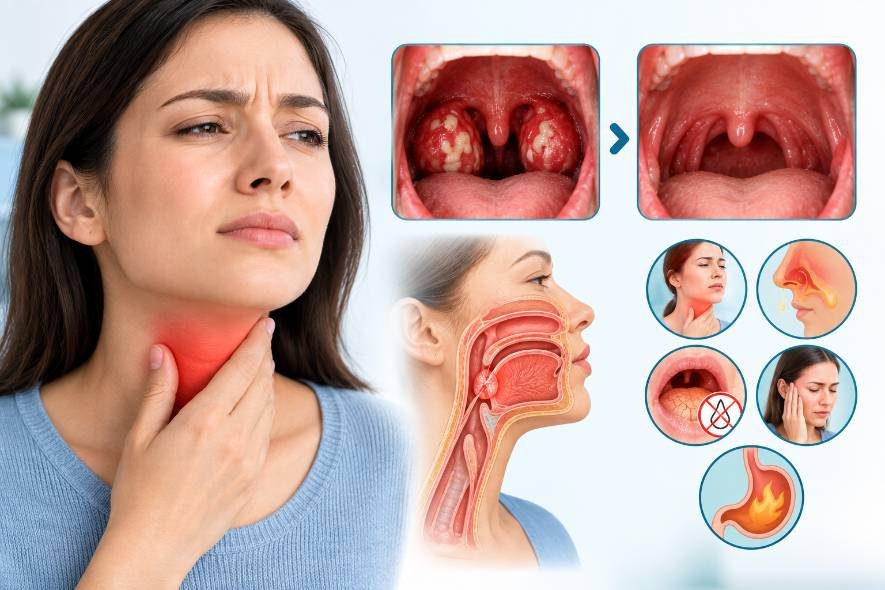
Months after a tonsillectomy, chronic throat pain may be caused by nerve irritation, scar tissue formation, or underlying problems such acid reflux or temporomandibular joint (TMJ) dysfunction.
Pain lasting multiple months is regarded a long-term consequence and should be assessed by an ENT Specialist (ear, nose, and throat physician), even though ordinary surgical healing takes approximately two to three weeks.
By Dr. Sagar Rajkuwar, ENT Specialist, Nashik, Maharashtra, India
🌐 www.entspecialistinnashik.com
Table of contents-
- (1)Introduction
- (2)Are Throat Discomfort Months After a Tonsillectomy Common?
- (3)Is tonsillectomy always the cause of a sore throat weeks or months later?
- (4)Typical Post-Tonsillectomy Healing Schedule
- (5)Can You Still Have a Sore Throat After Your Tonsils Are Removed?
- (6)10 Common Causes of Throat Pain Months After Tonsillectomy
- (7)Warning Signs: When Should You See an ENT?
- (8)What Can an ENT Specialist Test for?
- (9)How to Reduce Throat Discomfort Months After Tonsillectomy
- (10)Can Throat Pain Months Later Be Cancer?
- (11)How Long Can Persistent Pain Last?
- (12)Frequently Asked Questions About Throat Pain After Tonsillectomy
- (13)Important Information
- (14)Conclusion
(1)Introduction
One of the most frequent ENT procedures is a tonsillectomy, which is typically done to address recurrent tonsillitis, sleep-disordered breathing, or enlarged tonsils. The majority of patients feel better after three to four weeks, and most recover in 10 to 14 days. But months after having a tonsillectomy, some individuals still have throat discomfort, which may be alarming and perplexing.
I often encounter individuals in my role as an ENT expert who inquire, “Why does my throat still hurt months after my tonsillectomy?”
This comprehensive guide will cover the true causes, warning signs, consequences, and most effective treatments for prolonged throat discomfort following tonsil extraction.
(2)Are Throat Discomfort Months After a Tonsillectomy Common?
- For some individuals, a slight sore throat or “strange feeling” may last for several months.
- However, chronic, moderate, or worsening pain is not typical and often points to an underlying problem.
- Let’s start by examining the typical post-operative course to comprehend persistent pain.
(3)Is tonsillectomy always the cause of a sore throat weeks or months later?
Not always. Generally speaking, a tonsillectomy wound heals much sooner than a few months following the procedure. Usually, NHS hospital patient data indicate that severe postoperative throat discomfort lasts about 2-3 weeks, though recovery might differ from one person to another. So, physicians should take into account other reasons rather than just assuming that the surgical wound has not healed when a patient complains of throat pain either initially or several months later.
Potential causes include:
- GERD or Laryngopharyngeal reflux
- Allergic rhinitis or postnasal drip
- Dry mouth or mouth breathing
- A new bacterial or viral infection of the throat
- exposure to tobacco, dust, pollution, or chemical irritants from smoking
- muscle tension or excessive voice usage
- Temporomandibular joint (TMJ) problems
- pain associated with the nerves
- Problems affecting the lingual tonsils or the base of the tongue.
- Less frequently, another head-and-neck or throat ailment that needs more research
(4)Typical Post-Tonsillectomy Healing Schedule
Week 1
- Extreme throat discomfort
- ear ache
- Having trouble swallowing
- Tonsillar beds develop white scabs
- Minor chance of bleeding
Week 2
- The agony begins to subside
- Scabs break off
- Changes in taste might happen.
- Better hydration results.
Week 3–4
- The majority of patients experience a 70–90% recovery.
- Speech and swallowing revert back to normal
- There is just a slight dryness or scratchiness left.
Several Weeks to Months After Tonsillectomy
Most significant postoperative throat pain improves substantially during the first two weeks, although individual recovery can vary.
If throat pain continues, returns after initially improving, or becomes worse several weeks or months later, other causes should be considered rather than automatically attributing the symptoms to the tonsillectomy wound.
This is especially important when symptoms are accompanied by difficulty swallowing, persistent hoarseness, one-sided throat or ear pain, a neck lump, unexplained weight loss, blood in saliva, or breathing difficulties.
(5)Can You Still Have a Sore Throat After Your Tonsils Are Removed?
Certainly. Although a tonsillectomy removes the palatine tonsils, it does not provide complete protection against sore throats. Due to a variety of causes, such as viral infections, bacterial infections, reflux, allergies, postnasal drainage, dryness, irritants, and others, the throat can still become inflamed.
Since recurrent tonsillitis shouldn’t be immediately labeled as such, persistent sore throat after a tonsillectomy should be assessed based on the patient’s symptoms. This is crucial.
(6)10 Common Causes of Throat Pain Months After Tonsillectomy
1. Nerve-related pain
The surgical site is near vital nerves like:
- Glossopharyngeal nerve
- Lingual nerve
- Branches of the vagus nerve
These nerves can occasionally get hypersensitive or irritated.
Symptoms
- intense, stinging pain
- Pain caused by speaking or swallowing
- Pain in the ear
- Sporadic stabbing feelings
The reason why it occurs
Nerve fibers may get irritated or stretched during tonsil removal. They typically recover, but occasionally they develop excessive sensitivity.
Treatment
- Drugs that relieve nerve pain (pregabalin, gabapentin)
- The complex of B vitamins
- Warm salt gargles
- Staying away from irritants and cold air
- If the pain is severe, an ENT nerve check is performed.
2. Lingual tonsil hypertrophy
The lingual tonsils at the base of the tongue can enlarge even after the palatine tonsils have been removed.
After several months, this is one of the most frequent reasons for throat pain.
Signs
- Sore throat
- sensation of something being trapped in the throat
- Having trouble swallowing
- Persistent throat clearing
- Problems with snoring or sleeping
Therapy
- Medication to prevent reflux
- Steroid sprays for the nose
- Gargling with salt water
- Lingual tonsil reduction surgery may be necessary in extreme circumstances.
What are the causes of lingual tonsil swelling?
Unlike the palatine tonsils, which are removed during a traditional tonsillectomy, the lymphoid tissue known as lingual tonsils is found at the rear of the tongue.
Although lingual tonsil hypertrophy can occur after tonsillectomy, it shouldn’t be automatically taken for granted that it’s a compensatory response to the removal of the palatine tonsils. Findings from research on this connection have been at variance. Individual airway anatomy, reflux-related findings, and body weight are additional elements that might contribute to lingual tonsil enlargement.
If symptoms point to a problem at the tongue base, an ENT evaluation and, if appropriate, flexible nasendoscopy can help determine whether enlarged lingual tonsils are causing the symptoms.
3. Scarring
Scar tissue formation in the throat may result in:
- Tightness
- A sense of being pulled
- When yawning or stretching, discomfort
- Discomfort from speaking for a long period of time
Fibrosis, which may lead to persistent sensitivity, occurs in some individuals.
Treatment
- Exercises for stretching the throat
- Keeping Hydrated
- If the issue is related to vocal strain, consider voice therapy.
- An ENT assessment is conducted to determine the severity of the scar.
4. Dry throat
The throat may be abnormally dry for several months following a tonsillectomy.
Causes
- Decreased mucus production
- Breathing through the mouth when asleep
- dehydration
- dryness of the environment (air-conditioned rooms)
- Irritation from a postnasal drip
Signs
- Igniting
- Throat irritation
- Pain that comes and goes
- Sore throat in the morning
Therapy
- Nighttime humidifier
- Drink water often
- saline sprays for the nose
- Nasal drops of sesame oil (a natural moisturizer)
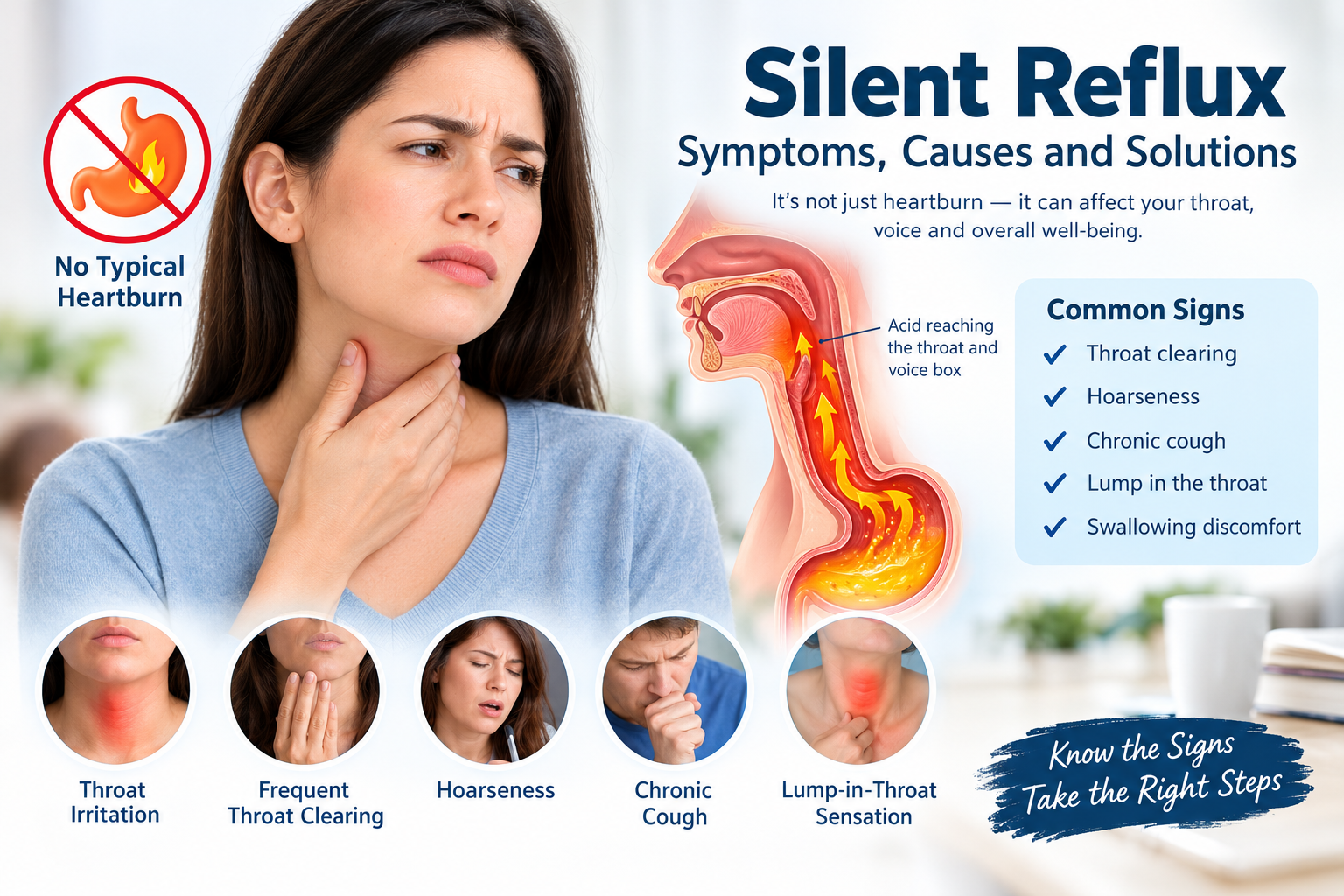
5. Acid Reflux (Silent or Hidden Reflux)
Months after surgery, laryngopharyngeal reflux (LPR) might still cause throat discomfort during healing.
Symptoms
- Burning in the throat
- A sour flavor
- Hoarseness
- Persistent cough
- a sense of being stuck
The reason for the decline following a tonsillectomy
Changes in swallowing habits can temporarily impair throat sensitivity, making reflux irritation more apparent.
Therapy
- Stay away from citrus, fried, and spicy dishes
- Eat three hours before you go to bed.
- according to the prescription for proton pump inhibitors (PPIs).
- Raising the head during sleep
6. Postnasal Drip and Allergies
Even when they are not connected to surgery, allergies are a significant contributor to persistent throat irritation.
Signs
- Scratching one’s throat
- Pain when waking up
- Persistent urge to swallow
- A thick layer of mucus in the throat
Treatment
- sprays containing steroids for the nose
- Antihistamines
- Steam inhalation
- staying away from allergens
7. New infection
Despite their rarity, some patients may experience:
- pharyngitis
- Lingual tonsillitis
- Throat infection
- Viral illnesses
Symptoms
- Fever
- Throat red
- patches that are white or yellow
- More and more discomfort
Treatment
- Antibiotics (if bacterial)
- Relax
- Liquids at warm temperatures
8. TMJ problems
The temporomandibular joint may be subjected to tension by the tonsillectomy posture during the procedure.
This may result in the following months:
Symptoms
- Throat discomfort extending from the jaw
- Aching ears
- sound of clicking
- Chewing hurts
Therapy
- warm compresses
- A diet that is soft
- physical therapy for the TMJ
- Jaw workouts
9. Muscle tension/voice strain
During their recovery, some patients alter their speech patterns, which causes muscle tension in the throat.
Symptoms
- Throat ache while speaking
- Hoarseness
- Post-talk exhaustion
Therapy
- Treatment for the voice
- Hydration
- less talking
- Refrain from yelling
10. Irritants/smoking
If you smoke or are subjected to:
- Tobacco
- Dust
- Compounds
- Contamination
It’s possible that your throat will remain swollen for months.
Answer
- Don’t smoke.
- Wear a mask
- Keep yourself hydrated
- Gargle with saline
(7)Warning Signs: When Should You See an ENT?
If throat pain occurs, make an appointment with an ENT for an assessment.
- Keeps Coming Back
- Remains for a long time
- deteriorate over time
- Is always present on one side
- Is linked to same-side ear pain.
- causes discomfort or pain when swallowing
- Voice changes or continuous hoarseness are experienced.
- Is accompanied by unexplained weight reduction
- Is linked to a lump in the neck
- Is characterized by blood in saliva or sputum
- Is characterized by an ongoing abnormal area or ulcer in the mouth or throat.
- Results in respiratory issues
- Is accompanied by an increasingly severe feeling of something caught in the throat
Cancer or other major conditions are not necessarily indicated by these symptoms. But rather than being treated yourself for a long time, they need to be given a proper examination.
(8)What Can an ENT Specialist Test for?
Evaluation by an ENT may entail flexible nasal or throat endoscopy, assessment of the tonsillectomy sites, neck examination, and examination of the mouth and throat, depending on the symptoms. When the history or examination points to a specific cause, further tests are taken into consideration.
The goal of this assessment is more than just to check for a tonsil issue. It is to determine if the symptoms are caused by reflux, nasal disease, the tongue’s base, larynx, muscles, infection, or another source.
The purpose of the evaluation is not simply to look for a problem with the previous tonsillectomy. It is to determine whether the symptoms could be related to:
- Acid reflux or laryngopharyngeal reflux
- Nasal disease or postnasal drainage
- Lingual tonsil enlargement
- The tongue base
- Laryngeal problems
- Infection
- Muscle tension or voice-related problems
- Nerve-related pain
- TMJ dysfunction
- Another condition affecting the throat or head and neck
Additional investigations are considered according to the patient’s history and examination findings.
(9)How to Reduce Throat Discomfort Months After Tonsillectomy
1. Drink Plenty of Water
Drink warm water at regular intervals.
Refrain from drinking alcohol and coffee.
2. Employ a Humidifier
Dry air makes throat discomfort worse, especially in the winter.
3. Use Saline Gargles
Gargling with warm salt water twice a day helps lower inflammation.
4. Moisturizers for the nose
Keep nasal passages wet if you breathe through your mouth.
5. Control Reflux
Steer clear of coffee, chocolate, spicy meals, and late meals.
6. Treat Allergies
Use nasal sprays and anti-allergy drugs.
7. ENT Follow-Up
An endoscopy might be necessary to determine the cause of ongoing pain.
- The lingual tonsils
- Scarring
- Problems with the nerves
- indications of reflux
(10)Can Throat Pain Months Later Be Cancer?
Very seldom.
However, continuous unilateral pain, especially when accompanied by:
- A bump on the neck
- Weight reduction
- Change in voice
- History of smoking
- should be examined by an ENT right away.
(11)How Long Can Persistent Pain Last?
The majority of cases are resolved within:
The duration depends on the underlying cause. Postoperative pain normally improves considerably within the first few weeks, while symptoms caused by reflux, allergies, dryness, infection, nerve sensitivity, muscle tension, TMJ dysfunction, or other conditions may follow different courses. Persistent or worsening symptoms should be evaluated rather than assigned a fixed recovery period..
(12)Frequently Asked Questions About Throat Pain After Tonsillectomy
Is a sore throat in the following months always caused by a tonsillectomy?
No. The tonsillectomy itself is not necessarily responsible for the throat pain that may persist months later. Some possibilities include reflux, allergies, postnasal drip, dryness, infection, irritants, vocal cord strain, TMJ problems, nerve pain, and tongue-base conditions.
Is it still possible to experience a sore throat after having your tonsils removed?
Yes, without a doubt. The palatine tonsils are removed during a tonsillectomy, but this operation does not stop viral or bacterial throat infections, reflux-related discomfort, allergies, dryness, postnasal drainage, or other reasons for a sore throat.
Is it possible for lingual tonsils to expand following a tonsillectomy?
It shouldn’t be automatically presumed that tonsillectomy results in compensatory enlargement, even if they can get bigger. Numerous studies have shown varying results about this connection.
What indicators indicate the necessity of an ENT check-up?
If you experience persistent or worsening pain, especially one-sided throat or ear pain, problems swallowing, persistent hoarseness, unexplained weight loss, a lump in your neck, blood in your saliva, a persistent mouth or throat abnormality, or difficulty breathing, you should get checked out.
Following a tonsillectomy, what can an ENT expert examine?
Depending on the signs, an ENT professional may examine the mouth, throat, neck, base of the tongue, larynx, and any previous tonsillectomy sites. If necessary, flexible nasal or throat endoscopy can be used.
(13)Important Information
It’s important to pay attention to persistent, recurring, one-sided, or gradually worsening throat discomfort that appears months after a tonsillectomy. The symptoms may have a treatable origin that has nothing to do with the initial tonsillectomy. Instead of thinking that all late throat symptoms are surgical complications, a good ENT evaluation might help identify the true reason.
(14)Conclusion
Although a tonsillectomy typically results in a quick recovery, it’s not unusual for patients to have continuing throat discomfort for months afterward. The discomfort may result from scarring, allergies, reflux, dryness, nerve sensitivity, or lingual tonsil hypertrophy.
The good news is that:
- The majority of underlying reasons are treatable, reversible, and not harmful.
- Don’t disregard a persistent sore throat months after surgery. The underlying cause can be determined by an ENT examination, and the best course of action can be prescribed.
Medical Disclaimer:
This content is for general educational purposes only and is not a substitute for professional medical advice, diagnosis, or treatment. Consult a qualified healthcare professional for personalized medical care.
📞 ENT Consultation & Surgery
Dr. Sagar Rajkuwar (MS-ENT)
Prabha ENT Clinic, Ambad, Nashik
📱 7387590194 | 9892596635
🌐 www.entspecialistinnashik.com
📲 For Health-Related Articles & Videos
🔹 Facebook: https://www.facebook.com/positivemind.healthcare
🔹 YouTube: http://www.youtube.com/@healthuseful8539/
🎥 Watch Educational Videos
👉 YouTube Channel:
http://www.youtube.com/@healthuseful8539/
Medical References
- NHS — Tonsillectomy patient information: postoperative pain, recovery, bleeding and complications.
- NHS England — Recurrent tonsillitis decision aid: postoperative risks and patient decision-making.
- Mayo Clinic — Sore throat: symptoms and causes: reflux, postnasal drip, dryness, irritants, muscle strain and other causes of persistent throat symptoms.
- PubMed — Lingual tonsil hypertrophy following tonsillectomy: evidence regarding the proposed relationship between tonsillectomy and lingual tonsil enlargement.
- PubMed — Lingual tonsil hypertrophy in adults with OSA, 2026: newer evidence examining prior tonsillectomy and lingual tonsil hypertrophy.
- NHS clinical guidance — Tonsillectomy for recurrent tonsillitis: emphasizes that not every subsequent sore throat is caused by tonsillitis and discusses appropriate indications for tonsillectomy.
Internal Linking List
Tonsillitis, Tonsillectomy & Adenoid Disorders
Disease: Tonsillitis
- https://healthuseful.com/tonsillitis-symptoms/
- https://healthuseful.com/tonsillitis-white-patches/
- https://healthuseful.com/tonsillitis-white-stones/
- https://healthuseful.com/tonsillitis-treatment/
Surgery: Tonsillectomy
- https://healthuseful.com/tonsillitis-surgery/
- https://healthuseful.com/tonsillitis-removal-surgery/
- https://healthuseful.com/what-age-is-too-late-to-remove-tonsils/
- https://healthuseful.com/does-removing-tonsils-change-your-voice/
- https://healthuseful.com/lingual-tonsillectomy/
Recovery & Post-Operative Care
- https://healthuseful.com/what-are-the-worst-days-after-tonsillectomy-and-adenoidectomy/
- https://healthuseful.com/tonsillectomy-diet-day-by-day-for-child/
- https://healthuseful.com/are-ear-infections-common-after-tonsillectomy/
Complications & Associated Conditions
Adenoids – Categorized Internal Linking List
1. Adenoid Types, Grades & Basic Information
- What Does Grade 3 Adenoids Mean? Symptoms, Causes & Treatment Explained
https://healthuseful.com/what-does-grade-3-adenoids-mean/ - At What Age Are Adenoids Most Active? Every Parent Should Know This!
https://healthuseful.com/at-what-age-are-adenoids-most-active/ - Can You Have Enlarged Adenoids Without Enlarged Tonsils?
https://healthuseful.com/can-you-have-enlarged-adenoids-without-enlarged-tonsils/ - Enlarged Adenoids in Children: Symptoms That Look Harmless But Aren’t
https://healthuseful.com/enlarged-adenoids-in-kids-symptoms-parents-miss/
2. Adenoid Symptoms & Problems
- When to Worry About Adenoids?
https://healthuseful.com/when-to-worry-about-adenoids/ - Can Adenoids Cause Ear Pain?
https://healthuseful.com/can-adenoids-cause-ear-pain/ - Can Adenoids Cause Low Oxygen Levels?
https://healthuseful.com/can-adenoids-cause-low-oxygen/ - Can Enlarged Adenoids Cause Hearing Loss?
https://healthuseful.com/can-adenoids-affect-hearing/ - Adenoids and Speech Delay
https://healthuseful.com/can-adenoids-affect-speech/ - How to Help a Child Sleep Better with Enlarged Adenoids
https://healthuseful.com/how-to-help-a-child-sleep-with-enlarged-adenoids/ - Do Adenoids Affect the Brain?
https://healthuseful.com/do-adenoids-affect-the-brain/ - Do Adenoids Affect Brain Development in Children?
https://healthuseful.com/do-adenoids-affect-brain-development/ - Can Food Get Stuck in Adenoids?
https://healthuseful.com/can-food-get-stuck-in-adenoids/
3. Causes, Allergies & Related Conditions
- Are Adenoids Linked to Allergies?
https://healthuseful.com/are-adenoids-related-to-allergies/ - Adenoids vs. Allergies
https://healthuseful.com/adenoids-vs-allergies-what-doctors-want-you-to-understand/ - Are Adenoid Problems Genetic?
https://healthuseful.com/are-adenoid-problems-genetic/ - Adenoids and Asthma
https://healthuseful.com/can-adenoids-make-asthma-worse/ - Do Antihistamines Help Adenoids?
https://healthuseful.com/do-antihistamines-help-adenoids/
4. Natural Treatment & Shrinking Adenoids
- How to Reduce Adenoids Naturally?
https://healthuseful.com/how-to-reduce-adenoids-naturally/ - How Can I Shrink My Adenoids Fast?
https://healthuseful.com/how-can-i-shrink-my-adenoids-fast/ - What Herbs Are Good for Swollen Adenoids?
https://healthuseful.com/what-herbs-are-good-for-swollen-adenoids/ - Is There Any Ayurvedic Treatment for Adenoids?
https://healthuseful.com/is-there-any-ayurvedic-treatment-for-adenoids/ - How to Keep Adenoids Healthy Naturally
https://healthuseful.com/how-to-keep-adenoids-healthy/ - How to Shrink Adenoids in Toddlers
https://healthuseful.com/how-to-shrink-adenoids-in-toddlers/ - Foods to Avoid for Adenoids
https://healthuseful.com/foods-to-avoid-for-adenoids/
5. Diagnosis & ENT Examination
- How Doctors Check Adenoids: Inside the ENT Process Explained Clearly
https://healthuseful.com/how-ent-specialists-check-adenoids/ - How Much Does an Adenoid X-Ray Cost?
https://healthuseful.com/how-much-does-an-adenoid-xray-cost/
6. Adenoidectomy – Surgery & General Information
- Adenoidectomy Surgery Guide – Expert Advice
https://healthuseful.com/adenoidectomy-surgery/ - What Age Is Best for Adenoidectomy?
https://healthuseful.com/what-age-is-best-for-adenoidectomy/ - How Do You Know If Your Child Needs Adenoids Out?
https://healthuseful.com/how-do-you-know-if-your-child-needs-adenoids-out/ - Is Adenoid Surgery Expensive?
https://healthuseful.com/is-adenoid-surgery-expensive/ - How Long Does Adenoid Surgery Take?
https://healthuseful.com/how-long-does-adenoid-surgery-take/ - Is Removing Adenoids a Good Idea?
https://healthuseful.com/is-removing-adenoids-a-good-idea/ - What Happens If Adenoids Are Not Removed?
https://healthuseful.com/what-happens-if-adenoids-are-not-removed/
7. Adenoidectomy Safety, Risks & Success
- Is Adenoid Surgery Safe?
https://healthuseful.com/is-adenoid-surgery-safe/ - Is Adenoid Removal Really Risky?
https://healthuseful.com/how-risky-is-adenoid-removal/ - What Is the Success Rate of Adenoid Removal?
https://healthuseful.com/what-is-the-success-rate-of-adenoids-removal/ - How Many People Have Died from Adenoidectomy?
https://healthuseful.com/how-many-people-have-died-from-adenoidectomy/ - Is Adenoid Removal Safe in the Long Run?
https://healthuseful.com/long-term-effects-of-adenoid-removal/ - Do You Get Sick More Without Adenoids?
https://healthuseful.com/do-you-get-sick-more-without-adenoids-the-truth-by-ent-specialist/
8. Adenoidectomy Recovery & Aftercare
- Is Drooling Normal After Adenoidectomy?
https://healthuseful.com/is-drooling-normal-after-adenoidectomy/ - Adenoidectomy Infection: Warning Signs
https://healthuseful.com/how-do-you-know-if-your-adenoidectomy-is-infected/ - What to Avoid After Adenoid Surgery
https://healthuseful.com/what-to-avoid-after-adenoid-surgery/ - Severe Headache After Adenoidectomy
https://healthuseful.com/severe-headache-after-adenoidectomy/ - Can My Child Swim After Adenoidectomy?
https://healthuseful.com/can-my-child-swim-after-adenoidectomy/ - Do Kids Sleep Better After Adenoid Removal?
https://healthuseful.com/do-kids-sleep-better-after-adenoid-removal/ - When Are the Worst Days After Tonsillectomy and Adenoidectomy?
https://healthuseful.com/what-are-the-worst-days-after-tonsillectomy-and-adenoidectomy/
9. Effects After Adenoid Removal
- Does Removing Adenoids Improve Hearing?
https://healthuseful.com/does-removing-adenoids-improve-hearing/ - Does Adenoid Removal Cause Weight Gain?
https://healthuseful.com/does-adenoid-removal-cause-weight-gain/ - Can Removing Adenoids Affect Behavior?
https://healthuseful.com/can-adenoid-removal-affect-behavior/ - Adenoids Removed but Still Snoring?
https://healthuseful.com/can-you-still-snore-without-adenoids/
10. Adenoid Regrowth
- Can Adenoids Grow Back in Adults?
https://healthuseful.com/can-adenoids-grow-back-in-adults/ - How Long Does It Take for Adenoids to Grow Back After Surgery?
https://healthuseful.com/how-long-does-it-take-for-adenoids-to-grow-back-after-surgery/
11. Adenoidectomy Cost in India
- Cost of Adenoidectomy in India
https://healthuseful.com/cost-of-adenoidectomy-in-india/ - Coblation Adenoidectomy Cost in India
https://healthuseful.com/coblation-adenoidectomy-cost-in-india/ - Adenoids Laser Surgery Cost
https://healthuseful.com/adenoids-laser-surgery-cost/ - Is Adenoid Surgery Covered by Insurance?
https://healthuseful.com/is-adenoid-surgery-covered-by-insurance/
12. Adenoidectomy Cost by City/Region
- Cost of Adenoidectomy in Hyderabad
https://healthuseful.com/cost-of-adenoidectomy-in-hyderabad/ - Cost of Adenoidectomy in Delhi
https://healthuseful.com/cost-of-adenoidectomy-in-delhi/ - Cost of Adenoidectomy Surgery in Mumbai
https://healthuseful.com/cost-of-adenoidectomy-surgery-in-mumbai/ - Cost of Adenoidectomy in Kerala
https://healthuseful.com/cost-of-adenoidectomy-in-kerala/
13. Surgical Techniques & Side Effects
- Coblation Adenoidectomy Side Effects
https://healthuseful.com/coblation-adenoidectomy-side-effects/ - Adenoids Laser Surgery Cost
https://healthuseful.com/adenoids-laser-surgery-cost/
14. Infection & Medicines
- Cefuroxime and Adenoid Infections: Effective or Not?
https://healthuseful.com/cefuroxime-and-adenoid-infections-effective-or-not/ - Adenoidectomy Infection: Warning Signs You Should Never Ignore
https://healthuseful.com/how-do-you-know-if-your-adenoidectomy-is-infected/
15. Rare Conditions / Cancer
- Can Adenoids Turn Cancerous?
https://healthuseful.com/can-adenoids-turn-cancerous/ - Adenoid Cystic Carcinoma Symptoms
https://healthuseful.com/adenoid-cystic-carcinoma-symptoms-early-warning-signs-you-shouldnt-ignore/