What 8 foods are 90% of allergies?
Author: Dr Sagar Rajkuwar, ENT Specialist, Nashik, Maharashtra, India
🌐 www.entspecialistinnashik.com
Milk, eggs, peanuts, tree nuts, wheat, soy, fish, and crustacean shellfish are the “Big 8” foods that account for about 90% of all allergic reactions. Although these were formerly known as the “Big 8,” current legislation in many areas now lists sesame as a significant allergen.
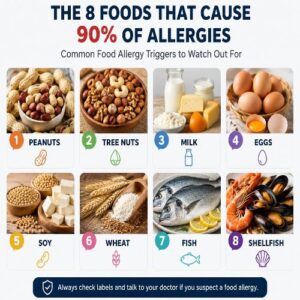
The eight main foods that are responsible for most allergic reactions are listed below:
Milk: Mostly cow’s milk, which is a prevalent allergen in youngsters.
Eggs: Frequently affects youngsters, who may eventually grow out of it.
Peanuts: A highly prevalent, frequently severe, and usually permanent allergy.
Tree Nuts: Consists of almonds, walnuts, cashews, pecans, and hazelnuts.
Fish: prevalent in adults, such as halibut, salmon, and tuna.
Shellfish: Crustaceans include shrimp, lobster, and crab (as opposed to mollusks).
Wheat: It causes an immune reaction to wheat protein and is frequently mistaken for gluten intolerance. I am: A common allergen, especially in young children and babies.
Table of contents
- Introduction
- A food allergy is a condition where specific foods cause an aberrant immunological reaction.
- What methods are used for the diagnosis and treatment of food allergies?
- Commonly asked questions
- Conclusion
Introduction
Food allergies are a growing health concern worldwide, affecting both children and adults. Surprisingly, nearly 90% of serious food allergic reactions are caused by just eight common foods. These major food allergens include peanuts, tree nuts, milk, eggs, soy, wheat, fish, and shellfish. Even small amounts of these foods can trigger allergic reactions ranging from mild itching and hives to severe, life-threatening anaphylaxis in sensitive individuals.
Food allergies occur when the immune system mistakenly identifies certain food proteins as harmful and reacts by releasing chemicals such as histamine. Symptoms may include swelling, skin rashes, stomach pain, vomiting, breathing difficulty, nasal congestion, or dizziness. Some people may experience reactions immediately after eating the allergenic food.
Among these common allergens, peanut and tree nut allergies are often considered some of the most severe because they can cause serious reactions even with tiny exposures. Milk and egg allergies are more common in children, while shellfish and fish allergies frequently persist into adulthood.
Understanding the eight foods responsible for most allergies is important for early recognition, prevention, and safe dietary management. Reading food labels carefully, avoiding cross-contamination, and consulting an allergy specialist can help reduce the risk of allergic reactions and improve long-term safety.
Key lessons learned
Food allergies affect almost 33 million Americans and 1 in every 13 kids, with 90% of reactions being caused by just nine foods. These include milk, eggs, peanuts, tree nuts, wheat, soy, fish, shellfish, and sesame.
When your immune system mistakenly identifies particular food proteins as dangerous, food allergies can result in symptoms ranging from minor itching to life-threatening anaphylaxis. Seek urgent medical attention for sudden swelling, difficulty breathing, dizziness, or fainting following a meal.
Avoid the trigger food in order to control food allergies. Certain allergies are more likely to be outgrown than others. With tests, a healthcare practitioner can verify a diagnosis and may advise carrying an epinephrine auto-injector.
When certain foods elicit an aberrant immune reaction, it is known as a food allergy.
According to Food Allergy Research and Education (FARE), it is believed that 33 million Americans, including 1 in 13 youngsters, suffer from food allergies.
The Food and Drug Administration estimates that 90%Trusted Source of all allergic responses are caused by nine foods, even though any food might induce an allergy.
Continue reading to find out more about the triggers, signs, and therapies for the nine most prevalent food allergies.
A food allergy is a condition where specific foods cause an aberrant immunological reaction.
According to the Food Allergy Research and Education (FARE), 33 million Americans and one in thirteen children suffer from food allergies.
Nine foods are responsible for 90% Trusted Source of allergic reactions, according to the Food and Drug Administration, despite the fact that any food can cause an allergy.
To find out more about the nine most prevalent food allergies’ causes, symptoms, and therapies, keep reading.
groundnuts
Similar to a tree nut allergy, peanut allergies are widespread and have the potential to result in dangerous and even life-threatening allergic reactions.
The two conditions are regarded as separate because peanuts are legumes. But more than 40% of those with peanut allergies are also allergic to one or more tree nuts.
FARE estimates that peanut allergies affect more than 6.2 million individuals in the United States. The most prevalent allergy among those 18 and under. Twenty percent of kids who acquire a peanut allergy, however, may discover that it disappears as they enter their adolescent years.
The underlying reason for peanut allergies is still a mystery. Nevertheless, those who have a family history of peanut allergies may be more vulnerable.
Treatment, similar to that for other allergies, involves steering clear of all peanuts and peanut-related items.
The oral immunotherapy drug known as Palforzia, however, has been approved by the FDA for the treatment of peanut allergies in patients between the ages of four and seventeen.
Tree nut
A tree nut allergy is an allergy to certain tree nuts and seeds. It is a prevalent food allergy that can affect as many as 3% of the world’s population, according to reliable sources.
The following are a few instances of tree nuts:
- Brazil nuts
- almonds
- cashews
- macadamia nuts
- pistachio nuts
- pine nuts
- walnut
It is best to avoid all tree nuts as well as foods made with tree nuts, such as nut butters and oils, if you are allergic to any kind of tree nut. If you have an allergy to one kind of tree nut, you are more likely to get an allergy to other varieties of tree nuts.
The majority of cases of tree nut allergy last a lifetime, and less than 10% of sufferers ever recover.
If you have a tree nut allergy, it is highly recommended that you always carry an epinephrine auto-injector, such as an EpiPen. This could save your life by enabling you to administer an adrenaline injection should you start experiencing a serious allergic reaction.
Epinephrine, also known as adrenaline, can counteract the effects of an allergy and may even save your life.
cow milk
One of the most prevalent childhood allergies is a cow’s milk allergy, which affects 2–3% of infants and young children.
By the age of three, about 90% of children will have outgrown the ailment, making it far less prevalent among adults.
Cow’s milk allergies can manifest anywhere between a few minutes after drinking milk and a few hours afterward.
The only way to treat a milk allergy in cows is to stay away from it completely. This covers meals and beverages that include cow’s milk, such as:
- milk powder
- cheese
- butter
- margarine
- yogurt
- cream
- ice cream
It may also be necessary to eliminate cow’s milk from the diet of mothers who are breastfeeding allergic infants.
Eggs
In youngsters, an egg allergy is the second most frequent cause of food allergies, according to a trustworthy source. The good news is that, by the age of 16, 68% of egg-allergic youngsters will have outgrown their allergy.
One can be allergic to egg whites but not the yolks, and the reverse is also true. The reason for this is that egg white and egg yolk proteins are slightly different.
An egg-free diet is the treatment for an egg allergy, much like any other allergy. However, you might not need to stay away from all egg-containing dishes.
According to a 2019 research, about 67%Trusted Source of egg-allergic children were able to consume muffins that included a cooked egg ingredient.
The proteins that cause allergies might change form when heated, which may prevent your body from recognizing them as harmful.
Additionally, research from the indicates that giving youngsters with egg allergies baked items can help them overcome their condition more quickly. The findings are contradictory, though, and more research is necessary to validate this.
Wheat
An allergic reaction to one of the proteins found in wheat is known as a wheat allergy. Children are more likely to experience it, but by the age of 10, they usually outgrow it. Reliable Source.
Symptoms of wheat allergies can resemble those of celiac disease and food intolerances such as non-celiac gluten sensitivity.
A wheat allergy, on the other hand, results in an immune-mediated reaction to one of the hundreds of proteins that make up wheat.
An aberrant response to gluten, a particular protein that is also present in wheat, causes celiac disease and non-celiac gluten sensitivity.
A protein allergy can have serious and even fatal consequences. It is also possible for celiac illness to be deadly, according to a reliable source. even if it is uncommon, as most individuals can successfully avoid gluten if left undiagnosed.
It is necessary for those who have celiac disease or non-celiac gluten sensitivity to avoid wheat and other grains that include the protein gluten.
People with wheat allergies simply need to stay away from wheat and may still eat gluten from grains that don’t include it.
A protein found in soybeans or soybean-containing foods causes soy allergies.
The majority of cases occur in babies and children under the age of three, with a prevalence of up to 0.5% in youngsters. The majority of youngsters eventually outgrow their allergy.
A runny nose and an itchy, tingling mouth are possible symptoms, as are a rash, asthma, or respiratory distress. Anaphylaxis is another possible, though uncommon, consequence of a soy allergy.
Soybeans and soy-based foods such soy milk or soy sauce are frequent dietary triggers for soy allergy. It’s crucial to read food labels since soy is a common ingredient in many foods.
The only remedy for soy allergy is avoiding soy, just like for other allergies.
Shellfish
Your body attacks proteins from the crustacean and mollusk families of fish, known as shellfish, resulting in a shellfish allergy.
Shellfish examples are:
- shrimp
- prawns
- crayfish
- lobster
- squid
- shellfish
Since a shellfish allergy rarely goes away with time, it is advisable to avoid all shellfish in your diet in order to prevent an allergic response.
Those with allergies may experience an allergic response from breathing in the vapors produced by cooking shellfish. Because of this, you may be instructed to stay away from seafood while it’s being prepared.
Fish
In contrast to other allergies, which often occur in childhood, fish allergies can manifest in adulthood in up to 40% of cases.
A fish allergy can result in a severe and maybe fatal allergic reaction. Vomiting and diarrhea are the most common symptoms, but anaphylaxis can also happen in rare cases.
An allergy to fish is occasionally mistaken for a reaction to a fish pollutant, such as bacteria, viruses, or poisons. You will, however, typically be given an epinephrine auto-injector to carry in case you unintentionally consume fish.
Sesame
Sesame was designated as the ninth major allergen by the FDA in 2021, according to a reliable source.
According to study, as many as 17% of youngsters with IgE-mediated peanut and tree nut allergies may also experience sesame allergies.
Sesame is used in a variety of foods, including Asian cuisine, baked goods, and dipping sauces.
All foods that contain sesame must have a sesame label as of January 2023.
On the other hand, this indicates that items put on the shelves before this time may include sesame, but it may not be listed on the label. For this reason, it is crucial to verify packing dates.
Other meals
The nine food allergies listed above are the ones that occur most frequently.
But there have been reports that around 170 items can trigger an allergic response. The following are a few of these:
- flaxseed
- sesame seeds
- peaches
- banana
- avocado
- kiwi fruits
- fruit of the passion
- celery
- garlic
- mustard seeds
- aniseed
- chamomile
Less common food allergies can manifest in a variety of ways, from mild itching of the lips and mouth to potentially deadly anaphylaxis.
What methods are used for the diagnosis and treatment of food allergies?
The first step in any health care visit is a physical exam and medical history. Next, they’ll probably prescribe a variety of diagnostic procedures, including:
- skin prick test
- intradermal examination
- blood tests
- patch test
- oral food tests
- diet of elimination
A medical expert will instruct you on how to handle your food allergy. Additionally, they could send you to a licensed dietitian for assistance with dietary management.
Commonly asked questions
Which foods cause the nine most frequent allergies?
The most prevalent food allergies are those to sesame, wheat, soy, fish, shellfish, peanuts, tree nuts, eggs, and cow’s milk.
What are the three signs and symptoms of a food allergy?
Food allergies have a variety of symptoms, some of which impact your skin, digestive system, and immune system. If you or someone in your company exhibits signs of anaphylaxis, which may include wheezing, hyperventilation, shortness of breath, and other symptoms, it is imperative that you seek medical care right away.
How are food allergies flushed out?
There is no way to cleanse food allergies from your body. An epinephrine auto-injector might be able to halt the reaction and save your life if you have a sudden onset of symptoms.
Conclusion
Ninety percent of all food allergies are caused by nine different foods. This covers:
wheat
I am
eggs
shellfish
fish
sesame
milk from cows
Groundnuts
nuts from trees
The proteins in food are mistakenly identified by your immune system as dangerous, which causes food allergies. This has the potential to result in reactions that might be fatal.
Talk to a healthcare provider if you think you may have a food allergy. They can perform some tests to confirm a diagnosis. They can help you manage it if it comes back positive. Additionally, they could recommend you to a licensed dietitian who can assist you in controlling your diet.
Since the effects of consuming egg-containing foods when you have an egg allergy might be life-threatening, you should talk to a healthcare provider before doing so.
👉 YouTube Channel:
http://www.youtube.com/@healthuseful8539/
📞 ENT Consultation & Surgery
Dr. Sagar Rajkuwar (MS-ENT)
Prabha ENT Clinic, Ambad, Nashik
📱 7387590194 | 9892596635
🌐 www.entspecialistinnashik.com
📲 For Health-Related Articles & Videos
🔹 Facebook: https://www.facebook.com/positivemind.healthcare
🔹 YouTube: http://www.youtube.com/@healthuseful8539/
📚 References
- Food Allergy Research & Education (FARE) – Top 9 Food Allergens
- Centers for Disease Control and Prevention (CDC) – Food Allergies in Schools
- https://www.healthline.com/nutrition/common-food-allergies