Vestibular Neuritis Exercises: Regain Balance Fast
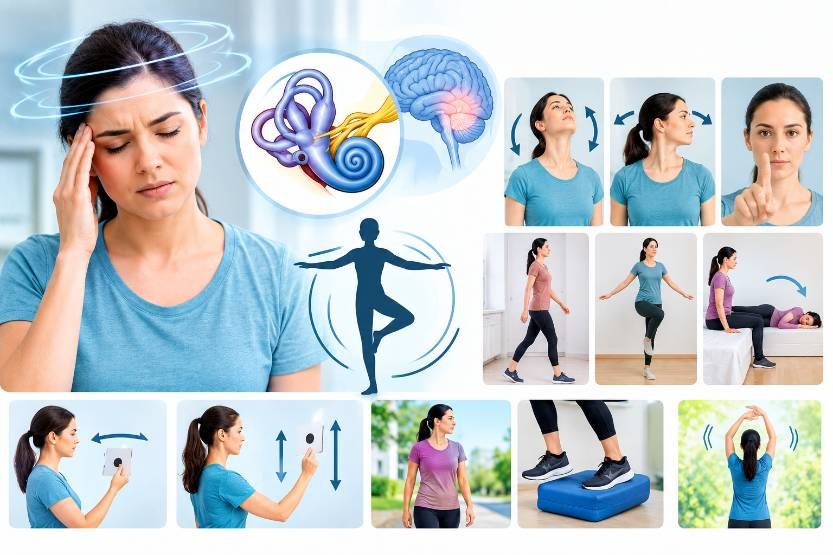
Vestibular neuritis exercises, typically included in vestibular rehabilitation therapy (VRT), focus on enhancing balance and minimizing dizziness by retraining the brain to adapt to changes in the vestibular system. These exercises consist of a mix of head and eye movements, walking patterns, and potentially habituation strategies.
Author: Dr Sagar Rajkuwar, ENT Specialist, Nashik, Maharashtra, India
🌐 www.entspecialistinnashik.com
Last medically reviewed and updated: October 2026
Quick Facts: Vestibular Neuritis at a Glance
- Incidence: Approximately 3.5 to 15.5 per 100,000 people annually; accounts for 3–10% of patients presenting to specialised dizziness clinics.
- Average age of onset: 41 years, affecting men and women equally.
- Hearing: Usually preserved (distinguishes it from labyrinthitis).
- Recovery: Most patients see substantial recovery within a few weeks; however, around 50% may experience some long-term vestibular symptoms without targeted rehabilitation.
- BPPV risk: Approximately 10–15% of patients develop benign paroxysmal positional vertigo (BPPV) within weeks of vestibular neuritis onset.
- Evidence rating: Vestibular rehabilitation carries a Strong Evidence (Grade A) recommendation from the American Physical Therapy Association’s 2021 Clinical Practice Guideline for peripheral vestibular hypofunction.
These numbers matter because they tell you that vestibular neuritis exercises are not optional add-ons — they are the single most effective, evidence-backed way to accelerate your recovery and reduce the risk of long-term dizziness.
Table of contents-
- Introduction
- How do vestibular exercises work?
- Head Exercises
- Sitting
- Standing
- Walking
- Lying Down
- Eye Exercises – Gaze Stabilization Tips
- Gaze Stabilization
- Smooth pursuit
- Head and eyes in the same direction
- Head and eyes in the opposite direction
- Summary
- The 3 Pillars of Vestibular Rehabilitation (Infographic)
- Visual Dependence, Anxiety and Recovery
- Dizziness Handicap Inventory (DHI): Track Your Progress
- Symptom Grading Scale (0–3): The NHS Method
- Common Mistakes to Avoid
- Return to Work, Driving & Daily Activities
- When Home Exercises Are NOT Enough — Red Flags
- FAQs
- Medical References
1) Introduction
You are experiencing issues with your balance or equilibrium. Do not let fear of your dizziness overwhelm you. Only you can develop the brain’s ability to manage your dizziness. It resembles a workout for building muscles. It necessitates consistent, capacity-enhancing effort to increase strength or tolerance. Continue to challenge your dizziness several times daily, understanding that each targeted, controlled episode of dizziness brings you closer to overcoming it.

Once you achieve a significant level of improvement and control during your practice sessions, look for sports or other physical activities that have previously been challenging and gradually spend more time doing them until they cease to cause any symptoms.
Why this matters clinically: According to the 2022 Bárány Society consensus document on Acute Unilateral Vestibulopathy / Vestibular Neuritis, the condition is defined as an acute vestibular syndrome lasting at least 24 hours, caused by sudden unilateral loss of peripheral vestibular function, without acute central neurological or audiological signs. The vestibulo-ocular reflex (VOR) deficit on the affected side is the hallmark finding — and it is precisely this deficit that structured vestibular neuritis exercises are designed to retrain through central vestibular compensation.
2) How do vestibular exercises work?
These exercises aim to enhance the brain’s ability to compensate for injuries or inconsistencies within the vestibular or balance system. The brain processes information obtained from the vestibular or balance system. When there is an injury or anomaly in any part of this system, the brain needs to be retrained or taught to interpret the information it receives accurately. Vestibular exercises simply activate the vestibular apparatus. This activation provides data for the brain to process. The objective of repeating these exercises is for the brain to learn to endure and correctly interpret this type of stimulation.
By consistently performing these exercises, one may even instruct the brain to adjust to an atypical stimulus. These exercises function similarly to the routines skaters or dancers perform to avoid becoming dizzy when rotating rapidly. In simple terms, an individual must confront and address those positions or circumstances that induce dizziness. Steering clear of them will merely extend one’s recovery time.
The three neuroplastic mechanisms behind recovery (added):
Modern vestibular science recognises three distinct neural mechanisms that vestibular neuritis exercises target:
- Adaptation — the brain recalibrates the VOR gain so that eye movements again match head movements of all speeds. Gaze stabilisation drills are the primary tool.
- Substitution — the brain learns to use alternative sensory inputs (vision and proprioception) and alternative motor strategies (e.g., covert saccades, cervico-ocular reflex) when the vestibular signal is weak.
- Habituation — repeated controlled exposure to a provoking stimulus progressively dampens the central response to it, reducing motion sensitivity and visually-induced dizziness.
Research published in Frontiers in Neurology (2023) shows that patients with better covert saccade organisation on video Head Impulse Testing (vHIT) recover dynamic visual acuity faster — meaning the brain’s substitution strategy is a measurable predictor of outcome.
Aims of exercises:
- 1.To facilitate the movement of the eyes, independent of the head.
- 2.To practice balancing in daily scenarios with a particular focus on enhancing the use of the eyes and the awareness of muscle sense.
- 3.To rehearse head movements that induce dizziness.
- 4.To acclimate to moving freely during both daylight and nighttime.
- 5.Overall, to promote the rebuilding of confidence in performing smooth, relaxed, spontaneous movements.
- 6. (Added) To reduce visual dependence — an over-reliance on vision for spatial orientation that is strongly linked to poorer long-term recovery.
- 7. (Added) To restore dynamic visual acuity, which is the ability to read or recognise objects while the head is moving.
When you begin:
During the initial few instances of performing the exercise, it is advisable to have someone else present in case the dizziness becomes extremely intense.
Added safety tip: Clear a 2-metre circle on soft flooring (carpet or a yoga mat), remove loose rugs, keep a sturdy chair within arm’s reach, and perform the first week of standing drills in a corner so two walls catch any sway. Research from the Vestibular Disorders Association (VeDA) emphasises that fall-risk mitigation is central to safe home-based vestibular neuritis exercises.
When should you stop doing the exercise?
These exercises should be conducted at least three times daily for a duration of 6 to 12 weeks or until the dizziness completely resolves. Ceasing before the dizziness is entirely alleviated often leads to a recurrence of symptoms. The time to stop the exercises is when one experiences no dizziness for two consecutive weeks. The exercises can be paused and resumed at any moment if dizziness reappears.
The following exercises should be conducted two times each day. The exercises aim to test your balance system and may frequently induce symptoms of dizziness. This is a typical reaction to these stimulating exercises. You should attempt to push through these symptoms if it is feasible. If you believe you cannot, have your nurse reach out to an inpatient physical therapist for support.
Added guidance (APTA 2021 CPG dose): The American Physical Therapy Association’s updated 2021 Clinical Practice Guideline recommends a minimum of 12 minutes per day of gaze stabilisation for acute or subacute unilateral vestibular hypofunction, progressing to at least 20 minutes per day, 3–5 sessions daily, for 4–6 weeks in chronic cases. Falling below this threshold is a common reason patients plateau.
Methods:
- Progress to performing each movement 20 times.
- All exercises begin at a noticeably slow pace and gradually increase in speed to a more swift rate.
- Make sure to persist with the exercises even when you feel dizzy. Take a break and rest only if you experience nausea or feel sick to your stomach. If unwell, after a rest, attempt a different exercise. If you still feel sick to your stomach, delay further work until your next session.
- (Added) Log each session — date, time, symptom score (0–3 scale, see Section 17), and which exercises triggered the most dizziness. A simple journal helps your physiotherapist calibrate progression and gives you objective proof of improvement when weeks blur together.
3) Head Exercises
1.Bending:
While seated, tilt your head down to gaze at the floor and then up to look at the ceiling.
- Guide your head with your eyes concentrating on the floor and the ceiling.
- Repeat this process 10 times. Stop and wait for symptoms to diminish, around 30 seconds.
- Repeat the entire process 2 more times.
2.Turning (side to side):
- While seated, turn your head to the right and then to the left, leading your head with your eyes as if you are observing a tennis match.
- Turn your head at a pace quick enough to evoke symptoms but not so fast that you hurt your neck. (Start slowly, then increase speed. )
- Go back and forth 10 times, and then wait for 30 seconds (or until symptoms improve).
- Repeat the entire process 2 more times.
As the dizziness lessens:
- Perform head exercises with your eyes shut.
- Progress to standing while executing head exercises.
The closer your feet are together, the more difficult it becomes.
Added progression (based on NHS Trust protocols): Once seated head turns at a brisk pace cause only mild symptoms (grade 1 on the 0–3 scale), progress to the same head turns while walking slowly, then with a busy visual background such as patterned wallpaper or a checkerboard. These are classic vestibular neuritis exercises for building real-world tolerance to visually crowded environments like supermarkets.
4) Sitting
1.Shrug shoulders – 20 times.
2.Rotate shoulders to the right and then to the left – 20 times.
3.Rotate head, shoulders, and trunk – 20 times each:
- Rotate upper body right to left with eyes open, then repeat with eyes closed.
- Rotate upper body left to right with eyes open, then repeat with eyes closed.
4.Bend forward and touch the ground then sit back up. Keep your eyes focused on the wall – 20 times.
5.Bend forward and touch the ground then sit back up. Move your eyes to the floor and back – 20 times.
6.Eye movements (head is still):
- Up and down (focusing on a finger).
- Side to side (focusing on a finger).
- Finger to tip of the nose and out (focusing on a finger).
Added rationale: These seated drills are part of the classical Cawthorne-Cooksey programme first described in 1944–1946 by neurologist Terence Cawthorne and physiotherapist Harold Cooksey at the Queen Square Hospital, London. Over 80 years of clinical use plus modern randomised trial evidence support them as the entry-level tier of vestibular neuritis exercises.
5) Standing
1.Change from a seated position to a standing position and back again
- 20 times with your eyes open.
- Repeat this with your eyes closed.
2.Standing with one foot in front of the other,
In a corner, practice standing “heel to toe” (one foot positioned in front of the other with the heel of one foot touching the toe of the other foot) with your eyes open for 30 seconds. The objective is to maintain your balance for the full 30 seconds without contacting the wall. You can increase the difficulty by crossing your arms over your chest. If this is initially too challenging, try standing “almost heel to toe” (with your feet touching at the big toes and ankles). After mastering this with eyes open, practice it with your eyes closed.
3.Standing on a cushion
- In a corner, stand on a couch cushion or multiple pillows. Attempt to remain still without leaning against the wall for 30 seconds. Practice this with your eyes open. Once this becomes easy, practice with your eyes closed. Increase the difficulty by bringing your feet closer together. Crossing your arms over your chest also heightens the challenge. You should advance by performing this in the most difficult position possible.
4.Standing and throwing
- Toss a small rubber ball from one hand to the other above eye level.
- Throw the ball from hand to hand beneath one knee.
5.Stand with your heels together
- Look straight ahead and maintain your balance (attempt this only with assistance).
6.Stand on one foot
- Try this first with your eyes open and then with your eyes closed (attempt this only with assistance).
7.Miscellaneous
- Engage in activities that involve stooping, stretching, bending, and going up and down stairs (this should be attempted only with assistance).
Added — why foam surfaces matter: Standing on a soft cushion forces the brain to down-weight unreliable proprioceptive input from the feet, pushing it to rely more on the healing vestibular system — essentially a sensory re-weighting drill. The APTA 2021 Clinical Practice Guideline notes moderate evidence that both static balance (standing still) and dynamic balance (moving) exercises improve recovery when prescribed together.
6) Walking
1.Walking in a straight line
- In a hallway or beside a wall, practice walking in a straight line for 5 minutes with one foot in front of the other or “heel to toe” (with the heel of one foot making contact with the toe of the other foot). If this proves too difficult at first, practice walking “almost heel to toe” and gradually progress to heel to toe touching.
2.Walking combined with head turning
- In a hallway or open space, practice walking in a straight line while rotating your head and eyes left and right with every other step (for example, when you step with your left foot, look left; when you step with your right foot, look right). Continue this for the length of the hallway or about 20 feet. Repeat the exercise 3 times. Now repeat the entire series another 3 times, this time looking at the ceiling or the floor. You should rest between repetitions to allow symptoms to settle.
3.Walk across the room
- First perform this with your eyes open, then with your eyes closed (attempt this only with assistance).
Added — graded walking programme (from NHS and APTA guidance):
- Week 1–2: 5-minute walks in a quiet, familiar hallway, 5 days per week.
- Week 3–4: 10–15 minutes, outdoors on an even pavement, no distractions.
- Week 5–6: Add head turns every 3rd step; walk in a park with visual complexity.
- Week 7+: Walk in a supermarket aisle (notoriously provocative for visual vertigo), on uneven ground, and up/down gentle slopes.
Aim ultimately for 30 continuous minutes, which is the WHO-recommended daily physical activity minimum and a strong marker that your vestibular compensation is complete.
7) Lying Down
While sitting on the side of the bed, quickly lie down to your left side, swinging your feet onto the bed as you do so.
- Remain in this position for 30 seconds or until symptoms improve.
- Repeat this 3 times.
- Now repeat this 3 times to the right.
Added — important differential: If lying down to one specific side triggers a brief (less than 60 seconds), intense spinning sensation that fades, this may indicate benign paroxysmal positional vertigo (BPPV) rather than persisting vestibular neuritis. Because 10–15% of vestibular neuritis patients develop BPPV within weeks, this symptom warrants reassessment by your ENT or vestibular physiotherapist — they can perform the Dix–Hallpike test and, if positive, the curative Epley manoeuvre. Continuing generic vestibular neuritis exercises alone will not clear BPPV.
8) Eye Exercises – Gaze Stabilization Tips
- The target must stay focused, should not be blurry, and must appear stationary while the head is in motion.
- Perform exercises with slight head movement (45 degrees on each side).
- The speed of head movement should be increased as long as the target stays in focus.
- If you use glasses, wear them during the exercises.
- These exercises may induce dizziness or nausea. Attempt to work through these feelings.
- Rest after each exercise.
- Exercises require complete concentration. Minimize distractions.
- For safety, exercises done while standing should be carried out next to a counter or with someone nearby.
Added tip — target choice matters: Use a target with sharp contrast — a single bold letter printed in 72-point font on white paper, taped to a wall at eye level, works far better than looking at a complex image. The clearer the target, the more precisely your brain can detect retinal slip (image blur) and recalibrate the VOR.
9) Gaze Stabilization
Maintain your gaze on a single stationary target held in hand or located on a wall 3-10 feet away. Now move your head side to side for 30 seconds. Repeat this 3 times. Now repeat 3 times while moving your head up and down for 30 seconds. Complete 3 sessions daily.
You may advance this by starting in a sitting position, then moving to standing with feet apart, standing with feet together, standing heel to toe, marching in place, or standing on a form. This will also become more challenging if the object you are focusing on is set against a “busy wallpaper” or a checkerboard pattern.
Added — “VOR x1” vs “VOR x2”: What you are doing above is called VOR x1 (target stays still, head moves). More advanced patients can progress to VOR x2, where the target moves one direction while the head moves the opposite direction at the same time. VOR x2 drills increase VOR gain more aggressively and are typically added at week 3–4 of rehabilitation under supervision.
10) Smooth pursuit
While holding a single target, keep your eyes fixed on it. Gradually move the target side to side for 30 seconds while your head remains still. Perform this in a sitting position. Progress to standing as tolerated. Now repeat the movement with your head going up and down. Repeat 20 times in each direction per session. Complete 3 sessions each day.
Important clinical note (added): The APTA 2021 Clinical Practice Guideline explicitly states that isolated smooth pursuit and saccadic eye-movement drills — on their own, without head motion — are not substitutes for true gaze stabilisation. They are useful as warm-ups and for patients with specific oculomotor deficits, but the brain only rebuilds the VOR when the head actually moves. Treat smooth pursuit as a complement to, not a replacement for, Section 9’s exercises.
11) Head and eyes in the same direction
While holding a single target (like a playing card or pencil), keep your eyes focused on it. Slowly move the target, along with your head and eyes, in the same direction (up and down, side to side) for 30 seconds. Perform this while seated, and you can progress to standing as you improve. Repeat 3 times per session. This will be more challenging if you have a “background” of busy wallpaper. Complete 3 sessions daily.
12) Head and eyes in the opposite direction
Holding your target, keep your gaze fixed on it and begin to slowly move the target (up and down, side to side) while moving your head in the opposite direction of the target for 30 seconds. Repeat this 3 times per session. You may advance from sitting to standing as in the earlier exercise. Complete 3 sessions each day.
Continue to perform these exercises at least twice daily until your symptoms subside. If these exercises do not elicit symptoms, you do not need to persist with them.
Initiate a walking program at home. Aim to walk 5 days a week. Start with a 5-minute walk. Gradually increase the walking duration by 5 minutes each week until you can walk continuously for 30 minutes.
13) Summary
Vestibular neuritis exercises are a key component of the rehabilitation process since they help retrain the brain, lessen vertigo, and restore balance. These exercises, which include gaze stabilization strategies, standing and walking practice, and head and eye coordination, assist the body in adjusting to changes in the inner ear.
Patients can increase stability, gain confidence, and restore daily function by performing consistently—typically many times a day for six to twelve weeks. Although physical activity may momentarily cause dizziness, this is a natural component of retraining the balance system. Consistent effort results in substantial progress over time.
The program progressively improves balance control through simple head turns and eye focus exercises, standing heel-to-toe, walking in straight lines, and doing regulated gaze exercises. The main objective is to enable people to move about in a way that is free, secure, and free from vertigo.
If symptoms are severe, always seek the advice of an ENT expert before starting treatment and practice under supervision. Vestibular workouts can significantly improve quality of life and recovery if done consistently.
14) The 3 Pillars of Vestibular Rehabilitation (Infographic)
Research summarised by the APTA Clinical Practice Guideline (2021), the Vestibular Disorders Association (VeDA), and the Bárány Society (2022) consistently describes vestibular neuritis exercises as resting on three evidence-based pillars. The infographic below summarises the dose, mechanism, and progression for each.
15) Visual Dependence, Anxiety and Recovery
One of the most important findings from vestibular research in the last decade — and something very few online articles mention — is that the quality of your long-term recovery is predicted less by how damaged your vestibular nerve was, and more by two psychological-perceptual factors: visual dependence and anxiety.
A landmark prospective study by Cousins et al. published in Annals of Clinical and Translational Neurology (2017) followed 40 vestibular neuritis patients from the acute phase (day 2) through 10 weeks and up to 10 months. The researchers found that worse recovery was associated with a combination of increased visual dependence, autonomic arousal, anxiety / depression, and fear of bodily sensations — but not with the severity of the vestibular lesion itself as measured by caloric testing or VOR gain.
What this means for your vestibular neuritis exercises
- Visual dependence means over-relying on vision for spatial orientation. In practice: you feel disoriented in a supermarket, on an escalator, watching action movies, scrolling your phone in a car, or walking past repeating patterns. Habituation drills with busy visual backgrounds (patterned wallpaper, checkerboard, optokinetic videos on YouTube) directly reduce this.
- Anxiety amplifies vestibular symptoms via the shared brainstem connections between the vestibular nuclei and the autonomic nervous system. Research shows that even mild untreated anxiety doubles the risk of progressing to Persistent Postural-Perceptual Dizziness (PPPD) — a chronic functional dizziness disorder.
- If you notice persistent anxiety, consider pairing your vestibular exercises with cognitive behavioural therapy (CBT), mindfulness, or structured breathing exercises. The 2023 Frontiers in Neurology “modular management” paper for vestibular neuritis specifically recommends integrating CBT with VRT for patients at risk of chronic dizziness.
This is why vestibular neuritis exercises must include some visual-motion provocation and must be done consistently rather than only on “good days” — avoidance feeds both the visual dependence and the anxiety loops.
16) Dizziness Handicap Inventory (DHI): Track Your Progress
The Dizziness Handicap Inventory, developed by Jacobson and Newman in 1990, is the single most widely used patient-reported outcome measure in vestibular medicine. It is a 25-item self-questionnaire scored from 0 to 100, grouped into three subscales:
- Physical (28 points): e.g., does bending down make your dizziness worse?
- Functional (36 points): e.g., does your dizziness restrict travel or housework?
- Emotional (36 points): e.g., does your dizziness make you feel frustrated or afraid?
Interpreting the DHI score
| DHI Score | Severity | What it means |
|---|---|---|
| 0–30 | Mild handicap | Minimal impact on daily life |
| 31–60 | Moderate handicap | Noticeable restriction; VRT strongly indicated |
| 61–100 | Severe handicap | Significant disability; supervised rehab recommended |
A minimum clinically important difference (MCID) of 18 points reduction indicates meaningful improvement. Many patients find it motivating to retake the DHI every 2–3 weeks while progressing through their vestibular neuritis exercises — it turns abstract “feeling better” into objective, trackable data. Free copies of the DHI are available from the Vestibular Disorders Association (vestibular.org).
17) Symptom Grading Scale (0–3): The NHS Method
Several UK NHS trusts (including St George’s Hospital, University Hospitals Sussex, and West Suffolk Hospital) teach patients to grade their dizziness during each exercise using a simple 4-point scale:
- 0 — Symptom-free: no dizziness during or after the exercise.
- 1 — Mild discomfort: slight unsteadiness that fades within 30 seconds. Keep going.
- 2 — Moderate discomfort: clear dizziness that takes 1–2 minutes to settle. Finish the set, then rest longer.
- 3 — Severe: intense vertigo, nausea, or near-fall. Stop that exercise, revert to the previous easier level tomorrow.
The sweet spot for driving neuroplastic change is grade 1 to low-grade 2 symptoms during exercise. Grade 0 means you are not challenging the system enough; grade 3 means you are overdoing it and risking a setback. Keeping a short daily diary of exercise + score is the simplest way to self-regulate your programme of vestibular neuritis exercises.
18) Common Mistakes to Avoid
In reviewing dozens of patient recovery journeys and clinical case notes, the same handful of errors keep appearing. Avoid these and you will almost certainly recover faster.
- Over-reliance on vestibular suppressants. Medications like betahistine, prochlorperazine, cinnarizine, or meclizine are helpful in the first 48–72 hours but delay central compensation if taken long-term. Guidelines recommend tapering off after 3–5 days.
- Lying in bed too long. Prolonged bed rest beyond 24–48 hours slows recovery. Early mobilisation is specifically recommended by the 2023 modular-management guidance.
- Avoiding provocative situations entirely. Skipping supermarkets, car journeys, screens, and crowds reinforces visual dependence. Confrontation (graded) is treatment.
- Doing exercises only when you feel bad. VRT is prophylactic and compensatory, not symptomatic. Schedule it, do not react to it.
- Expecting a straight-line recovery. Setbacks after illness, poor sleep, stress, or alcohol are normal. The overall trend over weeks is what matters, not any single day.
- Confusing BPPV with ongoing vestibular neuritis. If spinning now lasts seconds (not minutes to hours) and is triggered by specific head positions, get re-examined.
- Doing only eye drills. Pure smooth pursuit and saccades without head movement will not restore the VOR. Balance and walking drills matter equally.
- Dehydration, caffeine excess, poor sleep. All amplify dizziness; address them alongside your exercises.
Done right, vestibular neuritis exercises are safe, free, and more effective than any medication for long-term recovery.
19) Return to Work, Driving & Daily Activities
There is no single “safe” day to return to work or driving — it depends on symptom severity, visual stability, and job demands. The following benchmarks summarise expert guidance from the UK’s DVLA (Driver and Vehicle Licensing Agency), Cleveland Clinic, and the Vestibular Disorders Association:
Driving
- Do not drive while you have spontaneous vertigo or if you cannot pass a dynamic visual acuity (DVA) test — being able to read a number plate clearly while gently moving your head side to side at reading distance.
- Most patients can safely return to short, familiar daytime trips at 2–4 weeks, long motorway journeys at 6–8 weeks.
- In the UK, drivers with sudden disabling dizziness episodes are required to notify the DVLA; India’s equivalent is a self-declaration during licence renewal — when in doubt, consult your ENT.
Desk / office work
- Usually possible at 1–2 weeks, provided screen use is kept to shorter blocks and brightness/contrast is turned down.
- Use the 20-20-20 rule — every 20 minutes, look at something 20 feet away for 20 seconds — to prevent visual-vestibular fatigue.
Physical / manual work
- Jobs involving ladders, scaffolding, heavy machinery, overhead work, or driving should be avoided until balance is near-normal in supervised testing — typically 6–12 weeks.
Exercise & sport
- Walking from day 2–3, stationary cycling from week 2, swimming (lap style, not open water) from week 3–4, running from week 4–6, racquet sports and contact sports from week 8+ as tolerated.
- Yoga, Tai Chi, and Pilates are superb complements and can be reintroduced early.
20) When Home Exercises Are NOT Enough — Red Flags
Do not continue home vestibular neuritis exercises alone — seek urgent medical review — if you experience:
- Sudden hearing loss, muffled hearing, or new tinnitus (suggests labyrinthitis, Ménière’s disease, or sudden sensorineural hearing loss)
- Double vision, drooping face, slurred speech, limb weakness, or numbness (possible posterior circulation stroke — call emergency services immediately; 25% of acute vestibular syndromes have a central cause)
- Severe headache that is new or different from your usual headaches
- Loss of consciousness or fainting episodes
- Fever, neck stiffness, or ear discharge
- Symptoms worsening after 2–3 weeks despite correct exercise technique
- Falls or near-falls occurring repeatedly
The HINTS examination (Head Impulse, Nystagmus, Test of Skew) performed by a trained clinician is more sensitive than early MRI for distinguishing peripheral from central causes of acute vertigo — insist on expert assessment if any of the above red flags appear.
Labyrinthitis exercises
Are there any workouts for labyrinthitis that I may do at home?
Labyrinthitis, an inner ear condition that leads to dizziness and balance problems, can be controlled with home exercises designed to improve vestibular rehabilitation. Importantly, the Cawthorne-Cooksey and Brandt-Daroff exercises are crucial elements that concentrate on head and eye movements to stabilize the gaze and reposition displaced otoliths.
Incorporating physical activities like yoga, tai chi, or walking can also help to challenge the balance system and hasten the healing process.
It’s crucial to consider how each of these exercises can be easily incorporated into everyday routines for the best outcomes and a better quality of life as we investigate them.
Cawthorne-Cooksey Workouts
Cawthorne-Cooksey exercises, a key part of vestibular rehabilitation, consist of organized head and eye movements aimed at improving balance function and reducing vertigo. These exercises are especially helpful for people with labyrinthitis because they help lessen dizziness over time and promote vestibular compensation.
The main goal of Cawthorne-Cooksey workouts is to teach the eyes to move independently of the head, which enhances gaze stability and general balance.
Consistent practice can greatly enhance daily functional tasks and lessen vertigo symptoms. Adding these exercises to their practice might be quite beneficial for patients looking for natural treatments for vertigo. For more related balance strategies, see our guide on BPPV home remedies and our overview of vestibular neuritis physiotherapy.
The Cawthorne-Cooksey exercises’ main components are as follows:
- Head motions: Soft, regulated movements in various directions to activate the vestibular system.
- Eye movements: To enhance visual tracking, concentrate on different focal points while maintaining a steady head position.
- Gaze stabilization: Improving visual clarity during movement by concentrating on an item while moving the head.
- Relaxation of the shoulders and neck: strategies to alleviate muscle strain, which can cause lightheadedness.
- Balance training: Gradually increasing standing and walking movements to enhance postural stability.
Techniques for Repositioning Canaliths
By moving displaced otoliths back to their correct position in the inner ear, Canalith Repositioning Procedures (CRPs) provide focused interventions for treating benign paroxysmal positional vertigo (BPPV) while building on the fundamental benefits of Cawthorne-Cooksey workouts.
The Epley and Semont manoeuvres are among the CRPs that use specific head and upper body motions to reposition the otoliths, or crystals, in the vestibular system, which reduces the symptoms of vertigo.
The Epley manoeuvre is a well-known CRP that uses a series of head movements to direct the crystals through the semicircular canals and back into the utricle. Numerous research have demonstrated the effectiveness of this method in resolving symptoms.
These maneuvers must be carried out under the direction of a vestibular physiotherapist or healthcare professional to ensure correctness and safety. These methods might make symptoms worse or lead to more discomfort if they are used incorrectly.
For this reason, professional advice and patient education are crucial to the effective application of CRPs for the treatment of BPPV in the home.
The Brandt-Daroff Exercise
The Brandt-Daroff technique is a patient-centered approach that employs gravity to reposition misplaced otoliths inside the semicircular canals, reducing vertigo symptoms.
By promoting the natural relocation of otoliths, which can interfere with normal vestibular function, these activities are logically planned motions designed to reduce the disorienting symptoms of labyrinthitis.
To execute the Brandt-Daroff exercises:
- Starting Position: With your feet flat on the ground, sit on the edge of a bed.
- Lie Down and Head Turn: Turn your head 45 degrees to one side, then lie down on the opposite side (e.g., turn left, lie on right side).
- Wait: Stay in this position for 30 seconds or until you feel less dizzy.
- Return to Starting Position: Slowly sit up and pause for 30 more seconds.
- Repeat on Opposite Side: Carry out the same procedure on the other side.
- Ideally, a healthcare professional should supervise these exercises five times on each side.
Evidence indicates that regular practice can help alleviate symptoms by reducing the frequency and severity of vertigo episodes linked to labyrinthitis through the correct repositioning of otoliths.
Including Physical Activities
Integrating physical activities like dancing and yoga into your regimen might significantly improve the vestibular rehabilitation process by retraining and challenging your balance system.
Not only do these behaviors encourage general physical health, but they also specifically target the vestibular system, aiding in its functional improvement and adaptation to changes. For example, dancing involves intricate motions and coordination, which encourages the brain to readjust spatial orientation and balance.
Yoga, with its emphasis on regulated motions and postures, may greatly help in enhancing stability and proprioception. It promotes gradual advancement, enabling people to progressively increase the complexity of their movements as their symptoms subside.
Balance and coordination can also be improved by walking, playing ball games, and engaging in different sports. These activities are crucial for desensitization and symptom enhancement since they subject the vestibular system to controlled, repetitive challenges.
It may also be helpful to gradually reintroduce activities that were previously avoided because of dizziness. To guarantee consistent and pleasurable engagement, it’s crucial to tailor these activities to your skills and interests.
According to evidence, these personalized physical exercises can improve quality of life by promoting a resilient and adaptable vestibular system, which can hasten recovery.
To sum up…
The symptoms of labyrinthitis can be effectively treated with vestibular rehabilitation therapy, which includes Brandt-Daroff and Cawthorne-Cooksey exercises as well as canalith repositioning treatments.
Activities like Tai Chi, yoga, and walking might help you improve your balance and general health.
Exercises for Vestibular Rehabilitation
Note: Before beginning any vestibular neuritis exercises, consult with a vestibular physiotherapist or healthcare professional to ensure the exercises are suitable for you.
1. VOR Regular Standing / Gaze Stabilization
Here’s a modification to test out if keeping your gaze steady on one leg is too challenging for you.
Intended Benefits
- Enhance vision
- Encourage the capacity to concentrate on motionless things even when the head is moving.
- Encourage general gains in balance and movement
The Exercise’s Instructions
- Maintain a shoulder-width between your legs as you stand on them.
- Focus on a letter, your thumb, or something at eye level in front of you.
- Keep your attention on your target and keep your balance as you slowly turn your head from side to side.
- Continue performing gaze stabilization until you feel little to moderate vertigo.
- To aid your brain in adjusting, try to increase the duration of this exercise (up to one minute).
- Increase the frequency of this workout to three to five times daily.
Note: If you are unable to stabilize your gaze while standing, begin by practicing it while sitting.
2. VOR Single Leg / Gaze Stabilization
Planned Advantages
- Make your eyesight better.
- Encourage the capacity to concentrate on motionless things even while the head is moving.
- Encourage general improvements in balance
- Assist in the treatment of inner ear injuries
The Exercise’s Instructions
- Maintain your balance on one leg
- Concentrate on a letter, your thumb, or something else that is directly in front of you at eye level.
- Keep your gaze fixed on your target while turning your head from side to side at a moderate pace, keeping your equilibrium on one leg.
- Maintain gaze stabilization until you experience mild to moderate vertigo.
- To help your brain adjust, work your way up to doing this exercise for longer durations of time (up to a minute).
- Work your way up to doing this activity three to five times each day.
Note: This activity may be modified and progressed in a number of ways. I advise beginning with gaze stabilization while standing on both legs (which I will discuss later in this piece) if standing on one leg is too difficult.
Try moving your head faster or up and down rather than side to side to make gaze stabilization more challenging.
3. Vestibular Proprioception Training Using Laser or Mirror
Planned Advantages
- Enhance spatial awareness and proprioception
- Enhance reflexes between the neck and the eye
The Procedure for Performing the Exercise
- Use a whiteboard marker to draw an X on your mirror.
- Place yourself in front of the mirror so that the vertical line passes through the middle of your eyes.
- Close your eyes, move your head to the left, and then go back to the point where you believe the line will cross the center of your eyes.
- Take a look and see for yourself.
- Repeat the process five to ten times on each side, making changes as necessary.
4. Head Turns While Walking
Planned Advantages
- Enhance total equilibrium
- Help boost vestibular endurance and efficiency.
- lower dizziness sensitivity
- Improve mobility
The Steps of the Exercise
- Turn your head gently and smoothly from side to side as you walk.
- Try walking in a straight line while turning your head from left to right and from right to left.
- Make an effort to coordinate your steps with the direction in which you turn your head (e.g., step with your right foot, look to the right).
- Begin by walking and moving your head from side to side for the entire length of the hallway, and gradually increase your time to one minute at a time.
- Take a break before completing the procedure three times altogether.
Take note: I advise doing this in a hallway after consulting with a healthcare expert to determine whether it’s a good workout for you. If you get a little off balance in a hallway, the nearby walls offer a decent stabilization choice.
5. Saccades
Planned Benefits
- better head and eye movement control
- Increase vestibular endurance and efficiency
- Increase the brain’s tolerance to dizziness in order to lessen the symptoms of vertigo and dizziness.
The Procedure for Performing the Exercise
- Maintain a distance of approximately 80 cm between your two index fingers while holding them out in front of you at arm’s length.
- Keep your head still and quickly move your eyes to concentrate on your right index finger.
- Once gaze is steady, quickly move it to the left index finger without moving your head.
- Continue this procedure between the two fingers.
- You can use markers on the wall in front of you, such as playing cards, if you are unable to hold your arms out in front.
Note: I suggest doing this exercise while sitting or standing in front of a wall. Whatever position you find most comfortable is a good place to begin. Use a timer on your phone to keep track of your rounds with ease.
6. Use ball throwing to balance yourself.
Planned Advantages
- Enhance hand-eye coordination
- Improve overall balance
The Exercise’s Instructions
- At about eye level, toss a little rubber ball between your hands.
- Then, raise one leg and toss the ball between your hands under one knee.
- Do it again on the other leg.
- Sit in a chair and toss a tiny ball from hand to hand at just above eye level if the standing postures are too challenging.
- Attempt three rounds of 30 seconds of throwing.
7. Smooth Pursuit (Easy Follow)
Targeted Advantages
- Aid in fostering healing after an inner ear injury
- Help lessen the symptoms of dizziness.
- Help retrain the mind
The Exercise’s Instructions
- Keep just one thing in front of you.
- Maintain focus on the objective
- To maintain a steady head, slowly move the target side from side to side.
- Try to accomplish this for 30 seconds.
- Try this while standing if you can do it well in the sitting posture.
8. Improved Romberg Stance / Tandem Stance Balance
Desired Outcomes
- Enhance balance and stability
- Lower the chance of falling
- Increase vestibular efficiency and proprioception
How to Do the Exercise
- Place your feet heel to toe in an open space.
- Close your eyes after settling into this position.
- Try to maintain this posture for as long as you can – ideally for more than 30 seconds..
FAQs
What are vestibular exercises?
Vestibular activities are designed to test balance and induce dizziness. You may develop a tolerance for dizziness in your brain by intentionally inducing it under supervision through vestibular neuritis exercises. Similar to how some exercises strengthen your muscles, vestibular physiotherapy routines are intended to improve your balance and cognitive function.
What is vestibular physiotherapy?
Specialized physical therapy known as vestibular physiotherapy aims to treat balance and dizziness problems brought on by vestibular system problems. The vestibular system is made up of the components of the inner ear and brain that are responsible for maintaining balance and regulating eye motions.
What are the mechanisms behind vestibular exercises?
The vestibular system is stimulated during vestibular activities, which retrain the brain. This stimulation is intended to cause dizziness and imbalance. The brain learns to tolerate dizziness by being subjected to it repeatedly. Through vestibular rehabilitation activities tailored to each patient’s individual needs, I have witnessed significant improvements in their balance and mobility. I like seeing patients say they have less dizziness and are more able to do their everyday activities.
What are the advantages of vestibular rehabilitation therapy?
The following are some potential advantages of vestibular rehabilitation therapy:
- Practice moving the eyes separately from the head
- Treat inner ear injuries
- Train the mind once more
- Enhanced general equilibrium
- Better understanding of one’s muscles
- Increasing Vertigo and Dizziness
- enhanced quality of life
- Increased stability
- greater assurance in carrying out everyday activities
- Greater freedom of movement
- Less chance of tripping
Do you have any recommendations for beginning vestibular rehabilitation exercises?
I only advise doing vestibular rehab exercises under the guidance of a physiotherapist. A certified physiotherapist will teach you how to do the exercises safely, identify necessary adjustments, and make sure you do them correctly.
When starting vestibular therapy workouts, I provide my patients with the following advice:
- A little vertigo is to be expected, but discontinue the vestibular treatments if it gets bad.
- As you conduct vestibular physiotherapy exercises, have another person there.
- Work with a trained physiotherapist who can oversee your advancement.
- Begin slowly and make changes as necessary.
- Keep things the same.
- Take a break until your next session if you are still experiencing nausea.
How long until I see results from vestibular neuritis exercises?
Most patients notice meaningful improvement within 2–4 weeks of consistent, correctly-dosed practice. Research shows that most clinical and caloric recovery takes place during the first 10 weeks. Full compensation and return to pre-illness function typically takes 6–12 weeks, with a smaller group needing 3–6 months if visual dependence or anxiety is high.
Can COVID-19 cause vestibular neuritis?
Yes. Multiple case series and retrospective studies published since 2020 have linked SARS-CoV-2 infection to post-viral vestibular neuritis. The virus is thought to cause vestibular neuritis via the same mechanism as other upper-respiratory viruses — direct neural inflammation or post-infectious immune response. Vaccination has also, very rarely, been reported as a trigger. In all these cases, the recovery pathway and the vestibular neuritis exercises are the same.
Can I do vestibular exercises while on medication like betahistine?
Yes, but ideally taper the medication as symptoms allow. Long-term use of vestibular suppressants (betahistine, prochlorperazine, cinnarizine, meclizine) blunts the brain signals needed for compensation. Discuss a tapering schedule with your ENT.
Will my hearing be affected?
Usually not. The absence of hearing loss is what distinguishes vestibular neuritis from labyrinthitis. If you notice new hearing loss, tinnitus, or ear fullness, consult your ENT promptly — this changes the diagnosis.
Can vestibular neuritis come back?
Recurrence of true vestibular neuritis is uncommon (reported in less than 2% of patients in long-term follow-up). However, residual sensitivity to motion, flashing lights, or busy environments can last months and feels like a “mini-flare” — this is usually incomplete compensation, not a new attack. Resuming your vestibular neuritis exercises usually clears it.
Is there a role for VR / smartphone apps?
Yes — several small randomised trials have shown that gamified virtual reality and smartphone-based head-tracking apps can increase adherence and provide biofeedback. They are a useful supplement to, not a replacement for, physiotherapist-guided care.
Can I drink alcohol during recovery?
Minimise alcohol in the first 6–8 weeks. Alcohol temporarily alters the specific gravity of the cupula and worsens dizziness, delays central compensation, and interacts with any residual betahistine or antihistamine use.
Does caffeine make vestibular symptoms worse?
Moderate caffeine (up to 2 cups of coffee / day) appears safe for most patients. Very high caffeine intake can worsen anxiety and sleep, which indirectly aggravates dizziness.
How Does Vestibular Neuritis Exercise Aid in the Brain’s Recovery?
Directly “repairing” the damaged vestibular nerve is not often done with vestibular rehabilitation. Instead, it aids the nervous system in compensating for the discrepancy in vestibular signals between the two sides.
Over time, the brain may get better at using information from the muscles and joints, vision, and the vestibular system that is still present to enhance balance and movement. Vestibular compensation is the term for this process.
Vestibular rehabilitation relies on three essential methods:
- To enhance eyesight when moving the head, stabilize the gaze.
- Decrease vertigo brought on by particular motions or visual circumstances via habituation.
- Training for balance and gait to improve stability when standing and walking
Depending on the individual’s symptoms and functional limitations, the precise combination should be used.
What Differentiates Habituation and Gaze Stabilization?
These two kinds of vestibular neuritis exercises serve different purposes.
Keeping the eyes focused on a target while shifting the head is known as gaze stabilization. The objective is to increase one’s capacity to maintain a distinct visual target while moving one’s head.
Dizziness is caused by repeated, regulated exposure to movements or visual scenarios. The objective is to progressively lessen the dizziness reaction to certain movements.
A person who feels dizzy when turning their head quickly, for example, may progressively practice regulated head motions. Carefully chosen visual-motion exercises might be necessary for someone who gets disoriented in aesthetically crowded environments.
Habituation should present a moderate challenge rather than intense or protracted symptoms.
How frequently should vestibular rehabilitation exercises be completed?
Not everyone with vestibular neuritis will benefit from the same workout plan.
According to clinical practice recommendations, gaze-stabilization exercises should be performed at least three times a day, for a minimum of 12 minutes total, in cases of acute or subacute unilateral vestibular hypofunction. For persistent unilateral vestibular hypofunction, a different regimen may be necessary, such as 3-5 sessions daily for a minimum of 20 minutes each day for 4-6 weeks.
For vestibular hypofunction, clinical guideline recommendations rather than a needed prescription for everyone suffering from vestibular neuritis are represented by these values.
Frequency should be determined by:
- How severe is vestibular loss?
- Phase of restoration
- Capacity for balance
- Other health problems and age
- Danger of falling
- Exercise reaction
- Is there any improvement in the symptoms?
As the patient recovers, the vestibular therapist can increase the exercise dose.
Is It Okay for You to Experience Dizziness While Performing Vestibular Exercises?
Some dizziness may be experienced during vestibular neuritis exercises. Some workouts are designed to provide a regulated challenge that promotes adaptation or habituation.
More dizziness, though, is not always preferable.
Exercises shouldn’t be done if they result in serious symptoms, repeated vomiting, a hazardous loss of balance, or a noticeable decline in performance. According to the Vestibular Disorders Association, individualized exercise programs and pacing are important.
If the symptoms are considerably worse over a long period after activity, the program may need to be adjusted.
Is It Possible to Begin Vestibular Exercises Prematurely?
In the healing process following subacute or acute unilateral vestibular hypofunction, vestibular rehabilitation is supported by evidence.
Compared to standard care alone, an individually tailored rehabilitation program with home exercises reduced perceived dizziness and enhanced several quality-of-life indicators in a randomized controlled experiment of patients with verified acute vestibular neuritis.
Evidence supporting vestibular rehabilitation for vestibular neuritis was also discovered in a systematic review and meta-analysis conducted in 2023, which included 536 individuals and 12 randomized controlled trials.
But, according to the patient’s diagnosis, symptoms, and safety, early exercise should be implemented. It may be necessary to take a gradual strategy in the case of very serious acute symptoms.
When should you alter or discontinue vestibular exercises?
The endpoint of vestibular rehabilitation shouldn’t be determined by an arbitrary rule like “stop after two weeks without dizziness” or “stop after six weeks.”
Rehabilitation may be discontinued when, according to clinical guidelines:
- The primary objectives for rehabilitation have been completed.
- Symptoms have vanished.
- Vestibular and balance function has returned to a normal level.
- A plateau has been reached in progress.
- Treatment modification or cessation is necessary for another medical reason.
As a result, exercise duration needs to be customized.
Why Are Walking Exercises Important?
Only eye and sitting workouts should not be the focus of vestibular rehabilitation.
The brain can combine data from: with the help of walking exercises.
- The Vestibular System
- eyesight
- Joints and muscles
- Body and head movement
Rehabilitation might advance from regular walking to walking with head turns, changes in direction, various speeds, or other functional activities, depending on the patient’s capacity.
Because difficult walking activities might raise the likelihood of falling, this progression should be progressive.
Is a Vestibular Physiotherapist Necessary for You?
A supervised vestibular rehabilitation program can be beneficial, especially when balance is weak, symptoms are persistent, or the diagnosis is unclear, even though some basic exercises can be done at home.
The trained clinician can evaluate:
- Stable gaze
- Visual acuity changes over time.
- Balance when standing
- the capacity for walking
- Sensitivity of motion
- Risk of Falling
- function of the vestibular system
- Limitations in function
The program can then be tailored to the individual patient’s issues. For people with vestibular hypofunction who have pertinent impairments or activity limitations, supervised vestibular neuritis exercises are advised by clinical guidelines.
Is Gaze Stabilization the Same as Smooth-Pursuit and Saccade Exercises?
None.
For this post, this is a crucial distinction.
During a gaze-stabilization exercise, the person often keeps their vision fixed on a target while moving their head.
Specifically, the current clinical practice guideline advises against using voluntary smooth-pursuit or saccadic eye movements by themselves as specialized gaze-stability workouts for peripheral vestibular hypofunction.
Therefore, your current “Smooth pursuit” and “Saccades” sections shouldn’t present these workouts as equal alternatives for VOR/gaze-stabilization exercises.
While specific eye-head coordination or substitution training may be useful in specialized rehabilitation, this is not the same as asserting that isolated eye motions improve gaze stability.
Exercises for Vestibular Neuritis vs. Exercises for BPPV
Vestibular neuritis and benign paroxysmal positional vertigo (BPPV) are treated with different exercises because they are different conditions.
Rehabilitation for vestibular neuritis often emphasizes balance, walking, habituation, and gaze stabilization exercises.
The Epley manoeuvre, which is used to treat posterior-canal BPPV, is an example of a canalith-repositioning technique that is frequently used to treat BPPV. For posterior-canal BPPV diagnosed correctly, the American Academy of Otolaryngology-Head and Neck Surgery guideline advises canalith repositioning.
Therefore, a person shouldn’t presume that an exercise meant to treat BPPV would also help with vestibular neuritis.
Important Clarification: Labyrinthitis vs. Vestibular Neuritis Exercises
Canalith-repositioning manoeuvres and Brandt-Daroff exercises are mainly linked to BPPV, which entails the movement of otoconia. In labyrinthitis, they shouldn’t be referred to as “otolith repositioning” exercises.
Labyrinthitis impacts the inner ear and has the potential to include both hearing and vestibular structures. Vestibular rehabilitation may be helpful if the underlying condition isn’t BPPV but the patient is still experiencing persistent dizziness or imbalance.
For medical accuracy, this difference is crucial.
Is there any distinction between labyrinthitis and vestibular neuritis?
Occasionally, the terminology gets mixed up.
Usually, vestibular neuritis only impacts the vestibular part of the vestibulocochlear system and causes abrupt vertigo, balance problems, and nausea without a major hearing loss component.
The labyrinth may be affected by labyrinthitis, which can impair balance and hearing. Therefore, hearing loss or tinnitus might arise.
One should not immediately infer that the condition is vestibular neuritis if acute dizziness occurs along with recent hearing loss. Instead, one should get a professional medical assessment. See our detailed labyrinthitis symptoms guide and labyrinthitis treatment overview for comparison.
Can Vestibular Neuritis Recur?
Recurrence is possible, but typically rare.
The pace of recuperation also differs significantly. Others may have dizziness, imbalance, or motion sensitivity for weeks or months, while some people get better in a short time. Reevaluation is required for persistent symptoms rather than merely increasing the rigor of home activities.
At what point should home remedies for dizziness not be used alone?
An appropriate diagnosis must be made before starting an exercise regimen if you have new severe dizziness or vertigo.
If dizziness or vertigo is accompanied by any of the following, get help right away:
- Hearing loss (new)
- Dual perception
- A new sense of weakness or numbness
- Trouble speaking or swallowing
- Headache that is new and intense
- Extreme difficulty walking
- Passing out
- New neurological symptoms appear.
- Symptoms are still present or becoming worse.
- systemic symptoms that are concerning, such as considerable chest discomfort.
Sometimes, neurological illnesses like stroke might resemble severe vestibular symptoms. Therefore, a diagnosis of vestibular neuritis ought to be based on clinical observation rather than being inferred simply from the existence of vertigo.
Vestibular Neuritis Exercises: Quick Takeaway
The main goal of vestibular neuritis exercises is not to force dizziness away but to help the brain compensate for vestibular dysfunction.
The major rehabilitation approaches are:
| Exercise approach | Main purpose |
|---|---|
| Gaze stabilization | Improve visual stability during head movement |
| Habituation | Reduce dizziness triggered by specific movements or visual stimuli |
| Balance training | Improve postural stability |
| Walking/gait training | Improve balance during movement |
| Functional exercises | Help return to daily activities |
A personalized program is generally more appropriate than performing every exercise listed on the internet.
Medical Disclaimer
Medical Disclaimer: Vestibular exercises are not appropriate for every cause of dizziness or vertigo. This information is for general education and does not replace an examination by an ENT specialist, neurologist, audiologist or vestibular physiotherapist. Stop an exercise that causes severe symptoms or creates a fall risk and seek professional advice when appropriate. This article is for educational purposes only and does not replace professional medical advice, diagnosis, or treatment. If you have sudden hearing loss, severe dizziness, ear discharge, or other concerning symptoms, seek medical evaluation promptly.
📲 For Health-Related Articles & Videos
🔹 Facebook: https://www.facebook.com/positivemind.healthcare
🔹 YouTube: http://www.youtube.com/@healthuseful8539/
👉 YouTube Channel:
http://www.youtube.com/@healthuseful8539/
📞 ENT Consultation & Surgery
Dr. Sagar Rajkuwar (MS-ENT)
Prabha ENT Clinic, Ambad, Nashik
📱 7387590194 | 9892596635
🌐 www.entspecialistinnashik.com
Do you need assistance with your vestibular exercises?
Exercises in vestibular physiotherapy can be a key component of lessening the symptoms of vertigo and enhancing general balance.
Although some of these vestibular rehabilitation exercises may be done at home, they are best carried out under the guidance of a physiotherapist.
Our physiotherapists at the Physio and Exercise Lab focus on treating balance problems, dizziness, and other indications of vestibular illnesses.
We use cutting-edge assessment methods to pinpoint the underlying cause of your symptoms and figure out which vestibular neuritis exercises will help you restore your quality of life.
Our objective is to enhance your general well-being, lessen dizziness symptoms, and help you regain your self-assurance in performing your daily activities by employing a fully non-invasive method and focused vestibular workouts.
Medical References
- Hall CD, Herdman SJ, Whitney SL, et al. Vestibular Rehabilitation for Peripheral Vestibular Hypofunction: An Updated Clinical Practice Guideline From the Academy of Neurologic Physical Therapy of the American Physical Therapy Association. J Neurol Phys Ther. 2022;46(2):118-177.
- Strupp M, Bisdorff A, Furman J, et al. Acute unilateral vestibulopathy / vestibular neuritis: Diagnostic criteria. Consensus document of the committee for the classification of vestibular disorders of the Bárány Society. J Vestib Res. 2022;32(5):389-406.
- Vestibular Disorders Association (VeDA) — Vestibular Rehabilitation Therapy. vestibular.org
- Cleveland Clinic — Vestibular Neuritis. my.clevelandclinic.org/health/articles/vestibular-neuritis
- Cleveland Clinic — Vestibular Rehabilitation Therapy.
- NHS — Cawthorne-Cooksey Exercises (St George’s Hospital, University Hospitals Sussex, West Suffolk patient leaflets).
- Cousins S, Kaski D, Cutfield N, et al. Predictors of clinical recovery from vestibular neuritis: a prospective study. Annals of Clinical and Translational Neurology. 2017;4(5):340-346.
- Cousins S, Cutfield NJ, Kaski D, et al. Visual Dependency and Dizziness after Vestibular Neuritis. PLoS ONE. 2014;9(9):e105426.
- Nuti D et al. The incidence of vestibular neuritis in Italy. Frontiers in Neurology. 2023;14:1177621.
- Zhang L et al. Optimizing vestibular neuritis management with a modular approach. Frontiers in Neurology. 2023;14:1243034.
- Systematic review and meta-analysis of vestibular rehabilitation in vestibular neuritis (2023, 12 RCTs, 536 participants).
- American Academy of Otolaryngology–Head and Neck Surgery — Clinical Practice Guideline: BPPV (2017 update).
- Jacobson GP, Newman CW. The development of the Dizziness Handicap Inventory. Arch Otolaryngol Head Neck Surg. 1990;116(4):424-427.