How to Know if Tonsillitis Is Viral or Bacterial? (Complete Guide by ENT Specialist)
Even though bacterial strains like Group A Streptococcus are also commonly responsible for the illness, tonsillitis is generally brought on by a viral infection. Examining symptom differences, such as the presence of a cough or high fever, as well as clinical ratings and diagnostic tests like rapid strep evaluations or throat cultures, helps distinguish between viral and bacterial sources. Visit ENT Health for more information.
By Dr. Sagar Rajkuwar, ENT Specialist, Nashik, Maharashtra, India
🌐 www.entspecialistinnashik.com

Table of contents-
- (1)Introduction
- (2)What is tonsillitis?
- (3)Why is it necessary to understand the cause?
- (4)How to Tell If Tonsillitis Is Viral or Bacterial?
- (5) Bacterial Tonsillitis / Strep Throat
- (6) Centor Score –
- (7)Diagnostic Tests
- (8) Treatment: Viral vs Bacterial
- (9) Persistent or Recurrent Tonsillitis
- (10) Warning Signs
- (11) Children vs Adults
- (12) Prevention
- (13) Key Points to Remember
- (14)Conclusion
(1)Introduction
One of the most prevalent throat illnesses affecting youngsters, adolescents, and adults is tonsillitis. Not all tonsillitis is the same, even if the symptoms can be similar. The underlying cause may be bacterial or viral, and the course of treatment differs depending on the cause.
Knowing whether your tonsillitis is viral or bacterial will help you avoid complications, avoid taking unnecessary antibiotics, and speed up your recovery.
This thorough guide covers the differences, symptoms, causes, diagnosis, treatment, and red flags to help you figure out what kind of tonsillitis you may have.
(2)What is tonsillitis?
Tonsillitis is an inflammation of the tonsils, which are the two oval-shaped lymph nodes in the back of the throat. They serve as the body’s initial barrier against infections entering through the mouth and nose.
They swell, turn red, and exhibit throat discomfort and other symptoms when infected.
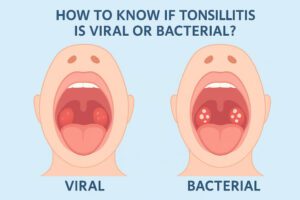
The two primary causes are:
- Viral infections (the majority)
- bacterial infections, especially those caused by Streptococcus pyogenes (Group A Strep).
(3)Why is it necessary to understand the cause?
Because:
- Antibiotics are not necessary for treating viral tonsillitis.
- Antibiotics may be necessary to treat bacterial tonsillitis in order to avoid consequences such rheumatic fever, peritonsillar abscess, and kidney inflammation.
- Proper diagnosis reduces antibiotic misuse
- Aids in a quicker recovery and lowers the likelihood of recurrence
Can White Patches on the Tonsils Prove It Is Bacterial?
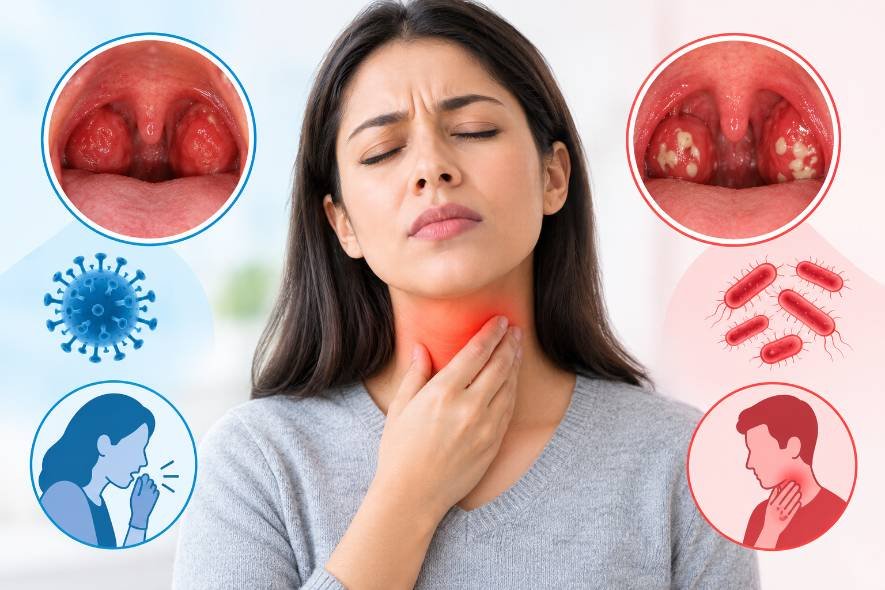
No. White spots, patches, or exudate from the tonsils do not automatically indicate bacterial tonsillitis. White spots or pus may be seen on the tonsils in cases of Group A Streptococcus, although certain viral infections may result in comparable findings.
Because of this, the tonsils’ appearance should be assessed in conjunction with the patient’s age, symptoms, results of examination, and, if necessary, a rapid strep test or throat culture.
(4)How to Tell If Tonsillitis Is Viral or Bacterial?
In order to help you distinguish between them, here is a clear comparison.
Symptom Pattern: Viral vs Bacterial
| Feature | Viral Tonsillitis | Bacterial Tonsillitis |
|---|---|---|
| Onset of symptoms | Gradual | Sudden & severe |
| Fever | Mild–moderate | High fever (101–104°F) |
| Throat pain | Mild to moderate | Severe throat pain |
| Cough | Common | Usually no cough |
| Runny nose | Common | Rare |
| Hoarse voice | Common | Rare |
| Swollen lymph nodes | Mild | Markedly enlarged & painful |
| Tonsil appearance | Red & swollen | Red, swollen + white patches/pus |
| Body aches | Common | Less common |
| Bad breath | Mild | Often severe |
| Fatigue | Mild | Severe |
| Duration | 3–7 days | 7–10 days (with treatment improves faster) |
Major Signs That Tonsillitis Is Viral
Viruses that cause viral tonsillitis include the following:
- Adenovirus
- Rhinovirus
- The flu
- Parainfluenza
- Epstein-Barr virus (EBV)
- The Coronavirus
Symptoms strongly suggesting viral cause:
✔ Cough present
Cough is rare in bacterial tonsillitis.
✔ Runny or blocked nose
Upper respiratory symptoms almost always point to viral infections.
✔ Hoarse voice
Inflammation spreading to the larynx is usually viral.
✔ Conjunctivitis (red eyes)
Seen in adenovirus infections.
✔ Mild fever
Viral fevers rarely cross 101°F.
✔ Gradual onset
Symptoms build slowly over 1–2 days.
✔ Fatigue + Body aches
Typical of viral flu-like infections.
✔ EBV signs (infectious mononucleosis)
In teenagers or young adults:
-
Extreme fatigue
-
Enlarged spleen
-
Severe throat swelling
Appearance of tonsils in viral infection:
-
Red
-
Mild swelling
-
Thin white coating (not thick pus)
-
No foul-smelling discharge
Does a Cough Usually Mean Tonsillitis Is Viral?
Instead of classic group A strep pharyngitis, a viral infection is highly indicated by a cough, runny nose, hoarseness, conjunctivitis, or oral ulcers.
The lack of a cough, however, does not indicate that the infection is bacterial. Along with age, tonsillar findings, swollen lymph nodes, fever, and testing when necessary, physicians take into account this one clinical feature.
Can Viral Tonsillitis Look Severe?
Yes. Fever, sore throat, enlarged tonsils, swollen lymph nodes, or tonsillar exudate are all common symptoms of some viral infections.
EBV, which may cause contagious mononucleosis, is crucial for teenagers and young adults. It can result in high temperature, sore throat, extreme weariness, swollen lymph nodes, and occasionally an enlarged spleen or liver.
Appropriate blood tests may be advised by a medical professional if infectious mononucleosis is suspected, depending on the patient’s medical condition.
(5) Bacterial Tonsillitis / Strep Throat
Group A Streptococcus (GAS) is the most common cause of bacterial tonsillitis.
✔ Intense discomfort in the throat
Pain is frequently intense and exacerbated by swallowing.
✔ High temperature (over 102°F)
The abrupt onset of high-grade fever is typical.
✔ No cough
One of the most trustworthy signs of strep is this.
✔ pus points on tonsils that are white
A bacterial infection is indicated by thick white/yellow spots or streaks.
✔ Lymph nodes in the neck that are hurting
Frequently tender, swollen, and noticeable.
✔ Poor breath
The source of the repulsive odor is bacterial poisons.
✔ Headache and abdominal discomfort
More prevalent in kids with strep.
✔ Cutaneous rash (scarlet fever rash)
A red flag sign of strep is a rash that feels like sandpaper on the skin.
(6) Centor Score –
A straightforward test utilized by medical professionals
The Centor Criteria are frequently used by doctors to determine whether tonsillitis is bacterial.
Every positive point earns a score of one.
- A temperature over 38°C (100.4°F)
- pus from the tonsils
- No coughing
- Lymph nodes that are sensitive in the neck
Score Interpretation:
- 0–1: Probably viral
- 2-3: Test necessary because there may be a bacterial infection.
- 4: Antibiotics may be initiated if bacteria are suspected
(7)Diagnostic Tests
Tests can help verify when symptoms overlap.
A. Quick Strep Test (RST)
- Takes 5–10 minutes to complete
- Detects Group A Streptococcus
- High degree of precision
B. Throat Culture
- The gold standard
- In 24–48 hours, results will be available.
- Verifies bacterial tonsillitis
C. Full blood count (CBC)
Aids in distinguishing between:
- viral infection results from an abundance of lymphocytes.
- Bacterial infections are indicated by elevated neutrophil levels.
D. The Monospot test for EBV
If infectious mononucleosis is suspected.
What Is the Most Reliable Way to Know If Tonsillitis Is Caused by Strep?
When a patient has no clear viral symptoms, symptoms and examination findings alone may not be sufficient to discriminate between viral throat infection and group A strep.
A quick result can be obtained with a rapid antigen detection test (rapid strep test). Where guidelines advise further testing, the diagnosis can be verified using a throat culture.
In cases where group A strep is suspected, children aged three years and older should typically have a throat culture performed if the rapid strep test result is negative. Usually, a normal throat culture is not required for adults following a negative rapid test. A healthcare professional should determine the precise testing strategy.
What If the Rapid Strep Test Is Negative?
The recommendation for follow-up following a negative quick test differs across age categories.
When group A strep is suspected in symptomatic children 3 years of age and older, CDC recommendations advise a backup throat culture following a negative rapid antigen test. It’s usually not a good idea to perform a backup culture after a negative rapid test in adults.
If symptoms continue to worsen despite a negative result, a medical reevaluation may be required since other diseases or causes of sore throat may need to be addressed.
Can Tonsillitis Be Caused by Something Other Than a Virus or Strep?
Right. While group A Streptococcus is the most prevalent bacterial cause, viruses are the primary cause of acute pharyngitis. Tonsil inflammation and sore throat can also be caused by other illnesses and non-infectious diseases.
A broader examination may be necessary for persistent, extremely severe, recurring, or atypical symptoms rather than just presuming the ailment is viral or bacterial tonsillitis.
(8) Treatment: Viral vs Bacterial
⭐ Viral Tonsillitis Treatment
No antibiotics are necessary.
Concentrate on alleviating symptoms:
- gargles using warm salt water
- Inhalation of steam
- Hydration
- Paracetamol / Ibuprofen
- foods that are soft and calming
- Throat pastilles
- Sufficient rest
Antibiotics are ineffective, and overuse might lead to resistance.
⭐ Treating Bacterial Tonsillitis
Antibiotics are necessary to prevent complications.
Regular prescriptions:
- Amoxicillin
- Amoxicillin-clavulanic acid
- Azithromycin (if allergic to penicillin)
- Cephalosporins
Antibiotics cause symptoms to get better in 24–48 hours.
Complete the entire course, even if your symptoms improve.
Why Is EBV Important Before Taking Antibiotics?
EBV, not group A Streptococcus, can sometimes be to blame for a sore throat with swollen tonsils. Because individuals with infectious mononucleosis may get a prominent rash from amoxicillin or ampicillin, antibiotics should not be administered solely because the tonsils have white patches.
If strep testing is negative and symptoms strongly indicate infectious mononucleosis, the diagnosis should be reconsidered before automatically switching to a new antibiotic.
Which Antibiotics Are Usually Used for Confirmed Strep Throat?
The favored initial therapy for confirmed group A strep pharyngitis in the absence of a pertinent allergy is often amoxicillin or penicillin.
For those with particular penicillin allergies or other clinical conditions, alternative antibiotics may be acceptable. The selection of an antibiotic should be based on the diagnosis that has been confirmed, the history of allergies, the patient’s age, local advice, and the patient’s medical condition.
Uncomplicated strep throat doesn’t benefit from a broad-spectrum antibiotic.
How Quickly Does Strep Throat Stop Being Contagious After Antibiotics?
According to current CDC guidelines, people with confirmed group A strep infection should stay out of school, work, or daycare until they are fever-free and have taken the proper antibiotics for at least 12-24 hours.
You may assist prevent transmission by practicing proper hand hygiene, refraining from sharing eating utensils or drinks, and avoiding close contact when infected.
(9) Persistent or Recurrent Tonsillitis
Tonsillitis is a recurrent illness for some patients, particularly youngsters.
Signs of recurring tonsillitis:
- 12 months, 7 episodes
- five episodes every year for two years
- 3 episodes annually for three years
When this occurs, a tonsillectomy may be advised by an ENT professional.
Does Recurrent Tonsillitis Always Mean Tonsillectomy Is Needed?
No. Tonsils do not necessarily need to be taken out just because of frequent sore throats.
For children, frequently used ENT guidelines advise cautious waiting if the recorded throat infection rate is below certain limits. A tonsillectomy may be performed if a patient has specific risk factors or if recurrent infections satisfy the defined frequency and documentation criteria.
A record of episodes, including fever, tonsillar exudate, swollen neck lymph nodes, and positive strep testing, might aid an ENT specialist in deciding whether surgery is necessary.
(10) Warning Signs
Regardless of whether it’s viral or bacterial, the following signs necessitate immediate assessment:
- Breathing problems
- Salivating from not being able to swallow
- Extreme stiffness of the neck
- Dehydration
- Fever that lasts for more than three days.
- trismus, which is the inability to open the mouth correctly
- Change in voice (hot potato voice)
- possible abscess close to the tonsils
- fever and rash
- More than seven days of symptoms
Among the potential complications are:
- peritonsillar abscess
- Epiglottitis
- Red fever
- Rheumatic fever
- Inflammation of the kidneys
When Should Tonsillitis Be Reassessed Urgently?
If severe tonsillitis is accompanied with any of the following symptoms, get immediate medical help:
- breathing problems
- Inability to swallow saliva or fluids
- Severe dehydration
- swallowing problems that cause salivation
- Difficulty opening your mouth severely
- A noticeably modified or muted voice
- Quickly escalating neck or throat edema
- Significant swelling or pain on one side of the throat
- Despite treatment, there is a considerable deterioration.
These findings, which shouldn’t be handled solely with home treatments, can appear with issues like a deep throat infection or peritonsillar abscess.
(11) Children vs Adults
Kids:
- More vulnerable to viral tonsillitis
- Stomachache, high temperature more prevalent
- In schools, bacterial tonsillitis is contagious.
Grown-ups:
- Higher probability of having bacterial tonsillitis
- A severe sore throat
- Untreated, there is a greater chance of complications.
(12) Prevention
⭐ Good hygiene practices include the following:
- Wash your hands often.
- Don’t share utensils.
- Stay away from anyone who has a painful throat.
⭐ Way of living:
- A good night’s rest
- A balanced diet
- Proper hydration
- Limit exposure to smoke or smoking.
⭐ Boosting immunity:
- fruits high in vitamin C
- daily workout
- Do not drink cold beverages in excess.
(13) Key Points to Remember
- White patches on your tonsils do not always indicate a bacterial infection.
- It is more probable that a viral etiology is responsible for a cough, runny nose, hoarseness, and conjunctivitis.
- Testing may be necessary to differentiate group A strep from a viral infection when there are no obvious viral symptoms.
- A rapid strep test or throat culture that is positive supports therapy for group A strep.
- After a negative rapid strep test, follow-up advice for kids and adults could vary.
- Penicillin or amoxicillin is often preferred for verified group A strep when appropriate.
- EBV can cause severe tonsillitis-like symptoms and is important to consider, particularly in teenagers and young adults.
- Severe swallowing difficulty, breathing problems, drooling, trismus, or rapidly worsening swelling requires prompt medical evaluation.
- Recurrent tonsillitis should be assessed based on documented episodes rather than the number of sore throats alone.
(14)Conclusion
Knowing if tonsillitis is viral or bacterial will help you make the best decisions for your treatment and recovery.
Bacterial illnesses may need antibiotics to prevent problems, but viral infections are more frequent and cure themselves.
Significant variations include the presence of cough, the severity of fever, the look of the tonsils, the enlargement of lymph nodes, and the availability of quick testing.
Seek treatment and assessment from an ENT expert if symptoms are severe, persistent, or recurrent.
📞 ENT Consultation & Surgery
Dr. Sagar Rajkuwar (MS-ENT)
Prabha ENT Clinic, Ambad, Nashik
📱 7387590194 | 9892596635
🌐 www.entspecialistinnashik.com
Medical Disclaimer
Medical Disclaimer: This article is for general educational and informational purposes only and is not a substitute for professional medical advice, diagnosis, or treatment. Symptoms of viral and bacterial tonsillitis can overlap, and the appearance of the tonsils alone cannot always determine the cause. A healthcare professional may recommend examination and, when appropriate, a rapid strep test or throat culture. Do not start, stop, or change antibiotics without medical advice. Seek prompt medical attention for difficulty breathing or swallowing, severe dehydration, significant neck swelling, rapidly worsening symptoms, or other serious symptoms.
📲 For Health-Related Articles & Videos
🔹 Facebook: https://www.facebook.com/positivemind.healthcare
🔹 YouTube: http://www.youtube.com/@healthuseful8539/
🎥 Watch Educational Videos
👉 YouTube Channel:
http://www.youtube.com/@healthuseful8539/
Internal Linking List
Tonsillitis, Tonsillectomy & Adenoid Disorders
Disease: Tonsillitis
- https://healthuseful.com/tonsillitis-symptoms/
- https://healthuseful.com/tonsillitis-white-patches/
- https://healthuseful.com/tonsillitis-white-stones/
- https://healthuseful.com/tonsillitis-treatment/
Surgery: Tonsillectomy
- https://healthuseful.com/tonsillitis-surgery/
- https://healthuseful.com/tonsillitis-removal-surgery/
- https://healthuseful.com/what-age-is-too-late-to-remove-tonsils/
- https://healthuseful.com/does-removing-tonsils-change-your-voice/
- https://healthuseful.com/lingual-tonsillectomy/
Recovery & Post-Operative Care
- https://healthuseful.com/what-are-the-worst-days-after-tonsillectomy-and-adenoidectomy/
- https://healthuseful.com/tonsillectomy-diet-day-by-day-for-child/
- https://healthuseful.com/are-ear-infections-common-after-tonsillectomy/
Complications & Associated Conditions
Medical References
- Centers for Disease Control and Prevention (CDC). Clinical Guidance for Group A Streptococcal Pharyngitis. Updated November 18, 2025. CDC Clinical Guidance for Group A Strep Pharyngitis
- Centers for Disease Control and Prevention (CDC). Testing for Strep Throat or Scarlet Fever. Updated August 7, 2025. CDC: Testing for Strep Throat or Scarlet Fever
- Infectious Diseases Society of America (IDSA). Clinical Practice Guideline Update on Group A Streptococcal (GAS) Pharyngitis. Published 2025; Clinical Infectious Diseases, 2026. IDSA Clinical Practice Guideline Update
- National Institute for Health and Care Excellence (NICE). Sore Throat (Acute): Antimicrobial Prescribing, NG84. NICE guidance. NICE Acute Sore Throat Guidance