Difference Between SMR and Septoplasty: ENT Expert Guide 2026
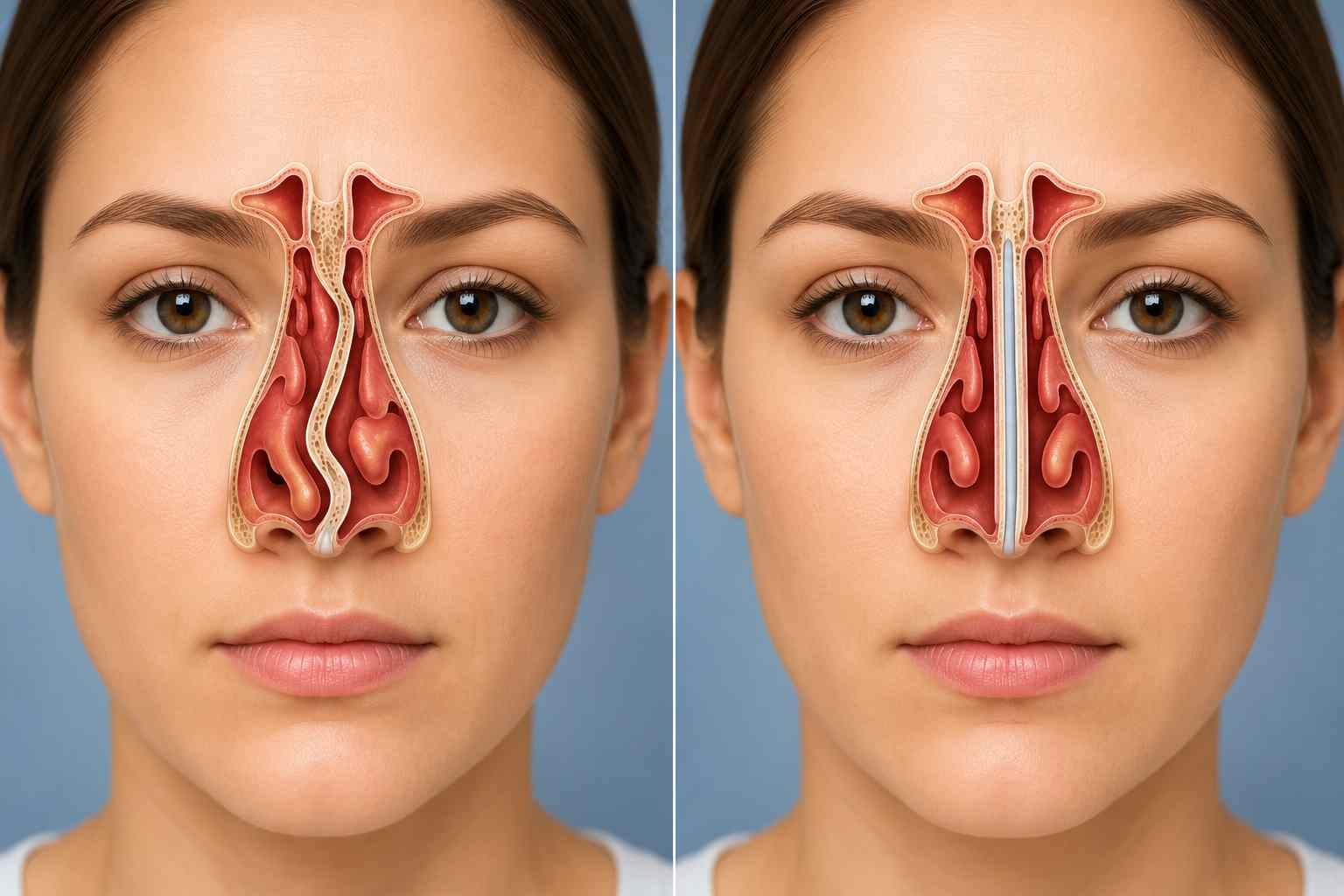
The core difference between SMR and septoplasty is the surgical philosophy. Submucous resection (SMR) is a historic operation that removes deviated septal cartilage and bone under preserved mucoperichondrial flaps, while modern septoplasty focuses on reshaping, repositioning and preserving structural support — particularly the L-strut — to straighten a deviated nasal septum while maintaining nasal stability. Both improve breathing; today septoplasty is the default, and SMR principles survive mainly within septoplasty, cartilage-grafting, and selected endoscopic approaches.
Author: Dr. Sagar Rajkuwar, MS-ENT
ENT Specialist, Nashik, Maharashtra, India
Clinic: Prabha ENT Clinic, Ambad, Nashik
Website: 🌐 www.entspecialistinnashik.com

📌 Quick Answer: SMR vs Septoplasty at a Glance
| Feature | SMR | Septoplasty |
|---|---|---|
| Full name | Submucous Resection | Septoplasty |
| Era introduced | Freer / Killian — 1902–04 | Cottle — 1948 |
| Main purpose | Remove deviated cartilage & bone | Straighten and reconstruct the septum |
| Tissue removal | Traditionally extensive | Conservative, targeted |
| Structural preservation | Limited (classic form) | Strong emphasis on L-strut preservation |
| Mucosal lining | Preserved | Preserved + repositioned |
| Modern use | Rare as standalone operation | Standard contemporary approach |
| Children | Rarely used | Selected cases only, protecting growth centres |
| Main goal | Improve nasal airway | Airway + septal stability + preserved cosmesis |
📌 Table of Contents
- Introduction
- What Is Submucous Resection (SMR)?
- What Is Septoplasty?
- SMR vs Septoplasty: Key Discrepancies
- Why Did Septoplasty Replace Traditional SMR?
- What Happens During Septoplasty?
- What Happens During SMR?
- Endoscopic Septoplasty & Modern Variants
- Septoplasty in Children
- Risks and Complications
- Recovery After Septoplasty or SMR
- Septoplasty vs Sinus Surgery
- When Is SMR or Septoplasty Recommended?
- Cost in India
- Preparing for Your ENT Consultation
- Frequently Asked Questions
- Conclusion
1. Introduction
A deviated nasal septum occurs when the osteocartilaginous wall dividing the nostrils is displaced. Up to 80% of adults have some degree of deviation, but only a minority have symptomatic nasal obstruction. The difference between SMR and septoplasty matters because the choice of surgery determines how much structural support remains and how your nose will function and look twenty years from now.
2. What Is Submucous Resection (SMR)?
Classical submucous resection, introduced by Freer (1902) and refined by Killian (1904), is a historical procedure in which the surgeon elevates the mucoperichondrial and mucoperiosteal flaps, then excises deviated parts of the quadrilateral cartilage, perpendicular plate of ethmoid, and vomer, before replacing the mucosal flaps. In its original aggressive form, SMR removed large portions of septal cartilage and bone, leaving behind only two mucoperichondrial layers held together — which later led to saddle nose deformity, septal perforation, and flail septum in a measurable proportion of patients.
Goals of SMR
- Remove obstructive deviated cartilage/bone
- Improve nasal airflow
- Preserve the mucosal lining
- Maintain whatever structural support remains
3. What Is Septoplasty?
Septoplasty, popularized by Cottle in 1948, is the operation of choice for a deviated nasal septum today. It emphasizes maximum preservation of cartilage and bone: deviated segments are freed from attachments, straightened or scored, repositioned in the midline, and often reinforced with sutured cartilage grafts. The critical structural requirement is preservation of the L-strut — a minimum of 1–1.5 cm of dorsal and caudal septal cartilage — which maintains tip support, dorsal height, and prevents long-term collapse. This is the clearest difference between SMR and septoplasty.
4. SMR vs Septoplasty: Key Discrepancies
1. Amount of cartilage removed
Classical SMR could remove more than 70% of the quadrilateral cartilage. Modern septoplasty rarely removes more than 20–30%.
2. Preservation of structural support
Septoplasty protects the dorsal and caudal L-strut; SMR does not emphasize this.
3. Correction of complex deformities
Modern septoplasty handles anterior, posterior, bony and cartilaginous deviations through techniques such as swinging-door, extracorporeal septoplasty, or endonasal reconstruction with autologous grafts.
4. Terminology
Today many surgeons use the terms interchangeably; what matters more is how much tissue is preserved.
5. Why Did Septoplasty Replace Traditional SMR?
Long-term follow-up studies showed that aggressive SMR led to late nasal collapse, saddle deformity, septal perforation and loss of tip support in up to 15–20% of cases. Modern septoplasty cut these complications by preserving the native framework. The rule today: fix the obstruction while maintaining the architecture. This evolution explains the current difference between SMR and septoplasty in modern ENT practice.
6. What Happens During Septoplasty?
Done under local, local-with-sedation, or general anesthesia:
- Killian or hemitransfixion incision inside the nostril
- Elevation of mucoperichondrial flap
- Identification of deviated cartilage/bone
- Scoring, freeing from attachments, repositioning or minimal excision
- Reinforcement with cartilage grafts if needed
- Repositioning of mucosal flaps
- Quilting sutures or internal splints
Operative time: 30–90 minutes.
7. What Happens During SMR?
SMR follows similar steps but focuses on removal rather than preservation. Classical SMR uses the Killian incision, raises bilateral flaps, and excises the deviated portions while leaving a frame at the dorsum and caudal septum. In India many hospitals still refer to septoplasty informally as “SMR,” but the modern technique is conservative.
8. Endoscopic Septoplasty & Modern Variants
Endoscopic septoplasty uses a 0° or 30° rigid endoscope through the nostril, allowing targeted correction of posterior deviations with less mucosal trauma. A 2023 meta-analysis in Medicine and a 2026 review in the European Archives of Oto-Rhino-Laryngology both report similar long-term symptom relief with less bleeding and smaller incisions compared to conventional septoplasty. Extracorporeal septoplasty — removing, reshaping and re-implanting the septum outside the body — is reserved for severe caudal deformities.
9. Septoplasty in Children
It is a widespread myth that children cannot have septoplasty. The reality: careful, limited septoplasty is permissible in children with severe obstruction, trauma, or breathing-related sleep disorders, provided the growth centres (sphenodorsal and sphenospinal zones described by Verwoerd) are preserved. Blanket age cut-offs like “only after 17” are no longer evidence-based.
10. Risks and Complications
- Postoperative bleeding
- Infection
- Septal hematoma — must be drained promptly to avoid cartilage necrosis
- Septal perforation
- Persistent nasal obstruction (10–15%)
- Crusting
- Temporary numbness of the upper incisors (anterior maxillary nerve)
- Reduced olfaction (usually transient)
- Adhesions / synechiae
- Rare saddle-nose or columellar retraction
- Toxic shock syndrome from prolonged nasal packing (very rare)
11. Recovery After Septoplasty or SMR
Expect: nasal obstruction (from edema and splints) for 1–2 weeks, mild discomfort, blood-tinged drainage, scabbing, pressure sensation. Full healing of cartilage takes 3–6 months.
Post-op recommendations:
- Avoid forceful nose-blowing for 2 weeks
- Use saline irrigation daily
- Avoid strenuous exercise for 2–3 weeks
- Attend all follow-up visits
- Keep splints until the surgeon removes them (usually 7–14 days)
12. Septoplasty vs Sinus Surgery
Septoplasty addresses the structural deviated septum. Functional endoscopic sinus surgery (FESS) opens blocked sinus drainage pathways in chronic rhinosinusitis. Many patients benefit from a combined procedure (septoplasty + FESS) when sinus disease and septal deviation coexist.
13. When Is SMR or Septoplasty Recommended?
Surgery is considered when a deviated septum causes persistent symptoms that fail medical therapy:
- Chronic nasal obstruction
- Mouth breathing
- Snoring and sleep-disordered breathing
- Recurrent epistaxis from a convex deviation
- Headaches from mucosal contact points
- Access needed for sinus or skull-base surgery
14. Cost in India
Depending on city, hospital tier and surgeon experience, septal surgery in India typically costs ₹35,000–₹1,20,000. Costs are higher for endoscopic techniques, combined turbinate reduction, or FESS. Insurance coverage is usually available when symptoms and documentation justify the operation.
15. Preparing for Your ENT Consultation
- Document duration of nasal blockage
- Note which side is more blocked and whether it alternates
- History of trauma, allergy, snoring, sleep problems
- Previous surgeries
- Medications and bleeding tendency
16. Frequently Asked Questions
Is septoplasty the same as SMR?
No. They overlap historically but today septoplasty is the preferred, more conservative operation that preserves the L-strut.
Which is better, SMR or septoplasty?
Septoplasty, for virtually all symptomatic deviated septums, because it preserves structural support while correcting the deviation.
Is SMR obsolete?
Classical radical SMR is largely obsolete. SMR principles are still used selectively.
Does septoplasty change nose shape?
Standard septoplasty aims for functional correction without changing the external nose; septorhinoplasty combines both.
Can turbinate surgery be done with septoplasty?
Yes — inferior turbinate reduction is frequently combined with septoplasty when hypertrophied turbinates also obstruct airflow.
Does septoplasty cure sinusitis?
Not always. Sinusitis has many causes; septoplasty may be part of a combined approach but is not a universal cure.
How painful is septoplasty?
Most patients report mild to moderate discomfort for 3–5 days; packing removal is often the most uncomfortable moment.
How long does the result last?
In 85–90% of patients, results are permanent. A minority may need revision if cartilage memory causes partial recurrence.
What is the Cottle technique?
A conservative septoplasty approach preserving the maximum amount of septal cartilage — the father of modern septoplasty.
Can I fly after septoplasty?
Short-haul flights are usually acceptable after 1–2 weeks; discuss timing with your surgeon.
17. Conclusion
The main difference between SMR and septoplasty is philosophy. SMR, as traditionally performed, removed significant septal cartilage and bone and sometimes compromised long-term nasal structure. Modern septoplasty — whether open, endoscopic, or extracorporeal — preserves the L-strut, repositions the deviated segments, and keeps the nose functionally and cosmetically intact. The real question for anyone considering surgery is not the label of the operation, but these clinical details: where exactly is the deviation, what structures are involved, is turbinate reduction needed, is sinus disease present, and how experienced is your surgeon with modern conservative techniques? A thorough ENT assessment — including nasal endoscopy and sometimes CT — is essential before deciding.
🎥 Watch Educational Videos
👉 YouTube Channel: http://www.youtube.com/@healthuseful8539/
📞 ENT Consultation & Surgery
Dr. Sagar Rajkuwar (MS-ENT)
Prabha ENT Clinic, Ambad, Nashik
📱 7387590194 | 9892596635
🌐 www.entspecialistinnashik.com
📲 For Health-Related Articles & Videos
🔹 Facebook: https://www.facebook.com/positivemind.healthcare
🔹 YouTube: http://www.youtube.com/@healthuseful8539/
Medical Disclaimer
This article is provided for general educational purposes and does not replace an examination, diagnosis or individualized treatment plan from a qualified ENT specialist. Surgical techniques, indications, risks and recovery can vary between patients. Do not choose or avoid surgery solely on the basis of information available online.
Medical References
- Taha HI, et al. Septoplasty versus non-surgical management for deviated nasal septum: a systematic review and meta-analysis of randomized controlled trials. European Archives of Oto-Rhino-Laryngology. 2025;282:597–610.
- Abd Elhadi U, Safia A, Masalha M. Septoplasty Versus Non-Surgical Treatment for Deviated Nasal Septum: A Systematic Review and Meta-Analysis. Journal of Clinical Medicine. 2026;15(10):3930.
- Low WK, Willatt DJ. Submucous resection for deviated nasal septum: a critical appraisal. Singapore Medical Journal. 1992;33(6):617–619.
- Lajdam GB, et al. Septoplasty versus septoplasty with turbinate reduction for nasal obstruction due to deviated nasal septum: a systematic review and meta-analysis. Rhinology. 2022;60(6):411–420.
- Endoscopic septoplasty versus conventional septoplasty for nasal septum deviation: a systematic review and meta-analysis of randomized clinical trials. Medicine. 2023.
- Janipour M, Rezaei-Tazangi F. The State of the Art in Septoplasty: A Review of the Latest Achievements. 2026.
- Cottle MH. Nasal Surgery. AMA Arch Otolaryngol. 1948;47:698–714.
- Verwoerd CDA, Verwoerd-Verhoef HL. Rhinosurgery in children: developmental anatomy and craniofacial growth. Rhinology suppl. 2010;22:1–85.
- AAO-HNS Position Statement — Septoplasty. https://www.entnet.org
- NHS — Septoplasty. https://www.nhs.uk
Related Articles (Internal Links)
Pillar Topic: Septoplasty
- What is Septoplasty Surgery
- Septoplasty vs Turbinoplasty
- Difference Between SMR and Septoplasty
- Septoplasty vs Rhinoplasty
- Septoplasty Cost in India
- Septoplasty Before and After
- Endoscopic vs Conventional Septoplasty
- Types of Septoplasty
- Is Septoplasty a Major Surgery?
- Will My Nose Shape Change After Septoplasty?
- Most Painful Part of Septoplasty
- Why Is My Nose So Big After Septoplasty?