Heat Wave Causes and Effects: Health Risks Explained
Author: Dr Sagar Rajkuwar, ENT Specialist, Nashik, Maharashtra, India
🌐 www.entspecialistinnashik.com
A heat wave is defined as a lengthy period of exceptionally hot weather, which usually lasts several days. These extremes result in severe health risks, agricultural losses, infrastructure failures, and widespread economic disruptions, which are made worse by global climate change and high-pressure atmospheric systems that trap hot air.
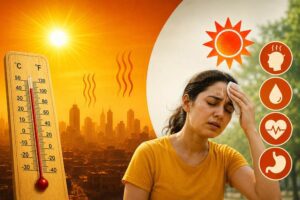
Table of Contents
- What Causes Heat Waves
- Heat Wave Consequences
- Frequently Asked Questions
- Summary
What Causes Heat Waves
Heat waves are brought on by a mix of human activities and atmospheric dynamics:
- High Pressure Systems (Heat Domes): High-pressure systems resemble a dome, trapping air in the upper atmosphere. Clouds are pushed out and stagnant, burning conditions are created when the air descends, warms, and compresses.
- Greenhouse gas emissions capture additional heat in the atmosphere, drastically raising the frequency, strength, and duration of heat waves across the world.
- Altered Jet Streams: The jet stream and other high-level winds might shift, allowing weather patterns to linger over certain places and stop colder air from coming in.
- Urban Heat Island Effect: Concrete and asphalt-covered towns absorb and store much more solar radiation than natural environments.
- Winds That Are Dry and Local: Over the Gangetic plains, hot, dry winds (often known as ‘Loo’) in locations like India produce intense temperature spikes.
Heat Wave Consequences
High temperatures have a significant impact on local economies, ecosystems, and communities:
- Effects on People’s Health: Heat cramps, serious dehydration, and dangerous illnesses such as heat stroke and heat exhaustion can all be caused by excessive heat. Also, high temperatures greatly stress the heart, aggravating pre-existing respiratory or cardiovascular disorders.
- Extended heatwaves destroy crop yields, lower milk output in livestock, and dry up soil moisture, resulting in catastrophic food shortages.
- Strain on Infrastructure: Overheating temperatures may buckle railway tracks, melt asphalt roads, and cause power outages as the energy grids are strained by extensive air conditioning usage.
- Damage to the environment: Forest fires are much more likely and spread more easily in dry, hot weather.
- Financial Output: Serious dangers are faced by outdoor and informal workers, which results in significant wage reductions and a decline in overall economic productivity.
To lessen these effects, disaster management organizations and local governments implement Heat Action Plans to safeguard at-risk people. Official health recommendations and heat safety advice from the World Health Organization or the National Disaster Management Authority of India are available for consultation.
Frequently Asked Questions
1. What is a heat wave?
A heatwave is a prolonged period of exceptionally high temperatures that lasts for several days and is significantly hotter than a region’s typical average temperature.
2. Why do heatwaves occur?
Heat waves are caused by low rainfall, arid soil, climate change, high-pressure weather systems, urban heat island effects, and a lack of clouds.
3. How does climate change cause heat waves?
Global temperatures are rising as a result of climate change, which increases the frequency, duration, and intensity of heatwaves.
4. What are the negative health repercussions of a heatwave?
Dehydration, heat cramps, heat exhaustion, heatstroke, kidney problems, and worsening of heart and lung conditions can all be brought on by heat waves.
5. Which people are most susceptible to a heatwave?
People who are older, infants, pregnant women, outdoor laborers, athletes, and those who have chronic medical issues are more likely to experience these symptoms.
6. What is heatstroke?
Heatstroke is a dangerous medical emergency that occurs when the body’s temperature exceeds 40 degrees Celsius (104 degrees Fahrenheit), resulting in confusion, unconsciousness, and organ damage.
7. What measures can I take to safeguard myself during a heatwave?
Follow local weather advisories, remain in cool surroundings, dress in loose clothes, avoid outdoor activities during peak heat hours, and drink lots of water.
8. What impact do heat waves have on farming?
Heat waves can lead to lower yields, higher irrigation needs, damaged fruits and vegetables, and stress on livestock.
9. What is the urban heat island effect?
When green places are constrained, concrete surfaces and structures make cities hotter than the rural areas around them, which is known as the urban heat island effect.
10. Are heat waves avoidable?
While heat waves cannot be entirely avoided, their effects can be reduced via climate action, early warning systems, urban greening, and public awareness.
Summary
Unusually high temperatures that last for a long time are known as heat waves. These waves can have a major negative impact on the environment, water supplies, agriculture, and human health. Climate change, less precipitation, dry soil conditions, urban heat island effects, and shifting weather patterns are among the frequent causes.
Heat waves can increase mortality, decrease crop yields, exacerbate chronic diseases, and cause dehydration, heat exhaustion, and heatstroke. People can prepare for and survive extreme heat waves by understanding their causes and consequences.
Heatwaves: Causes, Effects, Government Initiatives, and Prevention Strategies
What Is a Heatwave?
A heatwave is a prolonged period of unusually high temperatures that persists for several consecutive days. Temperatures during a heatwave are significantly higher than the normal seasonal average for a particular region.
Heatwaves are becoming more frequent and severe due to climate change, posing serious health, agricultural, and environmental challenges worldwide.
Heatwave Criteria in India (According to IMD)
The India Meteorological Department (IMD) declares a heatwave when:
- Maximum temperature reaches 40°C or more in plains
- 37°C or more in coastal areas
- 30°C or more in hilly regions
A heatwave is declared when temperatures are 4.5°C to 6.4°C above normal.
A severe heatwave is declared when temperatures are more than 6.4°C above normal.
Regardless of normal temperatures, a heatwave may also be declared when:
- Maximum temperature reaches 45°C or higher
Heatwave Conditions in North India
Several regions of North and West India have recently experienced temperatures 8–13°C above normal levels, leading to severe heatwave conditions.
Unusual Warming in Hill Stations
Traditionally cooler Himalayan regions have also witnessed unusually high temperatures.
For example:
Areas such as Shimla have recorded temperatures above 25°C, even during March.
IMD Heatwave Alerts
The IMD has issued warnings regarding:
- Early arrival of summer conditions
- Increased number of heatwave days
- Elevated risk of extreme heat across multiple states
Why Are Heatwaves Occurring Earlier?
Several climatic factors have contributed to early and intense heatwaves:
1. Reduced Winter Rainfall
Winter rainfall during January and February was significantly below average in many regions.
As a result:
- Soil became drier
- Land warmed more quickly
- Surface temperatures increased rapidly
2. Fewer Western Disturbances
North India experienced fewer western disturbances, resulting in:
- Reduced rainfall
- Less snowfall
- Fewer clouds
This allowed greater solar heating of the land surface.
3. Dry Soil Conditions
Dry soil contains less moisture for evaporation.
Since evaporation naturally cools the environment, reduced soil moisture leads to:
- Faster warming
- Higher daytime temperatures
4. Increased Sunshine
Lower cloud cover allows more sunlight to reach the earth’s surface, increasing temperatures further.
5. Weak Wind Convergence
Limited interaction between easterly and westerly winds reduced moisture transport from nearby seas, contributing to hotter and drier conditions.
Impact of Heatwaves on Agriculture
Heatwaves can significantly affect agricultural productivity.
Stress on Rabi Crops
High temperatures during the grain-filling stage can reduce yields of crops such as:
- Wheat
- Mustard
- Gram (chickpea)
Increased Irrigation Demand
Higher temperatures increase water loss through evaporation and plant transpiration.
This leads to:
- Greater irrigation requirements
- Increased pressure on groundwater resources
- Higher farming costs
Effects on Horticultural Crops
Temperature stress can reduce both yield and quality of crops such as:
- Apples
- Potatoes
- Other fruits and vegetables
Government Initiatives to Combat Heatwaves in India
National Disaster Management Authority (NDMA) Guidelines
The NDMA has developed heatwave management guidelines that focus on:
- Early warning systems
- Community awareness programs
- Emergency preparedness
- Public health protection
Heat Action Plans (HAPs)
More than 250 Indian cities have implemented Heat Action Plans that include:
- Public advisories
- Medical preparedness
- Early warning alerts
- Protection of vulnerable populations
Early Warning Systems
The IMD and NDMA provide:
- Heatwave forecasts
- Location-specific alerts
- Five-day advance warnings
These systems help communities prepare for extreme heat events.
National Action Plan on Climate Change (NAPCC)
The NAPCC promotes:
- Sustainable urban development
- Water conservation
- Climate-resilient agriculture
- Reduction of urban heat exposure
Effective Heatwave Management Strategies
1. Strengthen Early Warning Systems
Timely heat alerts help reduce:
- Heat-related illnesses
- Hospital admissions
- Heatstroke deaths
2. Promote Climate-Resilient Agriculture
Recommended measures include:
- Heat-tolerant crop varieties
- Adjusted planting schedules
- Drip irrigation systems
- Sprinkler irrigation techniques
3. Reduce Urban Heat
Cities can lower temperatures through:
- Increased green spaces
- Urban tree planting
- Reflective roofing materials
- Cool roof technologies
- Improved city planning
- Successful Example: Ahmedabad Cool Roof Program
Studies have shown that cool roofs can reduce indoor temperatures by up to 5°C, improving comfort and reducing heat-related illness.
4. Improve Water Management
Effective strategies include:
- Rainwater harvesting
- Groundwater recharge
- Efficient irrigation systems
- Water conservation initiatives
5. Increase Public Awareness
Public education should focus on:
- Staying hydrated
- Avoiding outdoor activity during peak heat hours
- Recognizing symptoms of heat exhaustion and heatstroke
- Protecting children, older adults, and vulnerable individuals
Conclusion
Heatwaves are becoming more frequent, intense, and prolonged due to climate change. These extreme temperature events pose serious risks to human health, agriculture, water resources, and economic productivity. Early warning systems, climate-resilient farming, sustainable urban planning, water conservation, and public awareness are essential to reducing the impact of heatwaves.
By adopting preventive measures and strengthening climate adaptation strategies, communities can better protect themselves from the growing threat of extreme heat.
Medical Disclaimer
Medical Disclaimer:
This article is intended for educational and informational purposes only and should not be considered medical advice. Always consult a qualified healthcare professional for diagnosis, treatment, or management of any medical condition. Seek immediate medical attention if you suspect heatstroke or any other heat-related emergency.
Main Topic: Heatwaves & Health
1. Heatwave Causes and Dangers
- Why Are Heat Waves Dangerous?
2. Effects of Extreme Heat on the Human Body
- How Does Extreme Heat Impact Our Health?
3. Heatwave Deaths and Severe Complications
- How Does a Heatwave Kill?
References
- World Health Organization. Heat and Health Factsheets.
- India Meteorological Department. Heatwave Guidelines and Alerts.
- National Disaster Management Authority. Heat Wave Management Guidelines.
- Centers for Disease Control and Prevention.
- World Meteorological Organization. Climate and Extreme Heat Reports.