Medically reviewed By ENT and respiratory health specialist — Dr. Sagar Rajkuwar, MS-ENT. Clinic Website: www.entspecialistinnashik.com
What Causes a Stomach Ulcer?
Direct answer: A stomach ulcer is most commonly caused by infection with Helicobacter pylori (H. pylori) bacteria or regular use of nonsteroidal anti-inflammatory drugs (NSAIDs), such as ibuprofen, aspirin, naproxen and diclofenac. These factors weaken the stomach’s protective lining, allowing digestive acid to damage the tissue and produce an open sore. Less common causes include severe physical illness, certain other medicines and rare conditions that cause excessive stomach acid.
Understanding what causes a stomach ulcer is important because treatment works best when the underlying cause is identified. Simply taking an acidity medicine may relieve discomfort, but it will not eradicate H. pylori or automatically remove the risk from an ulcer-causing painkiller.
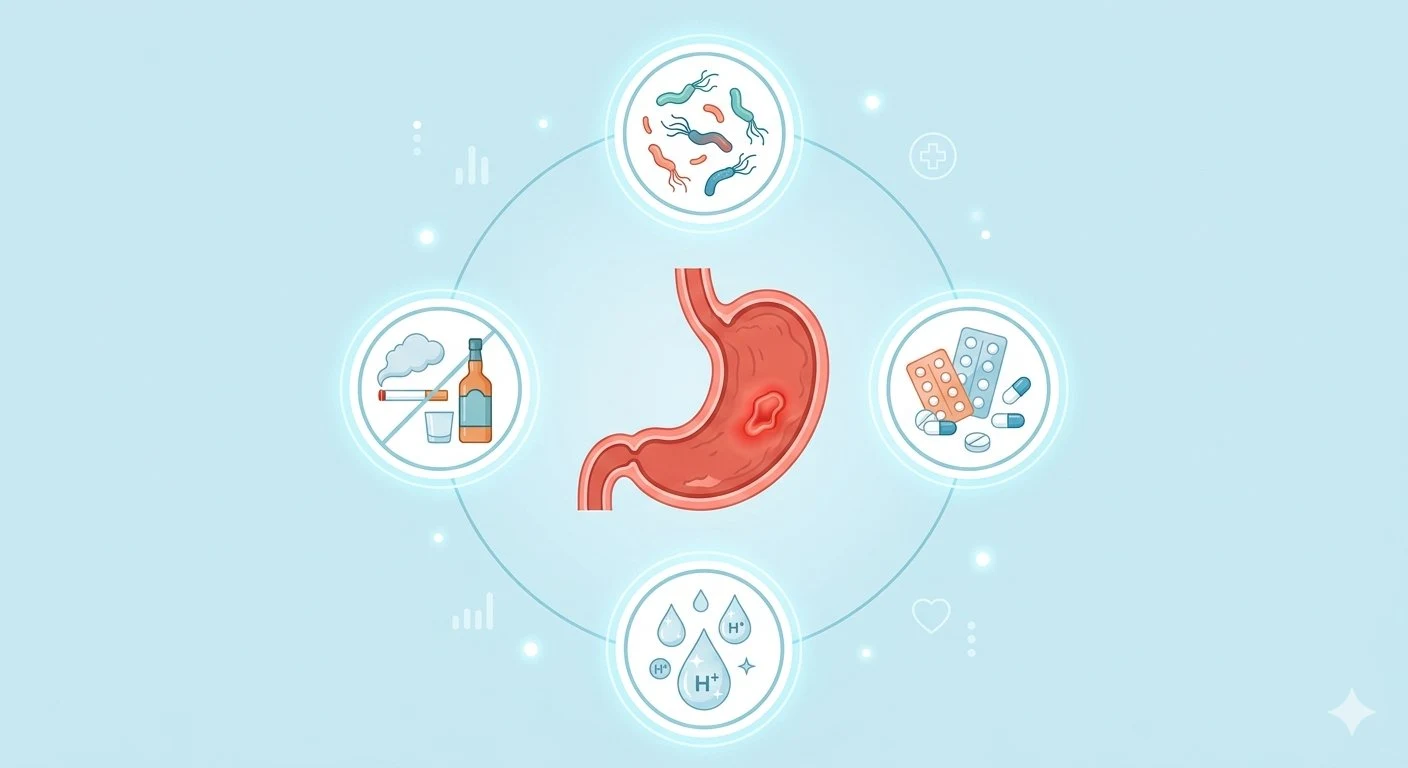
Table of Contents
How Does a Stomach Ulcer Develop?
The stomach naturally produces hydrochloric acid and digestive enzymes to break down food. Because these substances are powerful, the stomach has several protective mechanisms. A layer of mucus and bicarbonate, healthy blood flow and repair processes help protect the stomach wall from being digested by its own contents. A stomach ulcer develops when the balance between protective factors and damaging factors is disrupted. H. pylori can cause ongoing inflammation and impair the lining’s defences. NSAIDs reduce the production of protective substances called prostaglandins. In either situation, acid and digestive enzymes can injure the tissue, resulting in an ulcer. Therefore, a stomach ulcer is not simply a result of the stomach producing too much acid. Damage to the protective lining is central to the process, even when acid production is within the normal range.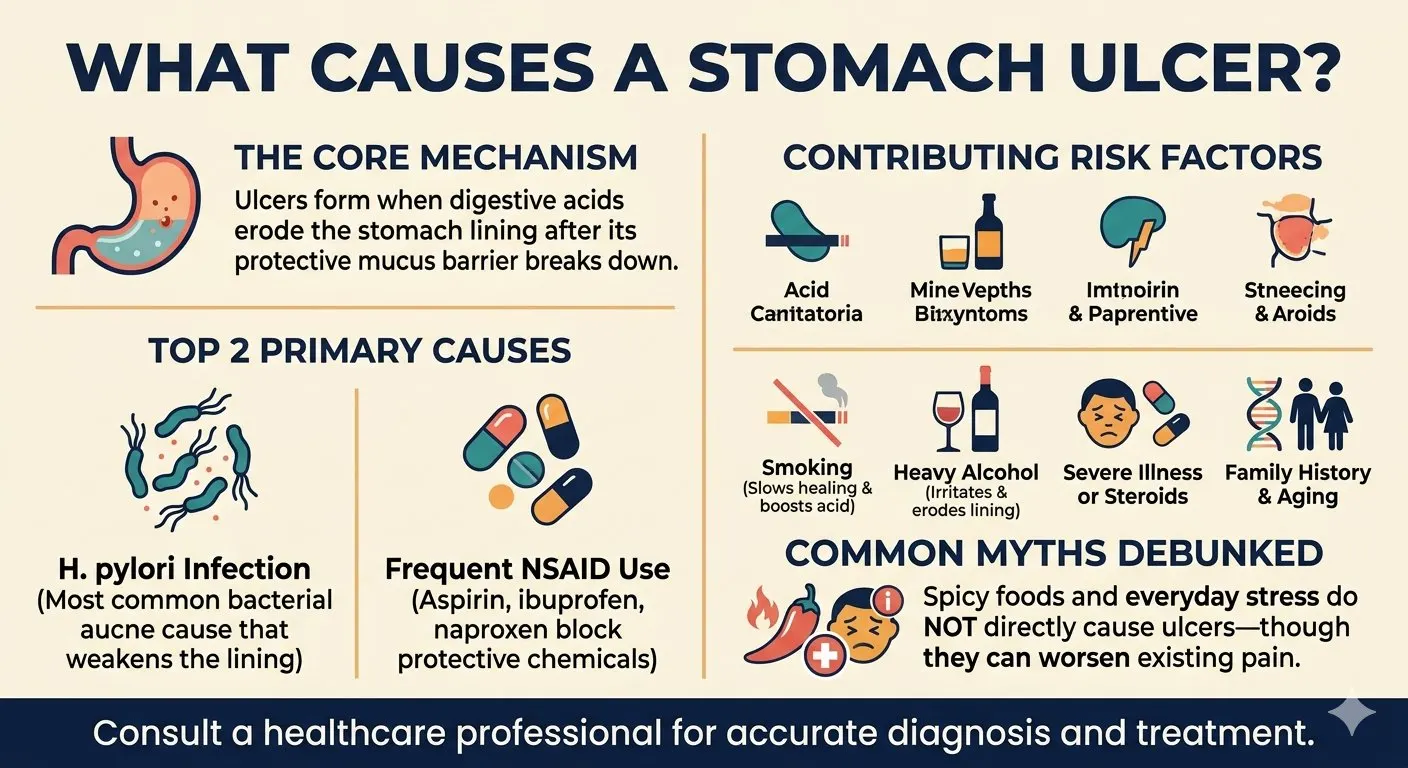
Main Causes of a Stomach Ulcer
1. Helicobacter pylori (H. pylori) infection
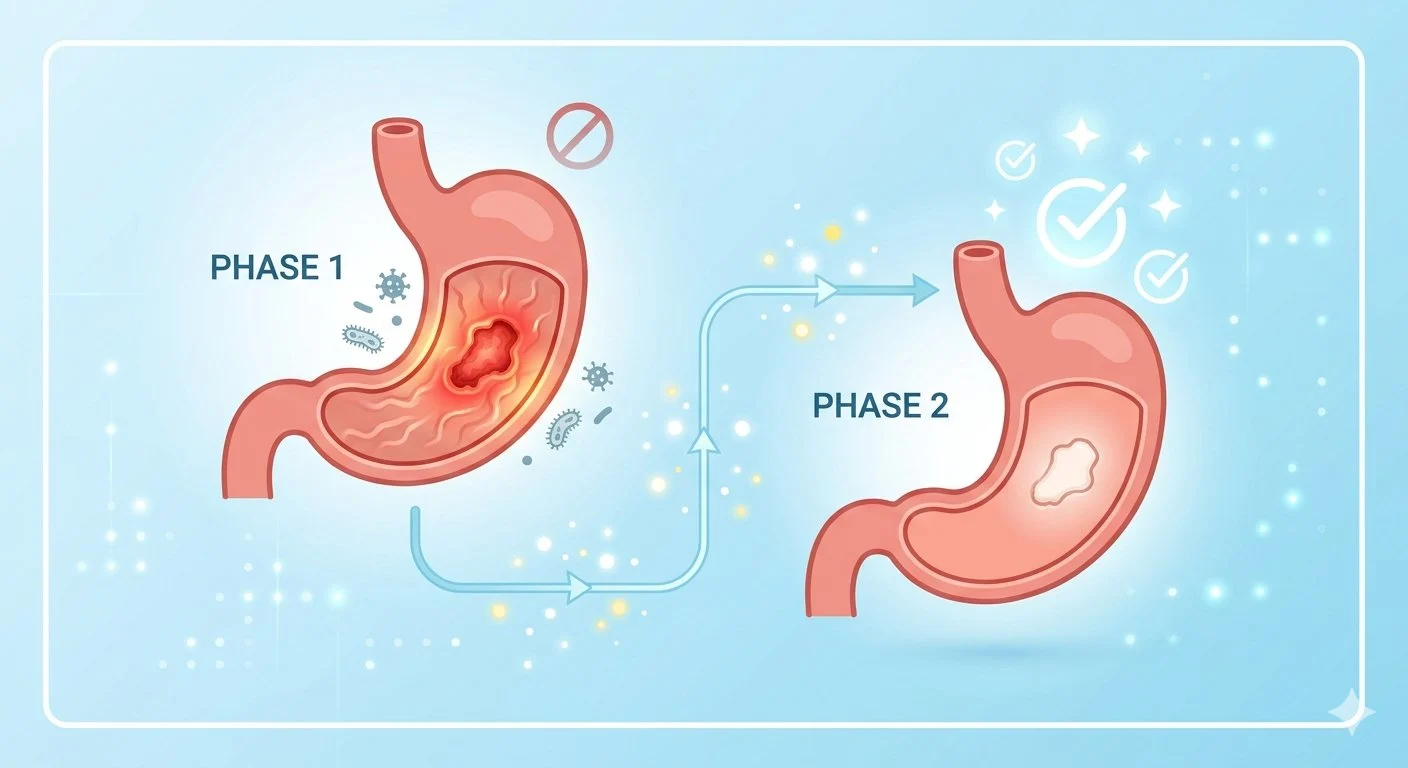
H. pylori is a spiral-shaped bacterium that can live in the mucus layer covering the stomach lining. It is one of the leading causes of stomach ulcers worldwide. Many infected people never develop an ulcer or experience obvious symptoms, but in some individuals the infection produces long-lasting inflammation known as chronic gastritis. The bacterium has adaptations that help it survive in the acidic stomach environment. It produces an enzyme called urease, which helps create a less acidic environment around the organism. It can also trigger an immune response and damage the normal protective barrier. Over time, this inflammation can contribute to ulcer formation.How does H. pylori spread?
The exact routes are not completely established. Transmission is thought to occur through oral–oral or faecal–oral routes, including close contact and exposure to contaminated food or water. Infection is often acquired during childhood and may persist for years if not treated.Can H. pylori be present without symptoms?
Yes. A person may carry H. pylori without pain, acidity or other warning signs. The absence of symptoms does not prove that the infection is absent. Testing is appropriate when a clinician suspects an ulcer or another condition for which H. pylori testing is recommended.Useful point: H. pylori infection is treatable. When it is responsible for an ulcer, a prescribed combination of antibiotics and acid-suppressing treatment is generally used. Completing the course and confirming eradication are important.
2. Regular use of NSAID painkillers
Nonsteroidal anti-inflammatory drugs (NSAIDs) are commonly used for pain, fever and inflammation. Examples include:- Ibuprofen
- Naproxen
- Diclofenac
- Aspirin, particularly at anti-inflammatory doses, although low-dose aspirin also carries a bleeding risk
- Mefenamic acid and other medicines in the same drug family
When does NSAID-related ulcer risk increase?
- Taking an NSAID at a high dose or for a prolonged period.
- Using more than one NSAID at the same time.
- Having a previous stomach or intestinal ulcer, especially one that bled.
- Being older, particularly with additional medical risk factors.
- Taking an NSAID while also infected with H. pylori.
- Combining NSAIDs with certain medicines that increase bleeding risk, such as anticoagulants, antiplatelet medicines or corticosteroids.
Important medicine safety advice
Do not stop prescribed low-dose aspirin, an antiplatelet drug or an anticoagulant on your own. These medicines may have been prescribed to prevent a heart attack, stroke or blood clot. A doctor should review the balance between cardiovascular benefit and gastrointestinal risk and decide whether a change or stomach-protective treatment is needed.3. Combined H. pylori infection and NSAID use
Having both H. pylori infection and regular NSAID exposure can increase the likelihood of peptic ulcer disease and its complications. The two factors affect stomach protection through different mechanisms: H. pylori causes inflammation, while NSAIDs reduce protective prostaglandins. Clinicians may therefore consider both causes rather than assuming that finding one automatically excludes the other.Less Common Causes of a Stomach Ulcer
4. Severe physical stress during critical illness
Severe physical illness is different from ordinary emotional stress. People who are critically ill, have major burns, severe injuries, sepsis, shock or prolonged stays in intensive care may develop stress-related mucosal damage. Reduced blood flow to the stomach lining and other changes can contribute to erosions, ulcers and bleeding. This is not the same as developing an ulcer simply because of work pressure, family worries or everyday anxiety. In hospital, doctors assess whether patients at high risk need preventive acid-suppressing medication.5. Certain medicines and drug combinations
NSAIDs are the most important medication-related cause, but other medicines can contribute to gastrointestinal injury or bleeding risk, especially when combined with NSAIDs. These may include:- Corticosteroids, such as prednisolone, particularly when taken with an NSAID.
- Some medicines used for osteoporosis, including certain bisphosphonates, which can irritate the upper digestive tract if taken incorrectly.
- Some antidepressants, particularly selective serotonin reuptake inhibitors (SSRIs), which may increase bleeding risk when combined with NSAIDs.
- Anticoagulants and antiplatelet medicines, which can make bleeding from an existing ulcer more serious, even though they are not usually the primary cause of the ulcer itself.
6. Zollinger–Ellison syndrome
Zollinger–Ellison syndrome is a rare condition in which one or more tumours called gastrinomas produce excessive amounts of the hormone gastrin. High gastrin levels stimulate the stomach to release excessive acid. This can lead to recurrent, multiple or difficult-to-heal peptic ulcers. Gastrinomas usually arise in the pancreas or duodenum. Some are associated with an inherited condition called multiple endocrine neoplasia type 1 (MEN1). Persistent ulcers despite appropriate treatment, recurrent ulcers in unusual locations or ulcers accompanied by chronic diarrhoea may prompt specialist investigation.7. Other uncommon diseases and causes
In a small proportion of patients, ulcers may be associated with conditions such as Crohn’s disease, certain infections other than H. pylori, reduced blood supply, previous surgery or severe systemic illness. A stomach ulcer that does not heal as expected may also require investigation to exclude stomach cancer or another underlying disorder. Sometimes no clear cause is identified even after appropriate evaluation. Such ulcers may be described as idiopathic peptic ulcers. Before using this label, clinicians generally review medication exposure, test for H. pylori and consider other relevant conditions.Do Stress, Spicy Food and Acidity Cause Stomach Ulcers?
Does emotional stress cause ulcers?
Everyday psychological stress is not considered a primary cause of peptic ulcers. However, stress may affect sleep, eating patterns, smoking or medication use and can make symptoms feel worse. Severe physical stress associated with critical illness is a separate medical situation and can cause stress-related mucosal injury.Do spicy foods cause stomach ulcers?
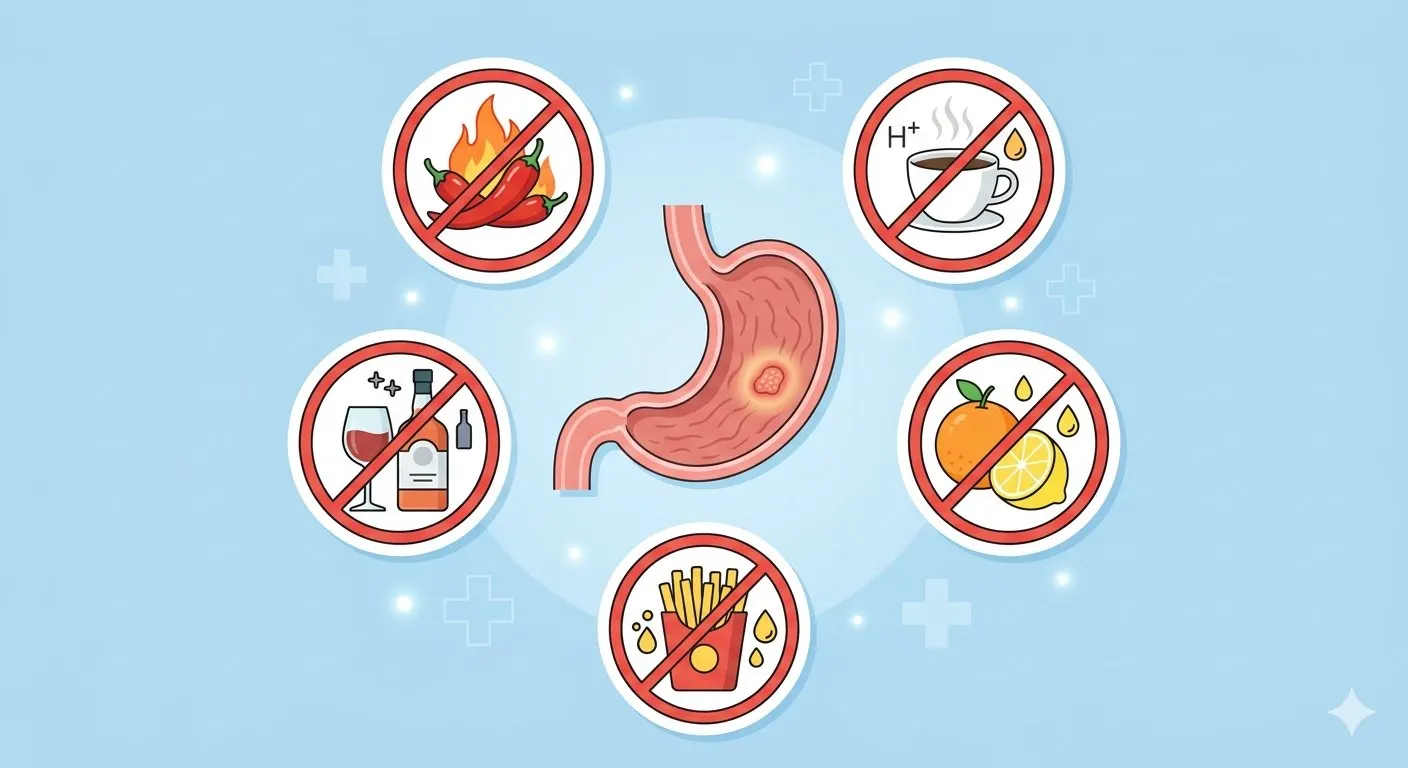
No. Spicy foods do not usually cause peptic ulcers. Chilli, strong spices and certain meals may aggravate burning or indigestion in an individual who already has an ulcer, but avoiding every spicy food does not eradicate H. pylori or reverse NSAID-related injury.Does excess stomach acid cause every ulcer?
Acid contributes to ulcer damage, but most ulcers are not simply caused by the stomach producing too much acid. H. pylori and NSAIDs weaken the protective lining. Acid-suppressing medicines help the ulcer heal, while treatment of the underlying cause reduces recurrence.Can tea, coffee or irregular meals cause ulcers?
Tea, coffee and irregular meal timings are not established primary causes of peptic ulcers. Some drinks or eating patterns may worsen an individual’s symptoms. Adjusting them can improve comfort, but it is not a substitute for testing and cause-specific treatment.Who Is at Greater Risk of Developing a Stomach Ulcer?
The following factors can increase the likelihood of ulcer disease or its complications:- Current or previous H. pylori infection.
- Regular, high-dose or prolonged use of NSAIDs.
- A previous peptic ulcer, especially one complicated by bleeding.
- Older age, particularly when combined with NSAID use or other illnesses.
- Smoking, which is associated with increased ulcer risk and slower healing.
- Taking NSAIDs together with medicines that increase bleeding risk.
- Severe critical illness or certain uncommon medical conditions.
Symptoms of a Stomach Ulcer
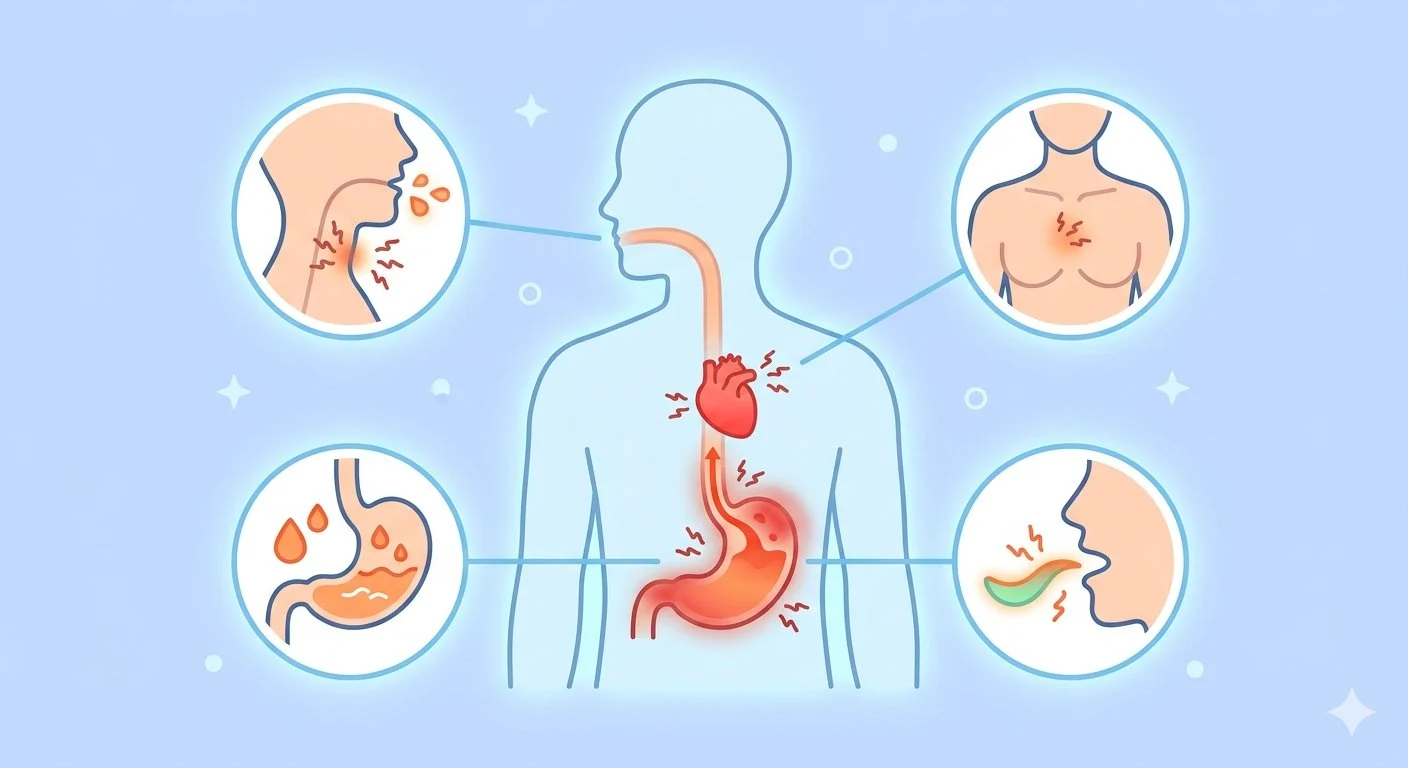
Some people with a stomach ulcer have no obvious symptoms. When symptoms occur, they may include:- Burning or gnawing pain in the upper abdomen, often between the breastbone and navel.
- Pain or discomfort that may change in relation to meals.
- Bloating, belching or a feeling of fullness.
- Nausea and sometimes vomiting.
- Feeling full after eating a small amount.
- Reduced appetite or unintended weight loss.
How Do Doctors Identify What Causes a Stomach Ulcer?
1. H. pylori testing
Doctors may use a urea breath test or a stool antigen test to look for active H. pylori infection. Blood antibody tests may show previous exposure and are generally less useful for confirming active infection or successful eradication. Some medicines, especially proton pump inhibitors, antibiotics and bismuth, can affect test accuracy. The clinician should give instructions about whether and when medicines need to be withheld before testing. Patients should not stop prescribed treatment without advice.2. Upper gastrointestinal endoscopy
Upper GI endoscopy, also called gastroscopy, allows a doctor to examine the oesophagus, stomach and duodenum using a thin flexible camera. It can identify an ulcer, assess bleeding and allow tissue samples (biopsies) to be taken. Biopsies may help test for H. pylori and investigate a suspicious gastric ulcer.3. Biopsy and additional investigations
When a gastric ulcer is found, the clinician may take biopsies to exclude malignancy and may recommend a repeat endoscopy to document healing, depending on the ulcer’s appearance, biopsy findings and clinical circumstances. Blood tests may be used to assess anaemia or other problems, but a routine blood test alone cannot reliably diagnose a stomach ulcer.Practical point: If you are being evaluated for a suspected ulcer, tell the clinician about all prescription medicines, over-the-counter painkillers, aspirin, supplements and previous H. pylori treatment. This information can materially change the investigation and treatment plan.
Treatment of a Stomach Ulcer Depends on Its Cause
When H. pylori is responsible
Doctors generally prescribe a combination of acid suppression and antibiotics. Depending on local antibiotic resistance, previous antibiotic exposure, allergies and current guidelines, treatment may include a proton pump inhibitor (PPI) with multiple antibiotics and sometimes bismuth. The exact regimen should be selected by a clinician; patients should not self-prescribe antibiotics. Completing the full course is important. A test of cure is generally recommended after treatment to confirm that the infection has been eradicated. Testing is commonly performed at least four weeks after antibiotics are completed, with appropriate withholding of PPIs beforehand according to the treating clinician’s instructions.When NSAIDs are responsible
The clinician may stop the NSAID, reduce its dose, shorten its duration or consider an alternative pain-management approach. A PPI is often prescribed to help the ulcer heal. If an NSAID remains essential, the doctor will assess gastrointestinal and cardiovascular risks and consider protective strategies. Do not independently stop aspirin prescribed for prevention of heart attack or stroke.When another cause is suspected
Uncommon causes require treatment directed at the underlying condition. For example, Zollinger–Ellison syndrome needs specialist evaluation and management of excessive acid production and the gastrinoma. An ulcer that persists despite appropriate treatment may need repeat endoscopy, biopsy and a review of the original diagnosis and medicines.How Can You Reduce the Risk of a Stomach Ulcer?
- Use NSAID painkillers only when appropriate and at the lowest effective dose for the shortest necessary period, under medical guidance.
- Avoid taking two NSAIDs together unless a clinician has specifically advised it.
- Tell your doctor if you have had an ulcer or gastrointestinal bleeding before starting an NSAID.
- Ask whether stomach protection is needed if you must take an NSAID and have additional risk factors.
- Get tested and complete treatment if H. pylori infection is diagnosed and treatment is recommended.
- Attend follow-up testing to confirm H. pylori eradication when advised.
- Avoid smoking; stopping smoking can support ulcer healing and reduce recurrence risk.
- Limit alcohol if it worsens symptoms. Alcohol can irritate the stomach lining, although it is not one of the two leading causes of peptic ulcers.
- Follow an eating pattern that reduces your own symptoms. No special diet has been proven to eradicate H. pylori or independently cure an ulcer.
When Should You Seek Medical Attention?
Arrange a medical assessment if upper abdominal pain keeps returning, indigestion does not improve, you repeatedly feel sick, you lose weight without trying or you feel full after eating very little. Persistent symptoms should not automatically be labelled as acidity.Seek emergency medical care immediately if you notice any of the following:
- Vomiting fresh red blood or material that looks like coffee grounds.
- Black, tarry stools or obvious blood in the stool.
- Sudden, severe or persistent abdominal pain, particularly with a hard or very tender abdomen.
- Fainting, marked dizziness, confusion, severe weakness, breathlessness or a rapid heartbeat, which may indicate significant bleeding or shock.
Important Differences: Stomach Ulcer, Gastritis and Acid Reflux
| Condition | What happens? | Common causes or contributors |
|---|---|---|
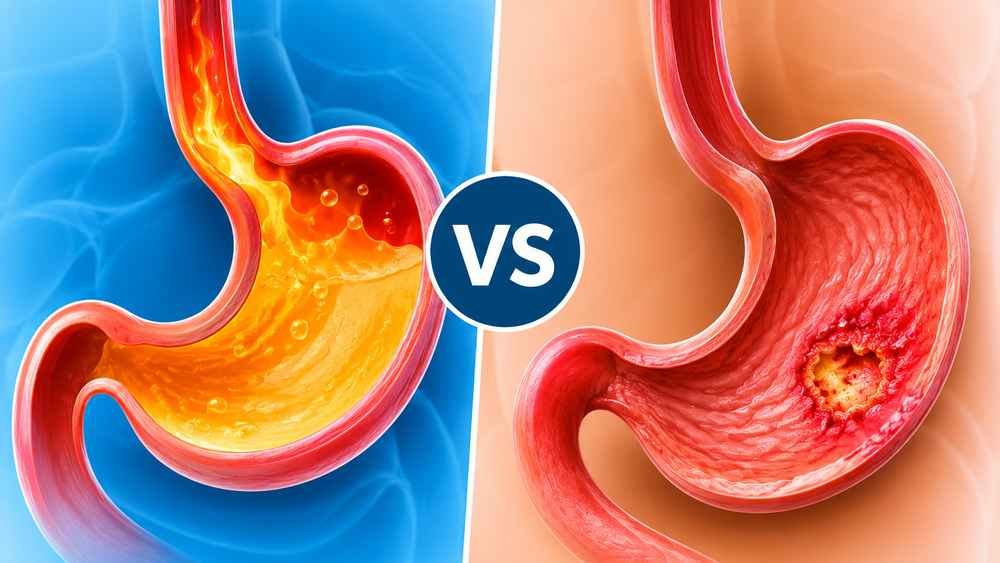
| Stomach ulcer | An open sore develops in the stomach lining. | H. pylori infection and NSAIDs are the leading causes. |
| Gastritis | The stomach lining becomes inflamed. | H. pylori, NSAIDs, alcohol-related irritation and autoimmune conditions, among others. |
| GERD / acid reflux | Stomach contents reflux into the oesophagus. | Failure or relaxation of the anti-reflux barrier and other contributing factors. |
Frequently Asked Questions (FAQs)
1. What is the most common cause of a stomach ulcer?
The two leading causes are H. pylori bacterial infection and NSAID painkillers such as ibuprofen, naproxen and aspirin. Which cause is responsible in an individual patient needs appropriate assessment and testing.2. Can a stomach ulcer develop suddenly?
Symptoms may appear suddenly, but the underlying injury may have been developing for some time. NSAID-associated ulcers can sometimes develop without prominent warning symptoms. Sudden severe pain needs urgent assessment because it may indicate a complication.3. Can painkillers cause stomach ulcers even when taken after food?
Yes. Taking an NSAID with food may reduce some immediate stomach discomfort, but it does not reliably prevent ulcer formation or bleeding. The risk relates to the medicine’s effects on protective prostaglandins as well as other patient factors.4. Can stress cause a stomach ulcer?
Ordinary emotional stress is not an established primary cause of peptic ulcers. Severe physical stress during critical illness can cause stress-related mucosal injury, which is a different condition.5. Do spicy foods cause stomach ulcers?
No. Spicy foods do not usually cause ulcers, although they can worsen discomfort in some people. Avoid foods that trigger symptoms, but do not rely on dietary restriction instead of medical evaluation.6. Can H. pylori cause an ulcer without symptoms?
Yes. Many people with H. pylori have no noticeable symptoms. The infection can nevertheless cause chronic inflammation and contribute to ulcer formation in some individuals.7. Are stomach ulcers contagious?
An ulcer itself is not contagious. H. pylori, one of the major causes, can spread between people. The exact routes are not fully understood, and an infected person does not necessarily develop an ulcer.8. Can a stomach ulcer turn into cancer?
A benign ulcer does not simply turn into cancer in every case. However, some stomach cancers can resemble ulcers, which is why a gastric ulcer may need biopsy and follow-up endoscopy. Long-standing H. pylori infection also increases the risk of certain stomach cancers.9. Can a stomach ulcer heal without treatment?
Some ulcers may improve, but relying on spontaneous healing is unsafe because the underlying cause may remain and complications can occur. H. pylori infection needs appropriate eradication treatment, and NSAID exposure needs medical review.10. Does milk cure a stomach ulcer?
No. Milk may briefly soothe symptoms in some people, but it does not eliminate H. pylori or reliably heal an ulcer. Treatment should be based on the identified cause.11. Can an ulcer bleed without causing pain?
Yes. Ulcer bleeding can occur with little or no preceding pain. Black tarry stools, vomiting blood, faintness or sudden weakness require emergency assessment.12. Which test confirms the cause of a stomach ulcer?
There is no single test for every cause. A urea breath test or stool antigen test can detect active H. pylori infection. Upper GI endoscopy can identify an ulcer and allow biopsies. Medication history is essential when assessing possible NSAID-related injury.Summary
- The two main causes of stomach ulcers are H. pylori infection and NSAID painkiller use.
- Both can weaken the stomach’s protective lining and allow acid-related tissue damage.
- Using NSAIDs at high doses, for long periods or alongside certain other medicines increases risk.
- Everyday emotional stress and spicy food are not established primary causes, although they may aggravate symptoms.
- Less common causes include severe critical illness, certain diseases and Zollinger–Ellison syndrome.
- H. pylori testing, medication review and endoscopy when appropriate help identify the cause.
- Vomiting blood, black stools or sudden severe abdominal pain require emergency medical care.
Conclusion
Knowing what causes a stomach ulcer helps patients and healthcare professionals choose treatment that addresses the underlying problem rather than just temporarily relieving pain. In most cases, the key causes to investigate are H. pylori infection and the use of NSAID painkillers. Both can damage the stomach’s natural protective barrier and allow acid to produce an ulcer. Accurate diagnosis is important because treatment differs according to the cause. H. pylori requires an appropriate eradication regimen, while NSAID-related ulcers require a careful review of pain medicines and acid suppression. Persistent or recurrent symptoms should be medically assessed, and warning signs of bleeding or perforation must never be ignored.Related Educational Video
For an additional explanation, see educational videos on H. pylori and peptic ulcer disease from established medical sources: Watch educational videos about H. pylori and peptic ulcers on YouTube. Choose material from recognized medical institutions and use it as general education, not as a substitute for individual medical advice.References and Further Reading
- National Institute of Diabetes and Digestive and Kidney Diseases (NIDDK): Symptoms & Causes of Peptic Ulcers.
- NIDDK: Treatment for Peptic Ulcers.
- NIDDK: Definition & Facts for Peptic Ulcers.
- National Health Service (NHS): Stomach Ulcer.
- NHS inform: Stomach Ulcer.
- American College of Gastroenterology: 2024 Guideline Summary on Treatment of Helicobacter pylori Infection.
- Mayo Clinic: Peptic Ulcer – Symptoms and Causes.
- Mayo Clinic: Zollinger–Ellison Syndrome – Symptoms and Causes.
Medical Disclaimer
This article is intended for general health education only. It does not provide an individual diagnosis or replace consultation with a qualified doctor or gastroenterologist. Abdominal pain and indigestion can have several causes, and symptoms alone cannot confirm a stomach ulcer. Do not start antibiotics, stop prescribed aspirin or other essential medicines, or change painkiller treatment without medical advice. Seek emergency care for vomiting blood, black tarry stools, fainting or sudden severe abdominal pain.📲 For Health-Related Articles & Videos
🔹 Facebook: https://www.facebook.com/positivemind.healthcare🔹 YouTube: http://www.youtube.com/@healthuseful8539/
ENT Consultation & Surgery
Dr. Sagar Rajkuwar (MS-ENT) Consultant ENT Specialist & Head-Neck SurgeonPrabha ENT Clinic, Ambad, Nashik, Maharashtra, India