Article author: Dr. Sagar Rajkuwar, MS-ENT 🌐 www.entspecialistinnashik.com
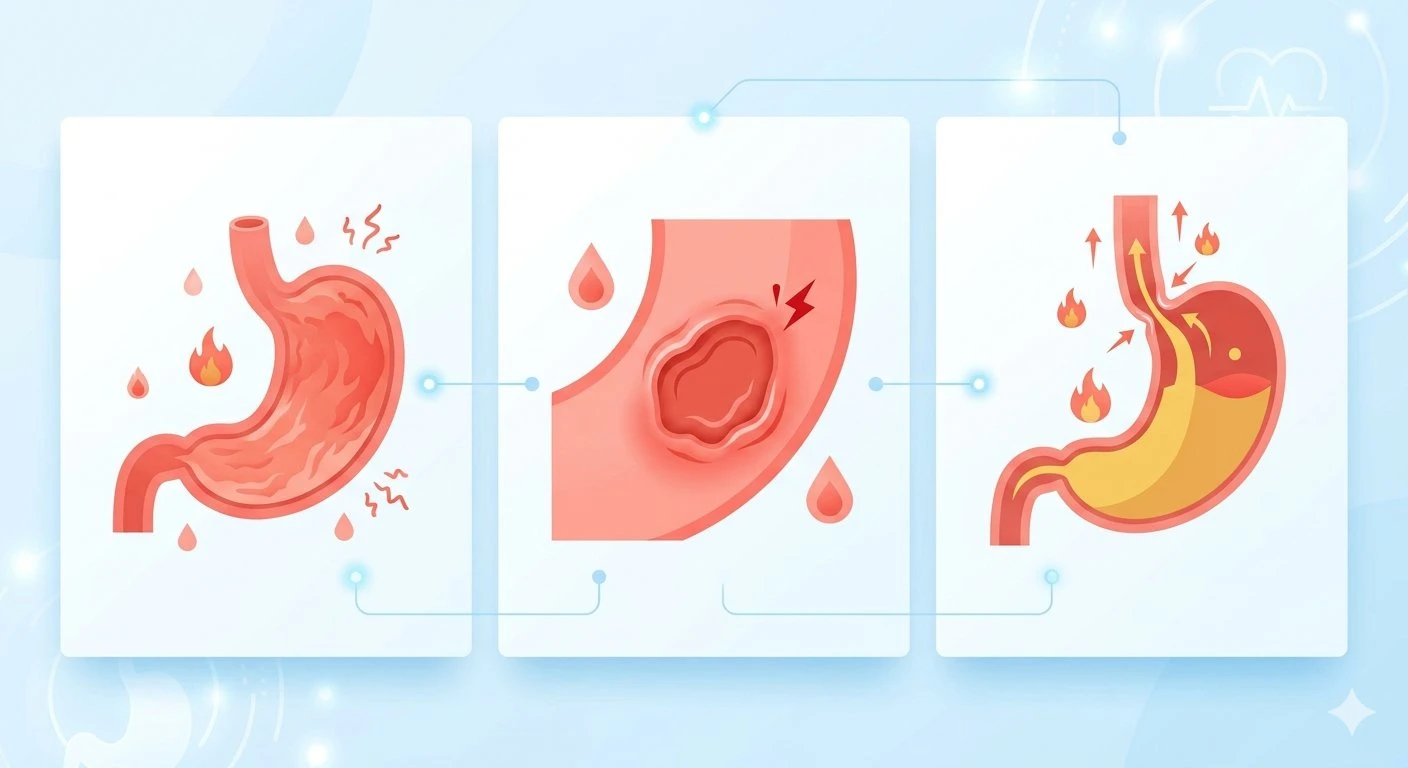
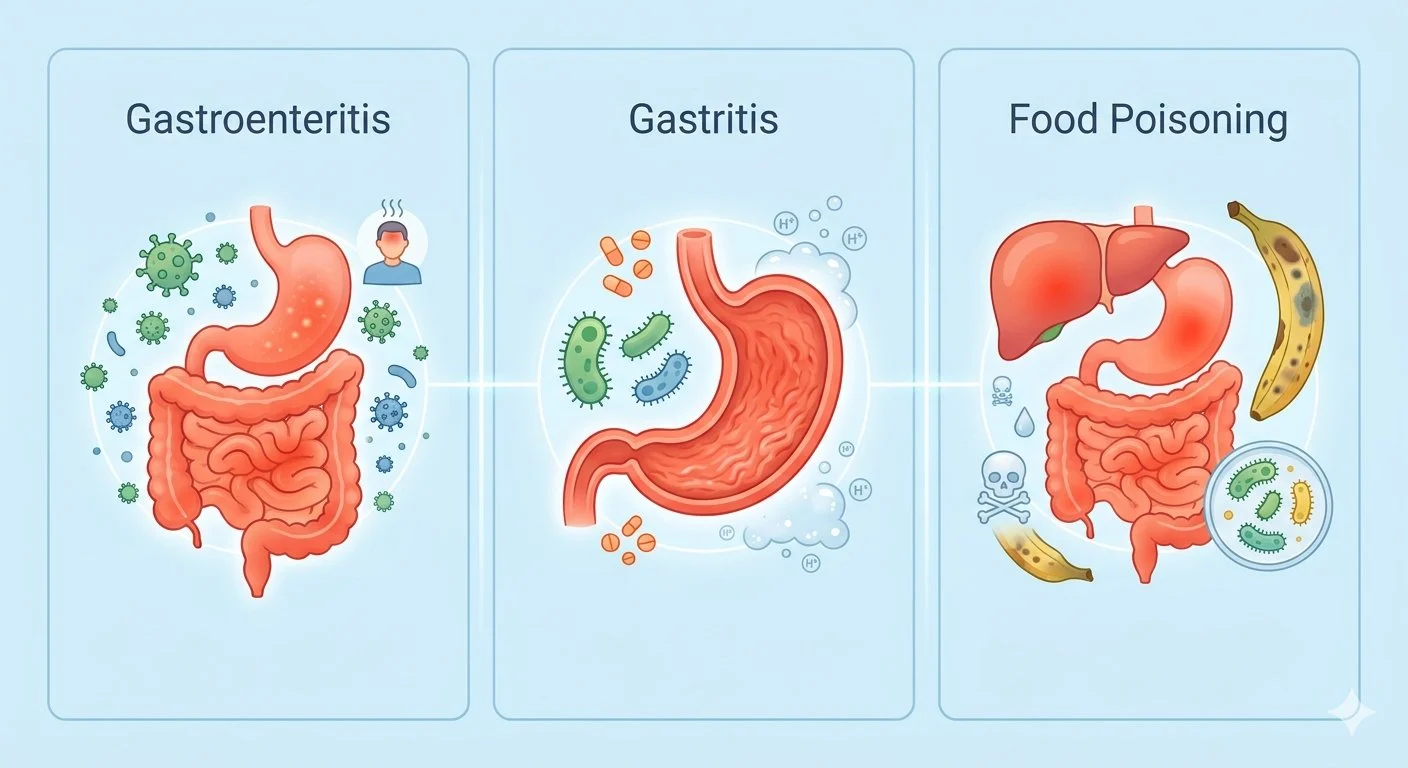
Gastritis vs ulcer vs GERD: quick comparison
The following table provides a practical overview. It is not a diagnostic checklist: symptoms overlap, and some people with gastritis or ulcers have no symptoms until a complication occurs.| Feature | Gastritis | Peptic ulcer | GERD |
|---|---|---|---|
| What it is | Inflammation of the stomach lining | An open sore in the stomach or duodenal lining | Reflux of stomach contents causing troublesome symptoms or complications |
| Main area involved | Stomach lining | Stomach or duodenum | Oesophagus, sometimes with related throat or respiratory symptoms |
| Common causes | H. pylori, NSAIDs, autoimmune disease, alcohol-related irritation and other causes | H. pylori and NSAIDs are the leading causes | Reflux related to an impaired anti-reflux barrier; hiatal hernia and other factors may contribute |
| Typical symptoms | May have none; indigestion, upper abdominal discomfort, nausea or early fullness | May have none; upper abdominal pain, sometimes night pain, nausea or bleeding | Heartburn and regurgitation; symptoms may worsen after meals or lying down |
| Best-known clue | Stomach-lining inflammation, not just “acidity” | A visible mucosal break or sore | Acid or stomach contents coming back up into the oesophagus |
| Important tests | H. pylori testing; sometimes endoscopy and biopsy | Upper GI endoscopy; testing for H. pylori | Clinical assessment; endoscopy or reflux monitoring in selected cases |
| Major complications | Bleeding; selected chronic forms can cause nutrient deficiency or other changes | Bleeding, perforation or gastric outlet obstruction | Erosive oesophagitis, stricture and Barrett’s oesophagus in some patients |
1. What is gastritis?
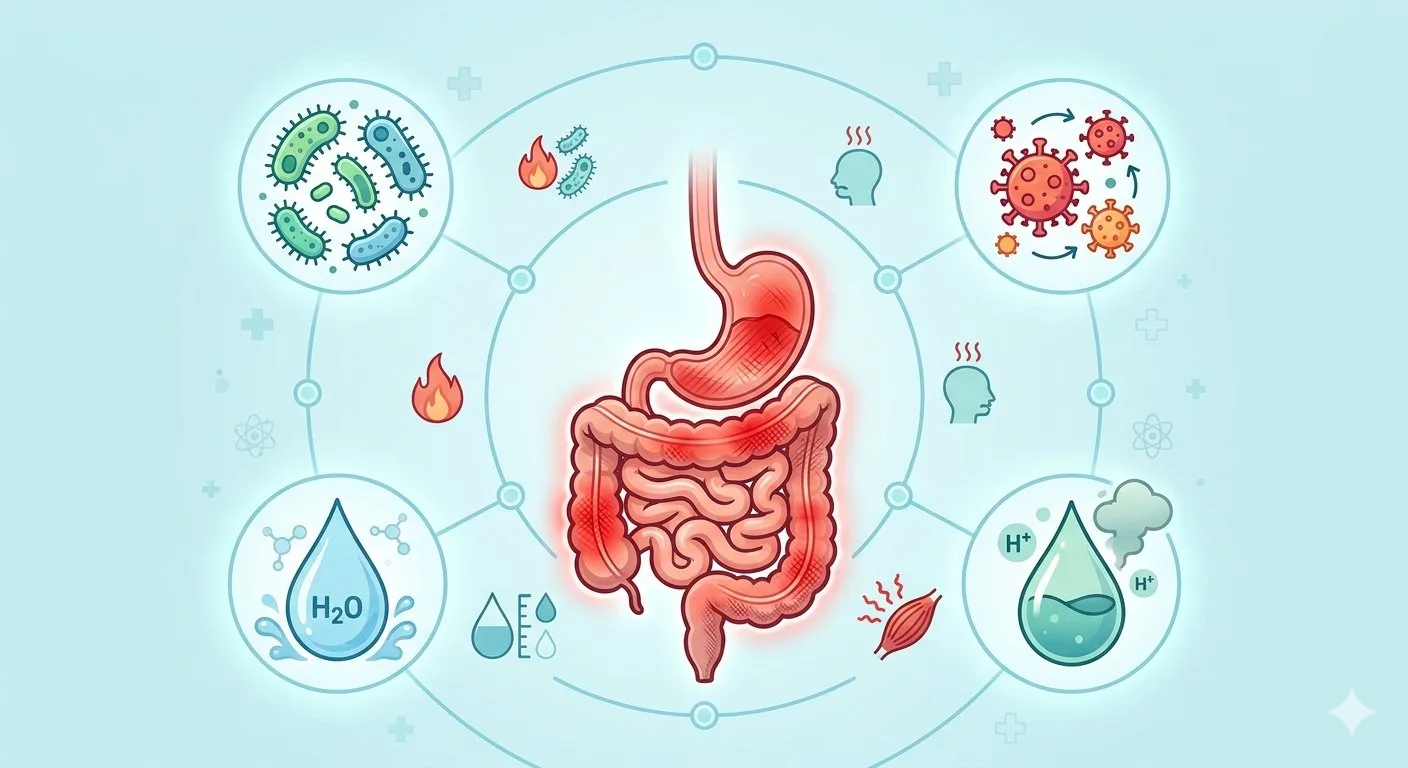
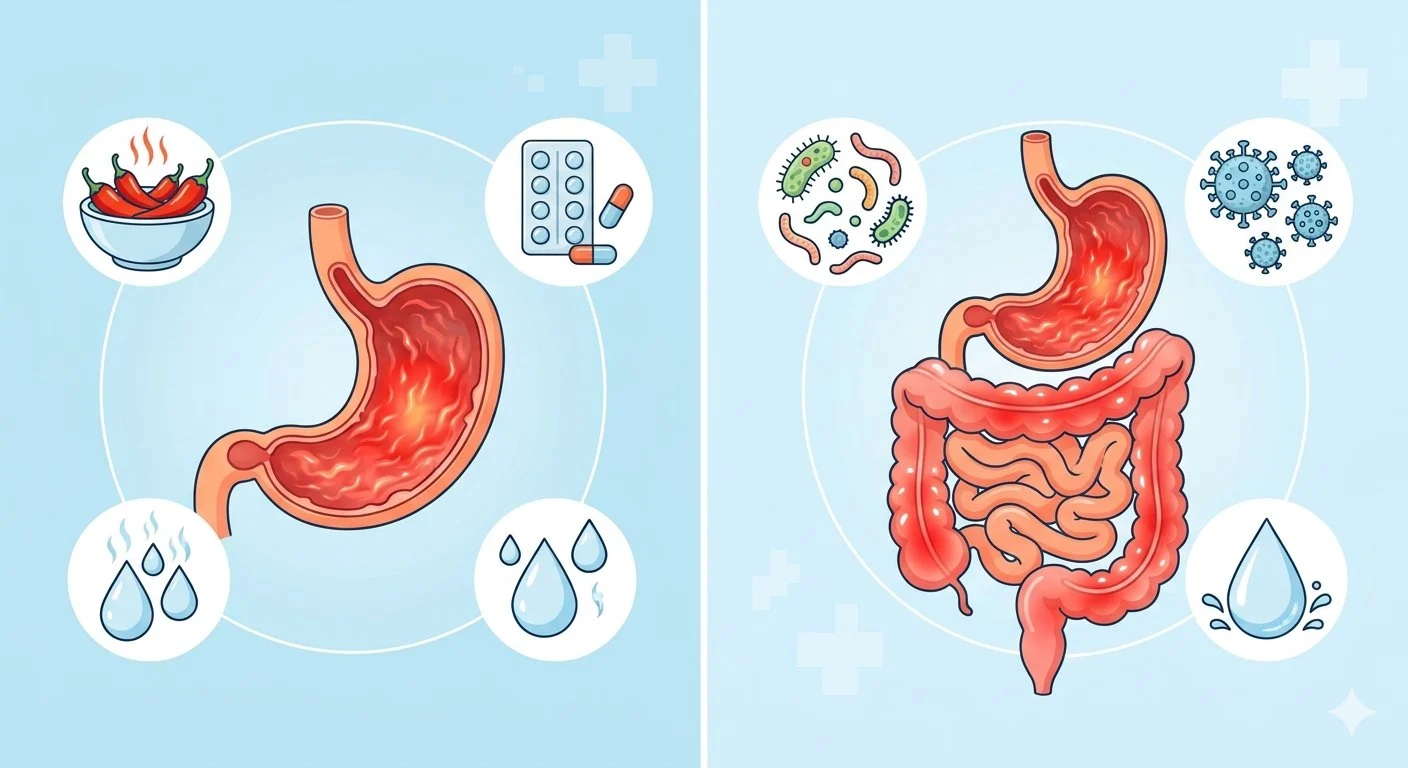
Gastritis is inflammation of the gastric mucosa, the protective lining inside the stomach. It may be acute or chronic. A related term, gastropathy, refers to damage to the stomach lining with little or no inflammation. The distinction can matter when interpreting endoscopy and biopsy findings.Causes of gastritis
- Helicobacter pylori (H. pylori): a bacterium and a major cause of chronic gastritis. It is also associated with peptic ulcer disease.
- Non-steroidal anti-inflammatory drugs (NSAIDs): medicines such as ibuprofen, naproxen and aspirin can weaken the stomach’s protective mechanisms.
- Autoimmune gastritis: the immune system attacks cells in the stomach lining. This can impair vitamin B12 and iron absorption.
- Alcohol and chemical irritation: heavy alcohol exposure and bile reflux can damage the lining.
- Severe physical stress: critical illness, major burns, severe injury or sepsis can cause acute erosive injury.
Symptoms of gastritis
Many people with gastritis have no symptoms. When symptoms occur, they can include upper abdominal discomfort, nausea, vomiting, loss of appetite, feeling full soon after beginning a meal, or uncomfortable fullness after eating. These symptoms are collectively described as dyspepsia and can also occur in other conditions.Does gastritis always cause acidity?
No. “Acidity” is a common everyday term, but it does not identify a specific disease. Gastritis, reflux, peptic ulcer disease and functional dyspepsia can produce similar complaints. A diagnosis of gastritis is based on the clinical context and, when appropriate, testing—not simply on a burning sensation.Clinical point
Gastritis does not inevitably progress to an ulcer. Some causes, especially H. pylori, can cause both gastritis and peptic ulcers, but many people with gastritis never develop an ulcer.2. What is a peptic ulcer?
A peptic ulcer is a break or sore in the lining of the stomach or duodenum caused by damage from acid and digestive factors. An ulcer in the stomach is called a gastric ulcer; one in the duodenum is called a duodenal ulcer.Main causes of peptic ulcers
- H. pylori infection: damages protective mechanisms and promotes inflammation, increasing ulcer risk.
- NSAID use: regular or prolonged use can reduce protective prostaglandins and make the lining more vulnerable to injury.
Symptoms of gastric and duodenal ulcers
The most recognised symptom is pain or discomfort in the upper abdomen, often described as burning or gnawing. Some people report pain at night or around meals, but the timing is not sufficiently reliable to determine whether an ulcer is gastric or duodenal. Others have no pain at all. Additional symptoms may include nausea, bloating, belching, early fullness or indigestion. An ulcer may first become apparent through a complication such as bleeding.Gastric ulcer vs duodenal ulcer
| Feature | Gastric ulcer | Duodenal ulcer |
|---|---|---|
| Location | Stomach | Duodenum, usually its first part |
| Pain pattern | May occur after meals in some patients | May occur when the stomach is empty or at night in some patients |
| Reliability of meal relationship | Variable; pain timing cannot reliably distinguish the two | |
| Evaluation | Endoscopy and assessment for H. pylori, as clinically appropriate | |
Why an ulcer should not be ignored
Peptic ulcers can bleed, perforate the wall of the digestive tract or cause narrowing that obstructs the passage of food. These complications can be serious and require prompt or emergency treatment.3. What is GERD?
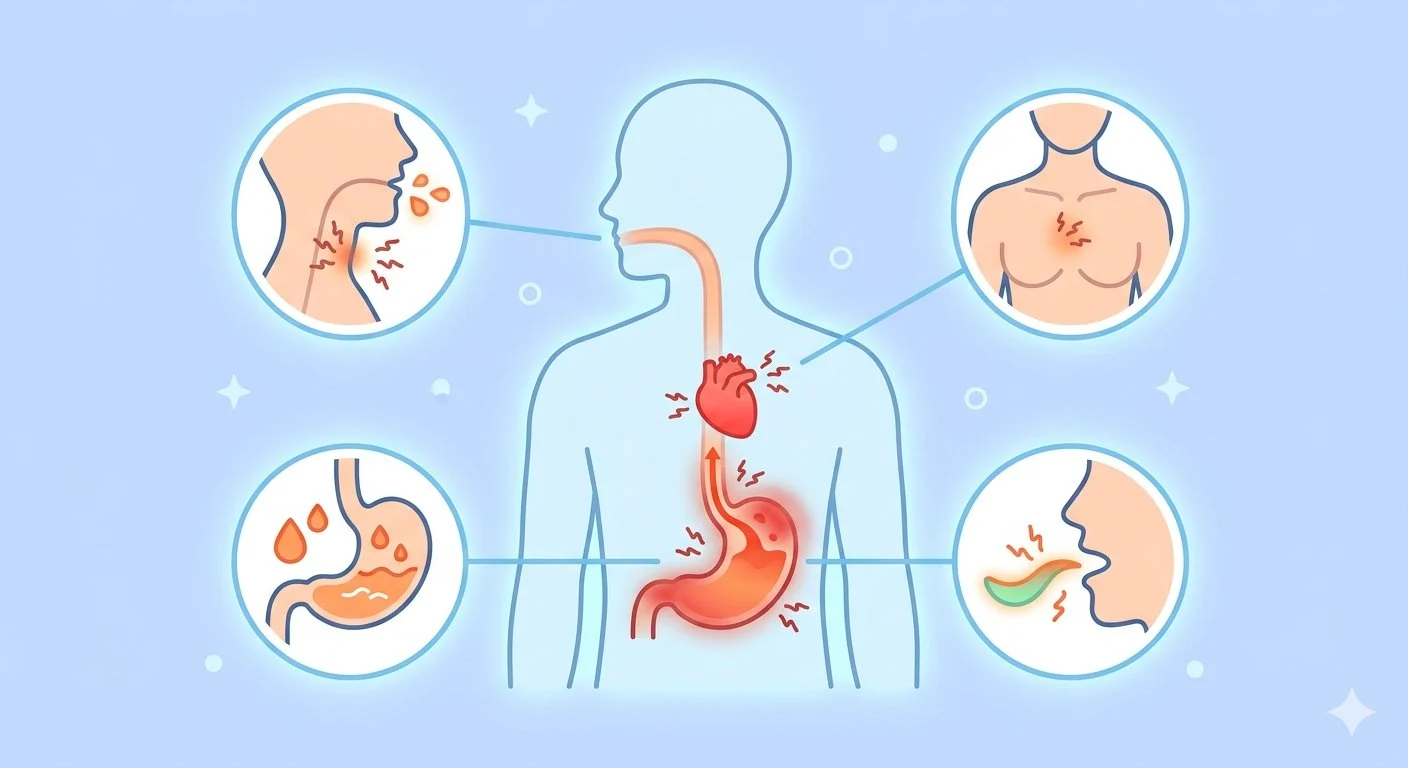
Gastroesophageal reflux disease (GERD) occurs when stomach contents repeatedly flow back into the oesophagus and cause troublesome symptoms or complications. Occasional reflux after a large meal can happen in healthy people; GERD refers to reflux that becomes clinically significant.Why does GERD occur?
The lower oesophageal sphincter (LES) is a muscular valve-like region between the oesophagus and stomach. It normally helps prevent stomach contents from moving upward. Transient relaxation or reduced function of this anti-reflux barrier can allow reflux. A hiatal hernia, excess body weight, pregnancy and certain habits or medicines may contribute in some people.Typical symptoms of GERD
- Heartburn: burning discomfort behind the breastbone, sometimes rising toward the throat.
- Regurgitation: sour or bitter fluid, or stomach contents, coming back into the throat or mouth.
- Symptoms after meals, bending forward or lying down.
- Night-time reflux or disturbed sleep in some people.
GERD is not the same as gastritis
GERD primarily involves reflux into the oesophagus. Gastritis involves the stomach lining. A person may have both, but one diagnosis does not prove the other.Can GERD occur without heartburn?
Yes, some people have regurgitation or other presentations without typical heartburn. However, isolated cough, hoarseness or throat symptoms are not enough to diagnose GERD; other causes should be considered.4. Gastritis vs ulcer vs GERD: symptoms and pain-pattern differences
The pattern of symptoms may suggest which condition needs evaluation, but it cannot establish the diagnosis. In particular, upper abdominal burning is not specific to gastritis or an ulcer, and chest burning should not automatically be assumed to be reflux.| Symptom | Gastritis | Peptic ulcer | GERD |
|---|---|---|---|
| Upper abdominal discomfort | Possible | Common possible feature | May occur, but not the defining symptom |
| Burning behind breastbone | Not typical | May be described as indigestion, but less characteristic | Typical |
| Sour fluid coming into mouth | Not typical | Not typical | Typical regurgitation symptom |
| Nausea | Possible | Possible | Can occur |
| Early fullness | Possible | Possible | Not a defining feature |
| Difficulty swallowing | Not typical | Not typical | May indicate oesophageal disease or a complication; needs assessment |
| Vomiting blood or black stool | Possible if bleeding occurs | Important ulcer complication | Not typical; investigate urgently |
Three examples that illustrate the differences
Example 1: Recurrent upper abdominal discomfort and nausea. Gastritis is one possibility, but an ulcer, functional dyspepsia, gallbladder disease and other conditions may produce similar symptoms. Evaluation depends on age, history and alarm features. Example 2: Burning behind the breastbone with sour fluid coming up after meals. This pattern is characteristic of GERD, especially if it worsens when lying down. It still needs clinical assessment if persistent, severe or associated with warning signs. Example 3: Sudden severe upper abdominal pain with black stools. This is not ordinary “acidity.” It may indicate gastrointestinal bleeding or another serious problem and requires emergency medical assessment.Chest pain: an important safety distinction
Heart-related pain can feel like indigestion or heartburn. New, severe or unexplained chest pressure, especially with breathlessness, sweating, nausea, faintness or pain spreading to the arm, jaw or back, requires emergency evaluation. Do not assume chest pain is GERD until a heart cause has been considered.5. Causes and risk factors: what do the three conditions share?
H. pylori: the link between gastritis and ulcers
H. pylori is an important connection between gastritis and peptic ulcer disease. The bacterium can cause chronic inflammation of the stomach lining and is a major cause of gastric and duodenal ulcers. However, not everyone infected develops an ulcer, and the infection is not the usual cause of GERD.NSAIDs: a major ulcer and stomach-injury risk
NSAIDs such as ibuprofen, naproxen and aspirin can cause gastropathy and peptic ulcers. Risk may be higher with previous ulcer or bleeding, older age, higher doses, prolonged use, or use alongside certain medicines such as anticoagulants or corticosteroids. A clinician should review the full medication list and individual risk.Factors associated with GERD
- Overweight or obesity, particularly increased abdominal pressure
- Hiatal hernia
- Pregnancy
- Meals close to bedtime or lying down soon after eating
- Individual food or drink triggers
- Smoking and some medicines that affect the anti-reflux barrier
6. Can gastritis, ulcer and GERD occur together?
Yes. These conditions can coexist because they affect different structures and may have different causes. For example, a person may have H. pylori-associated gastritis and a duodenal ulcer, while also experiencing GERD. Another person may have GERD and NSAID-related stomach injury. Finding one condition does not automatically exclude the others. If symptoms persist despite appropriate treatment, the clinician may reconsider the diagnosis, assess medication use, check for H. pylori, or investigate another cause.Why the distinction changes treatment
- H. pylori gastritis: needs an eradication regimen, not acid suppression alone.
- Peptic ulcer: requires treatment of the cause, acid suppression and assessment for complications; follow-up testing or endoscopy may be needed in selected cases.
- GERD: is managed with lifestyle measures and acid suppression when appropriate; testing may be needed if symptoms are atypical or treatment does not work.
7. How are gastritis, ulcers and GERD diagnosed?
Diagnosis begins with a careful history and examination. A clinician will ask where the discomfort is located, whether it is related to meals or lying down, how long it has been present, whether there is regurgitation or difficulty swallowing, and which medicines are being taken. Age, family history, anaemia, weight loss and bleeding symptoms influence the need for investigations.Tests for gastritis and H. pylori
Testing may include a urea breath test or stool antigen test for H. pylori. Blood tests may be used to assess anaemia or nutrient deficiencies in selected patients. Upper gastrointestinal endoscopy with biopsy may be appropriate when symptoms, risk factors or alarm features warrant direct examination of the stomach lining.Tests for peptic ulcer disease
Upper GI endoscopy allows a clinician to identify an ulcer, assess bleeding and take biopsies when indicated. Testing for H. pylori is important because eradication reduces recurrence and complications. A gastric ulcer may require follow-up endoscopy depending on its appearance, biopsy results and clinical context.Tests for GERD
Typical heartburn and regurgitation without alarm features may be assessed clinically. If the diagnosis is uncertain, symptoms do not respond to appropriate treatment, or alarm features are present, upper GI endoscopy and/or ambulatory reflux monitoring may be recommended. Reflux monitoring measures acid exposure and can help establish whether symptoms are associated with reflux.When is endoscopy particularly important?
Alarm features such as difficulty swallowing, painful swallowing, unexplained weight loss, gastrointestinal bleeding, persistent vomiting or iron-deficiency anaemia generally warrant prompt clinical evaluation and often endoscopy. The urgency and exact test depend on the patient’s condition.Do not diagnose based on response to antacids alone
Temporary relief after an antacid or acid-suppressing medicine does not prove GERD, gastritis or an ulcer. Several upper digestive conditions can improve temporarily when acid is reduced.8. Treatment: how does management differ?
Treatment depends on the confirmed or most likely diagnosis, cause, severity and risk of complications. The medicines below are treatment categories, not a recommendation to self-prescribe.A. Treatment of gastritis
- H. pylori-associated gastritis: treated with a prescribed combination of medicines, generally including multiple antibiotics and a proton pump inhibitor (PPI); bismuth may be part of the regimen. Choice depends on resistance patterns, allergies and prior antibiotic exposure.
- NSAID-related injury: the clinician reviews the need for the NSAID, dose and alternatives, and may prescribe acid suppression. Do not stop prescribed aspirin or other essential medicines without medical advice.
- Autoimmune gastritis: management may include monitoring and treatment of vitamin B12 or iron deficiency, as well as follow-up based on individual risk.
- Other causes: treatment is directed at the underlying condition or irritant.
B. Treatment of peptic ulcer
Most peptic ulcers are treated with acid suppression, commonly a PPI, and correction of the underlying cause. If H. pylori is present, eradication therapy is essential. If an NSAID is contributing, the prescriber should assess whether it can be stopped, reduced or replaced safely. Bleeding ulcers may require endoscopic treatment, hospital care and, rarely, surgery or interventional radiology.C. Treatment of GERD
For typical heartburn and regurgitation without alarm features, clinical guidelines support a time-limited trial of a PPI taken before a meal under clinician guidance. PPIs are generally more effective than H2-receptor blockers for healing erosive oesophagitis. Treatment should be reviewed rather than continued indefinitely without a clear indication.Important differences between acid medicines
| Medicine group | General role | Important limitation |
|---|---|---|
| Antacids | Neutralise existing stomach acid and may provide short-term relief | Do not eradicate H. pylori or heal every cause of symptoms |
| H2-receptor blockers | Reduce acid production | May be useful in selected cases; not equivalent to treating the cause of an ulcer |
| PPIs | Strongly suppress acid; used in GERD and ulcer treatment and as part of H. pylori regimens | Do not eradicate H. pylori alone; dose and duration need review |
| Antibiotics | Used in combination regimens to eradicate H. pylori | Not routine treatment for GERD or uncomplicated non-infectious gastritis |
Do not stop aspirin or blood thinners without advice
Aspirin, antiplatelet medicines and anticoagulants may increase bleeding risk, especially when combined with NSAIDs. However, these medicines may be prescribed to prevent heart attacks, strokes or blood clots. If you develop stomach symptoms or bleeding, obtain urgent medical advice; do not independently stop essential treatment.9. Lifestyle measures, diet and prevention
For GERD
- Avoid lying down for about 2–3 hours after meals if this triggers reflux.
- Consider smaller meals if large meals worsen symptoms.
- Identify and reduce personal trigger foods rather than eliminating many foods unnecessarily.
- Raise the head end of the bed for troublesome night-time symptoms; extra pillows alone may not provide the same effect.
- Weight reduction can improve symptoms in people who are overweight or obese.
- Avoid tobacco and discuss alcohol if it worsens symptoms.
For gastritis and peptic ulcer risk
- Avoid unnecessary or unsupervised NSAID use.
- Seek testing and appropriate treatment if H. pylori is suspected.
- Limit alcohol if it aggravates symptoms or contributes to stomach injury.
- Do not assume that spicy foods cause ulcers; they may trigger discomfort in some people but are not the usual cause of peptic ulcer disease.
Is a special diet required?
There is no universal diet that cures gastritis, peptic ulcer disease or GERD. Diet changes may reduce symptoms, particularly in GERD, but H. pylori requires eradication therapy and an ulcer needs cause-directed treatment. A food and symptom diary can help identify individual triggers without imposing unnecessary restrictions.10. Warning signs: when should you seek medical care?
Do not dismiss the following symptoms as ordinary acidity, gastritis or indigestion.Seek emergency medical care for possible bleeding or perforation
- Vomiting blood or material that looks like coffee grounds
- Black, tarry stools or maroon/bloody stools
- Sudden, severe or persistent abdominal pain, especially with a rigid or very tender abdomen
- Fainting, marked dizziness, rapid pulse, cold clammy skin or signs of shock
Arrange prompt medical evaluation for
- Progressive or persistent difficulty swallowing
- Painful swallowing
- Unexplained weight loss or loss of appetite
- Persistent vomiting
- Unexplained anaemia or unusual fatigue
- Symptoms that persist, recur or fail to improve with appropriate treatment
Chest pain needs special caution
Chest pressure, tightness or burning can be caused by heart disease as well as reflux. If chest discomfort is new, severe, occurs with exertion, or is associated with breathlessness, sweating, faintness or pain radiating to the arm, jaw or back, seek emergency care. Do not take an acid medicine and wait to see whether potentially cardiac pain settles.11. A practical guide: which condition might fit the symptom pattern?
This guide can help you describe symptoms to a clinician, but it cannot diagnose you.- Burning behind the breastbone with sour regurgitation: GERD is a possibility, particularly after meals or when lying down.
- Upper abdominal discomfort, nausea or early fullness: gastritis or dyspepsia may be considered, but other causes are possible.
- Persistent upper abdominal pain with a history of NSAID use or H. pylori: peptic ulcer disease should be considered and assessed.
- Black stools, vomiting blood, sudden severe pain or fainting: seek emergency medical care.
- Chest pain with breathlessness, sweating or exertion: emergency assessment is needed to exclude a heart problem.
Frequently Asked Questions
1. What is the difference between gastritis, an ulcer and GERD?
Gastritis is inflammation of the stomach lining. A peptic ulcer is an open sore in the stomach or duodenum. GERD is reflux of stomach contents into the oesophagus that causes troublesome symptoms or complications.2. Can gastritis, ulcer and GERD occur at the same time?
Yes. They affect different structures and can coexist. For example, H. pylori may cause gastritis and a peptic ulcer, while GERD may be present independently.3. Does gastritis turn into an ulcer?
Not always. Some causes, especially H. pylori, can cause both gastritis and ulcers. However, many people with gastritis do not develop ulcers. The underlying cause and individual risk factors matter.4. How can I tell GERD from gastritis?
GERD more typically causes heartburn behind the breastbone and regurgitation of sour fluid. Gastritis may cause upper abdominal discomfort, nausea or early fullness. Symptoms overlap, so clinical assessment may be needed.5. Can an ulcer cause heartburn?
An ulcer can cause upper abdominal pain and indigestion, sometimes described as burning. Heartburn and regurgitation are more characteristic of GERD, but symptoms alone cannot reliably distinguish the conditions.6. Which is more dangerous: gastritis, ulcer or GERD?
Severity depends on the individual case. Uncomplicated GERD or gastritis may be manageable, while a peptic ulcer can bleed or perforate. Severe erosive oesophagitis and other complications of GERD also need treatment. Warning signs matter more than the label alone.7. Can stress cause gastritis or ulcers?
Everyday psychological stress is not considered the usual direct cause of peptic ulcers; H. pylori and NSAIDs are the major causes. Severe physical stress from critical illness, burns or major injury can cause acute erosive stomach injury. Stress may also worsen the perception of digestive symptoms.8. Can spicy food cause an ulcer?
Spicy food is not a usual cause of peptic ulcers. It may aggravate symptoms in some people. Most peptic ulcers are associated with H. pylori or NSAID use.9. Does a PPI cure all three conditions?
No. PPIs reduce acid and are useful for GERD and many peptic ulcers, and may be used in selected gastritis treatment. But a PPI alone does not eradicate H. pylori, and it does not correct every underlying cause.10. Is endoscopy necessary for every patient?
No. Many people with typical reflux symptoms and no alarm features can initially be assessed clinically. Endoscopy is more important when there are alarm symptoms, suspected ulcer complications, persistent symptoms or diagnostic uncertainty.11. Can I take painkillers if I have gastritis or an ulcer?
Do not start NSAIDs such as ibuprofen or naproxen without medical advice if you have gastritis or an ulcer history. They can worsen stomach injury and bleeding risk. Ask a clinician about safer options based on your medical history. Do not stop prescribed aspirin or blood-thinning medicines independently.12. When is stomach burning an emergency?
Seek emergency care for vomiting blood, coffee-ground vomit, black tarry stools, sudden severe abdominal pain, fainting or signs of shock. New chest pain with breathlessness, sweating or radiation to the arm or jaw also requires emergency assessment.Summary
- Gastritis: inflammation of the stomach lining; may cause dyspepsia or no symptoms.
- Peptic ulcer: an open sore in the stomach or duodenum, commonly related to H. pylori or NSAIDs.
- GERD: reflux of stomach contents into the oesophagus, commonly causing heartburn and regurgitation.
- H. pylori links gastritis and ulcers, but it is not the usual cause of GERD.
- Symptoms overlap, so pain location or response to antacids cannot establish the diagnosis.
- Treatment differs: eradicate H. pylori when present, address NSAID injury, treat ulcers and manage reflux appropriately.
- Blood in vomit or stool, black stools, sudden severe abdominal pain, fainting, difficulty swallowing or unexplained weight loss need prompt assessment.
Conclusion
Understanding gastritis vs ulcer vs GERD is important because the three conditions may feel similar but are medically different. Gastritis is inflammation of the stomach lining, a peptic ulcer is a sore in the stomach or duodenum, and GERD is a reflux disorder affecting the oesophagus. H. pylori and NSAIDs are important causes of gastritis and ulcers, while GERD involves failure of the normal anti-reflux barrier. More than one condition can coexist, and symptoms alone cannot reliably distinguish them. Seek assessment for persistent symptoms and urgent care for bleeding, severe pain, fainting or possible cardiac chest pain. Accurate diagnosis helps ensure that treatment addresses the actual cause rather than simply suppressing symptoms.Related educational video
For patient education on acid reflux and GERD, see the American College of Gastroenterology’s patient resources: American College of Gastroenterology: Acid Reflux and GERD. Editorial note: If a YouTube video is required, embed a specific video only after verifying that it is from a recognised medical institution and directly relevant to this article. This page currently links to an authoritative educational resource rather than an unverified YouTube URL.Medical disclaimer
This article is intended for general educational purposes and does not replace individual medical advice, diagnosis or treatment. Upper abdominal pain, heartburn and indigestion can have causes other than gastritis, peptic ulcer disease or GERD. Chest pain may be cardiac and must not automatically be attributed to reflux. Do not start, stop or change prescription medicines, aspirin, antiplatelet medicines, anticoagulants, NSAIDs or antibiotics based only on this article. Seek urgent medical care for gastrointestinal bleeding, sudden severe abdominal pain, fainting, shock symptoms or concerning chest pain.References and further reading
- National Institute of Diabetes and Digestive and Kidney Diseases (NIDDK): Gastritis & Gastropathy.
- NIDDK: Symptoms and Causes of Gastritis and Gastropathy.
- NIDDK: Treatment of Gastritis and Gastropathy.
- NIDDK: Peptic Ulcers (Stomach or Duodenal Ulcers).
- NIDDK: Symptoms and Causes of Peptic Ulcers.
- NIDDK: Treatment of Peptic Ulcers.
- NIDDK: Acid Reflux (GER & GERD) in Adults.
- American College of Gastroenterology: Clinical Guideline for the Diagnosis and Management of GERD.
- American Society for Gastrointestinal Endoscopy: GERD Guideline Summary and Recommendations.
- NHS: Stomach Ulcer.
- American College of Gastroenterology: Acid Reflux.
📲 For Health-Related Articles & Videos
🔹 Facebook: https://www.facebook.com/positivemind.healthcare🔹 YouTube: http://www.youtube.com/@healthuseful8539/
ENT Consultation & Surgery
Dr. Sagar Rajkuwar (MS-ENT) Consultant ENT Specialist & Head-Neck SurgeonPrabha ENT Clinic, Ambad, Nashik, Maharashtra, India