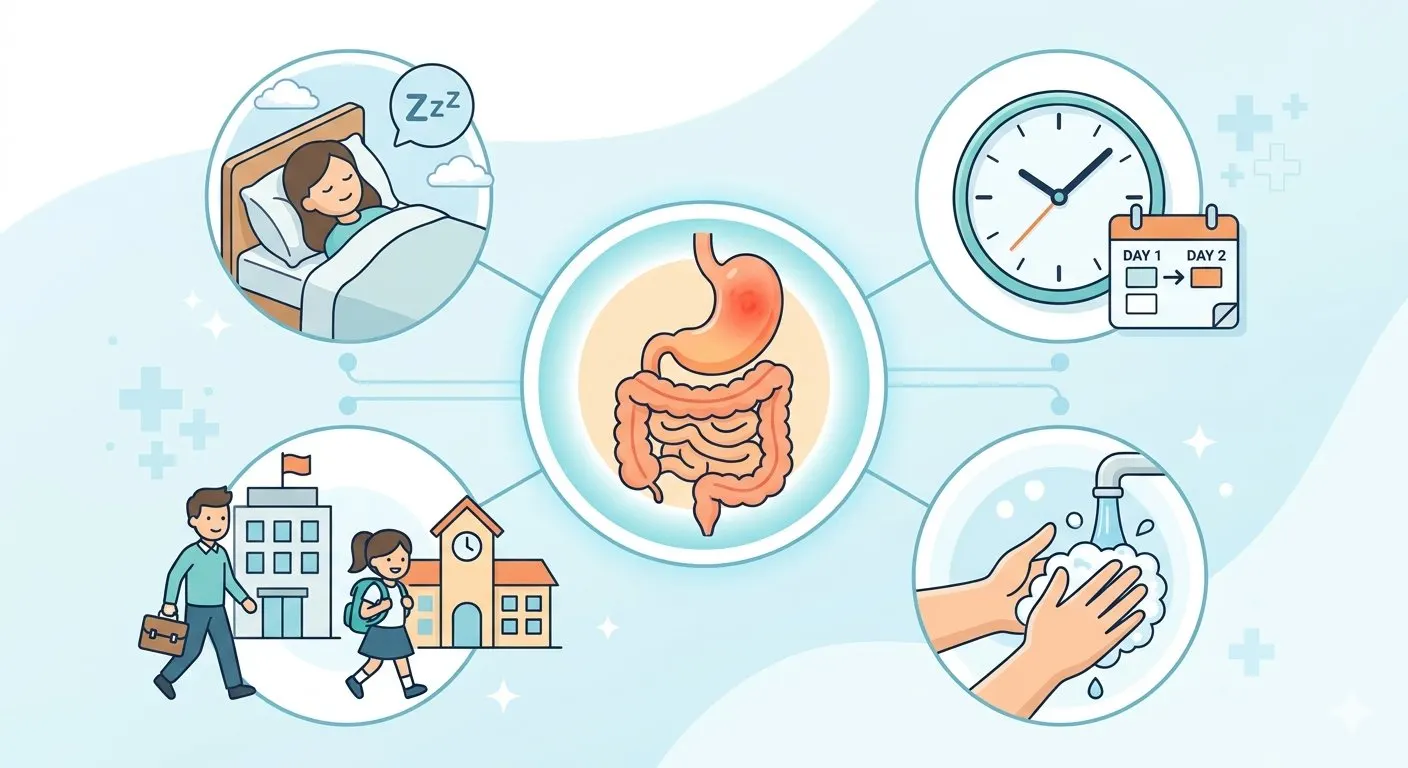
How Long Does Your Gut Take to Heal After Gastroenteritis?-various aspects-
Article author: Dr. Sagar Rajkuwar, MS-ENT 🌐 www.entspecialistinnashik.com
How Long Does It Take Your Gut to Heal After Gastroenteritis?
Vomiting and diarrhoea may settle within a few days, but the digestive system can take longer to feel completely normal. Some people continue to notice bloating, excess gas, loose stools, food sensitivity or irregular bowel movements after the infection itself has passed. This can be worrying, especially when appetite has returned but digestion still feels unsettled.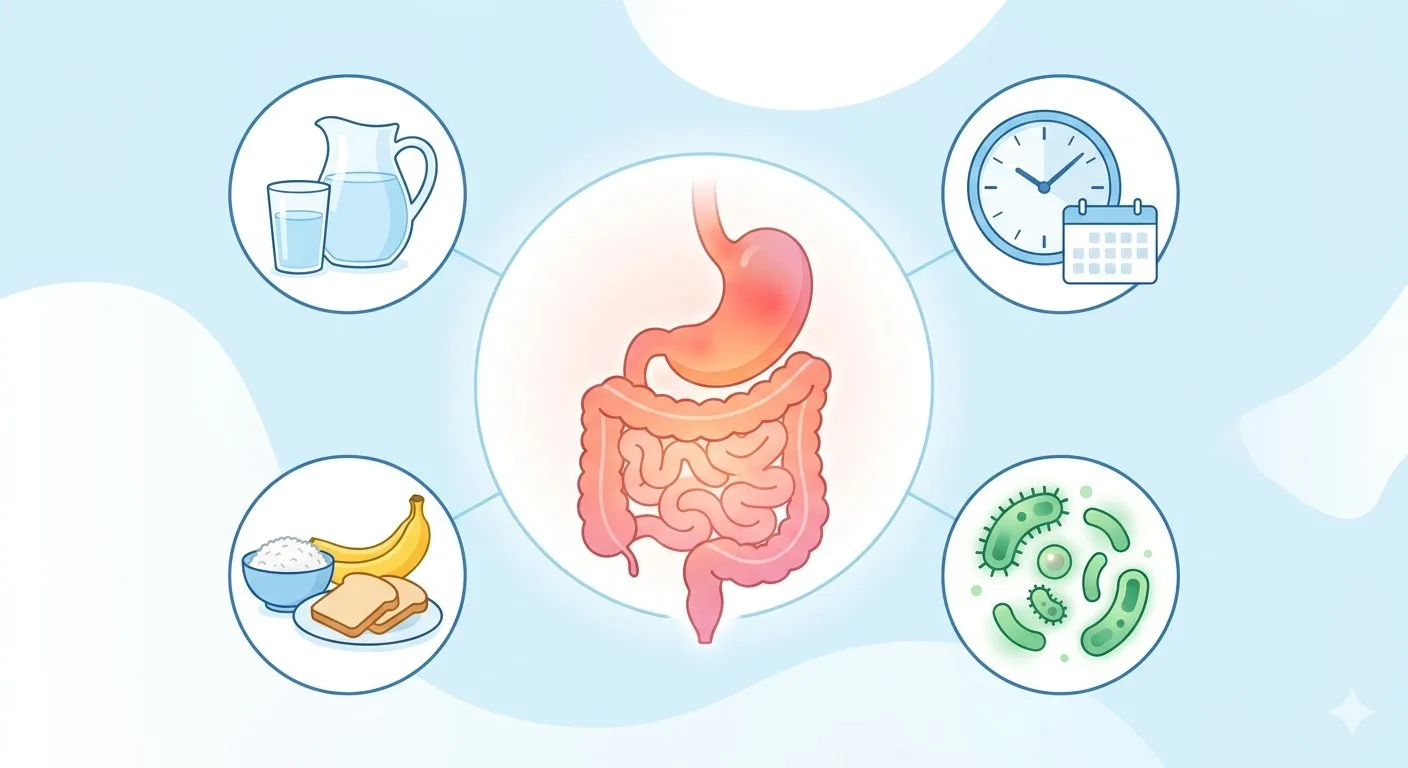
How Long Does It Take Your Gut to Heal After Gastroenteritis?
Short answer: Many otherwise healthy people feel much better within a few days, and their bowel habits gradually return towards normal over about one to two weeks. However, there is no single recovery time for everyone. Depending on the germ, severity of illness, age, hydration and underlying health, diarrhoea can last 10–14 days or sometimes longer. Temporary lactose intolerance or post-infectious bowel sensitivity may persist for several weeks, and occasionally longer.
The important distinction is between the infection settling and the intestine recovering its usual digestive function. You may no longer be vomiting or have fever while your gut is still sensitive to certain foods.
So, if you are asking, how long does it take your gut to heal after gastroenteritis, the realistic answer is: usually days to a couple of weeks for uncomplicated illness, but some after-effects can last longer. Symptoms that are severe, worsening or persistent should not automatically be labelled as normal healing.
Table of Contents
Typical Gut Recovery Timeline After Gastroenteritis
The following is a general guide, not a strict timetable. The cause of infection and the person’s health can change the duration considerably.| Time after illness begins | What may happen | What to focus on |
|---|---|---|
| First 1–3 days | Vomiting, watery diarrhoea, cramps, nausea and reduced appetite are common in many viral infections. | Prevent dehydration. Take frequent fluids and ORS when indicated. Rest. |
| Days 3–7 | Vomiting and fever often settle. Appetite may return, although stools can remain loose and the abdomen may feel unsettled. | Gradually resume normal food. Replace fluid losses and avoid foods that clearly worsen symptoms. |
| Days 7–14 | Many people continue to improve. Bowel movements, appetite and energy may gradually return to usual. | Monitor the trend. Seek medical advice if diarrhoea is not improving, is severe, or warning signs develop. |
| Several weeks | A minority experience temporary lactose intolerance, bloating or altered bowel habits after the infection. | Discuss persistent symptoms with a clinician rather than repeatedly restricting foods without a plan. |
| Beyond 4 weeks | Ongoing diarrhoea or abdominal symptoms need assessment for post-infectious conditions and other causes. | Arrange medical evaluation, especially with weight loss, blood, night-time symptoms or worsening pain. |
Why Can the Gut Take Longer to Recover?
Gastroenteritis affects the lining and function of the digestive tract. During an infection, inflammation and changes in intestinal absorption can interfere with the normal handling of water, salts, sugars and nutrients. Even after the infectious episode improves, some of these functions may take time to return to baseline.1. Temporary irritation of the intestinal lining
The intestinal mucosa is the inner lining of the small and large intestines. Some infections temporarily injure or inflame this lining. This can reduce the intestine’s ability to absorb fluid and nutrients efficiently, contributing to loose stools, urgency or abdominal discomfort.2. Temporary reduction in digestive enzymes
The small intestine produces enzymes that help digest carbohydrates. Infection-related injury can temporarily reduce some of these enzymes, including lactase, which breaks down lactose, the natural sugar in milk. Undigested lactose can draw water into the bowel and be fermented by gut bacteria, causing gas, bloating and diarrhoea.3. Changes in intestinal movement
Gut motility describes the muscular contractions that move food and waste through the digestive tract. After an infection, bowel movements may temporarily become faster or less predictable. Faster movement can leave less time for water absorption and may contribute to loose stools and urgency.4. Changes in the gut microbiome
The gut microbiome is the community of microorganisms living in the digestive tract. Infection, changes in food intake and sometimes antibiotic exposure can alter this community. Researchers are studying how these changes relate to post-infectious symptoms. It is not accurate to assume that every person needs a probiotic or a commercial “gut reset” to recover.5. The original infection may not have fully resolved
Not all gastroenteritis is caused by a short-lived virus. Bacterial and parasitic infections can cause more prolonged symptoms. Recent travel, unsafe food or water, an outbreak, recent antibiotic use and certain medical conditions may change which tests or treatment are needed.Which Symptoms May Continue After Gastroenteritis?
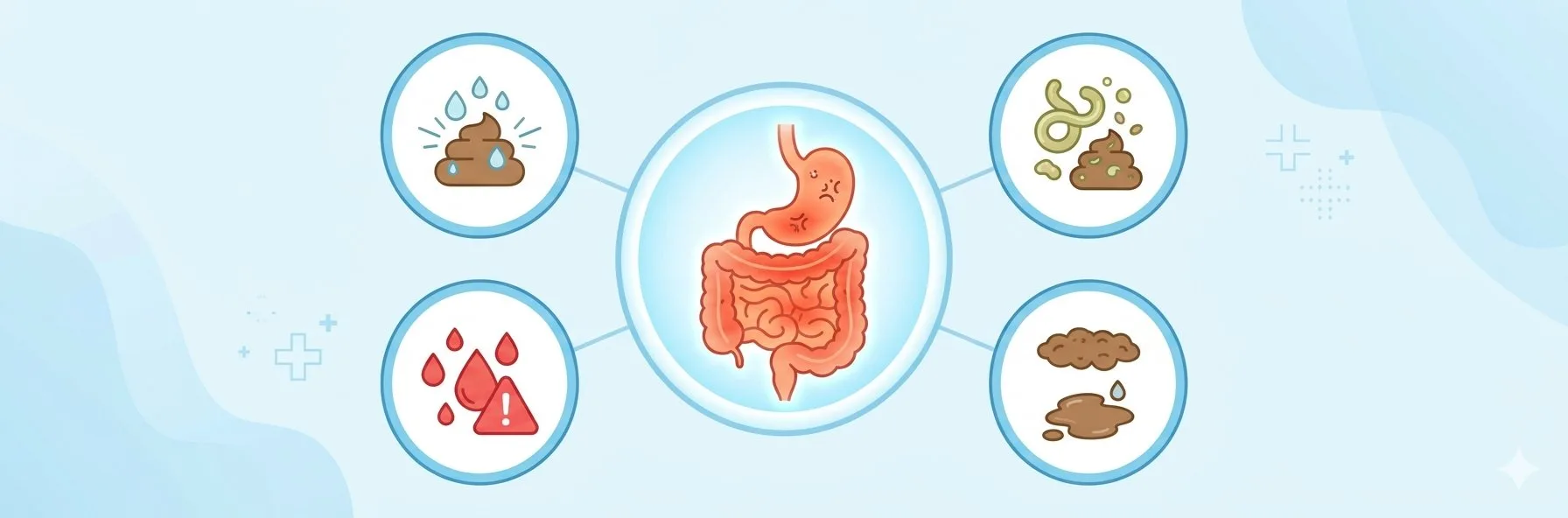
Some mild symptoms can linger while digestion returns to normal. What matters is whether they are gradually improving and whether there are any warning signs.Common recovery symptoms
- Bloating: a feeling of fullness or swelling in the abdomen.
- Excess gas: more burping or passing wind than usual.
- Mild abdominal cramps: intermittent discomfort that is improving.
- Loose stools: bowel movements may take time to regain their usual consistency.
- Food sensitivity: some foods, particularly milk or very fatty meals, may temporarily trigger symptoms.
- Reduced appetite and tiredness: these may follow fluid loss and reduced food intake during illness.
Symptoms that should not simply be ignored
Blood in the stool, severe or localised abdominal pain, persistent fever, repeated vomiting, significant dehydration, unexplained weight loss or symptoms that worsen after initial improvement require medical assessment. Do not assume these are part of routine gut healing.Can Gastroenteritis Cause Temporary Lactose Intolerance?
Yes. This is one of the most useful explanations for ongoing bloating or diarrhoea after an intestinal infection. Secondary lactose intolerance can occur when inflammation temporarily reduces lactase activity in the small intestine.How does it happen?
Lactase normally breaks down lactose into simpler sugars that can be absorbed. If lactase activity is temporarily reduced, lactose remains in the bowel. It can draw water into the intestine and be fermented by bacteria, producing gas and other substances that may cause symptoms.What symptoms can milk trigger?
- Bloating after milk or dairy products
- Abdominal rumbling and excess gas
- Loose stools or diarrhoea
- Abdominal cramps after consuming lactose
What can you do?
If milk repeatedly triggers symptoms, consider a short, practical reduction in lactose-containing foods and discuss the best approach with a healthcare professional, especially if symptoms are prolonged. Lactose-free milk or foods with lower lactose may be tolerated. Do not unnecessarily eliminate all sources of calcium and protein, particularly in children.Does Gastroenteritis Damage Your Gut Bacteria?
Infection can temporarily change the composition and activity of the gut microbiome. Antibiotics can also alter gut bacteria, sometimes causing diarrhoea during or after treatment. However, the microbiome is complex, and there is no single proven timetable for every person’s microbiome to return to its previous state.Do you need probiotics?
Not necessarily. Evidence for probiotics varies by organism, product, strain, age group and clinical situation. A probiotic is not a guaranteed way to restore the microbiome, and products are not interchangeable. People who are severely ill or immunocompromised should seek medical advice before using probiotic supplements.Do you need a gut cleanse or detox?
No. There is no good evidence that detox teas, colon cleanses, laxatives or restrictive “gut reset” programmes speed recovery after ordinary gastroenteritis. Some may worsen diarrhoea, dehydration or electrolyte disturbances. The practical priorities are hydration, adequate nutrition, time and assessment if symptoms persist.What Should You Eat While Your Gut Heals?
Once vomiting has settled and appetite returns, most people can gradually resume their usual balanced diet. You do not need to starve yourself or remain on a very restrictive diet for several days. The IDSA guideline recommends resuming an age-appropriate usual diet during or immediately after rehydration.Foods that are often easier to tolerate
- Rice, soft khichdi and plain cereals: provide energy and may be comfortable during early recovery.
- Bananas: provide carbohydrate and potassium.
- Toast, bread and crackers: may be easier to tolerate in small portions.
- Cooked vegetables: soft-cooked options may be more comfortable than large servings of raw vegetables initially.
- Soups and broths: contribute fluid and can provide some salt and nutrition.
- Eggs, dal, curd or other protein foods: add nutrition as tolerated. Dairy tolerance varies from person to person after infection.
Build back towards a balanced diet
Try smaller meals if large meals cause discomfort. Include a range of foods as your appetite improves, such as grains, vegetables, fruits and protein sources. Continue breastfeeding infants, and give children their usual age-appropriate food as appetite returns.Do not follow the BRAT diet for too long
The BRAT diet consists of bananas, rice, applesauce and toast. These foods may be easy to eat temporarily, but this diet is nutritionally limited if followed for an extended period. Evidence does not support prolonged restriction as a way to heal the intestine. Return to a varied diet as tolerated.Foods and Habits That May Aggravate Symptoms
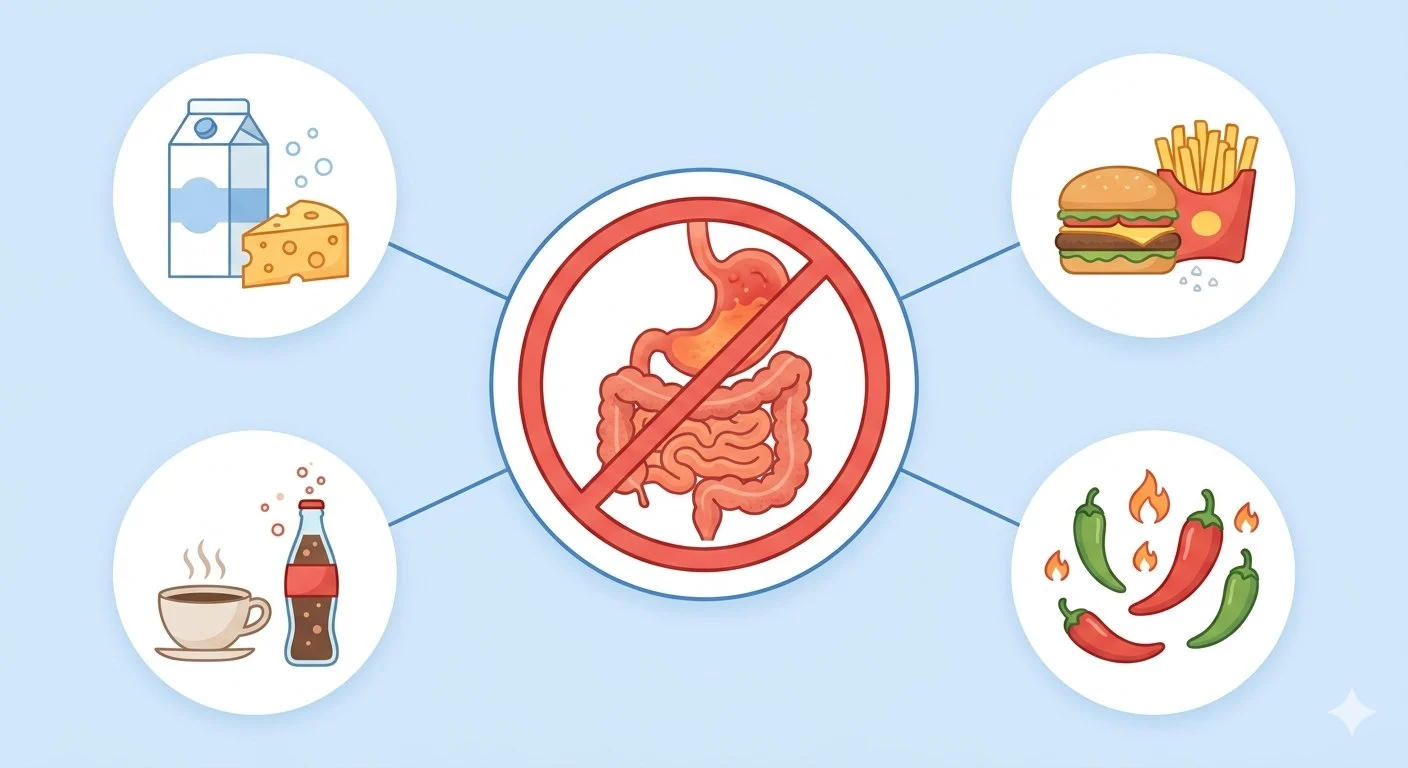
There is no universal list of foods that everyone must avoid. During recovery, temporarily reduce items that clearly worsen your symptoms.| Food or habit | Why it may cause difficulty | Practical approach |
|---|---|---|
| Large amounts of milk | Temporary lactose malabsorption may cause gas or diarrhoea. | Try lactose-free alternatives or smaller amounts if milk is a clear trigger. |
| Fried and very fatty foods | May worsen nausea, discomfort or loose stools in some people. | Choose simpler meals until appetite and digestion improve. |
| Very sugary drinks and fruit juices | High concentrations of simple sugars can worsen diarrhoea. | Prefer water and correctly prepared ORS when fluid replacement is needed. |
| Excess caffeine | Can stimulate bowel activity and aggravate symptoms in some people. | Reduce coffee, strong tea and caffeinated soft drinks temporarily if they trigger urgency. |
| Alcohol | Can irritate the digestive tract and make dehydration more likely. | Avoid until fully recovered and well hydrated. |
| Very large meals | May increase fullness, bloating or nausea. | Eat smaller portions more frequently if more comfortable. |
Hydration: A Key Part of Gut Recovery
Diarrhoea and vomiting cause loss of both water and electrolytes, including sodium and potassium. Replacing these losses helps prevent dehydration while the intestine recovers.How to use oral rehydration solution
- Use a commercially prepared oral rehydration salts (ORS) sachet when appropriate.
- Mix the sachet with exactly the volume of safe water written on the packet.
- Do not add extra sugar or salt, and do not make the solution more concentrated or dilute than instructed.
- Take small, frequent sips if nausea is present.
- Continue replacing ongoing fluid losses while diarrhoea continues.
Signs of dehydration
- Passing much less urine than usual or very dark urine
- Dry mouth and intense thirst
- Dizziness, especially on standing
- Sunken eyes or unusual tiredness
- In children, fewer wet nappies, poor feeding or unusual sleepiness
How Long Does Gut Recovery Take in Children and Older Adults?
Children
Children can become dehydrated more quickly than healthy adults. Continue breastfeeding and usual-strength formula for infants, and offer age-appropriate food as appetite returns. Do not dilute formula. Seek prompt medical advice if a child is unusually sleepy, has fewer wet nappies, cannot keep fluids down, has blood in the stool or appears dehydrated.Older adults
Older adults may have a higher risk of complications from dehydration, particularly if they have kidney or heart disease or take medicines that affect fluid balance. Recovery can also be affected by frailty, poor appetite and other illnesses. A lower threshold for medical review is sensible if diarrhoea continues or oral intake is poor.People with chronic illness or weakened immunity
People with significant medical conditions, a weakened immune system or recent hospitalisation should seek advice earlier. Persistent diarrhoea may need stool tests, blood tests or a review of medicines.When Should You See a Doctor After Gastroenteritis?
Do not wait for a particular number of days if symptoms are severe. Seek urgent medical assessment if you experience:- Blood in stool or black, tarry stools
- Severe, persistent or localised abdominal pain
- Repeated vomiting or inability to keep fluids down
- Signs of significant dehydration, fainting or very little urine
- Confusion, unusual drowsiness, collapse or severe weakness
- High fever or rapidly worsening illness
Arrange a medical review if:
- Diarrhoea lasts 14 days or more.
- Symptoms are not steadily improving or return after settling.
- You have ongoing bloating, pain or altered bowel habits that interfere with daily life.
- You have unexplained weight loss, night-time diarrhoea or recurrent symptoms.
- You recently travelled, used antibiotics or may have been exposed to contaminated food or water.
What If Your Gut Has Not Recovered After Several Weeks?
Persistent symptoms do not always mean that the original infection is still present. A clinician may consider several possibilities.1. Post-infectious irritable bowel syndrome
Post-infectious irritable bowel syndrome (PI-IBS) is a pattern of ongoing abdominal pain associated with changes in bowel habits after an episode of gastroenteritis. Symptoms may include diarrhoea, constipation, bloating or alternating bowel habits. It can persist for months in some people. Diagnosis requires clinical assessment and consideration of other causes; it should not be self-diagnosed simply because symptoms followed an infection.2. Persistent infection or a parasite
Some bacterial and parasitic infections can cause prolonged diarrhoea. Depending on symptoms and exposure history, a doctor may recommend stool testing. Recent travel, untreated water exposure, blood in stool, fever or prolonged symptoms can influence this decision.3. Antibiotic-associated diarrhoea or C. difficile
Diarrhoea during or after antibiotic use can sometimes be caused by Clostridioides difficile (C. difficile), a bacterium that can cause inflammation of the colon. This possibility is especially important after recent antibiotic treatment or healthcare exposure. Contact a clinician rather than treating persistent diarrhoea with over-the-counter medicines on your own.4. An unrelated digestive condition
Persistent symptoms may reveal or coincide with another condition, such as inflammatory bowel disease, coeliac disease, medication-related diarrhoea or another digestive disorder. Blood in stool, weight loss, anaemia, night-time symptoms or progressive pain should prompt assessment.What might a doctor investigate?
Depending on the history and examination, investigations may include stool tests for pathogens, blood tests to assess hydration or inflammation, and selected tests for other gastrointestinal conditions. Not everyone needs all these tests. The aim is to identify the cause rather than repeatedly trying restrictive diets or supplements without a diagnosis.Can You Speed Up Gut Healing After Gastroenteritis?
You cannot force the intestinal lining or microbiome to recover overnight, but sensible supportive care can help avoid setbacks.- Replace fluid losses: use ORS when indicated and drink regularly.
- Eat enough: return to a varied, balanced diet as appetite permits rather than fasting.
- Increase food variety gradually: temporarily reduce only foods that clearly trigger symptoms.
- Rest and resume activity gradually: avoid strenuous exercise while weak or dehydrated.
- Use medicines appropriately: antibiotics are not routinely useful for viral gastroenteritis. Avoid starting or stopping prescribed medicines without medical advice.
- Do not rely on detoxes: colon cleanses, laxatives and unproven “gut repair” products may make matters worse.
- Seek review for persistent symptoms: a prolonged problem deserves assessment rather than indefinite self-treatment.
Frequently Asked Questions
1. How long does it take your gut to heal after gastroenteritis?
Many people feel much better within a few days, with bowel habits settling over one to two weeks. Some people have temporary lactose intolerance or bowel sensitivity for several weeks or longer. The cause and severity of infection matter.2. Is it normal to have loose stools a week after gastroenteritis?
It can happen, but the overall trend should be improving. Seek medical advice if diarrhoea is severe, worsening, associated with blood or fever, or persists for 14 days or more.3. Why am I bloated after gastroenteritis?
Temporary changes in intestinal absorption, bowel movement and food tolerance can cause bloating. Lactose intolerance after infection is one possible reason, particularly if symptoms follow milk.4. Can I drink milk after gastroenteritis?
Many people can. If milk triggers bloating, gas or diarrhoea, temporary lactose intolerance may be present. Try a lactose-free option or discuss a short-term dietary adjustment with a clinician. Do not unnecessarily restrict nutrition in children.5. Should I take probiotics to heal my gut?
Probiotics are not essential for everyone, and evidence varies by product and clinical situation. They are not a guaranteed microbiome reset. Ask a clinician before using them if you are immunocompromised or seriously ill.6. Should I avoid all spicy food after gastroenteritis?
Not necessarily. If spicy foods worsen cramps, urgency or diarrhoea, reduce them temporarily and reintroduce them as tolerated. There is no universal requirement to avoid them for a fixed period.7. Does gastroenteritis permanently damage the intestine?
Most uncomplicated episodes do not cause permanent intestinal damage. Some infections can cause complications or prolonged symptoms, so persistent diarrhoea, blood in stool, weight loss or severe pain needs assessment.8. When should I worry about diarrhoea after gastroenteritis?
Seek urgent care for blood in stool, severe pain, fainting, confusion, inability to drink or signs of significant dehydration. Arrange a review if diarrhoea reaches 14 days or symptoms are not improving.9. Can antibiotics delay gut recovery?
Antibiotics can alter gut bacteria and sometimes cause diarrhoea, including C. difficile infection. They should be used only when clinically indicated. Do not stop a prescribed course without speaking to the prescriber.10. Does the gut microbiome return to normal after gastroenteritis?
The microbiome can change during and after infection, but recovery varies and there is no single timetable or test that proves it has returned to a previous state. A balanced diet and appropriate medical care are more useful than unproven detox programmes.Summary
- Most people improve substantially within days, and bowel habits often settle over about one to two weeks.
- Some infections cause diarrhoea lasting 10–14 days or longer.
- Temporary lactose intolerance can cause gas, bloating and diarrhoea for a month or more in some people.
- Post-infectious IBS and other conditions can cause symptoms that persist beyond the initial infection.
- Use ORS correctly when needed, and return to a balanced diet as appetite allows.
- Do not routinely fast, follow a prolonged BRAT diet, take antibiotics without advice or use detox products.
- Blood in stool, severe pain, dehydration, persistent vomiting or worsening symptoms require medical assessment.
Conclusion
For most otherwise healthy people, the worst symptoms of gastroenteritis improve within a few days, and digestion gradually returns towards normal over the following one to two weeks. However, the answer to how long does it take your gut to heal after gastroenteritis depends on the infecting organism, the degree of intestinal irritation, hydration, age and general health. Temporary lactose intolerance or post-infectious bowel sensitivity can last several weeks or longer. Support recovery with adequate fluids, correctly prepared ORS when needed, and a gradual return to a varied diet. Avoid unnecessary fasting, prolonged restrictive diets and unproven gut cleanses. If diarrhoea lasts 14 days or more, symptoms worsen, or warning signs such as blood in stool, severe pain or dehydration occur, seek medical assessment to identify the cause.Related Video Resource
For a visual explanation of diarrhoea management, ORS and nutrition during recovery, explore educational videos from recognised health organisations. This link opens a YouTube search rather than endorsing a specific unverified video: Watch educational videos on gastroenteritis, ORS and recovery.References and Further Reading
- Infectious Diseases Society of America (IDSA). 2017 Clinical Practice Guidelines for the Diagnosis and Management of Infectious Diarrhea. Includes recommendations on rehydration, resuming diet and evaluation of persistent symptoms. Read guideline.
- National Institute of Diabetes and Digestive and Kidney Diseases (NIDDK). Eating, Diet, & Nutrition for Viral Gastroenteritis. Includes temporary lactose digestion problems and food advice. Read NIDDK guidance.
- NIDDK. Treatment of Viral Gastroenteritis. Read treatment guidance.
- NIDDK. Treatment of Diarrhea. Read guidance.
- World Health Organization (WHO). Diarrhoeal disease: oral rehydration, nutrition and warning signs. WHO resource.
- US Centers for Disease Control and Prevention (CDC). Post-Travel Diarrhea, CDC Yellow Book. Discusses post-infectious phenomena, temporary enteropathy, lactose intolerance and post-infectious IBS. Read CDC clinical resource.
- Indian Council of Medical Research (ICMR). Antimicrobial Resistance Treatment Guidelines 2025, section on acute gastroenteritis. Read ICMR guidance.
- World Gastroenterology Organisation (WGO). Acute Diarrhea guideline. Read WGO guideline.
Medical Disclaimer
This article is intended for general educational purposes and does not replace a consultation with a qualified healthcare professional. Recovery time varies according to the cause of gastroenteritis and individual health. The information is not a diagnosis or an individual treatment plan. Seek medical advice for persistent or worsening symptoms, and urgent care for blood in stool, severe abdominal pain, significant dehydration, fainting, confusion or inability to keep fluids down. Children, older adults, pregnant people and people with chronic illness or weakened immunity may need earlier assessment. Do not start antibiotics, stop prescribed medicines or use restrictive diets without appropriate professional advice.
📲 For Health-Related Articles & Videos
🔹 Facebook: https://www.facebook.com/positivemind.healthcare🔹 YouTube: http://www.youtube.com/@healthuseful8539/
ENT Consultation & Surgery
Dr. Sagar Rajkuwar (MS-ENT) Consultant ENT Specialist & Head-Neck SurgeonPrabha ENT Clinic, Ambad, Nashik, Maharashtra, India