Can Nasal Polyps Cause Heart Problems? (Complete Medical Guide)
Nasal blockage is often dismissed as a minor issue, but in some cases, it may have deeper health implications. One important question many patients ask is:
Author: Dr. Sagar Rajkuwar (MS ENT), ENT Specialist, Nashik, India
🌐 www.entspecialistinnashik.com
👉 Can nasal polyps cause heart problems?
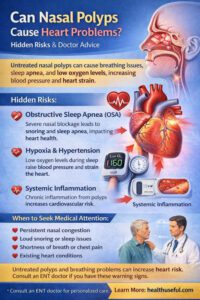
The answer is yes—indirectly. While Nasal Polyps themselves are not life-threatening, untreated and severe cases can affect breathing, oxygen levels, and overall cardiovascular health.
In this , we will explore the connection between nasal polyps and heart health, underlying mechanisms, risks, symptoms, and treatment options.
📌 Table of Contents
- What Are Nasal Polyps?
- Can Nasal Polyps Affect the Heart?
- How Nasal Polyps Impact Breathing
- Link Between Nasal Polyps and Sleep Apnea
- Hypoxia and Its Effect on the Heart
- Role of Chronic Inflammation
- Pulmonary Hypertension and Heart Strain
- Symptoms to Watch For
- When to See a Doctor
- Diagnosis of Nasal Polyps
- Treatment Options
- Does Treating Nasal Polyps Improve Heart Health?
- Prevention Tips
- Frequently Asked Questions
- Conclusion
What Are Nasal Polyps?
Nasal Polyps are soft, painless, non-cancerous growths that develop in the lining of the nasal passages or sinuses.
They are usually associated with:
- Chronic Sinusitis
- Allergic Rhinitis
- Asthma
Small polyps may not cause symptoms, but large ones can block airflow and affect breathing.
Can Nasal Polyps Affect the Heart?
👉 Yes, indirectly.
Nasal polyps can lead to breathing problems, reduced oxygen levels, and chronic inflammation, which may increase the risk of heart-related issues over time.
They contribute to heart problems mainly through:
- Obstructed airflow
- Sleep disturbances
- Low oxygen levels (hypoxia)
- Increased blood pressure
- Chronic inflammation
📞 ENT Consultation & Surgery
Dr. Sagar Rajkuwar (MS-ENT)
Prabha ENT Clinic, Ambad, Nashik
📱 7387590194 | 9892596635
🌐 www.entspecialistinnashik.com
How Nasal Polyps Impact Breathing
When nasal polyps grow large, they block nasal passages and reduce airflow.
Effects include:
- Difficulty breathing through the nose
- Mouth breathing
- Poor sleep quality
- Reduced oxygen intake
Over time, this can affect overall body function, including the cardiovascular system.
Link Between Nasal Polyps and Sleep Apnea
One major complication is Obstructive Sleep Apnea (OSA).
How It Happens:
- Polyps block nasal airflow
- Breathing pauses occur during sleep
- Oxygen levels drop
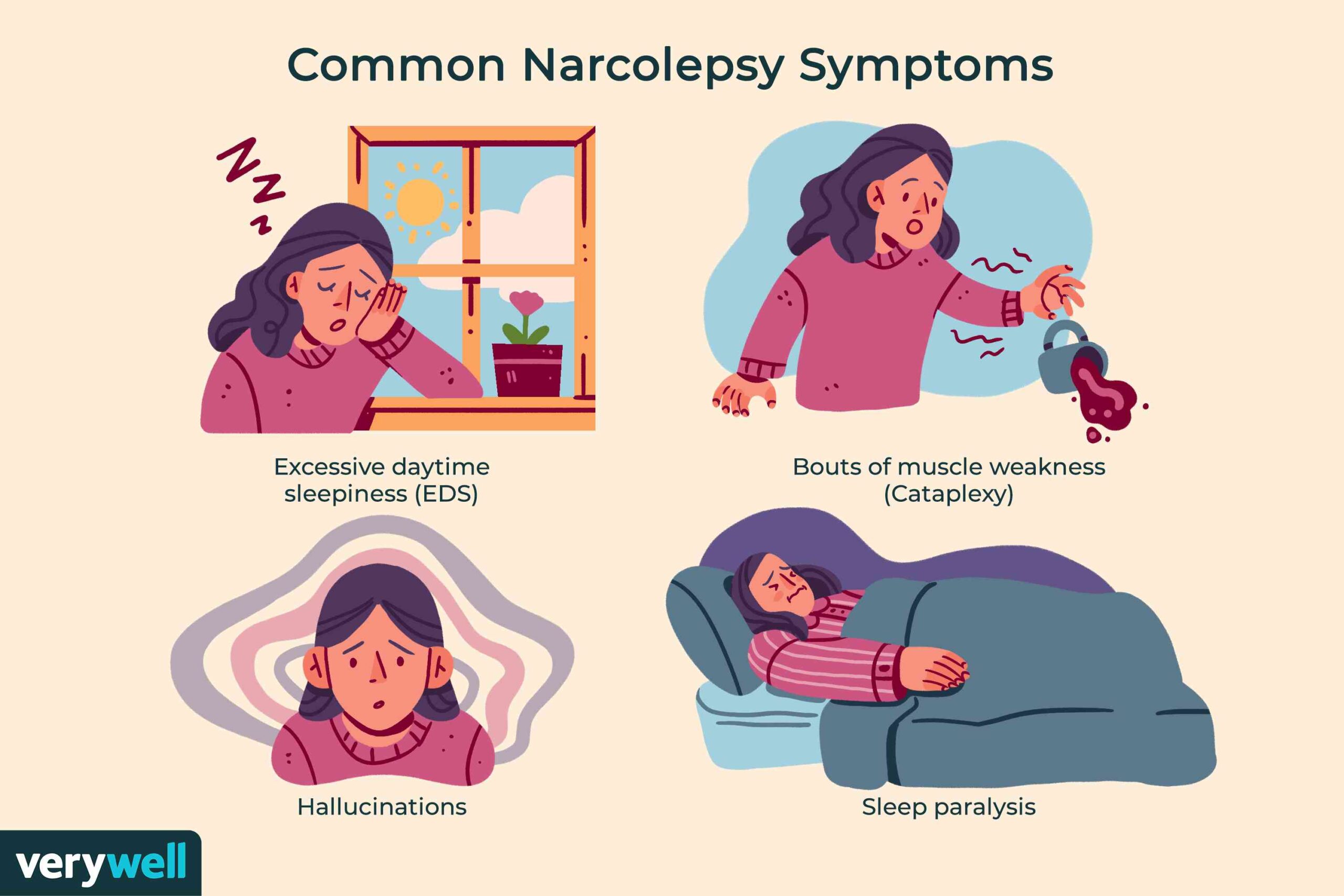
Symptoms of OSA:
- Loud snoring
- Daytime fatigue
- Interrupted sleep
- Morning headaches
OSA is strongly linked to heart problems.
Hypoxia and Its Effect on the Heart
Hypoxia occurs when the body does not get enough oxygen.
Effects on Heart:
- Increases heart workload
- Raises blood pressure
- Causes strain on heart muscles
Chronic hypoxia can lead to long-term cardiovascular complications.
Role of Chronic Inflammation
Nasal polyps are associated with ongoing inflammation.
Systemic Effects:
- Inflammation spreads beyond sinuses
- Affects blood vessels
- Increases risk of heart disease
Chronic inflammation is a known contributor to cardiovascular disorders.
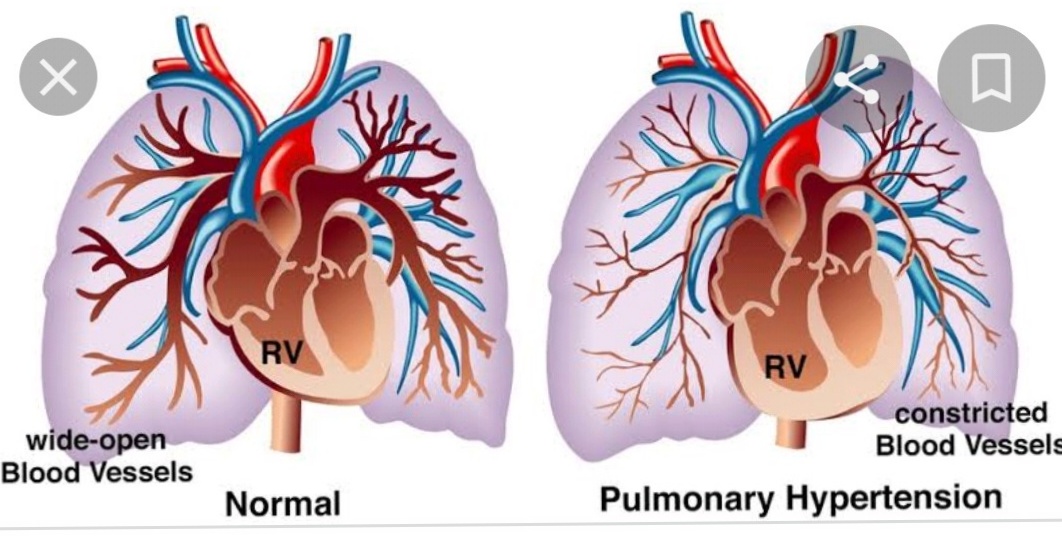
Pulmonary Hypertension and Heart Strain
Low oxygen levels can cause Pulmonary Hypertension.
Mechanism:
- Hypoxia causes narrowing of lung blood vessels
- Increases pressure in pulmonary arteries
- Strains the right side of the heart
If untreated, this may lead to serious heart conditions.
Symptoms to Watch For
If nasal polyps begin affecting your health, you may notice:
Nasal Symptoms:
- Persistent nasal blockage
- Loss of smell
- Runny nose
- Postnasal drip
Sleep & Breathing Symptoms:
- Snoring
- Interrupted sleep
- Daytime fatigue
Warning Signs of Heart Impact:
- Shortness of breath
- Chest discomfort
- High blood pressure
- Fatigue
When to See a Doctor
Seek medical attention if you experience:
- Chronic nasal congestion
- Sleep disturbances
- Loud snoring
- Difficulty breathing
- Existing heart conditions
Early treatment can prevent complications.
Diagnosis of Nasal Polyps
ENT specialists use:
1. Clinical Examination
Basic nasal check
2. Nasal Endoscopy
- Camera-based evaluation
- Confirms polyps
3. CT Scan
- Assesses size and extent
- Helps plan treatment
Treatment Options
Treatment aims to:
- Improve breathing
- Reduce inflammation
- Prevent complications
Medical Treatment
Nasal Steroid Sprays
Common options:
- Fluticasone
- Budesonide
- Mometasone
These reduce inflammation and shrink polyps.
Oral Medications
- Oral steroids
- Antihistamines
- Antibiotics (if infection present)
Surgical Treatment
👉 Endoscopic Sinus Surgery
Benefits:
- Removes polyps
- Improves airflow
- Enhances oxygen levels
Does Treating Nasal Polyps Improve Heart Health?
👉 Yes.
Studies show that treating nasal polyps can:
- Improve breathing
- Increase oxygen levels
- Reduce blood pressure
- Improve sleep quality
This indirectly reduces strain on the heart.
Prevention Tips
To reduce risk:
- Control allergies
- Avoid pollution and smoke
- Maintain nasal hygiene
- Stay hydrated
- Use humidifiers
Frequently Asked Questions
Can nasal polyps directly cause heart disease?
No, but they can contribute indirectly through breathing and oxygen issues.
Is sleep apnea dangerous?
Yes, untreated sleep apnea increases risk of heart disease and stroke.
Can treating nasal polyps reverse heart problems?
It can improve symptoms and reduce strain, but existing heart conditions require separate management.
Are nasal polyps serious?
They are usually benign but can cause complications if untreated.
Conclusion
So, can nasal polyps cause heart problems?
👉 The answer is yes—indirectly.
Nasal Polyps can lead to:
- Breathing difficulties
- Sleep apnea
- Hypoxia
- Increased blood pressure
- Heart strain
Key Takeaways:
- Treat nasal polyps early
- Monitor sleep and breathing
- Consult an ENT specialist
- Manage underlying conditions
With proper diagnosis and treatment, you can prevent complications and protect your heart health.
🔗 Read More
Medical Disclaimer
This article is for educational purposes only and does not replace professional medical advice. Consult a qualified healthcare provider for diagnosis and treatment.
FOR INFORMATION IN GREAT DETAIL Can Nasal Polyps Turn Cancerous? ENT Expert Answer PL CLICK ON THE LINK GIVEN BELOW-It is always better to view links from laptop/desktop rather than mobile phone as they may not be seen from mobile phone. ,in case of technical difficulties you need to copy paste this link in google search. In case if you are viewing this blog from mobile phone you need to click on the three dots on the right upper corner of your mobile screen and ENABLE DESKTOP VERSION-
FOR INFORMATION IN GREAT DETAIL Can Nasal Polyps Affect the Brain? ENT Expert Guide PL CLICK ON THE LINK GIVEN BELOW-It is always better to view links from laptop/desktop rather than mobile phone as they may not be seen from mobile phone. ,in case of technical difficulties you need to copy paste this link in google search. In case if you are viewing this blog from mobile phone you need to click on the three dots on the right upper corner of your mobile screen and ENABLE DESKTOP VERSION-
FOR INFORMATION IN GREAT DETAIL Symptoms of Cancerous Nasal Polyps: ENT Guide PL CLICK ON THE LINK GIVEN BELOW-It is always better to view links from laptop/desktop rather than mobile phone as they may not be seen from mobile phone. ,in case of technical difficulties you need to copy paste this link in google search. In case if you are viewing this blog from mobile phone you need to click on the three dots on the right upper corner of your mobile screen and ENABLE DESKTOP VERSION-
FOR INFORMATION IN GREAT DETAIL When to Worry About a Nasal Polyp? ENT Guide PL CLICK ON THE LINK GIVEN BELOW-It is always better to view links from laptop/desktop rather than mobile phone as they may not be seen from mobile phone. ,in case of technical difficulties you need to copy paste this link in google search. In case if you are viewing this blog from mobile phone you need to click on the three dots on the right upper corner of your mobile screen and ENABLE DESKTOP VERSION-
FOR INFORMATION IN GREAT DETAIL What Happens If Polyps Are Untreated? ENT Guide PL CLICK ON THE LINK GIVEN BELOW-It is always better to view links from laptop/desktop rather than mobile phone as they may not be seen from mobile phone. ,in case of technical difficulties you need to copy paste this link in google search. In case if you are viewing this blog from mobile phone you need to click on the three dots on the right upper corner of your mobile screen and ENABLE DESKTOP VERSION-
FOR INFORMATION IN GREAT DETAIL #1 Cause of Nasal Polyps Explained PL CLICK ON THE LINK GIVEN BELOW-It is always better to view links from laptop/desktop rather than mobile phone as they may not be seen from mobile phone. ,in case of technical difficulties you need to copy paste this link in google search. In case if you are viewing this blog from mobile phone you need to click on the three dots on the right upper corner of your mobile screen and ENABLE DESKTOP VERSION-
FOR INFORMATION IN GREAT DETAIL Can ENT See Nasal Polyps? Symptoms, Diagnosis & Treatment Guide PL CLICK ON THE LINK GIVEN BELOW-It is always better to view links from laptop/desktop rather than mobile phone as they may not be seen from mobile phone. ,in case of technical difficulties you need to copy paste this link in google search. In case if you are viewing this blog from mobile phone you need to click on the three dots on the right upper corner of your mobile screen and ENABLE DESKTOP VERSION-
FOR INFORMATION IN GREAT DETAIL How to Stop Polyp Growth: Causes, Prevention & Best Treatment (Doctor Guide) PL CLICK ON THE LINK GIVEN BELOW-It is always better to view links from laptop/desktop rather than mobile phone as they may not be seen from mobile phone. ,in case of technical difficulties you need to copy paste this link in google search. In case if you are viewing this blog from mobile phone you need to click on the three dots on the right upper corner of your mobile screen and ENABLE DESKTOP VERSION-