Cholesteatoma Surgery Recovery: What to Expect, Symptoms & Care Guide
By ENT Specialist – Dr. Sagar Rajkuwar, Nashik, Maharashtra, India
Clinic Website:www.entspecialistinnashik.com
Table of Contents
- (1)Introduction
- (2)Typical Experiences After Cholesteatoma Surgery
- (3)What to anticipate right after surgery
- (4)Ear and Wound Care
- (5)Potential signs following surgery
- (6)Advice on Lifestyle Precautions and Recovery
- (7)When to Seek Immediate Medical Assistance
- (8)Visits for Follow-Up
- (9)Recurrence Risk
- (10)Important Reminder for Patients
- (11)Conclusion
(1)Introduction
The removal of aberrant skin development from the middle ear during cholesteatoma surgery is critical in order to avoid problems such as hearing loss, infections, or vertigo. Although the treatment is really successful, it is just as important to know what to anticipate during the rehabilitation process. This thorough handbook helps patients and carers remain knowledgeable and confident throughout the healing process by covering common symptoms, experiences, precautions, and follow-up treatment following surgery for cholesteatoma.
(2)Typical Experiences After Cholesteatoma Surgery
1. Changes in Taste (Metallic or Dry Taste)
For a few weeks, several patients report having a dry or metallic taste in their mouth.
The reason for this is that the chorda tympani nerve, which is in charge of taste, passes through the middle ear and may be damaged or stretched during surgery.
- Taste often returns to normal in 6–12 weeks.
- Sometimes, if the nerve is injured, the alteration might last longer.
2. Ringing in the ear (tinnitus)
Following surgery, it is normal to hear humming, ringing, or buzzing.
This could go on for several weeks or a month before subsiding, usually as the ear heals.
3. Ear Numbness
A little nerve irritation can cause transient numbness behind or around the ear.
Generally, this clears up in three months.
4. Jaw Stiffness or Pain
Patients can experience the following because the jaw joint is close to the ear canal:
- Chewing-related discomfort
- Having trouble opening the mouth all the way
- Rigidity
Over the course of a week or two, these symptoms get better gradually.
5. Slight vertigo, popping, and ear pressure
Patients could experience:
- ear fullness
- Sounds of crackling and popping
- Slight vertigo
As swelling subsides, these feelings are anticipated and lessen.
6. Ear Drainage
A drain tube may be placed behind the ear for certain patients.
The time when it should be taken out will be determined by your surgeon.
7. Packing the Ear Canal
To help healing, the ear canal might be packed with packing material.
This results in diminished hearing and a blocked feeling that lasts until the packing is taken out at a follow-up visit.
8. Slight Blood Discharge
For the first few days, a little blood-tinged discharge is typical.
Initially, the outside cotton wool is often changed three or four times each day.
9. Pain Following Surgery
It’s common to experience ear pain, which can be treated with prescription pain medications.
10. Alterations in Hearing
Hearing can:
- Enhance
- Maintain the status quo
- Or need more surgery
The degree of middle ear reconstruction and the severity of the illness determine how much better things get.
(3)What to anticipate right after surgery
Staying in the Hospital
Based on the time of the procedure and the healing process:
- Some individuals return home the same day.
- Others may stay overnight, particularly following late operations.
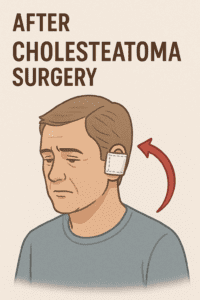
Bandage for the Head
The head and ear may be covered with a protective bandage that is often taken off:
- The following morning
- Or as directed, at home.
Bruises
The areas around which bruising might appear in older people are:
- The ear
- The Neck
- Bruises typically disappear in 2–3 weeks.
(4)Ear and Wound Care
Maintaining a Dry Ear
After surgery, this is the most crucial precaution.
Patients must:
- Keep water out of your ear
- Refrain from washing your hair for ten days.
- Use dry shampoo as necessary.
- When taking baths, use cotton wool covered in Vaseline.
- Wear a shower cap to provide additional protection.
Wound treatment
If the surgeon cut behind the ear:
- Adhesive dressings stay in place for seven to ten days.
- Even if bandages come off early, do not wash or clean the wound for at least five to ten days.
Stitches that Can and Cannot be Absorbed
- Most stitches are absorbable.
- The GP nurse will need to take out the blue stitches after 8–10 days.
The discharge letter will include instructions.
Packing the Ear Canal
The packing is maintained in place until the follow-up appointment (1–6 weeks).
You can experience:
- feeling of blockage
- less hearing
- Minor discharge
These are typical.
Antibiotics
If there is inflammation, patients may be given oral antibiotics for 5–7 days.
(5)Potential signs following surgery
1. Flavor of Metal
Resulting from a transient contusion of the taste nerve.
It typically takes 6 to 12 weeks for taste to come back.
2. Brief nausea and dizziness
Because of:
- Inner ear imbalance
- Impact of anesthesia
Although it goes away in a couple days, it is advised to get some rest for a week or two.
3. Tinnitus
May rise briefly after surgery but gets better as the healing process goes on.
(6)Advice on Lifestyle Precautions and Recovery
Patients should:
✔Anticipate hearing crackling or popping noises as the ear recovers.
✔Be sure to avoid lifting heavy weights.
✔Refrain from tensing
✔Do not ever hold back a sneeze.
✔Gently blow your nose.
✔Know that throbbing feelings are commonplace
✔Take a break from flying for four to six weeks.
✔Avoid scuba diving until you are cleared.
✔Refrain from driving if you have vertigo.
(7)When to Seek Immediate Medical Assistance
If you see any of the following, get in touch with your physician or hospital:
- Fever
- Constant or increasing ear discomfort
- Discharge with a foul odor
- Excessive hemorrhage
- Sudden loss of hearing
- Greater imbalance or dizziness
(8)Visits for Follow-Up
The first follow-up appointment is determined by a number of factors and occurs between one and six weeks following surgery.
- The kind of packaging that was employed
- Progress in healing
Before the trip, ear drops may occasionally be prescribed to aid in the breakdown of absorbable packing.
If recovery becomes irregular, for example:
- A sudden onset of intense vertigo
- Continued discomfort following an initial recovery
- Tinnitus is getting worse
The doctor will set up an immediate evaluation.
(9)Recurrence Risk
A cholesteatoma may recur.
Routine monitoring is necessary, as shown by clinical data.
Follow-up appointments should always be scheduled.
(10)Important Reminder for Patients
Many patients attempt self-treatment after reading online material, which might be harmful.
Patients may benefit from reading instructional material by:
- Recognize their situation
- Work more closely with treatment.
- Don’t worry excessively.
Treatment should only be administered under medical supervision, though.
For important health related topics please click on our facebook page link given below or copy paste this link into google search –
https://www.facebook.com/positivemind.healthcare
For important health related videos please click on the link of our youtube channel given below or copy paste this link into google search-
http://www.youtube.com/@healthuseful8539
(11)Conclusion
Following cholesteatoma surgery, there are a number of typical symptoms, including temporary hearing changes, ear fullness, mild dizziness, and taste disruption. The majority of patients make a healthy and uneventful recovery with appropriate treatment, preventative measures, and prompt follow-up. The key to a successful outcome is to keep the ear dry, stay away from demanding physical tasks, and keep an eye on any symptoms.
Additionally, patients should also:
- Understand that the ear will produce popping and crackling noises as it heals.
- Don’t lift large weights and strain.
- Refrain from suppressing their sneezes.
- Be extremely cautious if they blow their nose.
- Keep in mind that they could experience a throbbing feeling.
- Refrain from scheduling air travel for four to six weeks after surgery (if in doubt, patients should always check with their ENT surgeon)
- If at all feasible, refrain from flying or scuba diving while you have a cold, but this is contingent upon the procedure you’ve undergone.
- If they experience dizziness or imbalance, they should refrain from driving
If any patient has any ENT -Ear nose throat problems and requires any , consultation ,online consultation ,or surgery in clinic of ENT specialist Doctor Dr Sagar Rajkuwar ,he may TAKE APPOINTMENT BY CLICKING ON THE LINK GIVEN BELOW-
Clinic address of ENT SPECIALIST doctor Dr Sagar Rajkuwar-
Prabha ENT clinic, plot no 345,Saigram colony, opposite Indoline furniture Ambad link road ,Ambad ,1 km from Pathardi phata Nashik ,422010 ,Maharashtra, India-Dr Sagar Rajkuwar (MS-ENT), Cel no- 7387590194 , 9892596635