What Is the Disadvantage of Gargling With Salt Water? A Complete Guide by an ENT Specialist
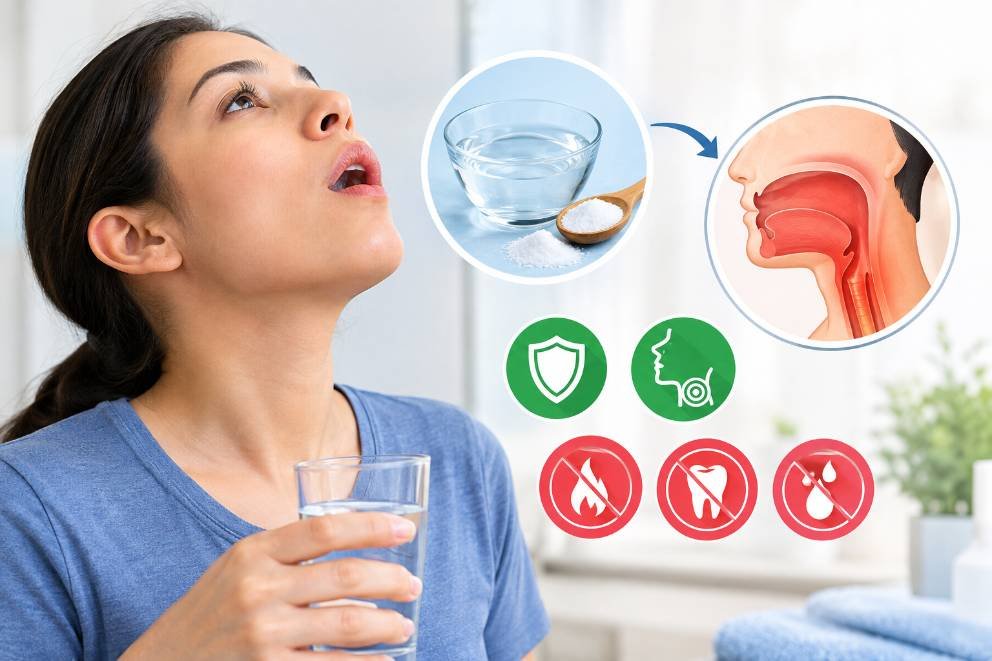
Gargling with saltwater is a frequent household remedy for minor throat discomfort, sore throats, and upper respiratory infection symptoms. Adults generally tolerate it well when it is properly prepared and gargled.
However, salt water gargling is not a cure for all types of sore throat, and using a highly concentrated solution, gargling too vigorously, or swallowing the solution might lead to problems. It’s also crucial to understand when a sore throat needs medical attention instead of ongoing home care.
Since I am an ENT professional, I frequently treat individuals who unintentionally make their throat problems worse by believing that “more salt means more benefit.” The disadvantages of salt-water gargling, the proper procedure, who should stay away from it, and safer options are all covered in this article.
By Dr. Sagar Rajkuwar, MS-ENT — ENT Specialist, Nashik, Maharashtra, India
Clinic: 🌐 www.entspecialistinnashik.com

Table of Contents
- 1. What Is Salt-Water Gargling?
- 2. How Does Salt-Water Gargling Work?
- 3. What Are the Disadvantages of Gargling With Salt Water?
- 4. Does Frequent Salt-Water Gargling Cause Dehydration?
- 5. Does Salt-Water Gargling Damage Tooth Enamel?
- 6. Can Salt-Water Gargling Worsen Acid Reflux or LPR?
- 7. Does Salt-Water Gargling Increase Blood Pressure?
- 8. Can Children Gargle With Salt Water?
- 9. Common Mistakes People Make
- 10. The Proper Way to Gargle with Salt Water
- 11. When Should You Avoid Salt-Water Gargling?
- 12. Are There Safer Alternatives?
- 13. What About Baking Soda Gargles?
- 14. When Is a Sore Throat a Medical Emergency?
- 15. When Should You See an ENT Specialist?
- 16. Commonly asked questions
- 17. Conclusion
1. What Is Salt-Water Gargling?
Spitting out a solution of warm water and a little bit of normal salt after gargling with it is known as salt-water gargling.
Sore throat symptoms are often momentarily alleviated with it. The NHS recommends gargling with roughly half a teaspoon of salt dissolved in a glass of warm water, then spitting the mixture out rather than swallowing it.
Although salt-water gargling can help ease symptoms, it should not be seen as a remedy for either bacterial or viral infections.
Viral infections are responsible for most sore throats, which go away without antibiotics. But some people experience bacterial infections, such group A streptococcal sore throat, which may need testing and the right medical attention.
2. How Does Salt-Water Gargling Work?
Irritated throat tissues might benefit from a brief soothing effect from warm saline water.
It has the potential to:
- Sore throat relief assistance
- Loosen secretions and mucus
- Temporarily lubricate the mouth and throat.
- Give a straightforward method for washing the mouth and throat.
- For some people, making swallowing a little bit more tolerable
The exact biological impact shouldn’t be overemphasized. It shouldn’t take the place of accurate diagnosis or treatment if an infection is suspected because it doesn’t always eliminate the viruses or germs that cause every sore throat.
For sore throat, gargling’s purpose is primarily to alleviate symptoms rather than to cure the core problem.
3. What Are the Disadvantages of Gargling With Salt Water?
Salt-water gargling is usually harmless when done properly, but it may cause discomfort or issues in certain individuals.

3.1 Irritation of the throat as a result of a concentrated solution
Adding too much salt is among the most frequent errors.
Taste unpleasant and potentially cause may be experienced with a very high concentration solution:
- Stinging or burning
- Increased irritation in the throat.
- An uncomfortable or dry mouth
- More discomfort while ingesting
If gargling hurts your throat rather than helps it, either stop using the solution or make sure it’s prepared to the right concentration.
More salt does not equal more gain.
3.2 Ephemeral Dryness or Disagreeable Feeling
After gargling, some people, particularly those with dry mouth, may experience dryness or a salty sensation.
There are several causes of dry mouth, including:
- Lack of water
- Some medications
- Breathing with your mouth open
- Smoking cigarettes
- Certain medical illnesses
- Decreased saliva output
In such circumstances, drinking plenty of water and treating the underlying cause of dry mouth may be more beneficial than often rinsing with strong salt water.
3.3 Severe Sore Throat May Make Gargling Challenging
It can be painful to gargle if your tonsils or throat are very swollen.
One may go through:
- Gagging
- Coughing
- A sense of suffocation
- Throat discomfort became worse.
- Challenging to manage the gargling fluid
Continuing to gargle at home should not postpone a medical evaluation if severe throat pain or swelling makes it hard to consume liquids.
3.4 Consuming a lot is not advised.
Rinse your mouth out with salt water, then spit it out.
Although it’s usually not a big deal for a healthy adult to unintentionally ingest a tiny bit, intentionally consuming saline gargle is not only unneeded but also raises your sodium intake.
Those who are under a doctor’s order to limit their sodium intake should avoid purposefully gulping the drink.
3.5 It Can Give False Reassurance
This is a serious drawback.
Although salt water may momentarily alleviate a sore throat, symptom improvement does not always imply that the underlying cause has been addressed.
A persistent or severe symptom may be the consequence of:
- Sore throat brought on by streptococcal infection
- Tonsilitis
- Peritonsillar abscess
- Infection by a virus
- Mononucleosis that is contagious
- Drainage from sinuses
- Allergies
- Laryngopharyngeal reflux or acid reflux
- infection of the mouth or teeth
- Other less frequent throat problems
For instance, bacterial infection known as group A strep throat may be identified with the correct tests. When antibiotics are medically indicated, gargling with saltwater does not take the place of that evaluation or antibiotic therapy.
4. Does Frequent Salt-Water Gargling Cause Dehydration?
This assertion is frequently overstated.
Spitting out a standard salt-water gargle typically doesn’t result in considerable full-body dehydration.
Nonetheless, continuous use of a highly concentrated solution might cause dryness or irritation in the throat or mouth. Thus, there is little need to employ a solution that is overly salty.
Regular water and sufficient fluid intake are typically more helpful for hydration if you are thirsty or have a dry throat.
5. Does Salt-Water Gargling Damage Tooth Enamel?
There is insufficient data to prove that infrequent gargling with a solution of salt water created in the right way leads to enamel erosion.
Recurrent contact to acids, such as acidic foods, beverages, and gastric acid, is mostly connected with tooth erosion. The American Dental Association advises avoiding behaviors that expose teeth to acidic liquids and minimizing acidic exposures.
So, there is no need to make the initial argument that normal salt water progressively “weakens enamel” into an established drawback.
However, salt water should not be viewed as a substitute for routine dental care.
Continue on:
- Using fluoride toothpaste twice a day to clean teeth
- Between the teeth, clean.
- Regular dental care if necessary
Generally, mouth rinses enhance brushing and interdental cleaning rather than substitute them.
6. Can Salt-Water Gargling Worsen Acid Reflux or LPR?
Acid reflux is not directly caused by gargling with salt water.
More significantly, throat symptoms that are said to be caused by “infection” may actually be caused by laryngopharyngeal reflux (LPR) or gastroesophageal reflux disease (GERD).
People who have throat symptoms caused by reflux may experience the following:
- Frequent throat clearing
- Cough for a long time
- raspy voice
- Irritation in the throat
- Experiencing a lump in your throat
- Bitter taste
Gargling with saltwater may momentarily ease irritation, but it does not address the underlying reflux.
Consequently, recurrent gargling shouldn’t be the primary course of treatment if reflux is thought to be present.
7. Does Salt-Water Gargling Increase Blood Pressure?
Generally, the quantity of sodium consumed or absorbed during regular gargling followed by spitting is low.
As a result, claiming that average saltwater gargling considerably elevates blood pressure would be dishonest.
However, people who have hypertension, kidney illness, heart failure, or a doctor-ordered sodium restriction should not consume the salt-water gargling solution.
The primary issue is needless salt consumption, not a big blood pressure impact from merely gargling and spitting.
8. Can Children Gargle With Salt Water?
In general, salt water gargling should be discouraged in young children unless they can reliably gargle and spit without swallowing.
The NHS cautions against gargling with salty water, particularly for youngsters.
The salt itself is not the sole cause for worry. Little children might:
- Drink the solution.
- Choke or cough
- Draw in the water
- be unable to gargle correctly
Instead, for little kids, utilize measures that are suitable for their age and have been suggested by a doctor or pharmacist.
Because young children may swallow the liquid, the American Dental Association also recommends exercising caution when using mouthwashes in children under the age of six.
9. Common Mistakes People Make
❌ Using an Excessive Amount of Salt
A more concentrated solution isn’t always more effective.
Instead of creating an excessively salty solution, use around 12 teaspoon of salt in a glass of warm water.
❌ Using Water That Is Very Hot
Tissues that have already been inflamed might be burned by extremely hot water.
Instead, use water that is warm enough to be comfortable.
❌ Drinking the Solution
It’s meant to be gargled and spit out with salt water.
❌ Being excessively forceful when gargling
If you gargle too much, you may gag, cough, or feel uncomfortable.
Light gargling is enough.
❌ Water that is unclean or not drinkable should not be used.
Employ drinkable, pure water.
When safe drinking water is accessible, there is no need for healthy adults to use sterilized water for regular saltwater gargling.
❌Continuing at-home therapy in the face of escalating symptoms.
Get medical attention rather than continuing to gargle if your symptoms are getting worse, especially if you have trouble swallowing or breathing, a high fever, or noticeable neck swelling.
10. The Proper Way to Gargle with Salt Water
Easy Recipe
Use:
- Around 1 glass of warm water
- About half a teaspoon of salt
According to the NHS, this simple recipe may help ease a sore throat.
Method
- Completely dissolve the salt in warm water.
- Take a modest bite.
- Slightly tilt your head backward.
- For a few seconds, gargle softly.
- The solution should be thrown up.
- Try again with a tiny mouthful if you feel comfortable.
- Avoid drinking the solution on purpose.
You don’t need to make the water too salty or use really hot water.
There isn’t a pressing need to adhere to a strict “maximum two or three times every day” guideline for every adult. The frequency can vary based on the person’s symptoms and tolerance. If continuous gargling results in dryness or irritation, either reduce or cease it.
11. When Should You Avoid Salt-Water Gargling?
If you experience any of the following, avoid or get expert help:
- Without swallowing, you cannot gargle.
- Significant burning results from gargling.
- You have extreme trouble swallowing
- You have trouble breathing
- You have a medical problem that increases the chance of aspiration.
- Your surgeon has provided a variety of instructions after your throat procedure.
- The symptoms are quickly deteriorating or severe
Avoid following a general home-cure advice automatically after tonsil or throat surgery; instead, heed the exact postoperative instructions given by your surgeon.
12. Are There Safer Alternatives?
There are several simple steps that can help ease minor throat pain.
Hot or Cold Liquids
Some people find cool fluids to be soothing, while others prefer warm beverages. Select the one that seems more convenient.
sufficient hydration
By helping you maintain adequate hydration, regular fluid intake may also facilitate the removal of mucus.
foods that are delicate
It could be simpler to consume软 food when your throat hurts.
Remainder
Good rest is beneficial for a lot of viral respiratory infections.
Moisturized Air
For certain individuals, a pleasant humidity level might alleviate dryness.
Lozenges for the throat
Lozenges that are suitable for the user’s age can provide short-term relief from throat pain. Tiny hard items that might choke a youngster should not be given to them.
What Regarding Antiseptic Gargles?
Items with antibacterial components like povidone-iodine or chlorhexidine aren’t necessarily safer or superior to saltwater.
Their application is determined by a number of factors, including the product, indication, age, medical history, and instructions. For instance, some users may experience tooth or tongue staining after using chlorhexidine.
Don’t replace salt water with a medicinal gargle unless you’ve read the product instructions or received professional medical advice.
13. What About Baking Soda Gargles?
Sometimes, especially for specific kinds of oral irritation or mucositis, baking-soda solutions are utilized as moderate oral rinses.
Nevertheless, baking soda shouldn’t be automatically pushed as a remedy for all acid reflux or sore throats.
Instead of changing gargling solutions often, one should examine the root cause if they experience chronic throat symptoms.
14. When Is a Sore Throat a Medical Emergency?
If a sore throat is accompanied by the following symptoms, get help immediately:
- Having trouble breathing
- Unable to swallow saliva
- Salivating because it’s difficult to swallow.
- Intense dehydration
- Quickly rising neck or throat edema
- A strange or muffled voice
- With swelling, there is intense one-sided throat pain.
- Mouth opening issues
- Weakness or disorientation is a severe symptom.
These symptoms should not be treated at home with gargling alone since they may indicate a serious airway issue or infection.
15. When Should You See an ENT Specialist?
Organize a medical checkup when:
- A terrible sore throat is present.
- Rather than getting better, the symptoms persist or get worse.
- Fever is significant or persistent.
- The tonsils have pus-filled patches
- You experience recurrent episodes of tonsillitis
- Swallowing is tough.
- Your voice is constantly husky.
- You have chronic coughing or throat clearing all the time
- Allergy or reflux is indicated by symptoms.
- You develop significant neck swelling
Evaluation is warranted for persistent or recurrent symptoms, but most common sore throats resolve in about a week.
16. Commonly asked questions
Is it safe to rinse your mouth with salt water?
When properly prepared, salt-water gargling is usually safe for the majority of individuals and can briefly lessen the pain of a sore throat.
What is the primary drawback of gargling with saline water?
The most frequent practical issues are irritation, burning, unpleasant taste, or dryness when the solution is too concentrated or applied in a way that irritates the throat.
Is it possible to cure a throat infection with salt water?
Not. Although salt water might alleviate symptoms, it cannot be relied upon to eradicate the source of a bacterial or viral throat infection.
Is it okay to swallow saltwater after gargling?
Instead of intentionally swallowing it, it’s better to spit it out.
Is salt water gargling appropriate for children?
In general, gargling with salt water is not recommended for small children since they may swallow or inhale the solution.
Is it harmful to teeth to drink salt water?
No evidence suggests that salt water that has been meticulously prepared might cause dental enamel to degrade. Dental erosion is caused primarily by acid exposure.
Does gargling with saltwater increase blood pressure?
It’s improbable that routine gargling and spitting would dramatically increase blood pressure. Avoid swallowing the solution if you are on a sodium restriction.
Is saltwater an effective treatment for tonsillitis?
Even if tonsillitis causes throat pain, it shouldn’t be used in place of an assessment or treatment when a bacterial infection or issue is suspected.
After throat surgery, is it possible to gargle?
Postoperative recommendations might vary based on the surgery and stage of healing; thus, it is imperative to adhere to the precise instructions given by your ENT surgeon.
17. Conclusion
Gargling with saltwater is a simple, affordable, and temporary way to soothe a sore throat. When prepared and ejected properly, most adults tolerate it effectively.
However, adding salt doesn’t make things any better. Youngsters could be unable to gargle properly and a concentrated solution may result in irritation or burns.
The same care should be given to a few frequently heard claims about salt-water gurgling. When used properly, regular salt-water gargling generally does not result in appreciable dehydration, important blood-pressure rise, or enamel erosion.
Most crucially, salt water only provides symptomatic relief; it does not treat the underlying cause. When swallowing or breathing becomes challenging, especially, persistent, severe, recurrent, or worsening throat symptoms should be assessed by a healthcare expert.
Medical Disclaimer
This article is intended for general educational purposes and does not replace an examination, diagnosis, or individualized medical advice. The appropriate treatment for a sore throat depends on its underlying cause, symptoms, age, medical history, and other factors. Seek urgent medical attention for difficulty breathing, inability to swallow saliva, severe swelling, or other serious symptoms.
📞 ENT Consultation & Surgery
Dr. Sagar Rajkuwar (MS-ENT)
Prabha ENT Clinic, Ambad, Nashik
📱 7387590194 | 9892596635
🌐 www.entspecialistinnashik.com
🎥 Watch Educational Videos
👉 YouTube Channel:
http://www.youtube.com/@healthuseful8539/
📲 For Health-Related Articles & Videos
🔹 Facebook: https://www.facebook.com/positivemind.healthcare
🔹 YouTube: http://www.youtube.com/@healthuseful8539/
Internal Linking List
Tonsillitis, Tonsillectomy & Adenoid Disorders
Disease: Tonsillitis
- https://healthuseful.com/tonsillitis-symptoms/
- https://healthuseful.com/tonsillitis-white-patches/
- https://healthuseful.com/tonsillitis-white-stones/
- https://healthuseful.com/tonsillitis-treatment/
Surgery: Tonsillectomy
- https://healthuseful.com/tonsillitis-surgery/
- https://healthuseful.com/tonsillitis-removal-surgery/
- https://healthuseful.com/what-age-is-too-late-to-remove-tonsils/
- https://healthuseful.com/does-removing-tonsils-change-your-voice/
- https://healthuseful.com/lingual-tonsillectomy/
Recovery & Post-Operative Care
- https://healthuseful.com/what-are-the-worst-days-after-tonsillectomy-and-adenoidectomy/
- https://healthuseful.com/tonsillectomy-diet-day-by-day-for-child/
- https://healthuseful.com/are-ear-infections-common-after-tonsillectomy/
Complications & Associated Conditions
Adenoids – Categorized Internal Linking List
1. Adenoid Types, Grades & Basic Information
- What Does Grade 3 Adenoids Mean? Symptoms, Causes & Treatment Explained
https://healthuseful.com/what-does-grade-3-adenoids-mean/ - At What Age Are Adenoids Most Active? Every Parent Should Know This!
https://healthuseful.com/at-what-age-are-adenoids-most-active/ - Can You Have Enlarged Adenoids Without Enlarged Tonsils?
https://healthuseful.com/can-you-have-enlarged-adenoids-without-enlarged-tonsils/ - Enlarged Adenoids in Children: Symptoms That Look Harmless But Aren’t
https://healthuseful.com/enlarged-adenoids-in-kids-symptoms-parents-miss/
2. Adenoid Symptoms & Problems
- When to Worry About Adenoids?
https://healthuseful.com/when-to-worry-about-adenoids/ - Can Adenoids Cause Ear Pain?
https://healthuseful.com/can-adenoids-cause-ear-pain/ - Can Adenoids Cause Low Oxygen Levels?
https://healthuseful.com/can-adenoids-cause-low-oxygen/ - Can Enlarged Adenoids Cause Hearing Loss?
https://healthuseful.com/can-adenoids-affect-hearing/ - Adenoids and Speech Delay
https://healthuseful.com/can-adenoids-affect-speech/ - How to Help a Child Sleep Better with Enlarged Adenoids
https://healthuseful.com/how-to-help-a-child-sleep-with-enlarged-adenoids/ - Do Adenoids Affect the Brain?
https://healthuseful.com/do-adenoids-affect-the-brain/ - Do Adenoids Affect Brain Development in Children?
https://healthuseful.com/do-adenoids-affect-brain-development/ - Can Food Get Stuck in Adenoids?
https://healthuseful.com/can-food-get-stuck-in-adenoids/
3. Causes, Allergies & Related Conditions
- Are Adenoids Linked to Allergies?
https://healthuseful.com/are-adenoids-related-to-allergies/ - Adenoids vs. Allergies
https://healthuseful.com/adenoids-vs-allergies-what-doctors-want-you-to-understand/ - Are Adenoid Problems Genetic?
https://healthuseful.com/are-adenoid-problems-genetic/ - Adenoids and Asthma
https://healthuseful.com/can-adenoids-make-asthma-worse/ - Do Antihistamines Help Adenoids?
https://healthuseful.com/do-antihistamines-help-adenoids/
4. Natural Treatment & Shrinking Adenoids
- How to Reduce Adenoids Naturally?
https://healthuseful.com/how-to-reduce-adenoids-naturally/ - How Can I Shrink My Adenoids Fast?
https://healthuseful.com/how-can-i-shrink-my-adenoids-fast/ - What Herbs Are Good for Swollen Adenoids?
https://healthuseful.com/what-herbs-are-good-for-swollen-adenoids/ - Is There Any Ayurvedic Treatment for Adenoids?
https://healthuseful.com/is-there-any-ayurvedic-treatment-for-adenoids/ - How to Keep Adenoids Healthy Naturally
https://healthuseful.com/how-to-keep-adenoids-healthy/ - How to Shrink Adenoids in Toddlers
https://healthuseful.com/how-to-shrink-adenoids-in-toddlers/ - Foods to Avoid for Adenoids
https://healthuseful.com/foods-to-avoid-for-adenoids/
5. Diagnosis & ENT Examination
- How Doctors Check Adenoids: Inside the ENT Process Explained Clearly
https://healthuseful.com/how-ent-specialists-check-adenoids/ - How Much Does an Adenoid X-Ray Cost?
https://healthuseful.com/how-much-does-an-adenoid-xray-cost/
6. Adenoidectomy – Surgery & General Information
- Adenoidectomy Surgery Guide – Expert Advice
https://healthuseful.com/adenoidectomy-surgery/ - What Age Is Best for Adenoidectomy?
https://healthuseful.com/what-age-is-best-for-adenoidectomy/ - How Do You Know If Your Child Needs Adenoids Out?
https://healthuseful.com/how-do-you-know-if-your-child-needs-adenoids-out/ - Is Adenoid Surgery Expensive?
https://healthuseful.com/is-adenoid-surgery-expensive/ - How Long Does Adenoid Surgery Take?
https://healthuseful.com/how-long-does-adenoid-surgery-take/ - Is Removing Adenoids a Good Idea?
https://healthuseful.com/is-removing-adenoids-a-good-idea/ - What Happens If Adenoids Are Not Removed?
https://healthuseful.com/what-happens-if-adenoids-are-not-removed/
7. Adenoidectomy Safety, Risks & Success
- Is Adenoid Surgery Safe?
https://healthuseful.com/is-adenoid-surgery-safe/ - Is Adenoid Removal Really Risky?
https://healthuseful.com/how-risky-is-adenoid-removal/ - What Is the Success Rate of Adenoid Removal?
https://healthuseful.com/what-is-the-success-rate-of-adenoids-removal/ - How Many People Have Died from Adenoidectomy?
https://healthuseful.com/how-many-people-have-died-from-adenoidectomy/ - Is Adenoid Removal Safe in the Long Run?
https://healthuseful.com/long-term-effects-of-adenoid-removal/ - Do You Get Sick More Without Adenoids?
https://healthuseful.com/do-you-get-sick-more-without-adenoids-the-truth-by-ent-specialist/
8. Adenoidectomy Recovery & Aftercare
- Is Drooling Normal After Adenoidectomy?
https://healthuseful.com/is-drooling-normal-after-adenoidectomy/ - Adenoidectomy Infection: Warning Signs
https://healthuseful.com/how-do-you-know-if-your-adenoidectomy-is-infected/ - What to Avoid After Adenoid Surgery
https://healthuseful.com/what-to-avoid-after-adenoid-surgery/ - Severe Headache After Adenoidectomy
https://healthuseful.com/severe-headache-after-adenoidectomy/ - Can My Child Swim After Adenoidectomy?
https://healthuseful.com/can-my-child-swim-after-adenoidectomy/ - Do Kids Sleep Better After Adenoid Removal?
https://healthuseful.com/do-kids-sleep-better-after-adenoid-removal/ - When Are the Worst Days After Tonsillectomy and Adenoidectomy?
https://healthuseful.com/what-are-the-worst-days-after-tonsillectomy-and-adenoidectomy/
9. Effects After Adenoid Removal
- Does Removing Adenoids Improve Hearing?
https://healthuseful.com/does-removing-adenoids-improve-hearing/ - Does Adenoid Removal Cause Weight Gain?
https://healthuseful.com/does-adenoid-removal-cause-weight-gain/ - Can Removing Adenoids Affect Behavior?
https://healthuseful.com/can-adenoid-removal-affect-behavior/ - Adenoids Removed but Still Snoring?
https://healthuseful.com/can-you-still-snore-without-adenoids/
10. Adenoid Regrowth
- Can Adenoids Grow Back in Adults?
https://healthuseful.com/can-adenoids-grow-back-in-adults/ - How Long Does It Take for Adenoids to Grow Back After Surgery?
https://healthuseful.com/how-long-does-it-take-for-adenoids-to-grow-back-after-surgery/
11. Adenoidectomy Cost in India
- Cost of Adenoidectomy in India
https://healthuseful.com/cost-of-adenoidectomy-in-india/ - Coblation Adenoidectomy Cost in India
https://healthuseful.com/coblation-adenoidectomy-cost-in-india/ - Adenoids Laser Surgery Cost
https://healthuseful.com/adenoids-laser-surgery-cost/ - Is Adenoid Surgery Covered by Insurance?
https://healthuseful.com/is-adenoid-surgery-covered-by-insurance/
12. Adenoidectomy Cost by City/Region
- Cost of Adenoidectomy in Hyderabad
https://healthuseful.com/cost-of-adenoidectomy-in-hyderabad/ - Cost of Adenoidectomy in Delhi
https://healthuseful.com/cost-of-adenoidectomy-in-delhi/ - Cost of Adenoidectomy Surgery in Mumbai
https://healthuseful.com/cost-of-adenoidectomy-surgery-in-mumbai/ - Cost of Adenoidectomy in Kerala
https://healthuseful.com/cost-of-adenoidectomy-in-kerala/
13. Surgical Techniques & Side Effects
- Coblation Adenoidectomy Side Effects
https://healthuseful.com/coblation-adenoidectomy-side-effects/ - Adenoids Laser Surgery Cost
https://healthuseful.com/adenoids-laser-surgery-cost/
14. Infection & Medicines
- Cefuroxime and Adenoid Infections: Effective or Not?
https://healthuseful.com/cefuroxime-and-adenoid-infections-effective-or-not/ - Adenoidectomy Infection: Warning Signs You Should Never Ignore
https://healthuseful.com/how-do-you-know-if-your-adenoidectomy-is-infected/
15. Rare Conditions / Cancer
- Can Adenoids Turn Cancerous?
https://healthuseful.com/can-adenoids-turn-cancerous/ - Adenoid Cystic Carcinoma Symptoms
https://healthuseful.com/adenoid-cystic-carcinoma-symptoms-early-warning-signs-you-shouldnt-ignore/
Medical References
1. NHS. Sore Throat. Guidance on self-care, including warm salty-water gargling and the recommended preparation.
2. NHS. Tonsillitis. Information on symptoms, self-care, salt-water gargling, and when medical assessment is required.
3. CDC. About Strep Throat.** Information on group A streptococcal throat infection, symptoms, testing, and treatment.
4. American Dental Association. Mouthrinse (Mouthwash).** Information on mouth rinses, oral hygiene, and precautions in children.
5. American Dental Association. Dental Erosion.** Information about the causes and prevention of enamel erosion.
6. American Dental Association. Home Oral Care.** Evidence-based information on oral hygiene and mouthrinse use.