What Are the Symptoms of Cancerous Nasal Polyps? (ENT Specialist Guide)
Author: Dr. Sagar Rajkuwar (MS ENT), ENT Specialist, Nashik, India
🌐 www.entspecialistinnashik.com
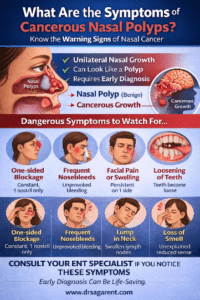
Table of Contents
-
Introduction
-
What Are Nasal Polyps?
-
Are There “Cancerous Nasal Polyps”? (Important Clarification)
-
What Is Nasal Cancer?
-
Key Symptoms of Suspected Cancerous Nasal Growth
-
Difference Between Benign Polyps and Cancer
-
Early vs Advanced Symptoms
-
Causes and Risk Factors
-
When Should You See a Doctor?
-
Diagnosis and Tests
-
Treatment Options
-
Prognosis and Survival
-
Prevention Tips
-
FAQs
-
Conclusion
-
Medical Disclaimer
1. Introduction
A very common and important question patients ask is:
👉 “What are the symptoms of cancerous nasal polyps?”
This concern is understandable because any growth inside the nose can cause anxiety about cancer. However, there is a crucial medical clarification you must understand first.
2. What Are Nasal Polyps?
Nasal Polyps are non-cancerous (benign) soft tissue growths that develop in the nasal lining due to chronic inflammation.
Common Features:
-
Soft, smooth, pale
-
Usually bilateral (both sides)
-
Associated with sinusitis and allergies
Symptoms:
-
Nasal blockage
-
Loss of smell
-
Runny nose
-
Postnasal drip
3. Are There “Cancerous Nasal Polyps”? (Important Clarification)
❗ Key Medical Fact:
Nasal polyps themselves are NOT cancerous and do NOT turn into cancer.
👉 So technically:
-
There is no condition called “cancerous nasal polyp”
However:
⚠️ Some nasal cancers can look like polyps, especially in early stages.
This is why ENT specialists carefully evaluate every nasal growth.
4. What Is Nasal Cancer?
Sinonasal Cancer refers to malignant tumors arising from the nasal cavity or sinuses.
Types:
-
Squamous cell carcinoma (most common)
-
Adenocarcinoma
-
Melanoma
These are serious conditions requiring early diagnosis.
📞 ENT Consultation & Surgery
Dr. Sagar Rajkuwar (MS-ENT)
Prabha ENT Clinic, Ambad, Nashik
📱 7387590194 | 9892596635
🌐 www.entspecialistinnashik.com
5. Key Symptoms of Suspected Cancerous Nasal Growth
Here are the most important symptoms that may indicate a cancerous growth rather than a simple nasal polyp:
🚨 1. One-Sided Nasal Blockage (Unilateral Obstruction)
-
Persistent blockage in only one nostril
-
Does not improve with medication
👉 This is the most important warning sign
🚨 2. Frequent Nosebleeds (Epistaxis)
-
Recurrent or unexplained bleeding
-
Blood-stained nasal discharge
👉 Polyps rarely bleed; cancer often does
🚨 3. Facial Pain or Swelling
-
Persistent pain on one side of the face
-
Swelling around cheek or nose
🚨 4. Loss of Smell (Anosmia)
-
Sudden or progressive
-
Especially if unilateral
🚨 5. Loosening of Teeth
-
Upper teeth becoming loose
-
Pain in gums
👉 Suggests spread to nearby structures
🚨 6. Vision Problems
-
Double vision
-
Blurred vision
-
Eye swelling
🚨 7. Persistent Headache
-
Deep, severe headache
-
Not relieved by usual treatment
🚨 8. Lump in Neck
-
Enlarged lymph nodes
-
Indicates possible spread
6. Difference Between Benign Polyps and Cancer
| Feature | Nasal Polyps | Cancerous Growth |
|---|---|---|
| Nature | Benign | Malignant |
| Side | Both sides | One side |
| Bleeding | Rare | Common |
| Pain | No | Yes |
| Growth | Slow | Rapid |
| Texture | Soft | Irregular |
7. Early vs Advanced Symptoms
Early Symptoms:
-
Mild nasal blockage
-
Occasional bleeding
-
Reduced smell
Advanced Symptoms:
-
Facial deformity
-
Vision loss
-
Severe pain
-
Brain involvement (rare)
👉 Early detection is critical
8. Causes and Risk Factors
Major Risk Factors:
-
Smoking
-
Exposure to chemicals (wood dust, leather dust)
-
Air pollution
-
HPV infection
-
Age > 50 years
9. When Should You See a Doctor?
Consult an ENT specialist immediately if:
-
Symptoms persist >2–3 weeks
-
One-sided nasal obstruction
-
Recurrent nosebleeds
-
Facial swelling or pain
👉 Early diagnosis can be life-saving.
10. Diagnosis and Tests
1. Nasal Endoscopy
-
Direct visualization
2. CT Scan / MRI
-
Extent of disease
3. Biopsy (Most Important)
-
Confirms cancer
👉 Any suspicious growth must be biopsied.
11. Treatment Options
Depends on stage and type:
1. Surgery
-
Removal of tumor
2. Radiation Therapy
3. Chemotherapy
Combined treatment often used for best outcomes.
12. Prognosis and Survival
-
Early-stage: Good prognosis
-
Late-stage: More complicated
👉 Survival depends on:
-
Early detection
-
Proper treatment
13. Prevention Tips
-
Avoid smoking
-
Reduce exposure to pollutants
-
Treat sinus infections early
-
Regular ENT check-ups
14. Frequently Asked Questions (FAQs)
1. Can nasal polyps become cancer?
No, they do not turn into cancer.
2. How do I know if my polyp is cancer?
Only biopsy can confirm.
3. Are nasal cancers common?
No, they are relatively rare.
4. Is nasal cancer curable?
Yes, if detected early.
15. Conclusion
👉 Nasal polyps are benign and NOT cancerous.
However:
-
Some cancers may mimic polyps
-
Certain symptoms should never be ignored
Final Takeaway:
✔ One-sided symptoms are a red flag
✔ Bleeding is concerning
✔ Early diagnosis saves lives
16. Medical Disclaimer
This article is for educational purposes only and does not replace professional medical advice. Always consult a qualified ENT specialist for proper diagnosis and treatment.
✅ Read the full medical guide here:
By Dr. Sagar Rajkuwar (MS-ENT)
ENT Specialist – Nashik, Maharashtra, India