Varicose Veins Symptoms: Early Warning Signs, Pain, Swelling, Skin Changes and When to Seek Medical Help-various aspects
Article author: Dr. Sagar Rajkuwar, MS-ENT
Introduction
Varicose veins are enlarged, twisted veins that commonly develop in the legs when blood does not flow efficiently back towards the heart. They may appear as blue, purple or dark-coloured veins beneath the skin and can sometimes become prominent, raised and easily visible. Although some people develop varicose veins without experiencing discomfort, others experience aching, heaviness, swelling, itching, burning sensations and pain that becomes more noticeable towards the end of the day. Recognising varicose veins symptoms early is important because the condition can sometimes progress from visible veins to swelling, skin inflammation, pigmentation and even non-healing ulcers around the ankles. One important point is that the severity of visible veins does not always correspond to the severity of the underlying venous problem. A person with relatively small visible veins may experience considerable discomfort, while someone with prominent veins may have very few symptoms. This article explains the early and advanced symptoms, how to distinguish varicose veins from other leg conditions, possible complications, diagnostic investigations and the warning signs that require medical attention.
Varicose Veins Symptoms
Table of Contents
- What Are Varicose Veins?
- What Are the Most Common Varicose Veins Symptoms?
- Early Symptoms of Varicose Veins
- Advanced Symptoms and Skin Changes
- Symptoms of Varicose Veins in Different Parts of the Legs
- Why Do Varicose Veins Symptoms Become Worse During the Day?
- What Causes These Symptoms?
- Varicose Veins vs Spider Veins: Understanding the Difference
- Warning Signs That Require Immediate Medical Attention
- Complications Associated with Varicose Veins
- How Are Varicose Veins Diagnosed?
- What Can You Do to Relieve Symptoms?
- When Should You Consult a Doctor?
- Frequently Asked Questions
- Summary
- Conclusion
- References
- Medical Disclaimer
1. What Are Varicose Veins?
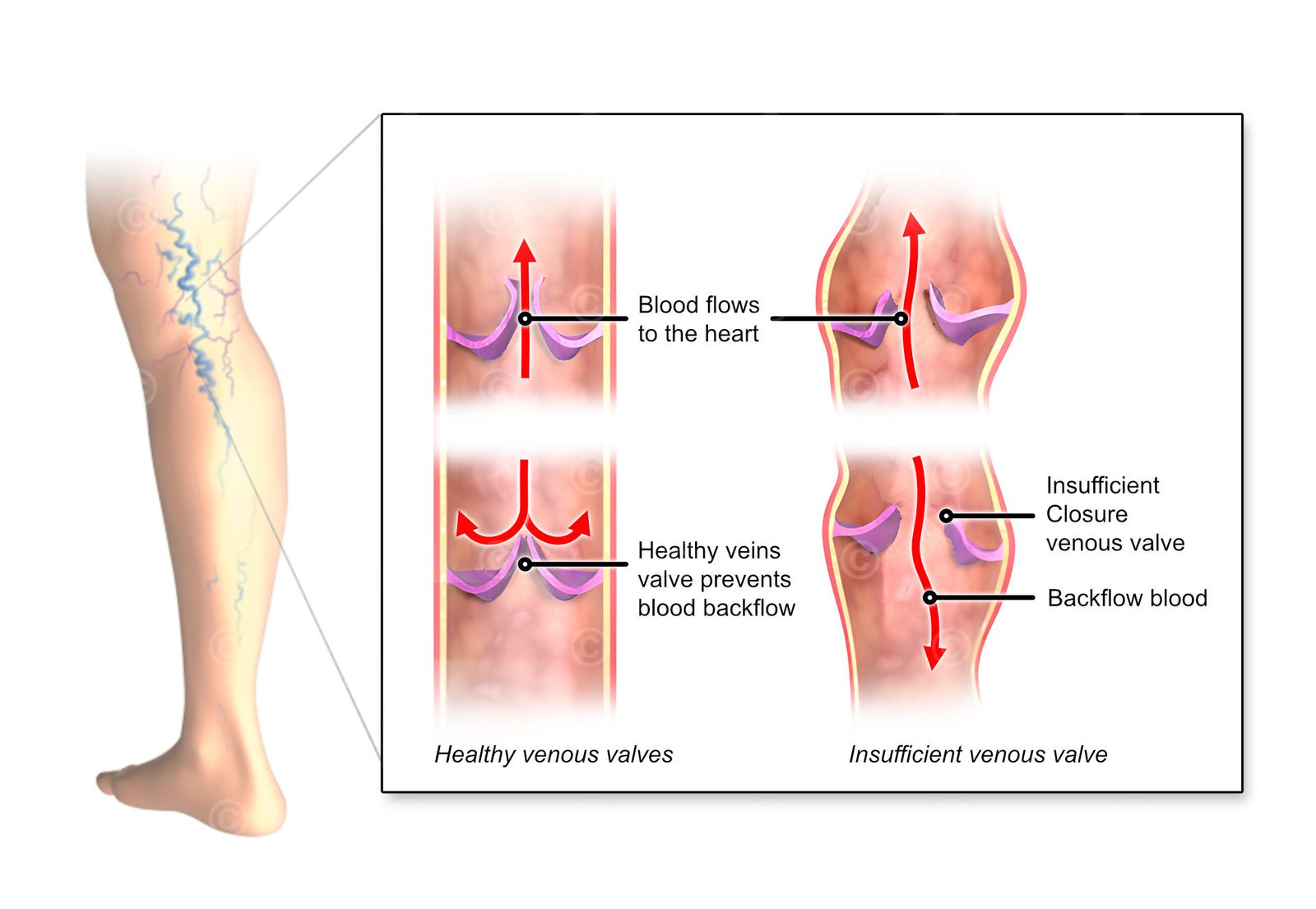
Varicose veins are enlarged, dilated and tortuous superficial veins, usually found in the lower extremities. Normally, veins transport blood from different parts of the body towards the heart. The leg veins must work against gravity to move blood upwards. To facilitate this process, veins contain small one-way structures called venous valves. These valves prevent blood from flowing backwards. When these valves become weak or damaged, they may fail to close properly. Consequently, blood flows backwards and accumulates within the superficial veins. This process is known as venous reflux. The increased pressure within the affected veins causes them to enlarge, become twisted and appear prominent beneath the skin. This condition is associated with chronic venous disease, which may produce symptoms ranging from mild heaviness to significant swelling and skin damage. Not everyone with varicose veins experiences symptoms. Some individuals primarily notice changes in the appearance of their legs.
2. What Are the Most Common Varicose Veins Symptoms?
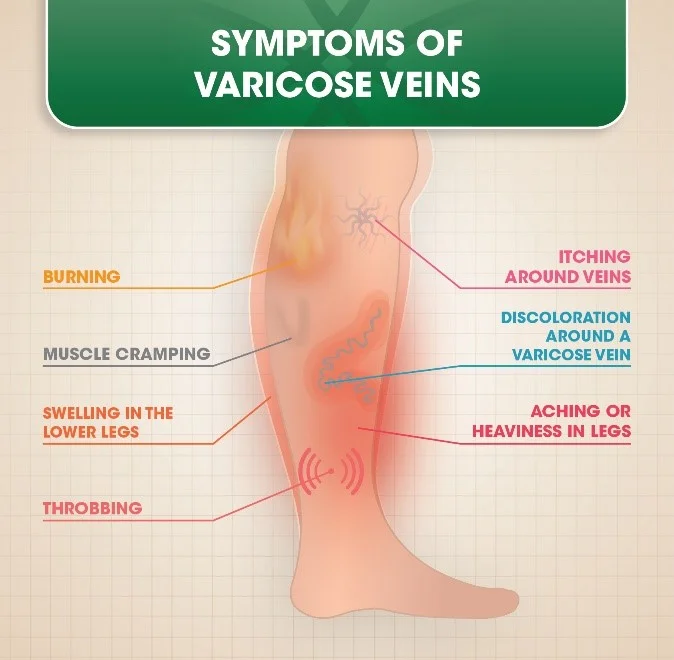
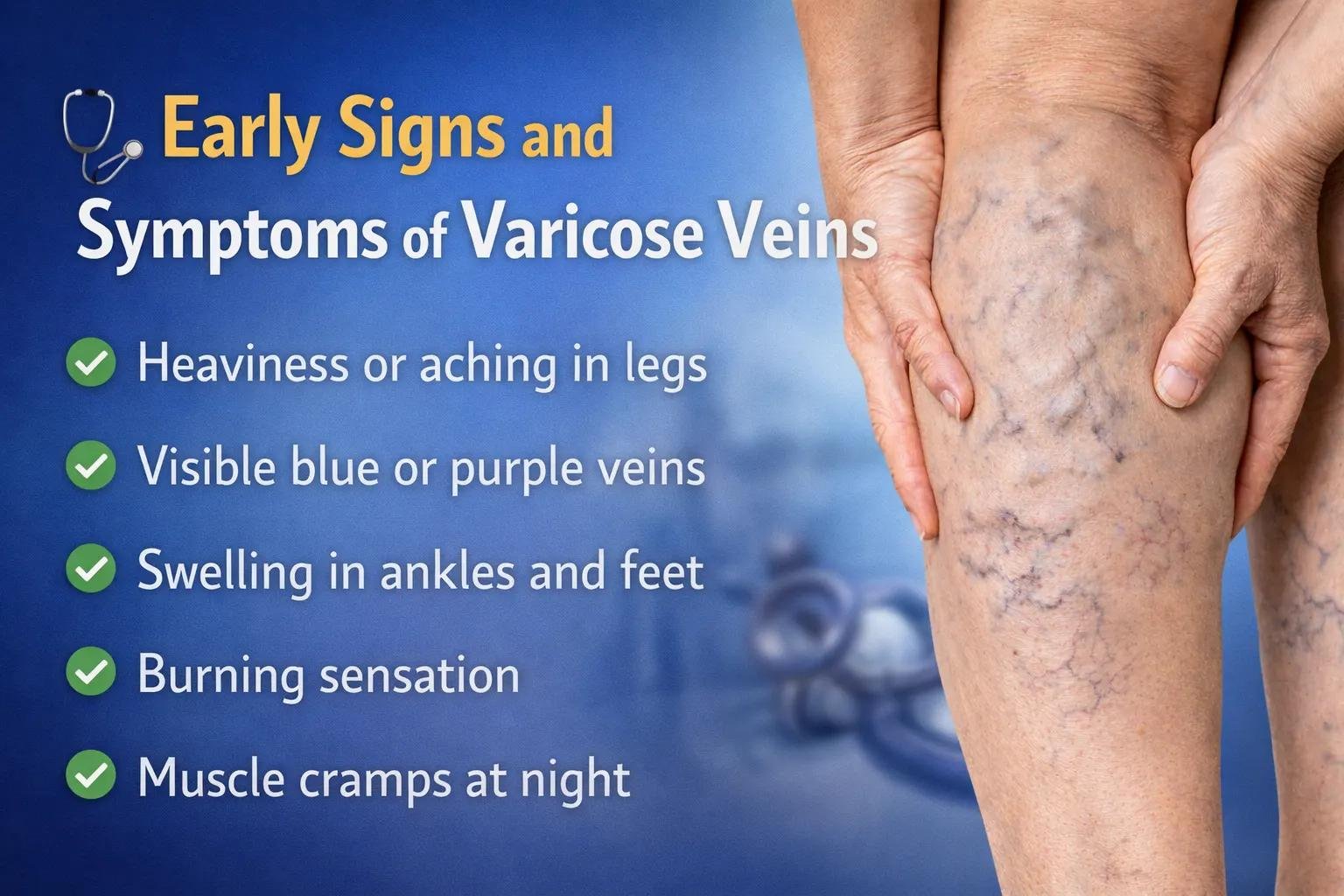
The most frequently reported symptoms include:
- Bulging, enlarged and twisted veins beneath the skin.
- Blue, purple or dark-coloured visible veins.
- Aching or throbbing pain in the legs.
- A feeling of heaviness or tiredness in the lower limbs.
- Swelling around the ankles and feet.
- Itching around the affected veins.
- Burning or tingling sensations.
- Night-time leg cramps.
- Dry, irritated or discoloured skin.
- Restlessness or discomfort in the legs.
The symptoms may become more noticeable after prolonged standing or sitting and may improve when a person walks or elevates their legs. An important characteristic of varicose veins symptoms is their relationship with body position and daily activity. For example, a person who stands for several hours at work may experience increasing heaviness and ankle swelling towards the evening.
2.1 Visible Bulging Veins
The most recognisable physical sign is the presence of enlarged, twisted veins beneath the skin. They may appear:
- Blue or purple.
- Raised above the surrounding skin.
- Twisted or rope-like.
- Clustered in particular areas of the leg.
- More prominent when standing.
These veins commonly develop along the inner aspect of the lower leg, calf or thigh. However, visible veins alone do not establish the severity of venous disease.
2.2 Aching and Throbbing Pain
Pain is another common complaint. Some individuals describe the discomfort as:
- A dull ache.
- Throbbing pain.
- A pulling sensation.
- A feeling of pressure within the leg.
- Discomfort after prolonged standing.
The pain may become worse towards the end of the day because prolonged dependency of the legs increases venous pressure.
2.3 Heaviness and Tiredness in the Legs
Many patients describe their legs as unusually heavy, tired or exhausted. This feeling may be particularly noticeable after:
- Standing for several hours.
- Sitting continuously at a desk.
- Travelling for long periods.
- Performing activities that involve prolonged standing.
The heaviness may improve after walking, resting or elevating the legs.
2.4 Swelling Around the Ankles and Feet
Peripheral oedema, meaning fluid accumulation in the tissues, can occur in chronic venous disease. Swelling commonly affects the ankles and lower legs. Patients may notice:
- Tightness around their footwear.
- Sock marks around the ankles.
- Increased ankle circumference in the evening.
- Swelling that improves after overnight rest.
Persistent or progressively increasing swelling deserves medical assessment because heart, kidney, liver and lymphatic disorders can also cause leg swelling.
2.5 Itching and Burning Sensations
Itching around enlarged veins is another possible symptom. It may result from changes in the surrounding skin associated with increased venous pressure and inflammation. Some people experience:
- Persistent itching.
- Burning sensations.
- Dryness and flaking.
- Skin irritation around the ankles.
Repeated scratching can damage the skin and increase the risk of infection.
2.6 Night-Time Leg Cramps
Some patients experience involuntary tightening of the calf muscles, particularly during the night. These cramps may disturb sleep and produce temporary pain. However, night-time cramps are not specific to varicose veins. They can also occur because of dehydration, muscle fatigue, medication effects, nerve disorders and other medical conditions. Therefore, recurrent cramps should not automatically be attributed to venous disease.
3. Early Symptoms of Varicose Veins
Recognising early symptoms can help people seek an appropriate assessment before significant skin complications develop. The earliest changes may be subtle and can occur even before large bulging veins become visible.
3.1 Small Blue or Purple Veins
Some people first notice thin, visible veins around the calves, thighs or ankles. These may represent reticular veins or telangiectasias, depending on their size and appearance. They are not necessarily the same as established varicose veins.
3.2 Leg Fatigue After Standing
Unusual tiredness in the legs after standing for extended periods can be an early complaint. The discomfort may initially be mild and may disappear after resting.
3.3 Mild Ankle Swelling
A small amount of swelling around the ankles, especially towards evening, may be an early manifestation of venous dysfunction. However, this symptom has many possible causes and should be interpreted in the context of the patient’s medical history and examination.
3.4 Occasional Itching
Some patients notice itching around the lower legs before developing obvious skin pigmentation or eczema. Persistent itching, especially when accompanied by swelling or visible veins, warrants assessment. Important: Early varicose veins symptoms are not always obvious. Some individuals have underlying venous reflux despite relatively minor external changes.
4. Advanced Symptoms and Skin Changes
Long-standing venous hypertension can affect the skin and tissues surrounding the affected veins. These changes indicate that the condition may have progressed beyond uncomplicated visible varicose veins.
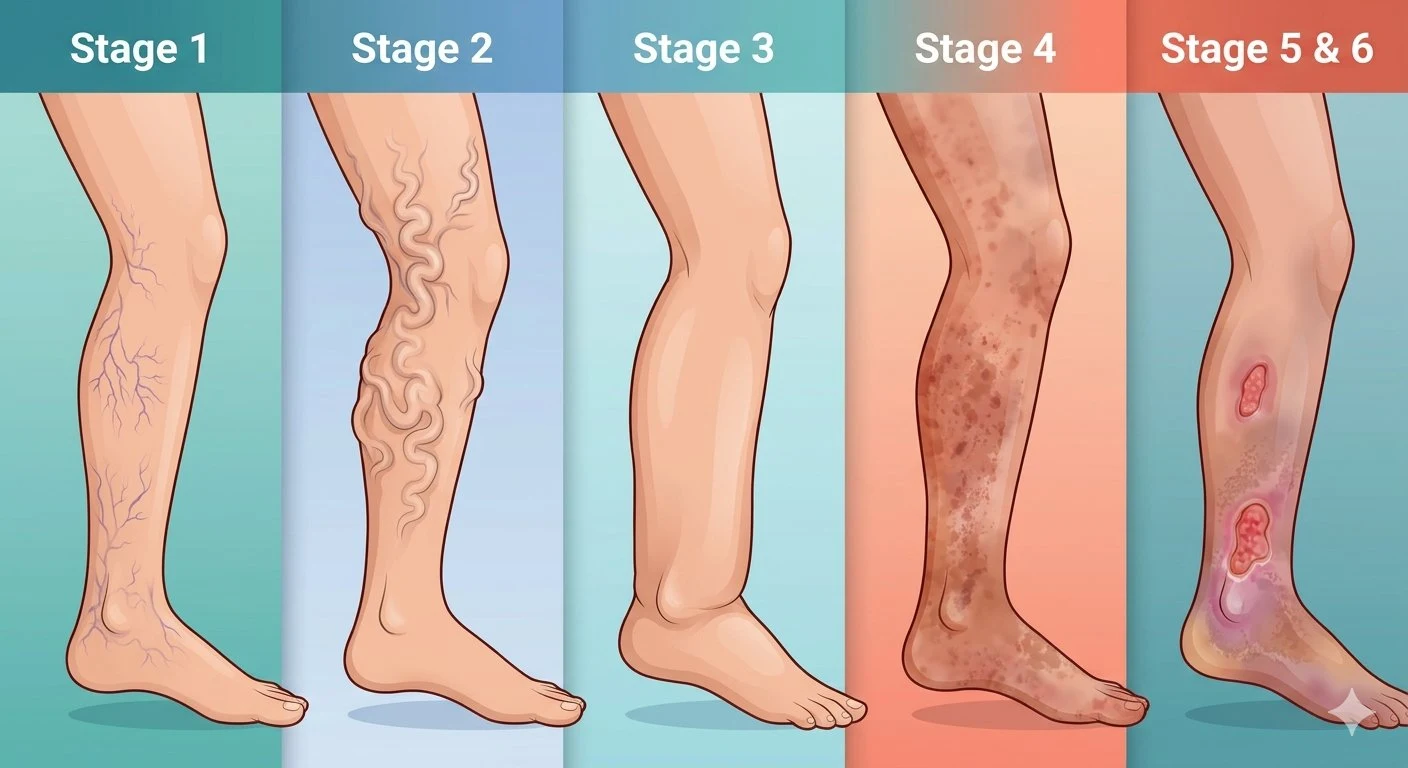
4.1 Brown or Dark Skin Discolouration
Venous pigmentation is a characteristic skin change associated with chronic venous disease. It frequently develops around the ankles and lower legs. Increased venous pressure can cause small blood vessels to leak red blood cells into surrounding tissues. The breakdown of these cells releases iron-containing pigments called haemosiderin. Haemosiderin accumulation can produce brownish or rust-coloured patches. These changes should not be dismissed as ordinary ageing or simple tanning.
4.2 Venous Eczema
Venous eczema, also known as stasis dermatitis, is an inflammatory skin condition associated with chronic venous hypertension. Possible features include:
- Redness or darker patches of skin.
- Persistent itching.
- Dryness and scaling.
- Skin irritation.
- Inflammation around the ankles.
- Occasionally, weeping or crusting.
Skin colour changes may appear differently in different skin tones. In darker skin, inflammation may look brown, purple or grey rather than bright red. Scratching can worsen inflammation and damage the skin barrier.
4.3 Skin Thickening and Hardening
In advanced chronic venous disease, the skin and underlying tissues may become thickened and hardened. A condition known as lipodermatosclerosis can develop. The lower leg may become firm, tender and inflamed. In some cases, the leg develops a characteristic narrowing above the ankle, sometimes described as an inverted champagne-bottle appearance. This finding suggests significant chronic tissue changes and requires medical evaluation.
4.4 Venous Leg Ulcers
One of the more serious complications is a venous leg ulcer. These ulcers commonly develop around the medial malleolus, the bony prominence on the inner side of the ankle. Typical characteristics include:
- A shallow open wound.
- Irregular wound margins.
- Surrounding skin pigmentation.
- Leg swelling.
- Exudate or fluid discharge.
- Delayed wound healing.
Venous ulcers may persist for weeks or months without appropriate management. A wound below the knee that has not healed within two weeks should be medically assessed, particularly when accompanied by signs of venous disease.
5. Symptoms of Varicose Veins in Different Parts of the Legs
The location of the affected veins can influence the symptoms experienced by an individual.
5.1 Varicose Veins in the Thigh
Enlarged veins in the thigh may cause:
- Visible bulging veins.
- Aching or discomfort.
- Heaviness.
- Localised itching.
- Pain after prolonged standing.
5.2 Varicose Veins in the Calf
The calf is a common location for visible varicose veins. Patients may experience:
- Twisted superficial veins.
- Aching pain.
- Muscle cramps.
- Heaviness.
- Swelling around the lower leg.
5.3 Varicose Veins Around the Ankles
The ankle region is particularly important because advanced venous disease may produce:
- Brown pigmentation.
- Itching.
- Eczema.
- Swelling.
- Skin thickening.
- Venous ulcers.
Small clusters of dilated veins around the ankle and foot may also be associated with more advanced venous disease.
5.4 Varicose Veins Behind the Knee
Some patients notice enlarged veins behind the knee. These may cause local discomfort or visible bulging. However, pain behind the knee can also result from musculoskeletal problems, a Baker’s cyst or other conditions. A clinical examination is needed to establish the cause.
6. Why Do Varicose Veins Symptoms Become Worse During the Day?
This is a particularly useful question for understanding the condition. When a person stands or sits with their legs down for extended periods, gravity increases the pressure within the veins of the lower limbs. In healthy veins, functioning valves and the calf muscle pump help return blood towards the heart. In people with venous valve incompetence, some blood flows backwards and accumulates within the superficial veins. Consequently, symptoms may gradually increase throughout the day. For example: Morning: The legs may feel relatively comfortable after overnight rest. Afternoon: Mild heaviness or ankle swelling may develop. Evening: Aching, itching, throbbing and swelling may become more noticeable. After leg elevation: Some patients experience improvement because elevating the legs helps reduce dependent venous pressure. This pattern is commonly described in chronic venous disease, although it is not diagnostic on its own.
7. What Causes These Symptoms?
The underlying mechanism is generally associated with increased pressure in the superficial venous system.
7.1 Venous Valve Dysfunction
The valves inside the veins normally prevent backward blood flow. When they become incompetent, blood may flow backwards, producing venous reflux. This increases pressure within the superficial venous system and contributes to vein enlargement.
7.2 Venous Hypertension
Venous hypertension refers to abnormally elevated pressure within the venous circulation. Persistent venous hypertension can contribute to:
- Enlarged veins.
- Fluid accumulation.
- Inflammation.
- Skin pigmentation.
- Tissue changes.
- Ulcer formation.
7.3 Reduced Calf Muscle Pump Function
The calf muscles help push blood upwards during walking. Prolonged inactivity or reduced mobility can impair this mechanism and contribute to venous pooling.
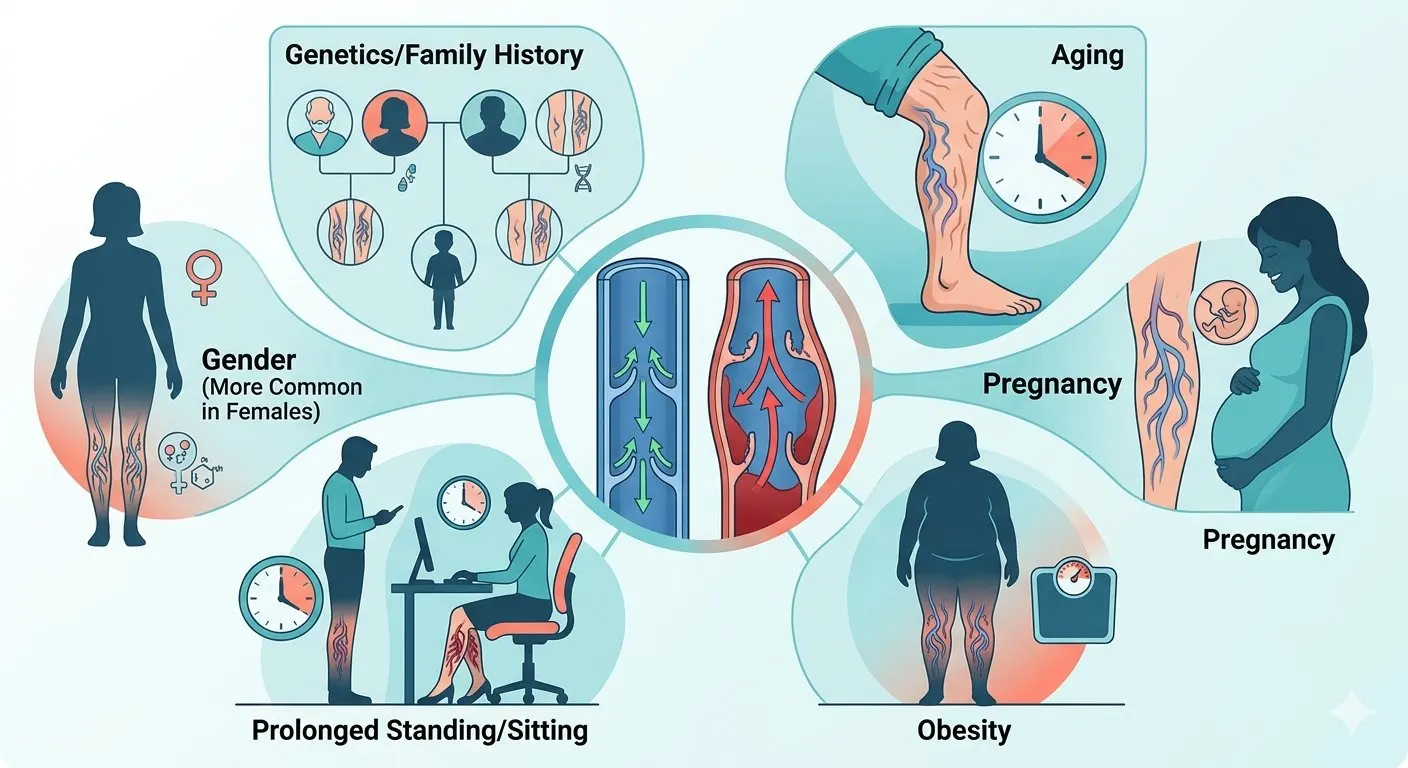
7.4 Risk Factors
Factors associated with an increased likelihood of developing varicose veins include:
- Family history of varicose veins.
- Increasing age.
- Pregnancy and multiple pregnancies.
- Excess body weight.
- Prolonged standing.
- Prolonged sitting with limited movement.
- Previous deep vein thrombosis.
- Reduced mobility.
These factors do not mean that every affected individual will develop symptoms or complications.
8. Varicose Veins vs Spider Veins: Understanding the Difference
Varicose veins and spider veins are related but distinct conditions.
| Feature | Varicose veins | Spider veins |
|---|---|---|
| Appearance | Enlarged, twisted veins | Fine, web-like vessels |
| Colour | Blue, purple or dark | Red, blue or purple |
| Size | Usually larger and raised | Usually small and flat |
| Location | Commonly legs and thighs | Commonly thighs, calves and ankles |
| Symptoms | May cause pain, heaviness and swelling | Often asymptomatic |
| Medical significance | May indicate chronic venous disease | Often mainly a cosmetic concern |
Telangiectasias, commonly called spider veins, are small dilated blood vessels near the skin surface. Reticular veins are slightly larger superficial veins that may appear blue or green. Although these conditions can coexist, their presence does not automatically mean that a person has significant underlying venous reflux.
9. Warning Signs That Require Immediate Medical Attention
Not every episode of leg discomfort in a person with varicose veins is caused by varicose veins. Some symptoms may indicate a separate and potentially dangerous condition.
9.1 Sudden One-Sided Leg Swelling
Sudden swelling affecting one leg, particularly when accompanied by pain or tenderness, requires urgent medical evaluation. One possible cause is deep vein thrombosis (DVT). DVT occurs when a blood clot forms in a deep vein, usually in the leg. Other features may include:
- Pain in the calf or thigh.
- Warmth over the affected area.
- Skin discolouration.
- Tenderness.
- Swelling of the entire leg.
DVT cannot be reliably excluded simply because a person already has visible varicose veins.
9.2 Sudden Chest Pain or Breathlessness
If a person develops sudden breathlessness, chest pain, fainting or coughing up blood, they may have a pulmonary embolism (PE). A pulmonary embolism can occur when a blood clot travels to the lungs. <PRIVATE_PERSON> Immediate emergency assessment is necessary. Call emergency services rather than waiting for symptoms to settle.
9.3 Bleeding From a Varicose Vein
Superficial varicose veins lie close to the skin and can occasionally bleed following minor trauma or spontaneous rupture. Bleeding may appear surprisingly heavy because of the pressure within the affected vein. What should you do?
- Lie down immediately.
- Elevate the affected leg above the level of the heart.
- Apply firm, continuous direct pressure over the bleeding point using a clean cloth or dressing.
- Seek emergency medical assessment, even if the bleeding stops.
Do not stand upright while waiting for help.
9.4 A Painful, Red and Hardened Vein
A vein that suddenly becomes painful, warm, red or hard may indicate superficial thrombophlebitis, also called superficial vein thrombosis. This involves inflammation and clot formation in a superficial vein. Medical assessment is important because the clot may sometimes extend towards the deeper venous system.
9.5 A Non-Healing Wound Around the Ankle
An open wound that persists around the ankle may indicate a venous ulcer. Early assessment is important to prevent further tissue damage and infection.
10. Complications Associated with Varicose Veins
Although many people with varicose veins do not develop serious complications, certain problems may occur.
10.1 Superficial Vein Thrombosis
A blood clot can form within a superficial varicose vein, producing pain, redness, warmth and localised hardening.
10.2 Bleeding
Enlarged superficial veins can rupture following minor injuries or occasionally without obvious trauma.
10.3 Venous Eczema
Persistent venous hypertension can cause inflammatory skin changes.
10.4 Lipodermatosclerosis
Chronic inflammation can cause thickening and fibrosis of the skin and subcutaneous tissue.
10.5 Venous Leg Ulcers
Long-standing venous hypertension can interfere with normal tissue health and wound healing, resulting in chronic ulcers.
10.6 Deep Vein Thrombosis
DVT is a distinct condition involving deep veins. It should not be considered an inevitable consequence of uncomplicated varicose veins. However, the possibility of DVT must be assessed when compatible symptoms develop.
11. How Are Varicose Veins Diagnosed?
Diagnosis begins with a detailed medical history and physical examination. The healthcare professional may ask about:
- Duration of visible veins.
- Pain and heaviness.
- Swelling patterns.
- Previous blood clots.
- Pregnancy history.
- Family history.
- Previous venous procedures.
- Skin changes and ulcers.
11.1 Physical Examination
The legs are examined for:
- Dilated superficial veins.
- Swelling.
- Skin pigmentation.
- Eczema.
- Skin thickening.
- Ulcers.
- Tenderness or inflammation.
The examination may be performed with the patient standing because some abnormal veins become more visible in this position.
11.2 Venous Duplex Ultrasound
Venous duplex ultrasound is an important investigation for evaluating suspected venous reflux and planning treatment. It combines conventional ultrasound imaging with Doppler assessment of blood flow. It can help identify:
- Incompetent venous valves.
- Reversed blood flow.
- Affected superficial veins.
- Venous obstruction.
- Deep vein thrombosis.
- The distribution of abnormal venous pathways.
The examination helps the specialist determine whether the visible veins are associated with underlying venous reflux. Importantly, the presence of visible varicose veins alone does not mean that every patient requires an ultrasound or an intervention. The need for investigation depends on symptoms, examination findings and the clinical situation.
12. What Can You Do to Relieve Symptoms?
Several practical measures may help reduce discomfort associated with uncomplicated varicose veins. These measures do not necessarily correct the underlying valve dysfunction.
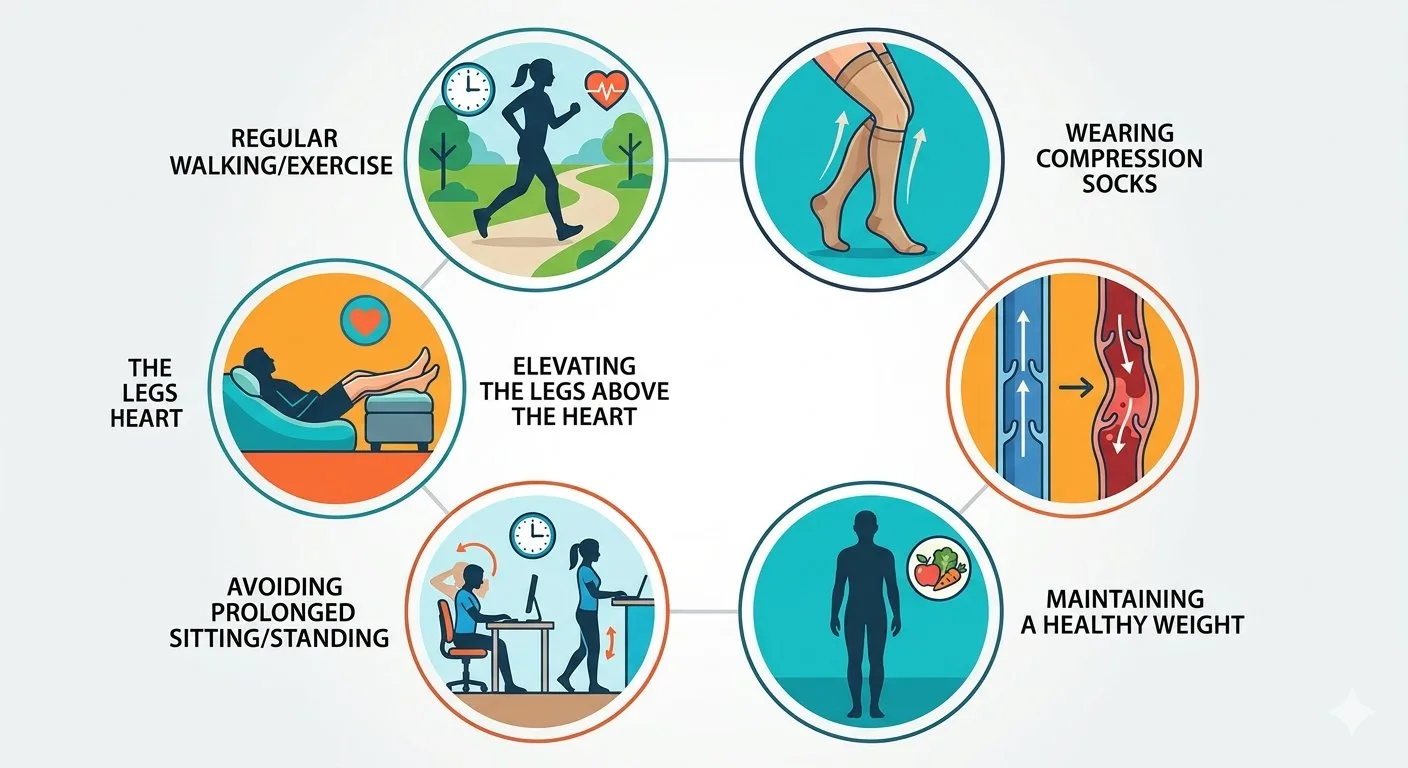
12.1 Walk Regularly
Walking activates the calf muscles and helps improve venous return. Short, regular walks may be more practical than remaining seated or standing continuously.
12.2 Avoid Prolonged Standing or Sitting
If your occupation involves long periods of standing, try to take regular movement breaks. If you work at a desk, periodically stand up and walk.
12.3 Elevate Your Legs
When resting, elevate your legs using cushions or a footrest. This may help reduce dependent swelling and heaviness.
12.4 Maintain a Healthy Weight
Excess body weight can increase pressure on the venous circulation. Maintaining a healthy weight may help reduce the mechanical burden on the lower limbs.
12.5 Take Care of Your Skin
Use an appropriate moisturiser if the skin is dry. Avoid scratching itchy areas because damaged skin can become infected. Persistent eczema or skin discolouration requires medical assessment.
12.6 Use Compression Stockings Only When Appropriate
Compression stockings apply graduated pressure to the legs and may help relieve swelling and discomfort in selected patients. However, they must be selected appropriately. People with significant peripheral arterial disease may require special assessment before using compression. A healthcare professional should advise on the appropriate compression level and fit. Compression stockings should not be assumed to permanently eliminate varicose veins or correct all underlying venous reflux.
13. When Should You Consult a Doctor?
Medical assessment is advisable if you experience:
- Persistent aching or heaviness.
- Recurrent ankle swelling.
- Itching that does not improve.
- Increasingly prominent veins.
- Skin pigmentation or eczema.
- Painful, hardened superficial veins.
- Recurrent leg discomfort affecting sleep or daily activities.
- Any wound that has not healed within two weeks.
A vascular specialist may be required when there are symptomatic varicose veins, chronic skin changes, suspected superficial venous thrombosis or venous ulcers. Early assessment can help identify the underlying problem and determine whether lifestyle measures, compression or a venous procedure is appropriate.
14. Frequently Asked Questions
Q1. What are the first symptoms of varicose veins?
Early symptoms may include mild leg heaviness, tiredness after prolonged standing, occasional aching, itching and small visible blue or purple veins. Some people initially have visible veins without any discomfort.
Q2. Do varicose veins always cause pain?
No. Many individuals have visible varicose veins without experiencing pain. Others develop aching, throbbing, heaviness, swelling or itching.
Q3. Why do varicose veins hurt more at night?
Symptoms may become more noticeable towards the evening after prolonged standing or sitting during the day. However, night-time leg pain can also have other causes, including muscle cramps, nerve disorders and restless legs syndrome.
Q4. Can varicose veins cause swelling in the feet?
Yes. Chronic venous hypertension can cause fluid accumulation in the lower legs and around the ankles. However, foot swelling may also result from heart, kidney, liver or lymphatic conditions.
Q5. Are varicose veins dangerous?
Most uncomplicated varicose veins are not immediately dangerous. However, some people develop complications such as bleeding, superficial vein thrombosis, eczema and venous ulcers.
Q6. Can varicose veins disappear without treatment?
Established varicose veins generally do not reliably disappear through lifestyle changes alone. Some symptoms may improve with walking, leg elevation and other conservative measures. Pregnancy-related varicose veins may improve after childbirth.
Q7. Can varicose veins cause blood clots?
Blood clots can develop in superficial varicose veins, a condition called superficial vein thrombosis. Deep vein thrombosis is a separate condition and requires urgent assessment when suspected.
Q8. Is itching a common symptom of varicose veins?
Yes. Itching can occur because chronic venous disease may cause inflammation and changes in the surrounding skin. Persistent itching accompanied by redness, dryness or pigmentation may indicate venous eczema.
Q9. Can varicose veins cause ulcers?
Yes. Advanced chronic venous disease can cause venous leg ulcers, commonly around the inner ankle. These wounds may heal slowly without appropriate treatment.
Q10. What is the best test for diagnosing varicose veins?
Venous duplex ultrasound is an important investigation for identifying venous reflux, assessing the affected veins and planning treatment.
Q11. Do varicose veins become worse with age?
They may become more prominent or symptomatic with increasing age because vein walls and valves can undergo progressive changes. However, progression varies considerably between individuals.
Q12. When should leg swelling be considered an emergency?
Sudden swelling of one leg, particularly with pain, warmth or tenderness, requires urgent assessment for possible DVT. If chest pain or breathlessness occurs, seek emergency medical care immediately.
Q13. Can exercise make varicose veins worse?
Ordinary walking and appropriate physical activity generally support venous circulation. Exercise should be adapted to the person’s health and symptoms. There is no need for most people to avoid normal walking simply because they have varicose veins.
Q14. Are visible spider veins the same as varicose veins?
No. Spider veins are small dilated vessels close to the skin surface, whereas varicose veins are larger, enlarged and tortuous superficial veins. They may coexist but are not identical.
Q15. Can varicose veins affect both legs?
Yes. Varicose veins can affect one or both legs. The distribution and severity may differ between the two sides.
15. Summary
Varicose veins symptoms can range from mild cosmetic changes to significant discomfort and advanced skin complications. The most common features include:
- Enlarged, twisted blue or purple veins.
- Aching and throbbing pain.
- Heaviness and tiredness in the legs.
- Swelling around the ankles.
- Itching and burning.
- Night-time cramps.
- Brown skin pigmentation.
- Venous eczema.
- Skin thickening and venous ulcers in advanced disease.
Symptoms often become worse after prolonged standing or sitting and may improve with walking, rest and leg elevation. Sudden one-sided leg swelling, a painful hardened vein, bleeding or symptoms suggestive of pulmonary embolism require prompt medical attention. Venous duplex ultrasound helps assess underlying venous reflux and supports appropriate treatment planning.
16. Conclusion
Varicose veins are more than a cosmetic concern for some individuals. Although many people experience only visible enlarged veins, others develop pain, heaviness, swelling, itching and progressive skin changes. Recognising varicose veins symptoms early allows patients to seek appropriate medical advice before advanced complications develop. Persistent discomfort, ankle swelling, skin pigmentation, eczema and non-healing wounds should not be ignored. A clinical examination and, when indicated, venous duplex ultrasound can help determine the extent of venous disease and guide treatment. Most importantly, sudden one-sided leg swelling, severe pain, bleeding or chest symptoms should never be dismissed as ordinary varicose veins. Understanding the symptoms and seeking timely medical assessment can help protect long-term leg health and improve quality of life.
17. References
The following authoritative resources were consulted for medical information and clinical guidance:
- NHS – Varicose Veins https://www.nhs.uk/conditions/
varicose-veins/ - National Institutes of Health – Varicose Veins https://health.nih.gov/health-
topics-a-z/varicose-veins - Society for Vascular Surgery – Varicose Veins https://vascular.org/your-
vascular-health/vascular- conditions/common-conditions/ varicose-veins - Society for Vascular Surgery, American Venous Forum and American Vein and Lymphatic Society – Clinical Practice Guidelines for the Management of Varicose Veins, Part II https://pmc.ncbi.nlm.nih.gov/
articles/PMC11523430/ - NICE – Varicose Veins: Diagnosis and Management https://www.nice.org.uk/
guidance/cg168 - NICE – Venous Thromboembolic Diseases: Diagnosis and Management https://www.nice.org.uk/
guidance/ng158/chapter/ recommendations - NHS – Deep Vein Thrombosis https://www.nhs.uk/conditions/
deep-vein-thrombosis-dvt/ - NHS – Phlebitis and Superficial Thrombophlebitis https://www.nhs.uk/conditions/
phlebitis/ - Mayo Clinic – Varicose Veins: Symptoms and Causes https://www.mayoclinic.org/
diseases-conditions/varicose- veins/symptoms-causes/syc- 20350643 - The 2020 Update of the CEAP Classification System and Reporting Standards – Journal of Vascular Surgery https://pubmed.ncbi.nlm.nih.
gov/32113854/
18. Medical Disclaimer
This article is intended for general educational and informational purposes only. It does not replace a consultation, clinical examination, diagnosis or treatment provided by a qualified healthcare professional. Leg pain, swelling, skin changes and visible veins can occur due to several different medical conditions. Readers should not assume that every symptom is caused by varicose veins. People experiencing sudden one-sided leg swelling, significant pain, suspected blood clots, uncontrolled bleeding, chest pain or breathlessness should seek appropriate urgent or emergency medical care. Treatment decisions should be made after individual clinical assessment.