How to Prevent Varicose Veins: 15 Practical Ways to Protect Your Leg Veins, Improve Circulation and Reduce Your Risk
Article author: Dr. Sagar Rajkuwar, MS-ENT
Introduction
Varicose veins are enlarged, twisted veins that commonly develop in the legs when blood does not return efficiently towards the heart. They occur when the normal functioning of the venous valves becomes impaired, allowing blood to flow backwards and accumulate within superficial veins. Although varicose veins are generally not life-threatening, they can cause aching, heaviness, swelling, itching, skin pigmentation and, in advanced cases, venous leg ulcers. An important question many people ask is: How to prevent varicose veins before they develop? The honest medical answer is that there is no guaranteed method of preventing varicose veins in everyone. Genetic susceptibility, ageing, pregnancy and some structural characteristics of the venous system cannot be completely controlled. However, several lifestyle measures can support healthy venous circulation, reduce prolonged blood pooling in the legs and help manage symptoms or reduce the likelihood of worsening existing venous disease. Regular walking, maintaining a healthy body weight, avoiding prolonged immobility and activating the calf muscles are particularly useful measures. This guide explains 15 practical ways to protect leg health, what medical research says about prevention, what people should avoid, and when professional assessment is necessary.Table of Contents
- Can Varicose Veins Be Prevented Completely?
- Understanding How Prevention Works
- How to Prevent Varicose Veins: 15 Practical Methods
- Best Exercises for Healthy Leg Veins
- How to Prevent Varicose Veins During Pregnancy
- Prevention Tips for People Who Stand or Sit All Day
- How to Protect Your Legs During Long-Distance Travel
- Foods and Nutrition for Healthy Blood Vessels
- Do Compression Stockings Prevent Varicose Veins?
- Common Prevention Mistakes and Myths
- Can You Prevent Existing Varicose Veins from Getting Worse?
- When Should You Consult a Doctor?
- Frequently Asked Questions
- Summary
- Conclusion
- References
- Medical Disclaimer
1. Can Varicose Veins Be Prevented Completely?
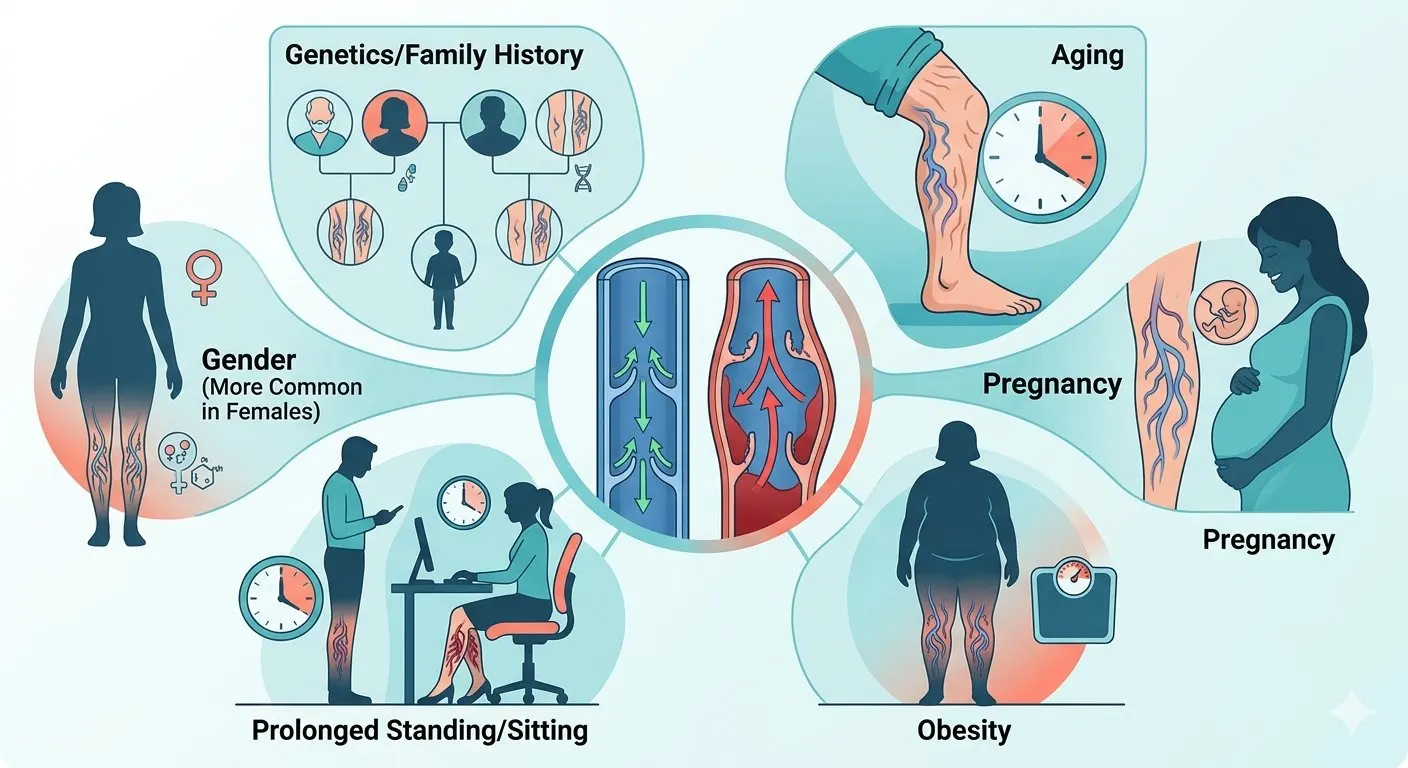
No. There is currently no scientifically established method that guarantees prevention of varicose veins. Some people develop varicose veins because of inherited susceptibility, age-related changes in vein walls and abnormalities of venous valves. Other factors, including pregnancy, excess body weight and prolonged periods of standing or sitting, may contribute to the development or worsening of venous problems. Nevertheless, understanding how to prevent varicose veins through healthy daily habits is valuable. The main objectives are to:- Encourage normal blood return from the legs towards the heart.
- Activate the calf muscle pump regularly.
- Avoid prolonged periods of immobility.
- Maintain a healthy body weight.
- Reduce unnecessary pressure on the lower-limb venous circulation.
- Recognise early symptoms and seek timely assessment.
2. Understanding How Prevention Works
To understand how to prevent varicose veins, it is useful to know how blood normally travels through the legs. Veins carry blood from the lower limbs towards the heart. Because blood must travel against gravity, the legs depend on several mechanisms to maintain effective circulation.2.1 The Role of Venous Valves
Venous valves are small structures inside veins that prevent blood from flowing backwards. When these valves become incompetent, blood may flow backwards and accumulate in the affected veins. This process is called venous reflux. Persistent reflux can increase pressure inside superficial veins, causing them to enlarge and become twisted. Lifestyle measures cannot reliably prevent inherited or structural valve abnormalities, but they can support the overall functioning of the venous circulation.2.2 The Calf Muscle Pump
The calf muscles act as a natural pumping mechanism. When a person walks, these muscles contract and compress the deep veins. This helps push blood upwards towards the heart. The venous valves help maintain the upward direction of blood flow. When a person remains seated or standing motionless for long periods, the calf muscle pump becomes less active. Regular movement is therefore an important part of maintaining healthy venous circulation.2.3 Why Gravity Matters
When a person stands or sits with the legs hanging down, gravity increases pressure in the veins of the lower limbs. Walking and leg muscle activity help counteract this effect. This explains why prolonged immobility can aggravate venous pooling and why many people experience less leg heaviness after walking or elevating their legs.3. How to Prevent Varicose Veins: 15 Practical Methods
The following measures focus on modifiable lifestyle factors and practical ways to support venous health.3.1 Walk Regularly Every Day
Walking is one of the simplest ways to activate the calf muscle pump. During walking, the calf muscles repeatedly contract and relax, helping move blood towards the heart. Regular walking may help:- Improve venous return.
- Reduce prolonged blood pooling.
- Maintain leg muscle function.
- Support a healthy body weight.
- Improve overall cardiovascular health.
3.2 Avoid Standing in One Position for Too Long
People whose occupations involve prolonged standing may experience increased venous pressure. Examples include:- Teachers.
- Nurses.
- Surgeons.
- Shopkeepers.
- Factory workers.
- Security personnel.
- Hairdressers.
- Hospitality employees.
- Take short walking breaks whenever possible.
- Shift body weight between the legs.
- Perform gentle heel raises.
- Move the ankles periodically.
- Avoid standing motionless for unnecessarily long periods.
3.3 Avoid Prolonged Sitting
Prolonged sitting is another situation in which calf muscle activity becomes reduced. This is particularly relevant for:- Office employees.
- Computer users.
- Drivers.
- Students.
- People working from home.
- Individuals who watch television for extended periods.
3.4 Maintain a Healthy Body Weight
Excess body weight is associated with an increased risk of chronic venous disease. Abdominal obesity may increase pressure within the abdomen and pelvic circulation, potentially interfering with venous return from the legs. Maintaining a healthy weight can help reduce this mechanical burden. Practical steps include:- Eating balanced meals.
- Limiting excessive calorie intake.
- Performing regular physical activity.
- Reducing prolonged sedentary behaviour.
- Maintaining consistency rather than following extreme diets.
3.5 Elevate Your Legs When Resting
Leg elevation can help reduce dependent venous pressure. When resting, place cushions beneath your lower legs so that your feet are comfortably raised. You may also lie down and elevate your legs above the level of your heart for short periods if comfortable. This measure may help relieve:- Ankle swelling.
- Leg heaviness.
- Tiredness.
- Discomfort associated with dependent fluid accumulation.
3.6 Perform Ankle Pump Exercises
Ankle pump exercises are simple movements that activate the muscles around the lower leg. They are especially useful for people who sit for prolonged periods. How to perform ankle pumps:- Sit comfortably with both feet supported.
- Raise the toes while keeping the heels on the floor.
- Lower the toes.
- Raise the heels while keeping the toes on the floor.
- Repeat the movements comfortably.
3.7 Perform Calf Raises
Calf raises strengthen the muscles responsible for supporting the calf muscle pump. How to perform calf raises:- Stand upright near a stable support.
- Keep both feet flat on the floor.
- Slowly raise both heels.
- Balance briefly on the balls of your feet.
- Lower your heels gradually.
- Repeat according to your comfort and physical ability.
3.8 Choose Comfortable Footwear
Footwear should permit normal ankle movement and comfortable walking. Some high-heeled shoes restrict ankle movement and may influence calf muscle activity. This does not mean that high heels are an established direct cause of varicose veins. However, people who experience leg discomfort in particular footwear may benefit from choosing more comfortable shoes.3.9 Avoid Smoking
Avoiding tobacco is important for overall vascular health. Smoking contributes to several cardiovascular and vascular disorders. Although smoking is not the only or primary explanation for varicose veins, stopping tobacco use is a valuable general health measure.3.10 Maintain Regular Physical Activity
Apart from walking, several forms of exercise can support leg muscle function. Examples include:- Swimming.
- Stationary cycling.
- Gentle cycling.
- Water-based exercise.
- Appropriate resistance training.
- Walking on level ground.
3.11 Avoid Prolonged Immobility During Travel
Long-distance travel can involve several hours of continuous sitting. This is particularly relevant during journeys by:- Airplane.
- Train.
- Bus.
- Car.
- Moving your ankles regularly.
- Performing calf muscle contractions.
- Walking when it is safe and possible.
- Taking regular breaks during long car journeys.
- Avoiding unnecessarily restrictive clothing.
3.12 Avoid Excessively Restrictive Clothing
Ordinary tight clothing does not automatically cause varicose veins. However, very restrictive garments around the waist or groin may be uncomfortable and could interfere with normal movement. Choose clothing that permits comfortable walking, sitting and bending.3.13 Take Care During Pregnancy
Pregnancy can increase venous pressure through increased blood volume, hormonal changes and compression of pelvic veins by the enlarging uterus. Women who wish to reduce discomfort during pregnancy may benefit from:- Regular gentle walking, if medically appropriate.
- Avoiding prolonged immobility.
- Elevating the legs while resting.
- Maintaining appropriate pregnancy weight gain.
- Discussing compression stockings with their healthcare professional when symptoms occur.
3.14 Avoid Excessive Straining
Repeated straining can temporarily increase intra-abdominal pressure. People who experience constipation may benefit from:- Adequate dietary fibre.
- Appropriate fluid intake.
- Regular physical activity.
- Medical assessment if constipation persists.
3.15 Recognise Early Warning Signs
Early recognition does not prevent the initial development of varicose veins, but it can help patients obtain appropriate assessment before complications develop. Watch for:- New prominent superficial veins.
- Persistent leg heaviness.
- Aching after prolonged standing.
- Ankle swelling.
- Itching.
- Brown skin pigmentation.
- Skin eczema.
- Non-healing wounds around the ankles.
4. Best Exercises for Healthy Leg Veins
Physical activity helps activate the calf muscle pump and supports lower-limb circulation. The following exercises can be incorporated into an appropriate daily routine.4.1 Walking
Walking is a practical activity for most people. It activates the calf muscles and helps reduce prolonged immobility.4.2 Swimming
Swimming involves repeated leg movement and provides a supportive water environment. It may be comfortable for people who experience heaviness in their legs during weight-bearing activities.4.3 Cycling
Cycling activates the calf and thigh muscles. Stationary cycling may be convenient for people who cannot comfortably walk for extended periods.4.4 Ankle Flexion and Extension
Move the foot upwards towards the shin and then point it downwards. This movement activates muscles involved in ankle and calf function. It can be performed while sitting or lying down.4.5 Gentle Calf Stretching
Gentle calf stretching can help maintain muscle flexibility. It does not directly repair venous valves, but it may support comfortable movement.4.6 Exercise Precautions
Exercise should not be forced through significant pain. People with sudden leg swelling, suspected DVT, acute inflammation or recent venous procedures should obtain medical advice before continuing an exercise routine.5. How to Prevent Varicose Veins During Pregnancy
Pregnancy deserves special attention because the circulatory system undergoes substantial changes.5.1 Understand Why Pregnancy Increases Risk
Several factors contribute:- Increased blood volume.
- Hormonal effects on blood vessel tone.
- Compression of pelvic veins.
- Increased pressure within the lower-limb venous circulation.
- Repeated pregnancies.
5.2 Practical Pregnancy Measures
Pregnant women can discuss the following measures with their obstetrician:- Walking regularly when medically appropriate.
- Avoiding prolonged sitting or standing.
- Elevating the legs when resting.
- Maintaining recommended pregnancy weight gain.
- Wearing properly fitted compression stockings when advised.
5.3 Are Compression Stockings Safe During Pregnancy?
Compression stockings may be recommended for relief of swelling and discomfort in selected pregnant women. The correct type and size should be chosen with professional guidance. Procedures to treat uncomplicated varicose veins are generally deferred during pregnancy.5.4 When Should Pregnant Women Seek Urgent Medical Attention?
Sudden swelling of one leg, calf pain, warmth or tenderness requires urgent assessment for possible DVT. Sudden breathlessness or chest pain requires emergency medical attention.6. Prevention Tips for People Who Stand or Sit All Day
Occupational routines can make it difficult to maintain regular movement. A practical approach is to introduce small activity breaks throughout the day.For People Who Stand for Long Hours
- Avoid remaining motionless.
- Walk briefly whenever possible.
- Perform gentle heel raises.
- Alternate positions.
- Elevate the legs after work if swelling occurs.
For Office Workers
- Take regular breaks from sitting.
- Walk around the workplace.
- Perform ankle pump exercises.
- Avoid remaining seated continuously for several hours.
- Use a comfortable chair that permits normal leg positioning.
For Drivers
- Take safe breaks during long journeys.
- Walk and stretch when the vehicle is stopped.
- Move the ankles periodically while seated.
- Avoid unnecessary prolonged immobility.
7. How to Protect Your Legs During Long-Distance Travel
Long journeys deserve particular attention because immobility can increase the risk of DVT. The CDC advises travellers to move their legs frequently, perform calf muscle exercises and walk periodically during long-distance journeys.7.1 During Air Travel
When possible:- Move your ankles and feet periodically.
- Perform heel and toe raises while seated.
- Walk around when permitted.
- Choose clothing that allows comfortable movement.
7.2 During Car or Bus Travel
Take breaks when safe to do so. During breaks, walk briefly and move your legs.7.3 Who Needs Additional Precautions?
People with previous blood clots, recent surgery, active cancer, pregnancy, inherited clotting disorders or significant immobility may require individual assessment. Some high-risk travellers may benefit from medical compression stockings or other preventive measures. Do not start aspirin or anticoagulant medication solely for travel-related prevention without medical advice.8. Foods and Nutrition for Healthy Blood Vessels
No particular food has been proven to prevent varicose veins or repair damaged venous valves. However, a balanced diet supports general cardiovascular health and helps maintain a healthy body weight.8.1 Eat Fibre-Rich Foods
Fibre-rich foods include:- Vegetables.
- Fruits.
- Whole grains.
- Beans.
- Lentils.
- Nuts and seeds.
8.2 Include Fruits and Vegetables
Fruits and vegetables provide vitamins, minerals and antioxidants. Examples include:- Oranges.
- Guavas.
- Papayas.
- Berries.
- Tomatoes.
- Leafy green vegetables.
- Carrots.
8.3 Choose Healthy Protein Sources
Include appropriate protein sources such as:- Pulses.
- Beans.
- Lentils.
- Eggs.
- Fish.
- Dairy products.
- Lean meats.
8.4 Maintain Appropriate Fluid Intake
Drink sufficient fluids according to your activity level, climate and medical needs. Hydration is important for general health, but drinking extra water has not been established as a method of preventing varicose veins. People with heart or kidney conditions who have been advised to restrict fluids should follow their clinician’s recommendations.8.5 Limit Excessive Salt Intake
Excessive sodium intake can contribute to fluid retention and may aggravate swelling in some people. Limiting highly processed foods and excessive added salt supports general cardiovascular health. However, salt reduction alone does not prevent venous valve dysfunction.9. Do Compression Stockings Prevent Varicose Veins?
This is an important question because compression stockings are frequently recommended for people with leg discomfort. Graduated compression stockings apply pressure to the lower limbs, generally providing greater pressure around the ankle and gradually decreasing pressure upwards. They can help reduce swelling and may relieve symptoms in selected patients. However, they should not be presented as a guaranteed method of preventing varicose veins in healthy people.9.1 How Do Compression Stockings Work?
Compression stockings:- Apply external pressure to the legs.
- Help reduce tissue fluid accumulation.
- Support venous return.
- May reduce heaviness and swelling.
- May provide symptom relief in chronic venous disease.
9.2 Who May Benefit?
They may be recommended for selected individuals with:- Symptomatic varicose veins.
- Venous swelling.
- Chronic venous insufficiency.
- Pregnancy-related leg discomfort.
- Certain DVT-related conditions.
9.3 Are Compression Stockings Suitable for Everyone?
No. People with significant peripheral arterial disease may require specialist assessment before compression is used. The correct compression level, size and duration should be determined according to individual needs. The NICE guideline advises against routinely offering compression hosiery as treatment for varicose veins unless interventional treatment is unsuitable. This reinforces the distinction between symptom management and definitive treatment of venous reflux.10. Common Prevention Mistakes and Myths
10.1 Believing Exercise Guarantees Prevention
Walking and exercise support venous circulation, but they cannot guarantee that varicose veins will never develop.10.2 Wearing Compression Stockings Without Assessment
Compression stockings are not necessary for every healthy individual. Incorrectly selected compression may be unsuitable for people with certain arterial circulation problems.10.3 Avoiding All Weightlifting
Resistance training is not automatically harmful to the veins. However, very strenuous lifting and repeated straining may worsen discomfort in some people with existing venous disease. Exercise should be adapted to individual health and symptoms.10.4 Assuming Varicose Veins Are Only a Cosmetic Problem
Some cases are primarily cosmetic, but others involve significant venous reflux, swelling, inflammation and skin complications.10.5 Ignoring Persistent Leg Swelling
Persistent swelling should not automatically be attributed to varicose veins. It can also result from heart, kidney, liver, lymphatic or other vascular disorders. Sudden one-sided swelling requires urgent assessment.11. Can You Prevent Existing Varicose Veins from Getting Worse?
This is slightly different from preventing varicose veins in someone who does not have them. Once venous valves become incompetent and established varicose veins develop, lifestyle changes generally cannot restore the valves to their original function. However, appropriate management can help reduce symptoms and address contributing factors. Useful measures may include:- Regular walking.
- Weight management.
- Avoiding prolonged immobility.
- Leg elevation.
- Appropriate compression when recommended.
- Skin care.
- Timely medical assessment.
11.1 When Are Medical Procedures Considered?
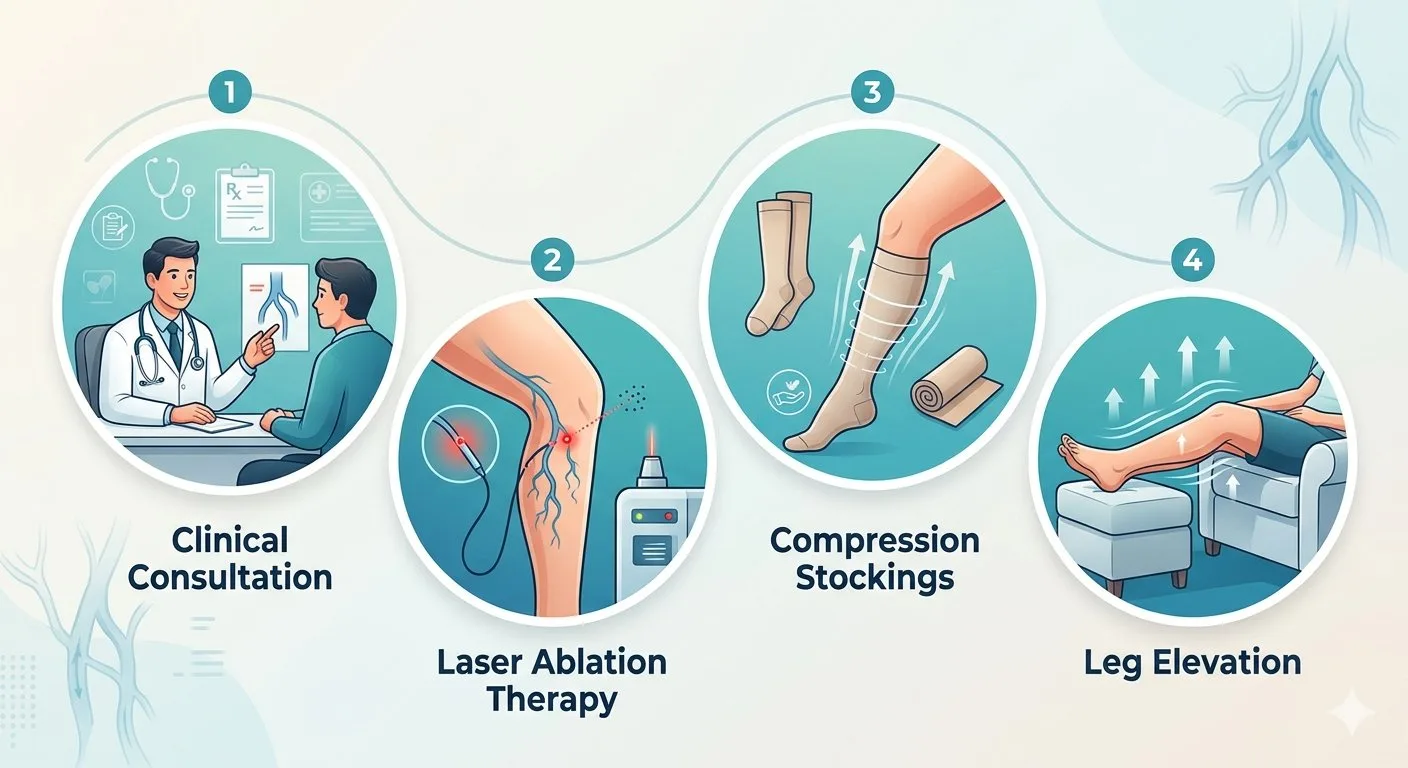
People with symptomatic varicose veins and documented venous reflux may be assessed for procedures such as:- Endovenous laser ablation (EVLA).
- Radiofrequency ablation (RFA).
- Ultrasound-guided foam sclerotherapy.
- Surgical ligation and stripping.
- Ambulatory phlebectomy.
12. When Should You Consult a Doctor?
Consult a healthcare professional if you experience:- Persistent aching or heaviness.
- Enlarging visible veins.
- Recurrent ankle swelling.
- Itching or skin pigmentation.
- Venous eczema.
- Skin thickening.
- A wound that is not healing.
- Recurrent inflammation around a superficial vein.
12.1 Warning Signs of Deep Vein Thrombosis
Seek urgent medical assessment if you develop sudden swelling in one leg, particularly with pain, tenderness, warmth or discolouration. These symptoms may indicate deep vein thrombosis.12.2 Warning Signs of Pulmonary Embolism
Sudden breathlessness, chest pain, coughing up blood or fainting may indicate pulmonary embolism. These symptoms require immediate emergency medical care.13. Frequently Asked Questions
Q1. How to prevent varicose veins naturally?
Regular walking, maintaining a healthy body weight, avoiding prolonged sitting or standing, performing calf exercises and taking movement breaks may support venous circulation. However, no natural method guarantees complete prevention.Q2. Can walking prevent varicose veins?
Walking activates the calf muscle pump and supports blood return from the legs towards the heart. It is beneficial for venous circulation, but it cannot eliminate inherited susceptibility or guarantee prevention.Q3. Does elevating the legs prevent varicose veins?
Leg elevation can reduce dependent venous pressure and help relieve swelling and heaviness. However, there is insufficient evidence that it reliably prevents the initial development of varicose veins.Q4. Can drinking more water prevent varicose veins?
Adequate hydration supports general health, but drinking extra water has not been proven to prevent venous valve damage or varicose veins.Q5. Which exercise is best for preventing varicose veins?
Walking is a convenient exercise because it activates the calf muscle pump. Swimming, cycling, ankle pumps and calf raises are other useful activities for supporting leg movement.Q6. Can weight loss prevent varicose veins?
Maintaining a healthy body weight may reduce pressure on the pelvic and lower-limb venous circulation. It can support venous health but cannot guarantee prevention.Q7. Do compression stockings prevent varicose veins?
Compression stockings may help relieve swelling and discomfort in selected patients. They are not a guaranteed preventive measure for healthy individuals and should be used according to medical advice.Q8. How can office workers reduce their risk of venous problems?
Office workers should avoid sitting continuously for several hours. Regular walking breaks, ankle pumps, heel raises and appropriate physical activity can support venous circulation.Q9. How can teachers and nurses protect their leg veins?
People who stand for prolonged periods can benefit from changing positions, walking briefly whenever possible, performing calf exercises and maintaining a healthy body weight.Q10. Can pregnancy-related varicose veins be prevented?
Complete prevention is not possible. However, gentle walking, avoiding prolonged immobility, leg elevation and appropriate compression when advised may help manage discomfort.Q11. Can varicose veins disappear through exercise?
Exercise can improve muscle function and venous return, but it generally cannot eliminate established enlarged veins or repair incompetent venous valves.Q12. Does crossing the legs cause varicose veins?
Ordinary leg crossing has not been established as a direct cause of varicose veins. However, remaining inactive in one position for long periods should be avoided.Q13. Can varicose veins be prevented if they run in the family?
Genetic susceptibility cannot be changed. However, healthy lifestyle habits may help reduce some contributing factors and support venous circulation.Q14. Should everyone wear compression stockings to prevent varicose veins?
No. Healthy individuals do not routinely need compression stockings solely to prevent varicose veins. They are used for specific clinical indications.Q15. Can existing varicose veins become worse?
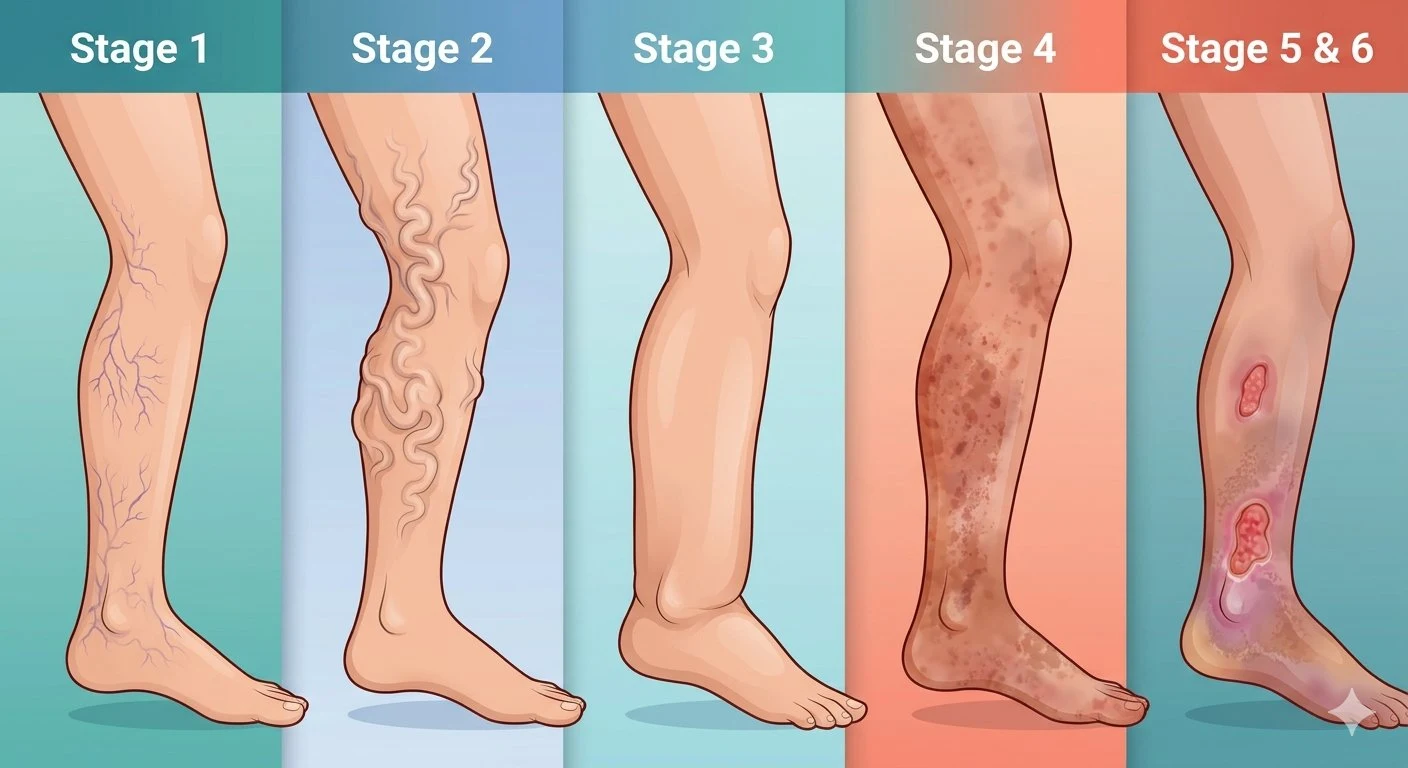
Yes. Some people experience progressive venous disease, including increasing swelling, skin pigmentation, eczema and ulcers. Appropriate assessment and management can help address symptoms and complications.14. Summary
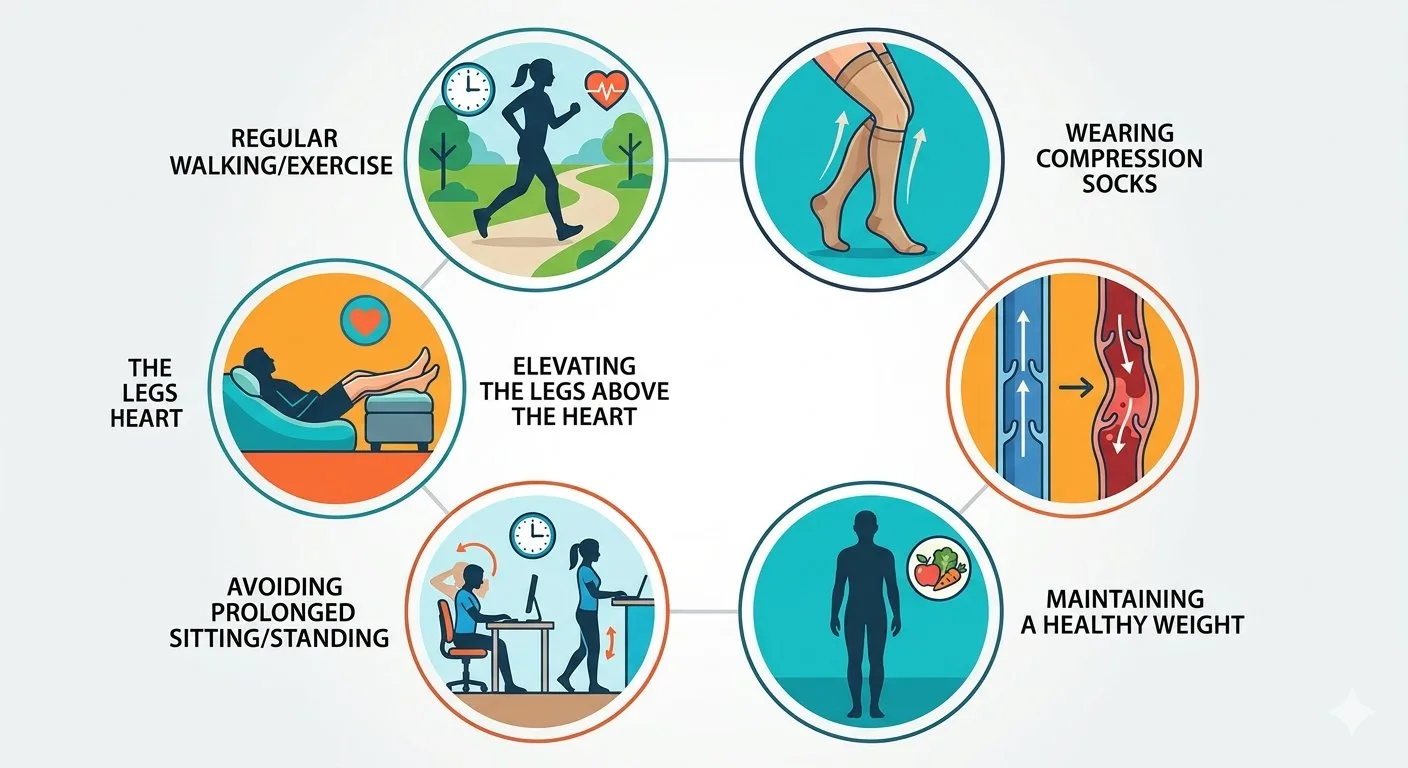
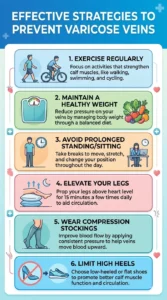
Understanding how to prevent varicose veins starts with recognising the importance of healthy venous circulation. Although complete prevention is not possible, several practical measures can support leg health:- Walk regularly.
- Avoid prolonged standing.
- Avoid prolonged sitting.
- Maintain a healthy body weight.
- Elevate your legs when resting if swelling occurs.
- Perform ankle pump exercises.
- Strengthen calf muscles appropriately.
- Choose comfortable footwear.
- Avoid smoking.
- Maintain regular physical activity.
- Move your legs during long journeys.
- Take appropriate precautions during pregnancy.
- Eat a balanced, fibre-rich diet.
- Avoid prolonged immobility.
- Seek medical advice when symptoms develop.
15. Conclusion
Varicose veins develop through a combination of venous valve dysfunction, vein wall changes, genetic susceptibility and other contributing factors. Although it is not possible to guarantee that varicose veins will never develop, healthy lifestyle habits can support normal venous circulation and help reduce some modifiable risk factors. Regular walking, calf muscle exercises, weight management and avoiding prolonged immobility are practical measures that can be incorporated into everyday life. It is equally important to understand the limitations of prevention. Exercise, leg elevation, diet and compression stockings cannot reliably repair damaged venous valves or eliminate established varicose veins. People with persistent leg discomfort, swelling, prominent veins or skin changes should seek medical assessment rather than relying exclusively on home remedies. The most useful approach is a combination of healthy daily habits, awareness of early symptoms and timely professional evaluation when necessary.16. References
The following authoritative medical sources support the prevention advice and clinical explanations in this article.- National Heart, Lung, and Blood Institute (NHLBI), NIH – Varicose Veins
https://www.nhlbi.nih.gov/
health/varicose-veins - National Institutes of Health – Varicose Veins
https://health.nih.gov/health-
topics-a-z/varicose-veins - NHS – Varicose Veins
https://www.nhs.uk/conditions/
varicose-veins/ - Centers for Disease Control and Prevention (CDC) – Understanding Your Risk for Blood Clots with Travel
https://www.cdc.gov/blood-
clots/risk-factors/travel.html - CDC – About Venous Thromboembolism (Blood Clots)
https://www.cdc.gov/blood-
clots/about/index.html - World Health Organization – Physical Activity
https://www.who.int/news-room/
fact-sheets/detail/physical- activity - NICE – Varicose Veins: Diagnosis and Management (CG168)
https://www.nice.org.uk/
guidance/cg168 - Society for Vascular Surgery, American Venous Forum and American Vein and Lymphatic Society – 2023 Clinical Practice Guidelines for the Management of Varicose Veins, Part II
https://pmc.ncbi.nlm.nih.gov/
articles/PMC11523430/ - NHLBI – Preventing Blood Clots
https://www.nhlbi.nih.gov/
health/venous-thromboembolism/ preventing-blood-clots - CDC – Blood Clots During Travel
https://wwwnc.cdc.gov/travel/
page/dvt - NHS – Deep Vein Thrombosis
https://www.nhs.uk/conditions/
deep-vein-thrombosis-dvt/
17. Medical Disclaimer
This article is intended for general educational and informational purposes only. It does not replace professional medical consultation, diagnosis or treatment. The preventive measures described may support venous circulation and general health, but they cannot guarantee that varicose veins will not develop. People with existing varicose veins, significant leg swelling, peripheral arterial disease, previous DVT or other vascular conditions should obtain individual medical advice before beginning compression therapy or a new exercise programmed. Sudden one-sided leg swelling, significant leg pain, suspected blood clots, chest pain or breathlessness require urgent or emergency medical assessment.📲 For Health-Related Articles & Videos
🔹 Facebook: https://www.facebook.com/positivemind.healthcare🔹 YouTube: http://www.youtube.com/@healthuseful8539/
ENT Consultation & Surgery
Dr. Sagar Rajkuwar (MS-ENT) Consultant ENT Specialist & Head-Neck SurgeonPrabha ENT Clinic, Ambad, Nashik, Maharashtra, India