Is an Anal Fissure a Serious Problem? Risks, Complications and Warning Signs-various aspects-
Medically reviewed By ENT and respiratory health specialist — Dr. Sagar Rajkuwar, MS-ENT. Clinic Website: www.entspecialistinnashik.com
Health education article | HealthUseful.com
An uncomplicated anal fissure is usually not a life-threatening problem. It is a small tear in the anal lining, and many acute fissures heal with stool-softening measures and other conservative care. However, a fissure can cause severe pain, become chronic or recur. More importantly, not every episode of anal pain or bleeding is a fissure, so persistent, unusual or severe symptoms should be examined.
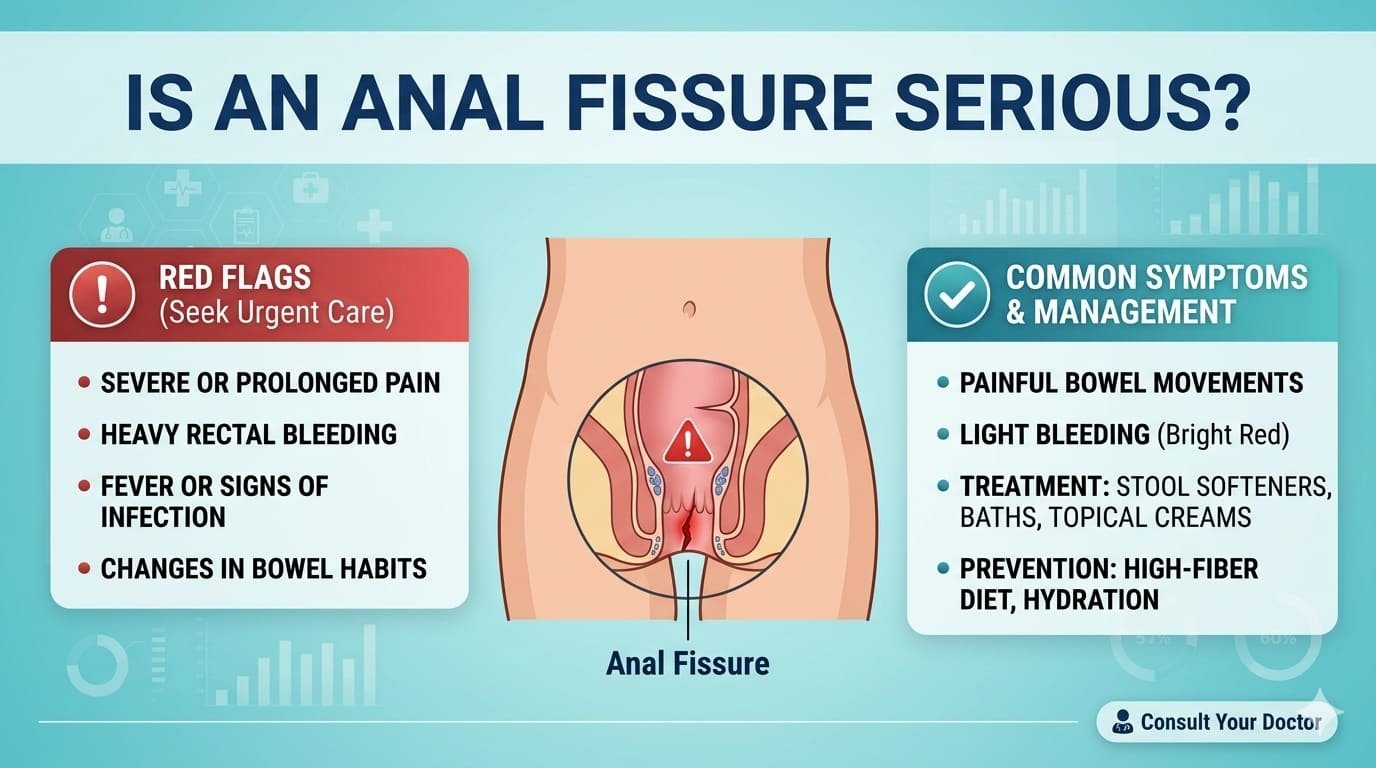
Table of contents
- Main guide
- Safe self-care
- When to seek medical care
- Frequently asked questions
- Summary and conclusion
When an anal fissure is usually not serious
A typical recent fissure after constipation may cause sharp pain and a small amount of bright-red blood. If symptoms steadily improve with softer stools and gentle care, healing is likely. Even then, seek medical advice for new rectal bleeding or if the diagnosis has not been confirmed.Problems a fissure can cause
Persistent pain and muscle spasm
Pain may continue after bowel movements and interfere with sitting, work, sleep and daily activities. Sphincter spasm can contribute to delayed healing.Chronic or recurrent fissure
A tear that does not heal or repeatedly reopens may become chronic. It can develop scarred edges or a sentinel skin tag and may require prescription treatment or a procedure.Fear of passing stool
Some people delay bowel movements because they expect pain. This can make stool harder and create a cycle of constipation, further trauma and pain. A treatment plan should address stool consistency as well as discomfort.Can a fissure lead to cancer?
An ordinary anal fissure does not turn into cancer. However, persistent bleeding, a non-healing ulcer, an unusual lump or an atypical fissure should not automatically be labelled as a fissure. A clinician may investigate other causes based on age, risk factors and examination.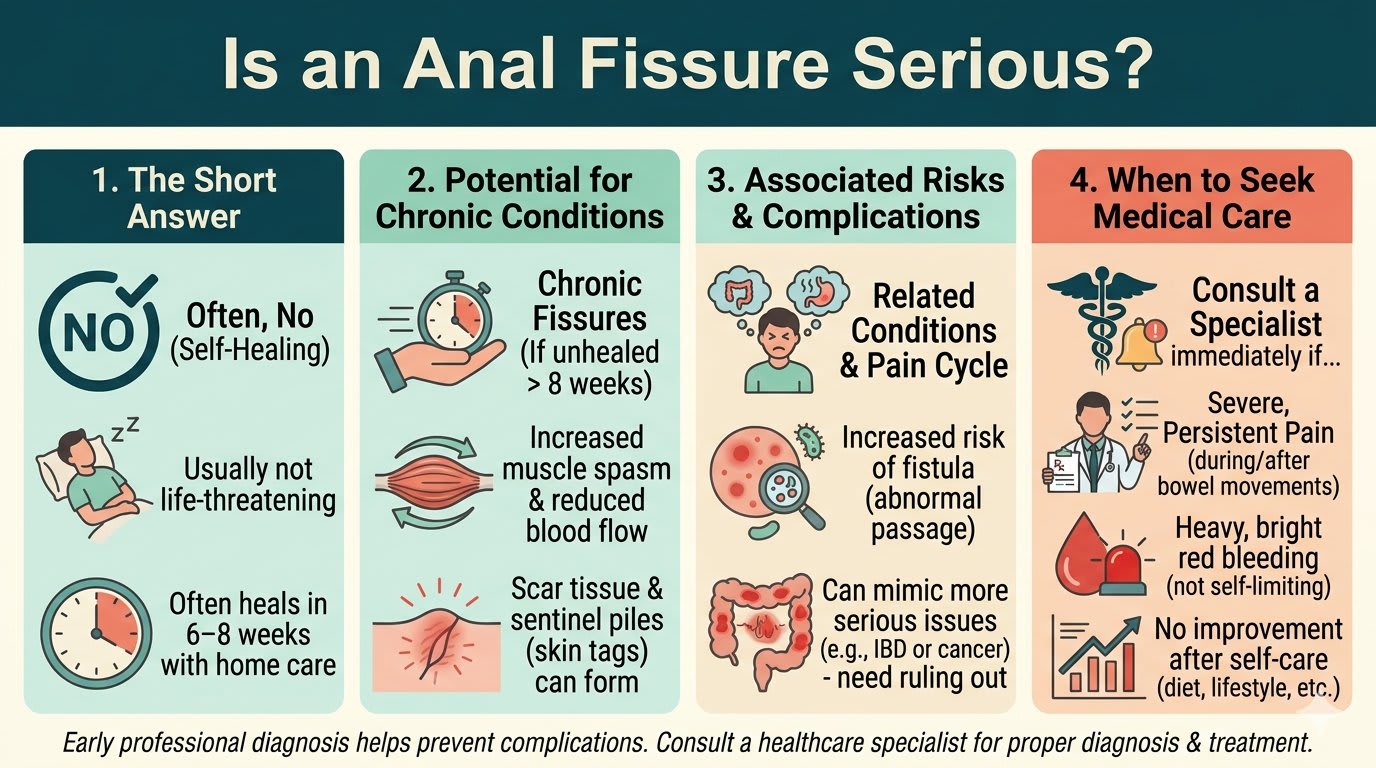
Warning signs that may mean something else
- Fever, chills, pus or constant throbbing pain: possible infection or abscess.
- Multiple or off-centre fissures: possible underlying inflammatory or infectious condition.
- Unexplained weight loss, altered bowel habits or abdominal symptoms: needs evaluation.
- Heavy bleeding, faintness, black stool or dark-red stool: urgent assessment.
When to seek help
See a healthcare professional for pain during bowel movements, visible bleeding, symptoms that worsen or no improvement after about seven days of self-care. Seek urgent care for fever with anal pain, pus, severe worsening pain or significant bleeding.Safe self-care that supports healing
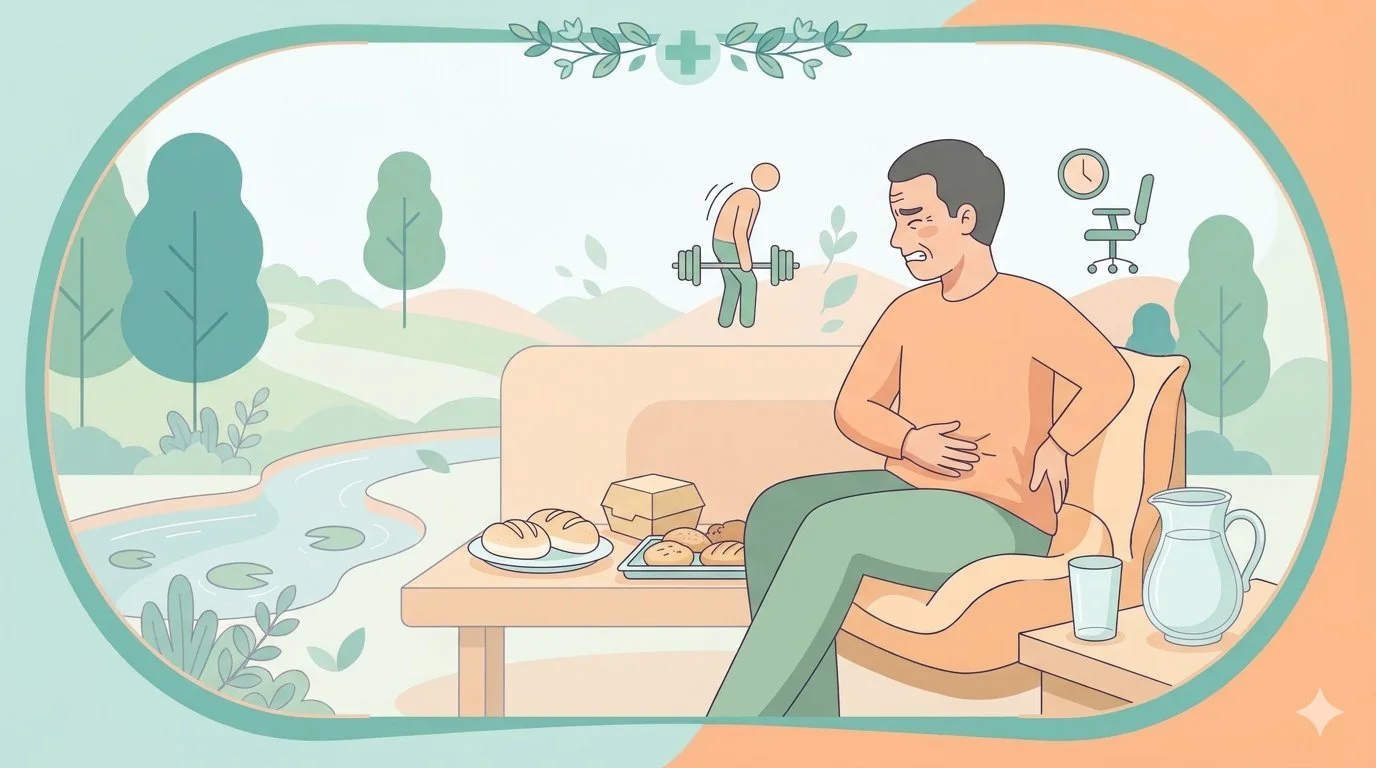
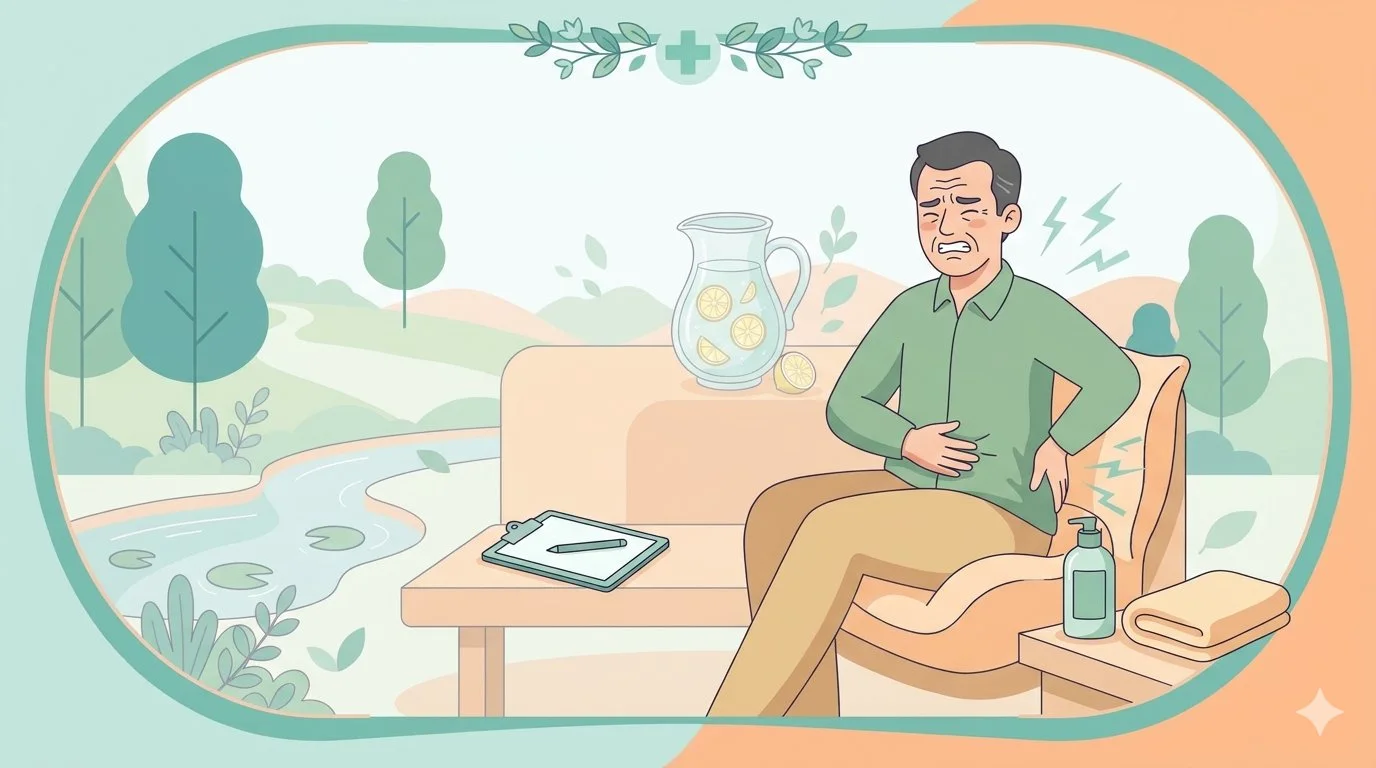
For many uncomplicated fissures, the foundation of treatment is to make bowel movements soft, formed and easy to pass. Increase dietary fibre gradually through vegetables, fruit, pulses, oats and whole grains. Drink adequate fluid unless a clinician has prescribed a fluid restriction. A fibre supplement such as psyllium may help some people; introduce it gradually and take it with the amount of water stated on the product label. If constipation continues, ask a clinician or pharmacist whether an appropriate laxative is needed. A warm, shallow sitz bath for around 10–20 minutes, particularly after a bowel movement, may soothe discomfort and relax the anal sphincter. Clean the area gently with water and pat dry. Avoid forceful wiping, fragranced soaps and irritating home remedies. Do not delay a bowel movement when you feel the urge, and do not sit on the toilet for long periods or strain.Practical bowel-habit checklist
- Go when the urge comes; do not repeatedly postpone stool.
- Allow time but avoid prolonged toilet sitting or phone scrolling.
- Do not push hard or hold your breath while passing stool.
- Keep a simple record of stool consistency, pain and bleeding to discuss at review.
- Address both constipation and frequent diarrhoea, because either can irritate the anal canal.
When to seek medical care
Arrange a medical assessment for anal pain or rectal bleeding rather than assuming the cause is a fissure or piles. Seek prompt care if pain is severe, symptoms are worsening, or there is no improvement after about seven days of self-care. Fever, chills, pus or constant throbbing pain may indicate an anal abscess or another infection and need urgent assessment. Heavy or continuous bleeding, large clots, faintness, black or dark-red stool, or feeling very unwell requires urgent medical attention. Unusual fissures—multiple, off the midline, recurrent or slow to heal—may need investigation for conditions such as Crohn’s disease, infection or, rarely, cancer. This does not mean these conditions are likely, but atypical findings should not be ignored.How a clinician confirms the diagnosis
Diagnosis usually begins with a history of pain, bleeding, bowel habits, duration and relevant medical conditions, followed by a careful visual inspection. A painful internal examination may be deferred or performed by a specialist when appropriate. Further tests are not necessary for every typical fissure; they may be considered when symptoms are atypical, persistent, recurrent or accompanied by other bowel symptoms.Medical disclaimer
This article is for general education and is not a substitute for examination, diagnosis or individual treatment. Medicines and procedures must be selected by a qualified healthcare professional after considering pregnancy, other illnesses, allergies and current medicines. Do not start, stop or change prescribed treatment based only on this page.References and further reading
- NHS – Anal fissure
- Mayo Clinic – Anal fissure: symptoms and causes
- Mayo Clinic – Anal fissure: diagnosis and treatment
- ASCRS – Management of Anal Fissures (2023 clinical practice guideline)
- American Family Physician – ASCRS fissure guideline summary (2024)
- NHS – Anal pain: causes and urgent warning signs
- Mayo Clinic Healthcare – Anal fissures and fistulas
Related video resource
Find patient-education videos about anal fissures from recognised medical organisations on YouTube. Use videos for general education, not as a substitute for a personal medical assessment.Frequently asked questions
Can an anal fissure be life-threatening?
A typical uncomplicated fissure is not usually life-threatening, but severe bleeding, infection or another underlying diagnosis needs attention.Can a fissure cause permanent damage?
Most do not. Chronic disease may require treatment, and procedures have their own risks that should be discussed.Can fissures cause infection?
A typical fissure is a tear, not an infection. Fever, pus or swelling raises concern for an abscess or another problem.Should I ignore a small amount of blood?
No. Bright-red blood can occur with fissures, but new or recurrent rectal bleeding should be assessed.When is a fissure considered chronic?
Definitions vary; symptoms persisting around six to eight weeks or showing chronic changes may be classified as chronic.Summary
Most uncomplicated fissures are treatable and not dangerous, but they can become chronic and significantly affect quality of life. A fissure itself does not become cancer. Persistent bleeding, atypical ulcers, fever, pus, severe pain or systemic symptoms need medical evaluation.
Conclusion
Most uncomplicated fissures are treatable and not dangerous, but they can become chronic and significantly affect quality of life. A fissure itself does not become cancer. Persistent bleeding, atypical ulcers, fever, pus, severe pain or systemic symptoms need medical evaluation. The right next step depends on the duration and severity of symptoms and an examination when needed. Avoid self-diagnosis and seek professional advice if symptoms persist or warning signs occur.
📲 For Health-Related Articles & Videos
🔹 Facebook: https://www.facebook.com/positivemind.healthcare