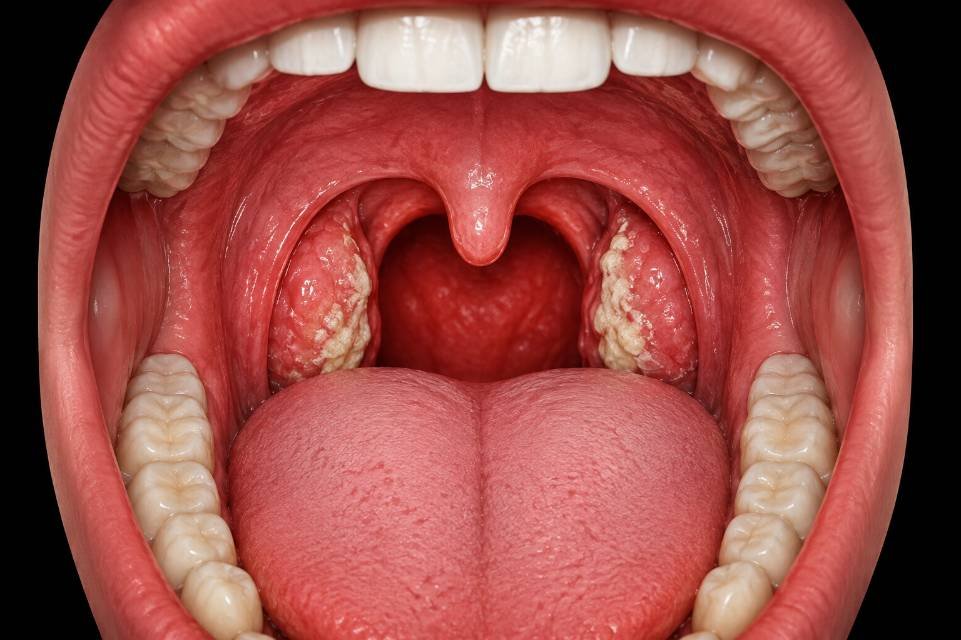
What Does a Healing Tonsillectomy Look Like? – Stages, Pictures, and Recovery Guide
Over the course of ten to fourteen days, a healed tonsillectomy goes thru various visible stages. By days three to five, thick white or yellowish scabs begin to form on the back of the throat, which is initially bright red. By days 7 to 10, these scabs gradually disintegrate and flake off, revealing pink, healthy tissue beneath as the throat heals completely.
By Dr. Sagar Rajkuwar, ENT Specialist, Nashik, Maharashtra, India
🌐 www.entspecialistinnashik.com
Table of contents-
- What Does a Healing Tonsillectomy Look Like?
- Why Does the Throat Look White After Tonsillectomy?
- Tonsillectomy Healing Stages: Day by Day
- Tonsillectomy Healing Pictures: What You May See
- What Does a Normal Tonsillectomy Look Like?
- White or Yellow Patches After Tonsillectomy: Is It Infection?
- Tonsillectomy Scabs: When Do They Fall Off?
- Tonsillectomy Pain During Recovery
- Normal vs Abnormal Tonsillectomy Healing
- Tonsillectomy Bleeding: When Is It an Emergency?
- How to Recover Faster After Tonsillectomy
- Foods and Drinks During Tonsillectomy Recovery
- Activity and Exercise After Tonsillectomy
- How Long Does Tonsillectomy Healing Take?
- Tonsillectomy Recovery in Children vs Adults
- Possible Complications During Recovery
- Frequently Asked Questions
- Tonsillectomy Healing Timeline
- Medical Disclaimer
- Conclusion
1)What Does a Healing Tonsillectomy Look Like?
You might be shocked by how the back of your throat appears if you’ve lately had your tonsils removed. Because the throat might be red, swollen, white, yellowish, or coated with a thick covering during recovery, many patients ask,
“What does a healing tonsillectomy look like?”
These changes are often a natural component of healing.
The regions where the tonsils were located after being removed are known as tonsillar fossae or tonsillar beds. These surgical regions progressively recover over many days to weeks.
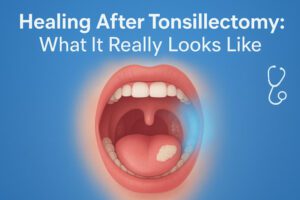
You may observe the following during the healing process:
- Red or raw-looking patches immediately following surgery
- yellowish, grey, cream, or white coating
- Scabs or patches that are thick
- Halitosis
- A sore throat
- Pain in the ear from referred agony
- Swallowing difficulties
- Progressive formation of healthy, pink tissue
As healing takes place, the appearance varies; the throat on day 2 may look substantially different from the throat on day 10.
2)Why Does the Throat Look White After Tonsillectomy?
The development of white spots in the throat is one of the most common worries after a tonsillectomy.
Normal wound healing often involves a white or yellow covering across the tonsil beds. It does not automatically follow that the wound is infected or purulent.
Especially during the first week, this coating can make the throat look quite frightening.
Other normal healing modifications may involve:
- Yellowish or white sections
- Slight edema
- Halitosis
- Sore throat
- Pain in the ear
- Dysphagia
The throat’s looks should always be evaluated in light of the patient’s symptoms, though.
You should have a doctor examine you if you have a high temperature, increasing swelling, serious dehydration, pus-like discharge, trouble breathing, or profuse bleeding.
3) Tonsillectomy Healing Stages: Day by Day
Between patients, the exact look and recuperation period differ. The timeline below is a general guide, nevertheless.
Day 0–1: Immediately Following Tonsillectomy
The tonsillar beds might seem like this immediately after surgery:
- Reddish brown
- Uncooked
- Pink
- Puffy
- Wet
- Unusual
The throat may be sensitive, especially while swallowing.
Other symptoms that some individuals could have include:
- Trouble swallowing
- Slightly blood-tinged saliva
- Tightness in the throat
- Pain in the ear
- The uvula swells
- Decreased hunger
During this time, it is especially crucial to drink plenty of water.
Healing Coating with White or Yellow on Days 2-5
During the early healing phase, it is usual for the surgical sites to develop a white, creamy, grey, or yellow covering.
One of the stages that generates the most anxiety for patients and parents is this one.
Even if the throat looks to be covered in pus, this alone does not indicate an infection.
You could also encounter:
- Severe throat pain
- Difficulty swallowing
- Pain in the ear
- Terrible breath
- Lower desire for food
- Minor edoema
Throughout this period, there may still be a lot of pain.
It is vital to follow your doctor’s recommendations for pain management and to drink enough water.
Scab Formation and Sloughing (Days 5–10)
The coating over the tonsillar beds progressively changes as the healing process continues.
The region can seem to be:
- Thick
- Grey or white
- Crusty
- Unequal
- Detached in part
Over time, the underlying healing tissue becomes healthier and pinker.
Since bleeding could occur when healing tissue separates, this time frame may also be significant.
Avoid attempting to remove the scabs or coating yourself.
If there is severe bleeding, seek quick medical attention instead of trying to stop it at home.
Days 10-14: New Pink Tissue Appears
Many people start to experience improvement during the second week.
The tonsillar beds might become:
- Pinker
- More even
- With fewer coatings
- Not as swelled
Despite some leftover discomfort, throat pain often starts to go away.
It is common for eating and drinking to become easier with time during recuperation.
Continued Healing: Days 14–21
Even though everyone recovers at a different pace, a large number of patients have made a full recovery by this point.
The throat may slowly become pinker and more typical.
Some folks may continue to have:
- Slight dehydration
- Throat soreness occasionally
- Variations in taste
- Moderate fatigue
It may take adults longer to recover than children.
4. Tonsillectomy Healing Pictures: What You May See
Because they wish to compare their throat to a normal recovery, patients often seek for images of tonsillectomy healing.
Understanding the overall look of healing is crucial rather than just looking at internet pictures:
Recovery stage |
Possible appearance |
|---|---|
| Day 1 | Red or raw tonsillar beds |
| Days 2–5 | White, cream, grey, or yellowish coating |
| Days 5–10 | Thick coating/scab with gradual separation |
| Days 10–14 | Increasingly pink healing tissue |
| Days 14–21 | Smoother, healthier-looking throat |
Patients differ significantly. A photo from someone else should not be utilized to identify bleeding or infection.
Get in touch with the surgeon or ENT specialist who performed the procedure if you are worried about the appearance of your own throat.
5. What Does a Normal Tonsillectomy Look Like?
Normal throats can seem very different from normal tonsillectomy recoveries.
The following are typical findings in healing:
- White or yellow coating
- Rosacea
- Little swelling
- Halitosis
- Sore throat
- Ache in the ear
- Having trouble swallowing
- As healing progresses, the discomfort slowly decreases.
The crucial point is that white spots alone don’t always mean an infection.
The color of the therapeutic tissue is less important than the overall clinical picture.
6. White or Yellow Patches After Tonsillectomy: Is It Infection?
A typical question is:
“Is it normal to have white patches after a tonsillectomy?”
Sometimes, yes. A normal component of postoperative healing might be a white or yellowish covering.
You shouldn’t assume that all postoperative symptoms are normal, though.
If you experience any of the following troubling symptoms, get in touch with your doctor:
- High or chronic temperature
- More swelling
- Pus-like discharge
- deteriorating health
- Breathing problems
- Incapacity to get enough fluids
- Major blood loss
Is it a problem or is it a sign of recovery? A doctor can tell.
7. Tonsillectomy Scabs: When Do They Fall Off?
Patients who have had tonsillectomy frequently want to know when their scabs will come off.
During the first and second weeks, the scab-like substance and healing layer typically change and separate. Individual differences exist in the precise timing.
Some people may observe the following as the healed tissue separates:
- increased pain in the throat
- Unpleasant breath
- An alteration in the tonsil beds’ appearance
- Tiny amounts of saliva tinged with blood
The healing tissue should not be manually pulled, scraped, or removed.
Seek immediate medical attention if you observe active, bright-red bleeding.
8. Tonsillectomy Pain During Recovery
Discomfort is one of the most prevalent symptoms following a tonsillectomy.
Discomfort may be experienced:
- In the back of the throat
- When swallowing
- In the ears
- Around the jaw
- Occasionally in the neck
Ear discomfort after a tonsillectomy doesn’t necessarily indicate an ear infection. It can happen due to the overlapping pathways of the nerves that innervate both the throat and the ear.
Pain levels may vary during recovery instead of showing a consistent improvement day by day.
Follow the instructions for pain medication precisely as directed by your healthcare provider.
9. Normal vs Abnormal Tonsillectomy Healing
Normal healing signs |
Concerning signs |
| White or cream-colored coating | Significant bright-red bleeding |
| Mild bad breath | Persistent or heavy bleeding |
| Throat pain | Breathing difficulty |
| Ear pain | Severe dehydration |
| Mild swelling | Worsening swelling |
| Difficulty swallowing | Inability to drink fluids |
| Gradual improvement | Sudden deterioration |
| Temporary taste changes | Severe or persistent concerning symptoms |
This table is a general guide and does not replace examination by a healthcare professional.
10. Tonsillectomy Bleeding: When Is It an Emergency?
One of the most crucial post-tonsillectomy consequences to comprehend is bleeding.
Although there may occasionally be a tiny bit of blood-stained saliva, active bright-red bleeding should never be disregarded.
Get medical help right away if you observe:
- Blood that is bright red and pouring from the mouth
- Constant bleeding
- repeatedly ingesting blood
- Blood in the vomit
- A substantial volume of blood
- weakness or dizziness brought on by bleeding
If the bleeding is severe or ongoing, do not wait for it to stop on its own.
Observe the emergency instructions that your surgeon or hospital has given you.
11. How to Recover Faster After Tonsillectomy
The tonsillar beds cannot be healed in an instant. On the other hand, a more seamless recovery might be facilitated by good postoperative care.
Keep Yourself Hydrated
As directed by your physician, consume fluids on a regular basis.
Dehydration can exacerbate discomfort and make recovery more challenging.
Take prescription drugs as directed.
Follow your doctor’s instructions when taking painkillers and other medications.
Don’t change your prescription regimen without first consulting a doctor.
Get Enough Rest
After surgery, your body needs time to heal.
Wait until your surgeon gives the all-clear to resume physically demanding activities.
Observe Your Surgeon’s Guidelines
Instructions following surgery may differ based on:
- Age
- Surgical method
- Medical background
- Additional procedures carried out
- Personal healing
Online general information should be subordinated to your surgeon’s advice.
12. Foods and Drinks During Tonsillectomy Recovery
Many tonsillectomy patients prefer softer foods and beverages since swallowing might be uncomfortable.
Depending on what your surgeon recommends, your alternatives could be:
- Oral rehydration fluids: water
- Soft foods
- Mashed foods
- Soups at a temperature that is comfortable
- Other easily swallowed foods
Foods that are extremely hot, acidic, hard, sharp, or crunchy can cause discomfort for certain patients.
Maintaining a sufficient fluid intake and adhering to your surgical team’s dietary recommendations are the most crucial objectives.
13. Activity and Exercise After Tonsillectomy
Don’t engage in physically demanding activities unless your surgeon gives you the all clear to do so.
Activities like:
- Running
- Excessive physical activity
- Sports that are competitive
- Heavy lifting
might have to be limited in the initial stages of recuperation.
The specific patient and the surgeon’s instructions determine the best return-to-activity schedule.
14. How Long Does Tonsillectomy Healing Take?
There’s no one recuperation time that works for everyone.
While adults may need more time to heal, many children do so in around two weeks.
A typical pattern of recovery is:
Days 0–2: The surgical site is raw, red, and extremely painful.
Days 2–5: A noticeable white or yellowish covering appears.
Days 5–10: The healing tissue starts to split and undergo changes.
Days 10–14: Pinker tissue starts to show.
Days 14–21: The throat continues to heal and returns to its typical look.
Certain effects, such weariness, dryness, or changed taste, might last longer.
15. Tonsillectomy Recovery in Children vs Adults
Adults and children don’t always heal in the same manner.
While adults may have greater postoperative discomfort and may need a longer recovery period, children may heal rather rapidly.
Additionally, recovery may be impacted by:
- General well-being Hydration
- Pain management
- Surgical method
- Additional health issues
- Whether further surgery was done
Therefore, rather than comparing one patient to another, recovery should be evaluated on an individual basis.
16. Possible Complications During Recovery
Although postoperative issues can arise, the majority of individuals recover without significant difficulties.
Significant issues consist of:
Bleeding
Hemorrhage following tonsillectomy is a serious complication that has to be evaluated by a doctor very once.
Dehydration
A patient may drink too little if they experience pain when swallowing.
Signs may consist of:
- Very little urine production
- Mouth dryness
- Significant weakness
- Lightheadedness
- extreme fatigue and infection
Although infections are less prevalent, any worrisome symptoms should be assessed by a medical expert.
Severe or Prolonged Pain
Although some pain is normal, the treatment team should be consulted if the symptoms are severe or getting worse.
17. Frequently Asked Questions
1)How does a tonsillectomy heal?
Initially appearing red and raw, a healed tonsillectomy may eventually develop a white, cream, gray, or yellowish covering. The tissue eventually gets smoother and pinker as healing advances.
2)After a tonsillectomy, is white stuff normal?
Material that is white or yellowish may be a typical aspect of healing. It may not always indicate the presence of an infection.
3)When do scabs from tonsillectomy fall off?
During the first and second weeks, healing tissue gradually alters and separates. Patients vary in the precise timing.
4)Is foul breath typical following tonsillectomy?
During the healing process, bad breath is common and often becomes better as the surgical sites heal.
5)After having a tonsillectomy, why do my ears hurt?
Referred discomfort from the throat can induce ear pain. An ear infection is not always indicated by it.
6)After a tonsillectomy, when should I be concerned about bleeding?
Urgent medical attention is necessary if there is a substantial amount of blood, prolonged bleeding, or active bright-red bleeding.
7)How long does it take for a tonsillectomy patient to fully recover?
Adults and certain other patients may need two to three weeks or more to fully recover, but many patients do so in approximately two weeks.
8)Can the white covering on my tonsillectomy wound be removed?
No. Avoid picking, scraping, or removing the healing tissue by hand. Observe your surgeon’s recommendations and let the surgery site recover normally.
9)Why is my throat hurting worse a few days after the tonsillectomy?
During the first week following surgery, postoperative pain may vary and continue to be severe. You should talk to your treating healthcare provider about any worsening or increasing symptoms.
18. Tonsillectomy Healing Timeline
| Day | Typical appearance | Common symptoms |
| 0–1 | Red/raw surgical beds | Throat pain, swallowing difficulty |
| 2–5 | White/cream/grey coating | Pain, ear pain, bad breath |
| 5–10 | Changing coating/scab-like tissue | Continued pain, possible bleeding risk |
| 10–14 | Increasingly pink tissue | Pain generally improving |
| 14–21 | Smoother pink tissue | Gradual return to normal |
Important: This is a general educational timeline. Individual healing can vary considerably.
When Should You Contact Your ENT Doctor?
If you have any concerns, speak with your treating ENT expert about:
- Symptoms that are persistent or getting worse
- Considerable bleeding
- Breathing difficulties
- Incapacity to consume adequate fluids
- extreme dehydration
- elevated or ongoing fever
- Growing edema
- Symptoms that abruptly worsen after first improving
Because they are familiar with the specifics of the procedure and your medical history, your own surgeon is in the greatest position to offer you advice.
Conclusion
Patients and parents may be better able to identify the typical changes that follow surgery if they are aware of what a healing tonsillectomy looks like.
The neck may appear rough and red at first, followed by a coating of white, cream, gray, or yellow. During the healing process, this appearance may be typical. The tissue gradually gets smoother and pinker as the healing process proceeds.
During the healing process, you may also have pain, poor breath, difficulty swallowing, and referred ear ache.
Significant bright-red blood, breathing problems, extreme dehydration, or other severe symptoms, however, call for immediate medical attention.
📲 For Health-Related Articles & Videos
🔹 Facebook: https://www.facebook.com/positivemind.healthcare
🔹 YouTube: http://www.youtube.com/@healthuseful8539/
Medical Disclaimer
Medical Disclaimer: This article is for educational and informational purposes only. It is not a substitute for professional medical advice, diagnosis, or treatment. Do not diagnose an infection, bleeding complication, or other postoperative problem solely from photographs or information found online. If you have significant bleeding, breathing difficulty, severe dehydration, or other concerning symptoms after tonsillectomy, seek urgent medical attention.
🎥 Watch Educational Videos
👉 YouTube Channel:
http://www.youtube.com/@healthuseful8539/
📞 ENT Consultation & Surgery
Dr. Sagar Rajkuwar (MS-ENT)
Prabha ENT Clinic, Ambad, Nashik
📱 7387590194 | 9892596635
🌐 www.entspecialistinnashik.com
Medical References
- American Academy of Otolaryngology–Head and Neck Surgery (AAO-HNS) — Tonsillectomy and post-tonsillectomy hemorrhage guidance.
- Cambridge University Hospitals NHS — Tonsillectomy aftercare and expected postoperative healing.
- East Kent Hospitals NHS — Adult tonsillectomy aftercare, white throat coating, pain and bleeding.
- University Hospitals Coventry and Warwickshire NHS — Adult tonsillectomy discharge and wound-healing information.
Internal Linking List
Tonsillitis, Tonsillectomy & Adenoid Disorders
Disease: Tonsillitis
- https://healthuseful.com/tonsillitis-symptoms/
- https://healthuseful.com/tonsillitis-white-patches/
- https://healthuseful.com/tonsillitis-white-stones/
- https://healthuseful.com/tonsillitis-treatment/
Surgery: Tonsillectomy
- https://healthuseful.com/tonsillitis-surgery/
- https://healthuseful.com/tonsillitis-removal-surgery/
- https://healthuseful.com/what-age-is-too-late-to-remove-tonsils/
- https://healthuseful.com/does-removing-tonsils-change-your-voice/
- https://healthuseful.com/lingual-tonsillectomy/
Recovery & Post-Operative Care
- https://healthuseful.com/what-are-the-worst-days-after-tonsillectomy-and-adenoidectomy/
- https://healthuseful.com/tonsillectomy-diet-day-by-day-for-child/
- https://healthuseful.com/are-ear-infections-common-after-tonsillectomy/
Complications & Associated Conditions
Adenoids – Categorized Internal Linking List
1. Adenoid Types, Grades & Basic Information
- What Does Grade 3 Adenoids Mean? Symptoms, Causes & Treatment Explained
https://healthuseful.com/what-does-grade-3-adenoids-mean/ - At What Age Are Adenoids Most Active? Every Parent Should Know This!
https://healthuseful.com/at-what-age-are-adenoids-most-active/ - Can You Have Enlarged Adenoids Without Enlarged Tonsils?
https://healthuseful.com/can-you-have-enlarged-adenoids-without-enlarged-tonsils/ - Enlarged Adenoids in Children: Symptoms That Look Harmless But Aren’t
https://healthuseful.com/enlarged-adenoids-in-kids-symptoms-parents-miss/
2. Adenoid Symptoms & Problems
- When to Worry About Adenoids?
https://healthuseful.com/when-to-worry-about-adenoids/ - Can Adenoids Cause Ear Pain?
https://healthuseful.com/can-adenoids-cause-ear-pain/ - Can Adenoids Cause Low Oxygen Levels?
https://healthuseful.com/can-adenoids-cause-low-oxygen/ - Can Enlarged Adenoids Cause Hearing Loss?
https://healthuseful.com/can-adenoids-affect-hearing/ - Adenoids and Speech Delay
https://healthuseful.com/can-adenoids-affect-speech/ - How to Help a Child Sleep Better with Enlarged Adenoids
https://healthuseful.com/how-to-help-a-child-sleep-with-enlarged-adenoids/ - Do Adenoids Affect the Brain?
https://healthuseful.com/do-adenoids-affect-the-brain/ - Do Adenoids Affect Brain Development in Children?
https://healthuseful.com/do-adenoids-affect-brain-development/ - Can Food Get Stuck in Adenoids?
https://healthuseful.com/can-food-get-stuck-in-adenoids/
3. Causes, Allergies & Related Conditions
- Are Adenoids Linked to Allergies?
https://healthuseful.com/are-adenoids-related-to-allergies/ - Adenoids vs. Allergies
https://healthuseful.com/adenoids-vs-allergies-what-doctors-want-you-to-understand/ - Are Adenoid Problems Genetic?
https://healthuseful.com/are-adenoid-problems-genetic/ - Adenoids and Asthma
https://healthuseful.com/can-adenoids-make-asthma-worse/ - Do Antihistamines Help Adenoids?
https://healthuseful.com/do-antihistamines-help-adenoids/
4. Natural Treatment & Shrinking Adenoids
- How to Reduce Adenoids Naturally?
https://healthuseful.com/how-to-reduce-adenoids-naturally/ - How Can I Shrink My Adenoids Fast?
https://healthuseful.com/how-can-i-shrink-my-adenoids-fast/ - What Herbs Are Good for Swollen Adenoids?
https://healthuseful.com/what-herbs-are-good-for-swollen-adenoids/ - Is There Any Ayurvedic Treatment for Adenoids?
https://healthuseful.com/is-there-any-ayurvedic-treatment-for-adenoids/ - How to Keep Adenoids Healthy Naturally
https://healthuseful.com/how-to-keep-adenoids-healthy/ - How to Shrink Adenoids in Toddlers
https://healthuseful.com/how-to-shrink-adenoids-in-toddlers/ - Foods to Avoid for Adenoids
https://healthuseful.com/foods-to-avoid-for-adenoids/
5. Diagnosis & ENT Examination
- How Doctors Check Adenoids: Inside the ENT Process Explained Clearly
https://healthuseful.com/how-ent-specialists-check-adenoids/ - How Much Does an Adenoid X-Ray Cost?
https://healthuseful.com/how-much-does-an-adenoid-xray-cost/
6. Adenoidectomy – Surgery & General Information
- Adenoidectomy Surgery Guide – Expert Advice
https://healthuseful.com/adenoidectomy-surgery/ - What Age Is Best for Adenoidectomy?
https://healthuseful.com/what-age-is-best-for-adenoidectomy/ - How Do You Know If Your Child Needs Adenoids Out?
https://healthuseful.com/how-do-you-know-if-your-child-needs-adenoids-out/ - Is Adenoid Surgery Expensive?
https://healthuseful.com/is-adenoid-surgery-expensive/ - How Long Does Adenoid Surgery Take?
https://healthuseful.com/how-long-does-adenoid-surgery-take/ - Is Removing Adenoids a Good Idea?
https://healthuseful.com/is-removing-adenoids-a-good-idea/ - What Happens If Adenoids Are Not Removed?
https://healthuseful.com/what-happens-if-adenoids-are-not-removed/
7. Adenoidectomy Safety, Risks & Success
- Is Adenoid Surgery Safe?
https://healthuseful.com/is-adenoid-surgery-safe/ - Is Adenoid Removal Really Risky?
https://healthuseful.com/how-risky-is-adenoid-removal/ - What Is the Success Rate of Adenoid Removal?
https://healthuseful.com/what-is-the-success-rate-of-adenoids-removal/ - How Many People Have Died from Adenoidectomy?
https://healthuseful.com/how-many-people-have-died-from-adenoidectomy/ - Is Adenoid Removal Safe in the Long Run?
https://healthuseful.com/long-term-effects-of-adenoid-removal/ - Do You Get Sick More Without Adenoids?
https://healthuseful.com/do-you-get-sick-more-without-adenoids-the-truth-by-ent-specialist/
8. Adenoidectomy Recovery & Aftercare
- Is Drooling Normal After Adenoidectomy?
https://healthuseful.com/is-drooling-normal-after-adenoidectomy/ - Adenoidectomy Infection: Warning Signs
https://healthuseful.com/how-do-you-know-if-your-adenoidectomy-is-infected/ - What to Avoid After Adenoid Surgery
https://healthuseful.com/what-to-avoid-after-adenoid-surgery/ - Severe Headache After Adenoidectomy
https://healthuseful.com/severe-headache-after-adenoidectomy/ - Can My Child Swim After Adenoidectomy?
https://healthuseful.com/can-my-child-swim-after-adenoidectomy/ - Do Kids Sleep Better After Adenoid Removal?
https://healthuseful.com/do-kids-sleep-better-after-adenoid-removal/ - When Are the Worst Days After Tonsillectomy and Adenoidectomy?
https://healthuseful.com/what-are-the-worst-days-after-tonsillectomy-and-adenoidectomy/
9. Effects After Adenoid Removal
- Does Removing Adenoids Improve Hearing?
https://healthuseful.com/does-removing-adenoids-improve-hearing/ - Does Adenoid Removal Cause Weight Gain?
https://healthuseful.com/does-adenoid-removal-cause-weight-gain/ - Can Removing Adenoids Affect Behavior?
https://healthuseful.com/can-adenoid-removal-affect-behavior/ - Adenoids Removed but Still Snoring?
https://healthuseful.com/can-you-still-snore-without-adenoids/
10. Adenoid Regrowth
- Can Adenoids Grow Back in Adults?
https://healthuseful.com/can-adenoids-grow-back-in-adults/ - How Long Does It Take for Adenoids to Grow Back After Surgery?
https://healthuseful.com/how-long-does-it-take-for-adenoids-to-grow-back-after-surgery/
11. Adenoidectomy Cost in India
- Cost of Adenoidectomy in India
https://healthuseful.com/cost-of-adenoidectomy-in-india/ - Coblation Adenoidectomy Cost in India
https://healthuseful.com/coblation-adenoidectomy-cost-in-india/ - Adenoids Laser Surgery Cost
https://healthuseful.com/adenoids-laser-surgery-cost/ - Is Adenoid Surgery Covered by Insurance?
https://healthuseful.com/is-adenoid-surgery-covered-by-insurance/
12. Adenoidectomy Cost by City/Region
- Cost of Adenoidectomy in Hyderabad
https://healthuseful.com/cost-of-adenoidectomy-in-hyderabad/ - Cost of Adenoidectomy in Delhi
https://healthuseful.com/cost-of-adenoidectomy-in-delhi/ - Cost of Adenoidectomy Surgery in Mumbai
https://healthuseful.com/cost-of-adenoidectomy-surgery-in-mumbai/ - Cost of Adenoidectomy in Kerala
https://healthuseful.com/cost-of-adenoidectomy-in-kerala/
13. Surgical Techniques & Side Effects
- Coblation Adenoidectomy Side Effects
https://healthuseful.com/coblation-adenoidectomy-side-effects/ - Adenoids Laser Surgery Cost
https://healthuseful.com/adenoids-laser-surgery-cost/
14. Infection & Medicines
- Cefuroxime and Adenoid Infections: Effective or Not?
https://healthuseful.com/cefuroxime-and-adenoid-infections-effective-or-not/ - Adenoidectomy Infection: Warning Signs You Should Never Ignore
https://healthuseful.com/how-do-you-know-if-your-adenoidectomy-is-infected/
15. Rare Conditions / Cancer
- Can Adenoids Turn Cancerous?
https://healthuseful.com/can-adenoids-turn-cancerous/ - Adenoid Cystic Carcinoma Symptoms
https://healthuseful.com/adenoid-cystic-carcinoma-symptoms-early-warning-signs-you-shouldnt-ignore/