Can Nasal Polyps Affect the Brain? (Complete ENT Specialist Guide)
Author: Dr. Sagar Rajkuwar (MS ENT), ENT Specialist, Nashik, India
🌐 www.entspecialistinnashik.com
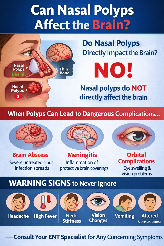
Table of Contents
-
Introduction
-
What Are Nasal Polyps?
-
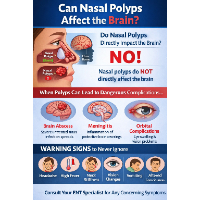
Can Nasal Polyps Affect the Brain? (Direct Answer)
-
How Close Are Sinuses to the Brain?
-
When Can Nasal Polyps Become Dangerous?
-
Rare Complications Involving the Brain
-
Warning Signs You Should Never Ignore
-
Causes and Risk Factors
-
Diagnosis and Evaluation
-
Treatment Options
-
Can Nasal Polyps Cause Headache or Brain Pressure?
-
Prevention Tips
-
FAQs
-
Conclusion
-
Medical Disclaimer
1. Introduction
Many patients with chronic sinus issues often ask:
“Can nasal polyps affect the brain?”
Because the nose and sinuses are located very close to the brain, this concern is understandable. The idea of a growth inside the nose spreading or affecting the brain can be alarming.
2. What Are Nasal Polyps?
Nasal Polyps are non-cancerous, soft growths that develop in the lining of the nasal passages or sinuses due to chronic inflammation.
Key Features:
- Painless, soft, jelly-like masses
- Usually occur on both sides (bilateral).
- Associated with chronic sinusitis.
- Common Symptoms:.
- Nasal blockage.
- Loss of smell.
- Runny nose.
- Facial heaviness.
3. Can Nasal Polyps Affect the Brain? (Direct Answer).
✅ Short Answer:.
No, nasal polyps do NOT directly affect the brain.
They are benign growths and:.
- Do not invade the brain.
- Do not spread like cancer.
- Do not damage brain tissue.
However, in very rare and severe cases, complications related to infection or sinus disease can indirectly affect the brain.
4. How Close Are Sinuses to the Brain?
To understand the risk, it’s important to know the anatomy.
The sinuses– especially the:.
- Frontal sinuses.
- Ethmoid sinuses.
— are located very close to the brain, separated by thin bone.
Important Concept:.
Paranasal Sinuses.
Because of this proximity:.
Severe infections can potentially spread.
But this is rare with modern treatment.
📞 ENT Consultation & Surgery
Dr. Sagar Rajkuwar (MS-ENT)
Prabha ENT Clinic, Ambad, Nashik
📱 7387590194 | 9892596635
🌐 www.entspecialistinnashik.com
5. When Can Nasal Polyps Become Dangerous?
Nasal polyps themselves are harmless, but problems arise when they:.
1. Block Sinus Drainage.
Leads to chronic sinus infections.
2. Cause Severe Inflammation.
Persistent swelling can worsen symptoms.
3. Delay Diagnosis of Serious Conditions.
Rarely, tumors may be mistaken for polyps.
6. Rare Complications Involving the Brain.
Although extremely uncommon, untreated sinus disease (not polyps directly) can lead to serious complications.
Potential Complications:.
1. Brain Abscess.
Infection spreads from sinuses to brain.
Life-threatening if untreated.
2. Meningitis.
Infection of brain coverings.
Symptoms: fever, neck stiffness, confusion.
3. Orbital Complications.
Eye swelling.
Vision problems.
Important: These complications occur due to severe untreated infection, not due to the polyp itself.
7. Warning Signs You Should Never Ignore.
If you have nasal polyps and notice these symptoms, seek urgent medical care:.
Red Flags:.
Severe headache not relieved by medication.
- High fever.
- Neck stiffness.
- Altered consciousness.
- Vision changes.
- Swelling around eyes.
- Persistent vomiting.
These may indicate serious complications involving the brain.
8. Causes and Risk Factors.
Common Causes:.
- Chronic sinusitis.
- Allergies.
- Asthma.
- Fungal infections.
Risk Factors for Complications:.
- Poor immunity.
- Diabetes.
- Delayed treatment.
- Recurrent infections.
9. Diagnosis and Evaluation.
ENT Evaluation Includes:.
1. Nasal Endoscopy.
Direct visualization of polyps.
2. CT Scan (PNS).
Shows sinus involvement.
Detects complications.
3. MRI (if needed).
Used when brain involvement is suspected.
10. Treatment Options.
1. Medical Treatment:.
Steroid nasal sprays.
Oral steroids.
Antibiotics (if infection present).
2. Surgical Treatment:.
Functional Endoscopic Sinus Surgery (FESS).
Goals:.
- Remove polyps.
- Restore sinus drainage.
- Prevent complications.
11. Can Nasal Polyps Cause Headache or Brain Pressure?
Yes– but indirectly.
How?
Blocked sinuses → pressure buildup → headache.
Important:.
This is sinus pressure, NOT brain pressure.
Patients often confuse sinus headache with brain-related pain.
12. Prevention Tips.
Reduce risk of complications with these steps:.
- Treat sinus infections early.
- Control allergies.
- Avoid pollution.
- Use saline nasal rinses.
- Regular ENT follow-up.
13. Frequently Asked Questions (FAQs).
1. Can nasal polyps spread to the brain?
No, they can not spread to the brain.
2. Can sinus infection reach the brain?
Rarely, yes– if untreated.
3. Are nasal polyps life-threatening?
No, but complications can be serious if ignored.
4. When should I see a doctor?
If symptoms persist > 10 days or worsen.
14. Conclusion.
Nasal polyps do NOT affect the brain directly.
However:.
They can cause sinus blockage.
Untreated infections may rarely spread to nearby structures.
Final Takeaway:.
✔ Polyps are benign.
✔ Brain involvement is extremely rare.
✔ Early treatment prevents complications.
15. Medical Disclaimer
This article is for educational purposes only and does not replace professional medical advice. Always consult a qualified ENT specialist for proper diagnosis and treatment.
✅ Read the full medical guide here:
By Dr. Sagar Rajkuwar (MS-ENT)
ENT Specialist – Nashik, Maharashtra, India