What Is Turbinoplasty? Complete Guide to Turbinate Reduction Surgery
By ENT Specialist – Dr. Sagar Rajkuwar, Nashik, Maharashtra, India
Clinic Website: www.entspecialistinnashik.com
Table of contents-
- (1)Introduction
- (2)Procedure Details
- (3)Risks / Benefits
- (4)Recovery
- (5)What is the Complication of Turbinoplasty?
- (6)Summary
(1)Introduction
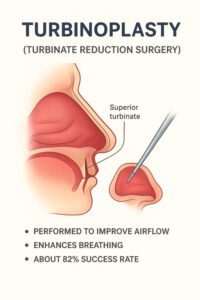
Turbinoplasty , sometimes called turbinate reduction surgery, is a frequent ENT operation used to increase airflow in individuals who have persistent nasal blockage. Inside the nose are the turbinate’s, tiny, fragile tissues that help warm, filter, and moisturize the air we inhale. These turbinate’s, which can become swollen as a result of allergies, infections, or persistent irritation, might lead to ongoing nasal congestion, insomnia, snoring, post-nasal drip, and even breathing difficulties during physical activity or sleep.
Turbinate reduction surgery is a safe and successful option for patients who do not benefit from medical procedures like antihistamines or nasal sprays. This operation, which has an overall success rate of about 82%, can greatly improve nasal breathing, alleviate congestion, and raise overall quality of life. To help you decide if this surgery might be appropriate for you, this article discusses the definition of turbinoplasty, its indications, its procedure, its hazards, its recovery schedule, and its success rate.
What is turbinate reduction?
Turbinate reduction refers to a surgical procedure conducted by ear, nose, and throat (ENT) specialists to enhance airflow in individuals suffering from chronic nasal congestion. This procedure is also known as nasal turbinate reduction and inferior turbinate reduction. (It is termed bilateral turbinate reduction when the surgery is conducted on both sides of the nose. )
Why is turbinate reduction done?
The purpose of turbinate reduction surgery is to eliminate excess tissue around your turbinate bones so you can breathe more easily. Turbinates are small structures located within your nose. They filter, warm, and humidify the air as it moves through your nasal cavity and into your lungs.
Your turbinates may become inflamed and swollen due to irritation, allergies, or infection. Generally, this inflammation is temporary. However, some individuals may experience chronic swelling of their turbinates (hypertrophy).
How common is turbinate reduction surgery?
Turbinate reduction is a frequently performed surgical procedure. It can be carried out alone or alongside other treatments, such as septoplasty (to fix a deviated septum) or rhinoplasty (to reshape the nose or address breathing issues).
How successful is turbinate reduction?
The overall success rate for turbinate reduction is approximately 82%. Although it is possible for the tissue surrounding your turbinates to eventually regrow, many patients are pleased with the results of turbinate reduction.
(2)Procedure Details
How do I know if I need turbinate reduction surgery?
To determine whether turbinate reduction is necessary for you, your healthcare provider will conduct a physical examination. They may also utilize nasal endoscopy to look inside your nose for diagnostic confirmation.
Your healthcare provider will suggest steroid nasal sprays and/or antihistamines as initial treatment options. However, if these treatments do not yield positive results, then turbinate reduction might be required. Turbinate reduction surgery is typically indicated when nasal obstruction causes congestion, post-nasal drip, sleep apnea, or other respiratory disorders.
What happens during turbinate reduction surgery?
Turbinate reduction surgery can be carried out as a same-day procedure — either at a hospital, ambulatory surgical center, or an outpatient clinic. Typically, the procedure is performed under general anesthesia, although some patients may only require local anesthesia.
During the turbinate reduction surgery, your surgeon carefully reduces the size of your turbinate tissue. This can be achieved through various techniques, including:
Cauterization. A heated probe is inserted into your nose to seal off certain blood vessels in your turbinates. This leads to decreased blood flow, resulting in the shrinkage of your turbinate tissues.
Radiofrequency turbinate reduction. Using radiofrequency ablation, a long, slender probe transmits heat energy to your inflamed turbinates, leading to scar tissue formation.
Consequently, your turbinate tissues reduce in size.
Coblation. The term “coblation” stands for “controlled ablation. ” Similar to radiofrequency reduction, coblation employs heat energy to lessen the size of your turbinate tissues.
Nevertheless, this technique uses a lower temperature to preserve surrounding tissues.
Microdebrider submucosal resection. In this procedure, your surgeon makes a small incision in your turbinate. They remove tissue through this incision while leaving the outer lining intact. As you recover, your turbinates decrease in size.
Partial resection. This process entails the excision of a small segment of your turbinate. In contrast to the techniques mentioned previously, partial resection extracts both soft and hard tissue.
How painful is turbinate reduction?
Individuals who undergo turbinate reduction may feel discomfort for a few days; however, it is typically minimal. If your turbinate reduction was done alongside other procedures, you might experience increased discomfort. To alleviate your symptoms, take all medications exactly as directed by your healthcare provider.
What happens after turbinate reduction?
Upon completing your turbinate reduction surgery, your healthcare provider will provide you with a comprehensive list of postoperative instructions. These instructions will assist you in remaining comfortable throughout the healing phase.
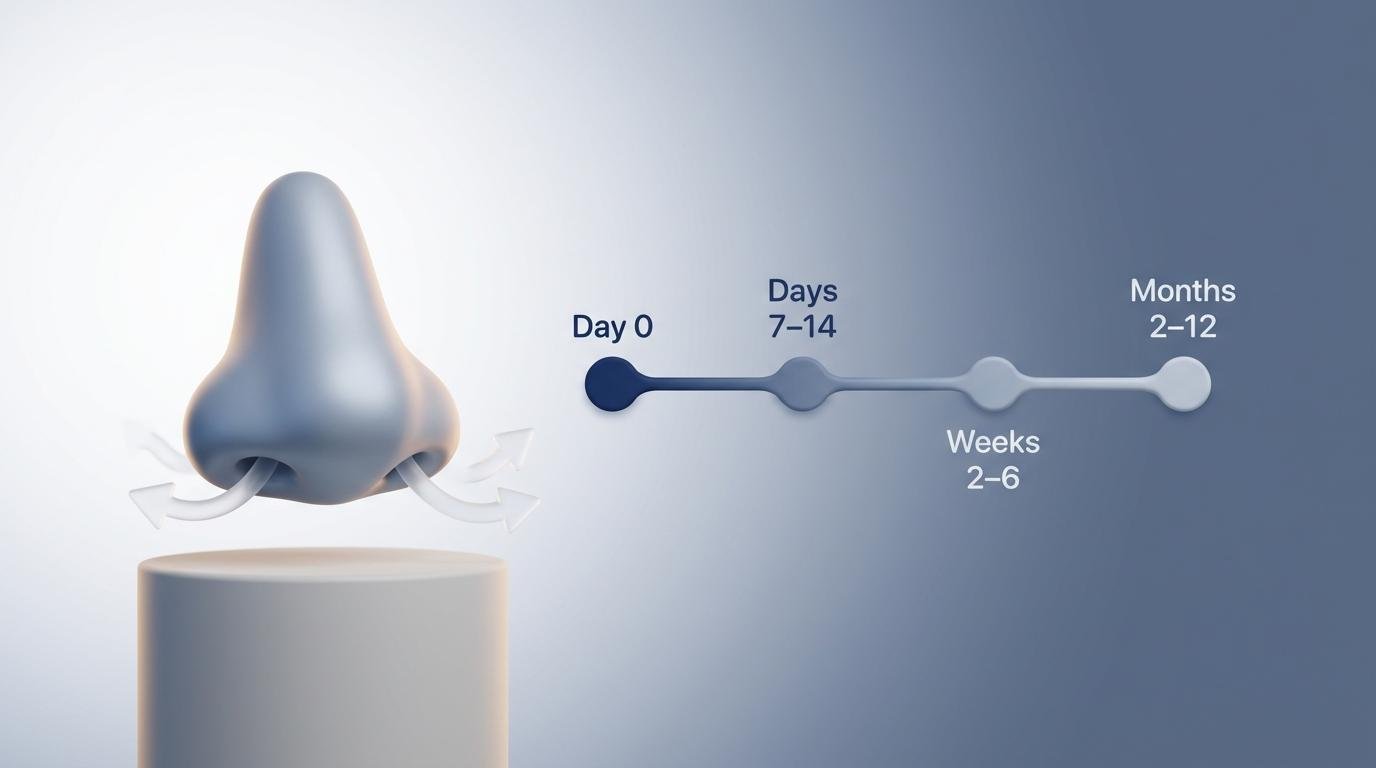
Crusting is likely to form on your nose. This is a result of nasal discharge that occurs during the healing of your turbinates. Crusting may persist for up to three weeks. To ease your symptoms, consider using saline nasal spray or a cool mist humidifier. Alternatively, you can apply petroleum jelly around your nose.
(3)Risks / Benefits
What are the pros and cons of turbinate reduction surgery?
As with any surgical procedure, turbinate reduction surgery has its advantages and disadvantages:
Pros of turbinate reduction surgery
Turbinate reduction surgery:
- Is performed on an outpatient basis.
- Enhances your nasal airway and facilitates better breathing.
- Decreases snoring.
- Addresses severe nasal allergies.
Cons of turbinate reduction surgery
Turbinate reduction surgery may lead to:
- Empty nose syndrome (a very rare condition where you cannot sense the air flowing through your nasal passages).
- Chronic nasal dryness.
- Nosebleeds.
Consult your healthcare provider regarding the risks and complications associated with turbinate reduction. They can assist in determining if the procedure is appropriate for you.
(4)Recovery
How long does it take to recover from turbinate reduction?
You can resume work, school, and other usual activities in one day if you undergo the in-office procedure, and within one week if you have the procedure done under general anesthesia. Total recovery from turbinate reduction may take up to six weeks. During this period, your healthcare provider will oversee your healing to ensure you are progressing as expected.
(5)What is the Complication of Turbinoplasty?
Other Typical Dangers of Turbinate Reduction
What is the success rate of turbinoplasty?
Submucous resection inferior turbinate
Submucous resection of the inferior turbinates is a surgical treatment that aims to decrease the size of the nasal turbinates in order to enhance airflow through the nose and relieve breathing problems. This technique entails elevating the turbinates’ mucosal lining to reveal the bony structure beneath, then surgically cutting away a section of the bone to in turbinates’ overall volume.
For important health related topics please click on our facebook page link given below or copy paste this link into google search –
https://www.facebook.com/positivemind.healthcare
For important health related videos please click on the link of our youtube channel given below or copy paste this link into google search-
http://www.youtube.com/@healthuseful8539
(6)Summary
If any patient has any ENT -Ear nose throat problems and requires any , consultation ,online consultation ,or surgery in clinic of ENT specialist Doctor Dr Sagar Rajkuwar ,he may TAKE APPOINTMENT BY CLICKING ON THE LINK GIVEN BELOW-
www.entspecialistinnashik.com
Clinic address of ENT SPECIALIST doctor Dr Sagar Rajkuwar-
Prabha ENT clinic, plot no 345,Saigram colony, opposite Indoline furniture Ambad link road ,Ambad ,1 km from Pathardi phata Nashik ,422010 ,Maharashtra, India-Dr Sagar Rajkuwar (MS-ENT), Cell no- 7387590194 , 9892596635