Stomach Ulcer Symptoms: Early Signs, Warning Signs and When to Get Help-various aspects-
Medically reviewed By ENT and respiratory health specialist — Dr. Sagar Rajkuwar, MS-ENT. Clinic Website: www.entspecialistinnashik.com
Health education article | HealthUseful.com
Quick answer: The most typical stomach ulcer symptoms are burning, gnawing or aching pain in the upper middle abdomen, indigestion, bloating, nausea, belching and feeling full unusually quickly. Some people have no symptoms. Vomiting blood, black tarry stools, faintness or sudden severe abdominal pain may signal a dangerous complication and require emergency care.
A stomach ulcer is a break or sore in the protective lining of the stomach. It is also called a gastric ulcer. A similar sore in the first part of the small intestine is a duodenal ulcer; both are forms of peptic ulcer disease. Recognising stomach ulcer symptoms matters because uncomplicated ulcers are usually treatable, whereas bleeding or perforation can become life-threatening.
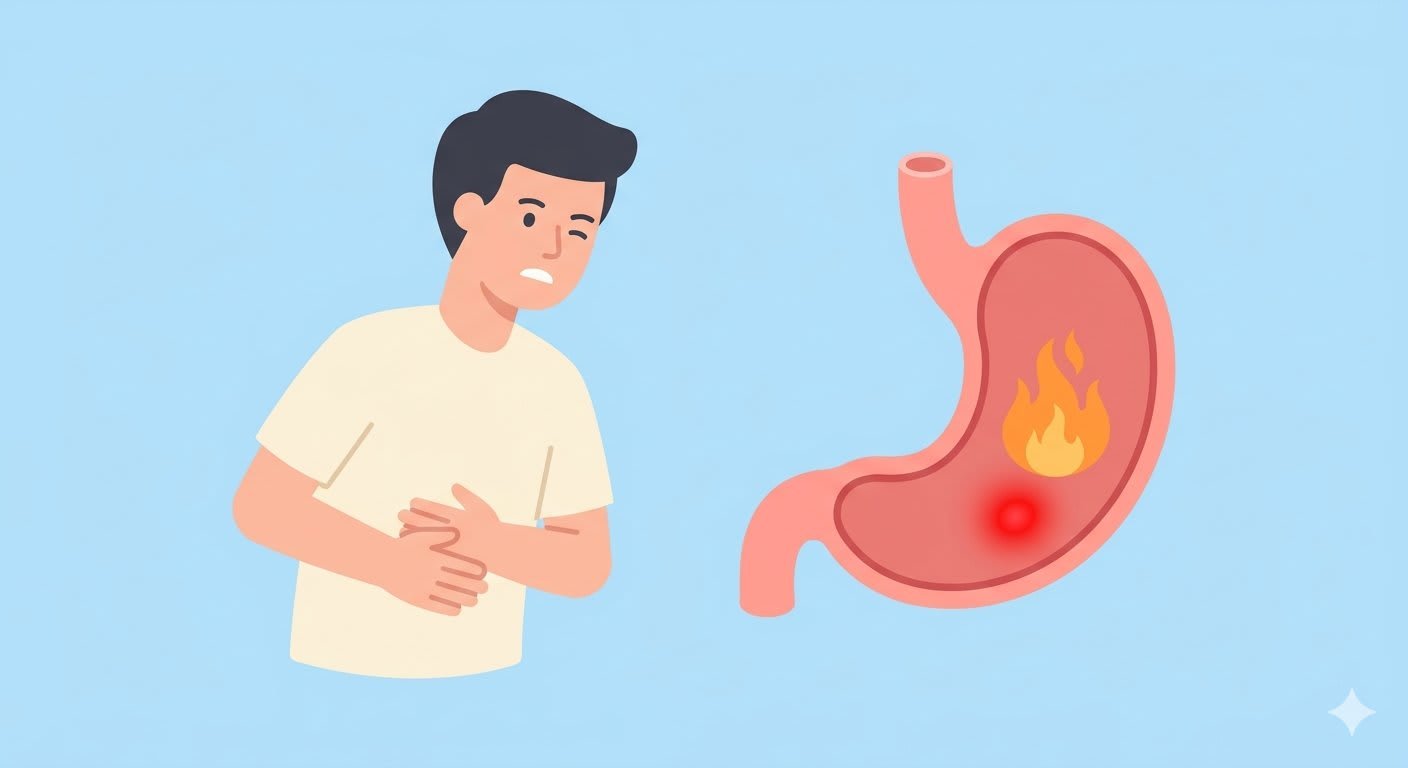
What are the common stomach ulcer symptoms?
The most recognised symptom is pain or discomfort in the upper abdomen, medically called the epigastric region. People often describe it as burning, gnawing, aching or an empty, hunger-like sensation. The pain may come and go, last for minutes or longer, and recur over days or weeks. The pattern is different from one person to another.1. Burning or gnawing upper abdominal pain
Pain is commonly felt between the breastbone and the navel. It may be mild or quite troublesome. Some people notice it when the stomach is empty or during the night; others find that eating makes it worse. A gastric ulcer may hurt after meals, but this pattern is not reliable enough to distinguish it from a duodenal ulcer or another digestive condition.2. Indigestion and upper abdominal discomfort
Dyspepsia is a group of symptoms that can include upper abdominal discomfort, burning, nausea and troublesome fullness. It is common in people with ulcers, but most people with dyspepsia do not necessarily have an ulcer. Persistent or recurrent indigestion deserves assessment rather than repeated self-treatment.3. Bloating, belching and excessive fullness
Some people feel swollen or unusually full after a small meal and may belch more often. These symptoms can occur with ulcers, but also with reflux, functional dyspepsia, food intolerance and other gastrointestinal problems. They are clues, not proof.4. Nausea and vomiting
Nausea may accompany ulcer-related pain. Repeated vomiting is more concerning, particularly when it prevents drinking fluids, occurs with weight loss, or is associated with severe pain. In some cases, swelling or scarring near the stomach outlet can obstruct the passage of food.5. Reduced appetite or eating less
A person may avoid food because meals trigger discomfort or because they feel full too quickly. Unintentional weight loss, progressive loss of appetite or persistent early satiety should prompt medical review. These symptoms are not specific to ulcers and need evaluation for other causes too.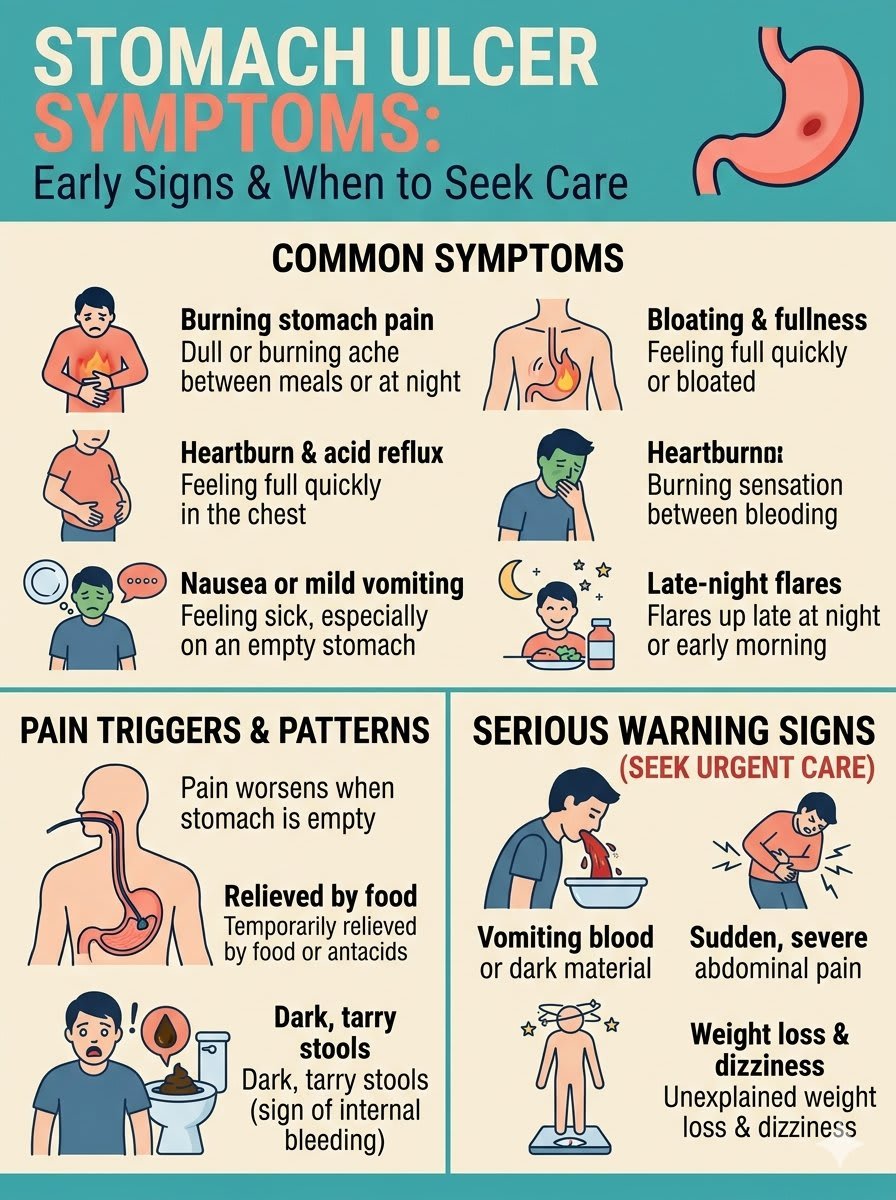
Stomach ulcer symptoms at a glance
Recognise the pattern — but do not self-diagnose
CommonBurning or gnawing upper abdominal pain
CommonBloating, belching or indigestion
PossibleNausea, vomiting or early fullness
May be silentNo obvious symptoms until a complication occurs
EmergencyBlood in vomit or black, tarry stools
EmergencySudden severe pain, fainting or collapse
Where is stomach ulcer pain located?
Typical ulcer discomfort is in the upper central abdomen, below the breastbone. It may sometimes spread towards the back or be felt more widely, but this is not the usual pattern for every patient. Pain on the right or left side, chest pain or back pain can have many causes. Do not assume that pain in a particular location is an ulcer.Does ulcer pain occur before or after eating?
There is no dependable meal-time rule. Some people with peptic ulcers report pain when hungry or at night; others report worsening after food. A gastric ulcer can be aggravated by eating, but symptoms overlap substantially between gastric and duodenal ulcers. A clinician should interpret the history alongside risk factors and appropriate tests.Can a stomach ulcer have no symptoms?
Yes. Some people have an ulcer without noticeable warning symptoms. This is particularly important in people taking nonsteroidal anti-inflammatory drugs (NSAIDs), because an ulcer may bleed with little preceding pain. An absence of pain does not rule out an ulcer or its complications. Older adults and people taking medicines that increase bleeding risk may need particular care. Do not wait for severe stomach pain if you notice black stools, blood in vomit, unexplained weakness or faintness.Emergency warning signs: when to seek help immediately
Get emergency medical care now if you have any of these signs
- Vomiting blood, whether bright red or dark material resembling coffee grounds.
- Black, sticky, tar-like stools or visible blood in the stool.
- Sudden, severe or persistent abdominal pain, especially with a rigid or very tender abdomen.
- Fainting, marked dizziness, confusion, cold clammy skin, rapid heartbeat or profound weakness.
Other symptoms that need prompt medical assessment
- Repeated vomiting or inability to keep fluids down.
- Unintentional weight loss or steadily declining appetite.
- Feeling full after only a few bites, particularly if new or worsening.
- Progressively worsening or recurring upper abdominal pain.
- Difficulty or pain when swallowing, persistent fatigue or suspected anaemia.
What causes stomach ulcers?
The two leading causes of peptic ulcers are Helicobacter pylori (H. pylori) infection and use of NSAID pain-relieving medicines. These factors weaken the stomach or duodenal lining’s defences and allow digestive acid to cause injury.H. pylori infection
H. pylori is a bacterium that can live in the stomach lining and cause chronic inflammation. Many infected people never develop an ulcer, but the infection is an important, treatable cause of peptic ulcer disease. When an ulcer is found, clinicians commonly consider testing for this organism.NSAID medicines
Medicines such as ibuprofen, naproxen and aspirin can increase ulcer risk, especially with regular use, higher doses, older age, a previous ulcer, or use alongside certain other medicines. Do not start, stop or change prescribed aspirin or another blood-thinning medicine on your own. Contact the prescribing clinician promptly to review risks and alternatives.Other factors and common misconceptions
Smoking can impair ulcer healing and increase recurrence risk. Some medicines, including corticosteroids when combined with NSAIDs, may increase risk. Severe physiological illness and uncommon disorders can also be involved. Spicy food and ordinary emotional stress are not considered the main causes of peptic ulcers. However, particular foods, alcohol or caffeine may aggravate symptoms in an individual. Food triggers vary; a restrictive “ulcer diet” does not eradicate H. pylori or heal the underlying cause.Stomach ulcer symptoms compared with other digestive conditions
Several conditions can cause upper abdominal pain, burning, nausea or bloating. This comparison is only a guide; it cannot replace clinical assessment.| Condition | Possible pattern | Important distinction |
|---|---|---|
| Stomach (gastric) ulcer | Upper abdominal burning or aching; sometimes worse after meals | May bleed; diagnosis often requires endoscopy |
| Duodenal ulcer | Upper abdominal pain that may occur between meals or at night | Symptoms overlap with gastric ulcers |
| Gastritis | Upper abdominal discomfort, nausea or indigestion | Inflammation of the stomach lining; not necessarily an open sore |
| GERD | Heartburn behind the breastbone and acid regurgitation | Often worse after meals or lying down; may coexist with other conditions |
| Functional dyspepsia | Fullness, early satiety or upper abdominal discomfort | Symptoms occur without an ulcer or other structural explanation on routine evaluation |
| Gallbladder disease | Often right upper abdominal pain, sometimes after fatty meals | May spread to the back or right shoulder; assessment may include ultrasound |
How is a stomach ulcer diagnosed?
A clinician will ask about the location and timing of pain, vomiting or stool changes, previous ulcers, medical history and all medicines—including over-the-counter painkillers. Examination and tests help distinguish an ulcer from other causes and identify complications.Upper gastrointestinal endoscopy (gastroscopy)
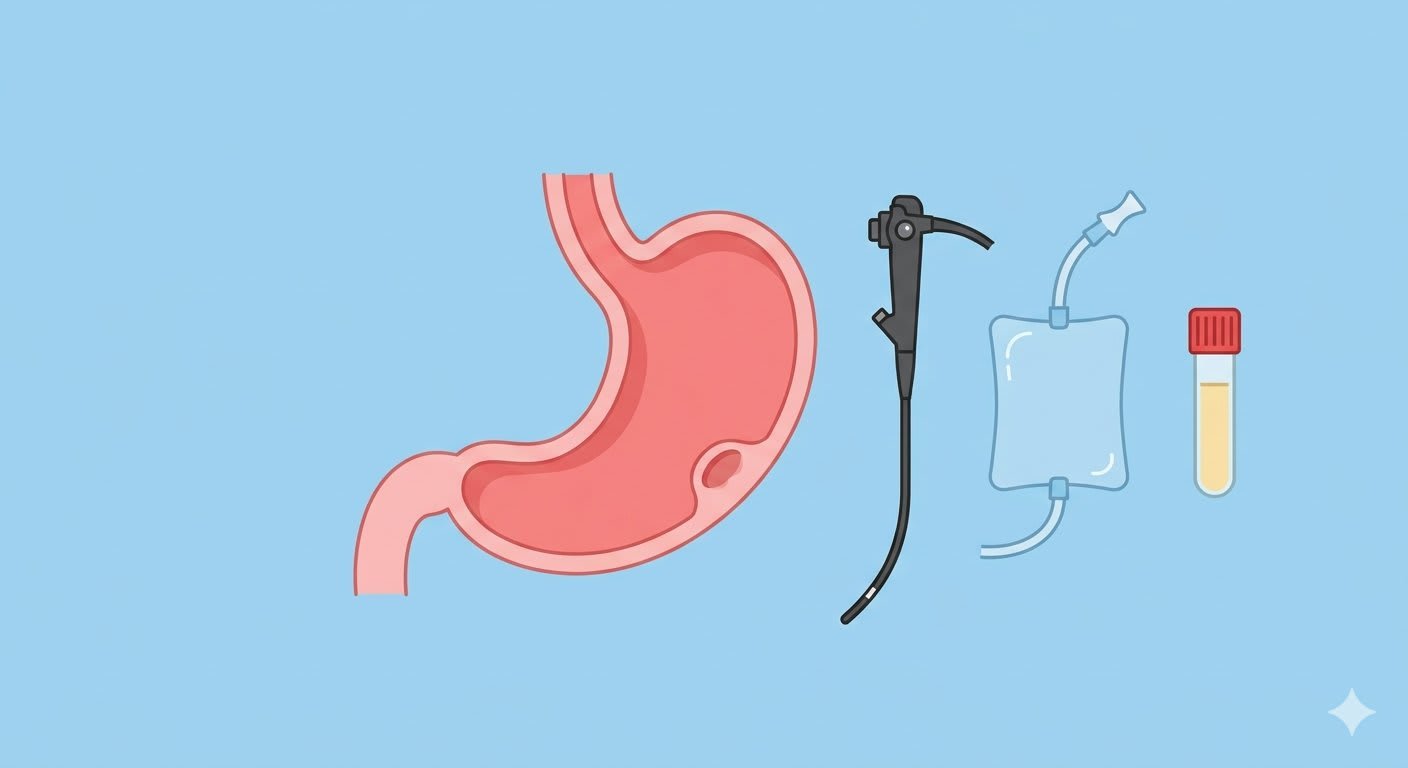
An upper GI endoscopy uses a thin flexible tube with a camera to examine the oesophagus, stomach and duodenum. It can directly identify an ulcer, assess bleeding and allow tissue samples (biopsies) to be taken when appropriate. A biopsy may help assess H. pylori or investigate an abnormal-looking stomach ulcer.Tests for H. pylori
- Urea breath test: detects evidence of active H. pylori infection.
- Stool antigen test: can detect active infection using a stool sample.
- Biopsy-based testing: may be performed during endoscopy.
- Blood antibody test: may show previous exposure and is generally less useful for confirming active infection or successful eradication.
Blood tests and other investigations
A blood count may help identify anaemia from blood loss. Depending on the symptoms, a clinician may request other blood tests or imaging to look for alternative diagnoses or complications. A normal blood test alone does not exclude an ulcer.What should you do if you notice possible stomach ulcer symptoms?
- Arrange a medical review if upper abdominal discomfort persists, keeps returning or is associated with early fullness, nausea or weight loss.
- Make a medicine list. Include aspirin, ibuprofen, naproxen, prescribed steroids, anticoagulants, supplements and non-prescription remedies.
- Do not self-prescribe antibiotics. H. pylori treatment requires an appropriate combination selected by a clinician, taking local antibiotic resistance and allergy history into account.
- Avoid taking NSAID painkillers without advice if an ulcer is possible. If aspirin or an anticoagulant has been prescribed for heart or stroke prevention, seek prompt advice rather than stopping it yourself.
- Seek emergency help for blood in vomit, black tarry stools, fainting or sudden severe abdominal pain.
How are stomach ulcers treated?
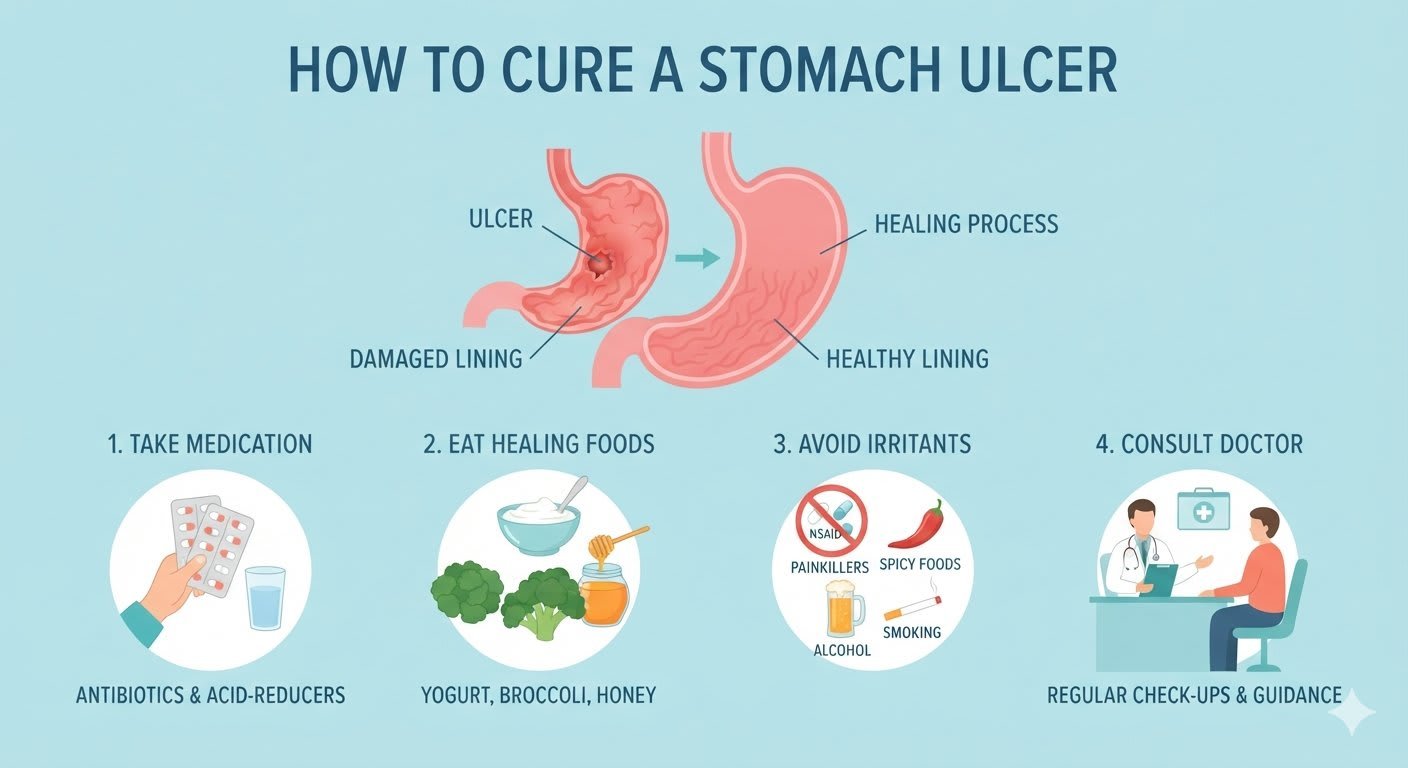
Treatment depends on the cause. Clinicians commonly use acid-suppressing medicines such as a proton pump inhibitor (PPI) to help the ulcer heal. If H. pylori is present, a combination regimen containing acid suppression and antibiotics—sometimes with bismuth—is prescribed. The exact regimen depends on local resistance patterns, previous antibiotic exposure, allergies and clinical guidance. If NSAIDs contributed, the prescriber may recommend stopping, reducing or changing the medicine, or adding stomach protection if an anti-inflammatory drug remains necessary. Do not make this change independently when the medicine has been prescribed for an important cardiovascular or other condition. It is important to complete the prescribed course. A clinician may arrange a follow-up H. pylori test to confirm eradication, generally at least four weeks after antibiotics are completed, with appropriate preparation regarding acid-suppressing medicines. Some gastric ulcers need repeat endoscopy to confirm healing and exclude another cause.Food and lifestyle: what can help symptoms?
No single food plan cures a peptic ulcer. Eat a balanced diet and notice whether specific foods or drinks reliably worsen your discomfort. Smaller meals may be more comfortable for some people. Avoid lying down soon after eating if reflux symptoms are also present. Stop smoking if possible, and limit alcohol if it aggravates symptoms or is medically inadvisable. Do not rely on milk, bland food, herbal products or home remedies to treat an ulcer. They do not eliminate H. pylori, reverse NSAID injury or manage bleeding. A clinician should address the cause.Possible complications if an ulcer is not treated
- Bleeding: may cause vomiting blood, black stools, anaemia, dizziness or shock.
- Perforation: an ulcer can create a hole in the wall of the stomach or duodenum, allowing contents to leak into the abdominal cavity and cause peritonitis.
- Penetration: an ulcer may extend into a nearby organ and cause persistent or unusual pain.
- Gastric outlet obstruction: swelling or scarring can interfere with food leaving the stomach, causing repeated vomiting and early fullness.
Frequently asked questions about stomach ulcer symptoms
1. What is the most common symptom of a stomach ulcer?
Upper abdominal pain or discomfort is the most common symptom. It is often described as burning or gnawing, but some people have no symptoms at all.2. What does stomach ulcer pain feel like?
It may feel like a dull ache, burning sensation or gnawing discomfort in the upper middle abdomen. The pattern and severity vary, and pain quality cannot confirm an ulcer.3. Can a stomach ulcer cause back pain?
Occasionally, ulcer-related pain may be felt in the back, especially if an ulcer penetrates deeper. Back pain is common and has many possible causes, so it should not be assumed to be an ulcer.4. Can stomach ulcer symptoms come and go?
Yes. Discomfort may fluctuate or recur. Temporary improvement does not prove that an ulcer has healed or that its cause has been treated.5. Can you have a stomach ulcer without pain?
Yes. Some ulcers are silent and may first become apparent through bleeding or another complication. This can occur particularly in people using NSAIDs.6. Are black stools always caused by a stomach ulcer?
No. Iron tablets and some medicines or foods can darken stools, but black, sticky, tar-like stools may indicate gastrointestinal bleeding. Treat this as urgent, especially with weakness, dizziness or vomiting.7. Do spicy foods cause stomach ulcers?
No. The main causes are H. pylori infection and NSAID medicines. Spicy foods may worsen symptoms in some people but are not considered the underlying cause of most ulcers.8. How do I know whether I have gastritis or a stomach ulcer?
Symptoms overlap. Gastritis is inflammation of the stomach lining, whereas an ulcer is an open sore. Endoscopy may be needed to distinguish them and assess the stomach lining.9. When should I see a doctor for possible ulcer symptoms?
Arrange a medical appointment for persistent or recurring upper abdominal pain, unexplained weight loss, reduced appetite, early fullness or repeated vomiting. Seek emergency care for vomiting blood, black tarry stools, fainting or sudden severe pain.10. Can antacids hide stomach ulcer symptoms?
Antacids may temporarily relieve acid-related discomfort, but symptom relief does not confirm the diagnosis or heal the underlying cause. Recurrent pain needs assessment.11. Is a stomach ulcer the same as acidity?
No. “Acidity” is a broad everyday term often used for heartburn or indigestion. An ulcer is a defined sore in the stomach or duodenal lining and may require specific testing and treatment.12. Can a stomach ulcer become cancer?
A benign ulcer does not simply turn into cancer in every case. However, some stomach cancers can resemble an ulcer. This is one reason clinicians may take biopsies and arrange follow-up endoscopy for a gastric ulcer when indicated. H. pylori infection is also associated with increased gastric cancer risk.Helpful video resource
For a supplementary visual explanation, see YouTube results for NIDDK peptic ulcer disease and H. pylori education. Choose a video from a recognised medical or government health organisation and use it as general education, not as a substitute for medical advice.Summary
- The main stomach ulcer symptoms include upper abdominal burning or aching, indigestion, bloating, belching, nausea and early fullness.
- Some people have no warning symptoms; symptom severity does not reliably measure ulcer severity.
- H. pylori infection and NSAID medicines are the leading causes.
- Endoscopy and tests for active H. pylori infection help establish the diagnosis and guide treatment.
- Blood in vomit, black tarry stools, fainting or sudden severe abdominal pain are emergency warning signs.
- Treating the cause—not simply suppressing discomfort—is essential to healing and preventing recurrence.
Conclusion
Recognising stomach ulcer symptoms can help people seek care before complications develop. Burning upper abdominal pain is a common clue, but ulcers can also cause vague indigestion or no symptoms. Because several digestive and non-digestive conditions can feel similar, diagnosis should be based on clinical assessment and appropriate testing. Do not ignore bleeding, faintness or sudden severe pain: these require emergency care. With the cause identified and treated, most peptic ulcers can heal.References and further reading
- National Institute of Diabetes and Digestive and Kidney Diseases (NIDDK): Symptoms & Causes of Peptic Ulcers.
- NIDDK: Diagnosis of Peptic Ulcers.
- NIDDK: Treatment for Peptic Ulcers.
- National Health Service (NHS): Stomach ulcer.
- Mayo Clinic: Peptic ulcer — Symptoms and causes.
- Mayo Clinic: Peptic ulcer — Diagnosis and treatment.
Medical disclaimer: This article is for general educational purposes and does not replace an individual consultation, examination or diagnosis. Do not start, stop or change prescription medicines based on this article. Seek emergency care for suspected gastrointestinal bleeding, fainting or sudden severe abdominal pain. Medical content should be reviewed by a qualified gastroenterologist or other appropriately qualified clinician before publication; no independent clinical review is claimed here.
📲 For Health-Related Articles & Videos
🔹 Facebook: https://www.facebook.com/positivemind.healthcare🔹 YouTube: http://www.youtube.com/@healthuseful8539/
ENT Consultation & Surgery
Dr. Sagar Rajkuwar (MS-ENT) Consultant ENT Specialist & Head-Neck SurgeonPrabha ENT Clinic, Ambad, Nashik, Maharashtra, India