How to Cure Stomach Ulcer: Effective Treatment, Medicines and Recovery-various aspects-
Medically reviewed By ENT and respiratory health specialist — Dr. Sagar Rajkuwar, MS-ENT. Clinic Website: www.entspecialistinnashik.com
Health education article | HealthUseful.com
Understanding how to cure stomach ulcer starts with knowing why the sore developed. A stomach ulcer is an open sore in the protective lining of the stomach. The two major causes are infection with H. pylori bacteria and regular use of certain pain-relieving medicines called non-steroidal anti-inflammatory drugs (NSAIDs). Treatment is different for each cause, so testing and a clinician’s assessment matter.
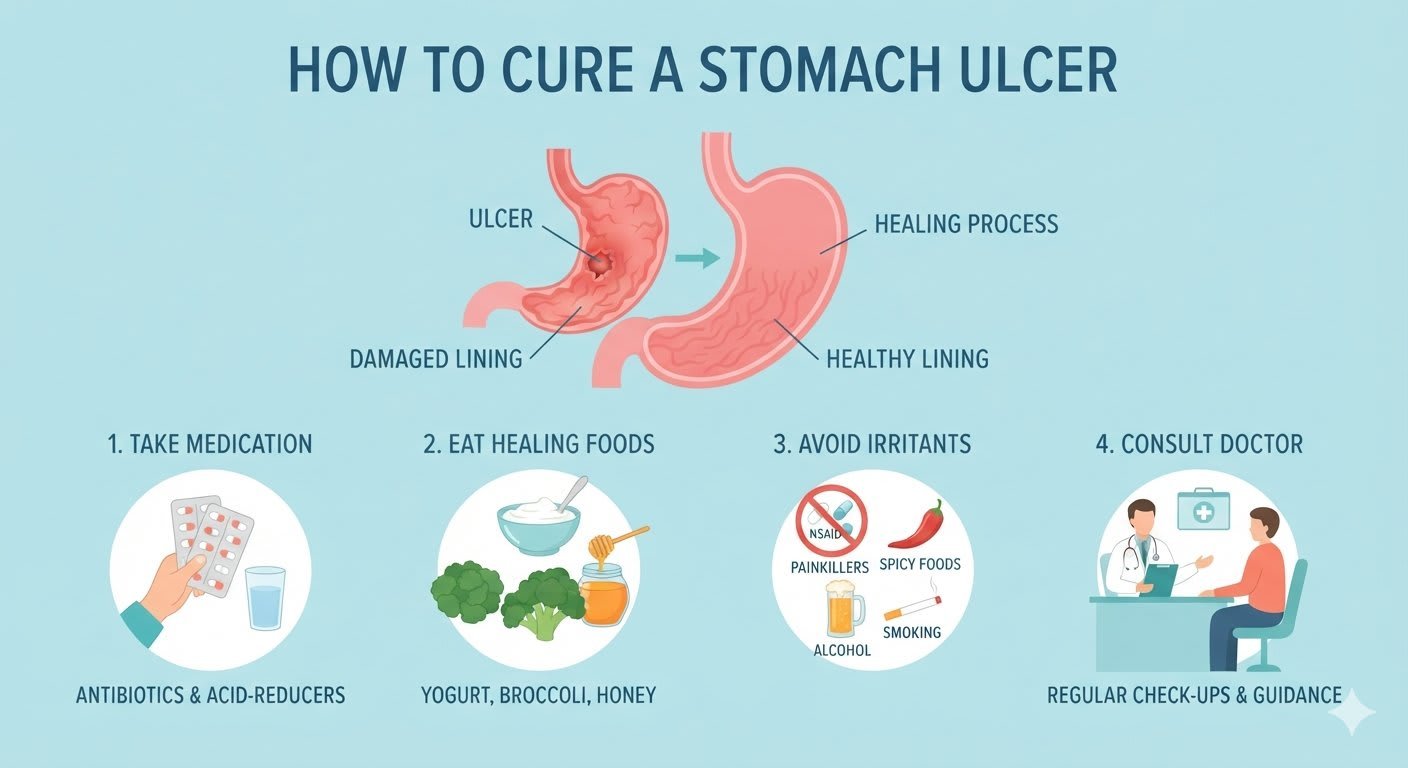
What is a stomach ulcer?
A stomach ulcer, also called a gastric ulcer, is a break in the lining of the stomach. Ulcers can also develop in the first part of the small intestine, the duodenum; these are called duodenal ulcers. Both are forms of peptic ulcer disease. The stomach normally has a protective mucus-and-bicarbonate barrier. When this defence is weakened, stomach acid and digestive enzymes can injure the tissue. An ulcer may cause burning or gnawing upper-abdominal pain, but some ulcers cause few symptoms until bleeding or another complication occurs.
How to cure stomach ulcer: the treatment plan
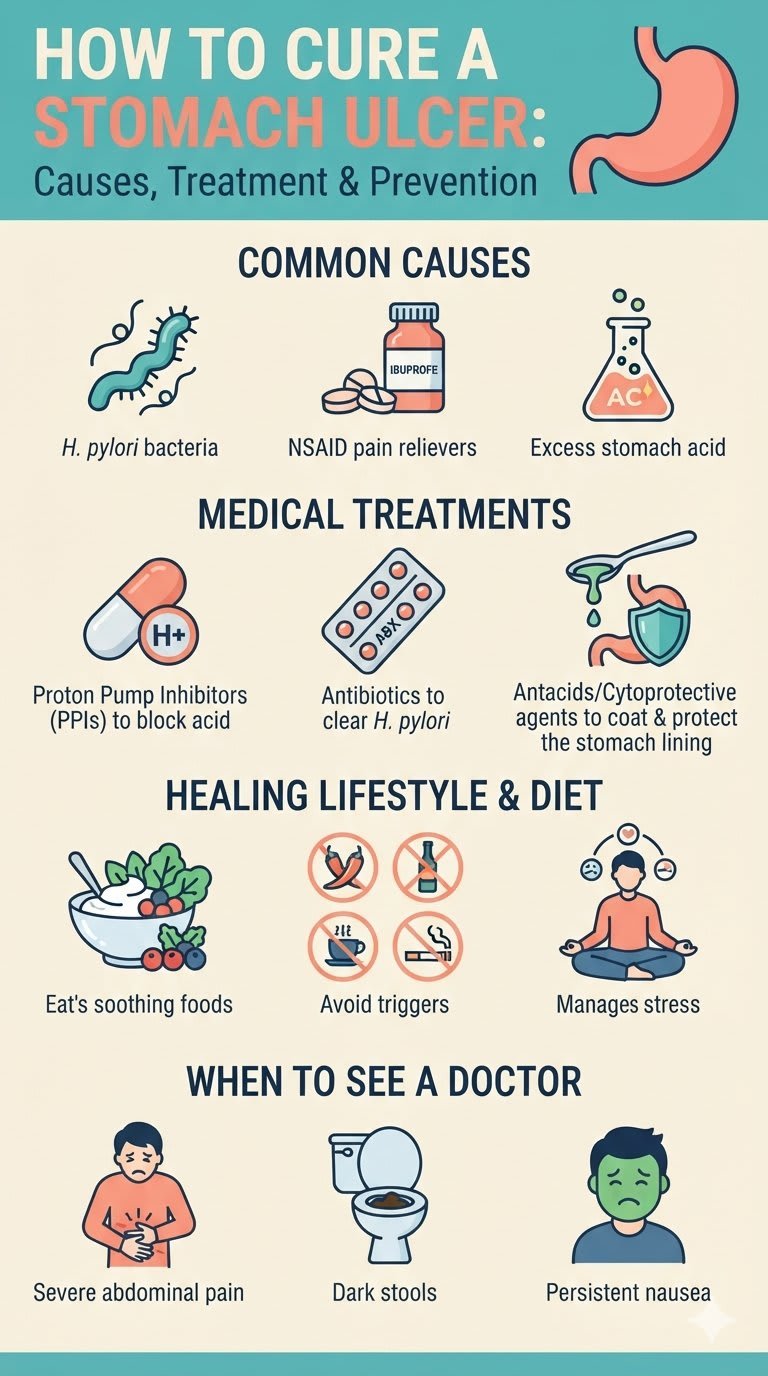
There is no single tablet that cures every ulcer. A safe treatment plan has four parts: confirm the diagnosis, identify the cause, use the appropriate medicines for long enough, and check that the underlying problem has been corrected. This cause-based approach is the key to learning how to cure stomach ulcer and reduce the chance of recurrence.
1. Treat H. pylori infection if it is present
H. pylori is a bacterium that can live in the stomach lining and cause inflammation and ulcers. If a breath test, stool antigen test or suitable biopsy test confirms active infection, a clinician generally prescribes a combination regimen containing acid suppression and more than one antimicrobial medicine. Some regimens also include bismuth. The exact combination depends on factors such as local antibiotic resistance, previous antibiotic exposure, allergy history, availability and clinical guidelines. The 2024 American College of Gastroenterology guideline favours 14-day optimized bismuth quadruple therapy in many treatment-naïve patients when antibiotic susceptibility is unknown. Other options may be appropriate in selected circumstances. A clinician should select the regimen; do not copy an antibiotic prescription from the internet or use leftover antibiotics.
Confirm that H. pylori has been eradicated
Symptom relief does not prove that the bacteria have gone. Current guidance recommends a test of cure for treated patients, generally with a urea breath test or stool antigen test at least four weeks after completing antibiotics. To reduce false-negative results, a clinician commonly advises withholding PPIs for about two weeks and antibiotics and bismuth for at least four weeks before testing, if medically safe. Never stop prescribed medication without discussing the timing with your doctor.
2. Reduce stomach acid so the ulcer can heal
Proton pump inhibitors (PPIs) reduce the amount of acid produced by the stomach. Examples include omeprazole, pantoprazole, esomeprazole and lansoprazole. They are commonly used to help an ulcer heal and are often included in H. pylori eradication treatment. A PPI is not an antibiotic: it reduces acid and supports healing but does not by itself eliminate H. pylori. The dose and duration depend on the ulcer’s cause, location, severity, other medicines and clinical findings. Follow the prescription rather than increasing the dose or extending treatment yourself.
3. Address NSAID-related ulcers
NSAIDs such as ibuprofen, naproxen, diclofenac and aspirin can damage the stomach’s protective mechanisms. If a medicine is contributing to an ulcer, the prescriber may recommend stopping it, reducing the dose, changing to a safer alternative or adding a PPI if the anti-inflammatory medicine must continue. Do not independently stop prescribed low-dose aspirin, clopidogrel or other blood-thinning/antiplatelet treatment. These medicines may have been prescribed to prevent a heart attack or stroke. Contact the prescribing clinician promptly to balance bleeding risk against the risk of stopping them. Tell the clinician about all prescription medicines, over-the-counter painkillers and supplements you take.
4. Treat uncommon or persistent ulcers
If an ulcer does not heal, returns, or has no obvious H. pylori or NSAID cause, the clinician may review adherence, smoking, other medicines and less common disorders. Further endoscopy, biopsies or specialist assessment may be needed. Rarely, an ulcer that does not respond to medical treatment or has a serious complication requires an endoscopic procedure or surgery.
Symptoms of a stomach ulcer
Symptoms vary. Some people have no obvious symptoms, while others experience recurring discomfort. Possible symptoms include:
- Burning, gnawing or aching pain in the upper abdomen.
- Pain that occurs between meals, at night or after eating; the pattern is not reliable enough to diagnose the ulcer.
- Bloating, belching or indigestion.
- Nausea or vomiting.
- Feeling full unusually quickly or feeling uncomfortably full after a meal.
- Reduced appetite or unexplained weight loss.
These symptoms can also occur with reflux, gastritis, gallbladder disease and other conditions. A symptom pattern alone cannot confirm an ulcer.
What causes stomach ulcers?
H. pylori infection
This infection is a major cause of peptic ulcers. Many people with H. pylori have no symptoms. The infection can persist unless it is treated with an appropriate eradication regimen.
Regular use of NSAID painkillers
Risk rises with prolonged use, higher doses, taking more than one NSAID, older age, a previous ulcer, or combining NSAIDs with certain other medicines. The risk may be higher when H. pylori infection is also present.
Other contributors
Smoking can increase ulcer risk and delay healing. Severe illness and uncommon conditions that cause excessive acid production can also be involved. Stress and spicy foods are not considered the usual direct causes of peptic ulcers, although they may aggravate symptoms in some people.
Which tests confirm a stomach ulcer?
To decide how to cure stomach ulcer, a clinician may need to establish both whether an ulcer exists and what caused it.
| Test | What it helps identify |
|---|---|
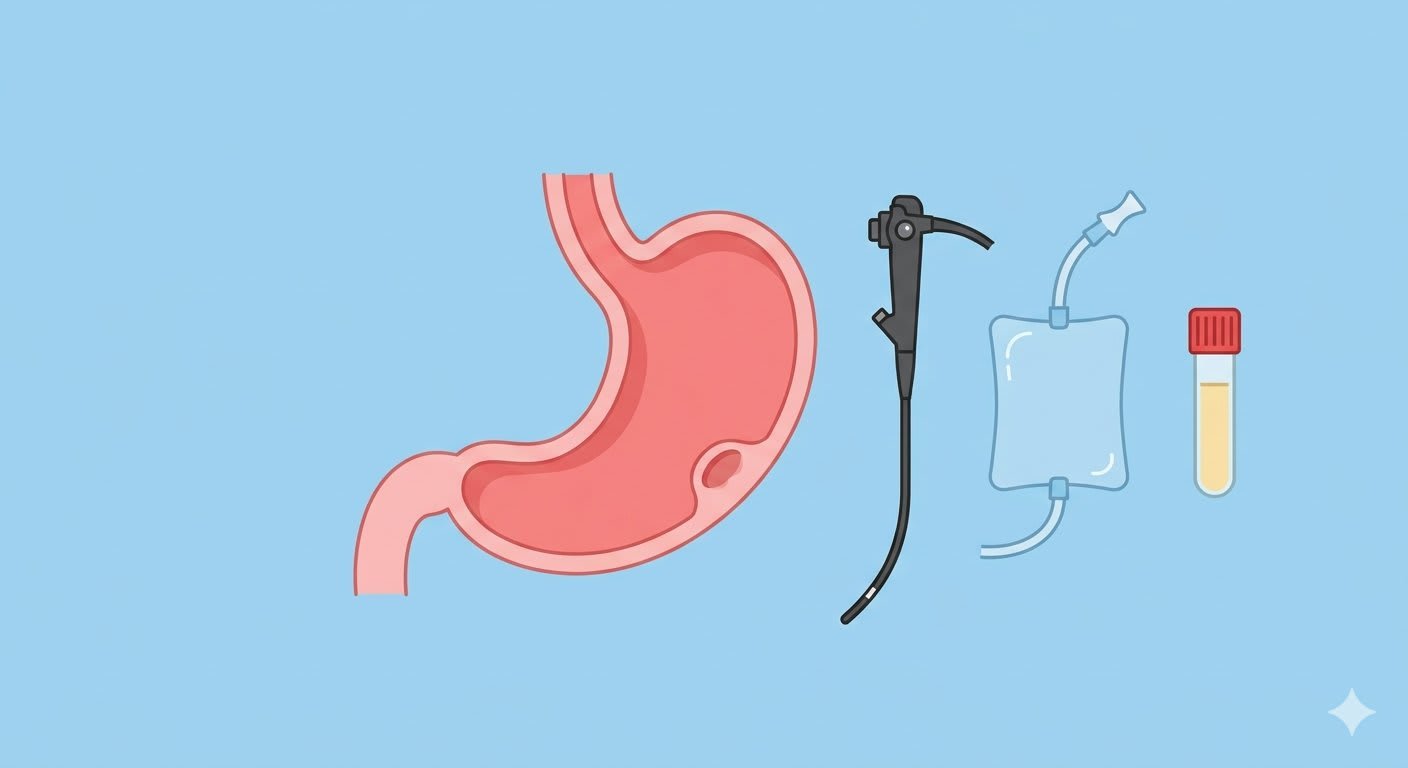
| Upper GI endoscopy (gastroscopy) | Allows direct inspection of the oesophagus, stomach and duodenum. A biopsy may be taken to investigate H. pylori or assess a gastric ulcer. |
| Urea breath test | Detects active H. pylori infection. |
| Stool antigen test | Detects active H. pylori infection and can be used after treatment to confirm eradication. |
| Blood tests | May check for anaemia or other effects of bleeding. Antibody tests do not reliably distinguish current from past H. pylori infection. |
Endoscopy is particularly important when there are alarm features, suspected bleeding, persistent symptoms or concern about another diagnosis. For a gastric ulcer, the gastroenterologist may take biopsies and recommend a repeat endoscopy to document healing and ensure an important underlying condition has not been missed. The need and timing depend on the findings and local clinical guidance.
How long does a stomach ulcer take to heal?
Healing time depends on the ulcer’s size and site, its cause, whether complications are present and whether treatment is taken correctly. Many uncomplicated ulcers improve over several weeks, while some need a longer course of acid suppression and follow-up. H. pylori eradication treatment is usually a defined short course, but the ulcer itself may take longer to heal. Do not judge healing only by whether the pain disappears. Some ulcers are painless, and symptoms can settle before the underlying cause has been eliminated. Attend recommended testing and endoscopy appointments.
Diet and lifestyle: what helps during recovery?
No special diet has been proven to cure a peptic ulcer or eradicate H. pylori. Food choices are mainly about comfort, nutrition and avoiding personal symptom triggers. A practical approach is:
- Eat balanced meals; smaller portions may be more comfortable if large meals worsen symptoms.
- Notice whether particular foods or drinks trigger discomfort and limit those items if needed. Spicy food, coffee or fatty food may bother some people but do not cause every ulcer.
- Avoid smoking and seek support to quit.
- Limit or avoid alcohol, especially if it worsens symptoms or interacts with medicines.
- Avoid taking non-prescribed NSAID painkillers. Ask a clinician or pharmacist about safer pain relief for your situation.
- Maintain adequate fluids and nutrition, especially if nausea has reduced your food intake.
- Take prescribed medicines exactly as directed and keep follow-up appointments.
Can milk, bananas, honey or home remedies cure an ulcer?
No home remedy has been shown to reliably cure a stomach ulcer or eliminate H. pylori. Milk may briefly soothe some people but does not heal the ulcer and is not a substitute for treatment. Bananas and other nutritious foods can be part of a balanced diet if tolerated, but they are not ulcer medicines. Avoid relying on baking soda, herbal mixtures or supplements as a replacement for medical care; some products can cause side effects or interact with prescribed medicines.
When should you seek urgent medical care?
- Vomiting fresh red blood or material that looks like coffee grounds.
- Black, sticky, tar-like stools, or significant blood in the stool.
- Sudden, severe or persistent abdominal pain, particularly with a hard or very tender abdomen.
- Fainting, marked dizziness, confusion, cold clammy skin, rapid heartbeat or severe weakness.
Arrange a prompt medical review for recurring or persistent upper-abdominal pain, repeated vomiting, unexplained weight loss, loss of appetite, difficulty swallowing, unusual tiredness or feeling full after only a small amount of food.
Common mistakes that delay ulcer healing
- Taking acid medicine but ignoring H. pylori: acid suppression alone does not eradicate the infection.
- Stopping antibiotics early: this can cause treatment failure and contribute to resistance.
- Continuing NSAIDs without review: the ulcer may persist or bleed if the damaging medicine continues.
- Stopping aspirin or antiplatelet medicines without advice: this may increase the risk of a heart attack or stroke in people who need them.
- Assuming symptom relief means cure: follow-up testing may still be necessary.
- Using home remedies instead of diagnosis: persistent pain may have another cause that needs assessment.
Frequently asked questions
1. Can a stomach ulcer be cured completely?
Yes. Most uncomplicated ulcers heal when the cause is treated and the prescribed course is completed. H. pylori must be eradicated when present, and ulcer-causing medicines need a clinician-led review. Some patients require follow-up endoscopy or testing.
2. What is the fastest way to cure a stomach ulcer?
There is no safe instant cure. The fastest effective route is prompt diagnosis and the correct cause-specific treatment. Taking random antibiotics or increasing acid medicine without medical advice can delay proper care.
3. Can a stomach ulcer heal without medicine?
Some ulcers may improve if an offending medicine is stopped, but untreated H. pylori can persist and ulcers can cause serious complications. Medical assessment is important rather than waiting for the ulcer to heal by itself.
4. Is a stomach ulcer caused by stress?
Everyday psychological stress is not considered a usual direct cause of peptic ulcers. Severe physical stress in critically ill patients can cause stress-related mucosal injury. Stress may also worsen how symptoms are experienced.
5. Should I avoid spicy food completely?
Not necessarily. Spicy foods do not cause most peptic ulcers, but they may worsen discomfort in some people. Avoid foods that clearly trigger your symptoms while maintaining a nutritious, varied diet.
6. Can I take painkillers if I have a stomach ulcer?
Do not self-medicate with ibuprofen, naproxen or diclofenac. Ask your clinician about an appropriate alternative. If you take prescribed aspirin or an antiplatelet/anticoagulant medicine, do not stop it without medical advice.
7. Do I need another test after H. pylori treatment?
Yes, current guidance recommends confirming eradication with an appropriate test, usually a urea breath test or stool antigen test, at least four weeks after antibiotics. Your clinician will advise how to manage acid medicines before testing.
8. Can a stomach ulcer turn into cancer?
A typical benign ulcer does not simply turn into cancer. However, some stomach cancers can resemble an ulcer, which is why endoscopy and biopsy may be recommended for a gastric ulcer. Long-standing H. pylori infection is also associated with an increased risk of stomach cancer. Seek the follow-up advised by your specialist.
Summary
- Most stomach ulcers are treatable and heal with appropriate medical care.
- The two leading causes are H. pylori infection and NSAID painkillers.
- PPIs reduce acid and help the lining heal; H. pylori requires a prescribed combination eradication regimen.
- Complete the full treatment and confirm H. pylori eradication when advised.
- Do not stop prescribed aspirin or blood-thinning medicines without speaking to the prescriber.
- Vomiting blood, black tarry stools, fainting or sudden severe abdominal pain are emergencies.
Conclusion
The most reliable way to understand how to cure stomach ulcer is to identify its cause and treat it specifically. Acid-reducing medicines help the sore heal, while H. pylori infection needs a complete eradication regimen and NSAID-related ulcers need a careful medication review. Diet changes can make symptoms easier to manage, but food and home remedies cannot replace treatment. Seek urgent help for signs of bleeding or perforation, and complete the follow-up recommended by your doctor.
Useful video resource
For a patient-friendly overview of peptic ulcer disease, visit the NIDDK peptic ulcer information page. For a video, use the YouTube search for NIDDK peptic ulcer education videos; choose a video from a recognized medical institution and check its publication date.
References and further reading
- National Institute of Diabetes and Digestive and Kidney Diseases (NIDDK): Treatment for Peptic Ulcers.
- NIDDK: Diagnosis of Peptic Ulcers.
- NIDDK: Symptoms and Causes of Peptic Ulcers.
- National Health Service (NHS): Stomach Ulcer.
- American College of Gastroenterology: 2024 H. pylori Guideline Highlights.
- American College of Gastroenterology: 2024 guideline summary and treatment considerations.
Medical disclaimer
This article is for general health education only. It does not diagnose an individual, replace a consultation, or provide a personal prescription. Treatment depends on examination, test results, allergies, other illnesses and current medicines. Antibiotics and acid-suppressing medicines should be used under the direction of a qualified healthcare professional. If you have symptoms of gastrointestinal bleeding or sudden severe abdominal pain, seek emergency medical care.
📲 For Health-Related Articles & Videos
🔹 Facebook: https://www.facebook.com/positivemind.healthcare