Is Gastroenteritis Contagious Before Symptoms Appear?
Article author: Dr. Sagar Rajkuwar, MS-ENT 🌐 www.entspecialistinnashik.com
Is Gastroenteritis Contagious Before Symptoms?
Can a person pass a stomach infection to family members before vomiting or diarrhoea begins? This is a practical concern when someone has been exposed to an infected person but still feels completely well. The answer is **yes for some infections**: certain organisms can be shed before symptoms appear, so transmission may occur during this apparently healthy period.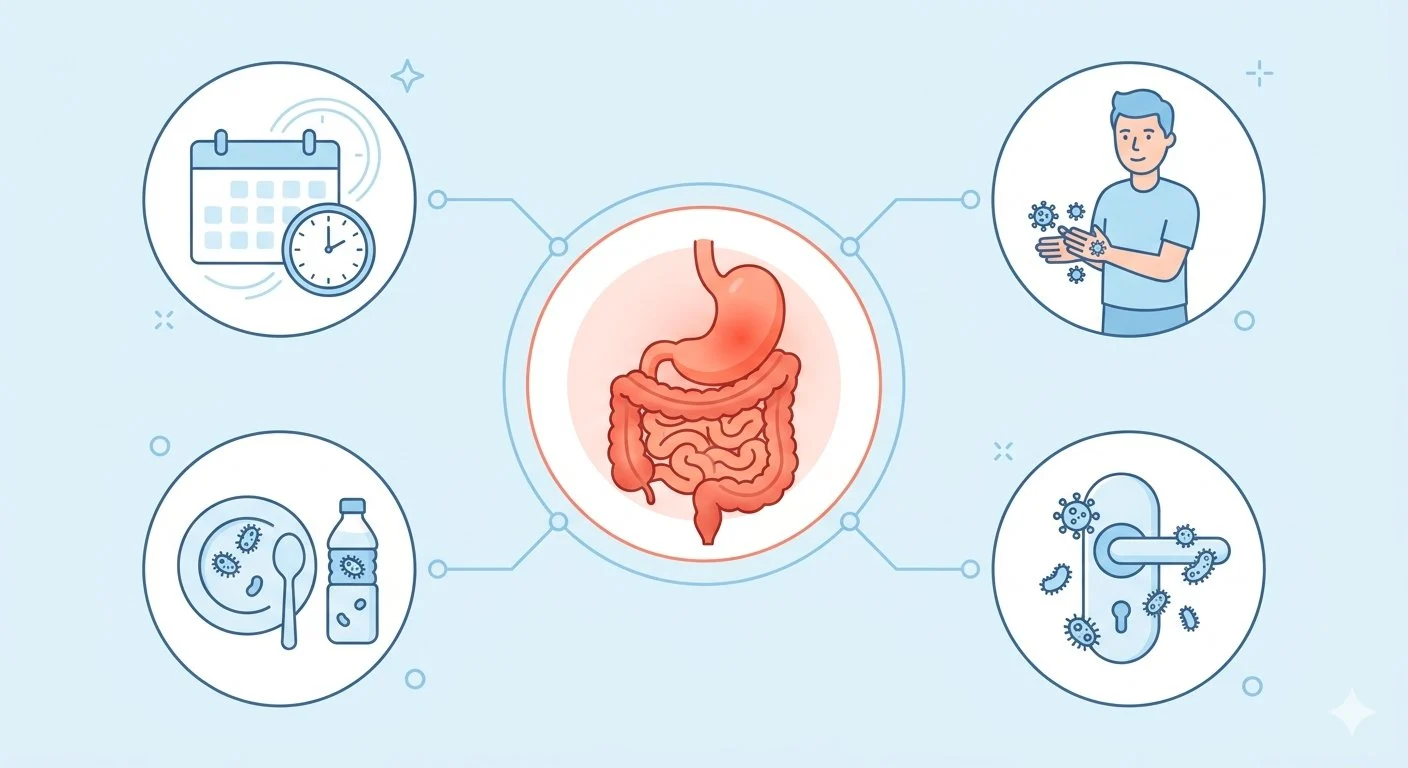
Is gastroenteritis contagious before symptoms?
Yes. Some types of infectious gastroenteritis can spread before symptoms start. The clearest example is norovirus. The US Centers for Disease Control and Prevention (CDC) states that norovirus can be present in an infected person’s stool before they begin to feel sick. The National Institute of Diabetes and Digestive and Kidney Diseases (NIDDK) also explains that people without symptoms can spread viruses such as norovirus. However, this does not mean every stomach infection is equally contagious before symptoms. The risk depends on the organism, the timing of shedding, hygiene, exposure and the amount of infectious material transferred. People are generally most contagious when they have vomiting or diarrhoea and during the first few days after they feel better.This article focuses specifically on pre-symptomatic transmission—the possibility of spreading an infection before a person recognises that they are ill. It also explains the difference between pre-symptomatic and asymptomatic infection, how long symptoms take to appear, and what families can do after a possible exposure.
What does “contagious before symptoms” mean?
After an infectious organism enters the body, there is often a period when it is multiplying or being shed but the person has not yet developed noticeable symptoms. If infectious material leaves the body during this period and reaches another person’s mouth, transmission may occur.
Pre-symptomatic infection
Pre-symptomatic transmission means an infected person passes the organism to someone else before their own symptoms begin. They may feel normal, go to work, prepare meals, care for children or share a bathroom without knowing they are infected.
Asymptomatic infection
Asymptomatic infection means a person is infected but never develops recognisable symptoms. Some infected people may still shed an organism and transmit it. This is different from a person who develops symptoms later.
Incubation period
The incubation period is the time between becoming infected and developing symptoms. It is not automatically the same as the infectious period. A person may become infectious before symptoms, during symptoms, after symptoms, or during more than one of these phases, depending on the pathogen.
What does medical evidence say about pre-symptomatic spread?
There is direct public-health guidance supporting pre-symptomatic shedding of norovirus. The CDC’s norovirus prevention information says the virus may be found in stool before a person starts feeling sick. The NIDDK similarly notes that people who do not have symptoms can spread viruses and specifically identifies norovirus in stool before symptoms. Public-health guidance from NHS inform in Scotland also notes that people with gastroenteritis may be infectious for a short time before symptoms begin, although they are most infectious from symptom onset until 48 hours after symptoms have passed. Scientific studies and reviews describe norovirus transmission before symptoms, after symptoms and from people with subclinical infection. However, the degree of infectiousness is not necessarily equal across these periods. Available evidence generally indicates that transmission risk is greatest during active vomiting and diarrhoea, when viral contamination of hands and the environment can be substantial.
Why can norovirus spread before a person realises they are ill?
Norovirus is a leading cause of acute viral gastroenteritis. It can cause sudden vomiting, watery diarrhoea, nausea and abdominal cramps. It spreads efficiently because only a small amount of infectious material may be needed to cause illness, and the virus can contaminate hands, food, water and surfaces.
1. Virus may be present in stool before symptoms
According to the CDC, an infected person may have norovirus in their stool before they feel sick. If microscopic stool contamination reaches a hand, food, utensil or shared surface, another person may swallow the virus.
2. The infected person may not know to take precautions
Before symptoms begin, a person may continue normal activities such as cooking, serving food, changing a baby’s nappy, using a shared bathroom or touching commonly used objects. This can create opportunities for accidental contamination.
3. The infectious dose can be very small
Norovirus has a low infectious dose. This means that a very small amount of virus may be sufficient to cause infection. It helps explain why careful handwashing and environmental cleaning are important even when contamination cannot be seen.
4. Symptoms can begin suddenly
Norovirus symptoms usually begin around 12–48 hours after exposure. A person may therefore be carrying out ordinary activities during the incubation period and may not connect a later illness with an earlier exposure.
Can other causes of gastroenteritis spread before symptoms?
Gastroenteritis is a clinical syndrome, not one single infection. Different viruses, bacteria and parasites behave differently. Evidence for pre-symptomatic spread is particularly clear in norovirus guidance, but the timing and importance of asymptomatic shedding vary for other organisms.
| Organism | How it commonly spreads | What to know about spread before symptoms |
|---|---|---|
| Norovirus | Faecal-oral route, contaminated food, water, hands and surfaces; vomit can contaminate the environment | CDC specifically states virus can be present in stool before a person feels sick. |
| Rotavirus | Mainly faecal-oral spread, especially among young children | Shedding can occur around the illness period; do not assume the norovirus timing applies exactly. |
| Shigella | Faecal-oral spread, person-to-person contact, contaminated food or water | Asymptomatic carriage and prolonged shedding can occur; timing and public-health precautions are infection-specific. |
| Salmonella | Often contaminated food or animal contact; sometimes faecal-oral spread | People can shed bacteria after illness, but pre-symptomatic transmission is not a universal rule for all Salmonella infections. |
| Giardia | Contaminated water, food or faecal-oral contact | Asymptomatic infection and prolonged shedding may occur; risk depends on exposure and hygiene. |
| Food toxin illness | Eating food containing a toxin formed before consumption | Usually not spread directly from one person to another because illness is caused by a toxin rather than an ongoing transmissible infection. |
Therefore, if someone asks whether gastroenteritis contagious before symptoms, the most accurate response is that it can be, especially with norovirus, but it is not correct to apply one infectious timeline to every cause of diarrhoea and vomiting.
Exposure, incubation and infectious timeline
Consider a household example: one family member is exposed to norovirus on Monday. They feel well on Tuesday morning, prepare breakfast and use the shared bathroom. Vomiting and diarrhoea begin later that day or on Wednesday. Because norovirus may be present in stool before symptoms, transmission before the first episode of vomiting is possible.
| Stage | What may be happening | Practical implication |
|---|---|---|
| Exposure | The person swallows the infectious organism through contaminated food, water, hands or surfaces. | There may be no immediate symptoms. |
| Incubation | The organism begins multiplying or establishing infection. | Some infections, including norovirus, may be shed before symptoms. |
| Symptom onset | Nausea, vomiting, diarrhoea or cramps begin. | For norovirus, this is commonly 12–48 hours after exposure; infectiousness is usually high. |
| Early recovery | Symptoms improve or stop. | Transmission can continue; follow the recommended exclusion period. |
| Later shedding | Viral material may remain detectable in stool. | Continue careful hand and toilet hygiene after recovery. |
This is an illustrative timeline, not a way to diagnose the cause or calculate an exact time when someone becomes infectious. Exposure dose, immunity, age and the specific organism can change the timing.
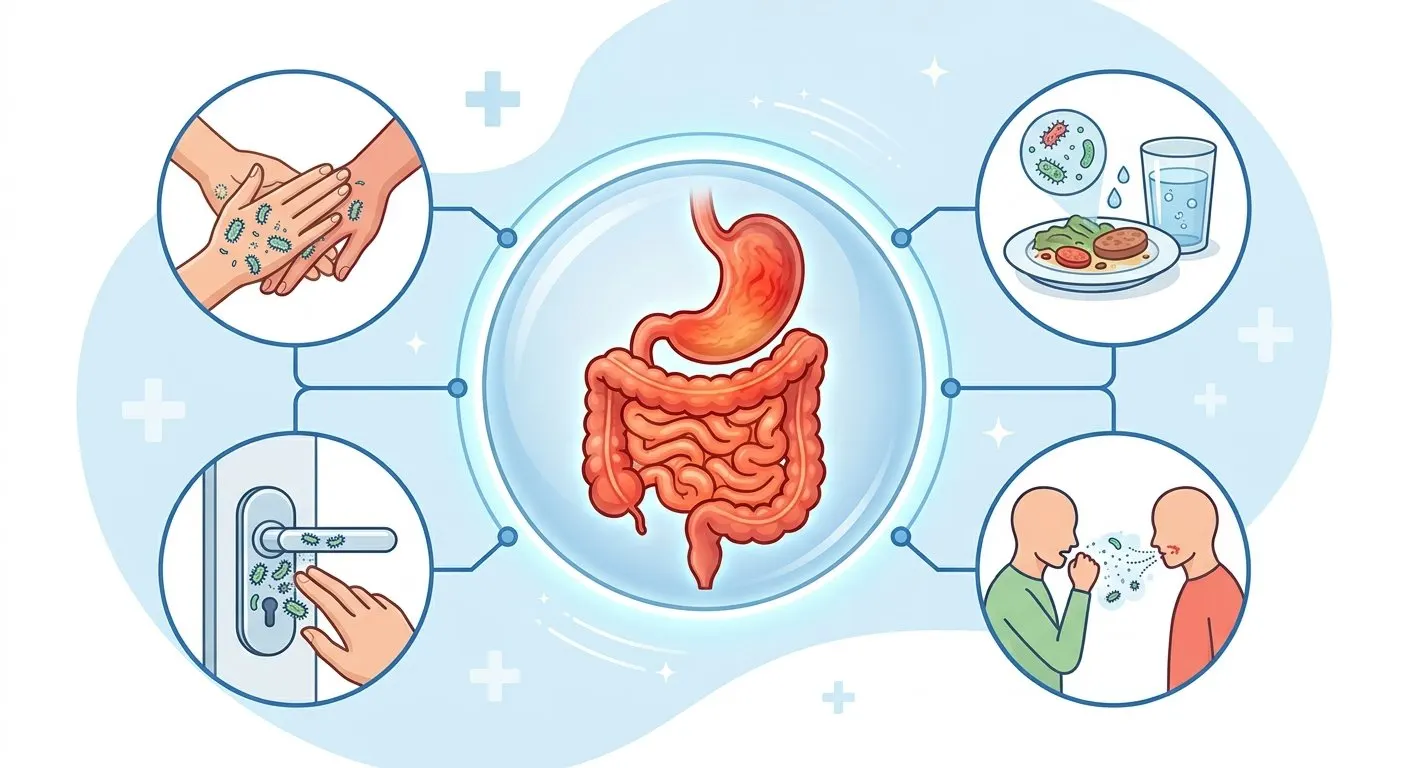
How can gastroenteritis spread before symptoms?
Contaminated hands
If microscopic stool contamination reaches a person’s hands during toileting or nappy changing, the virus can be transferred to food, utensils, taps or another person’s hands. The next person may become infected after touching their mouth or eating without washing properly.
Food preparation
A person who is infected but not yet symptomatic may prepare ready-to-eat food. If their hands contaminate the food and it is not subsequently cooked, several people may be exposed. This is one reason food handlers need rigorous hand hygiene and must stay away from food preparation when ill.
Shared bathrooms and surfaces
Toilet flush buttons, taps, door handles and phones can become contaminated. A shared bathroom does not automatically infect everyone who uses it; transmission requires infectious material to reach another person’s mouth. Cleaning and handwashing reduce this risk.
Care of children and vulnerable people
Changing nappies, assisting with toileting and feeding children create opportunities for faecal-oral transmission. Wash hands carefully after these activities, even if the caregiver feels completely well.
Vomiting-related contamination
Once vomiting begins, droplets can spread norovirus onto nearby surfaces, objects and food. This is an important route during symptomatic illness, but it should not be confused with ordinary respiratory spread like influenza or COVID-19.
Who may be exposed without realising it?
- Household members: people sharing a bathroom, kitchen, towels or frequently touched objects.
- Children in childcare or school: close contact and developing handwashing habits can facilitate spread.
- Food handlers: contaminated hands can expose many people through ready-to-eat food.
- Healthcare and aged-care staff: close contact with patients can create opportunities for transmission.
- People caring for an ill family member: toileting, cleaning and handling laundry require careful hygiene.
Young children, older adults and people with weakened immune systems may be more vulnerable to complications from dehydration. The priority is not to panic after every contact, but to use sensible hygiene and monitor for symptoms.
What should you do after possible exposure?
If you have shared a meal, bathroom or close contact with someone who later develops gastroenteritis, exposure does not mean infection is certain. There is no routine medicine that should be taken by a healthy person simply because they may have encountered norovirus. Instead, use practical prevention steps.
1. Wash hands with soap and water
Wash for at least 20 seconds after using the toilet, changing nappies, before eating and before preparing food. Alcohol-based hand sanitiser alone is not reliable protection against norovirus and should not replace soap-and-water handwashing.
2. Avoid sharing food and utensils with an ill person
Do not share drinking glasses, cutlery, towels or food. Anyone who develops vomiting or diarrhoea should not prepare food for others.
3. Clean frequently touched surfaces
Clean toilet seats, flush handles, taps, door handles and kitchen surfaces. If vomit or stool contaminates an area, wear disposable gloves and use a disinfectant labelled effective against norovirus or an appropriate chlorine-based product according to its label. Never mix bleach with ammonia, acids or other cleaners.
4. Handle laundry carefully
Do not shake soiled clothes, towels or bedding. Wash them promptly with detergent at the warmest temperature suitable for the fabric and dry thoroughly. Wash hands after handling laundry.
5. Be cautious with food preparation
If you are well but have had a household exposure, maintain hand hygiene and safe food handling. If symptoms begin, stop preparing food for others and remain away from work or school until at least 48 hours after vomiting and diarrhoea have stopped, unless local guidance requires a longer period.
6. Do not take antibiotics or anti-diarrhoeal drugs preventively
Antibiotics do not prevent norovirus infection and are not appropriate for routine prevention after exposure. Do not take antibiotics, anti-parasitic medicines or diarrhoea-stopping medicines without a clinical reason and professional advice.
Symptoms to watch for after exposure
Norovirus symptoms often begin 12–48 hours after exposure, but other causes of gastroenteritis have different incubation periods. Watch for:
- Nausea or sudden vomiting.
- Watery diarrhoea or frequent loose stools.
- Abdominal cramps or stomach pain.
- Low-grade fever, headache, chills or muscle aches.
- Reduced appetite, weakness and tiredness.
Signs of dehydration
Repeated vomiting and diarrhoea can cause loss of fluid and electrolytes. Warning signs include intense thirst, dry mouth, dark urine, passing urine less often and dizziness on standing. In children, look for fewer wet nappies, no tears when crying, sunken eyes or unusual sleepiness.
When should you seek medical care?
Most otherwise healthy people with mild viral gastroenteritis recover with supportive care and adequate fluids. Use oral rehydration solution (ORS) if diarrhoea or vomiting is causing fluid loss. Prepare commercial ORS sachets exactly as directed on the packet; do not alter the water quantity.
Seek urgent medical assessment if there is:
- Blood in the stool or vomit, or black, tarry stool.
- Severe or persistent abdominal pain.
- Confusion, fainting, marked drowsiness or signs of severe dehydration.
- Very little urine or inability to keep fluids down.
- High or persistent fever or rapidly worsening symptoms.
Contact a healthcare professional earlier for infants, older adults, pregnant people, people with weakened immunity, kidney disease or other significant medical conditions. A clinician may consider stool testing if there is bloody diarrhoea, severe illness, prolonged symptoms, recent travel, immunosuppression or a suspected outbreak.
Frequently asked questions
1. Is gastroenteritis contagious before symptoms appear?
Yes, some infectious causes can spread before symptoms. This is particularly well recognised for norovirus: the CDC says it may be present in stool before an infected person feels sick. The risk and timing are not the same for every organism.
2. Can norovirus spread one day before vomiting starts?
It is possible because norovirus may be shed in stool before symptoms begin. However, there is no single exact number of hours that applies to everyone. People are generally most contagious while they have symptoms and during the first few days after recovery.
3. Can a person spread gastroenteritis without diarrhoea or vomiting?
Yes. A person with norovirus may shed virus before symptoms, and some infected people may never develop noticeable symptoms. This is why hand hygiene and safe food handling matter even when someone appears well.
4. How long after exposure do norovirus symptoms appear?
Symptoms usually start 12–48 hours after exposure. Other infections may have shorter or longer incubation periods.
5. If I feel well after contact with someone who has gastroenteritis, am I safe?
Feeling well is reassuring but does not prove that infection has not occurred. Follow careful handwashing, avoid sharing utensils and monitor for symptoms. Do not assume that exposure guarantees illness.
6. Can someone transmit norovirus while asymptomatic?
Yes, asymptomatic shedding and transmission are possible. The degree of transmission risk may be lower than during active vomiting and diarrhoea, but it is not necessarily zero.
7. Should I stay home after being exposed if I have no symptoms?
Routine exclusion is not generally required for every healthy person who has merely been exposed and remains well. Follow workplace, school or public-health instructions, especially in healthcare, childcare, food service and aged-care settings or during a confirmed outbreak.
8. Does hand sanitiser prevent norovirus?
Alcohol-based hand sanitiser is less reliable against norovirus than washing with soap and water. Use soap and water for at least 20 seconds, particularly after using the toilet and before preparing or eating food.
9. Can a person spread the infection after recovering?
Yes. Norovirus may continue to be shed in stool for two weeks or more after symptoms improve. People should avoid preparing food and stay away from work or school for at least 48 hours after symptoms stop, while continuing careful hygiene afterwards.
10. Does every type of food poisoning spread before symptoms?
No. Food poisoning includes infections and toxin-mediated illness. Some infections can spread between people, but illness caused by a pre-formed toxin in food is generally not passed directly from one person to another.
Summary
- Yes, some gastroenteritis infections can spread before symptoms.
- Norovirus is a well-documented example; CDC says it may be present in stool before a person feels sick.
- Pre-symptomatic shedding is different from asymptomatic infection and from prolonged shedding after recovery.
- Norovirus symptoms commonly begin 12–48 hours after exposure.
- People are generally most contagious during active vomiting or diarrhoea and the first few days after recovery.
- Handwashing with soap and water, safe food handling and careful surface disinfection reduce spread.
- Seek medical care for blood in stool, severe pain, inability to drink or signs of significant dehydration.
Conclusion
Gastroenteritis can be contagious before symptoms appear, particularly when caused by norovirus. An infected person may shed the virus in stool before feeling unwell, which means household members or people who consume food handled by that person may be exposed without knowing it. Nevertheless, pre-symptomatic transmission is not equally established for every cause of gastroenteritis, and the greatest risk of norovirus transmission is generally during active illness and the early recovery period. Good handwashing with soap and water, safe food preparation, careful bathroom cleaning and avoiding food handling when ill are practical ways to reduce transmission. If symptoms develop, focus on hydration and seek medical advice for severe symptoms or signs of dehydration.
Disclaimer
This article is for general educational purposes and does not replace individual medical advice, diagnosis or treatment. The infectious period varies with the organism and the person’s health. Follow local public-health and workplace guidance during outbreaks. Seek prompt medical care for severe symptoms, dehydration, blood in stool or illness in a high-risk person. Medical review: This article should be reviewed by a registered medical practitioner with relevant expertise before being labelled “medically reviewed”. No independent specialist review is claimed in this version.
Further learning
For additional educational material, visit the YouTube search for CDC norovirus prevention and transmission videos. Prefer videos from recognised public-health agencies or medical institutions.
References and authoritative sources
- Centers for Disease Control and Prevention (CDC). How to Prevent Norovirus. States that norovirus may be present in stool before a person starts feeling sick and provides prevention advice.
- National Institute of Diabetes and Digestive and Kidney Diseases (NIDDK). Symptoms and Causes of Viral Gastroenteritis. Discusses spread by infected people without symptoms and norovirus shedding.
- CDC. How Norovirus Spreads. Transmission routes and periods of greatest infectiousness.
- CDC. About Norovirus. Symptoms, incubation period, complications and prevention.
- NHS inform, Scotland. Gastroenteritis in adults. Notes that infectiousness may begin shortly before symptoms and gives practical prevention guidance.
- California Department of Public Health. Norovirus. Symptoms, incubation period, contagious period and dehydration information.
- CDC Yellow Book. Norovirus. Transmission, environmental contamination and prevention.
- New Zealand Ministry of Health. Communicable Disease Control Manual: Enteric Disease. Incubation and communicability information for multiple intestinal pathogens.
- Peer-reviewed review. Infection control for norovirus. Reviews transmission before symptoms, during subclinical infection and after recovery.
- Peer-reviewed study. Heterogeneity in norovirus shedding duration affects community risk. Examines variation in shedding and pre-symptomatic shedding.
📲 For Health-Related Articles & Videos
🔹 Facebook: https://www.facebook.com/positivemind.healthcare